





Swimming at exotic beaches, hiking through gorges, itineraries through villages, and other unforgettable experiences in the warm and welcoming Cretan South.
From the famous Samaria Gorge and proud Sfakia to the exotic beaches of the Libyan Sea, the South of Chania offers travelers unique thrills and experiences. Blending wild beauty with serenity, this magical corner of Crete is ideal for those seeking ultimate relaxation as well as adventure on their holidays.
Palaiochora: The «nymph of the Libyan Sea»
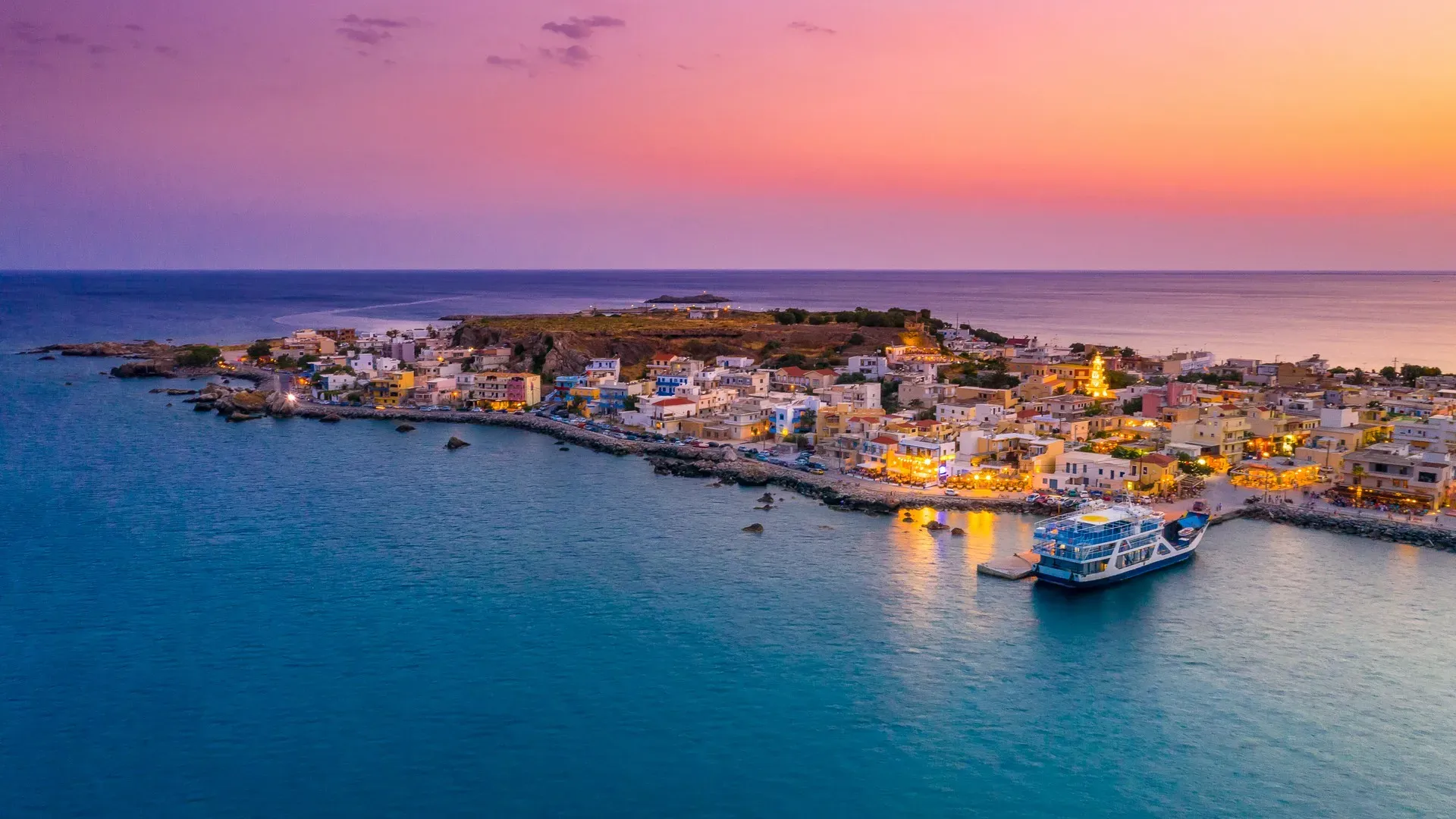
Palaiochora, a small town lapped by the Libyan Sea, 77 km south of Chania, rewards visitors with a plethora of different beaches. Local sights include the ruins of the Venetian castle of Selino on Fortezza Hill, the Museum of the Acritans of Europe, the church of Agios Georgios with its Byzantine icons in the nearby village of Anydri, as well as the caves and the Monastery of the Holy Fathers in the village of Azogires. In Palaiochora you'll find the large, organized beach of Pachia Ammos and Halikia beach with its big pebbles. It's also worth visiting the organized beach of Gialiskari. Palaiochora makes an ideal base for exploring the area. From here you can take the boat to Sougia, Loutro, Agia Roumeli, Chora Sfakion and Gavdos.
Holidays in Sfakia
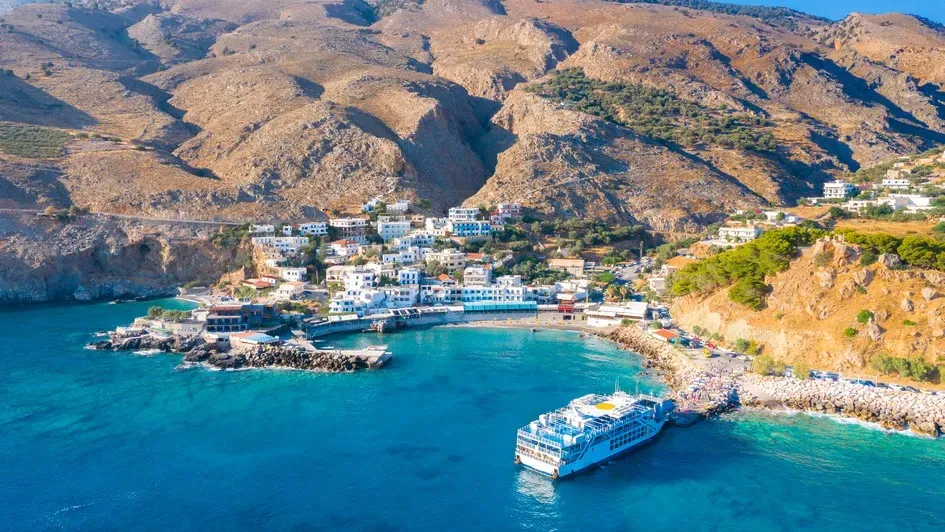
Chora Sfakion, with its ruined Venetian fort and bustling port from where little boats depart for nearby seaside settlements, is an ideal destination for those who want to explore the island's wildest side on the slopes of the White Mountains, and to enjoy hiking and swimming with the Libyan Sea as a backdrop. Here you'll get a real taste of Sfakian hospitality and Sfakian cuisine (Sfakian pies with honey and myzithra, sfakiano yachni or tsigariasto are among the specialties).
Idyllic Loutro
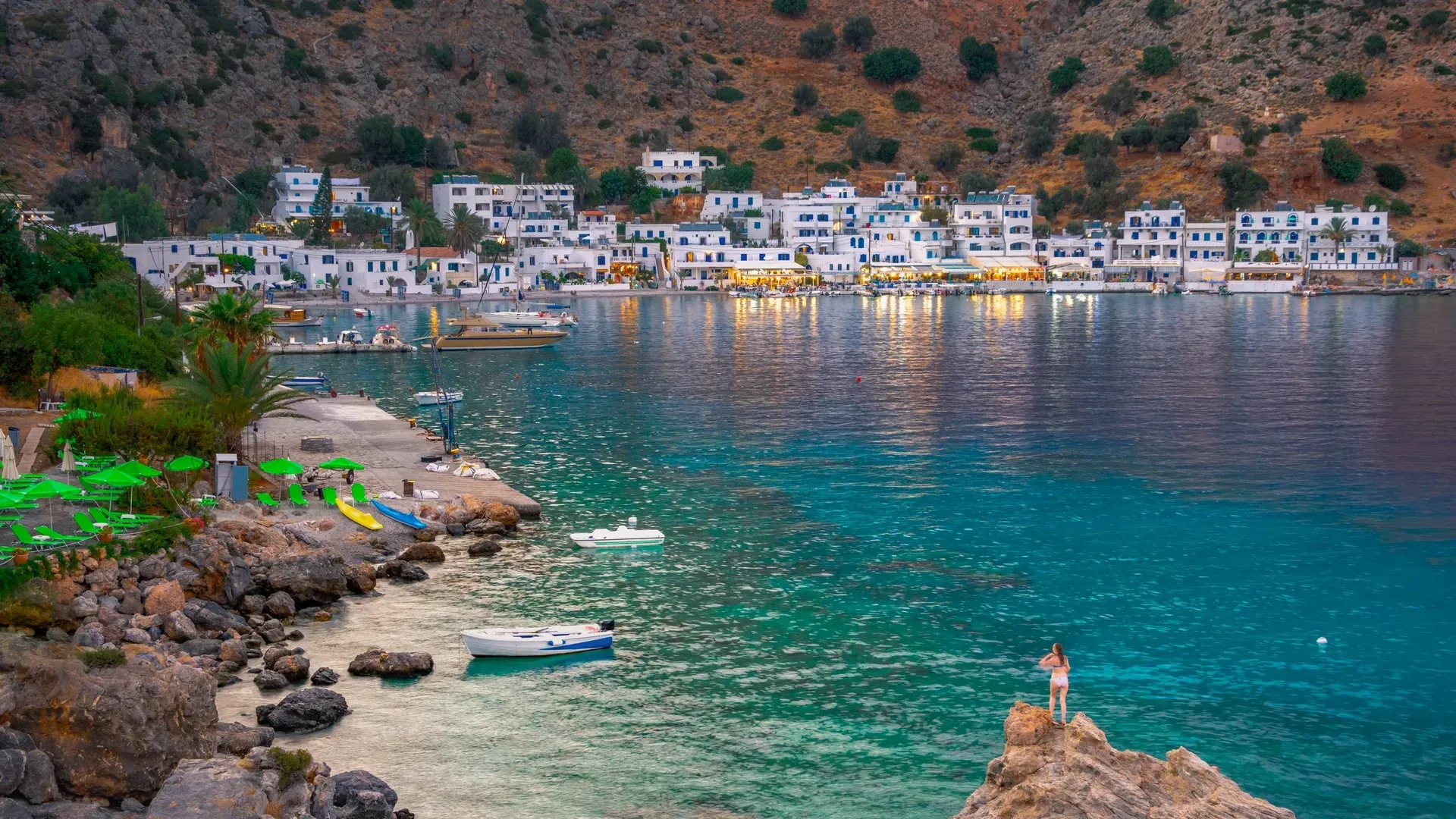
From Chora Sfakion you can take the boat to reach, after 20 minutes, Loutro, an idyllic fishing village where whitewashed houses hug the small harbor. You'll come here to holiday in a beautiful place and to swim in wonderful waters under the blazing sun of southern Crete. In Loutro there are no roads, no cars or motorbikes- only small hotels, fish tavernas and a few cafés. Inside the bay there are two beaches, but if you want more options, you can also visit the surrounding beaches, such as Glyka Nera and Marmara. Around it are trails that offer the chance to combine hiking and swimming in the crystal-clear waters of the Libyan Sea.
In the villages of Anopoli and Aradena
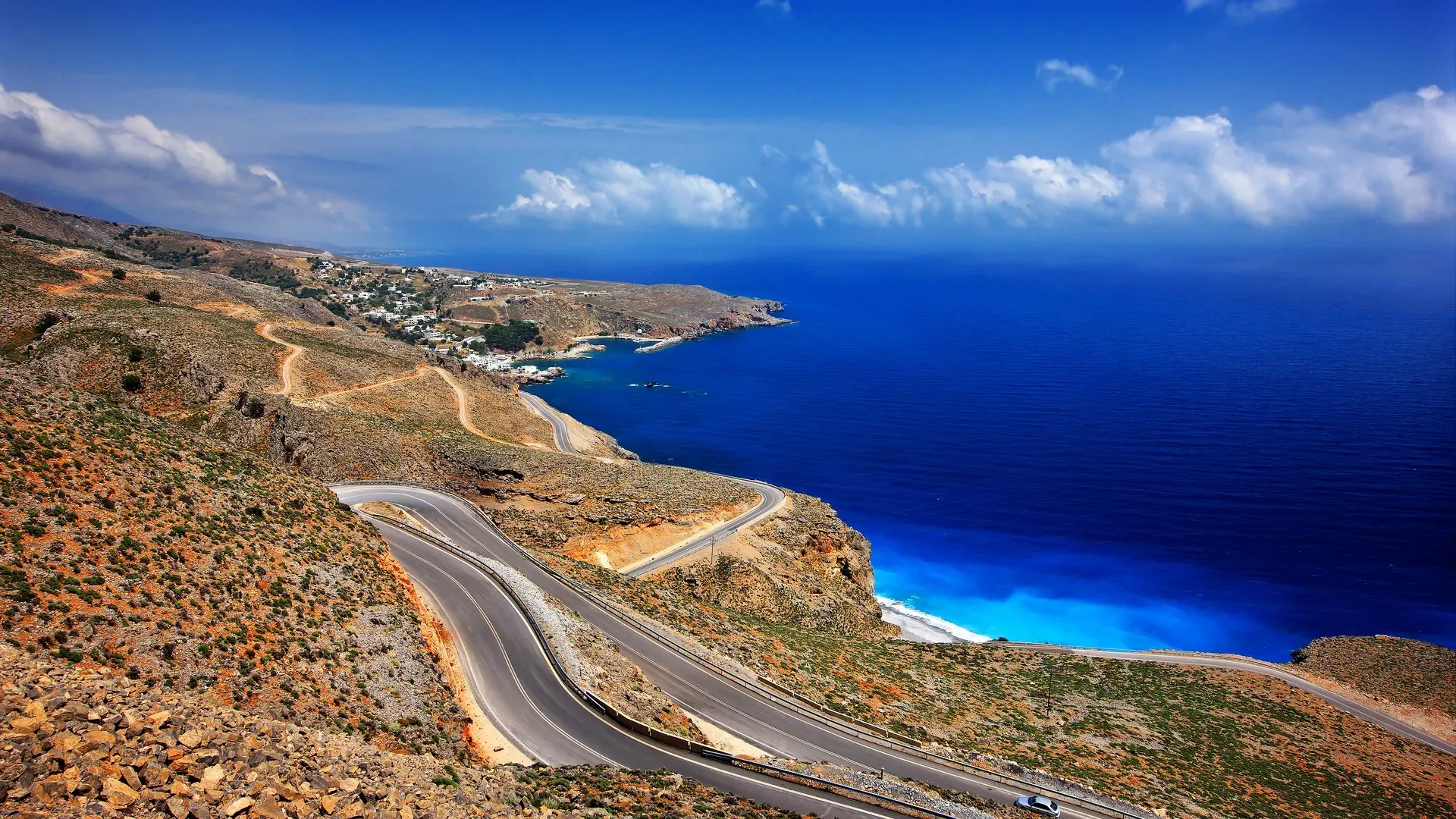
If you find yourself in Sfakia, it's worth heading up to Anopoli, 600 m. above the sea, for a raki at the traditional cafés. The winding road climbs the steep mountains and offers enchanting views of the wild landscape and the endless blue. Continuing north of Anopoli and at a distance of 3.5 km lies the ruined village of Aradena. As the stories go, this small village, built on the edge of the gorge of the same name, was deserted during the 1950s because of a vendetta.
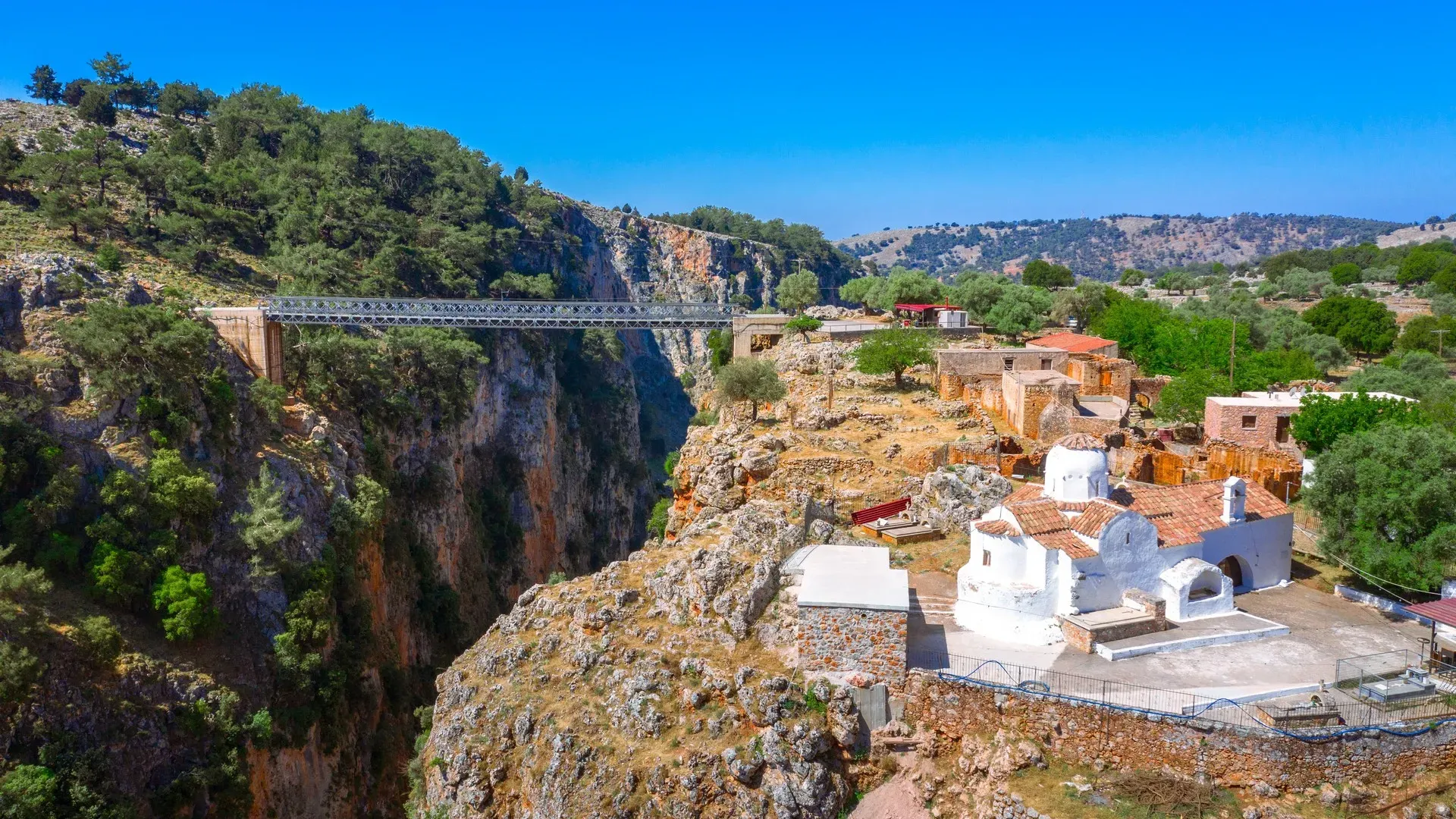
Today, the «ghost village» invites an atmospheric stroll among its paths and houses built in traditional Sfakian architecture. Many tourists visit to hike the gorge, and also to go bungee jumping at 138 meters from the metal bridge at the village entrance. Behind the bridge's canteen begins the descent path to the famous and uniquely beautiful Aradena Gorge, 7 km long. After about 3.5 to 4 hours of hiking, the gorge ends at the wonderful Marmara beach, where you can enjoy your swim in crystal-clear waters.
Legendary Frangokastello
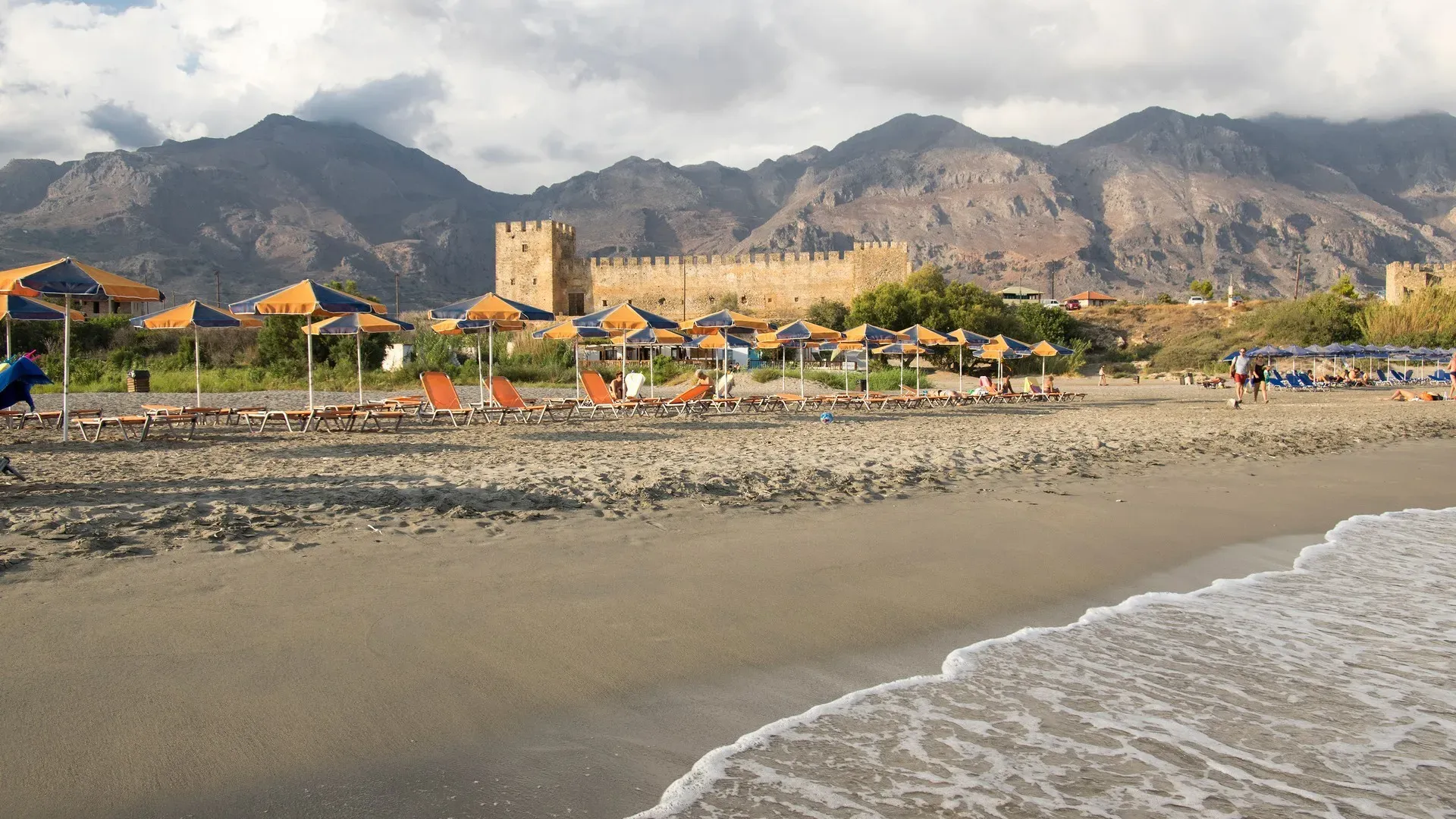
From Chora Sfakion, if you head east you'll come to Frangokastello, the 14th-century Venetian castle accompanied by the legend of the Drosoulites. From late May to early June the legend says that if you're at the spot Thyme Kambos of Sfakia before the sun rises, you'll see the Drosoulites, the famed host of the warriors of the Epirote, Hatzimichalis Dalianis. It's said that the warriors with their gleaming armor, on foot or on horseback, advance past Frangokastello towards the sea, and the phenomenon lasts for about 8 minutes with the coolness of dawn, from which they take their name. The main beach of Frangokastello is organized, with sand and shallow waters, while next to it lies Orthi Ammos, named for the large sand dunes rising above the sea.
Crossing the Samaria Gorge
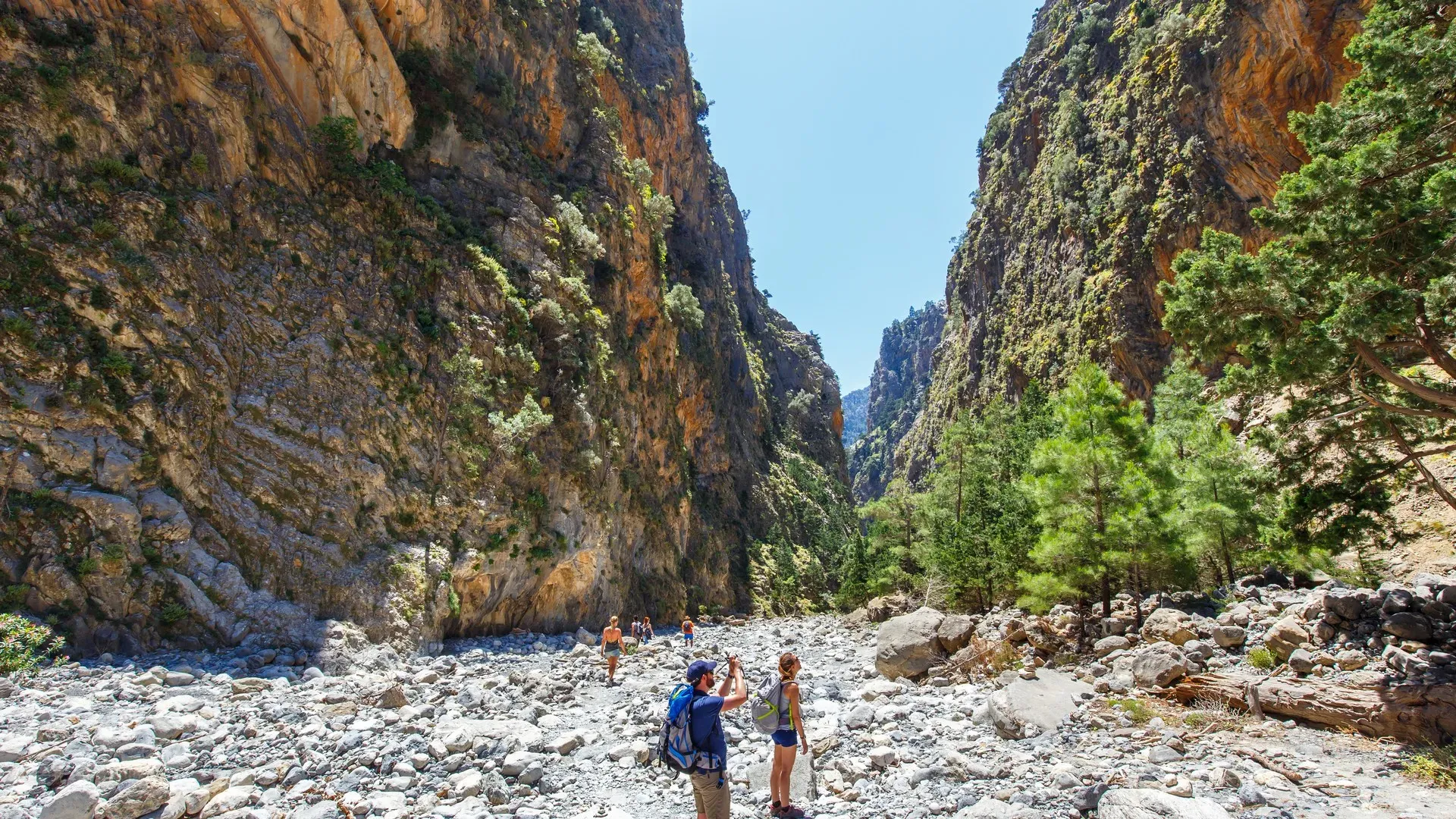
It's the most famous of Crete's gorges, and the longest gorge in Europe, with a total length approaching 18 km. A unique natural monument, with rich flora and fauna, the Samaria Gorge (also known as «Faraggas») has been declared a protected National Park and crossing it is a once-in-a-lifetime experience for nature lovers and hikers who flock by the thousands from early May until late October. The descent starts from Xyloskalo, on the Omalos plateau, and the first kilometers unfold in a lush, cool landscape. You'll need athletic shoes, a hat, water and plenty of patience, as it'll take you at least five hours to cross it. The trail ends at the beach of Agia Roumeli. Naturally, a refreshing dip in the waters of the Libyan Sea will reward you.
Exotic beaches
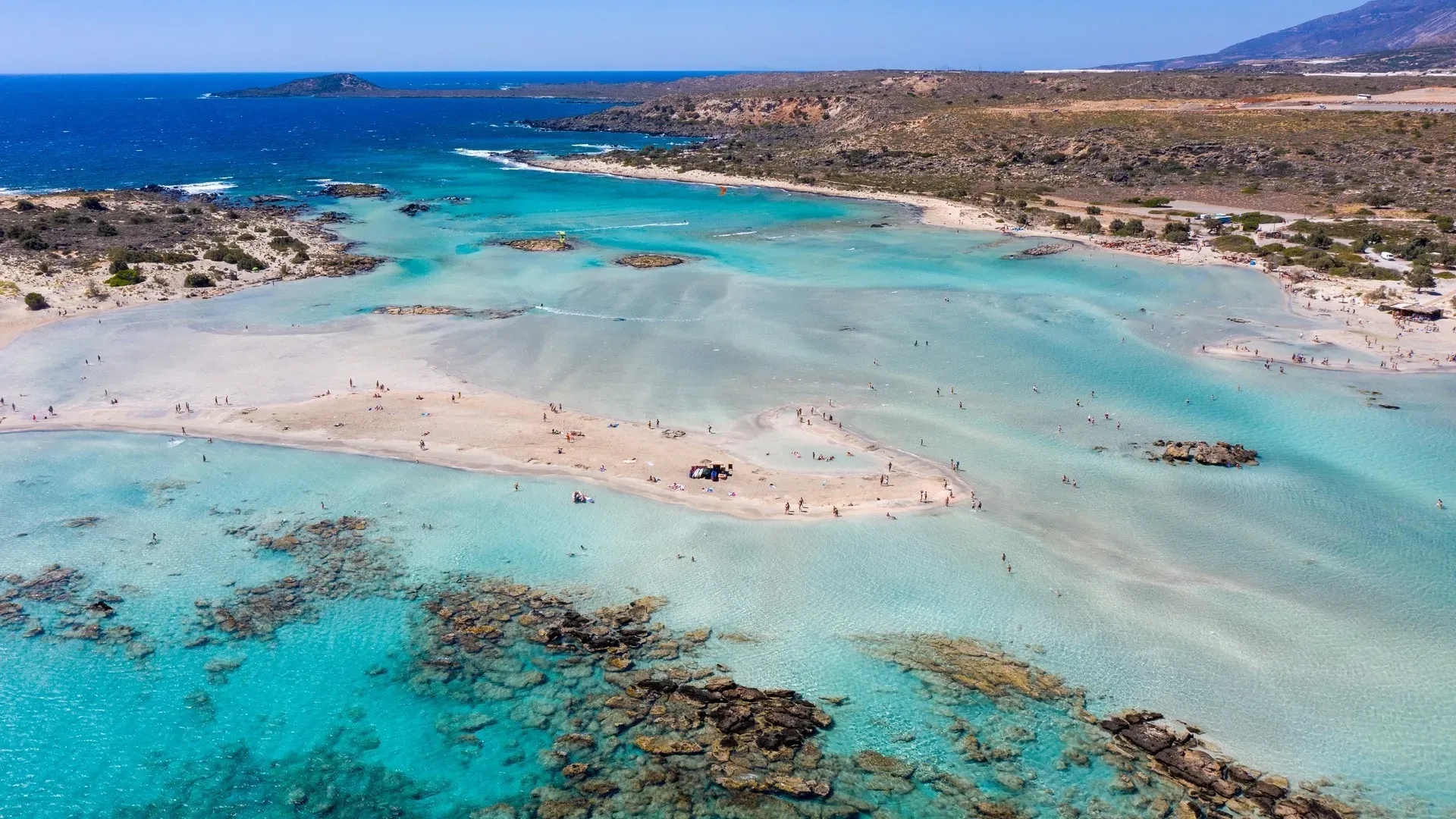
At the remote southwestern tip of Crete, Elafonisi is one of the most popular destinations in the Chania region. It's a slender peninsula that "splits" at its start, giving the feel of a separate islet about 150 m. from the opposite shore. The area has been included in the Natura 2000 network and the setting is tropical, with shallow turquoise waters and white sand that takes on pink hues from thousands of crushed shells.
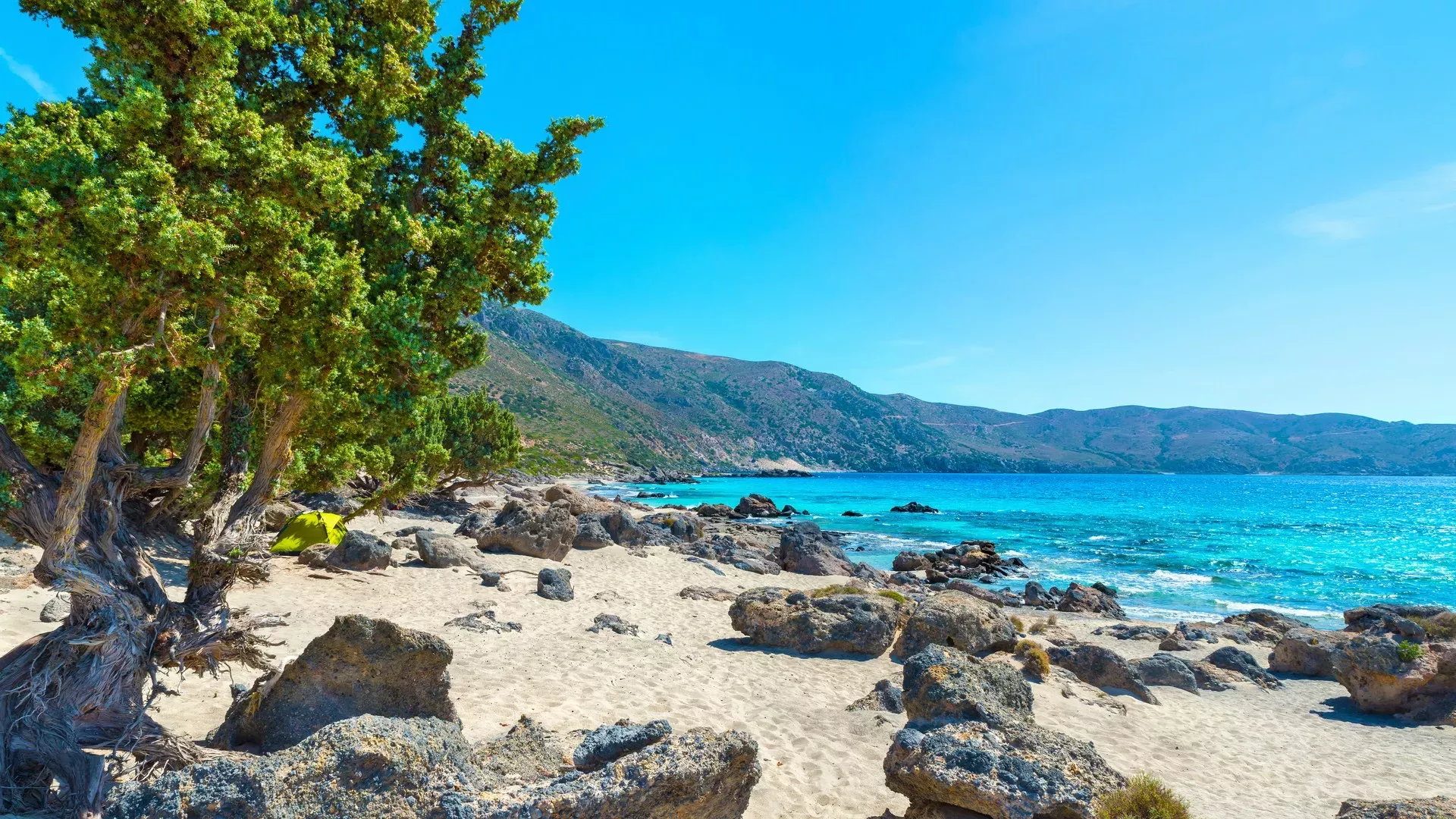
Very close to Elafonisi, you'll find Kedrodasos, an untouched place of sand dunes and junipers that reach all the way to the beach. If you want more seclusion, there are various beaches between Kedrodasos and the church of Agios Ioannis, located about 2 km. east.
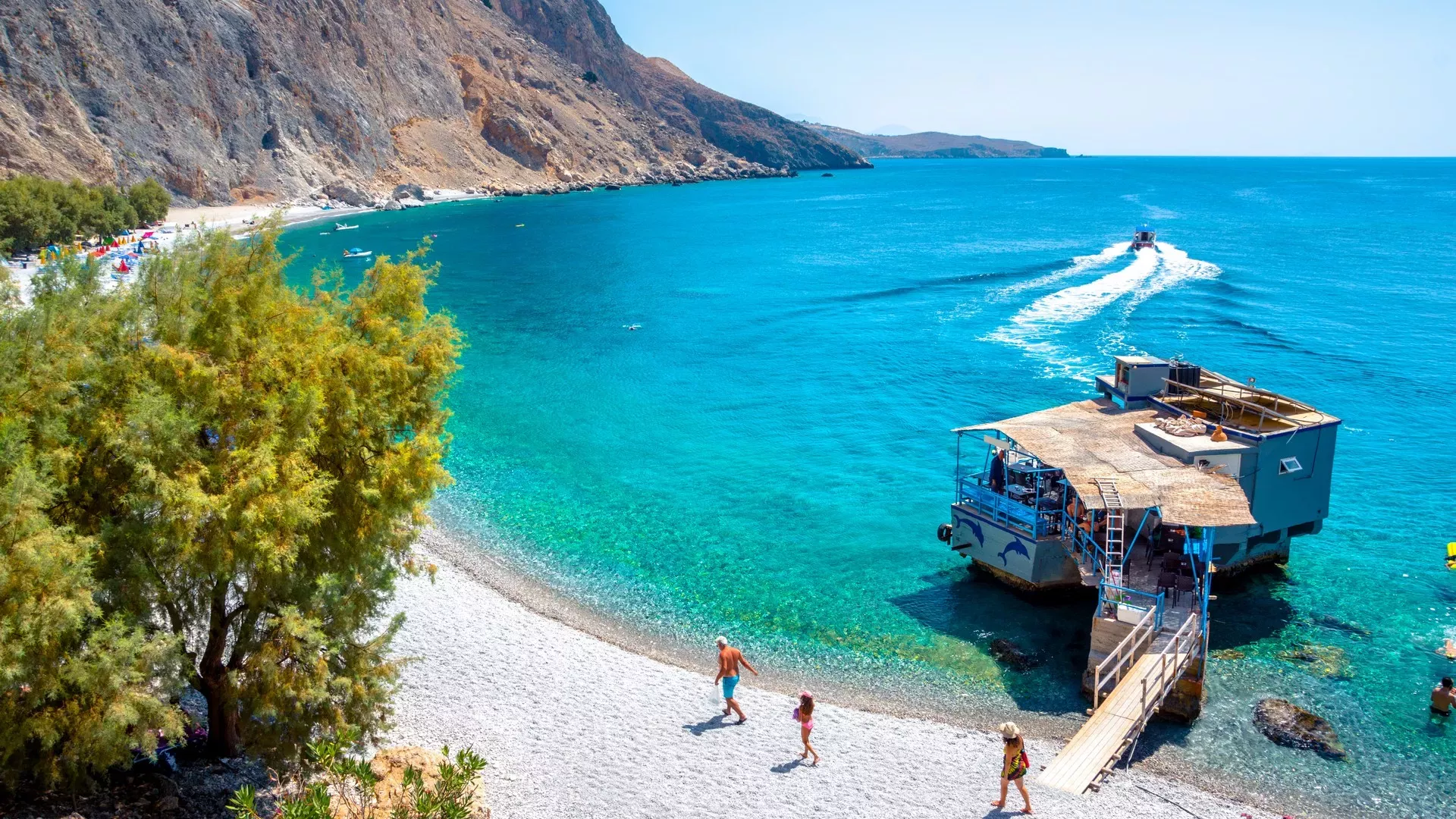
Among the most beautiful beaches in southern Chania are Glyka Nera, hidden between the mountainous masses of Sfakia, 5 km. west of Chora Sfakion. The beach is pebbly and was named after the freshwater springs that bubble up beside and within the sea. There are two ways to reach this seaside "secret": either by boat from Loutro or Sfakia or by traversing the mountainous E4 trail.