


Learning to sail in autumn (or spring) in Athens and planning your next, truly independent holidays on the islands.
I belong to that (classic) category of people who live for summer. Understandable, if you think that we live in Greece and the potential destinations - for anyone whose very being is intertwined with the blue - are endless.
There are five of us in our group. We've been vacationing together for years, and the withdrawal syndrome that hits us is such that, the moment we set foot in the port on our return - with the salt still on our skin and the “back to reality” Monday blues lurking - we almost instantly start planning the next escape. An island gets thrown on the table, someone suggests another, the «when?», «how many days?», «should we book tickets before the year changes to catch the early birds?» begin and, before we know it, we've organized next summer - almost identical to the previous one.


Only this time, the conversation took a completely unexpected turn. In early September, somewhere between the consolation coffees (of the return), the existential question was born: «What if instead of looking each time for which island the ferry will take us to, we learned to travel between them ourselves?»
That's how sailing came into our lives. From a philosophical café chat, we found ourselves walking through the door of NOAM (Nautical Club of Amfithea). Its location, right on Faliro Bay in Palaio Faliro, has its own special energy. It's where the concrete city meets the sea, and the moment you step through the entrance you feel as if you've found a secret escape portal from Athens' everyday life.
We started with the simple (and slightly naive) belief that it would be «fun» to get an offshore sailing license so we could rent a boat and try our summer holidays that way too. We had no idea that what began as a simple autumn hobby would change our worldview quite a bit. In a country, after all, with Greece's heavy maritime tradition - where they really should be teaching us seamanship at school, but that's a big conversation for another time - sailing turned out to be something much bigger. It radically changed not only the way we look at the map of Greece, but also the way we see our holidays.
From Wednesday's theory to Sunday's... sea spray
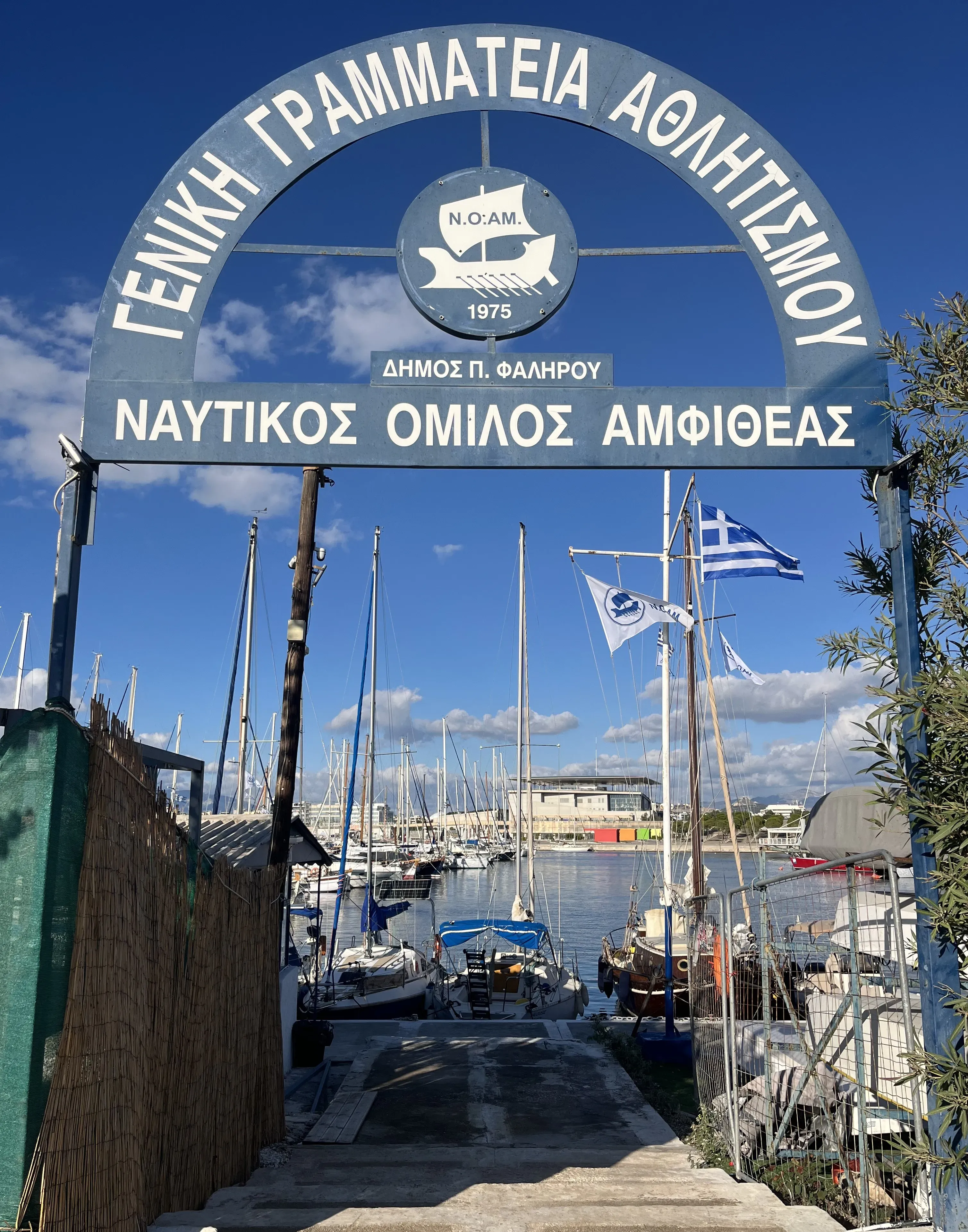
The lessons quickly found their own delightful rhythm, which became the highlight of our week. The 'routine' splits in two:
Wednesdays of science: On Wednesday afternoons we turned into theorists of the Atlantic. We'd gather at the club's facilities in Faliro with the nautical charts open, trying to decode an entirely new world: meteorology, lighthouses and beacons, flags, orientation, right of way, nautical rules and, of course, knots.
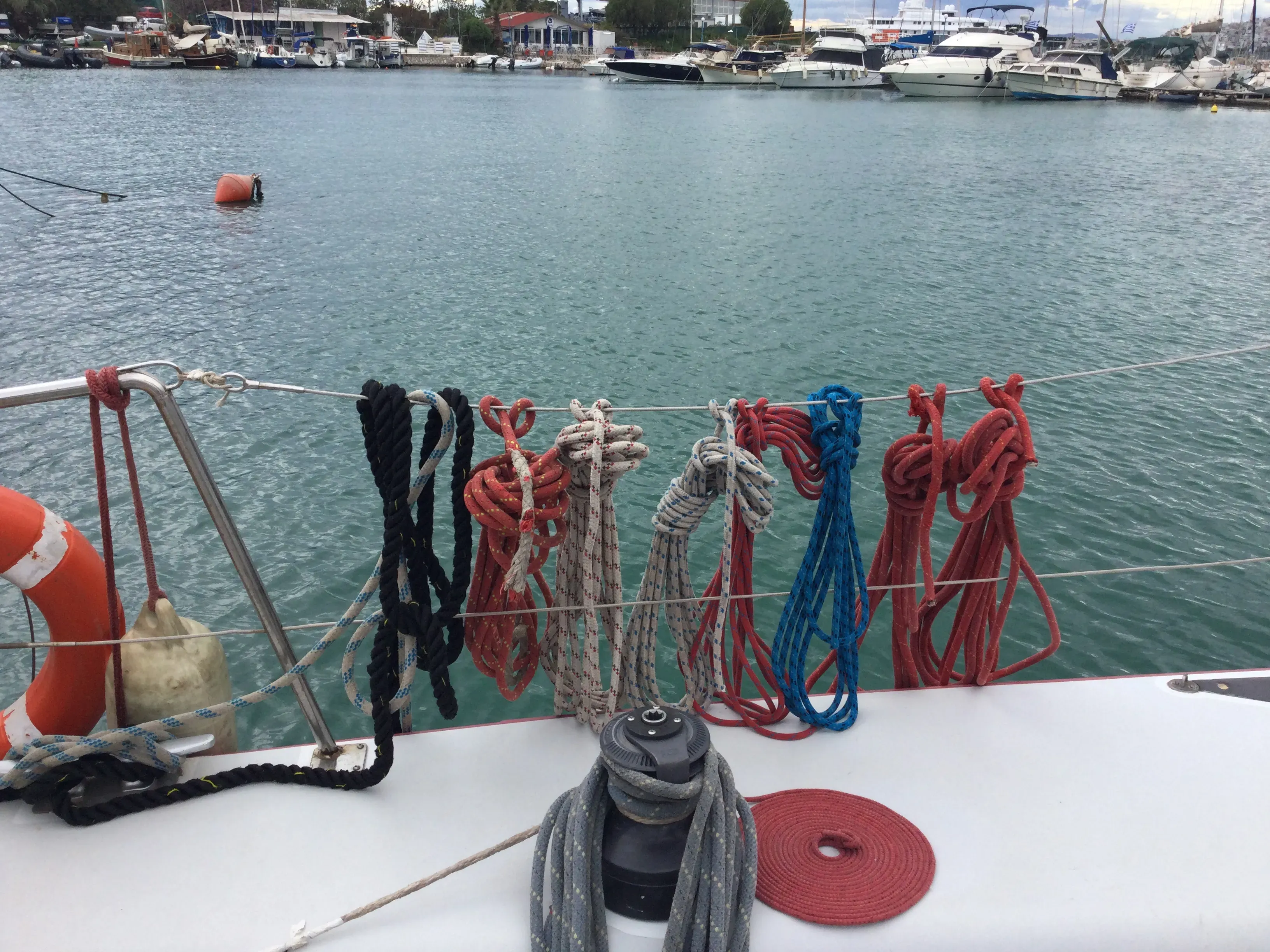
Our instructor, Dimitris, is in a league of his own. He has a unique way of conveying knowledge without a trace of academic pomposity, but with the passion of someone who's weathered countless waves. Every lesson with him feels a bit like a seamanship masterclass. And so, things that at first seem like an incomprehensible code – what όρτσα means, what πρίμα is, what the παταράτσα are, how you read the weather, how you plot a course – gradually start to make sense.
(Those of us who've read Kabbadias or listened to «Σταυρό του Νότου» or «Γραμμές των Οριζόντων» may have had a small taste of this special language of the sea. It's one thing, though, to encounter these words in a poem or hear them in a song, and quite another to suddenly have to understand them on a boat and communicate with them).
Sundays of truth: And then came Sunday morning. The moment when theory took on flesh, bone, and sails – essentially stepped down from the board and boarded the impressive Oceanos II - against the backdrop of the Athenian Riviera. If we played 'scientists' on Wednesday, on Sunday reality aboard Oceanos II brought us down to earth – and with a generous splash of saltwater in the face.
The transition from the desk to the deck is the most eventful thing you can experience with your friends. In theory, everything makes perfect sense. You sit comfortably at your desk, take notes and nod meaningfully to the instructor with all the confidence of “it's fine, I've got this”. But when you find yourself on the boat and Dimitris calls out with his characteristic zen calm «hoist the mainsail» or «ease the sheet», your brain suffers a small short circuit. Suddenly, we look at each other as if he's speaking ancient Aramaic – with flawless nautical pronunciation, of course.
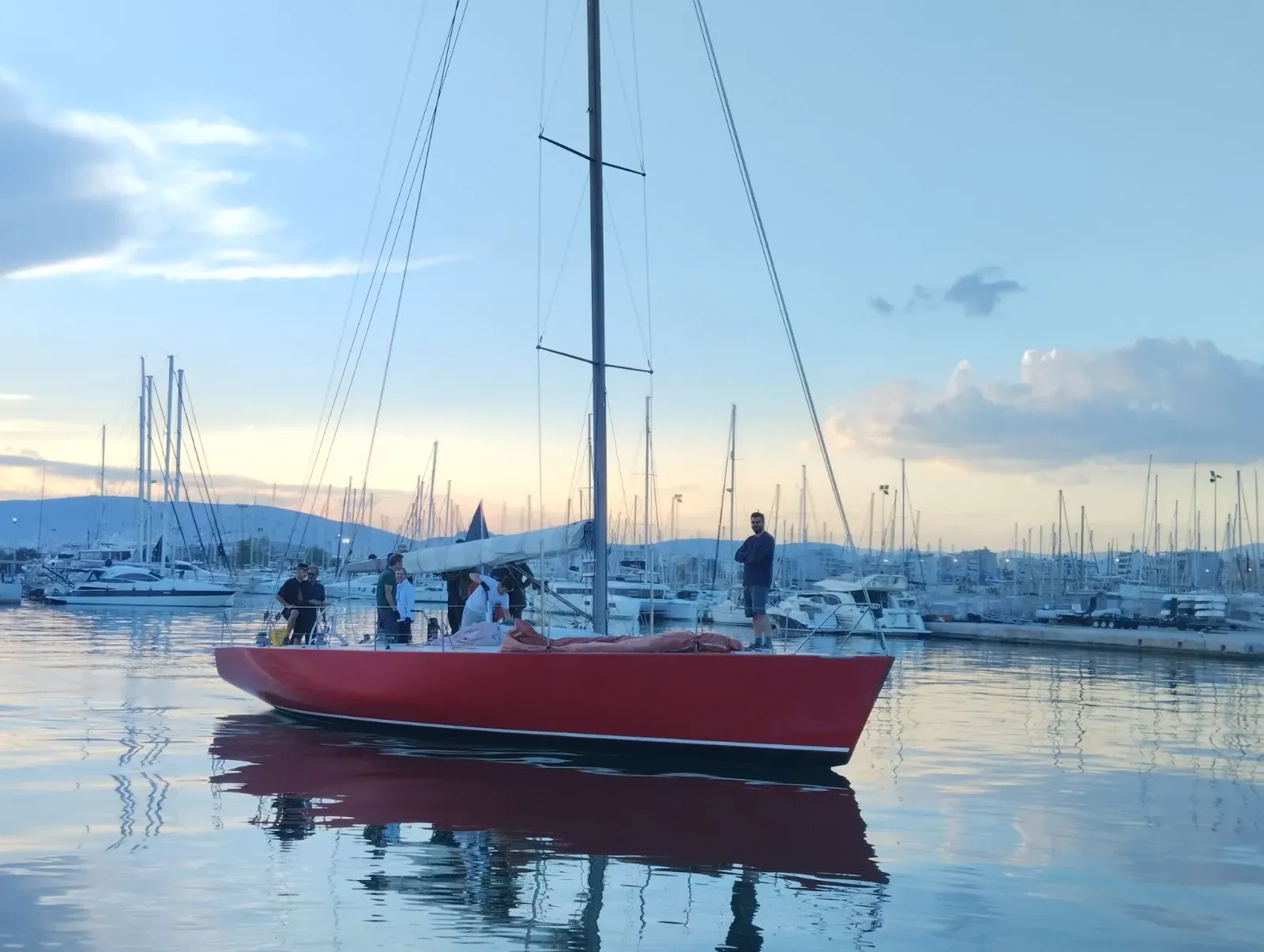
Until hands sync up with the brain, Oceanos II turned into the set of a slapstick comedy. We mixed up the ropes (which we now call halyards, sheets or topping lifts – depending on use), pulled on each other instead of using the winch handle (seriously, who came up with these names?), and tried to understand why the boom - the large horizontal spar at the foot of the mainsail - had a strange, almost obsessive tendency to want to get to know us up close, especially during changes of tack («tack» and «gybe» in official nautical language, «duck like an action hero to avoid decapitation» in ours).
The secret, though, is exactly this: through that initial, hilarious chaos, you start to 'hear' the boat. After the first epic blunders, the «I pull this rope because the instructor said so» transforms into «I pull this rope because I feel how the boat responds». At first you wrestle with the sail; then you become one with the wind. And it's truly magical when you realize that sailing isn't just a series of technical moves. It's a constant conversation between the sea, the wind, the boat, and, of course, a continual exercise in communication (verbal and non-verbal) with your shipmates.
A group of 10 that became... a crew
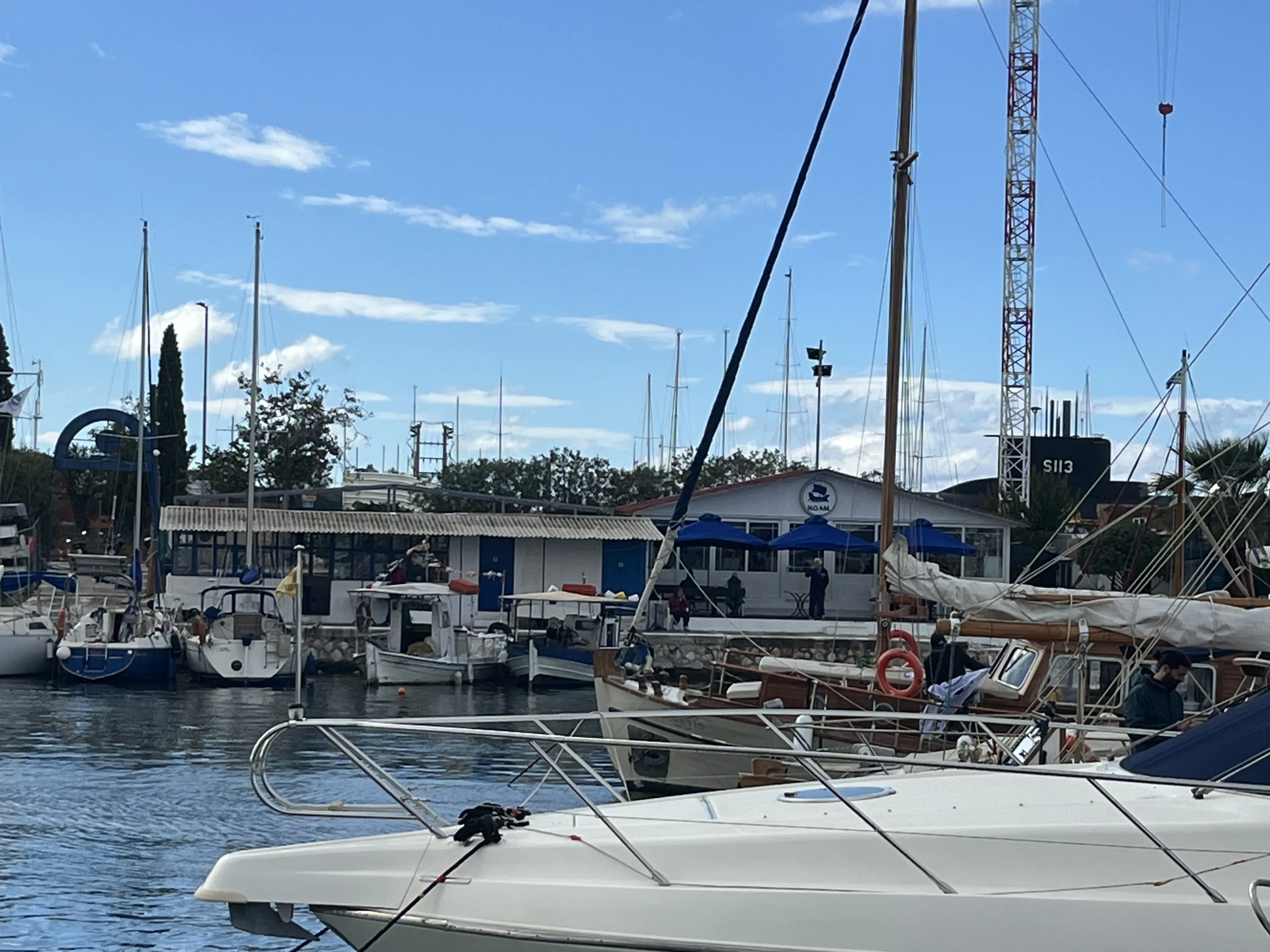
There's also something else we hadn't counted on. Sailing teaches you to operate differently, not only with your own people, but also with people who were strangers until yesterday. At NOAM, each section consists of 10 people in total. The number proved ideal: enough to share different experiences and views, but few enough to bond quickly.
The chemistry didn't stop at the dock. The real 'closing ceremony' of each lesson was written immediately after. Whether Wednesday night after theory, or Sunday noon after practice on Oceanos II, the ending was almost always the same: food and beers at the neighborhood haunts.
There we analyzed every degree of our trajectory – and every trajectory of our fate. Because on a boat you're not a unit. Ego goes out the window. Everyone has their role. Someone's at the helm, someone on the sails, someone monitors the course, someone keeps an eye on the space around us (of course all of this rotates – so everyone learns everything). At every moment you have to listen, coordinate and react at the right time. As the weeks went by, we stopped being a group of people taking a class. We had become, in every sense of the word, a crew.
The sea is no longer just the backdrop
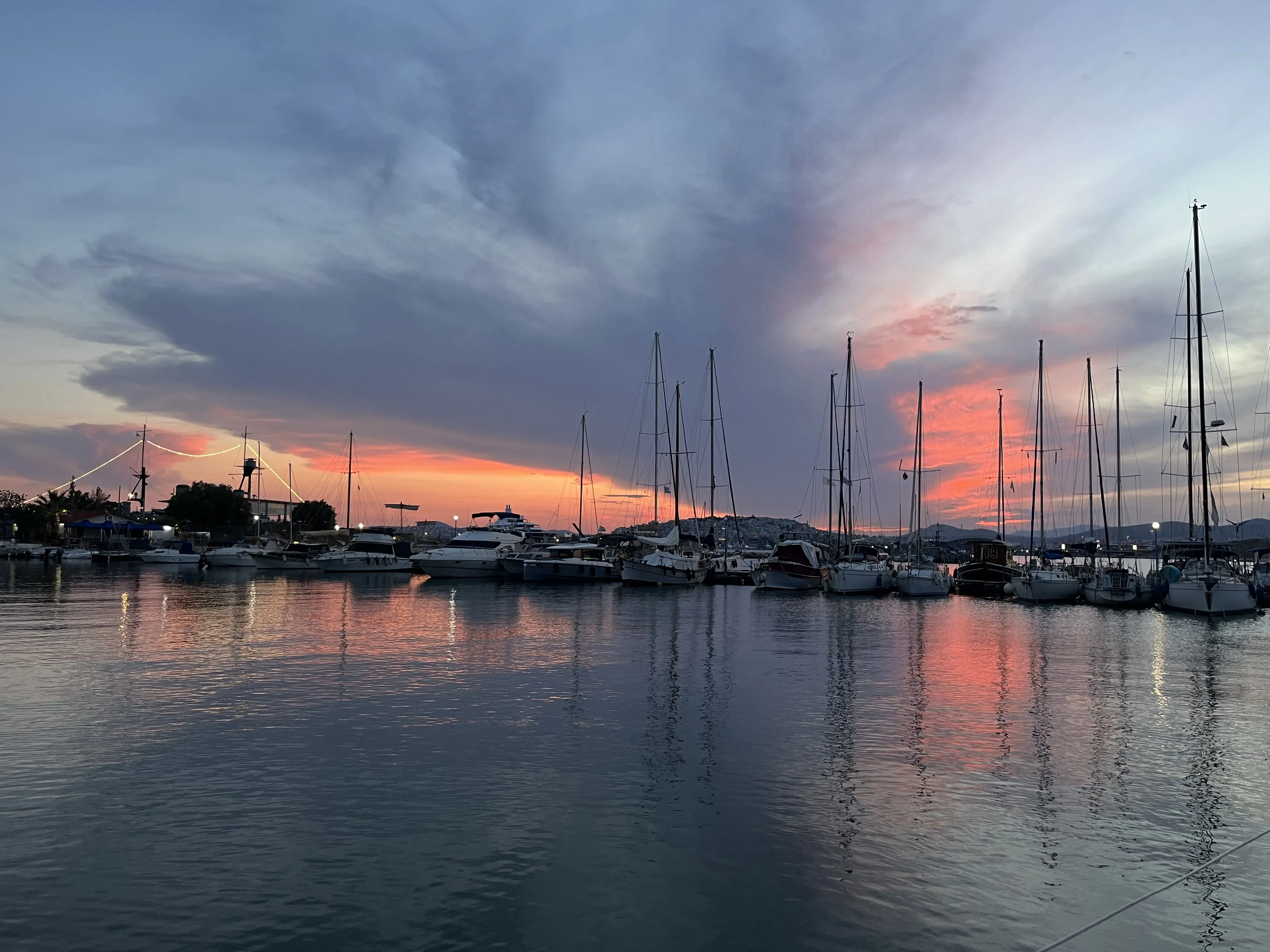
This is perhaps the biggest twist. Before I started the school, when I thought of Greek holidays, my mind went exclusively to the destination: a specific island, a quiet beach, a nice little taverna for the evening.
Now, when I look at a nautical chart, I see something entirely different. I see routes, distances, safe harbors and narrow passages. I see islands that are no longer just dots on Google Maps, but the starting point, an intermediate stop for resupply, or the final destination.
And that's how a new wordplay was born within our group: We used to look for an island. Now we look for a route. The map of Greece doesn't change· the way you look at it changes radically.
From «where will we go?» to «where will we sail?»
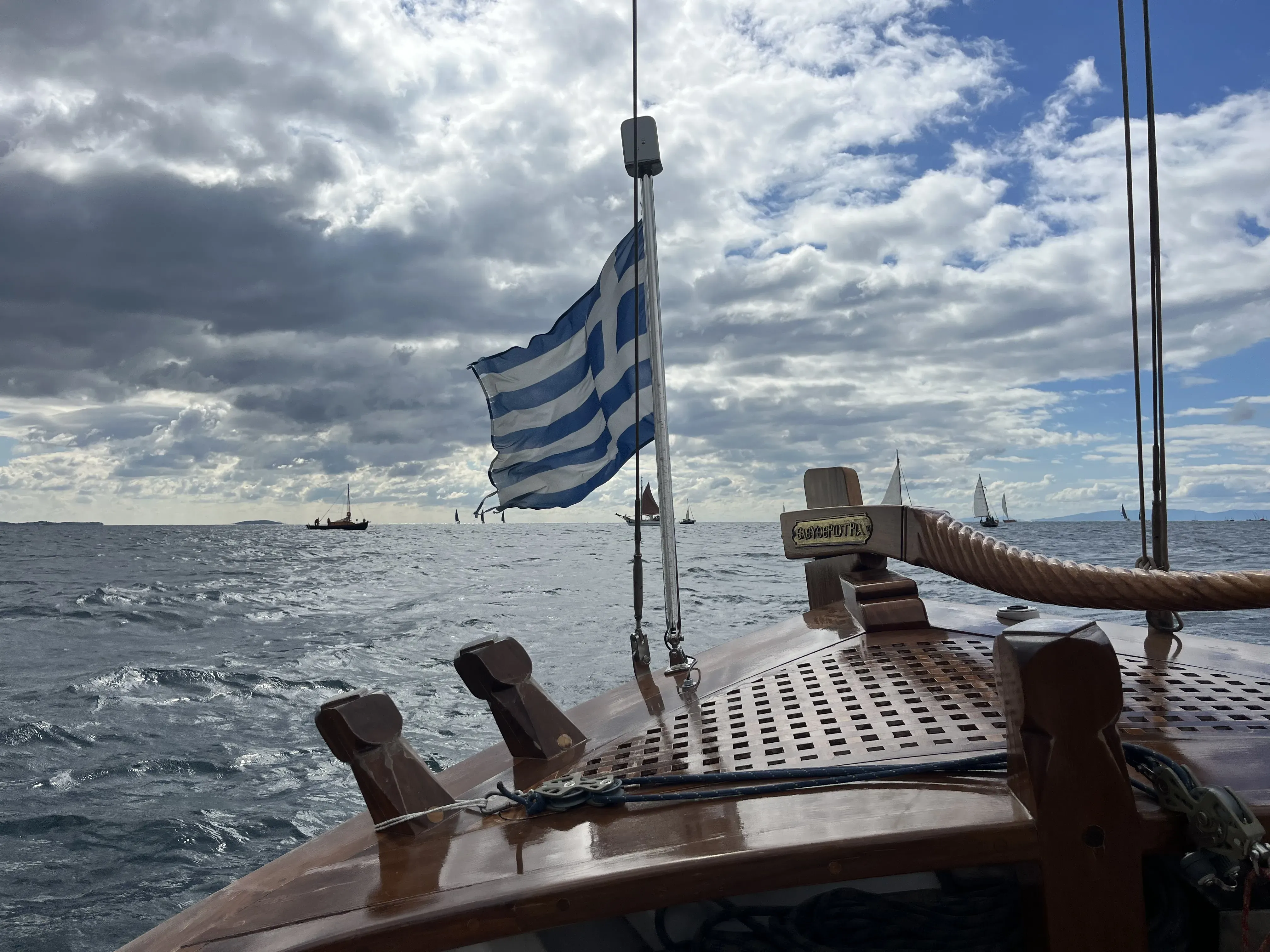
The question for the next holidays transforms. And the difference is huge.
Of course, the sea demands absolute respect. It calls for knowledge, proper planning, continuous weather checks, preparation and responsibility. This is, after all, one of the most important lessons you get through training at NOAM. Freedom at sea doesn't mean you do whatever comes to mind; it means you've learned enough to be able to make the right decisions. And that's exactly what makes the feeling of freedom even greater.
Suddenly, the map fills with options. Islands that until yesterday were just isolated names suddenly acquire a relationship between them. They become parts of a single, living route. You stop dreaming only of the place you'll reach and start enjoying everything that happens until you drop anchor - from destination to destination.
The license is only the beginning
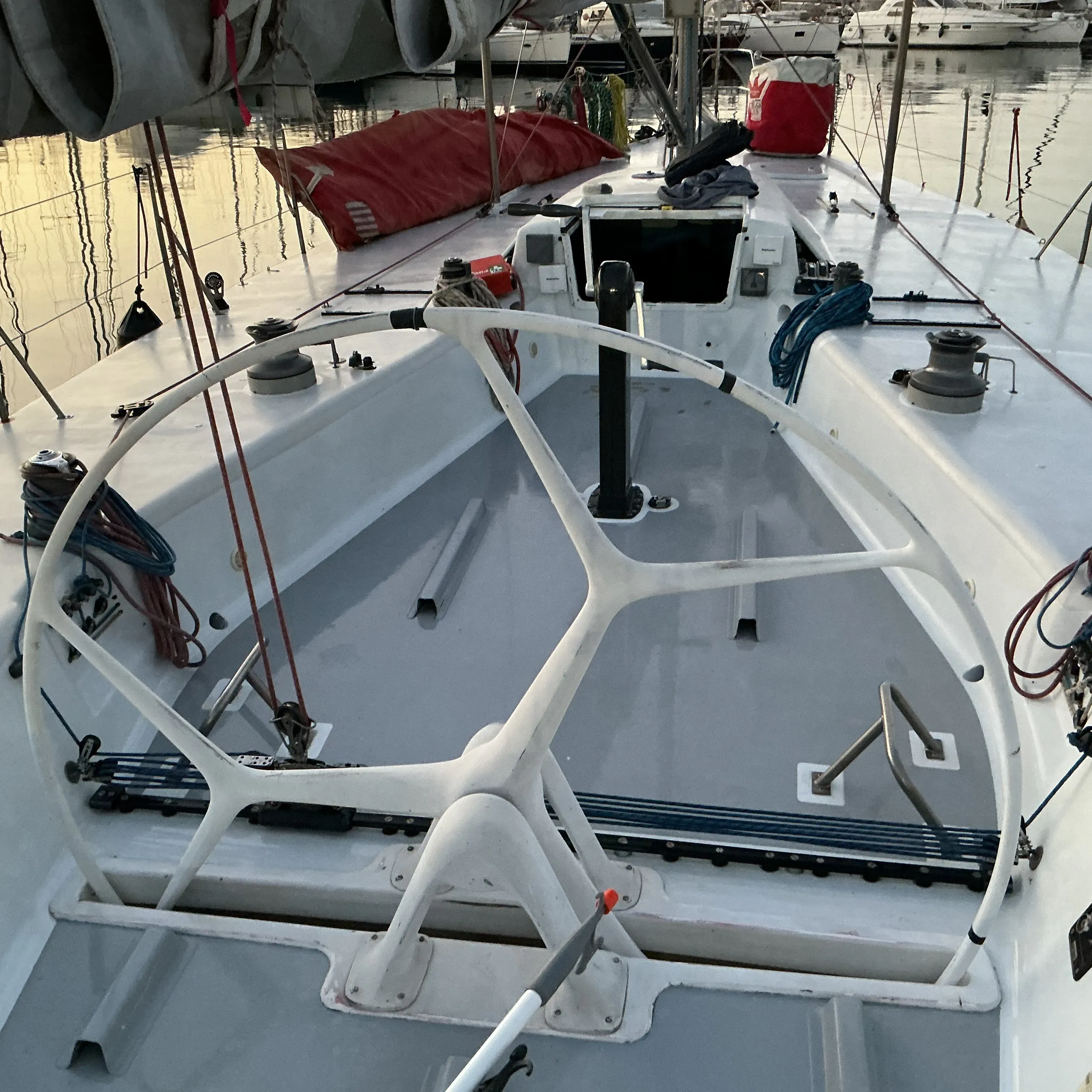
When you start out, it's very easy to get stuck on the idea of the license. But as Sundays on Oceanos II go by, you realize the license is more of a starting point than a finish line. Sailing doesn't stop when the course is completed. That's exactly when the good stuff begins: different conditions, longer passages, the weather's surprises and the need to become one with the sea.
And there's something else I particularly love about this activity: it doesn't have a strict expiration date. It's not one you leave behind because you grew up. On the contrary, it can follow you for decades, evolve with you, and remain a way to be at sea for years, at different ages and in different ways.
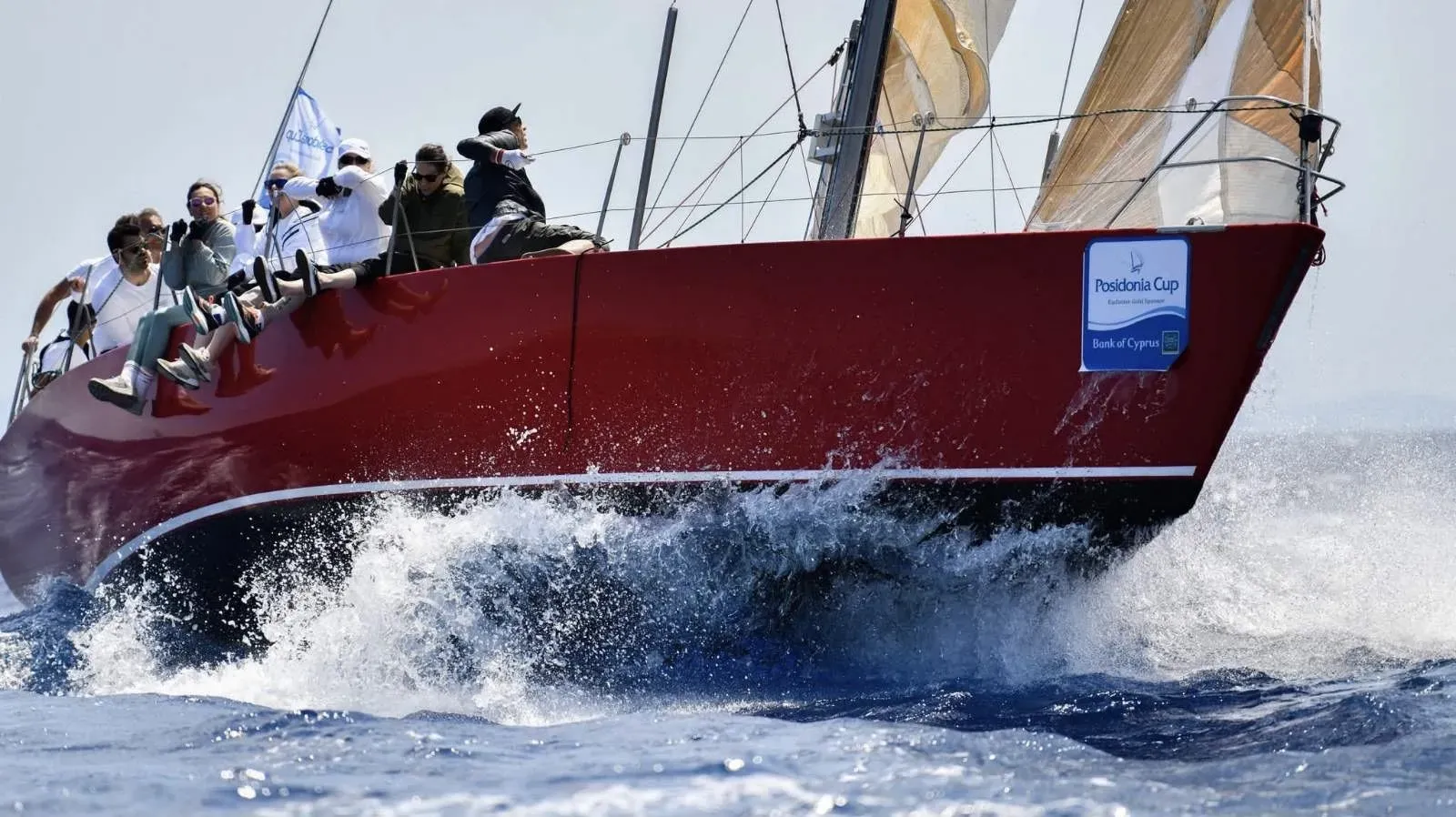
And of course there's another dimension that carries particular weight these days. When you let the wind do a large part of the work, the journey takes on a different environmental footprint, as you limit the need for mechanical propulsion and, with it, fuel consumption during the voyage. And when you start to understand how the movement of the air, the forces on the sails and pressure differences can move an entire boat, together with its behavior in the water, the experience takes on an almost philosophical dimension. You don't try to impose yourself on natural phenomena. You learn to cooperate with them. And honestly, what could be more beautiful than using nature's power not to overcome it, but to travel with it?
The best part? At NOAM, even if you're not ready to rent your own boat (or if your piggy bank disagrees), you don't stay in the shallows, nor does anyone leave you mid-sea. You always have the chance to attend extra practice lessons (at no charge when there's a gap in the new sections), or to "sneak" into some of the many activities and races the club organizes all year round. In short, you don't get untangled easily – fortunately.
And the next holidays?
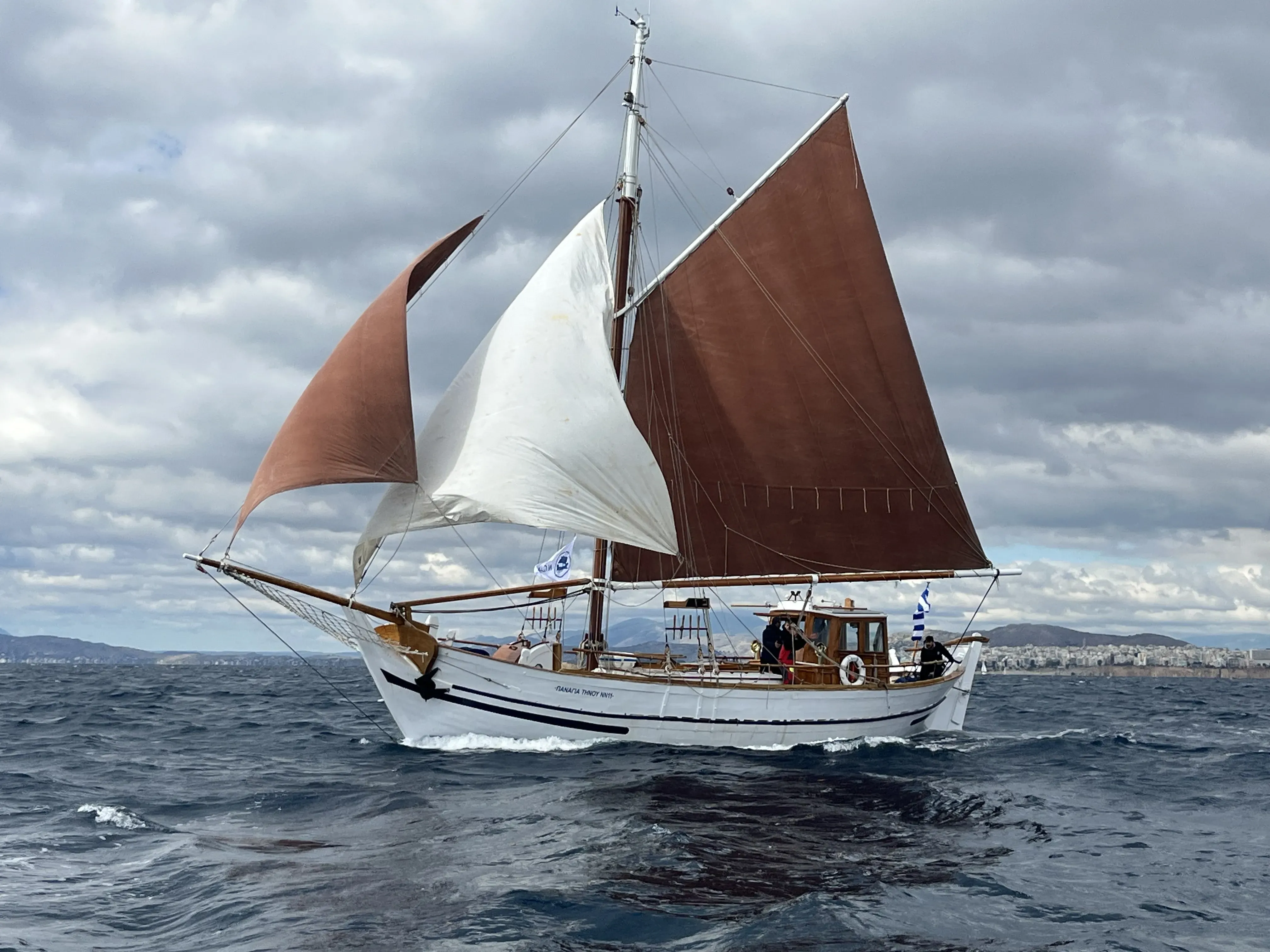
I still don't know exactly where next summer will take us. Maybe the route will change, maybe the weather will spoil our plans, maybe a beloved island we've already visited ten times will this time be just a short stop for a few hours, and maybe we'll end up somewhere completely unpredictable.
And that's the whole beauty. For the first time, when we talk about summer, the conversation isn't trapped in a single name. Instead, a map opens, and with it dozens of possibilities unfold. A sailboat, a handful of islands, a group of people and the open sea between them. Do you want anything else?
So put on sunscreen, grab a jacket (because the Saronic has a mind of its own) and get ready to change forever the way you see summer (and not only).
See you on the seas!


