





If youre looking for a different destination to celebrate Carnival, with music, food and age-old customs lost in time, then its worth taking a trip to Ioannina.
As in every region of Greece, Ioannina has its own customs to celebrate Carnival.Customs linked to the area’s traditions thatvanish into the depths of the centuries and are revived each year in a distinctive way. The«Tzamales», a unique custom with a long history,are a great reason to find yourself in the pride of Epirus over the Clean Monday long weekend.
The Tzamales in Ioannina
The Tzamales are the distinctive neighborhood Carnival celebration that is revived every year in Ioannina. In the square of each neighborhood, inside a circle of sand, logs and small tree trunks are placed and a fire is lit that burns until the morning of Clean Monday. Around the tzamales, a big all-night revelry unfolds with dancing, wine, and warm bean soup. Costumed revelers dance around them in double and triple lines until the early hours. The neighborhoods thus compete to see which one will host the best Carnival party.
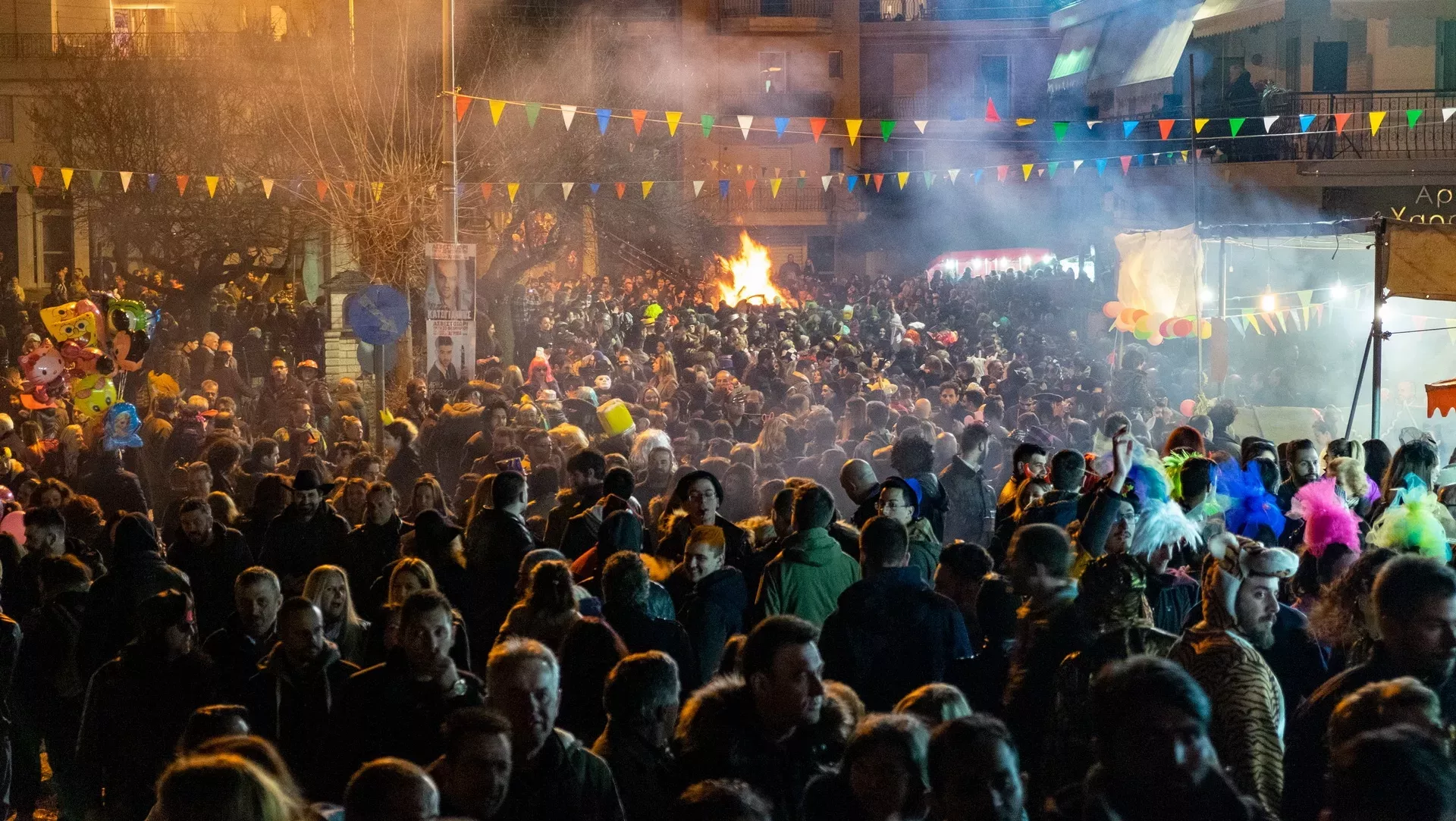
Every neighborhood in the city and every village in the Prefecture of Ioannina has its own tzamala. The most popular Tzamales are those of Karavatia, the Castle, in Lakkomata, in Platanakia and in Loutsa. The most popular with visitors and locals is the fire inside the castle. From early afternoon until late at night, young women and men first dance traditional dances and later turn the area into an open-air club. Beyond the castle fire, it’s worth a stroll to the other fires too. After all, almost all of them are within easy walking distance.
What to do in Ioannina
But Ioannina is not only the Tzamales. The Clean Monday long weekend is ideal for exploring the capital of Epirus, a city that blends history and traditions with fun and nightlife. In Ioannina there are so many options that you won’t have a single free hour over your long weekend.
Lake Ioannina
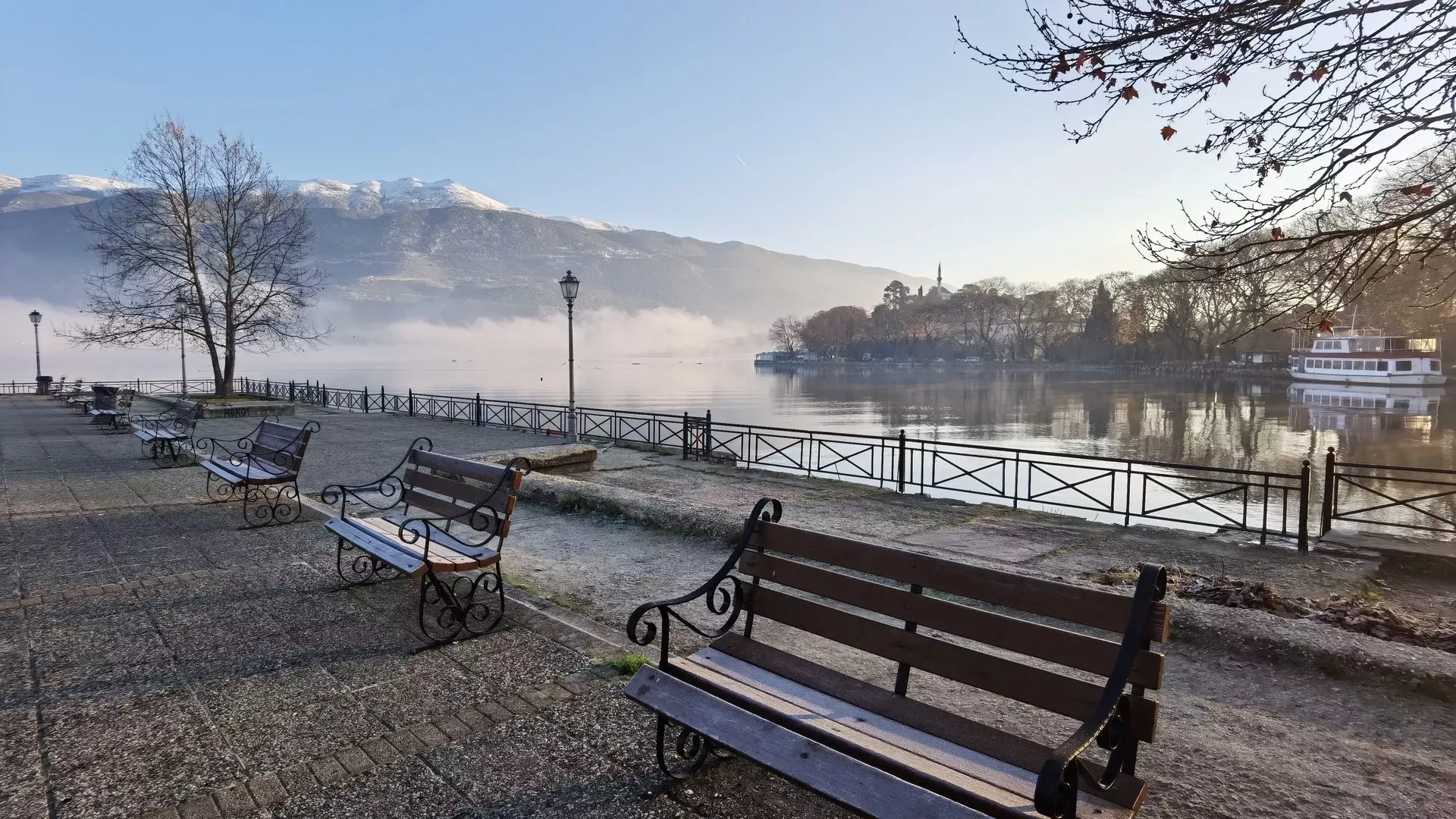
A stroll by the lake of Ioannina is the ideal way to start discovering the city. Stop for a coffee at traditional cafés with views of Lake Pamvotida, one of the country’s few urban lakes. After you enjoy the view, you can then walk along the wide pedestrian promenade on the lakeside road. It is perhaps the most popular area for visitors, and it is also the route that hosts thousands of residents all year long out for their walk.
Islet
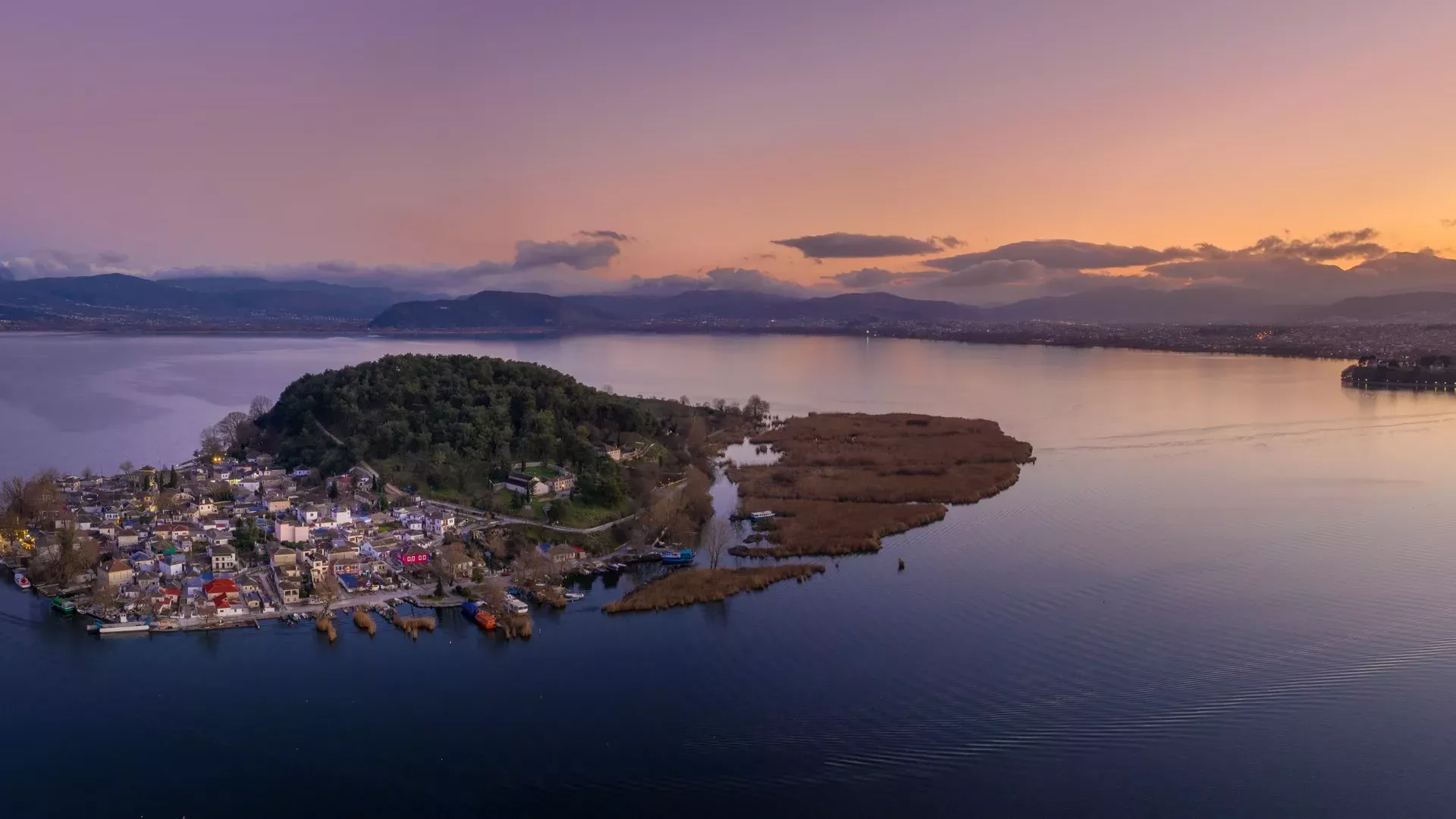
After the walk along the lake, it’s time to take the little boat and find yourself on one of Europe’s few inhabited lake islands - an island with no name! They call it «the island of the lake» or «the Ioannina islet» and it has about 250 inhabitants, a community mainly of fishermen. It is officially designated a traditional settlement, as among other things it is built with devout fidelity to traditional Epirote architecture with its characteristic slate roofs.
Although small, the island has seven monasteries. Beyond the monasteries, the islet has its own distinct history connected with Ali Pasha. In 1820, Ali Pasha came into conflict with Sultan Mahmud II, resulting in Khurshid Mehmed Pasha being sent against him and besieging Ioannina. Ali had stationed on the island a guard of a thousand Albanians, leading Khurshid to bombard it and inflict great destruction. In January 1822, after he had been defeated, Ali fled to the island, to the Monastery of Agios Panteleimon, where he was assassinated. Indeed, on the islet there is also the Ali Pasha Museum. It is worth visiting it and then enjoying a tsipouro in the island’s traditional tavernas. And all this at your leisure, since there is a boat to the islet almost every half hour.
Ioannina Castle
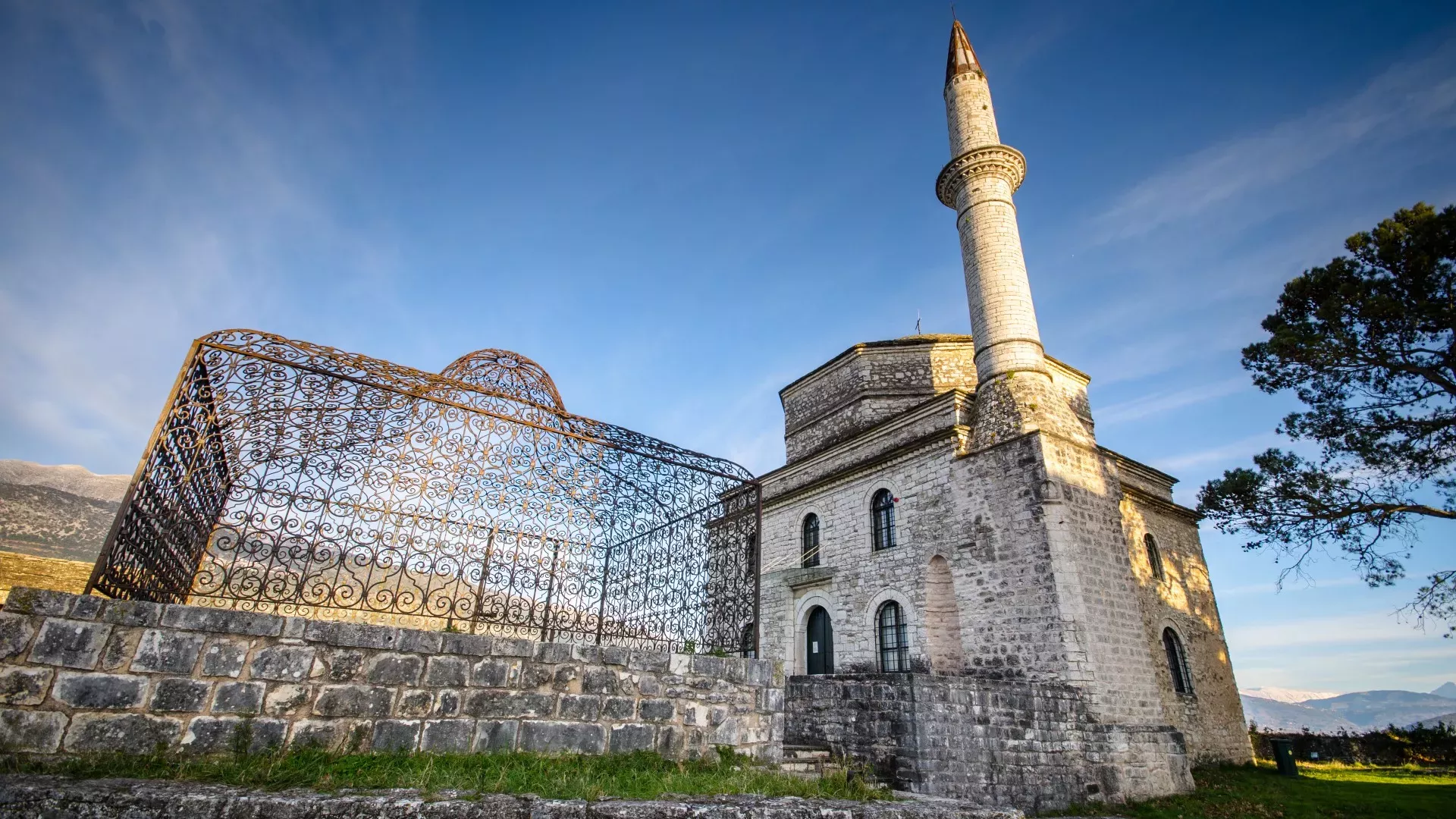
A village within the city. Ioannina Castle is the fortified old town of Ioannina. The present fortification was largely rebuilt by Ali Pasha in the late Ottoman period, but it also incorporates pre-existing Byzantine structures. It is built on the western shore of Lake Pamvotida on a small rocky peninsula, on whose two rises two acropolises are formed. The inhabitants of the Castle have managed to preserve its residential character, and a stroll through the cobbled alleys transports the visitor in mind to another era, when Ali Pasha ruled not only Ioannina, but all of Epirus. The Its Kale acropolis with the 18th-century Fethiye Mosque, with the tomb of Ali Pasha, the Tower of Bohemond, the Silversmithing Museum and the Byzantine Museum, as well as the imposing Soufari Serai, where Ali Pasha’s cavalry school once operated and today houses the building of the G.A.K. – Historical Archive of Epirus, are some of the monuments a visitor will see.
Perama Cave
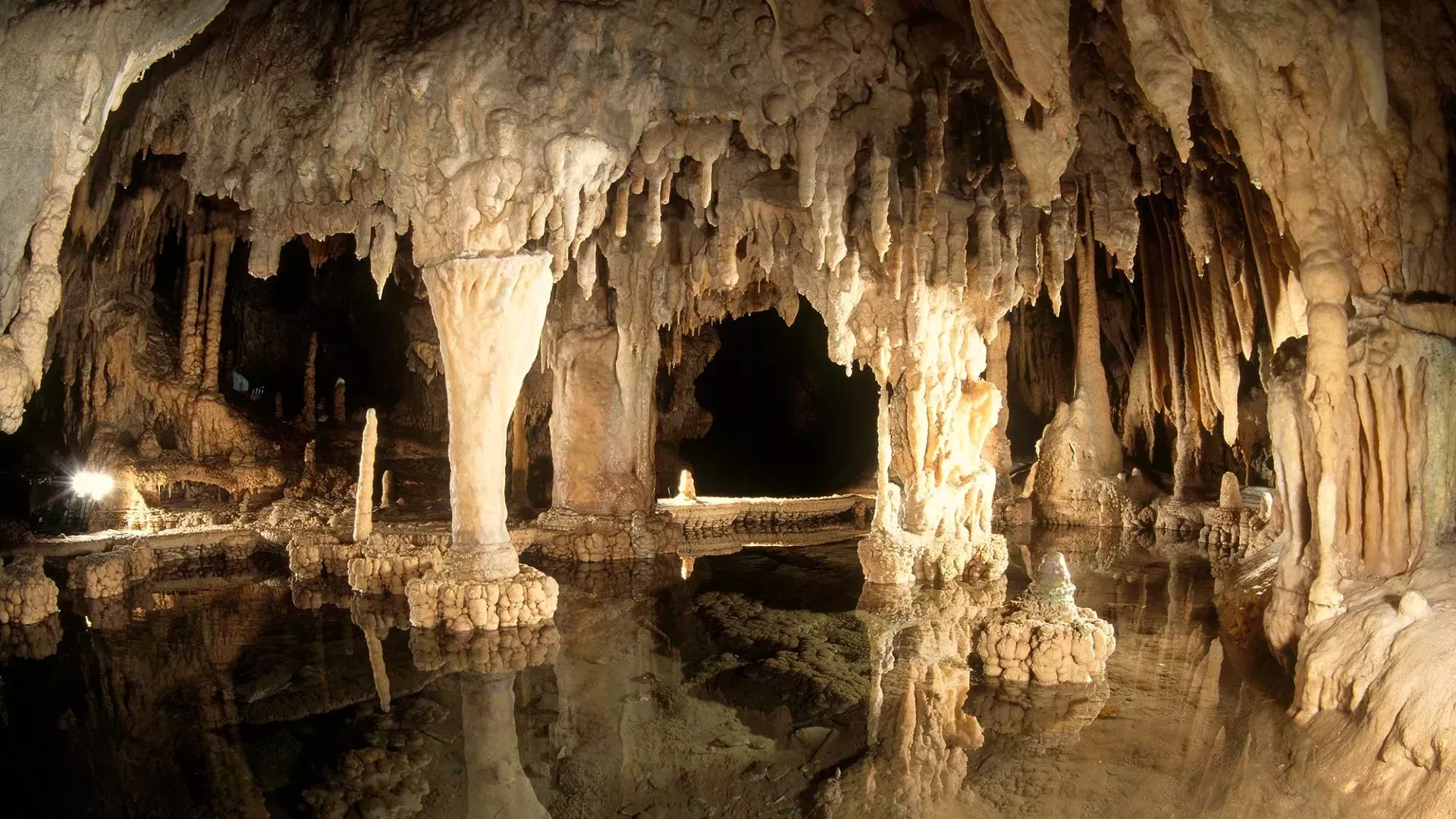
Perama Cave of Ioanninais just five kilometers from the center of the city of Ioannina, in the suburb of the same name, Perama, on Goritsa Hill. It was discovered by chance in 1940, during World War II. It consists of many successive chambers and corridors with stalactites, stalagmites, draperies, and impressive columns in clusters. In 1956, fossilized teeth and bones of the cave bear were found. It covers an area of 14,800 sq.m. and the visitor route is a total of 1,100 meters, while the temperature remains steady at 18°C. Some parts of the cave are lit with various colors, offering an impressive spectacle. Also, somewhere along the route there is a small pond, where sceneswere filmed for the movie «Astero» with Aliki Vougiouklaki. The guided tour lasts 45 minutes and the ticket costs 7 euros.