





A journey to Armenia, a country with a rich history and tradition, majestic mountains, tranquil lakes and ancient monasteries, offers scenes that stay with you forever.
Armenia is a destination that wins you over at first glance and surprises you along every route. With a population of 3 million it lies in the South Caucasus, bordering Georgia and Azerbaijan to the north and Iran and Turkey to the south. It is considered one of the world's oldest nations and states, with a history spanning over 2,500 years.
It was the first country to adopt Christianity as an official religion in 300 AD. A country small in size but full of grand images: imposing mountains, deep valleys, serene lakes, ancient monasteries - silent witnesses to a story that travels through the centuries. A place that doesn't reveal itself all at once, but invites you to discover it route by route.
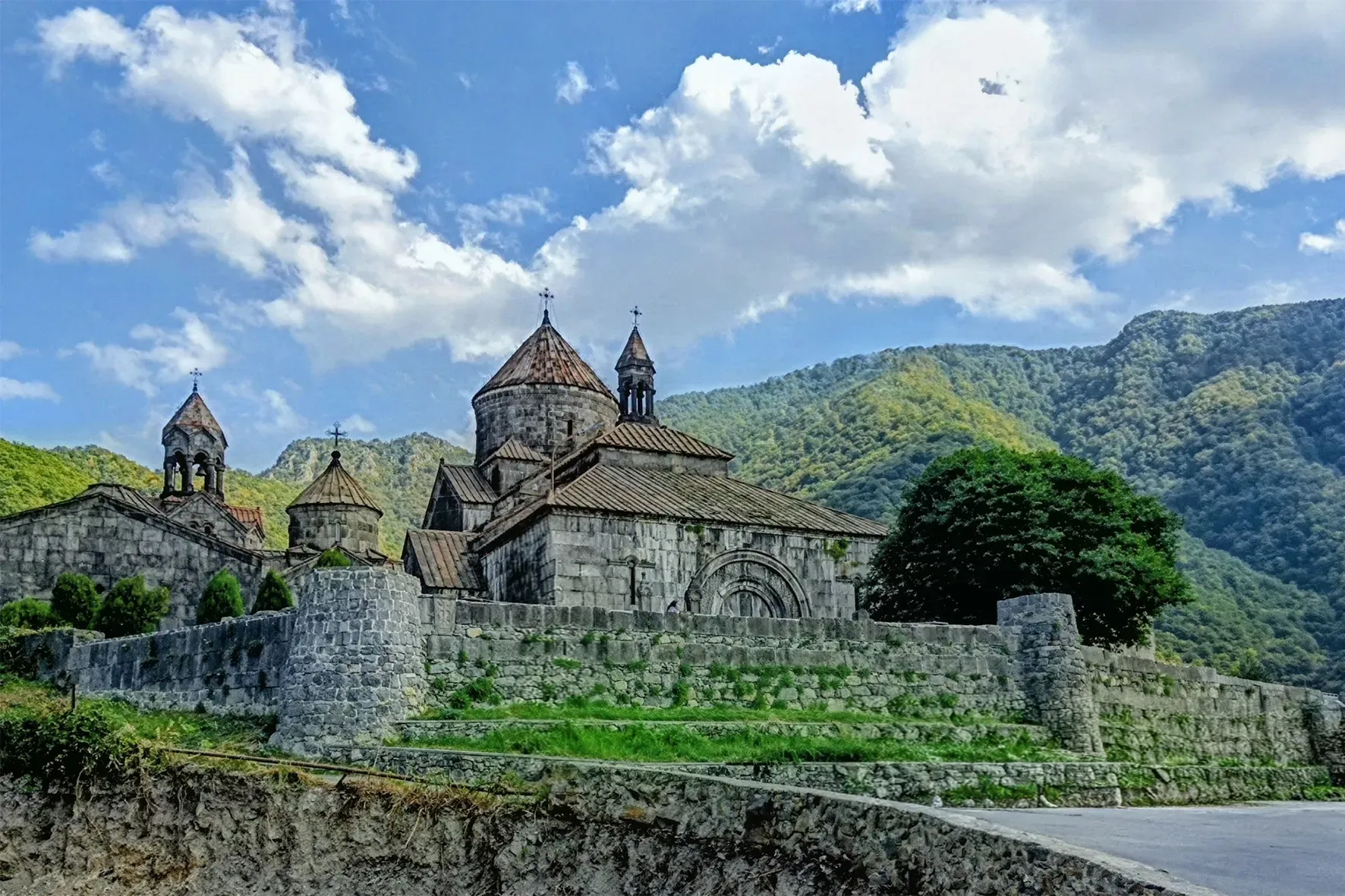
Leaving Georgia behind, the road continues south and leads us into Armenia. Upon arrival at the border we change car and, with Arman as our driver, head to Dilijan. Beforehand we stop at the imposing 10th-century Haghpat Monastery, one of the country's most important medieval monuments in a dramatic mountain landscape, which was an important spiritual and cultural center of medieval Armenia.
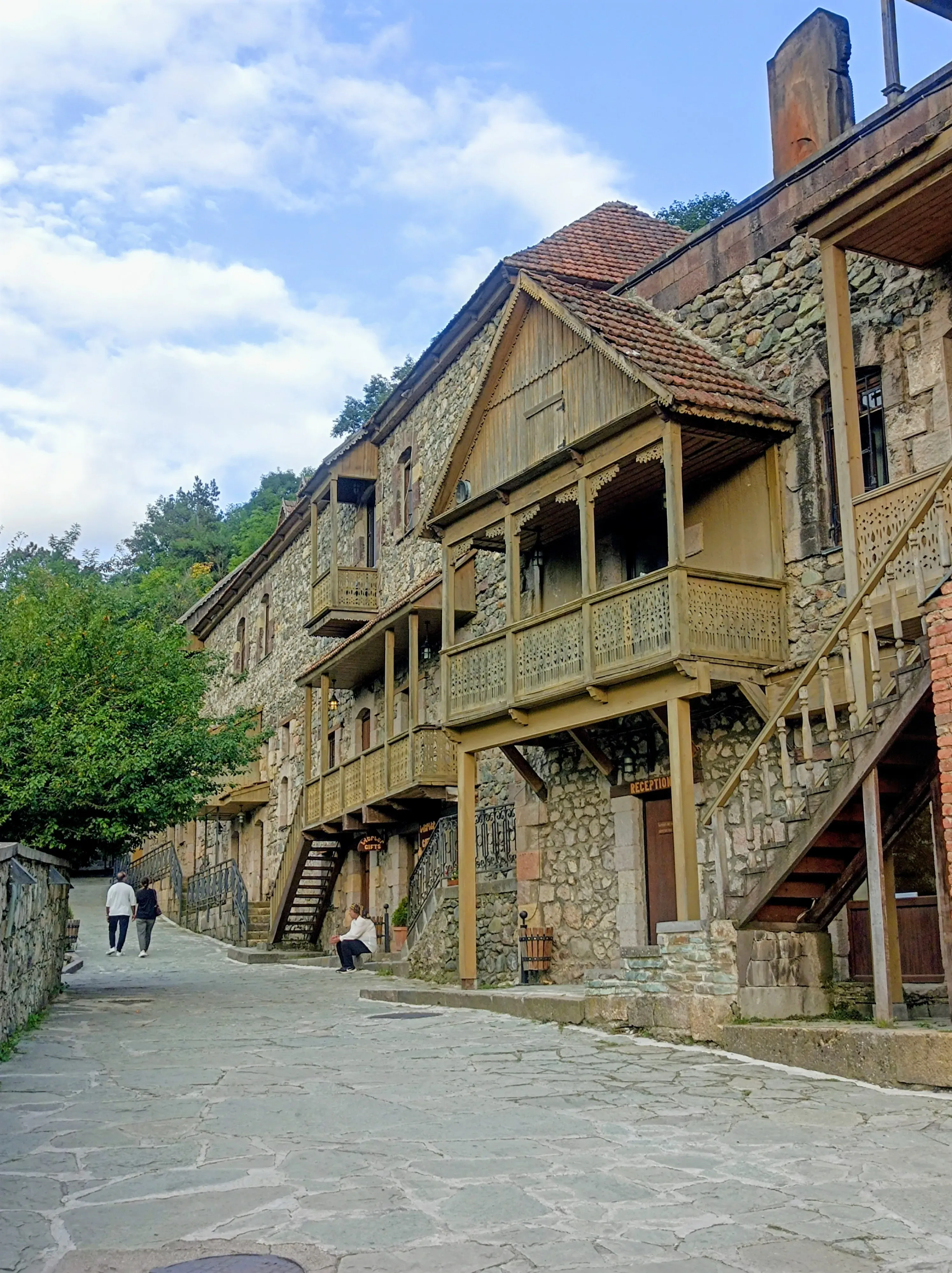
In the afternoon we end up in a small atmospheric loft in Dilijan, nestled amid the greenery and calm of the forest. We drop our backpacks and head straight out to get to know the town. Nestled among dense forests and mountains, it's considered one of Armenia's most beautiful resorts, with traditional Armenian architecture. In Dilijan, often called the "Armenian Switzerland", many Armenian visual artists, composers, and filmmakers reside.
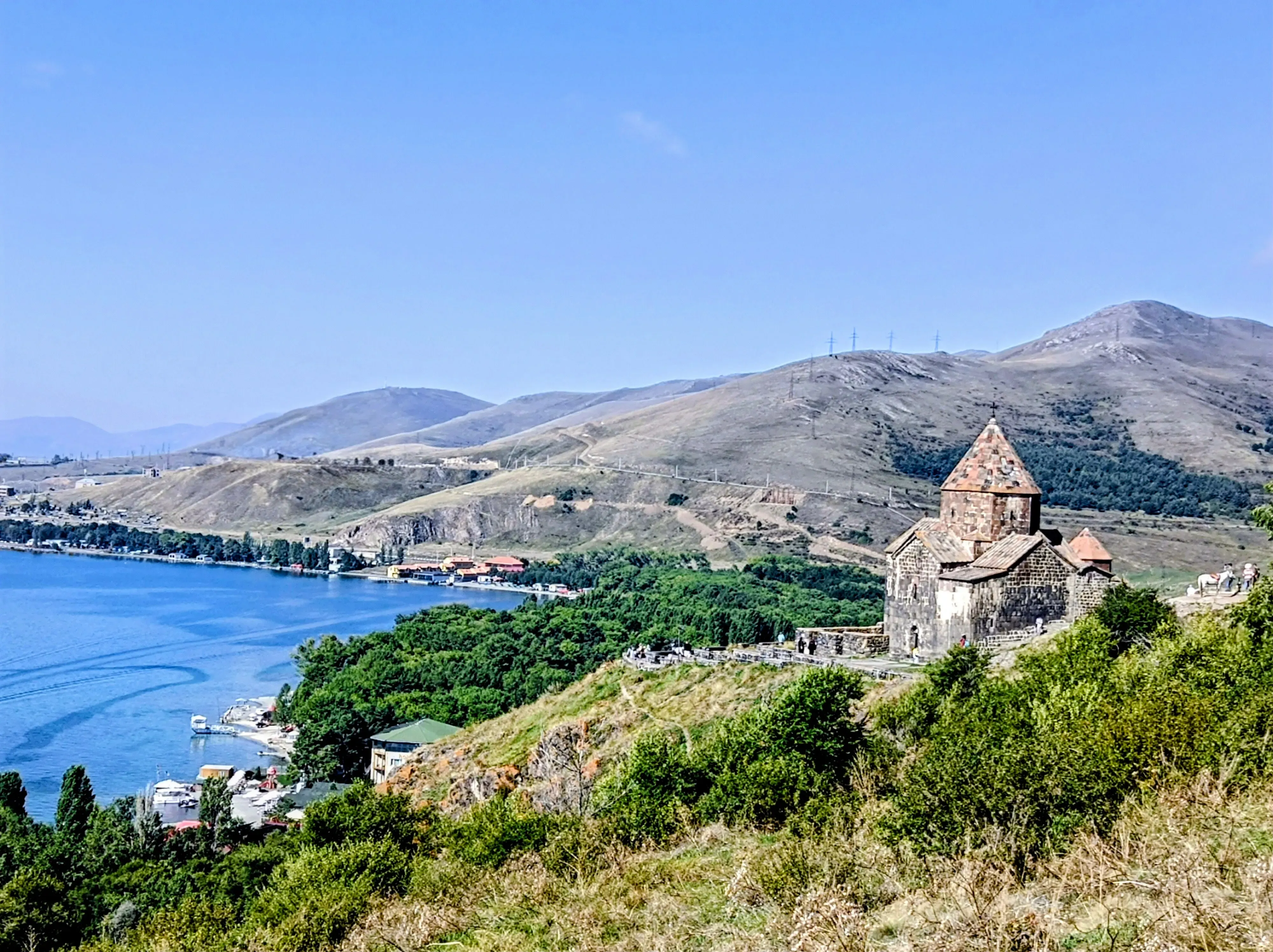
In the morning we continue our journey, with the first stop the beautiful Lake Sevan with its crystal-blue waters. It's considered the largest lake in the Caucasus and lies 1,899 m above sea level, into which 28 rivers flow. Around the lake there are two lovely monasteries from the 9th and 12th centuries with stunning views: Hayravank Monastery and the historic monastic complex of Sevanavank.
We continue on and make a stop at the Noratus cemetery, in the village of the same name on the lake's western shores, known since medieval times. Here we see some of the most beautiful khachkars — the Armenian carved cross-stones, each of which tells the story of the person buried there.
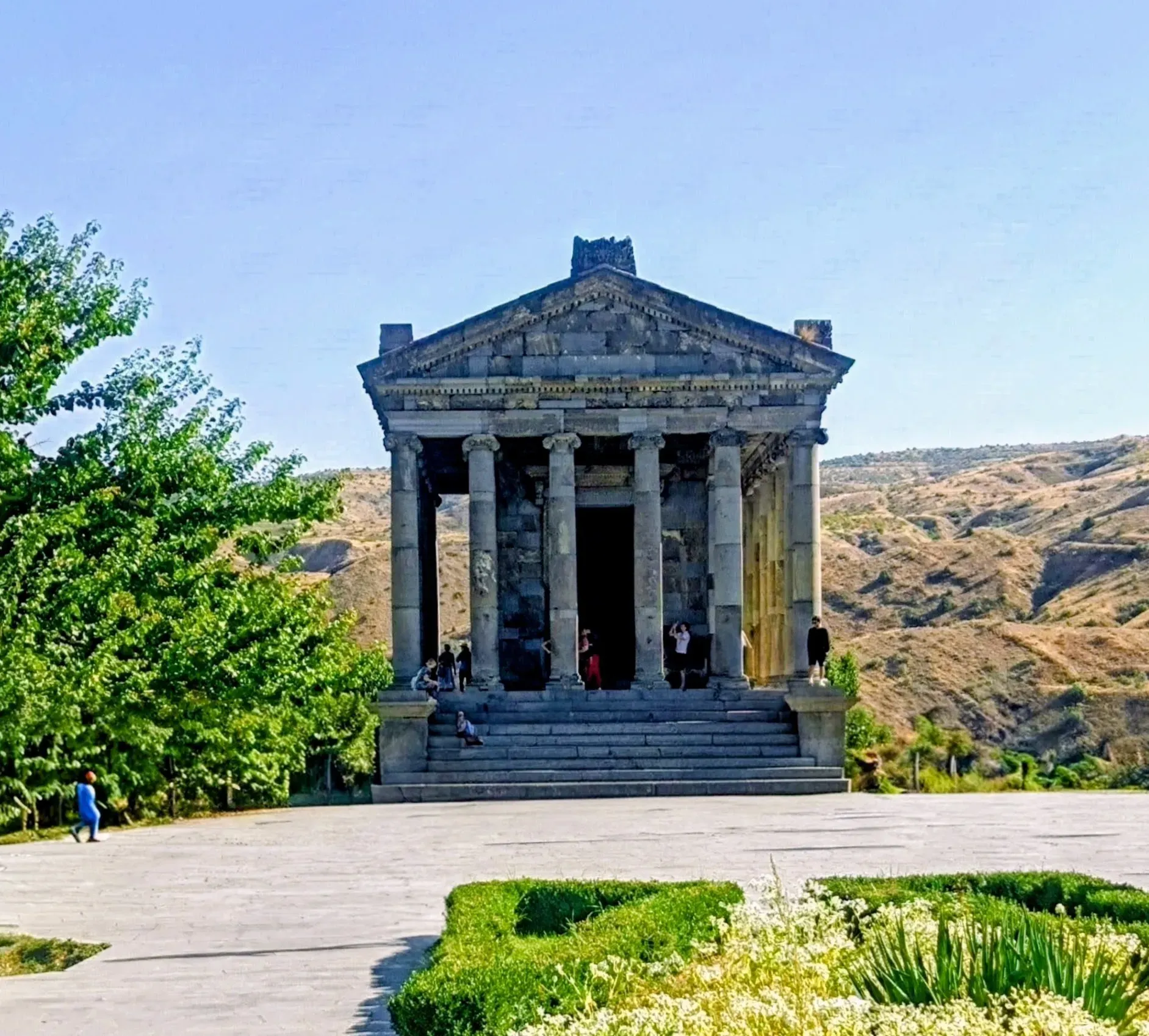
Next stop, the pagan Temple of Garni, a classical Hellenistic temple located near Armenia's capital, Yerevan. The pagan temple is dedicated to the Sun God Mihr and was built in the 1st century by King Tiridates I of Armenia, who had Persian (from his father) and Greek (from his mother) ancestry.
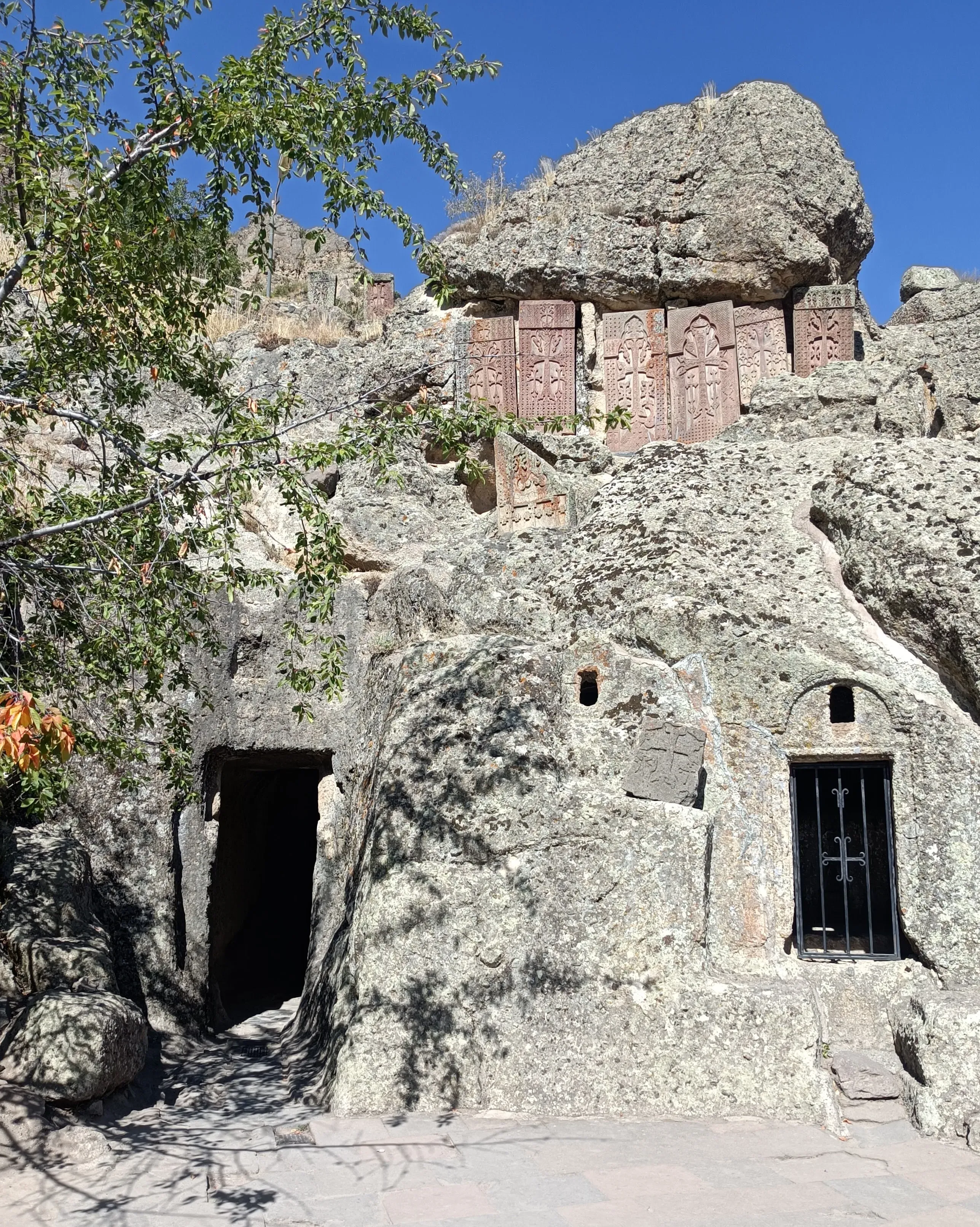
Our last stop today, before reaching Yerevan, is the 4th-century Geghard monastic complex, which was included on the UNESCO World Heritage List. The monastery stands at the entrance to the Azat Valley and is surrounded by cliffs. What makes it special is that many of the churches and many of the tombs are hewn into the rock, showcasing Armenian medieval architecture at its best. We end up in Yerevan, also called the "pink city" because of the color of the volcanic rock "tuff", from which many of the city's buildings are constructed.
Yerevan, in the heart of Armenia
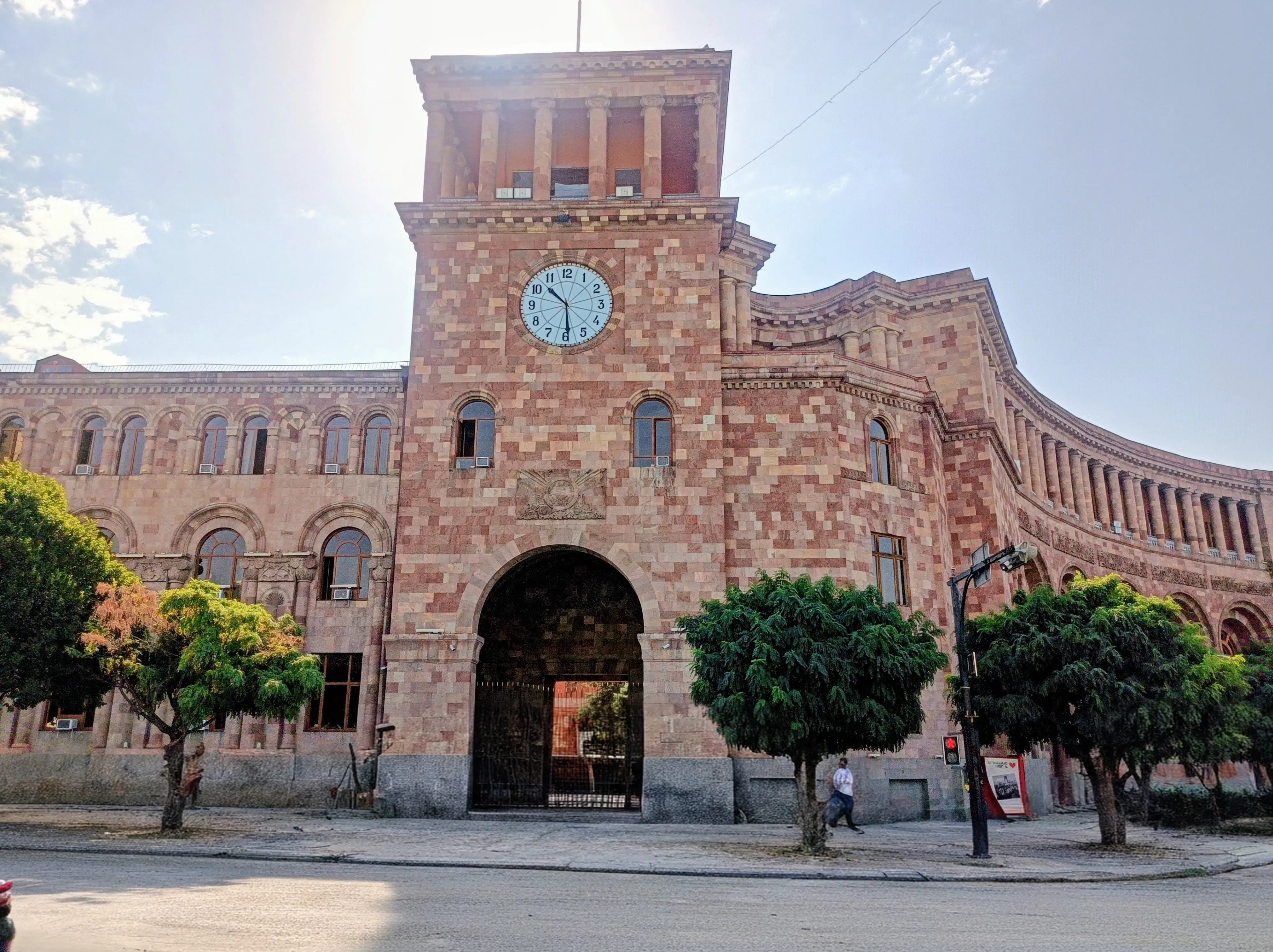
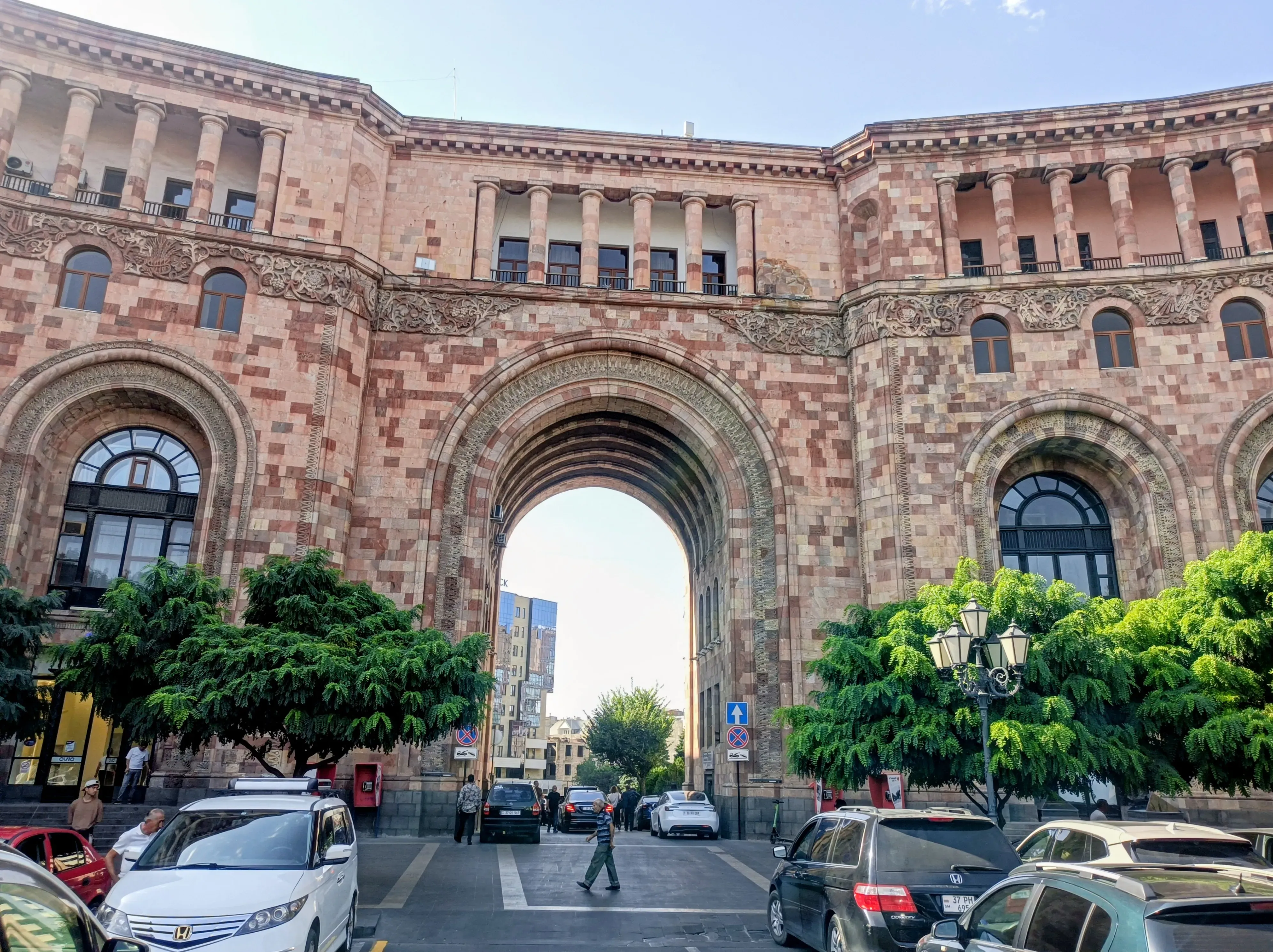
The pink capital welcomes us with lively squares, historic monuments, and the imposing Ararat dominating the horizon. We start our day at Republic Square, formerly Lenin Square, in the city center. The square is surrounded by five large Soviet monumental buildings with a deeply Armenian soul, thanks to Armenian architect Alexander Tamanian, who incorporated traditional Armenian carvings into their facades. In a few days Armenia's Independence Day is celebrated, and the square is full of crews setting up stages and loudspeakers for the city's festivities.
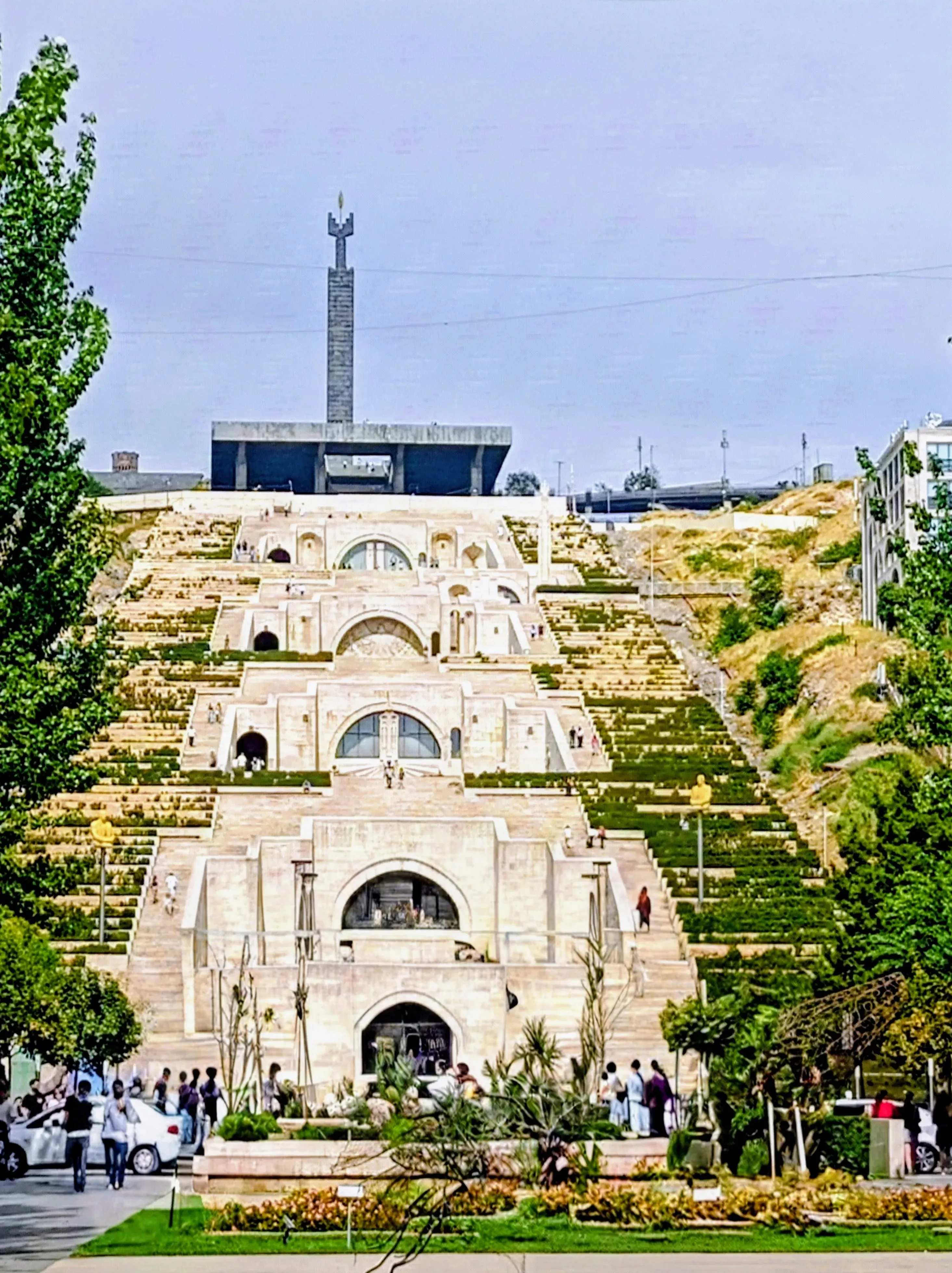
One of Yerevan's most iconic landmarks is the Cascade complex. It's a huge monumental complex with 572 steps spread across five terraces with gardens, fountains, and sculptures by distinguished artists, such as Fernando Botero, ascending the hillside to offer panoramic views over the city and the mythical Mount Ararat. For those who don't wish to climb the 572 steps, there are interior escalators.
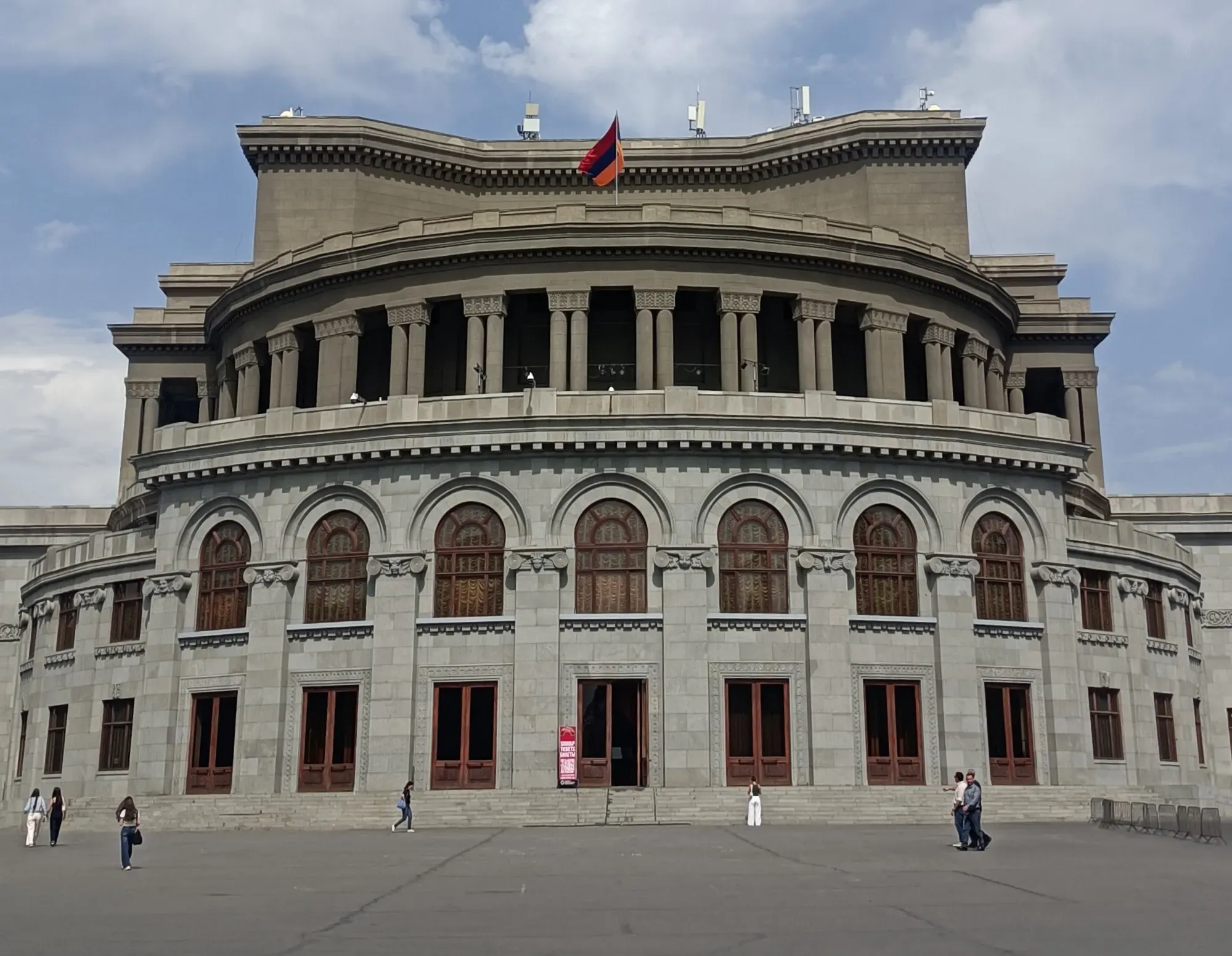
We continue along one of Yerevan's most central streets, Mashtots Avenue, filled with shops of all kinds and cultural institutes. Here stands the "Alexander Spendiaryan" Opera, which is divided into two halls: the Opera and the "Aram Khachaturian" Concert Hall. Two leading names, founders of Armenian classical music.
In general, what I've realized here in Yerevan is that music is deeply bound to Armenian identity and history. For Armenians it's not just an art form, but also a way to keep memory, tradition, and their stories alive. In the evening we go to taste Armenian cuisine. Yerevan offers an outstanding gastronomic scene that blends ancient Armenian tradition with influences from Persian, Russian, and Arab cuisines.
The next day, before leaving the modern city to take the road across the Ararat plateau, we go to visit the Armenian Genocide Museum, which is dedicated to the memory of the victims of the 1915 Genocide. As you walk among photographs, documents, and testimonies of people who lived through the tragedy, the joy of travel gives way to silence and reflection.
On the road to southern Armenia, in the footsteps of the Silk Road
Leaving Yerevan and heading south, we follow the ancient roads of southern Armenia, linked to the trade networks of the Silk Road, along which Marco Polo also traveled. The urban landscape gradually gives way to open plains and the mountain massifs of Mount Ararat, which dominates the horizon.
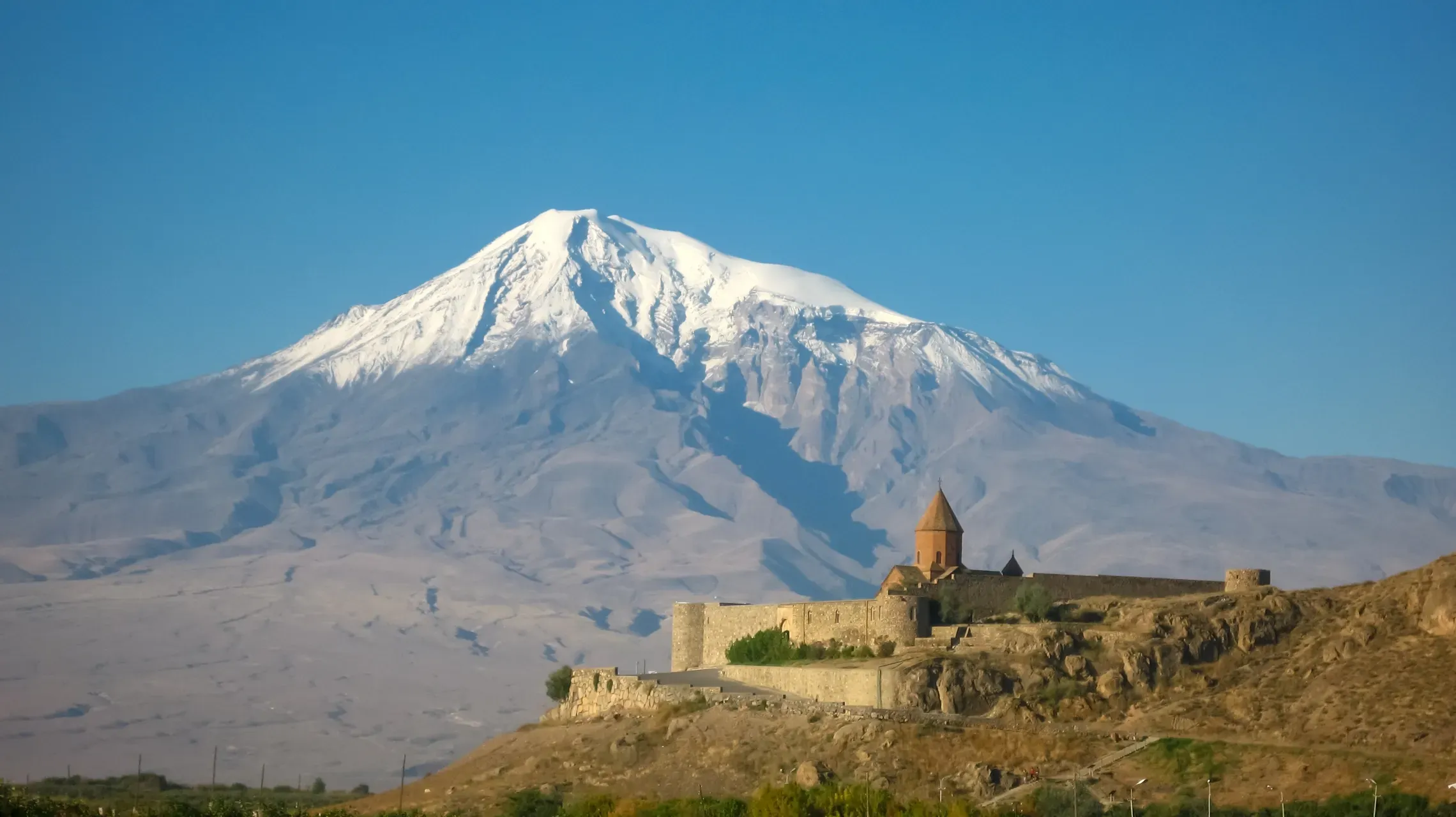
First stop, Khor Virap, one of Armenia's most emblematic monasteries. Nestled close to the biblical slopes of Mount Ararat, which today lies within Turkey's borders, just a few kilometers from the "closed" border with Turkey, it is one of Armenia's most revered Christian sites. It was here that Saint Gregory was imprisoned for 12 years by King Tiridates, who embraced Christianity thanks to Saint Gregory and proclaimed it Armenia's official religion, making the country the first nation in the world to adopt Christianity. Looking around at the landscape, I see Mount Ararat in the distance, veiled in cloud, which I visited on a previous trip to Eastern Turkey.
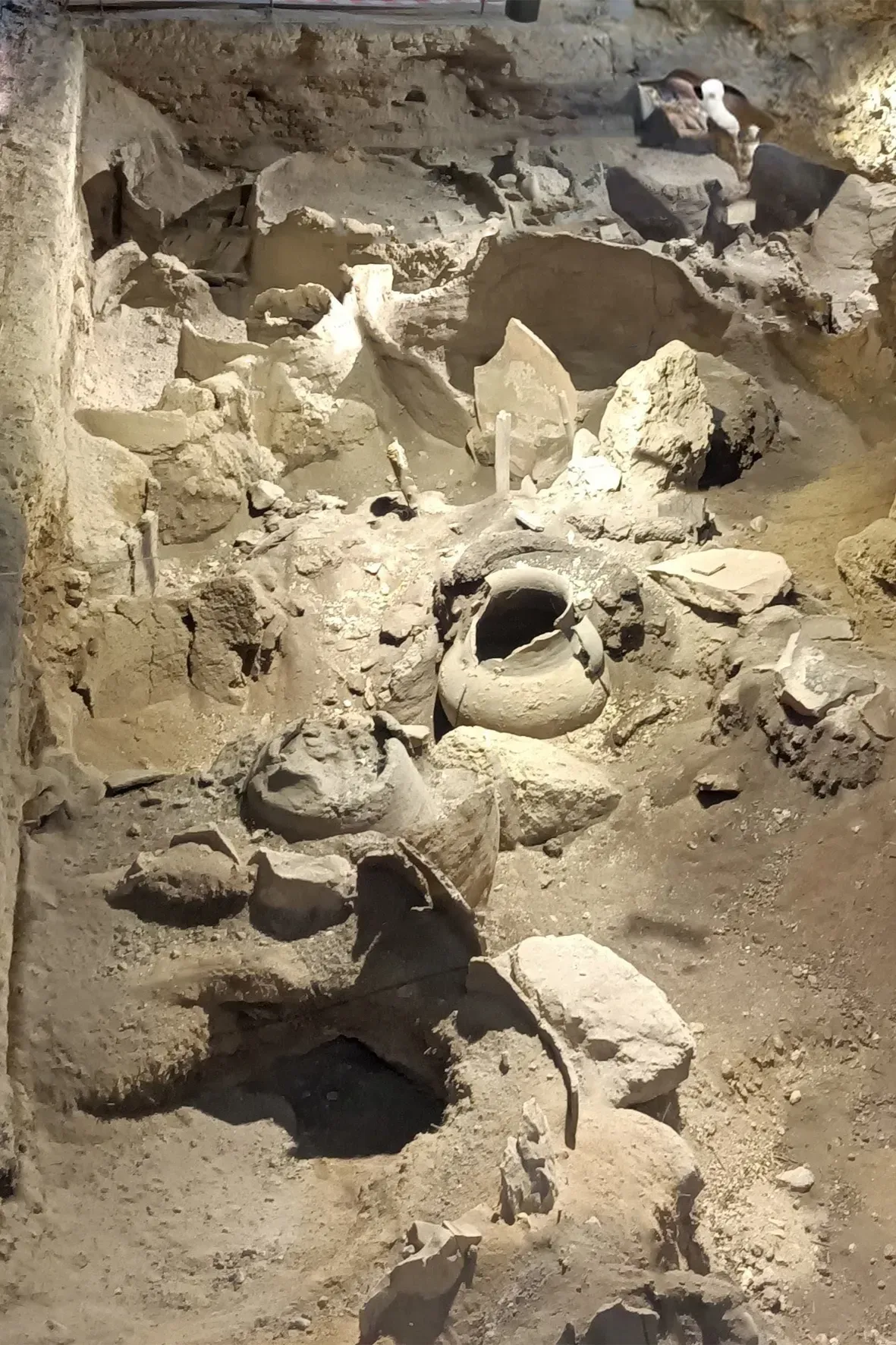
Continuing to Areni, the road winds through impressive gorges and mountain scenery. The area is known for its centuries-old winemaking tradition. The main attraction here is the Areni-1 Cave, where scientists discovered a complete 6,100-year-old winery, including treading vats, fermentation vessels, and storage jars.
At noon we enjoy a traditional Armenian meal in the garden of a family winery, filled with pomegranate trees. The meal consists of lavash (a very thin, soft flatbread similar to a tortilla and made right then), khorovats (pork grilled on the barbecue or spit) and Armenian dolma (vine leaves stuffed with minced meat), all accompanied by different wines.
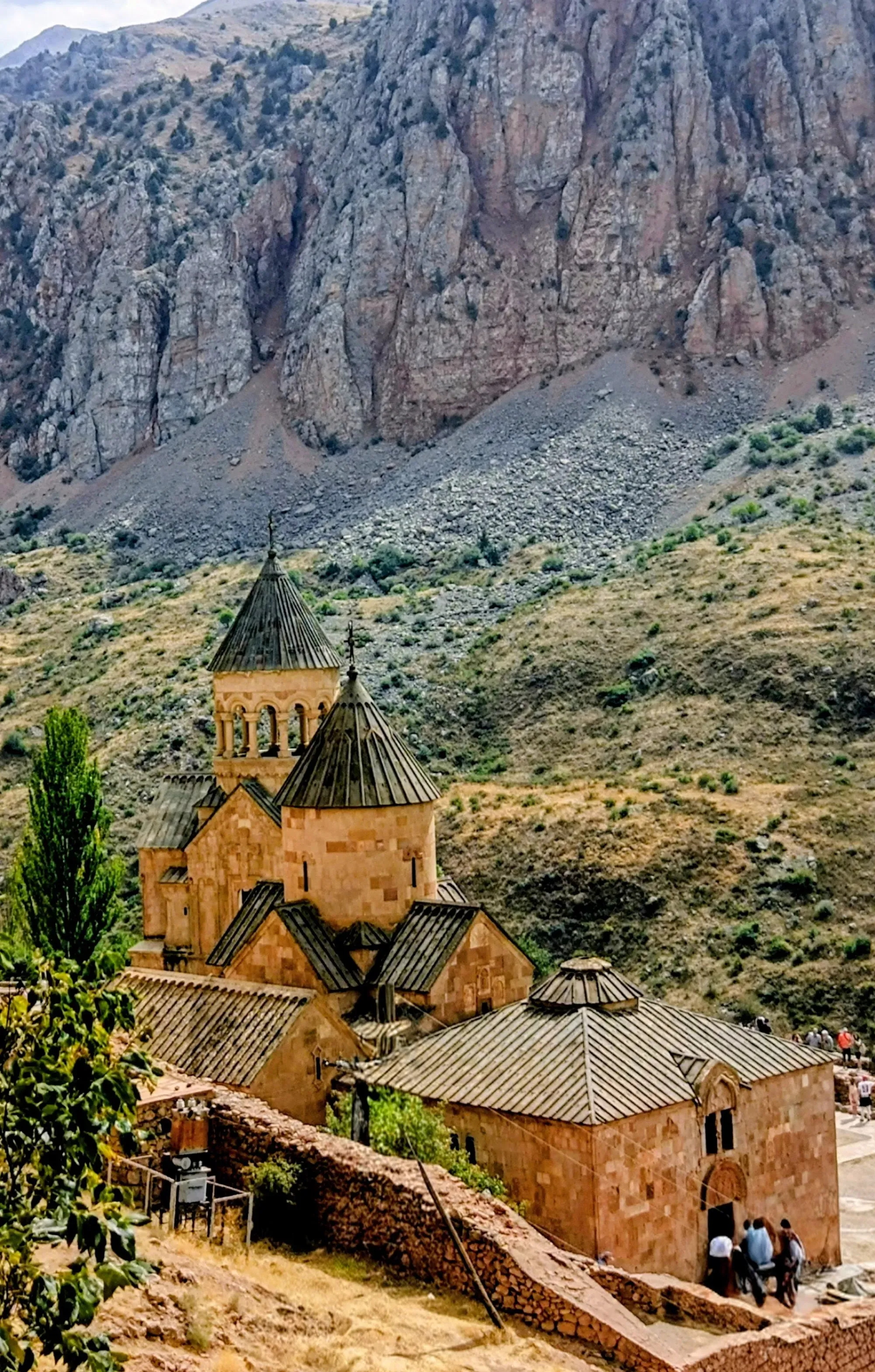
After this wonderful meal, today's journey ends at Noravank Monastery, hidden within an impressive gorge of sheer, deep-red cliffs. My original goal on this road trip through southern Armenia was also to visit Selim Caravanserai, located on the Silk Road and built in 1332 at the Selim mountain pass, which unfortunately I couldn't visit due to landslides in the previous days.
Returning to Yerevan, images from today's route to southern Armenia keep coming to mind. Ararat, the vineyards, the ancient monasteries in gorgeous landscapes make up a dreamlike drive. Late in the afternoon we arrive at our hotel. Though tired, we decide to take a stroll downtown, which is just 20 minutes on foot from the hotel where we're staying.
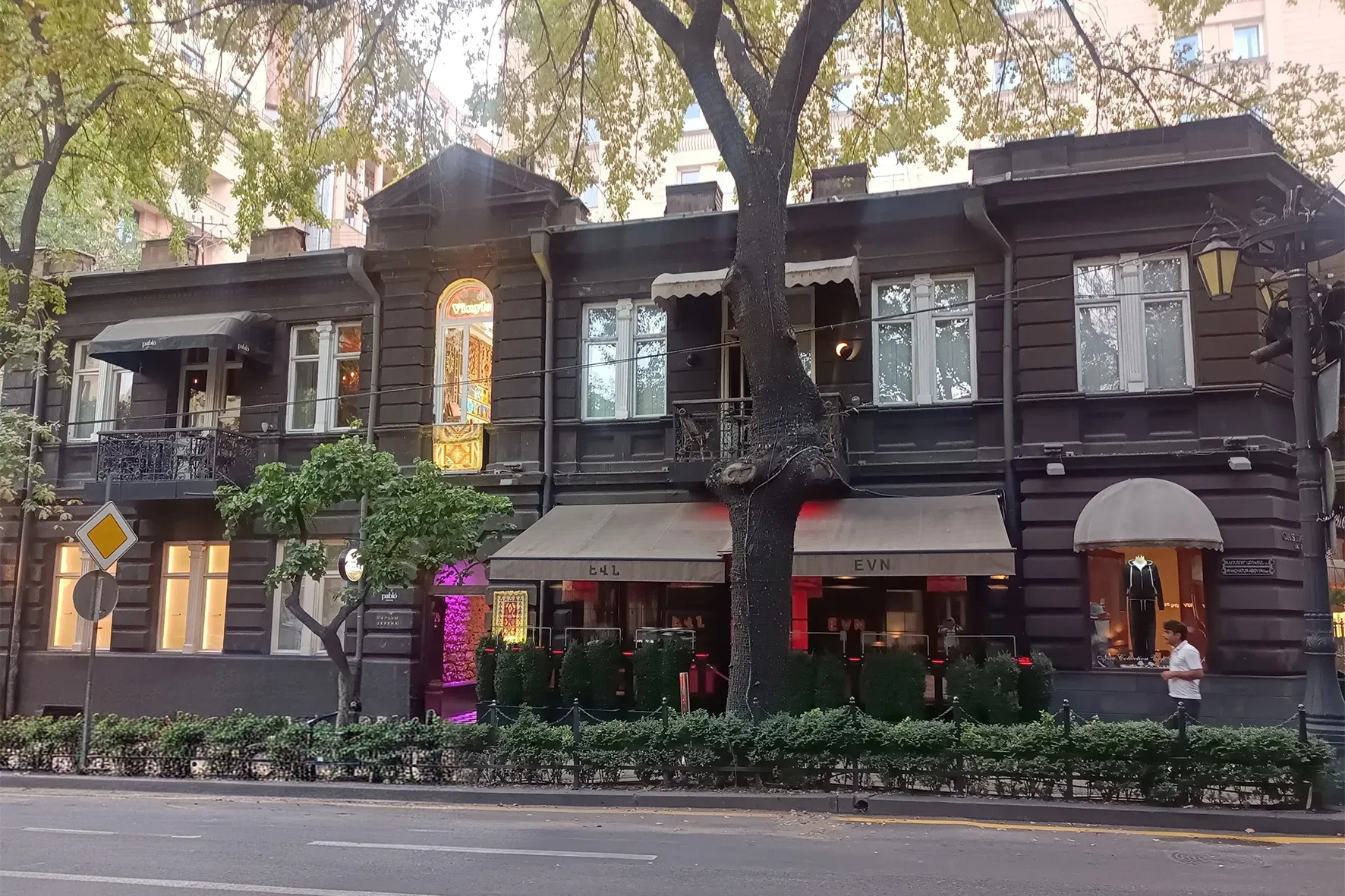
At night the city takes on a different rhythm, with restaurants and cafés with outdoor tables full of people. We walk, enjoying the city lights and watching the singing fountains in Republic Square, as the water dances and music fills the plaza. From Republic Square we climb up historic Abovyan Street, one of the oldest, most lively, and atmospheric streets in central Yerevan.
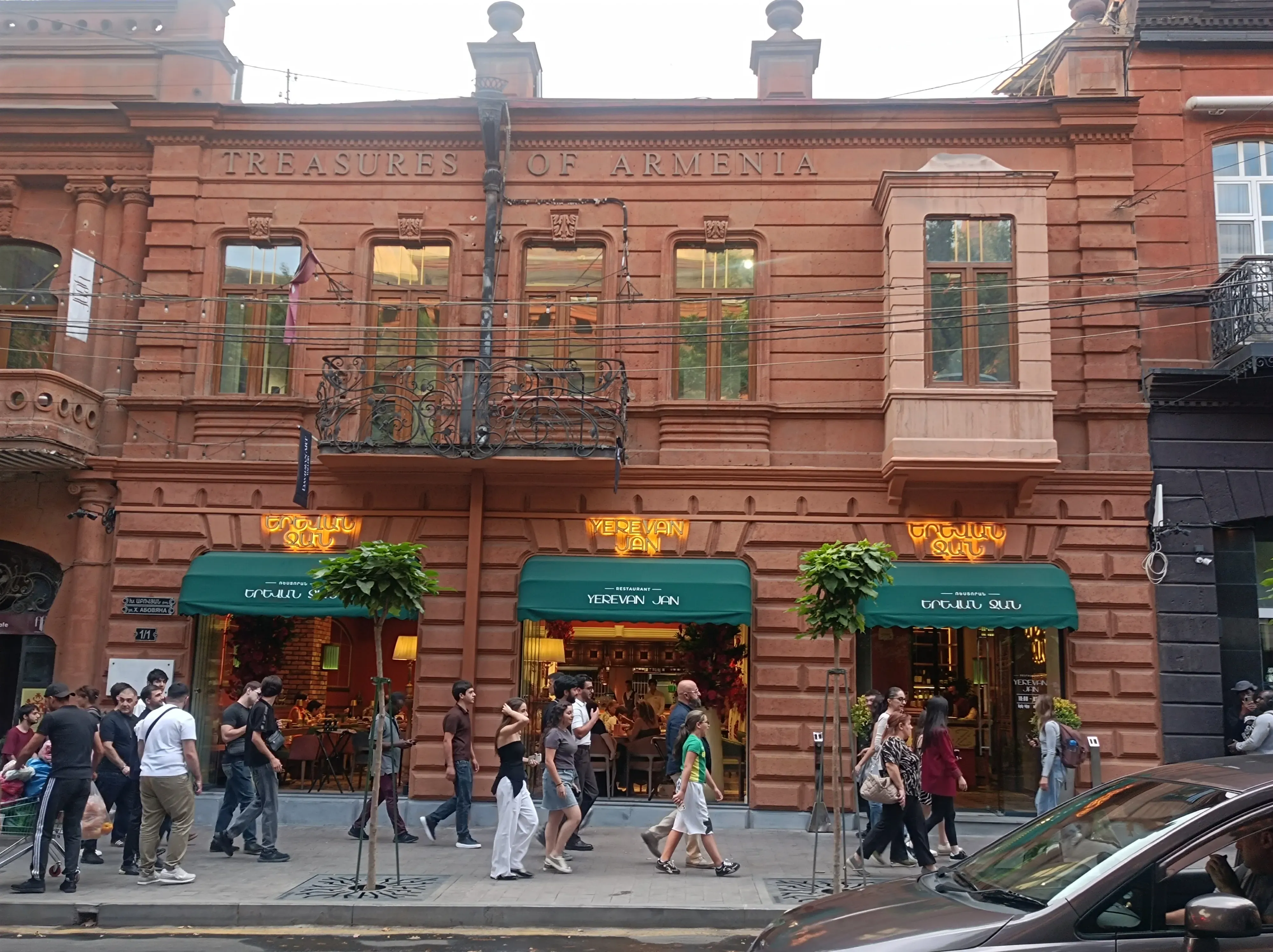
In the evening hours, the street transforms into a vibrant hub of entertainment, blending 19th-century architecture with contemporary nightlife, as the historic buildings of the 19th and 20th centuries, built from the characteristic black and red volcanic stone, tuff, are dramatically illuminated, highlighting their details.


We reach the beautiful Charles Aznavour Square, with his eponymous metal statue adorning the square. We sit for a drink and let time flow slowly. Here you don't need to do anything more than watch the city live, revealing its own relaxed nighttime rhythm.
Bidding farewell to Armenia
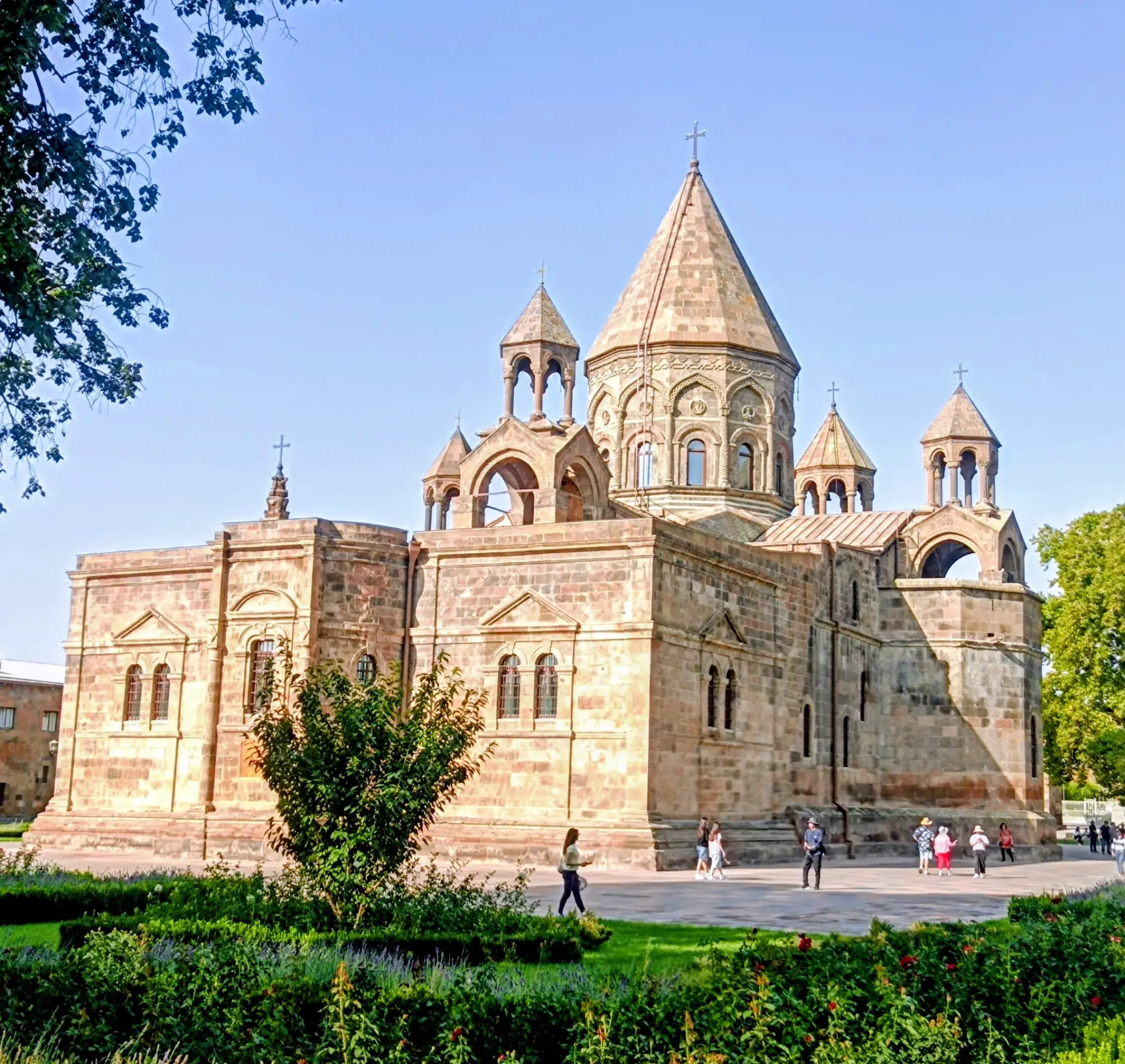
I dedicate my last day in Armenia to two interesting UNESCO World Heritage monuments, a few kilometers outside Yerevan. First stop is Etchmiadzin Cathedral, the first cathedral built in ancient Armenia, in 303, and considered the oldest cathedral in the world.
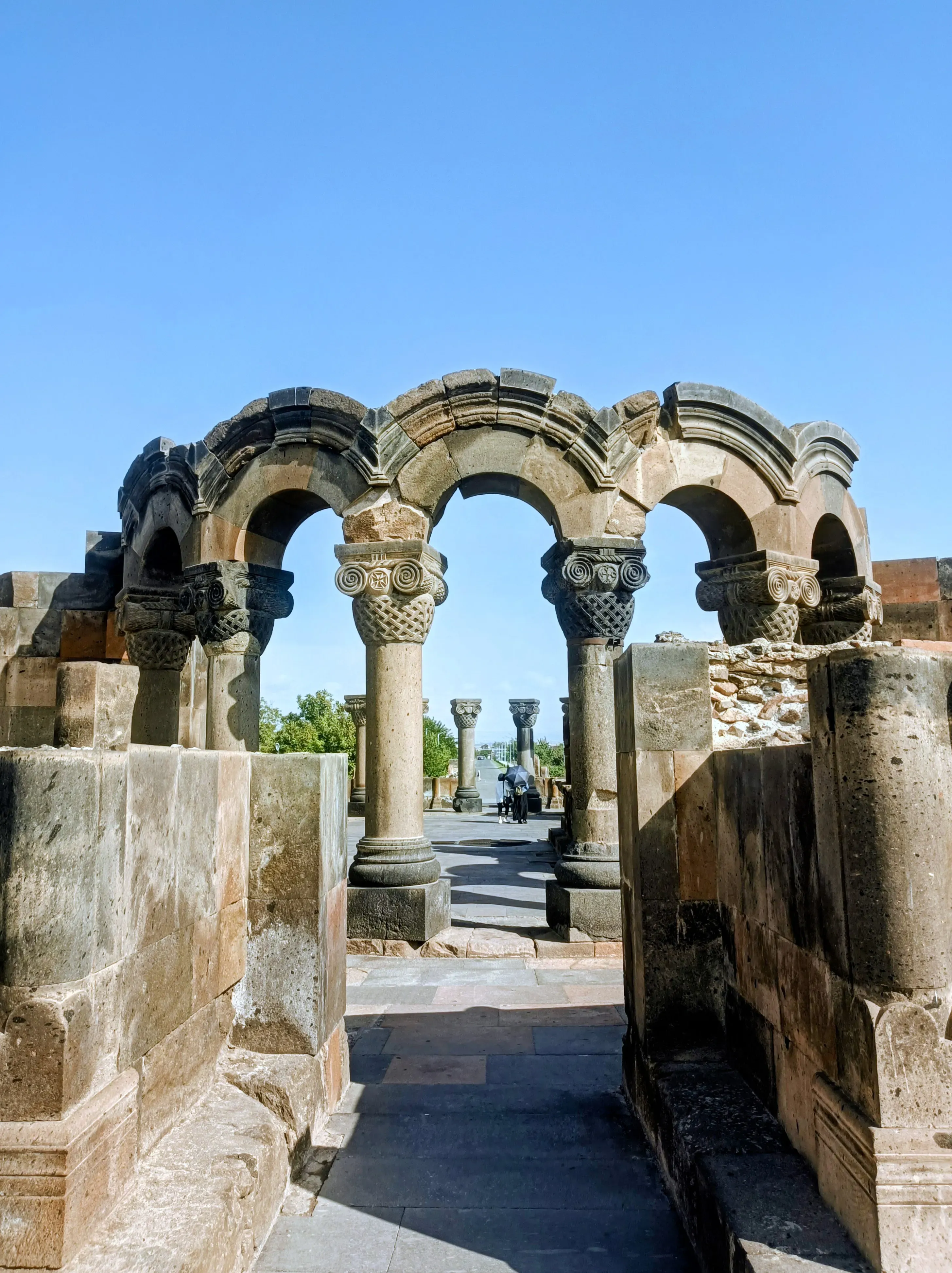
The next and final stop is the 7th-century Zvartnots Temple, known for its unique design, a circular structure with an impressive dome. Both sites offer deep insight into Armenia's rich religious heritage and, at the same time, the architectural brilliance of their era.
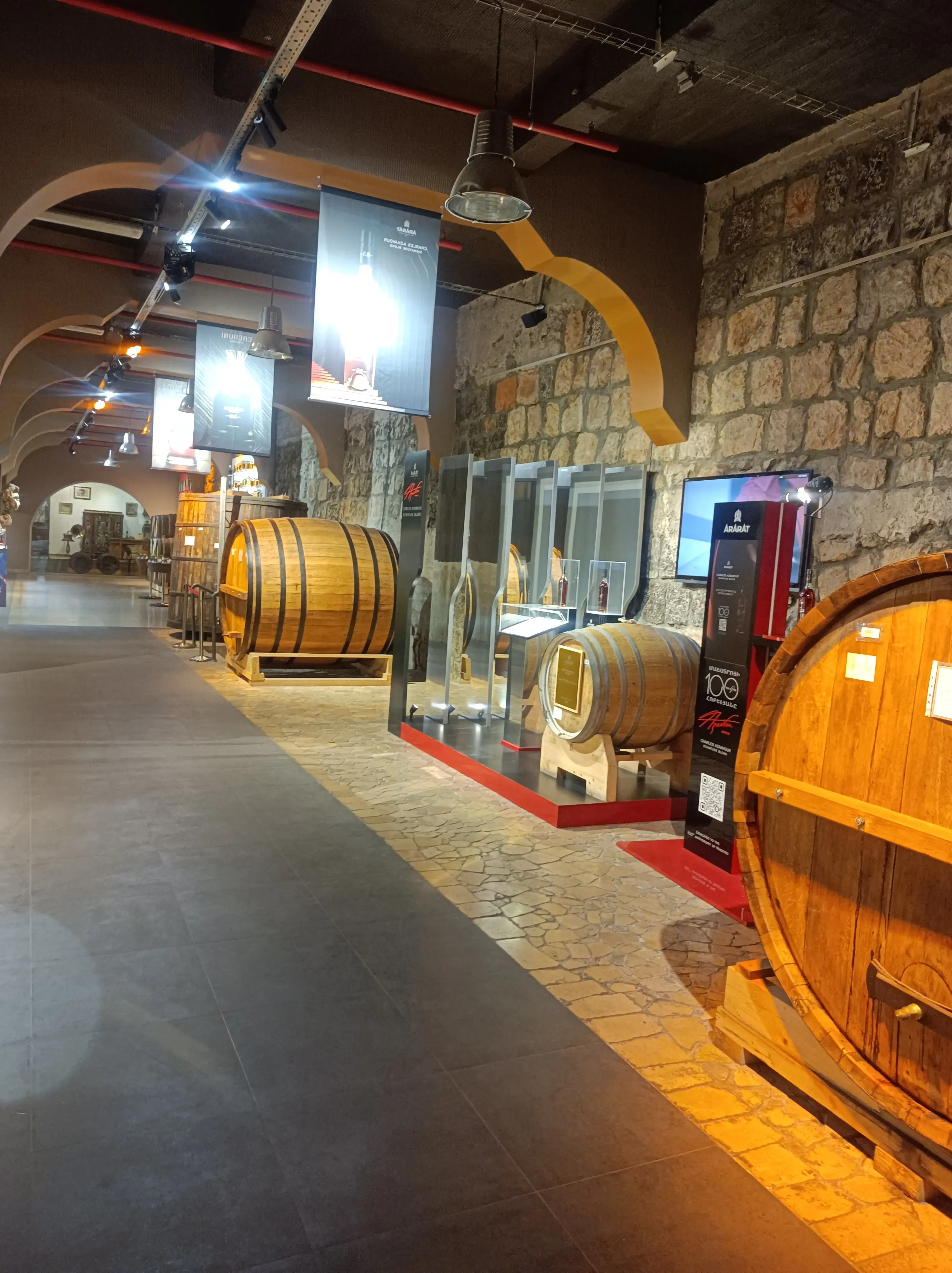
I return to Yerevan and, shortly before leaving for the airport, I visit the historic distillery that has been producing the famous Armenian ARARAT brandy since 1887 in Yerevan. ARARAT brandy became internationally known and a favorite drink of diplomats, such as Winston Churchill, when, at the Yalta Conference in 1945, Stalin offered the British Prime Minister a glass of Armenian brandy. Churchill, a well-known lover of fine alcohol and cigars, was so thrilled by its taste that Stalin arranged for 400 bottles to be sent to him annually directly from the Soviet Union.
Late at night I start the journey back. We leave behind Yerevan, the monasteries perched on the rocks, the peaks of the Caucasus, Lake Sevan and the lush forests of Dilijan, with our suitcase full of images and our heart full of stories.