





Perhaps the best way to discover Vienna and its Kaffeehauskultur is through its historic cafés, which transport us back through the centuries.
Imposing and aristocratic, Vienna is a city that enchants every visitor with its unique atmosphere. Yet here, history isn't written only in the impressive buildings and museums, but at the tables of cafés and patisseries that have survived the passage of centuries. At the end of the 19th and the beginning of the 20th century, cafés transformed into something far more than places to eat and drink. They became meeting places for intellectuals, artists, writers, and politicians, spaces where texts were written and ideas exchanged.
The Kaffeehauskultur, the famed culture of the Viennese café, is far more than the enjoyment of a drink. It embodies an entire way of social life, inextricably linked with Vienna's history and identity. After all, since 2011 it has been included on UNESCO's list of Intangible Cultural Heritage. The Kaffeehäuser aren't just cafés, but places where people meet, talk, read newspapers and books, or simply while away the time in peace. Many of them still operate today, preserving the atmosphere of a capital that seems to move to a different rhythm.
Café Central
If there's one café that's become synonymous with Viennese tradition, it's Café Central. It opened its doors in 1876 in the imposing Palais Ferstel and very quickly evolved into one of the city's most important intellectual meeting places. This legendary café is one of visitors' favorites, with daily queues forming at its door. Its striking interior, with soaring arches, columns, and a Venetian aesthetic, still transports you to the 19th century.
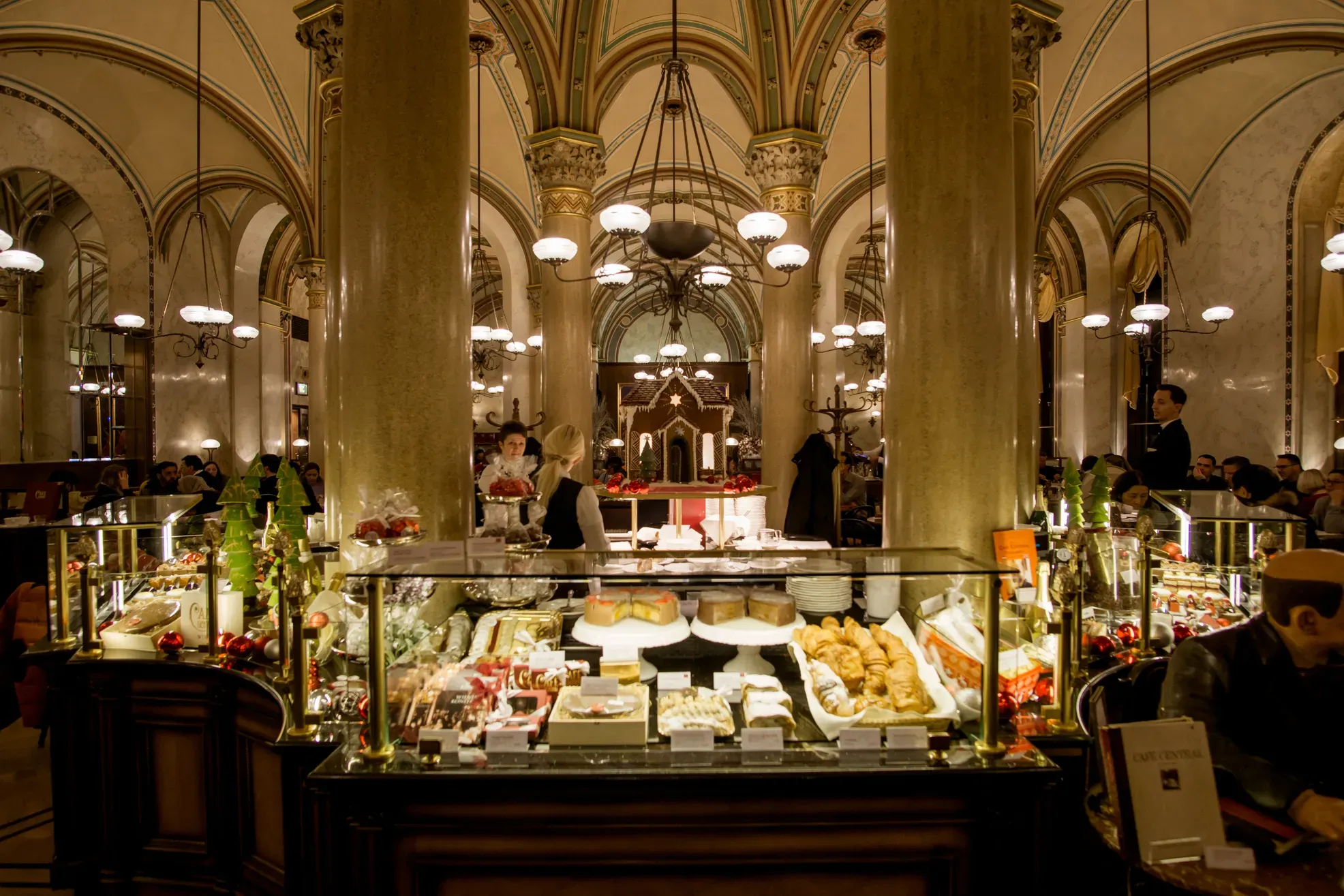
At its tables sat leading figures of Vienna's intelligentsia, such as Arthur Schnitzler and Peter Altenberg, while Sigmund Freud and Adolf Loos also passed through Café Central. Since March 2026 it's been closed for renovation and is expected to reopen during the winter. If you want to experience a little of its magic, for now you can visit its pop-up, Café Decentral, at the Palais Harrach.
Café Sacher
Right across from the Opera, Café Sacher is housed in the Hotel Sacher and has become one of the city's most recognizable landmarks. The café is famous across Europe as the 'home of the Sachertorte,' one of the world's most recognizable desserts. Its story is inextricably linked to the authentic Sachertorte, as the original recipe was created there by Franz Sacher in 1832 and remains a secret to this day.
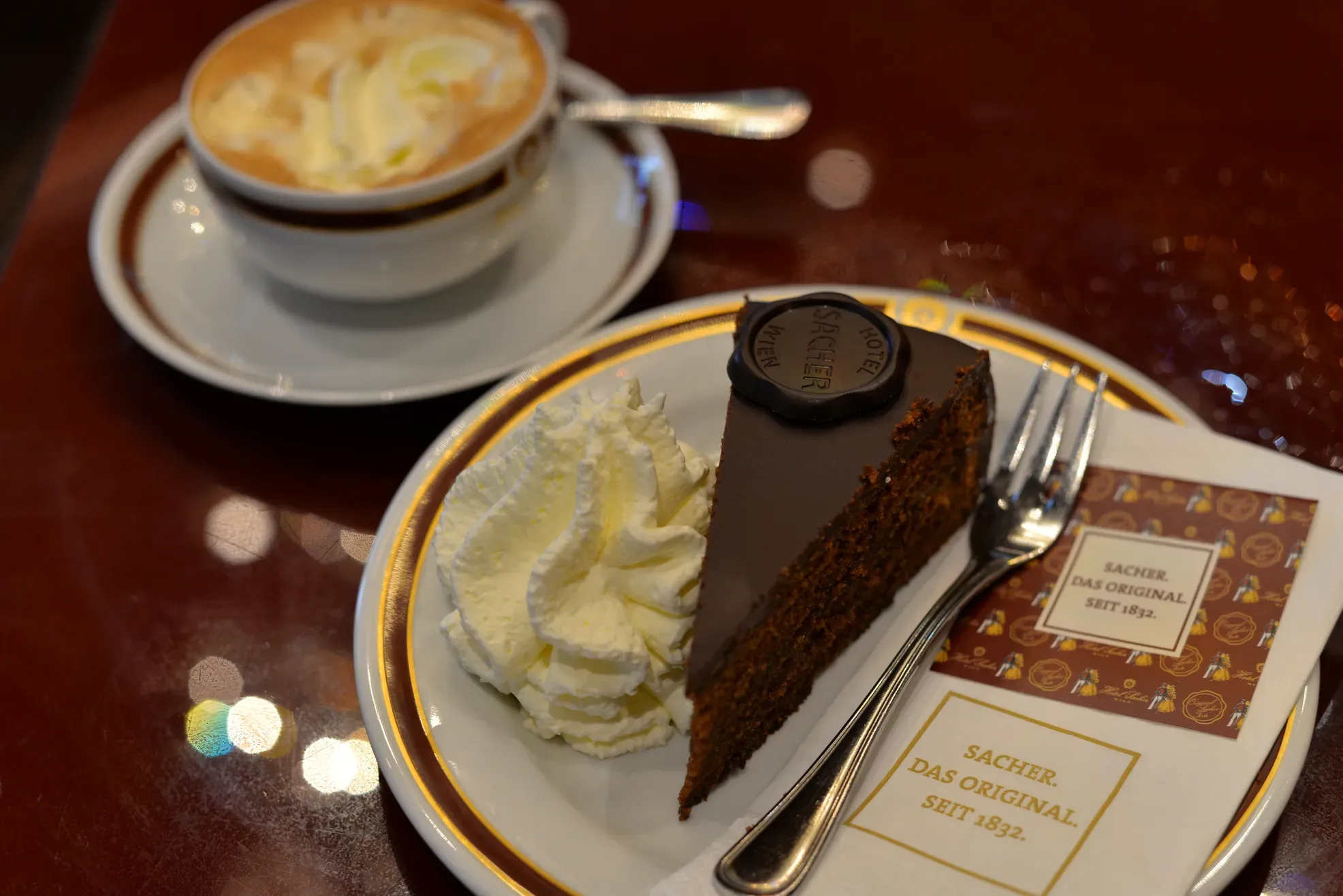
Every day you'll see long lines of people of all ages patiently waiting for a spot on its red sofas. Here, it's all about the experience. A hot chocolate, a Viennese coffee, and a slice of the beloved cake with chocolate, a thin layer of jam, and whipped cream on the side will initiate you into a tradition that's endured for centuries.
Café Landtmann
Café Landtmann holds a special place in Vienna's history, as it opened in 1873, the year the city hosted the World's Fair. Choosing a location on the Ringstrasse was a bold move at the time, as construction sites surrounded it. Over the years it became one of the boulevard's most emblematic landmarks, as it was a meeting place for figures from literature, politics, and the arts.
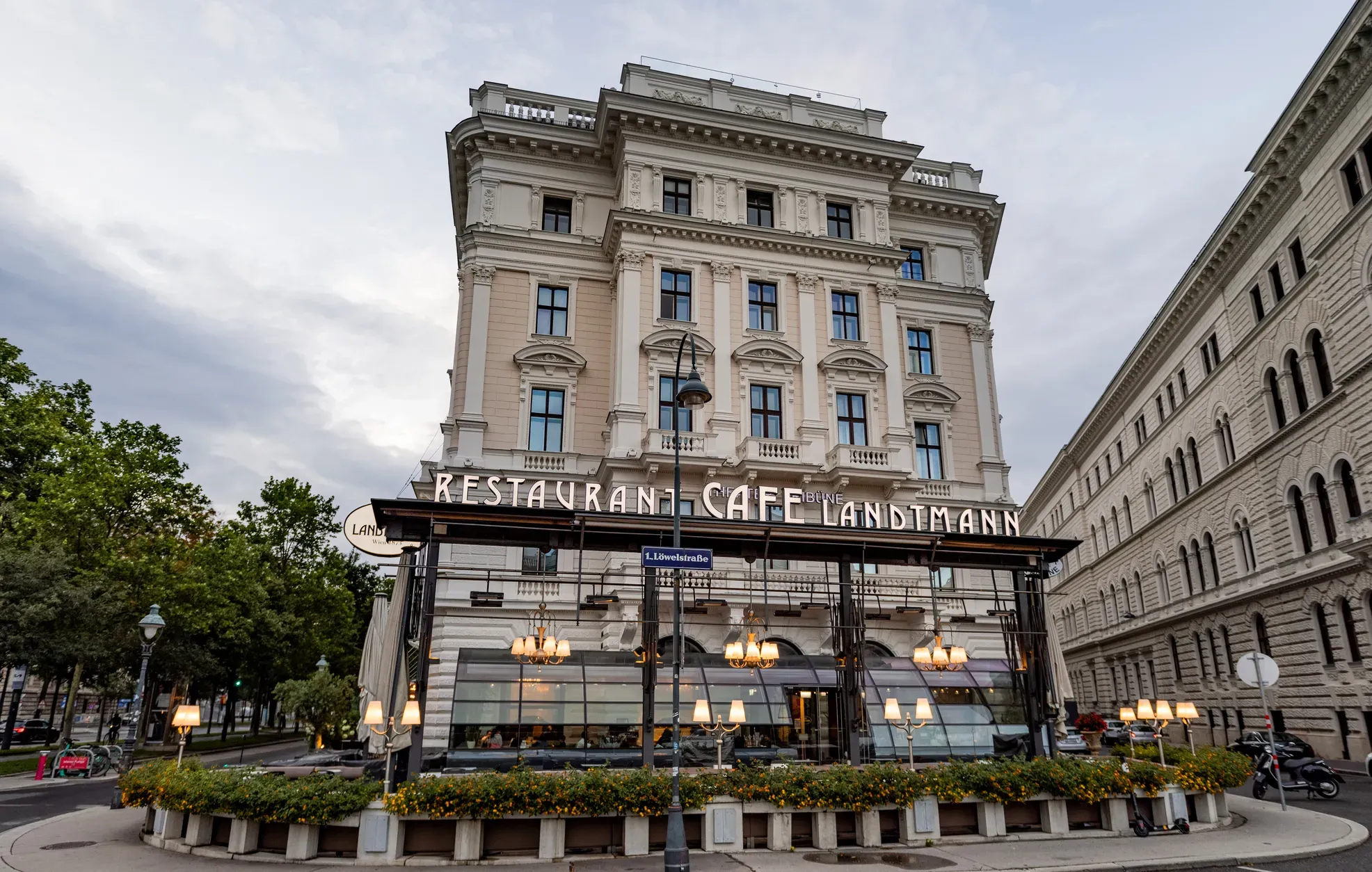
Along with the nearby Rathaus and Burgtheater, it still preserves the feel of 19th-century Vienna in all its grandeur. It's the ideal place to sit after a stroll along the Ringstrasse, ordering a glass of wine, a Melange - a Viennese coffee - and a dessert, while looking at the city from the large windows.
Café Hawelka
In the heart of Vienna, just 5 minutes from the central Stephansplatz, Café Hawelka is a bohemian refuge for artists. Leopold and Josefine Hawelka opened Hawelka in 1936 and, over the decades, turned it into a true institution of Vienna's artistic life. The café has passed from generation to generation and for decades has been a meeting point for artists and cultural figures, while among its famous visitors are Hans Moser, Udo Jürgens, and Andy Warhol.
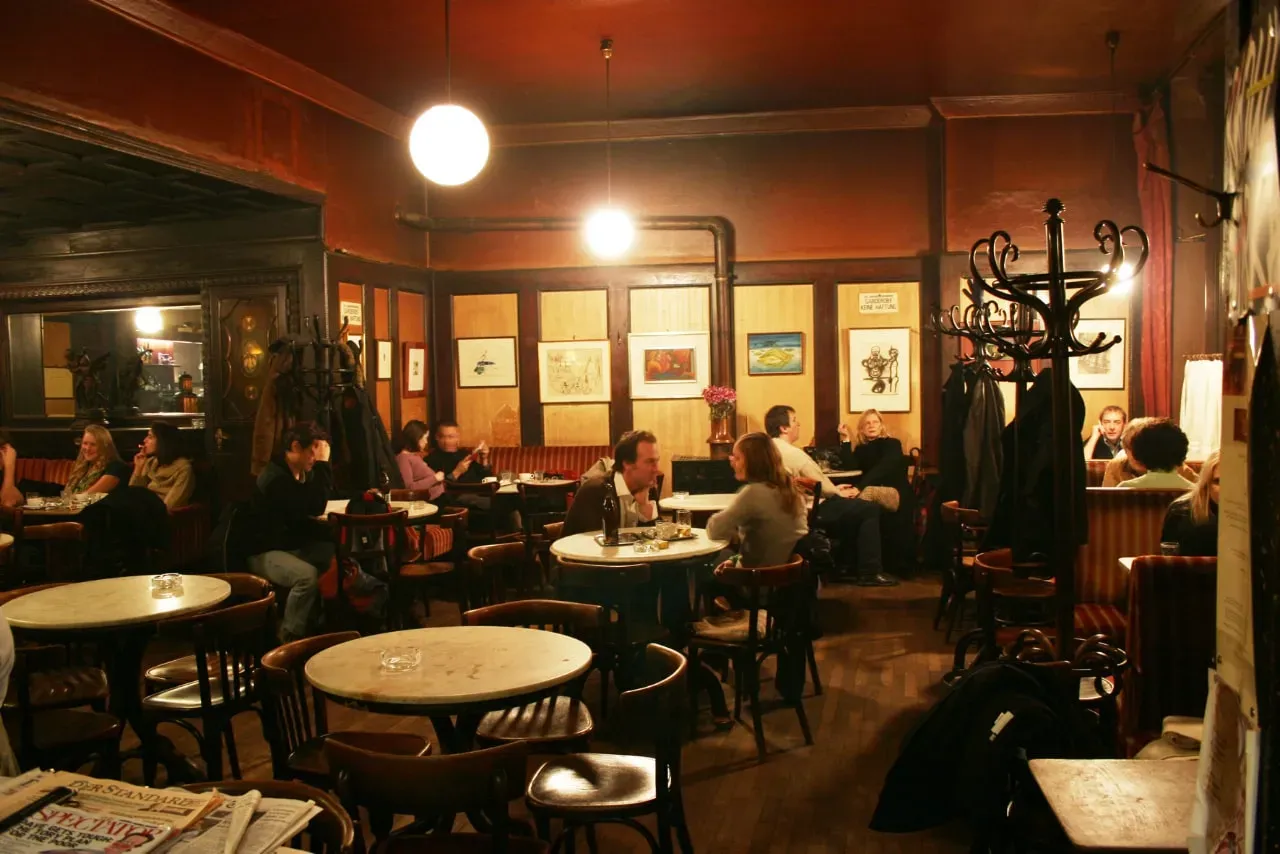
The atmosphere is moody and cinematic, as if lifted from the set of an old film. After 20:00 there's yet another reason to come, as you'll find the famous Buchteln, the fluffy jam-filled rolls that have become synonymous with Hawelka. The menu also features coffee cocktails.
Demel
On the Kohlmarkt, a few steps from the Hofburg, the windows showcasing Demel's intricate creations are as impressive as its interior. It's not just a café, but one of Vienna's most historic patisseries. Its tradition spans over two centuries, as it served as the k.u.k. Hofzuckerbäcker, the official Imperial and Royal purveyor of sweets. This was an official honorific title in the Austro-Hungarian Empire, awarded to leading patisseries and confectioners.
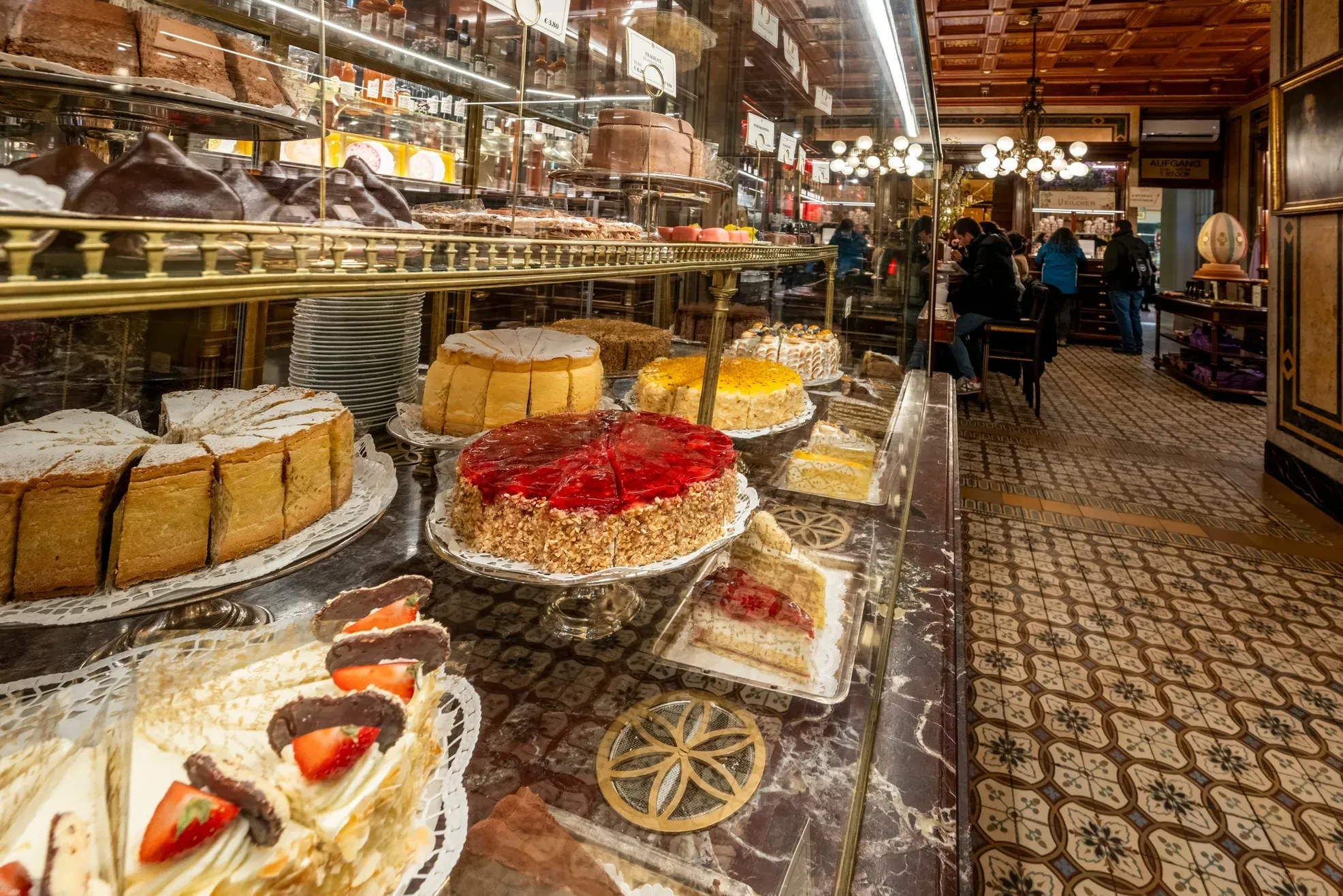
Its tradition is linked even to Empress Elisabeth, while a hallmark of Demel is that for about two centuries its staff has consisted exclusively of women. At Demel you'll experience Vienna's imperial side by tasting the famous Austrian dessert Kaiserschmarrn, made of fluffy, roughly torn, caramelized pancake, known as 'the emperor's mess'.
Café Sperl
We travel back to the 19th century as we step through the doors of Café Sperl. It's one of the historic cafés that gives you the sense time has truly stood still. It's been operating since 1880, and many elements of its interior have remained almost untouched. Marble tables, wooden chairs, old mirrors, billiards, a piano, and newspapers create a setting that evokes fin de siècle Vienna, the cultural, artistic, and social atmosphere that prevailed in Europe at the end of the 19th century.
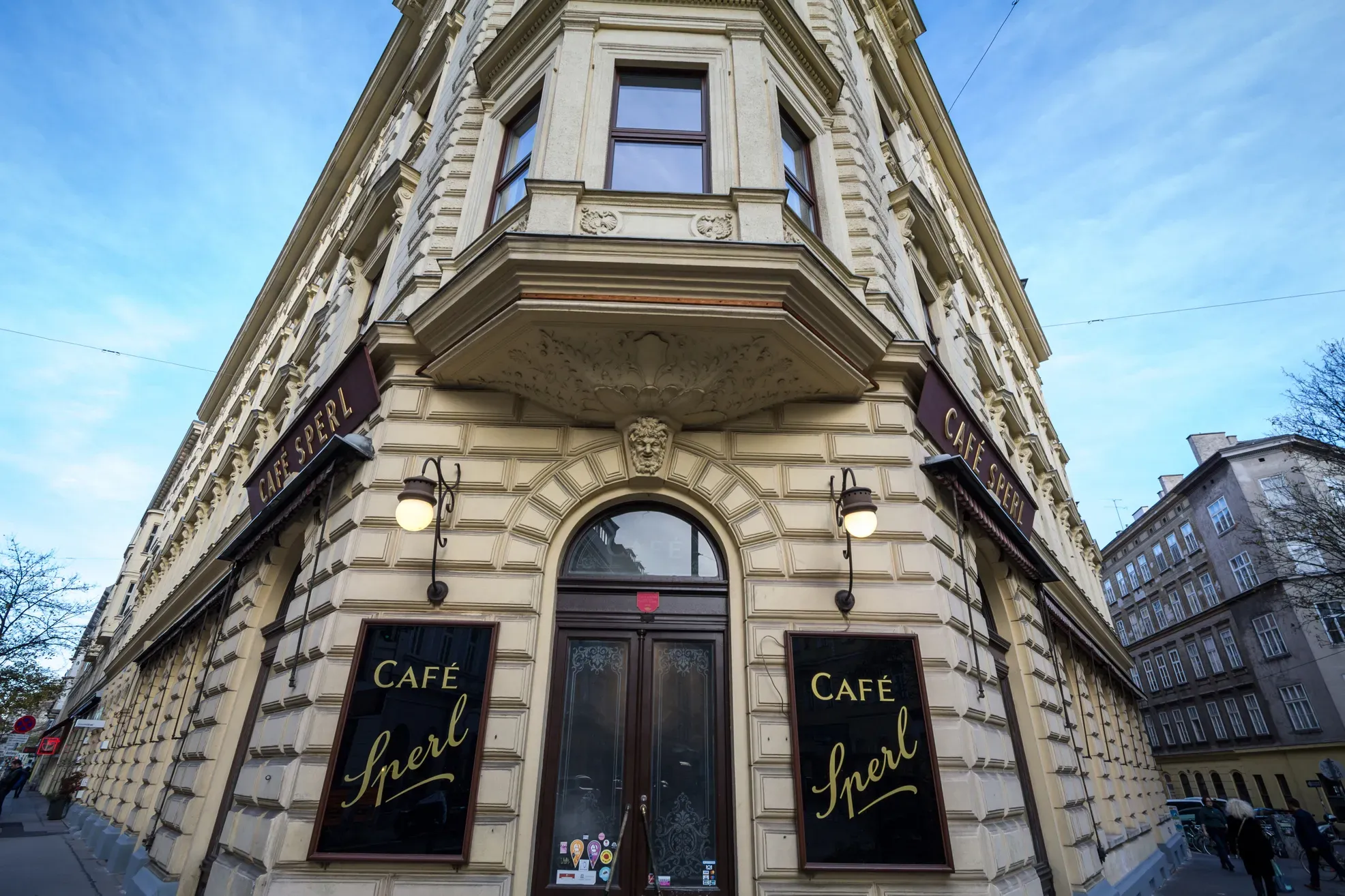
Here you can try the Original Sperl Torte with your coffee. Café Sperl offers an authentic, warm, and slightly nostalgic portrait of Vienna, which is why it remains one of the essential stops for anyone who wants to get to know the history of Vienna's Kaffeehäuser.
Café Museum
Café Museum is one of the cafés most closely connected with Vienna's artistic history. It's one of the key stops for those who want to explore the relationship between Viennese Kaffeehauskultur and art. It opened in 1899 near the Opera, and within the first decades of its operation it became a favorite meeting place of Vienna's avant-garde. Among its famous regulars were Gustav Klimt, Egon Schiele, and Oskar Kokoschka, while the original, characteristically minimalist design was the work of architect Adolf Loos.
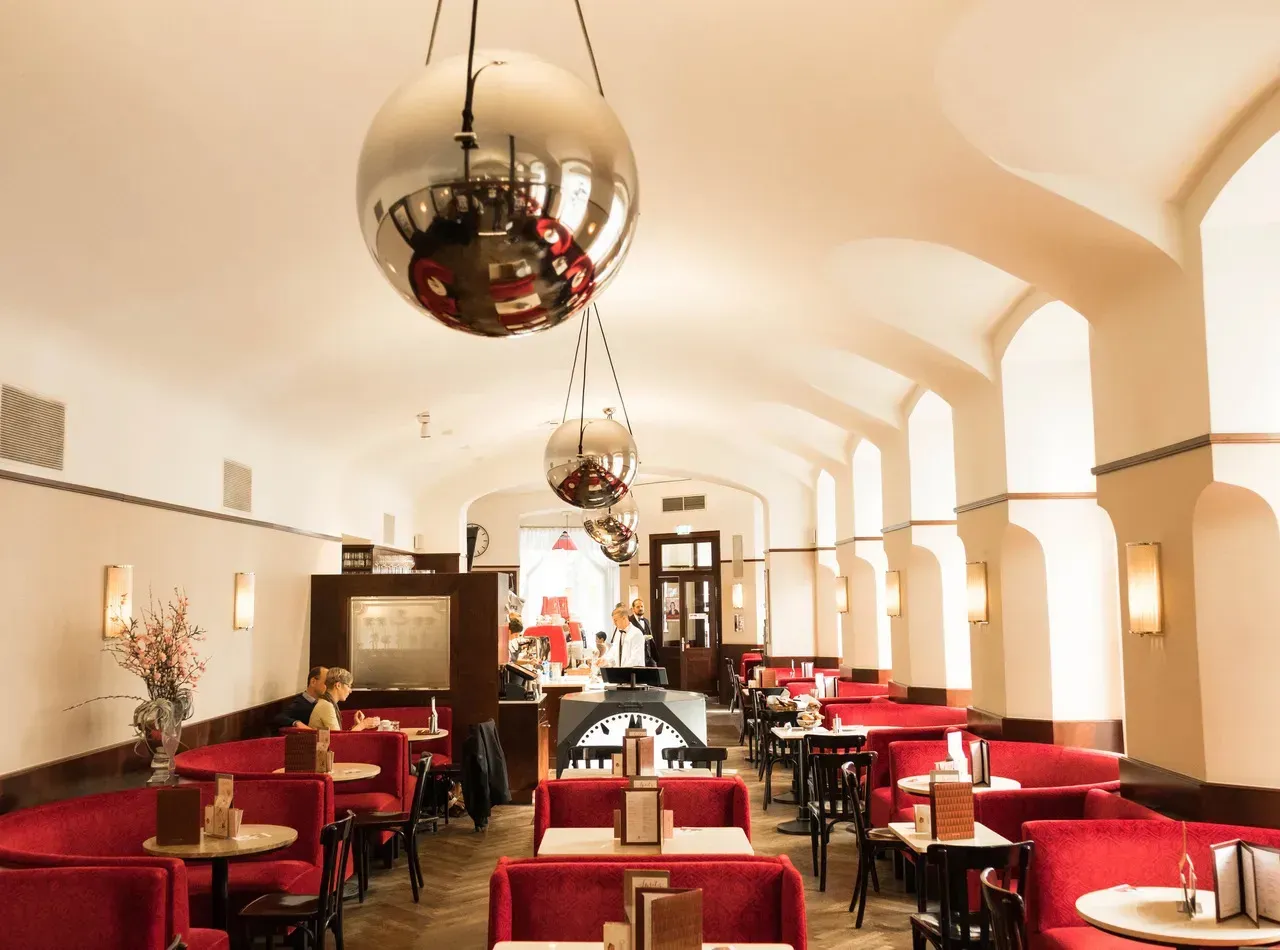
Unlike the more ornate cafés of that era, the architect created a pared-back interior with curves, mirrors, and marble surfaces, shaping a space that was considered particularly modern for its time. Its location between the State Opera, the Secession, and the MuseumsQuartier makes it an ideal stop for a coffee after a stroll through the city's most important art spots.
Café Korb
Around the central Stephansplatz, Café Korb is one of the historic cafés that maintains a more personal identity.Its distinctive charm lies in the aesthetic it has preserved from past decades. Its interior blends the classic feel of the Viennese café with more eccentric touches, and the Art Lounge is particularly interesting, a space that functions as a small gallery and hosts contemporary artworks.
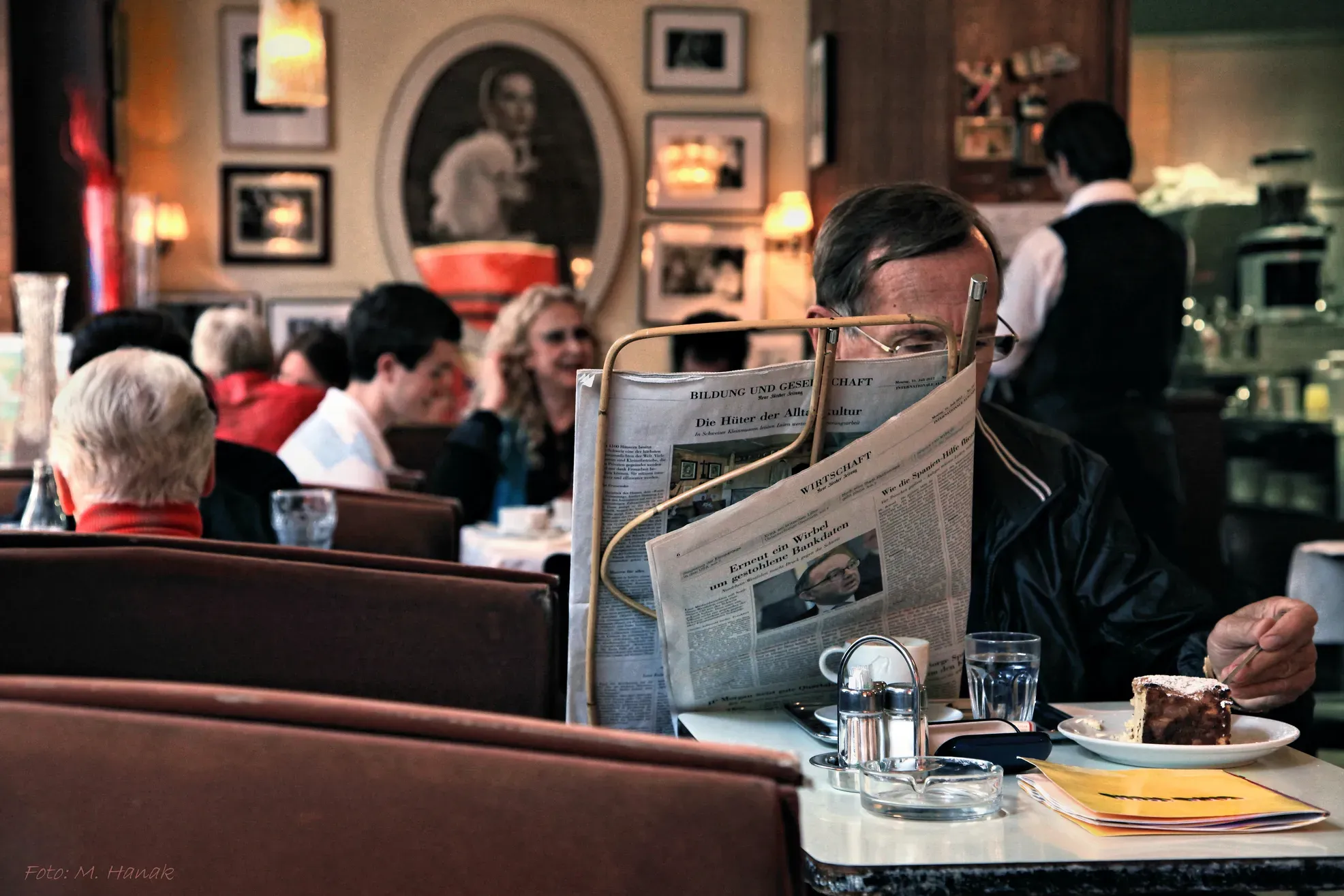
It opened in 1904 and its history is also tied to pivotal moments in the Austrian capital, as after World War II it became a meeting place for different artistic and intellectual circles. Its atmosphere is unpretentious compared to other cafés of that era, which makes it an intriguing choice for those who want to discover a different side of Viennese culture.
Café Mozart
Right next to Vienna's State Opera stands the popular Café Mozart. It's one of the most emblematic historic cafés of the Austrian capital, with its history beginning in 1794, when one of the city's first cafés opened in the same area. The present-day Café Mozart was founded in 1929 and took its name from Wolfgang Amadeus Mozart, thus linking its story to the city's deep musical tradition. Its prime location, opposite the Opera and close to the Albertina museum, has long made it a favorite meeting place for artists, but also visitors to Vienna.
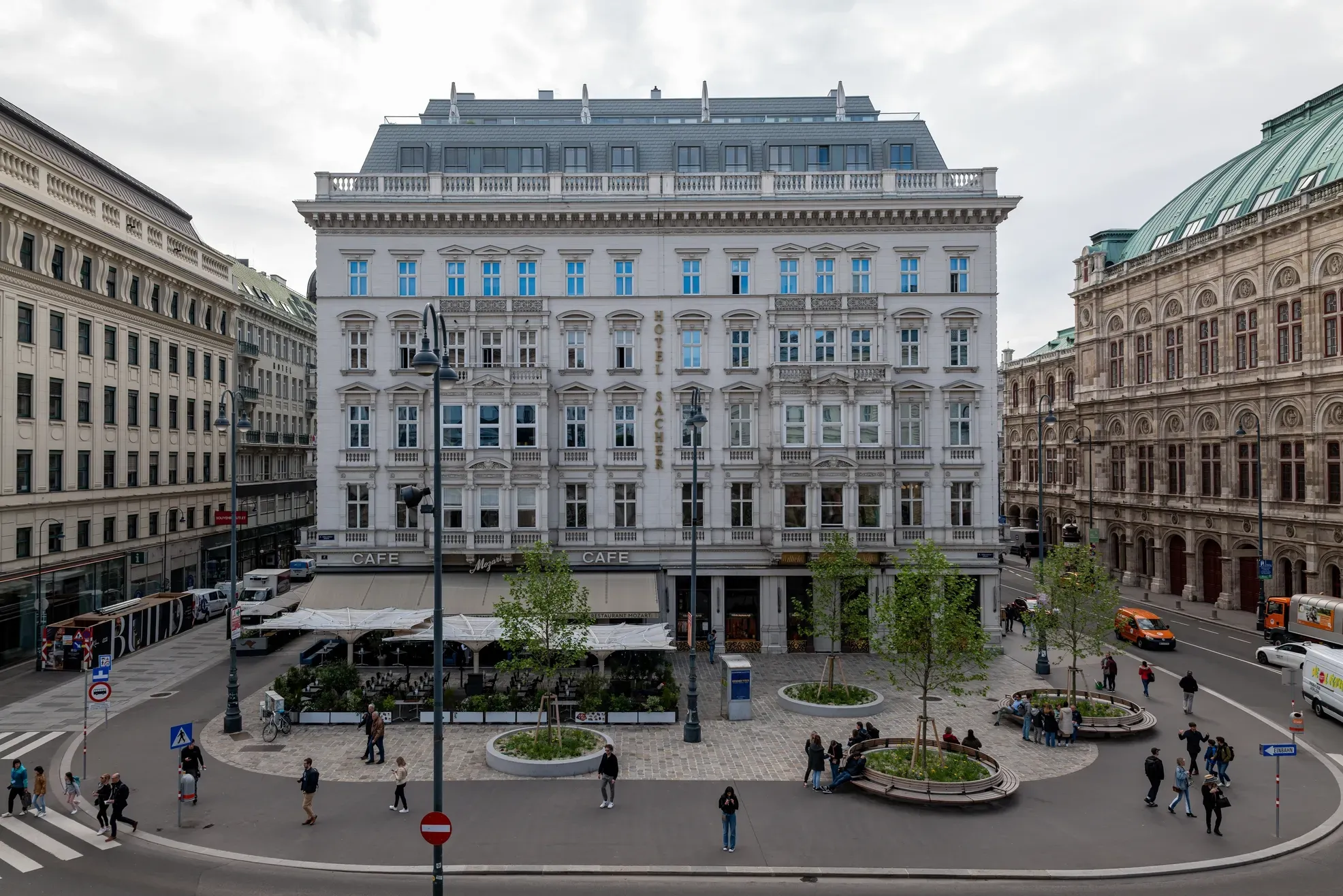
Its elegant, classic atmosphere, large windows, and signature view over the square create a setting that feels plucked from old Vienna, and its history is linked to cinema too, as it was one of the locations where scenes of the film «The Third Man», a 1949 noir, were shot. Today it remains one of the classic stops for a Viennese coffee and a sweet, especially after a visit to the museums.
Café Bräunerhof
Café Bräunerhof has stood on Stallburggasse since 1920, in the city center, and stands out for its classic interior, with marble tables, large mirrors, and a tranquil atmosphere. Its renown isn't due only to its aesthetic, but also to its association with Thomas Bernhard, one of the most important Austrian writers of the 20th century. The writer was a regular and helped make it one of the city's emblematic literary haunts.
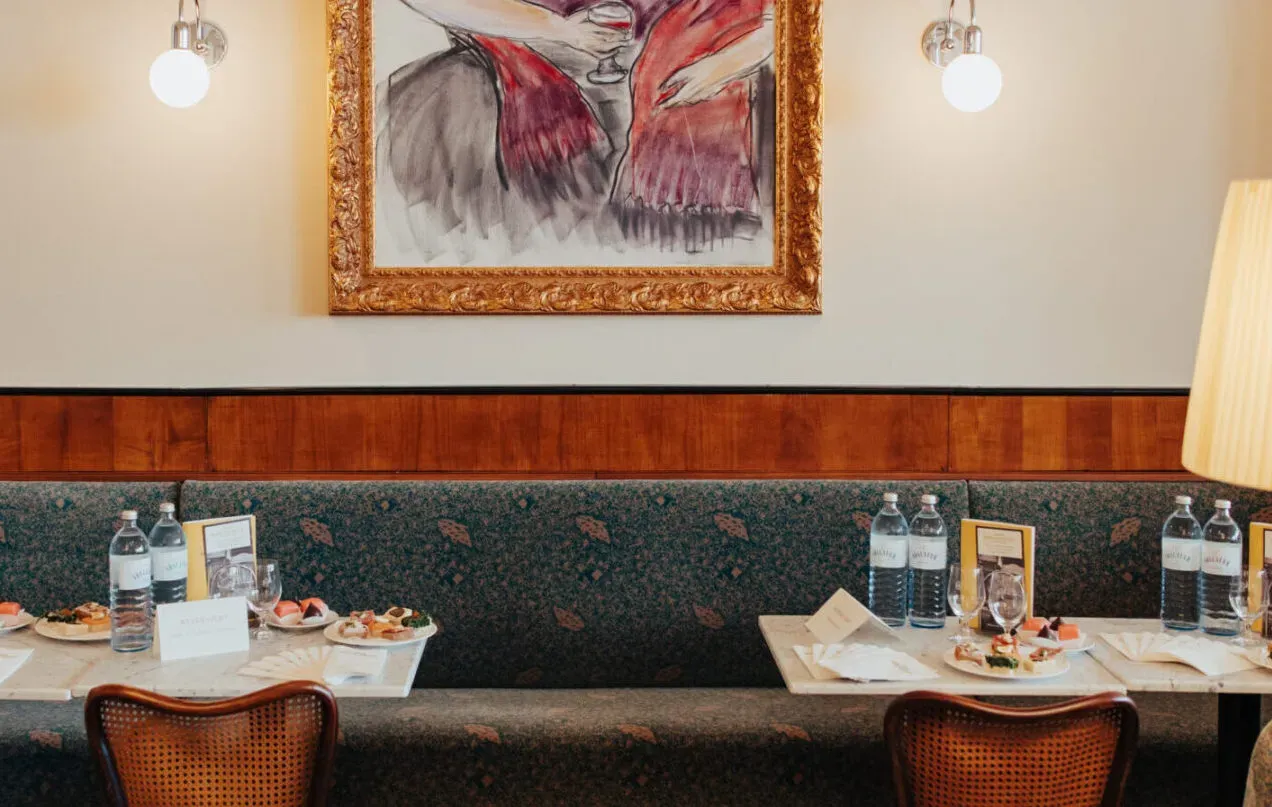
People of letters and the arts have sat at its tables, and even today the café is best for a pause where visitors take their time, enjoying their coffee and their newspaper or book.