





Exploring the landscapes and monuments of a small mountainous country in Central Asia.
Our journey begins at the airport of Tashkent with a 4WD, where our driver awaits to take us to the Uzbekistan – Tajikistan border, specifically to Oybek. In an hour we arrive. There, the ordeal begins. We have to walk a long distance with our luggage in hand through the borders neutral zone, passing passport control at three checkpoints set at different distances from one another.
After quite some time, at last, we cross the border. We are now in Tajikistan, a country 93% covered by mountains, whose peaks are among the highest in the region, such as Ismoil Somoni(7,495 meters). Traveling in Tajikistan is essentially an ascent to the roof of the world, into the Pamir, one of the worlds loftiest mountain ranges.
There we meet our new driver, Dave, who will be with us for the next few days, and we continue to Khujand. In a short while we enter the Fergana Valley, of which the city of Khujandis part. The Fergana Valley is a large triangular basin shared by Uzbekistan, Tajikistan, and Kyrgyzstan. It is considered one of the most fertile valleys, watered by the Syr Darya River—known in antiquity as the Jaxartes—and by the many tributaries that descend from the surrounding mountains. Its produce includes cotton, grains, fruits, and vegetables, all renowned for their excellent quality.
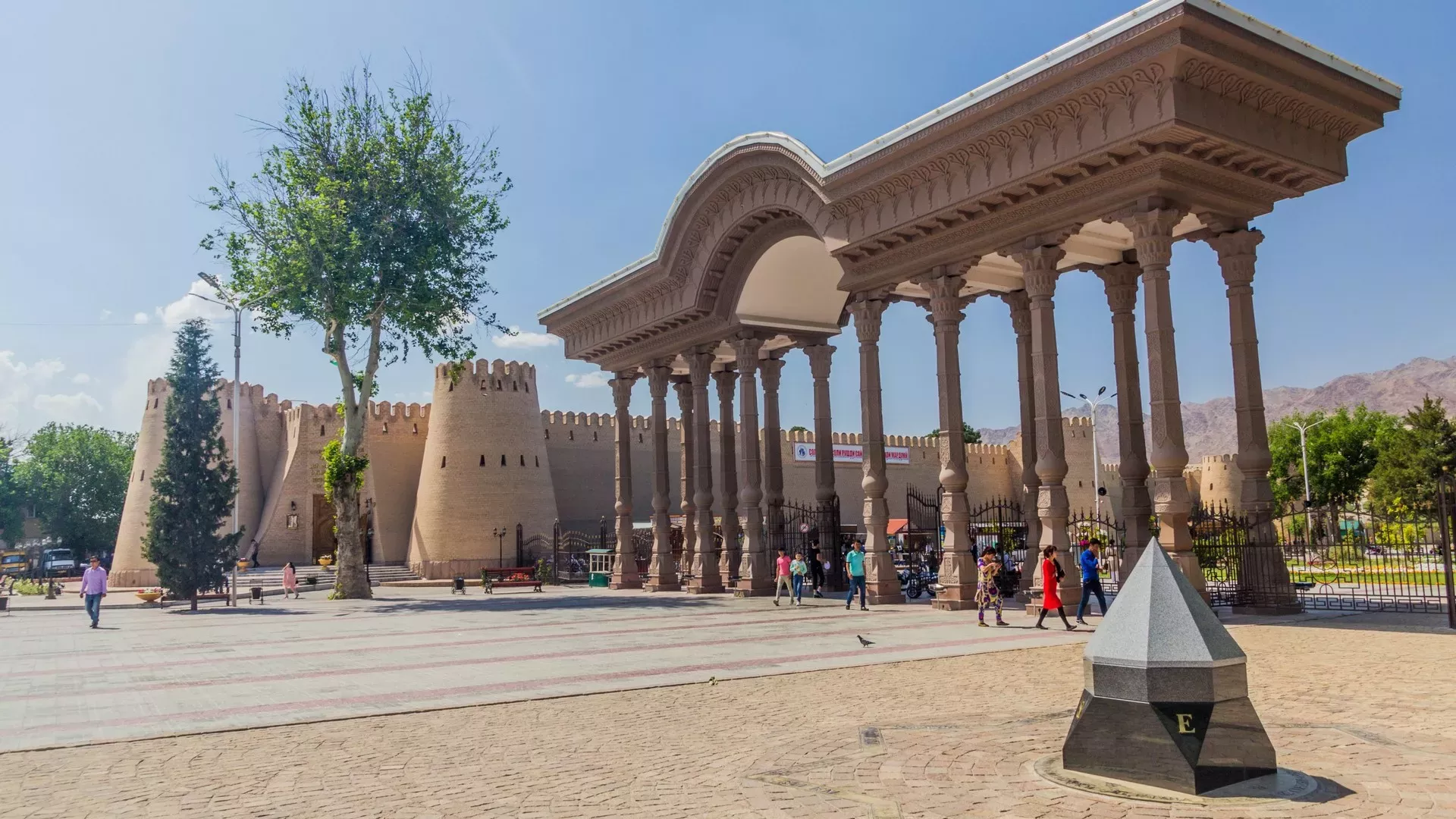
When we reached Khujand it was already night. The next morning our tour of the citys sights begins. Khujand (formerly Leninabad) is one of Central Asias oldest and most important cities. It was conquered by Alexander the Great in 329 BC; he rebuilt and fortified it, renaming it "Alexandria Eschate".
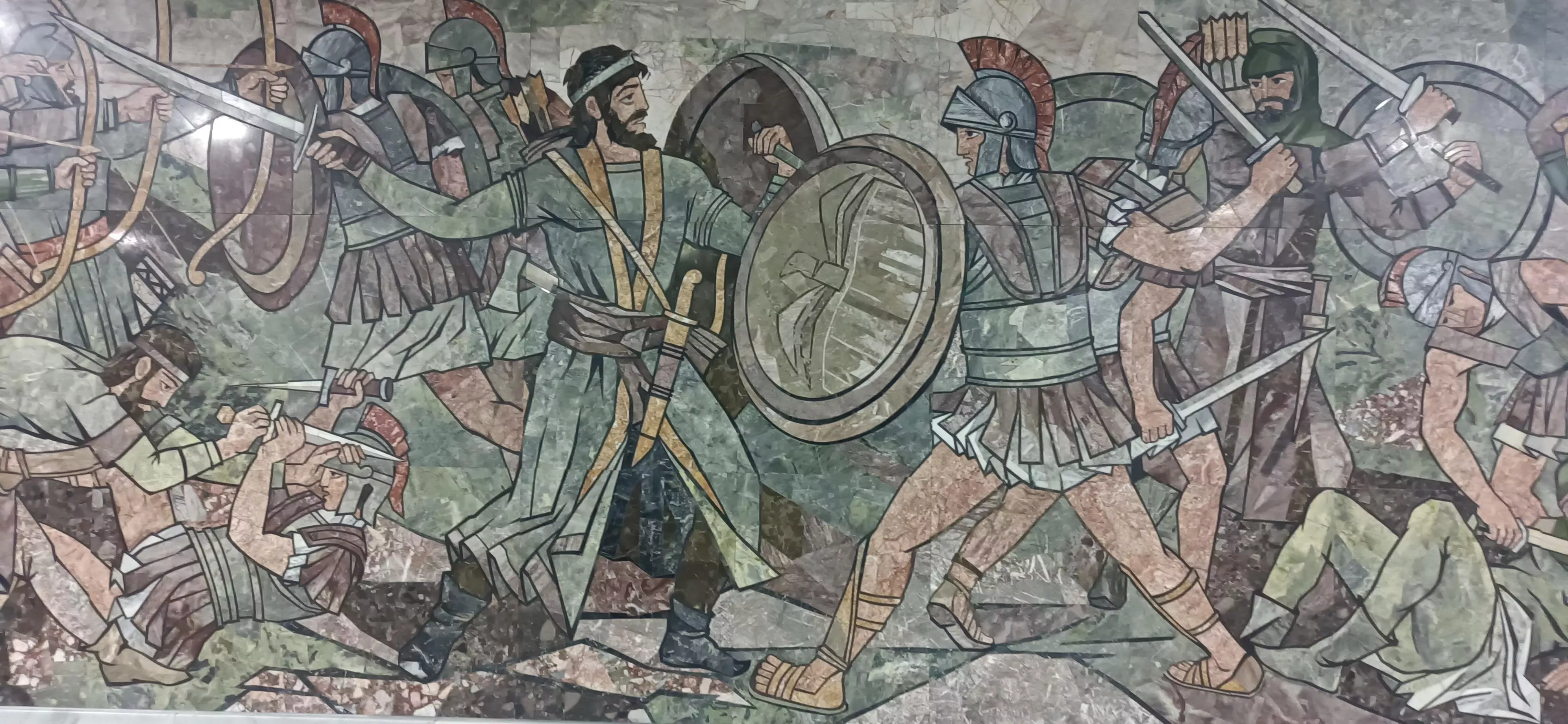
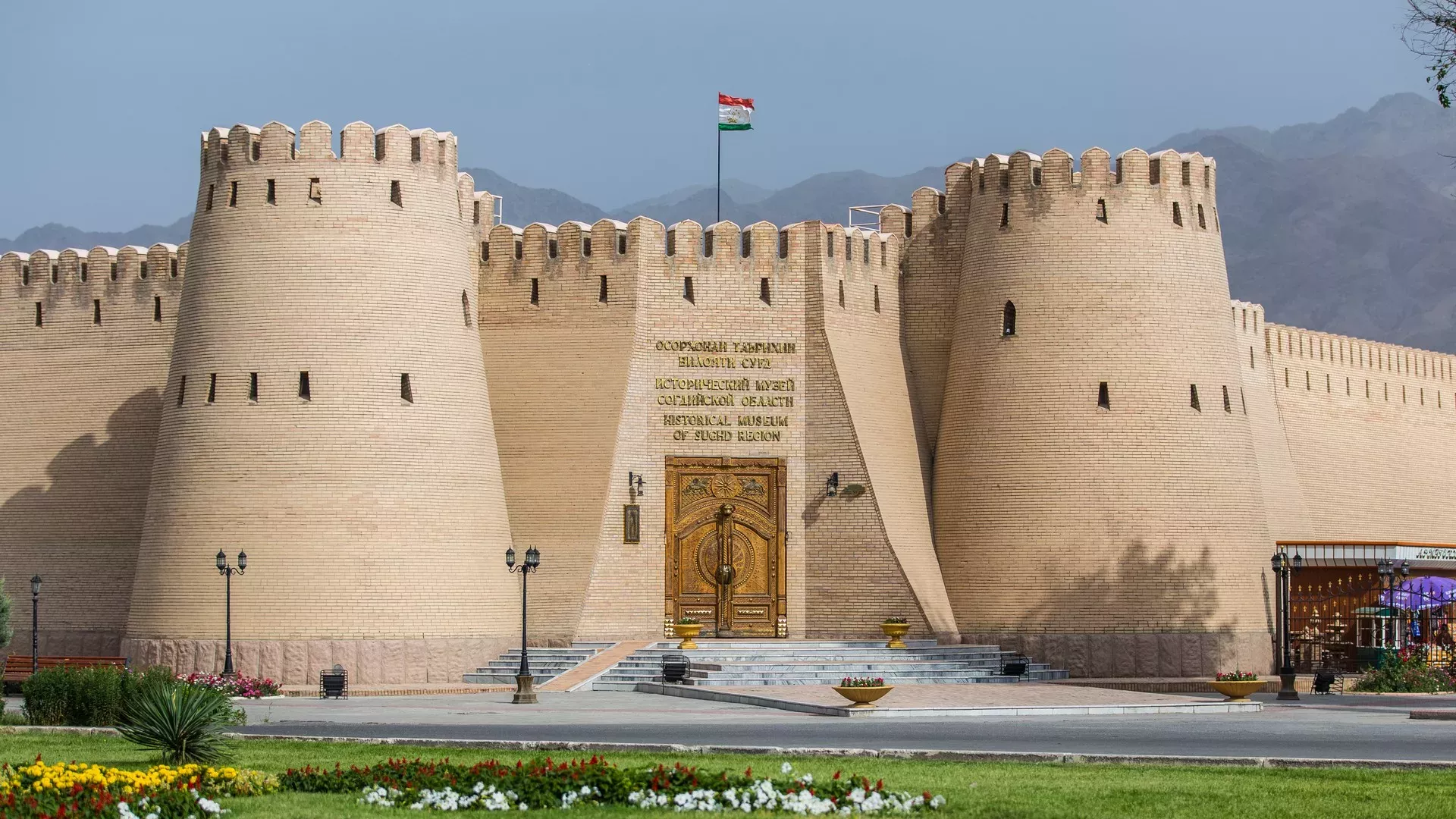
We begin at the Sughd Historical Museum, housed beside the ruins of the ancient fortifications at the southeastern corner of the old city wall, while on the northern side of the old town flows the Syr Darya (Jaxartes) River. The museum holds a wide array of artifacts related to the history of the Sughd region. What truly captivates us, however, are the marble mosaics from the 16th century AD depicting the life of Alexander the Great, covering an entire floor. The multiple scenes with horses are rendered with exceptional artistry.
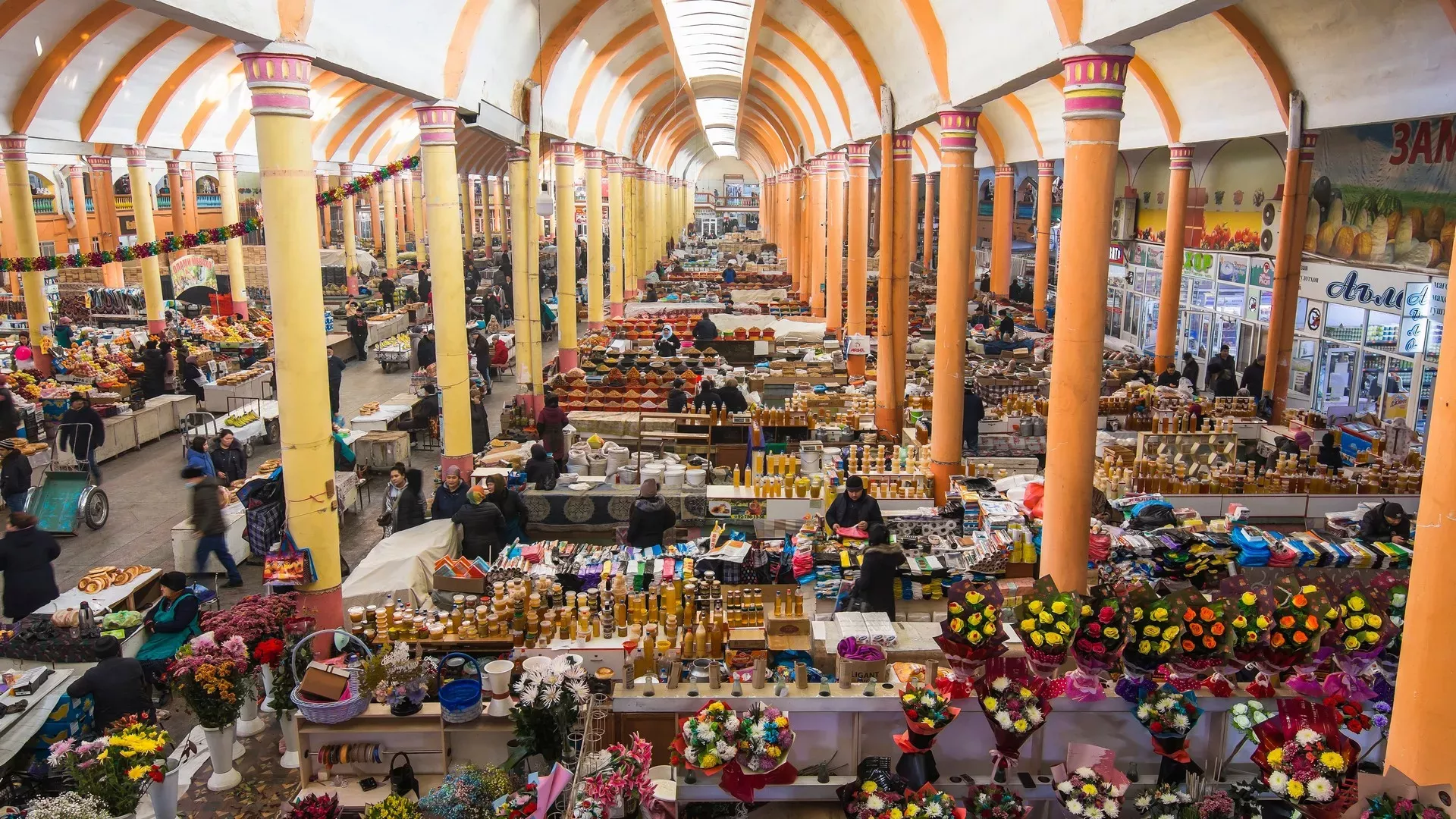
We leave the museum and head to the covered Panjshanbe market. Its standout feature is its unique architecture and design. Construction began in the mid-20th century and was completed in 1964. It blends elements of classicism and Stalinist Empire. The markets interior marries Eastern and Soviet styles. We sit down to eat outside the market, at a restaurant where they are preparing plov. After lunch we depart for Penjikent, 260 km from Khujand, with a stop in Istaravshan, ancient Cyropolis. Istaravshan lies 78 km from Khujand, in the southwestern Fergana Valley, and was a Silk Road stop. It was founded in the 5th century BC by Cyrus, king of the Achaemenids.


Leaving the city, we pass the ancient acropolis of Mug Teppe, conquered by Alexander the Great in 329 BC and by the Arabs in AD 772. We continue to Penjikent. Shortly we enter the Zarafshan Valley, where Penjikent sits. The valleys main attraction is its enchanting scenery, with deep gorges and cliffs. We reach the town late in the afternoon.
At midday the next day we set off for Alexander the Greats lake (Iskanderkul), 270 km from Penjikent. Until then, we tour the city. We begin with a first visit to the ancient settlement of Penjikent on the outskirts of the modern town, a typical Soviet city with wide avenues and some fine civic buildings. We pass the mausoleum of the world-renowned Persian poet Rudaki, who lived in the 10th century AD and died here in Penjikent. Soon we reach ancient Penjikent, perched atop a hill above the Arafshan River. This ancient city was founded in the 4th century BC as part of Sogdian civilization. After a short tea break, we continue to Lake Iskanderkul in the Fann Range.
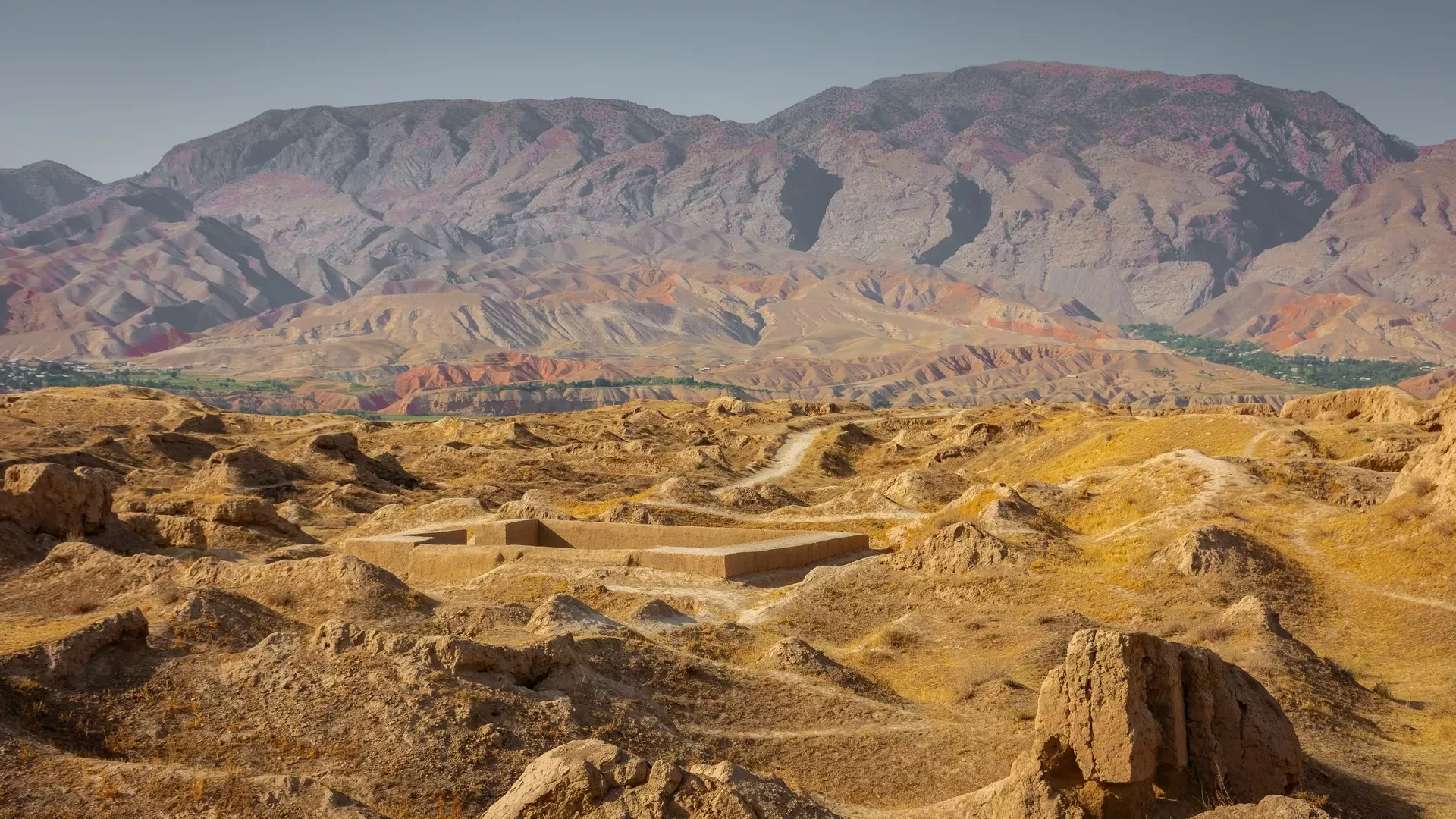
Along the way we stop to sample Tajikistans fruits and nuts from roadside vendors—something that enchants me on these mountain drives. Before reaching the lake, which lies at an elevation of 2,195 m, we pause in a village, Ayni, tucked low in a ravine, to quench our thirst. There, even if youre not thirsty, its impossible to resist an ice-cold soda chilled by the waters running down the mountainside, where stone shelves are lined with soft drinks.
The journey can be tiring and reaching Iskanderkul can take quite some time, but its worth it, because the entire route is wonderfully scenic, with the barren mountains growing more dramatic as we approach the lake. There are two theories about the lakes name. One holds that here, in this very lake, Alexander the Greats beloved horse, Bucephalus, fell and drowned. The other says that when Alexander arrived here with his army, he met resistance from the local inhabitants. To take revenge, Alexander diverted the river that flows into the lake and drowned them.
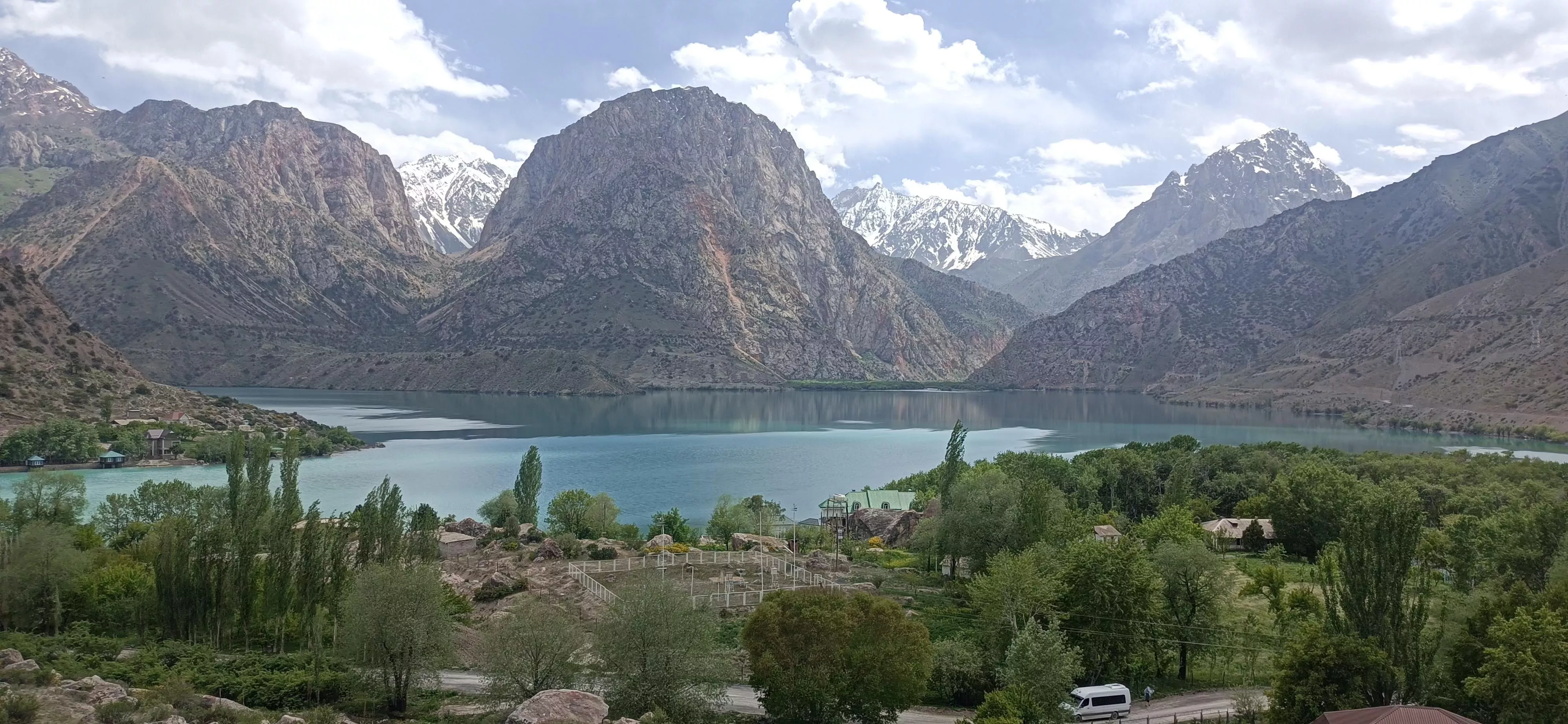
Whichever theory is true, as we arrive Im left speechless by the lakes breathtaking beauty. Encircled by sheer mountains in a lush green setting, the lake offers a calm, serene atmosphere. Its crystalline turquoise waters reflect the majestic mountains, creating a sublime spectacle. Its no coincidence that the president of Tajikistan, Emomali Rahmon, has one of his dachas here on the lake.


We take an easy 30-minute hike to a 38-meter waterfall, stroll around the lake, and then continue, following an uphill road through a gorge, to reach the small village of Sarytag, where well spend the night in a Homestay.
I take a stroll through the village with Dave until its time for dinner. Sarytag was relatively unknown to travelers until some hikers discovered the superb, rugged trails in the Fann Mountains. Today it serves as a base for intrepid trekkers. We return for a meal prepared by our hosts, traditional fare so we can, as our host says, get to know the local cuisine. First comes green tea, followed by "naryn" soup made with horse meat with the addition of noodles, onions, and peppers, and then Tajik plov with lamb, "osh". A pleasant evening unfolds at a relaxed pace, with good food, conversation, and plenty of tea.
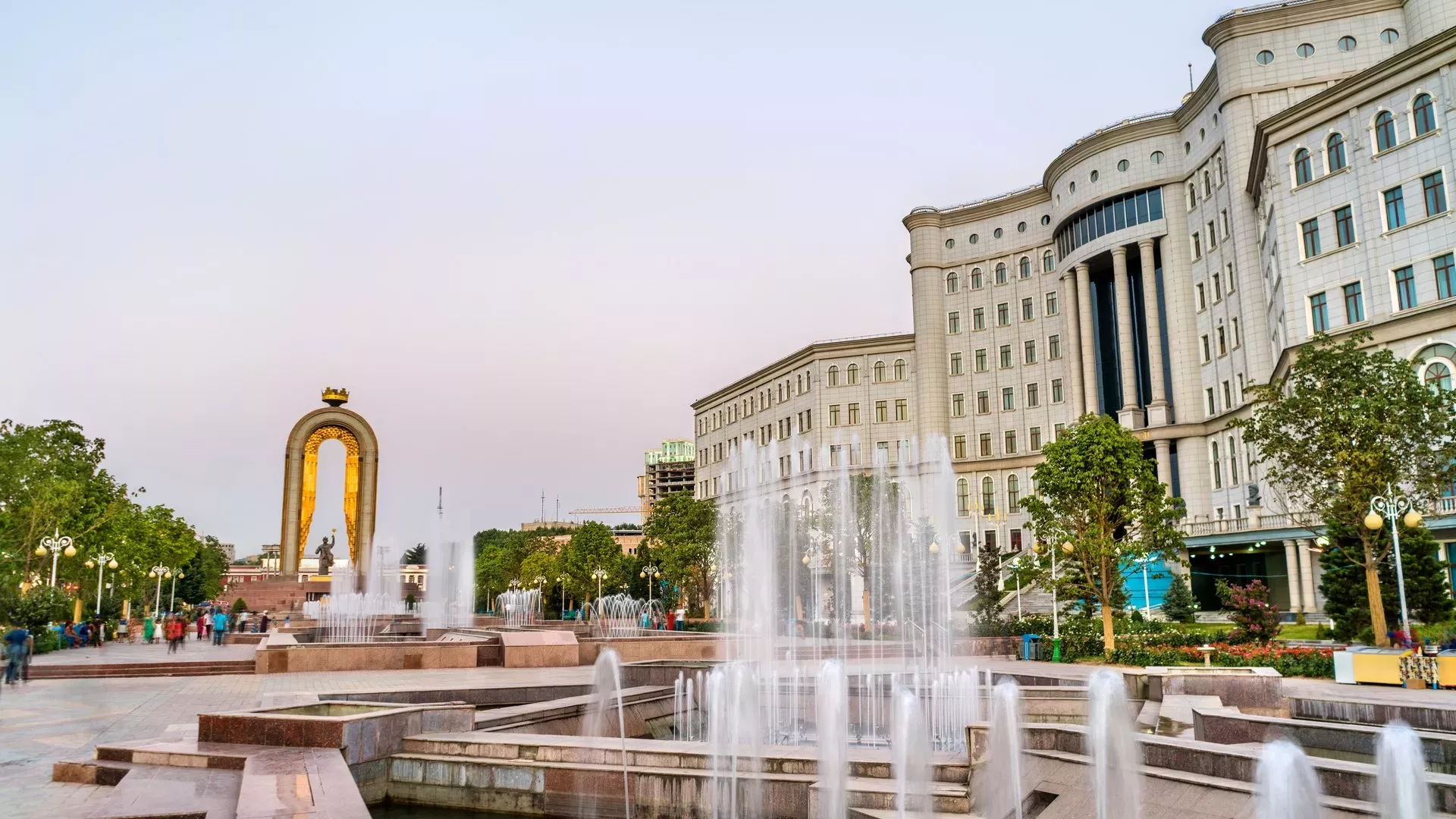
The next day we continue our overland journey to Tajikistans capital, Dushanbe, which lies 130 km from Iskanderkul. We cross one of ancient Sogdianas historic and famed mountain passes, the 60-km Anzob Pass at 3,300 m. We reach Dushanbe at midday. We check in to the hotel weve chosen to stay at, drop our things in the room, and head out to get to know the city.
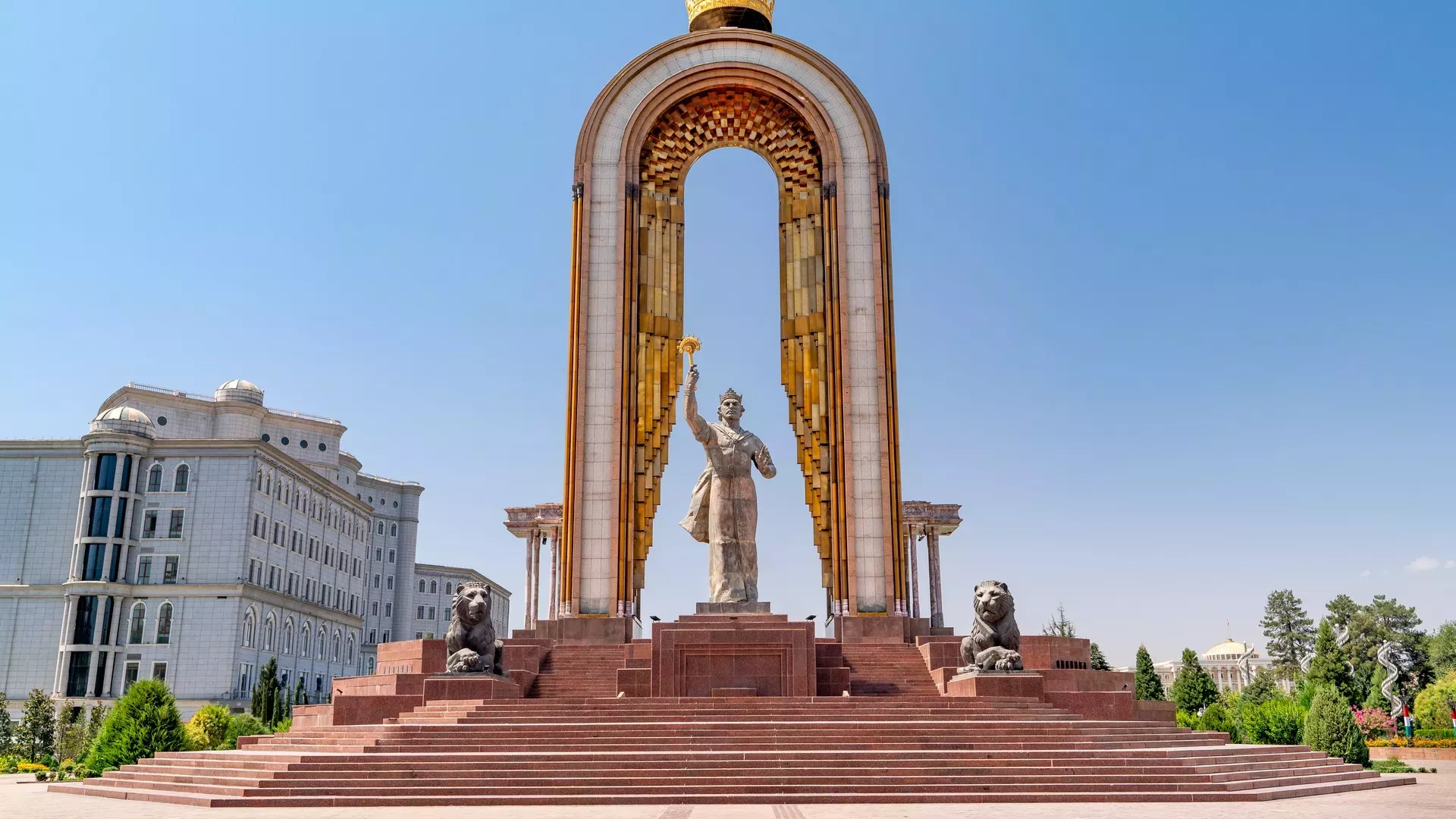
Tajikistan, like other countries in Central Asia, was part of the Soviet Union from 1917 to 1991. In 1929 the city was renamed Stalinabad. We pass along the central boulevard—formerly Lenin Avenue—shaded by soaring plane trees. A stroll along Rudaki Avenue is a walk through Dushanbes history. We continue to Friendship Square (Dustin), with the giant statue of national hero Ismoil Somoni standing before the parliament, and finally end up at the archaeological museum.
The Tajiks are a nation with a rich history, intertwined with the shaping and development of Buddhist, Zoroastrian, Hellenistic, and Islamic civilizations. We focus on finds from the Hellenistic period, mainly from the archaeological site of Takht-I-Sangin (a city of the Greco-Bactrian kingdom), with a temple dedicated to the Oxus River, on which this ancient city stands, in southern Tajikistan. A 3rd-century BC portrait of Alexander the Great depicted as Heracles, a dish portraying hunting scenes, and the god Apollo in his youth are among the pieces we see. Also outstanding are the 5th- to 7th-century AD frescoes from the medieval city of Penjikent, which we visited the previous day. Enchanted by the museums exhibits, we leave and continue to Hissar Fortress, 30 km from Dushanbe.
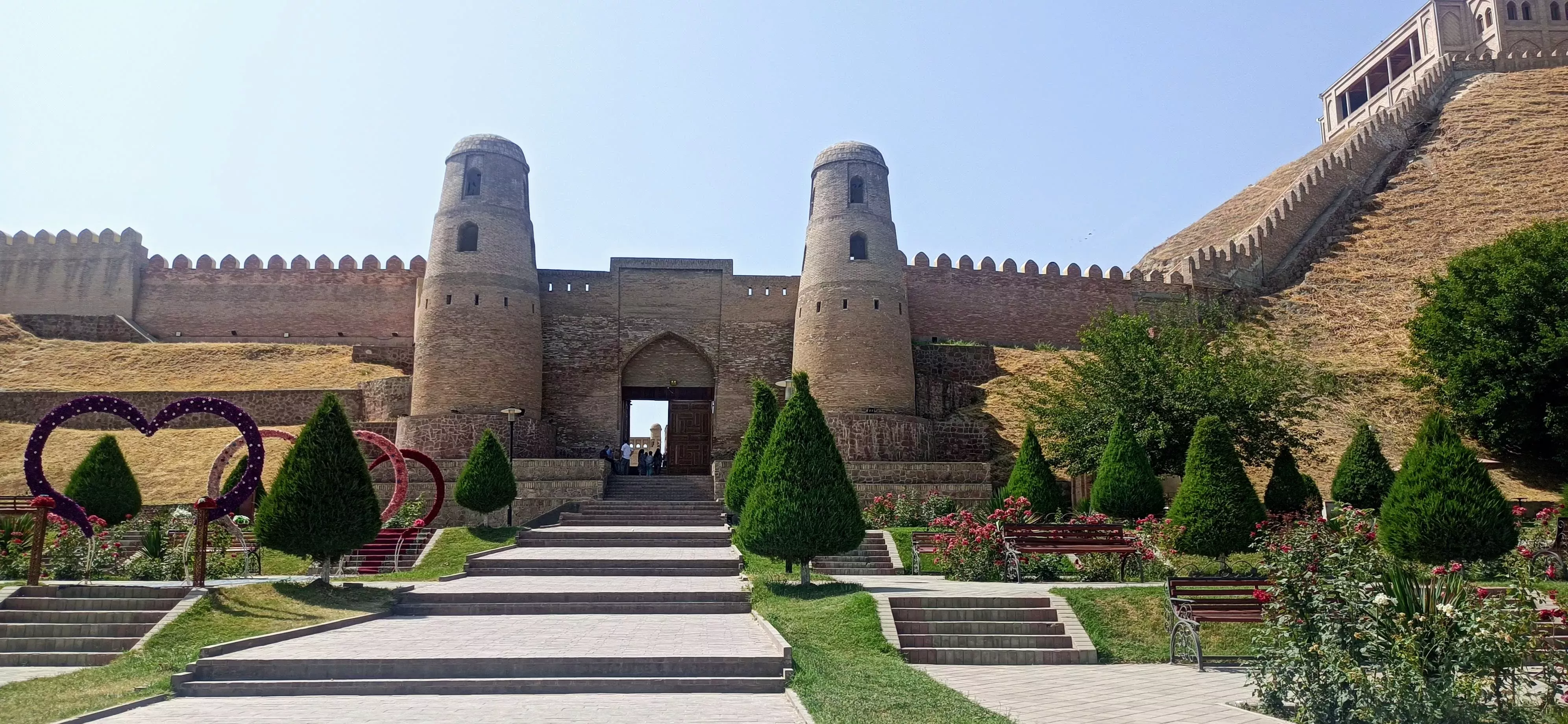
Hissar Fortress, built 2,500 years ago, is one of Tajikistans most important historical monuments. Due to its strategic location and later as a significant Silk Road stop, Hissar Fortress often became a target for conquerors, from the Mongols to Genghis Khan. Among the conquerors was Alexander the Great. As the fortress was destroyed countless times by successive invaders, very little remains of the ancient stronghold. The main gate, the most impressive feature dating from the 16th century, underwent many renovations to the point that today it is unclear how closely it resembles its original structure.
In front of the fortress lies Registan Square, bordered by two madrasas (religious schools), an 8th-century AD mosque, and a caravanserai from AD 1800. On weekends, the fortress, and especially the central gate, is a popular spot for Tajiks to take wedding photos, and for children playing with electric cars on the square. Late in the afternoon we return to Dushanbe. The next day we start a seven-day, 1,300-km road trip along the Pamir Highway that links Tajikistans capital, Dushanbe, with Osh, the second largest city in southern Kyrgyzstan.