





A journey through Central Asia, where breathtaking landscapes blend with monuments of the distant past.
One of the most fascinating road trips in Uzbekistan is the journey to the Surkhandarya region,in the southern reaches of Uzbekistan, which blends the breathtaking beauty of natural landscapes with monuments of the distant past such as open-air museums, Buddhist temples, and the ruins of ancient settlements. Since antiquity, Surkhandarya linked the ancient cities of Sogdiana, Bactria, and India. Alexander the Great and Genghis Khan passed through here.
The most significant and oldest city of this region is Termez.So, while we are in Samarkand, we decide to rent a car with a driver and visit Termez, which lies 390 km to the south in Uzbekistan, on the border with Afghanistan. We leave the next morning for Termez with an intermediate stop in the city of Shakhrisabz, Tamerlane’s birthplace. The distance from Samarkand to Shakhrisabz is close to 90 km. We pass along the foothills of Mount Aaqrafshan. The route is beautiful, with dramatic scenery unfolding at every turn of the road.
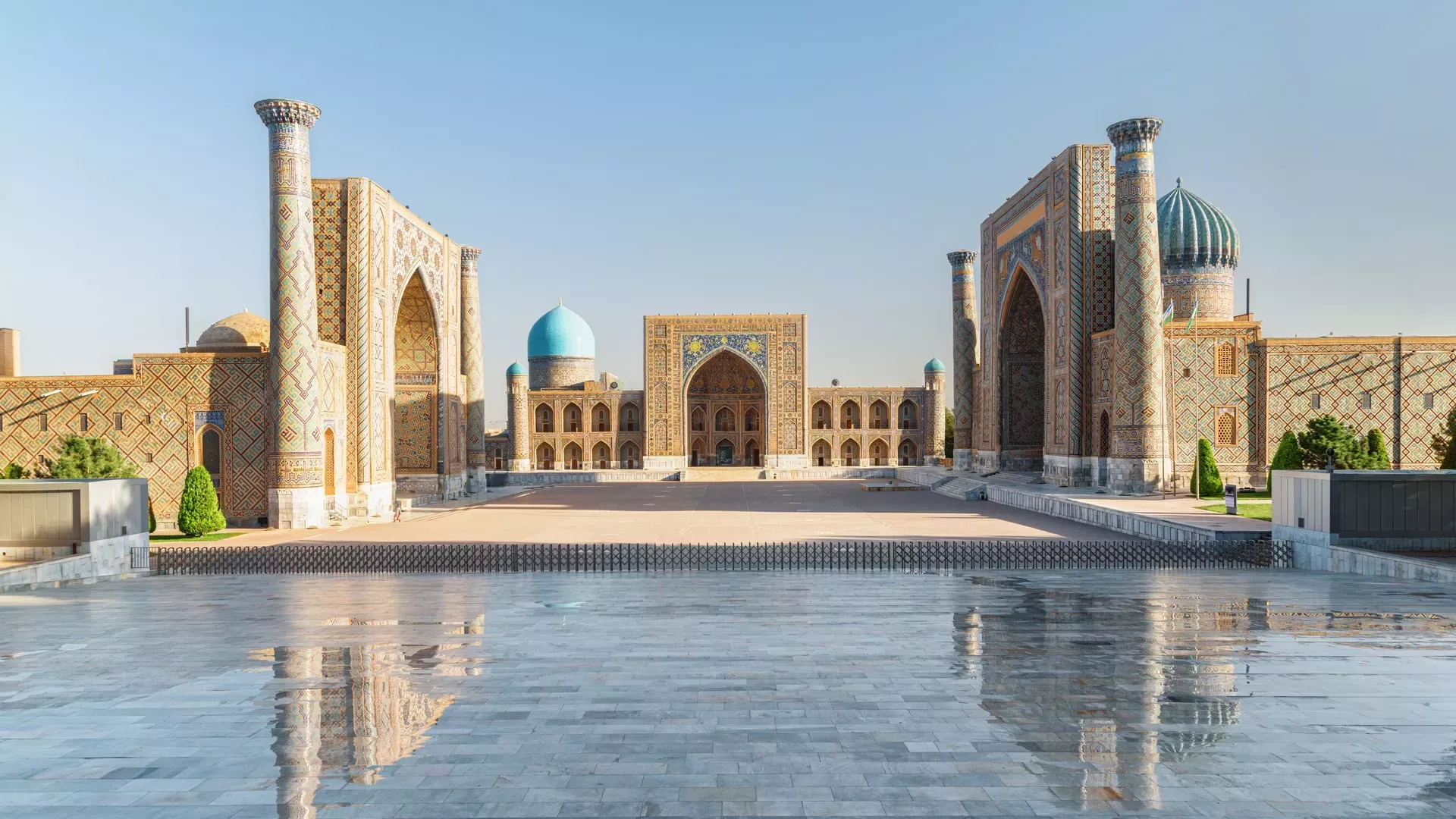
We reach the Kitob (Takhta-Karacha) pass at 1,600 m. Caravans of the Silk Road once passed here, as did the army of Alexander the Great en route from «Alexandria on the Oxus»(Termez) to ancient Maracanda (Samarkand). Along the way we come across an open-air market with stalls laden with mountain herbs and honey, while a few meters further down, lamb—a local, traditional dish and Tamerlane’s favorite—is being cooked in clay ovens.
We make a stop to admire the magnificent mountain view. Far below, we see the road we will follow snaking through the lush green slopes. The scene is superb and we relish it.
After about an hour and a half we arrive in Shakhrisabz.The city has a certain splendor, perhaps because it was intended to become the capital of Tamerlane’s Empire, which ultimately became Samarkand. There are many sights built during Timur’s reign in the 14th century AD. All are clustered in the city’s historic center, which is also a UNESCO World Heritage site.
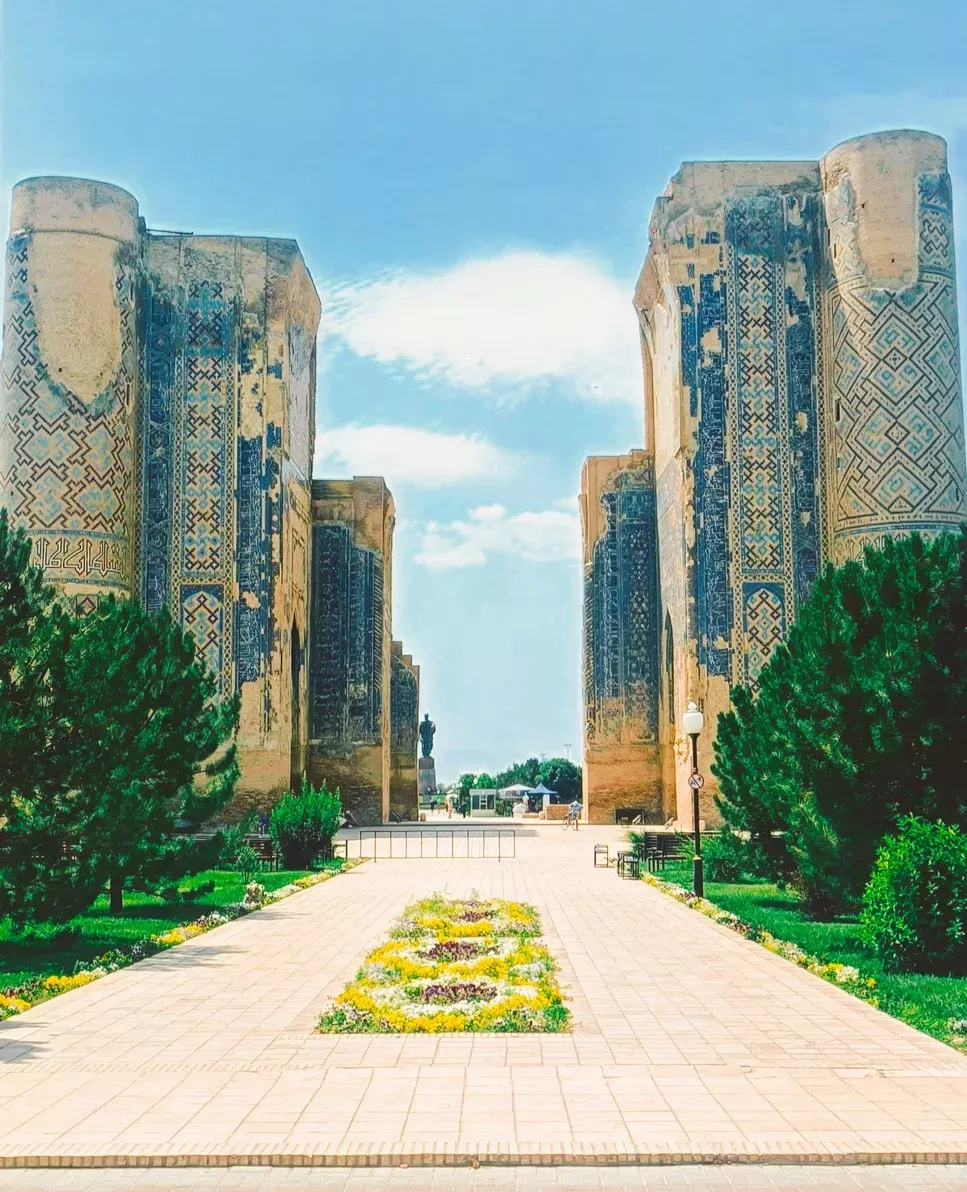
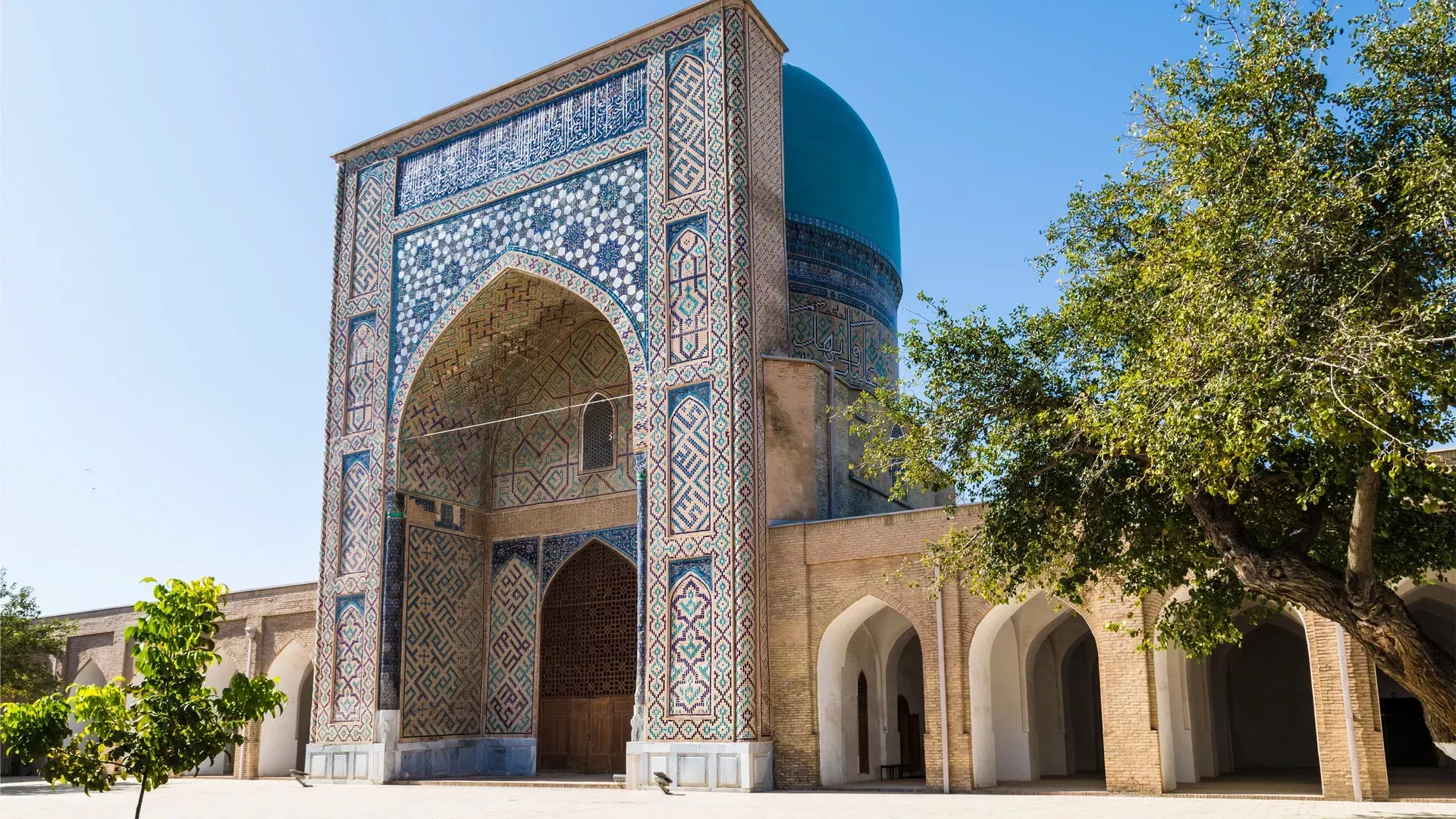
We are going to visit the Ak Saray Palace, at whose monumental gates brides in pristine white gowns and tiaras pose for photos today. We then head to the Timurid dynasty’s family tomb, Dorus Saodat, meaning “seat of power,” where Timur’s eldest and most beloved son, Jahangir, was buried after falling from a horse at the age of 20. In the southwestern corner of the garden stands the Kok Gumbaz Mosque, built by Tamerlane’s grandson, Ulugh Beg.
We sit for a while out in the garden, sip a tea, and then depart for Termez. Throughout the drive, mountains alternate with plains. We arrive late in the afternoon. In the evening we go out for dinner at a restaurant recommended by our hotel, 13 km outside the city, beside the Oxus River, in a lush green park. Due to rain, we have to move into a yurt (tent) to continue our dinner, which consists of river-caught fish and plov, Uzbekistan’s national dish.
The city of Termez lies on Uzbekistan’s southern border with Afghanistan, on the right bank of the Amu Darya River. It is considered one of the oldest cities in Central Asia. The modern city was founded in the 14th century. Old Termez, located 5 km northwest of the modern city, was completely destroyed by the Mongols of Genghis Khan in 1220.
Termez, aside from the Archaeological Museum, is not particularly compelling. The area around the old city, however, is dotted with intriguing archaeological sites. Termez is tied to three events: a) The founding of “Alexandria on the Oxus” by Alexander the Great in 329 BC; b) A center of early Buddhism in the 1st–2nd century AD; and c) The Soviet Union’s base for military operations in Afghanistan during the Soviet–Afghan War, 1979-1989.
In the morning, we meet at the hotel with Sergei, who will be our driver in Termez. We set off with our first visit to Kampir Tepe, 30 km outside the city. Kampir Tepe is considered to be the ancient city of «Alexandria on the Oxus» founded by Alexander the Great in 329 BC. Before we arrive, we make a stop to see the Stupa Zurmala, which is surrounded by cotton fields. It is a cylindrical tower of unbaked bricks 12 m high, the remnant of the largest Buddhist stupa in the area. It was built during the Kushan Empire, in the 1st to 2nd century AD, when Buddhism dominated Central Asia.
Kampir Tepe


We continue our route to the ancient city of Kampir Tepe, on the bank of the Amu Darya (Oxus) River. The Kampir Tepe fortress is among the oldest archaeological sites in Uzbekistan, formed across three periods: early Hellenistic, Greco-Bactrian, and Kushan. In 2018 archaeologists demonstrated that the legendary city of «Alexandria on the Oxus» stood here.
The complex consists of a main acropolis surrounded by a moat and walls and an unfortified suburb. In addition to residences, harbor buildings were identified, as there was a port beneath the Acropolis. The city flourished from its founding by Alexander the Great in 329 BC until the 1st century AD. Today, the Amu Darya flows five kilometers south of the ruined city within Afghan territory.
The numerous finds, as well as the architectural features of the ancient site, indicate the coexistence of various cults and religions for centuries. Zoroastrians, Buddhists, worshippers of ancient Greek gods, and adherents of local cults lived together peacefully. Thus, Greco-Buddhist art emerged. It is no coincidence that many archaeologists have called Kampir Tepe the Pompeii of Central Asia.
Fayaz Tepe


We continue our visit to Fayaz Tepe. It is a Buddhist monastery whose site foundations date to the 1st century AD, with activity peaking in the 3rd–4th century AD. Fayaz Tepe played a pivotal role in the spread of Buddhism, which started in India and reached Termez at the end of the 1st century AD, turning the city into a center of early Buddhism. At the same time, Termez was an important stop for Silk Road caravans, which, beyond transporting goods, also carried ideas, cultures, and religions. In this way, Buddhism, following the Silk Road, reached China.
Kara Tepe
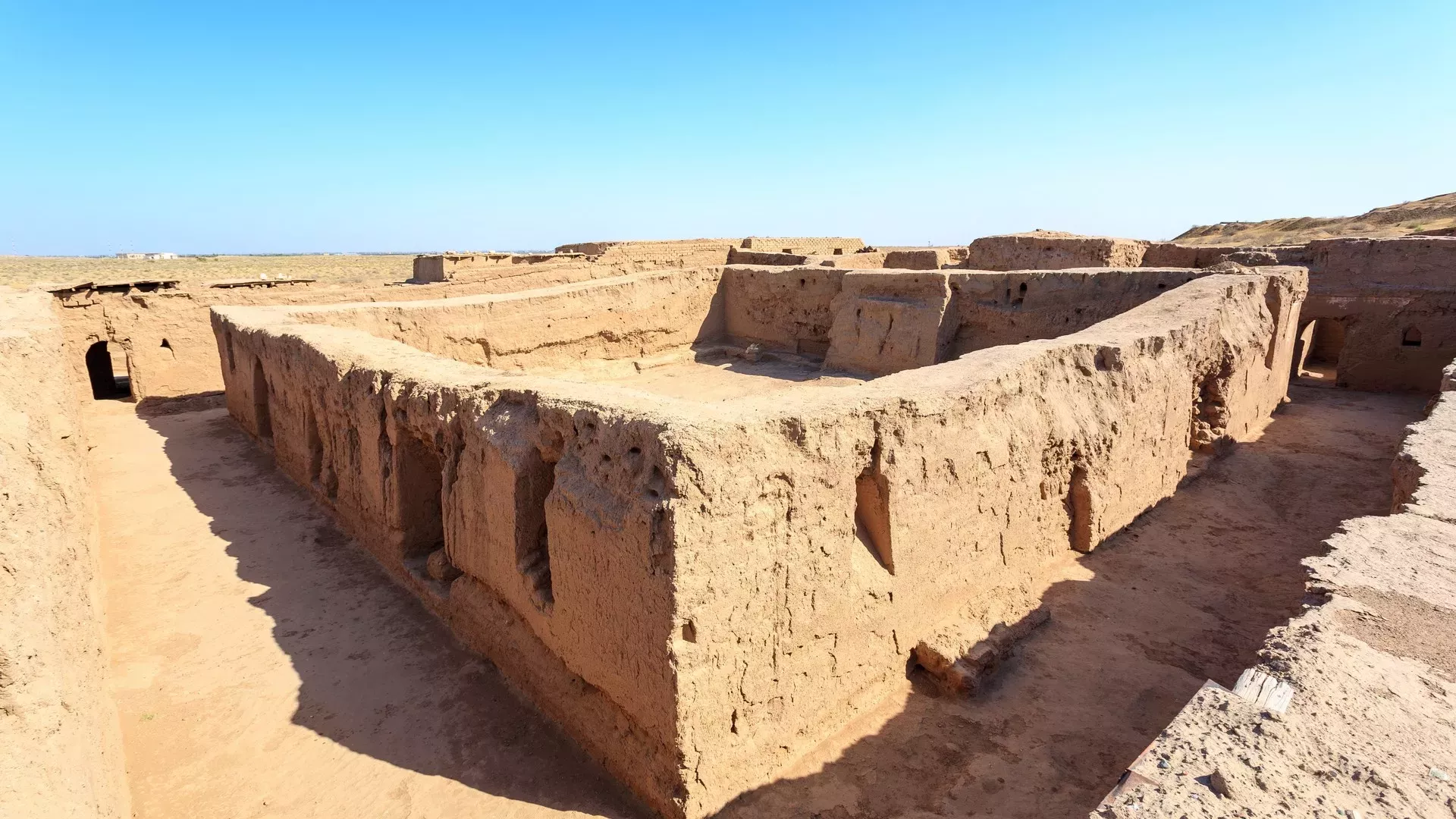
Opposite Fayaz Tepe, on the border with Afghanistan and at a distance of one kilometer, lies Kara Tepe, one of the oldest surviving Buddhist cave monasteries in the world, which appeared in the 2nd century AD. The site of the Buddhist complex lies in a military zone between Uzbekistan and Afghanistan, something the presence of an electrified fence and a metal military watchtower constantly reminds us of. For this reason, access is not always possible.
We, however, were able to visit it. The site includes remnants of Buddhist temples with colorful monastic frescoes, cave cells that were used as burial places, and a series of mudbrick buildings. Kara Tepe was at its peak in the 2nd and 3rd centuries AD.
Old Termez
Returning to the city, we pass by the site of Old Termez, an important city that flourished in the 1st century BC and was destroyed by the army of Genghis Khan in the 13th century. In the 15th century, the mausoleum of Hakim al-Termezi, a 9th-century Sufi scholar and mystic, was built. Today the site is an important place of pilgrimage.


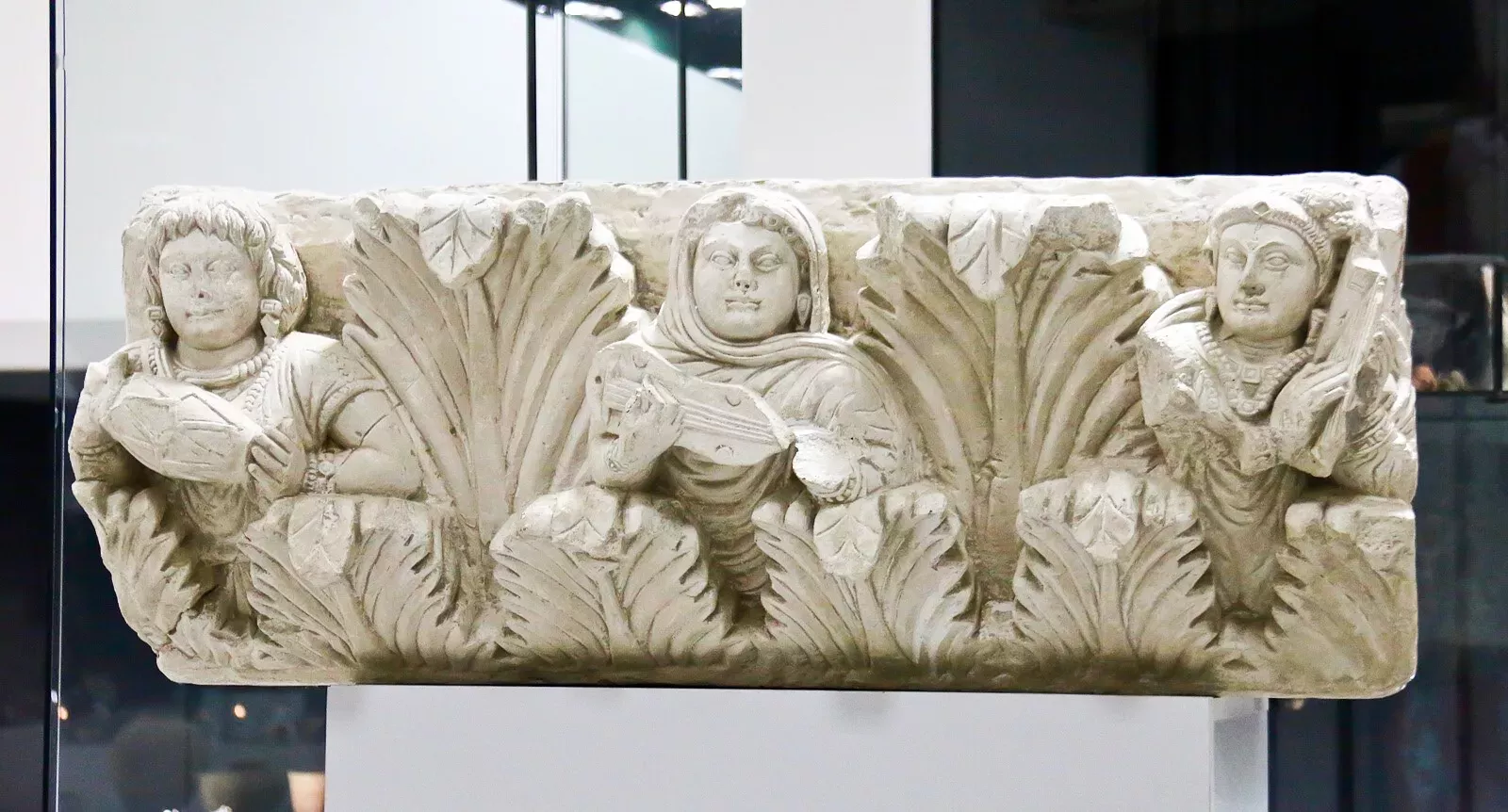
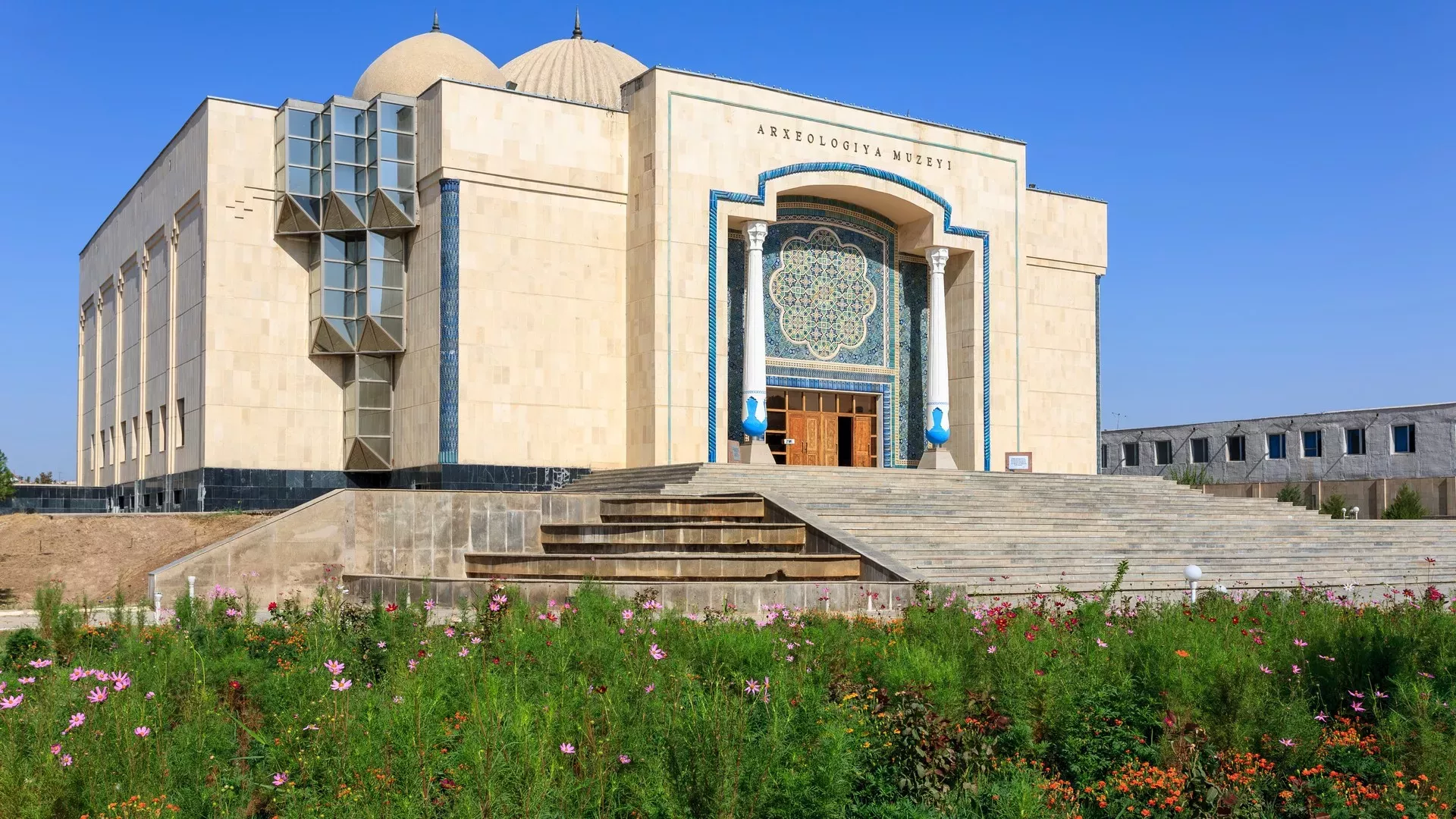
In the afternoon we return to Termez and go to the archaeological museum, which houses unique treasures of Greco-Buddhist art, with clear Hellenic influences preserved from Hellenistic cities of Central Asia. Greco-Buddhist art, Sergei explains, was born from the Hellenic substrate that came from the Greco-Bactrian and Indo-Greek kingdoms and the later establishment of Buddhism in India. Our visit to the museum was truly a journey into the world of archaeology.
The next day, as we fly in the afternoon to Tashkent, we have the morning free to get to know modern Termez. Walking through the city, you get the impression of a Wild West town, due to the steady flow of contraband goods and cocaine from Afghanistan northward, and alcohol smuggling in the opposite direction, via the «bridge of friendship» Afghanistan-Uzbekistan, over the Amu Darya River.
Termez served as the base for the Soviet Union’s military operations in Afghanistan (Soviet-Afghan War 1979-1989) due to Russia’s (Soviet and Tsarist) expansionist policy, with more than 100,000 Soviet troops stationed in Termez. The 816-meter-long «bridge of friendship» was built then as well.
In 1989 the Soviet forces withdrew defeated, bringing the conflict to an end. I remember the iconic photograph of the withdrawal of the military forces across the «bridge of friendship» in the newspapers of that time, noting that this war was a catalyst for the dissolution of the Soviet Union.
Before leaving for the airport, we take a brief stroll through Termez’s covered bazaar, awash with colors and aromas from the wide variety of goods.