





Mountain villages - quiet retreats ideal for weekends of relaxation in nature.
Tranquil stone squares, dense forests to explore, and great food. From Mainalo to Parnon and from Parnassos to the Zagorochoria, we've gathered seven picturesque and peaceful villages for those of you seeking new destinations for the coming weekends. These nature-immersed destinations promise guaranteed relaxation and rejuvenation so you come back with your batteries fully charged.
Zygovisti, Arcadia
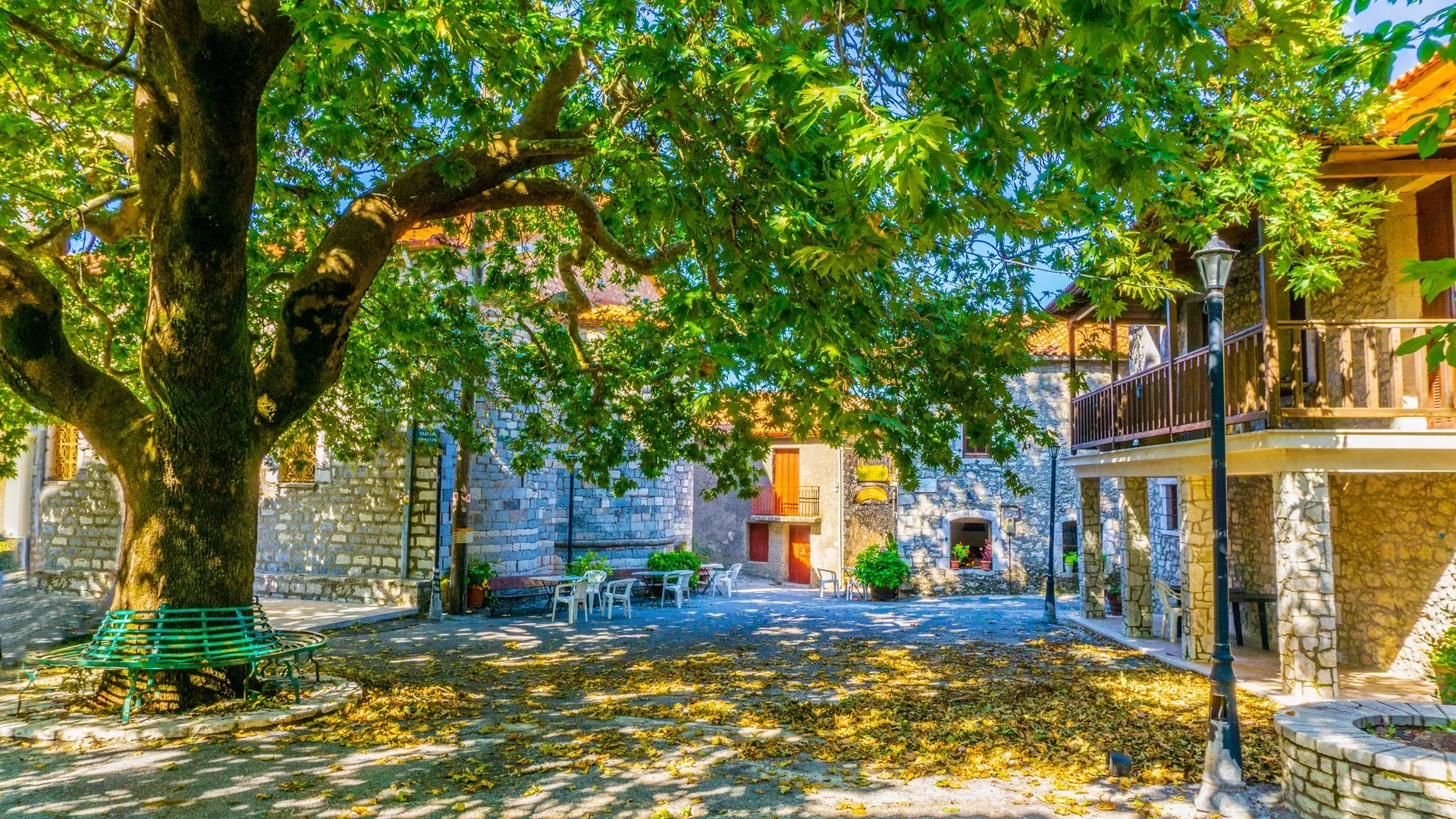
Built at an elevation of 1,160 meters, Zygovisti is a picturesque village nestled in the heart of Mainalo's fir forest, just a few kilometers from Dimitsana. It's one of the most mountainous villages in the Peloponnese and has been declared a traditional settlement. Stone houses topped with tiles blend beautifully with the lush green landscape. At the village entrance, an original marble monument welcomes you: an open book inscribed with the names of all Zygovisti's fighters, some of whom Kolokotronis had included in his bodyguard as the 'immortal corps'. The Church of the Transfiguration of the Savior, with its elaborate carved wooden iconostasis, was built in 1810 and, remarkably, within 40 days! Also preserved is the building of the Kapodistrian school, erected in 1830. One of the village's distinctive features is its abundant running water, which is why there are many springs, such as the Upper, Lower, and Middle Spring, as well as Drakouna Spring.
Tsinzina, Laconia
Hidden among firs in the heart of Parnon, with traditional stone houses built amphitheatrically on three slopes, the village of Tsinzina (also known as Polydroso) feels like a refuge and is ideal for getaways in every season. It's perfect for those seeking relaxation and tranquility, and thanks to nine waymarked trails of varying difficulty it serves as a hugely popular base for hikes on Parnon and nature-focused excursions in general. If you're in the mood to explore, around Tsinzina you'll discover caves, springs, and quaint little chapels. Among the village's most important sights are the Monastery of Agioi Anargyroi and the Church of St. Vlasis, with frescoes by Fotis Kontoglou.
Ano Vlasia, Achaia
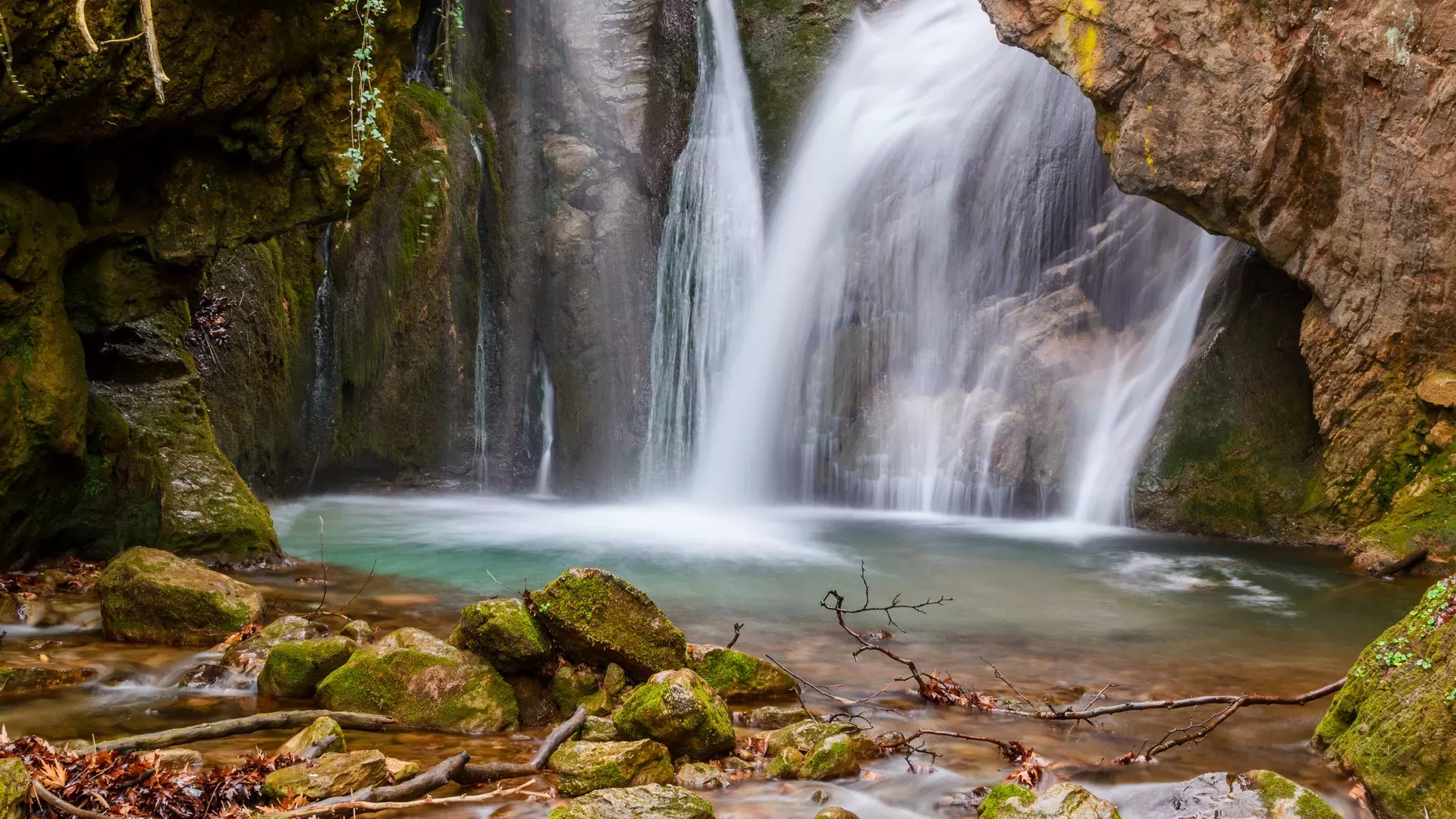
One of the most beautiful and least explored villages of Kalavryta is Ano Vlasia. Here you'll be impressed by the greenery everywhere and the superb Taxiarchis Waterfalls just outside the village. These are the waterfalls of the Selinountas River, which springs from Mount Erymanthos and flows into the Corinthian Gulf. The falls (in fact a double waterfall) are at the end of the gorge, where the river seems to disappear into a cave. Using the village as your base, you can visit the Monastery of Agia Lavra, the Monastery of Mega Spilaio, the picturesque town of Kalavryta, the Cave of the Lakes, the medieval Castle of Oria, and the Kalavryta Ski Center.
Vargiani, Fokida
The small 'noteworthy traditional settlement' of Vargiani, with handsome stone-built houses and running waters from the Bourboula springs, emerges from the impressive forests of western Parnassos at an elevation of 880 meters. In the village's cobbled square you'll find tavernas and a traditional café to sip your coffee under the plane trees, with the picturesque bell tower of Agia Paraskevi as a backdrop, gazing at the slopes of Parnassos on one side and Giona on the other. The Bourboula springs, Vargiani's folklore museum, and the aqueduct pique visitors' interest. From Vargiani begins the trail that leads to Neraidospilia, an impressive cave whose interior features stalactites and stalagmites, as well as pools of water.
Fidakia, Evrytania
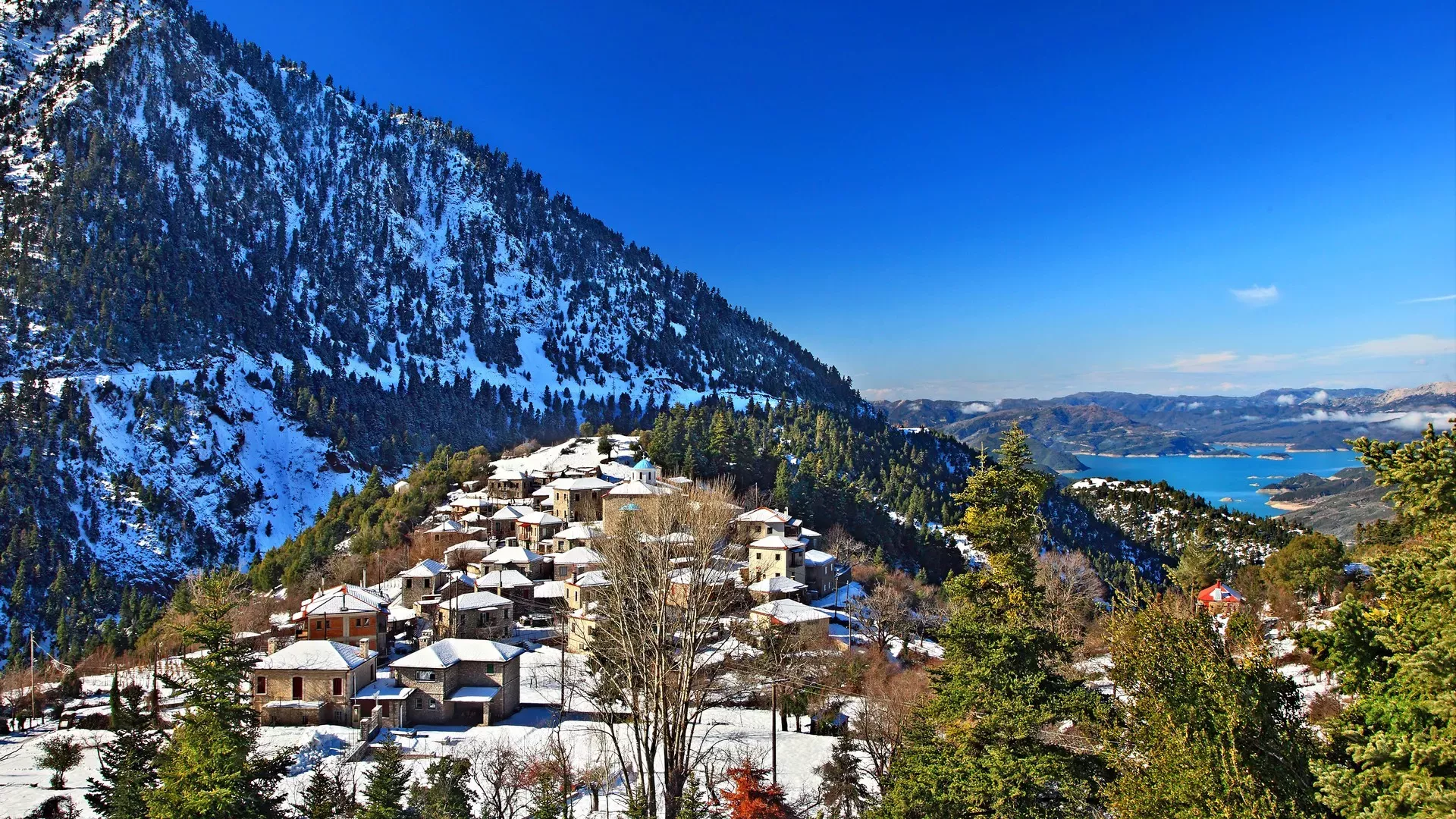
One of Evrytania's most beautiful villages, 25 km from Karpenisi, Fidakia spreads its stone houses across the slopes of Mount Chelidona and stands out for the superb views it offers over Lake Kremasta from an elevation of 960 m. This small village, designated a traditional settlement, is perfect for a relaxing escape. The blue dome of the Church of the Nativity of the Theotokos in the main square stands out from afar. Cobbled alleys, old mansions, well-preserved houses, and flower-filled courtyards set the scene in this beautiful corner of Evrytania. Just 3 km from the village, you'll reach the Tsangaralona viewpoint to enjoy the sunset and the enchanting view of Lake Kremasta, which is the largest artificial lake in Greece.
Vovousa, Zagori
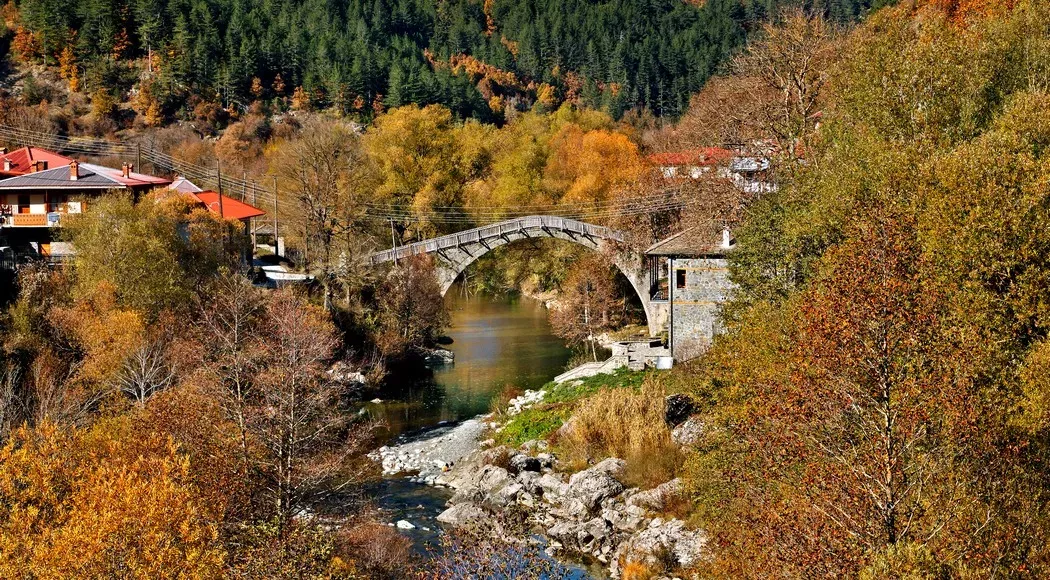
Vovousa (or Vovousa) is the most remote village on the eastern side of Zagori. It's one of Ioannina's hidden - 'gems' and one of the gateways to the Valia Kalda National Park. It's at an elevation of 1,000 meters and 77 km from the city of Ioannina. The Aoos River runs through the village, dividing it in two. The village most likely took its name from the roar of the river's waters. The setting is fairytale-like in every season, with the river slicing the village in two and forests of beeches, firs, and black pines spreading all around. The village is adorned at its center with one of Zagori's finest single-arched stone bridges. It was built in 1748 by Alexios Misios and has been recognized as a newer archaeological monument. The Church of Saint George (1814) is the second most important sight you should see.
Milia Metsovou, Ioannina
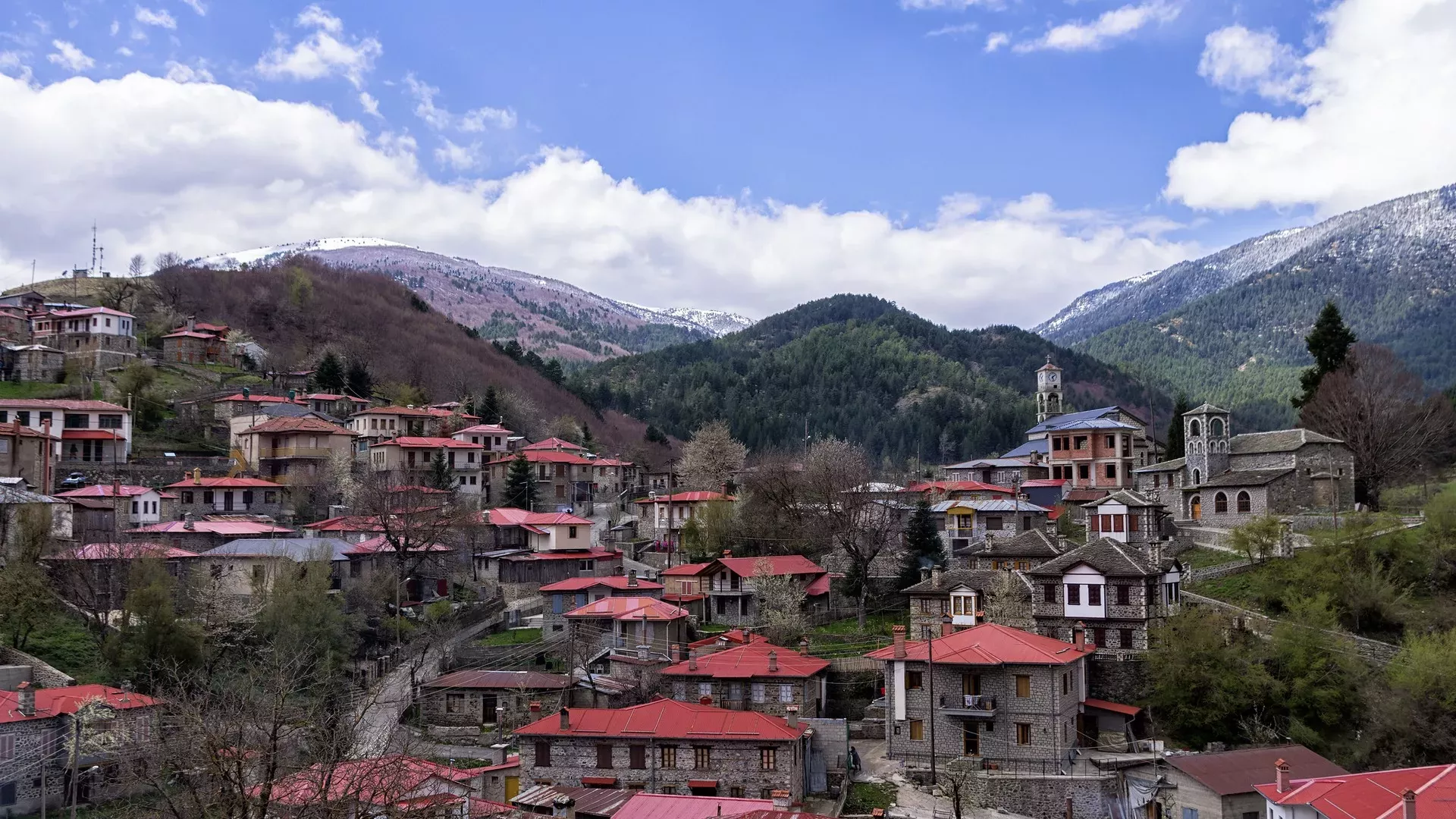
Few will cover the 20 km from famous Metsovo to Milia, which is built at an elevation of 1,160 meters on the slopes of the northern Pindus. Those who do will discover a beautiful village, among the most mountainous in Epirus. Milia (or Amerou, in the local Vlach dialect) belongs to the Municipality of Metsovo and is among the Vlach villages of the Pindus. It's a particularly lively village, steeped in tradition, that hasn't developed touristically. The old stone-built houses with the ontas, the sarai, and the hotziare steal the show, blending so harmoniously with the landscape. The villagers work with woodcraft, a skill passed down from generation to generation. Every family in Milia has a wood-processing workshop, and the village also has two forestry cooperatives. Visitors are struck by the sight of the taxidermied bear, in the center of the village, which was found injured by a local resident and died the same day. The unfortunate animal was preserved and placed in a glass case, in order to raise awareness among residents and visitors to the area.