





Edessa, the city of waters and cherries with a rich history, will enchant you with its unique landscapes.
A city that has undergone change from antiquity to today, Edessa (or Vodena, as it was once called), makes an ideal escape in every season. In the capital of Pella the grandeur of nature meets the urban landscape, offering a scene you won’t find elsewhere in Greece. The famous waterfalls dominate the city center, while streams run along its entire length.
What to see
The waterfalls of Edessa
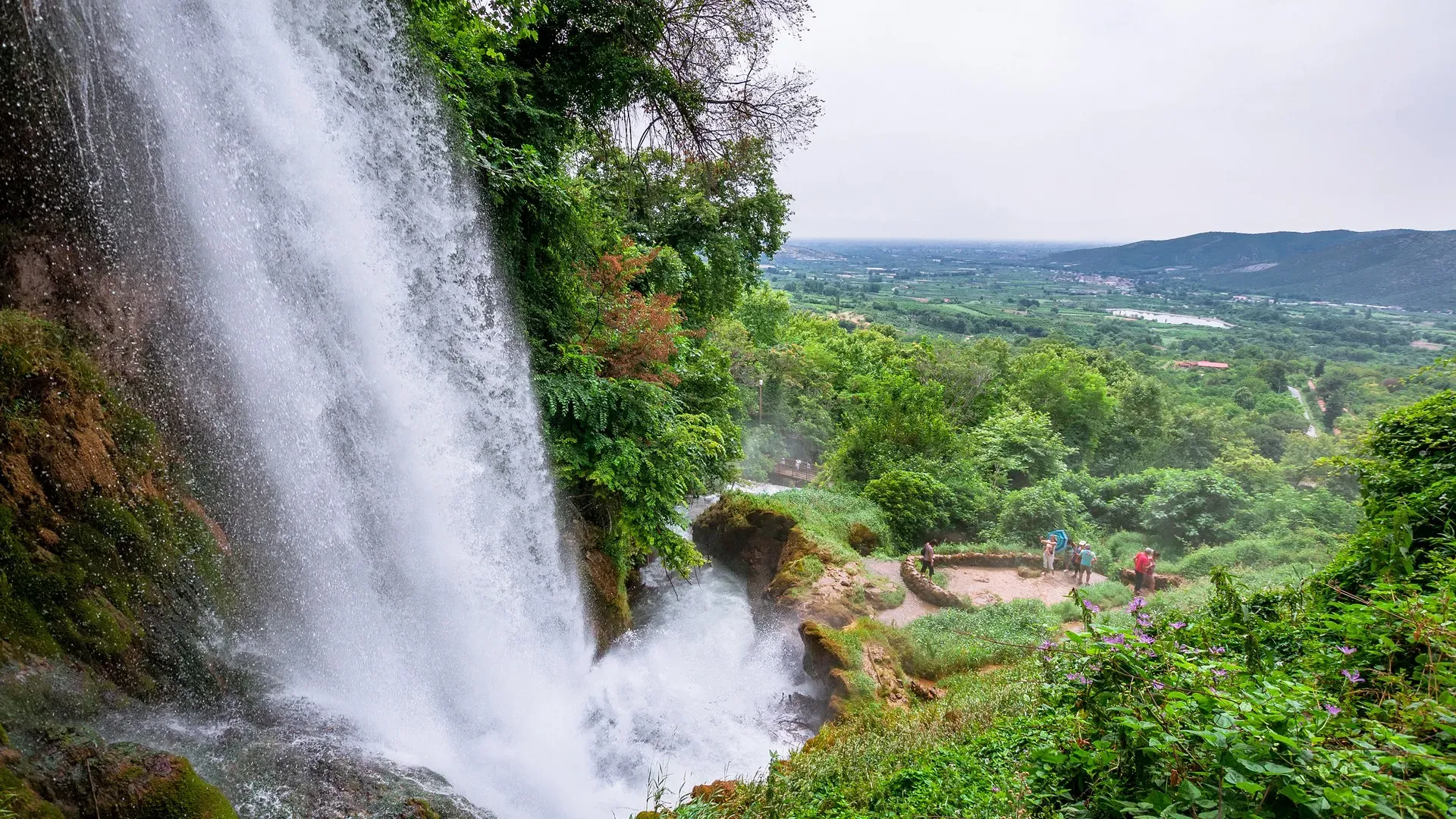
Edessa’s most famous and top attraction is its waterfalls. After all, the city is unlike any other in Greece, offering a rare spectacle to residents and visitors alike. Legends say that every night the water nymph walks lightly among them. Of the twelve found in the city, only two are visible and make their presence felt. The rushing waters that plunge down create a dramatic sound effect. As you approach, you will admire this unique landscape from above as well as up close.
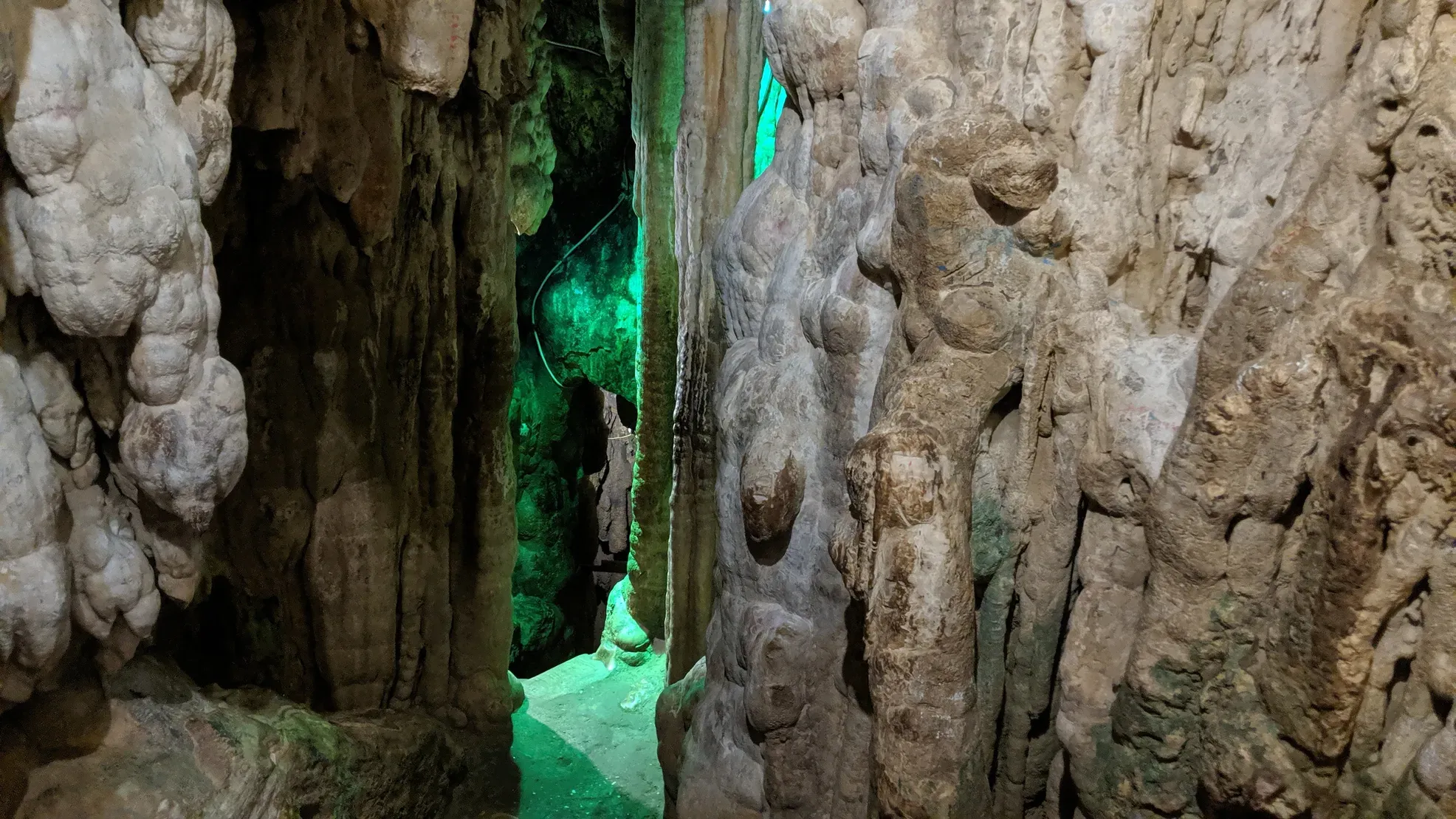
Descending the steps you will come upon the great waterfall Karanos, 70 meters high, said to have taken its name from the mythical founder of the royal house of Macedonia, while you will also be enchanted by the Double Waterfall beside it. Beneath the rock you will discover the hidden Cave of the Waterfalls, a primary cave (formed simultaneously with its rock), unique in its kind. The route inside is just 21 meters, with impressive stalactites in different hues.
The Waterfalls Park
In the lush Waterfalls Park you will travel back in time. The Open-Air Water Museum includes restored industrial buildings that have now been repurposed. At the «Mill of Flavors», which once was a sesame mill, you will get to know the region’s gastronomic culture. There you will learn how an old flour mill worked with the power of water. In the «Mill of Water and the 5 Senses», minerals and rocks are exhibited, revealing the secrets of the city’s rock. There too is the Herb Garden, where you can discover various herb species of the area.
One of the park’s most popular spots is theMunicipal Aquarium- Reptile House of Edessa. You can see up close different species of fish, and it is the only one in Greece where there are 57 species of reptiles. At the Visitor Information Center of Edessa that is also located in the park, you can get the Edessa City Card to reduce the total cost of tickets, as it gives you unified entry to museums and attractions of the city along with a guide-map.
The Loggos Archaeological Site
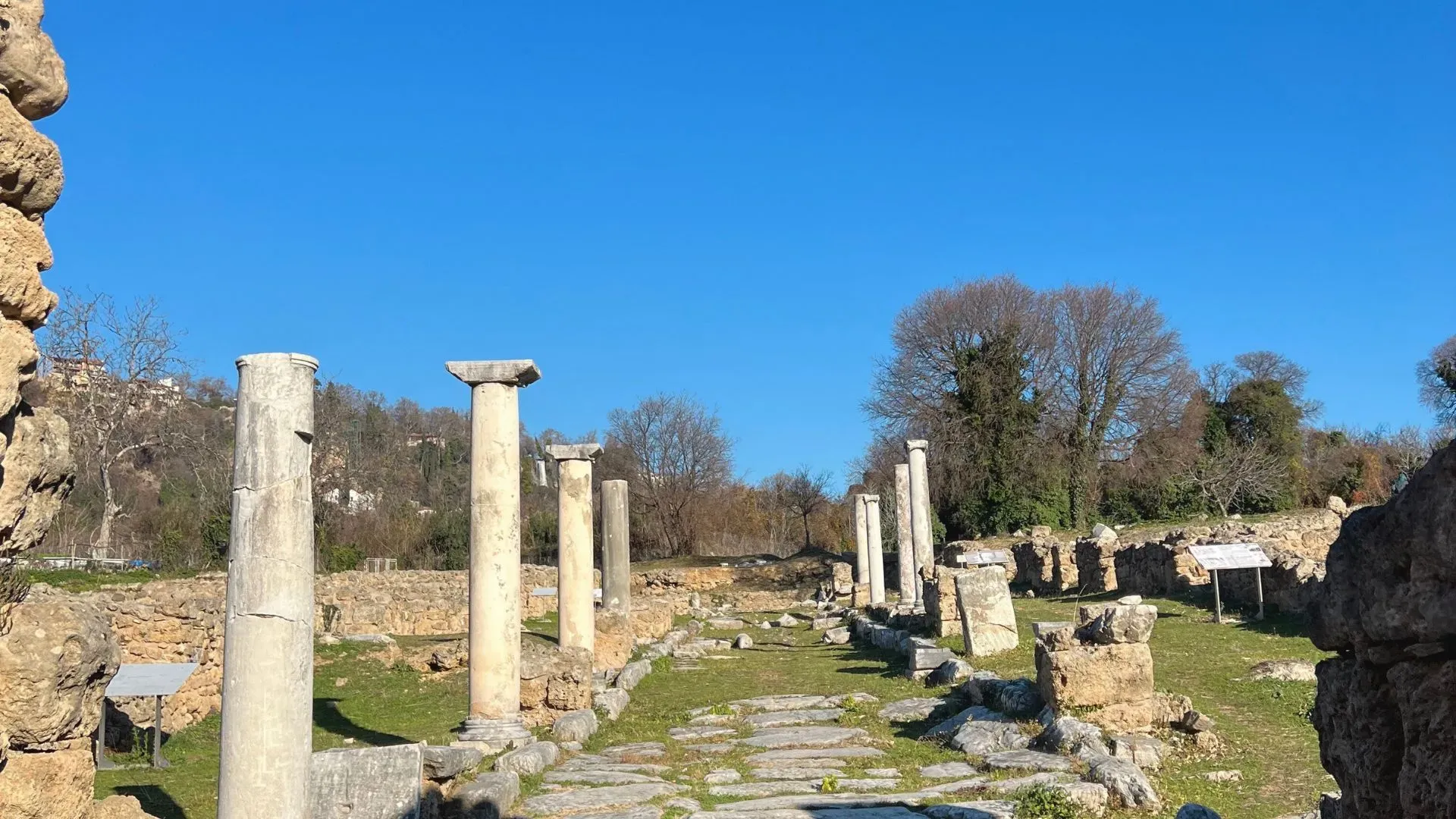
The ancient city of Edessa lies at the foot of the new one. At the Loggos Archaeological Site it is worth devoting a little time to get to know the history of the place better. With today’s Edessa as a backdrop, you will see ruins with remnants of walls from the Early Byzantine period, the paved main street, and remains of residences and public buildings. Together with the Acropolis that stood atop the rock, it formed a strategic point, as the ancient Via Egnatia passed through here.
The Old Metropolis of Edessa
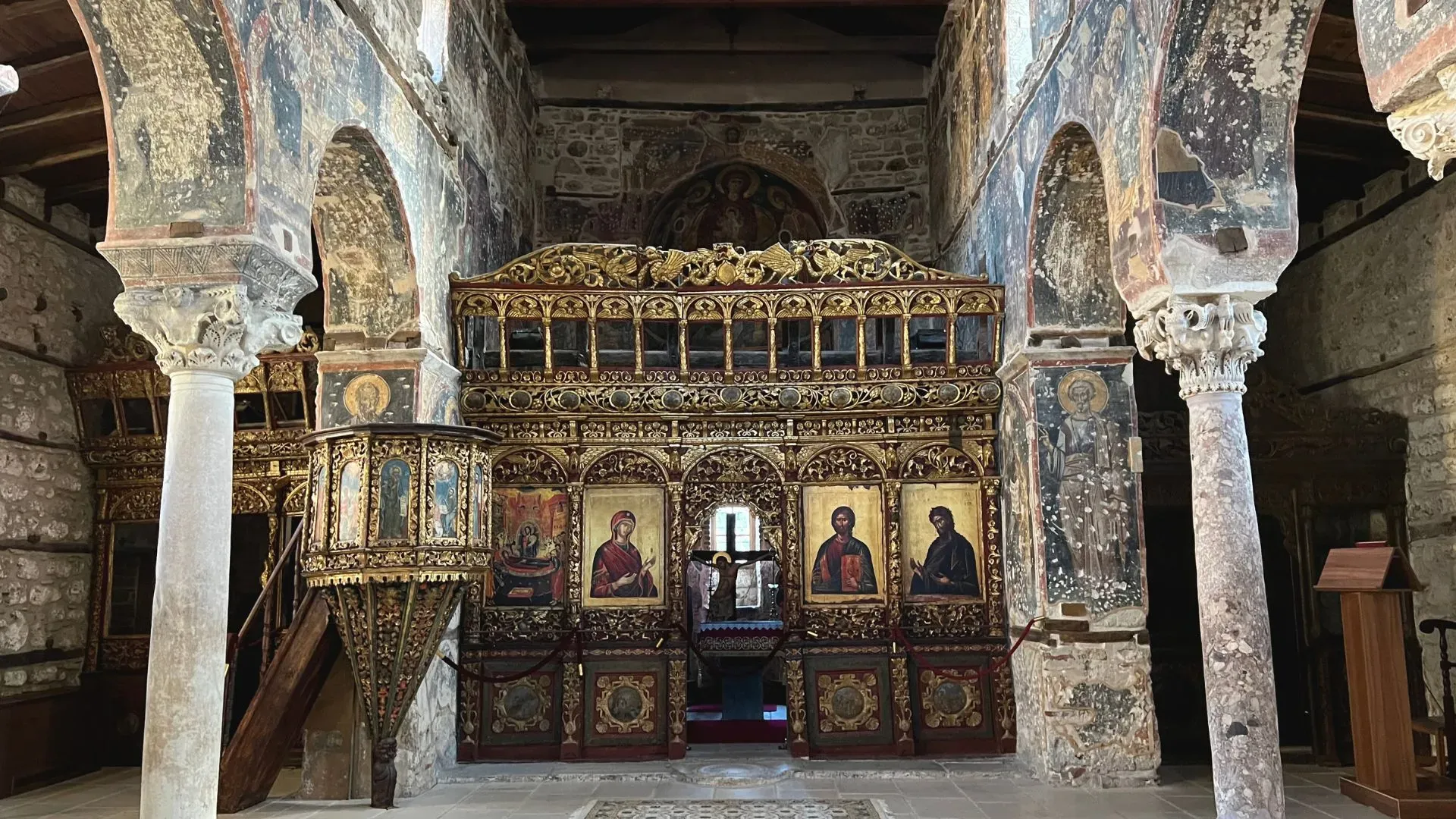
The Holy Church of the Dormition of the Theotokos, the Old Metropolis of Edessa, is one of the two Byzantine churches that have been preserved in the area. Its construction dates to the 14th century and it was initially dedicated to Saint Sophia. In front of the columns that date from the 5th century AD stands the carved wooden iconostasis that impresses, together with the frescoes.
The Edessa Folklore Museum
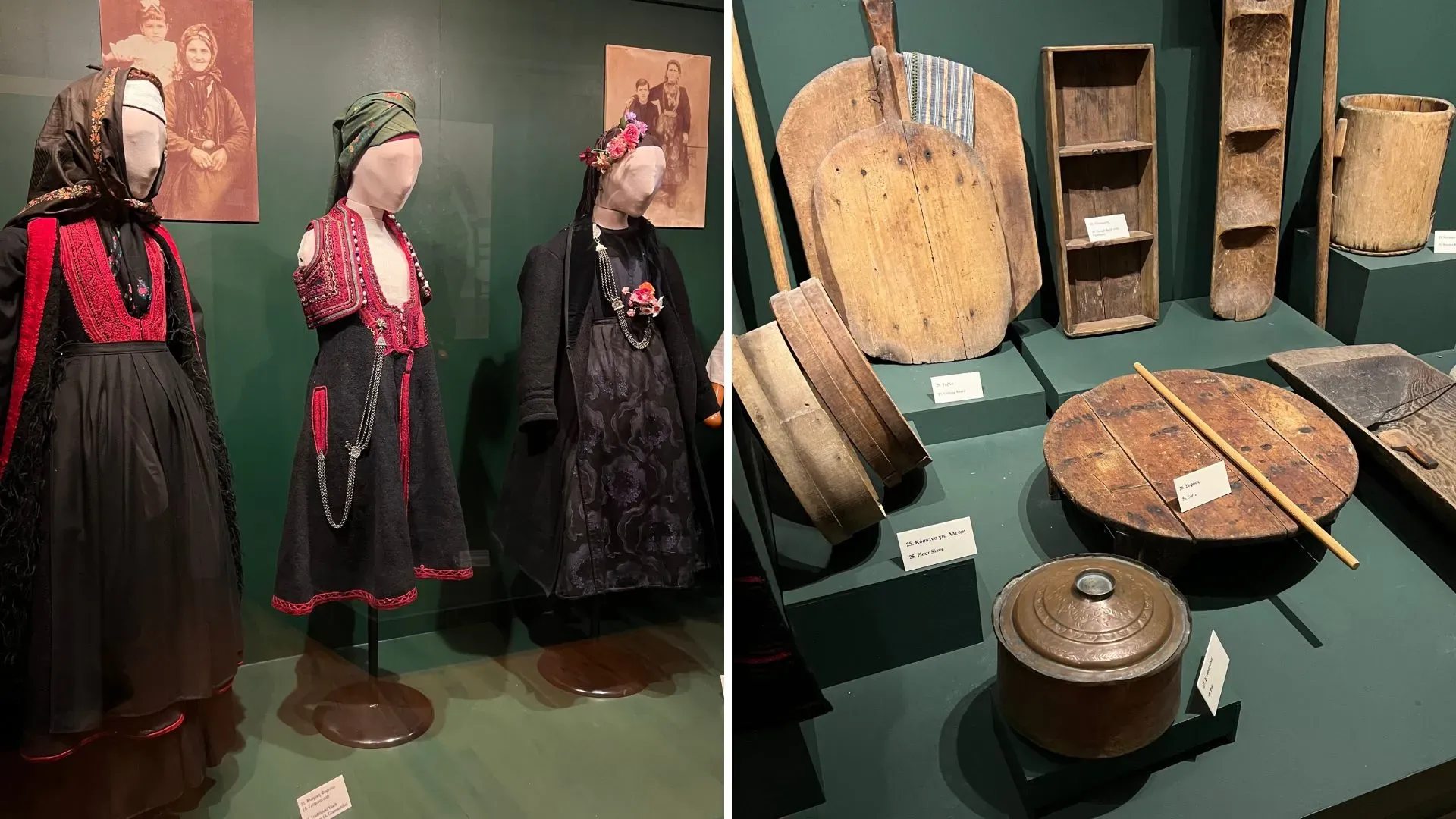
Next to the Old Metropolis stands the Edessa Folklore Museum, housed in a historic 1932 building. There you will tour a rich collection of local costumes and objects from residents’ daily life in past decades. In addition, you will learn all about the city’s entrepreneurial and industrial activity, as it was an important hub in silk production in Greece.
What to do
In a distinctive city like Edessa, every neighborhood has its own charms. It is easy and pleasant to walk, with running waters and little bridges along its length creating a sense of calm.
The largest park and the Kioupri Bridge
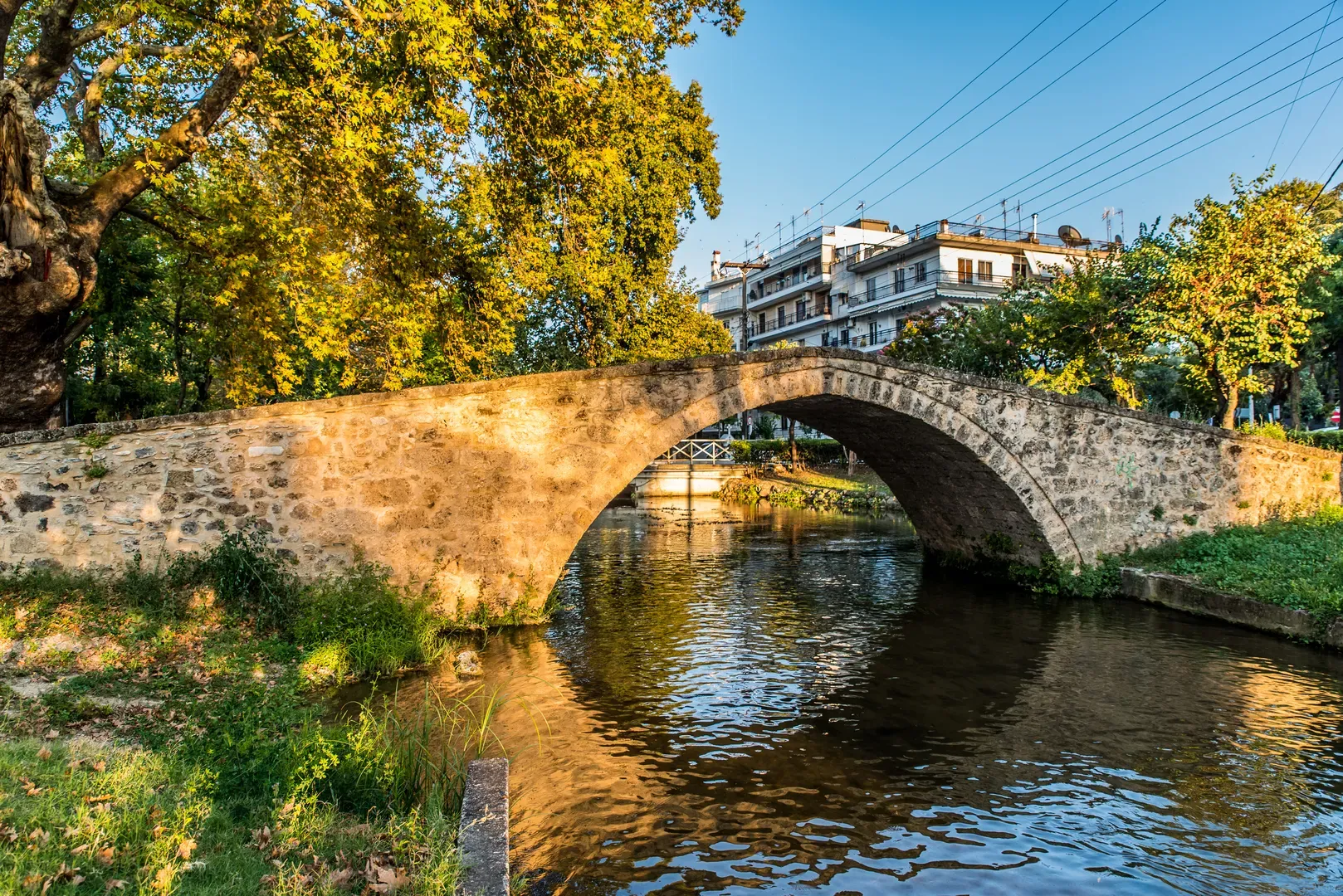
Take a stroll in the park Kioupri, the largest in the city, with its age-old plane trees. Here you will also find the famed Kioupri bridge, a stone arched bridge that locals call Byzantine and which has given the park its name («kioupri» means bridge in Turkish). The reflection of the bridge on the waters creates a living painting.
The stately Varosi quarter
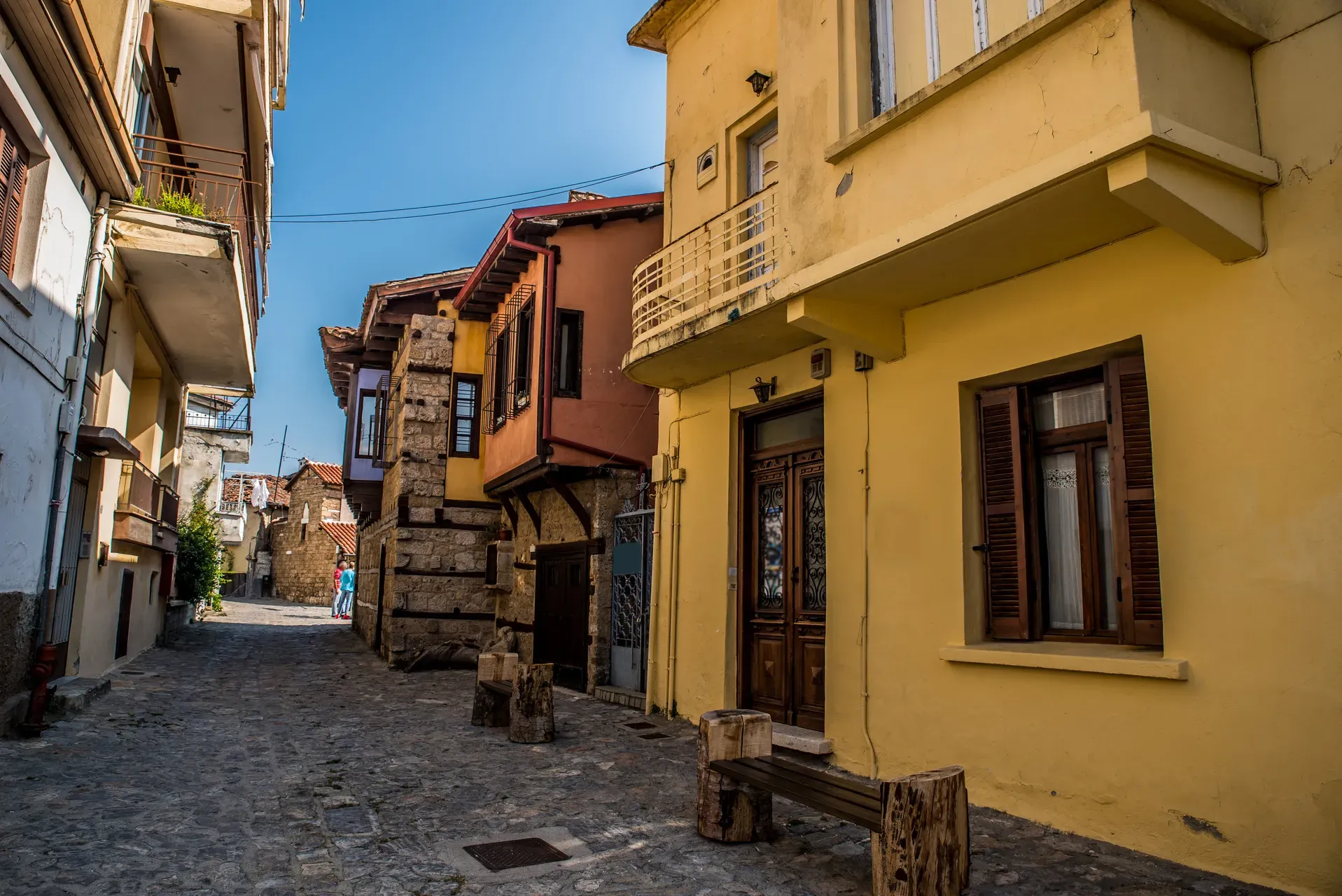
Close to the waterfalls lies the stately neighborhood of Varosi (in Turkish varoš means «suburb - settlement outside the walls»). In its cobbled lanes you will admire preserved Macedonian-style mansions with the sachnisia (the projecting sections with windows). Open to visitors is the Varosi Mansion that takes you through the city’s history, with photographs and video screenings.
The clock and the Small Waterfalls Park
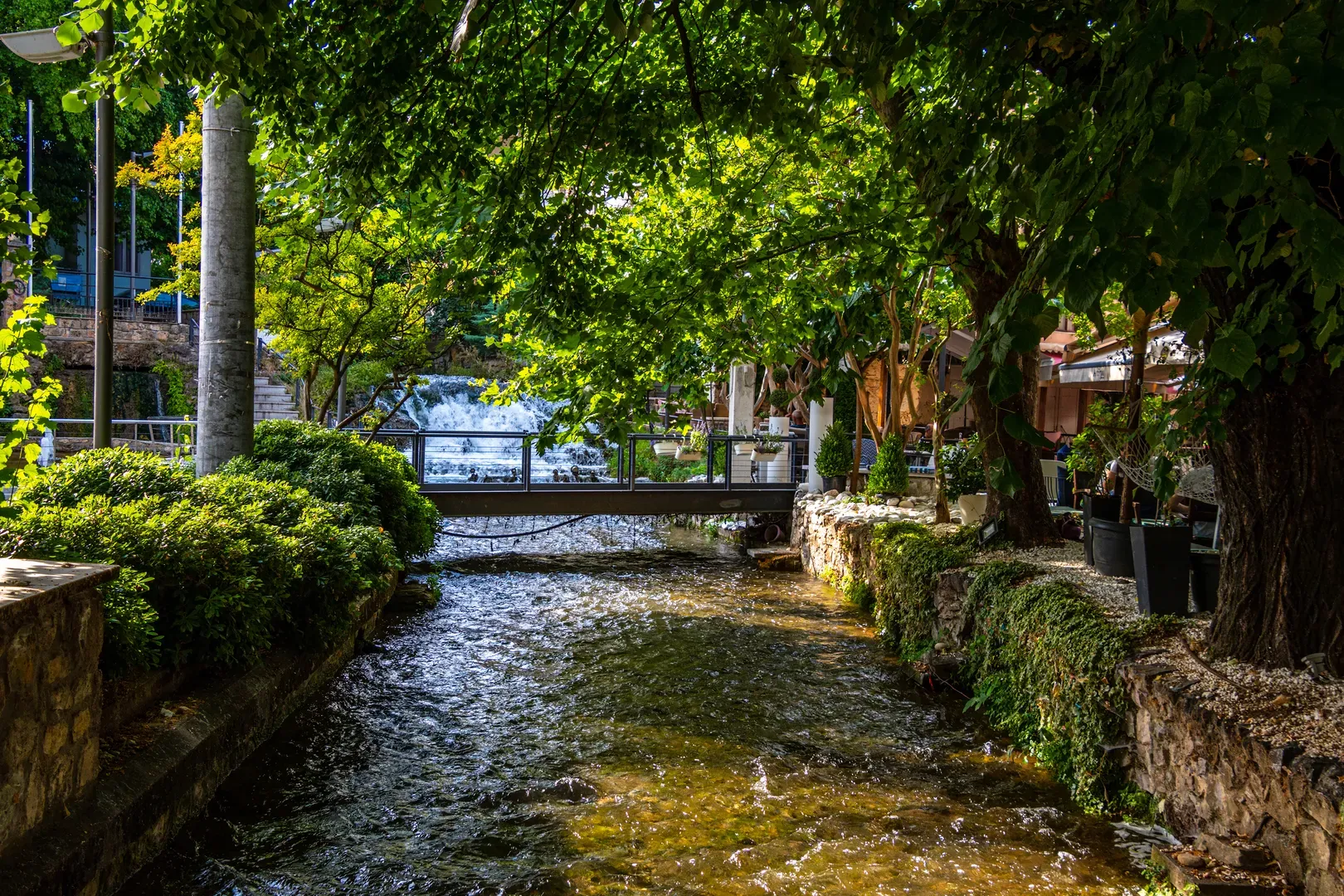
Among the houses you will see Edessa’s clock, which dates to around 1900 and was crafted by Konstantinos Zisis. Very close by is the Small Waterfalls Park, another oasis in the heart of the city. There are many places there where you can sit to enjoy your coffee and relax.
The mobile Planetarium
A standout experience is a visit to the inflatable mobile Planetarium «Planet Edessa» that operates every weekend in the Waterfalls Park. It features a 10-meter-diameter dome and delights young and old with films about the planets and the universe, as well as with the only Greek documentary filmed specifically for dome projection.
What to try
Edessa boasts a rich gastronomic tradition with unique dishes and products. The local cuisine includes a variety of traditional foods, handmade pasta, and pies with hand-rolled pastry. Among local products, batzos (or batzios) cheese stands out, a traditional salty cheese made from sheep’s and goat’s milk, usually eaten grilled. In cherry season you will find spoon sweets and cherry liqueur.
At the meze restaurant Ousies you will savor local meze, grilled pork cutlets, and the traditional batzos cheese saganaki. One of the locals’ favorite haunts is Ouzeri Platanos. There you will drink tsipouro with anise or ‘grapa’ (without), as they call it in Macedonia, and you will pair it with potatoes in batzos sauce, mushrooms sautéed in garlic butter, and soutzoukakia.
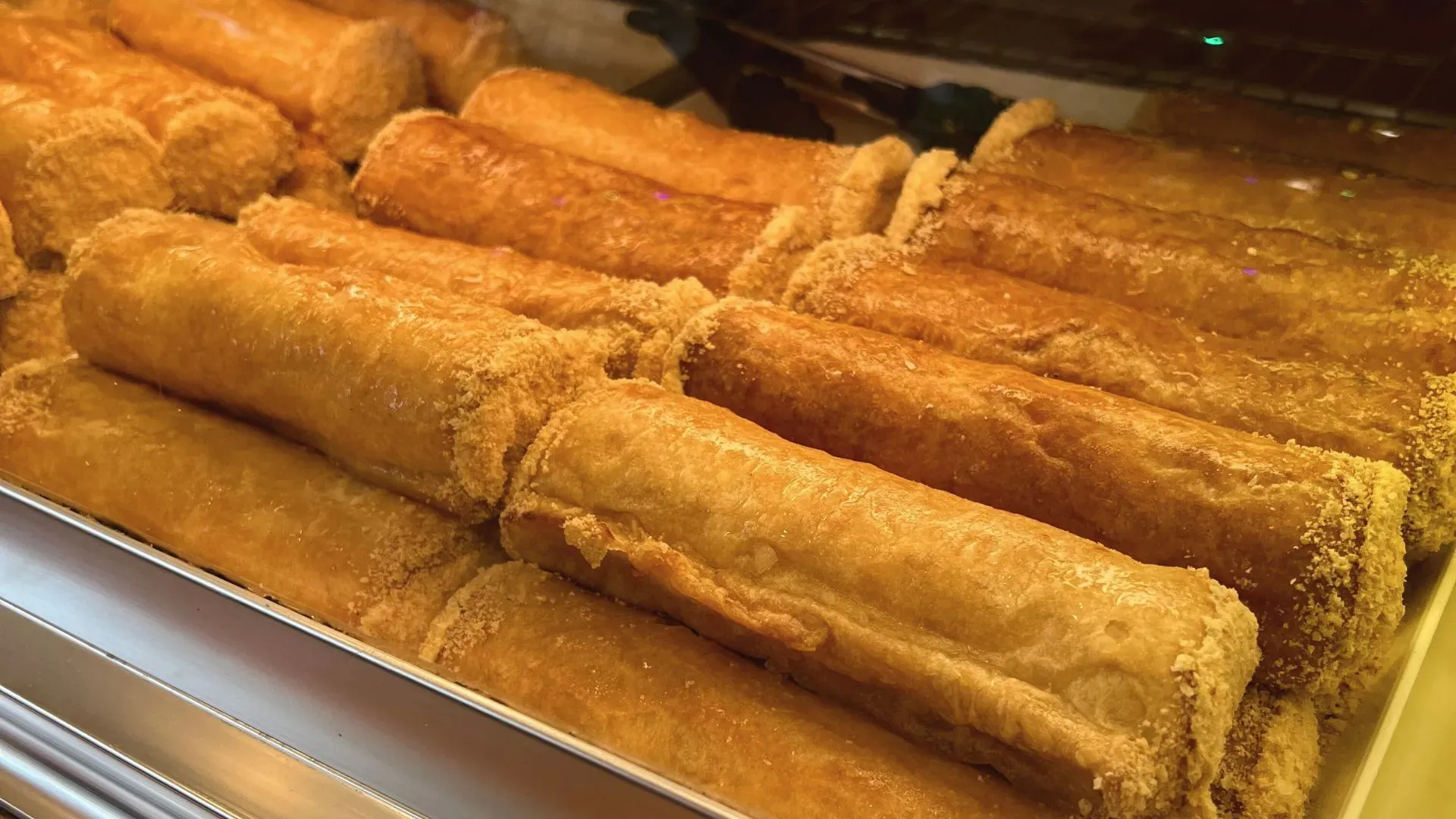
Beside the waterfalls you will have coffee and drinks at the restaurant Katarraktes Complex - Restaurant. Try the food too, with local recipes such as the traditional tsobleki baked in a clay pot with veal and vegetables. For brunch, visit Fresh Edessa, which offers both savory and sweet treats like pancakes. Breakfast in Northern Greece -for many- means bougatsa. At Dimitra or Paki, you will try both savory and sweet flavors. In the city, the dessert that stands out, however, is the famous flogeres of the Kronos patisserie, with rich cream in crisp puff pastry.
Nearby escapes
There are many options for excursions from the city of Edessa. Palaios Agios Athanasios, the famous tourist resort of Northern Greece, gathers quite a crowd on weekends. Very close is the Voras Ski Center, known as Kaimaktsalan, for nature outings and skiing.
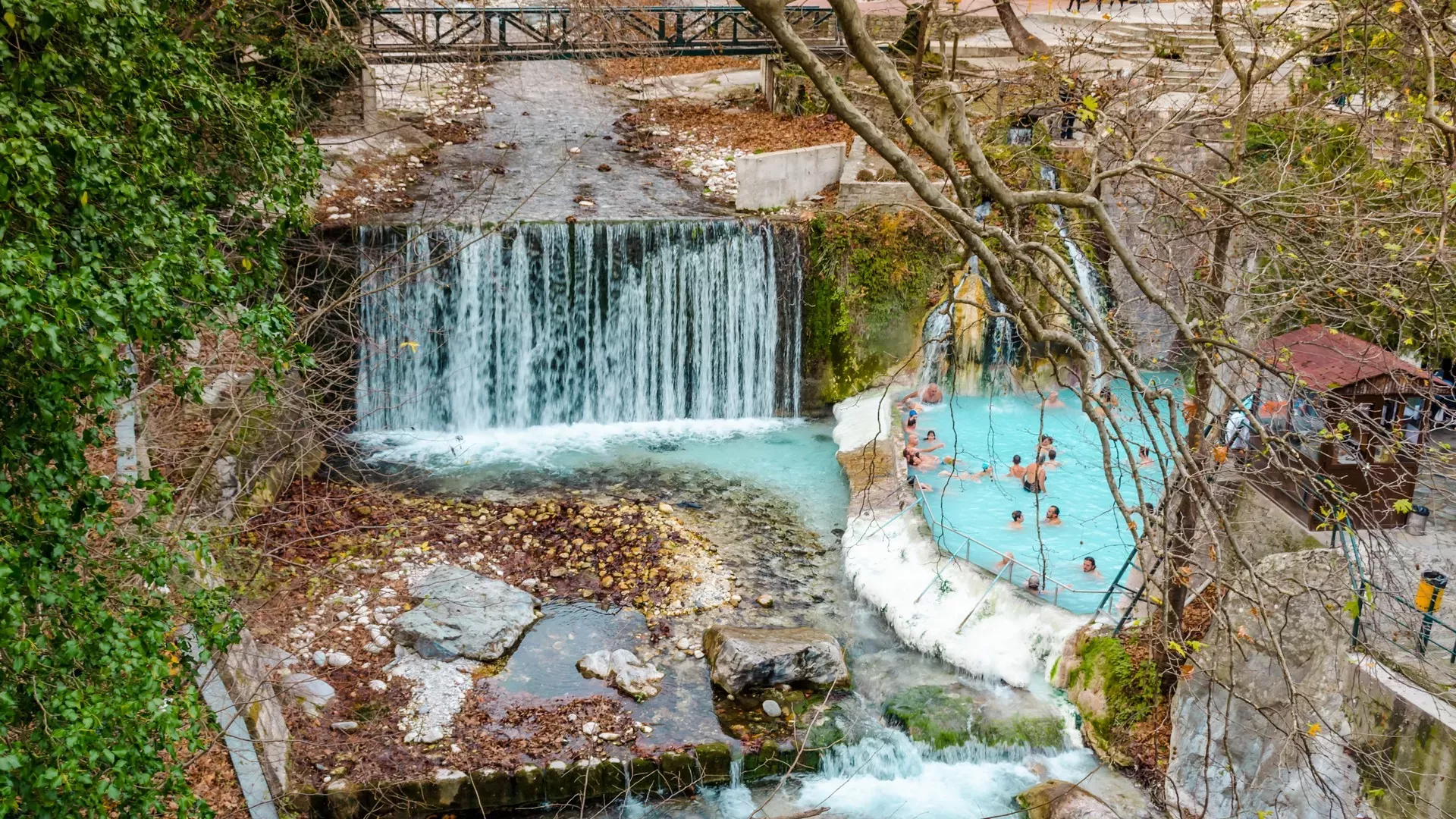
Also popular are the Pozar Baths or Loutraki, among the best-known thermal spa baths in Greece. You will be impressed by the hot thermal springs that form natural waterfalls. In just about 20 kilometers you will reach Arnissa, the small town with a magical setting on the shores of Lake Vegoritida. Explore the lake and stroll its beaches with Kaimaktsalan as your backdrop.