





Along the paths of mythology and modern reality, Thebes is one of the oldest cities in the world with a rich history stretching back through the ages.
Just about an hour from Athens, Thebes, built in the heart of Boeotia, is a vibrant city with a rich history and sights of remarkable interest. From ancient structures to Byzantine monasteries and from the quiet trails of Mount Helicon to beaches with crystal-clear azure waters, Thebes is worth not only for a brief stop, but for a grand exploration.
We found ourselves in the city where the god Dionysus, the demigod Heracles, the poet Pindar, the generals Epaminondas and Pelopidas and the Theban Cycle were born, where Oedipus lived his tragic story and Antigone claimed the burial of her brother.
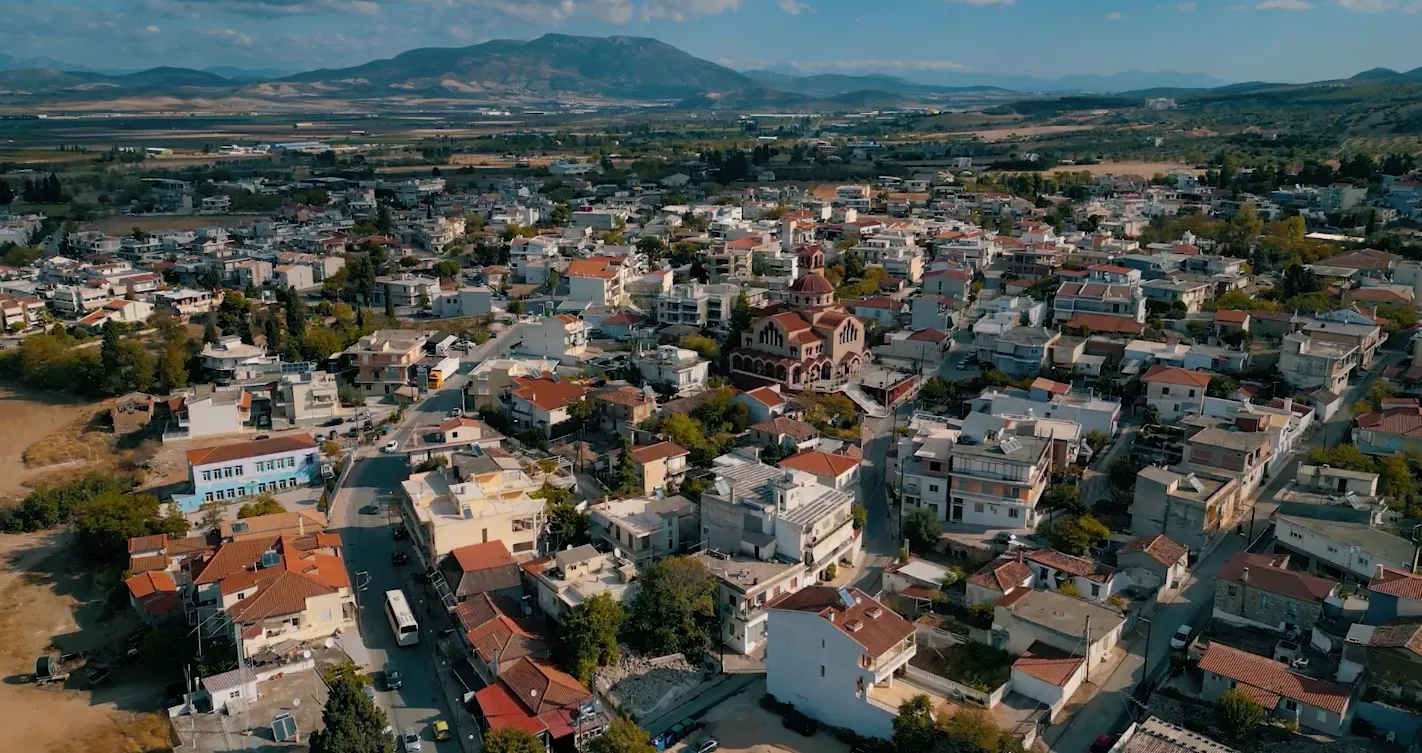
Modern Thebes is built on the site of the ancient city, which according to legend was founded by Cadmus in the 13th c. BC and flourished particularly during the Mycenaean period.
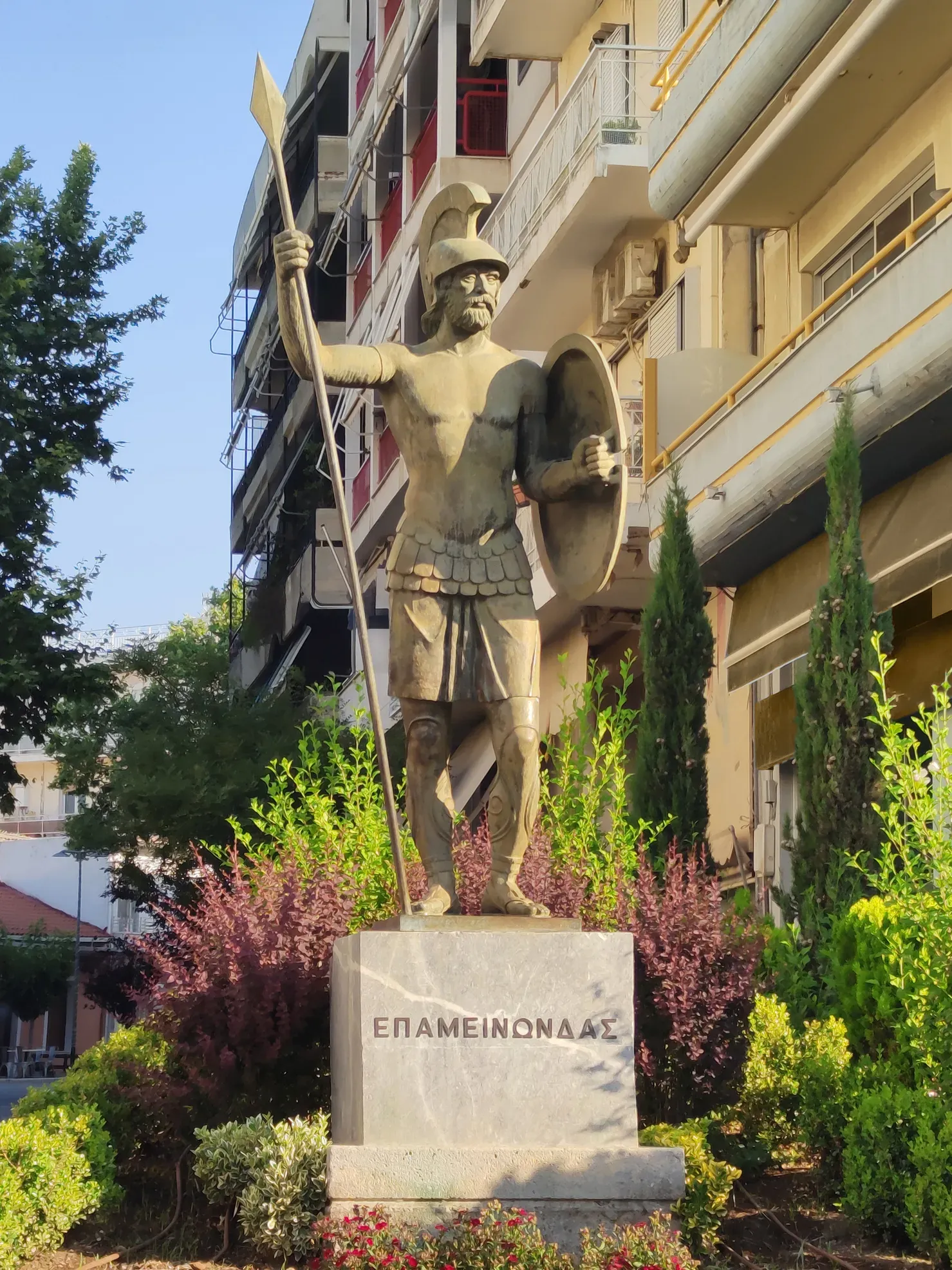
We explored its attractions, wandered through its narrow lanes and relaxed on its enchanting beaches. The only sure thing is that however many times one visits, there will always be something new to learn.
The citys attractions
Cadmea Acropolis of Thebes
Kadmeion Mycenaean Palace of Thebes
The Cadmea, the Mycenaean acropolis of Thebes, is built upon the hill of the modern city. At its center are the remains of the Kadmeion, the Mycenaean Palace of Thebes dating from the 14th to the 13th century BC, which was one of the most important Mycenaean administrative centers of mainland Greece. There some of the palace’s most significant workshops were housed, and various important materials were stored, such as the large false-neck amphorae that arrived from Crete to Thebes filled with oil.
Treasure Room
The Treasure Room or treasury of the palace lies at the northeastern corner of the Mycenaean palace of Thebes, which extends beneath the city’s central square. The name of the space owes to the fact that it safeguarded precious items and jewelry of gold, lapis lazuli, agate, and ivory, as well as a unique treasure of cylinder seals of Assyrian, Hittite, Hurrian, and Cypriot origin.
Armory
In the eastern section of the acropolis lies the building complex of the Armory, which formed an annex of the palace’s central complex. The rooms served as storerooms for weaponry, horse gear, and bronze tools and vessels, spaces for storing raw materials, as well as clay tablets, the archives of the palace’s economic activities.
The Gates of the Cadmea
The Cadmea acropolis was surrounded by a wall that had seven gates: the Electra, the Homoloides, the Proitides, the Ogygian or Boreal, the Neistes, the Hypsistes and the Onkaia, however, today only the Electra have been preserved.
Sanctuary of Heracles
Before we pass through the Electra Gates at the southeastern edge of the Cadmea, we encounter the sanctuary of Heracles. Recent excavations beneath the modern city have brought to light the sanctuary where, according to Pindar and Pausanias, Megara, daughter of Creon, honored her husband Heracles.
Archaeological Museum of Thebes
The Archaeological Museum of Thebes is among the most important archaeological museums in Greece, first built between 1905- 1912 at the northern edge of the Cadmea hill. The present, renewed Museum is the third in succession to host in the same location the ancient finds of the area. Its exhibits come from excavations in Boeotia and chronologically cover the region’s culture from the Paleolithic years to the post-Byzantine period.
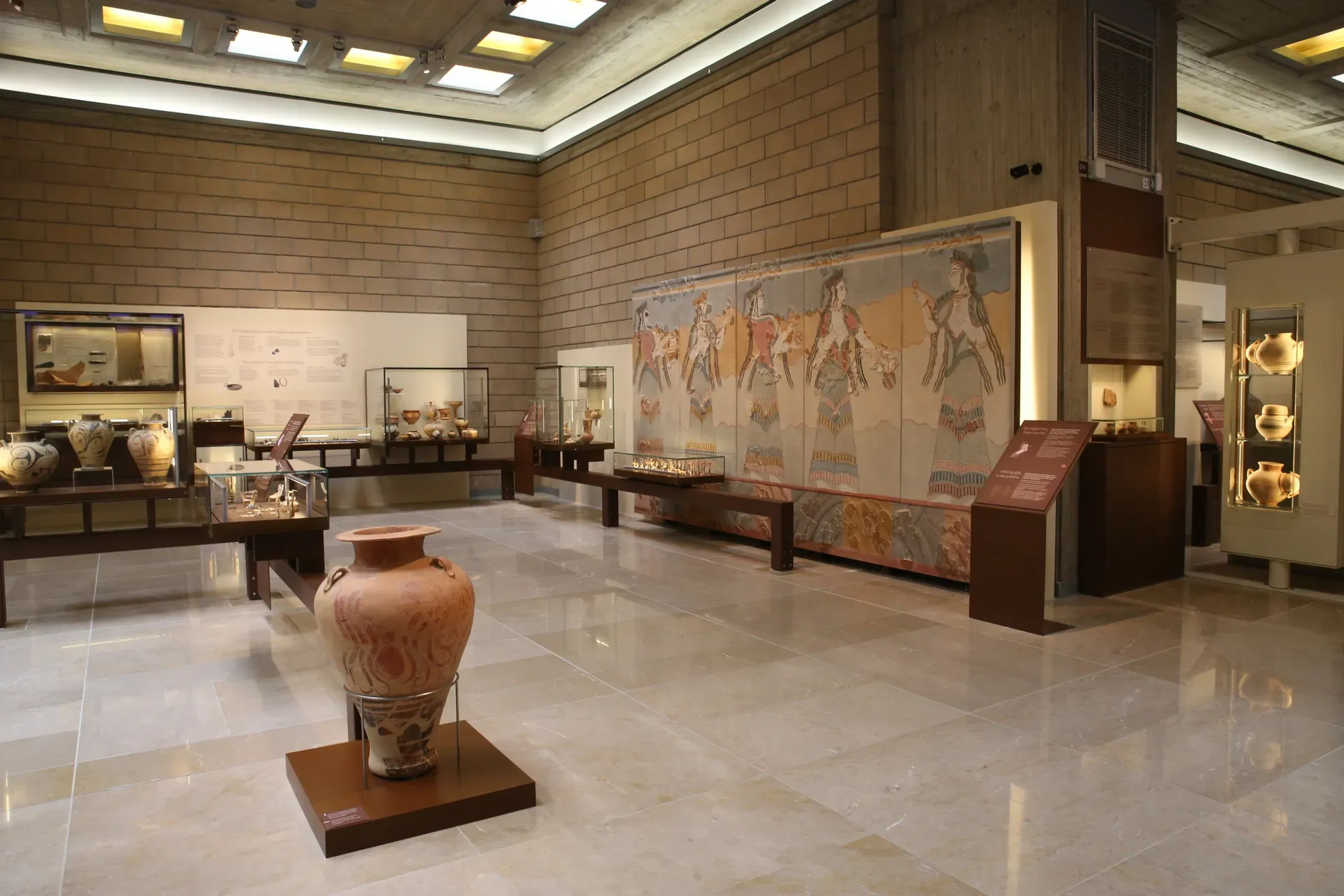
The new Archaeological Museum of Thebes houses a wealth of objects, representative of millennia of continuous human activity in Boeotia, on two different levels. The exhibition includes 18 sections, eleven of which follow a chronological sequence from the Paleolithic period to the end of Ottoman rule, and it presents through time the culture, daily life, political and social development in Boeotia. Specialized sections present the history of the Archaeological Museum of Thebes and the first archaeological research in the area.
Mycenaean chamber tombs
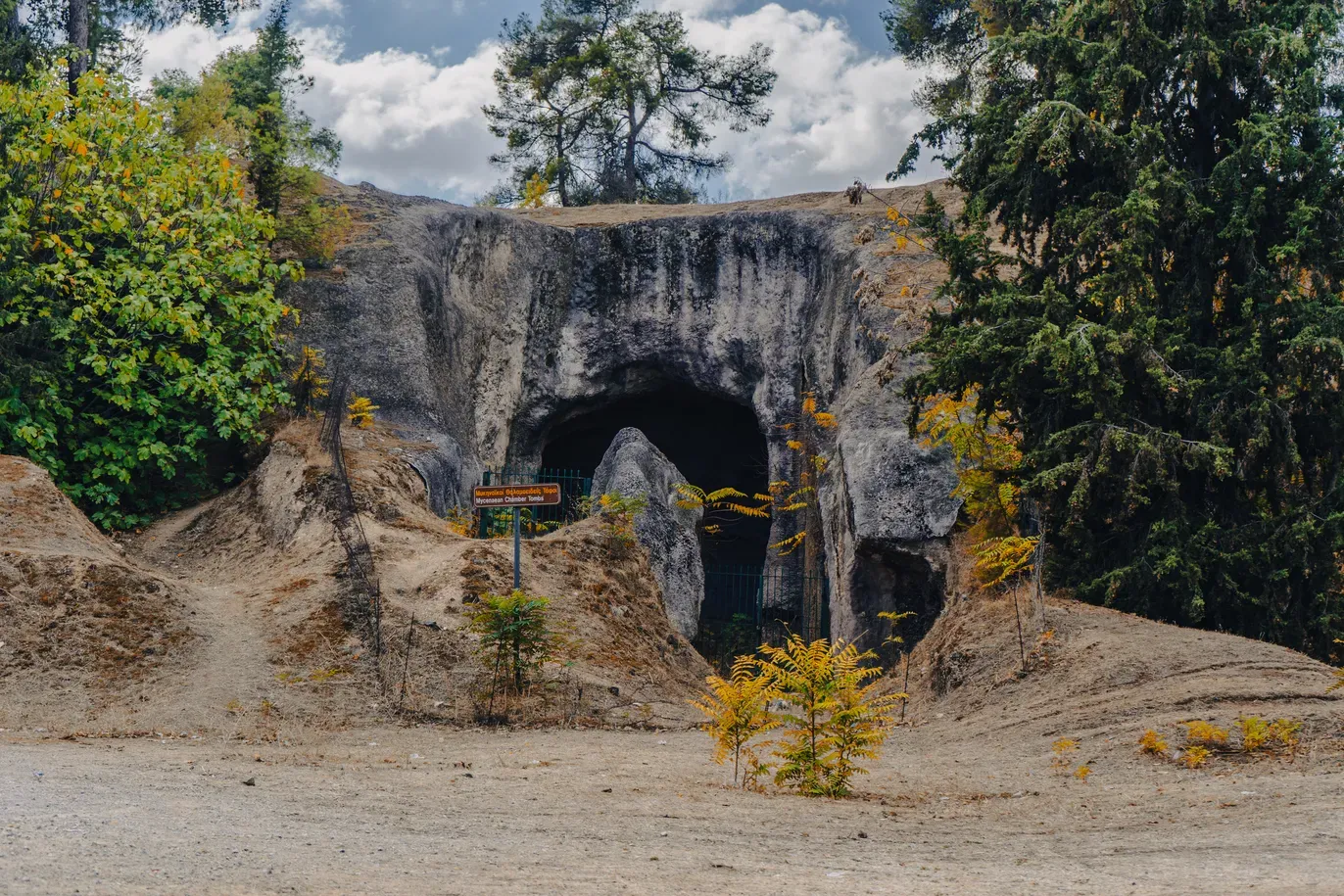
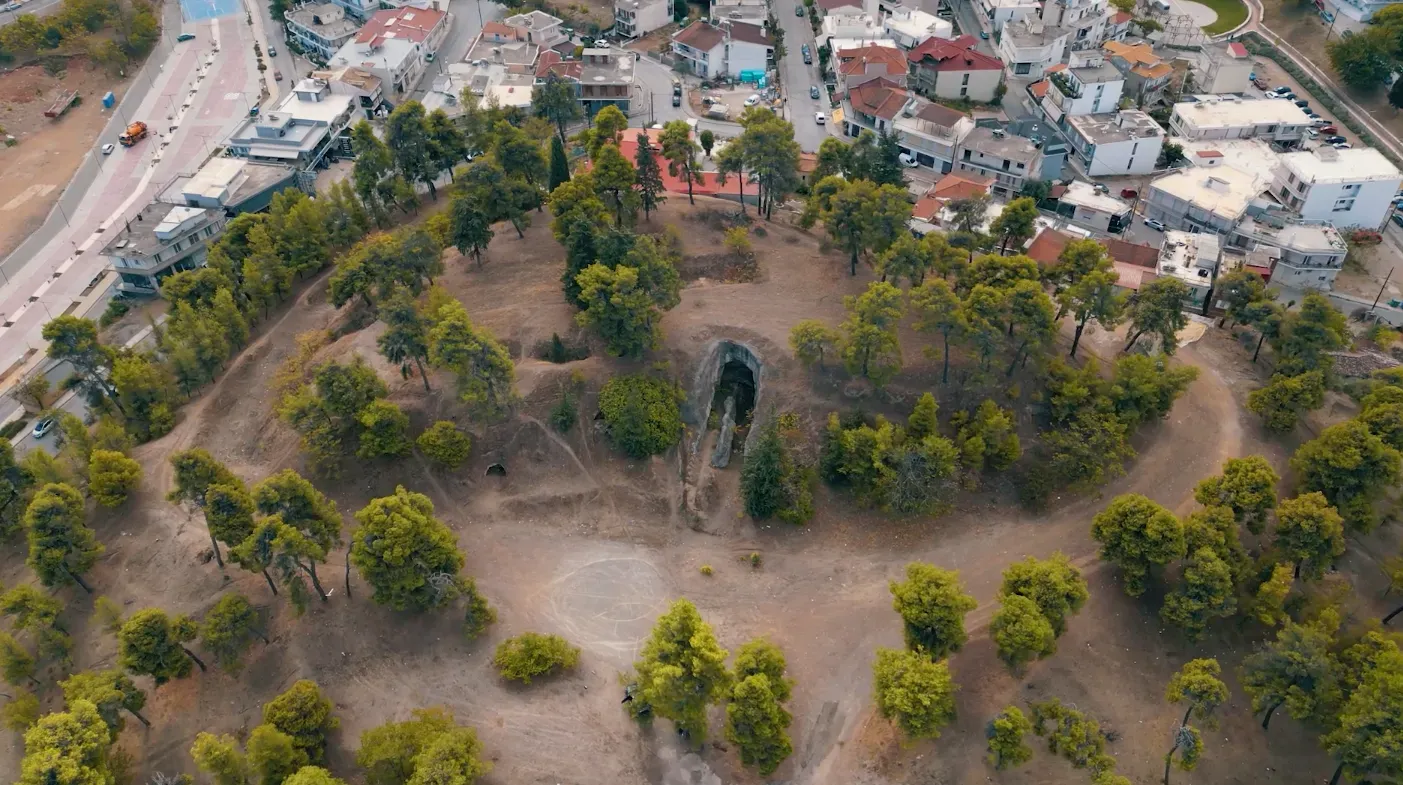
Among Thebes’ most popular sights, the chamber tombs are among the largest known chamber tombs of the Mycenaean era. On the hills around the Cadmea, three large Mycenaean cemeteries developed. In the Mycenaean Cemetery of Mikro Kastelli stands the monumental chamber tomb of the 13th c. BC, adorned with unique wall paintings depicting female figures in poses of paying respect or bidding farewell to the dead. The chamber tombs have been identified with the tombs of Oedipus’s sons and Antigone’s brothers, Eteocles and Polynices, who killed each other in single combat before the walls of Thebes in the campaign of “Seven Against Thebes”.
Temple of Ismenian Apollo
One of the most important sanctuaries of ancient Thebes was the sanctuary of Ismenian Apollo, on the namesake hill southeast of the ancient city. The hill was already in use from the 15th c. BC, as it was the site of one of the three large cemeteries of rock-cut chamber tombs of Mycenaean Thebes, and later the sanctuary was founded there.
Mythic Fountains
Oedipodean Fountain
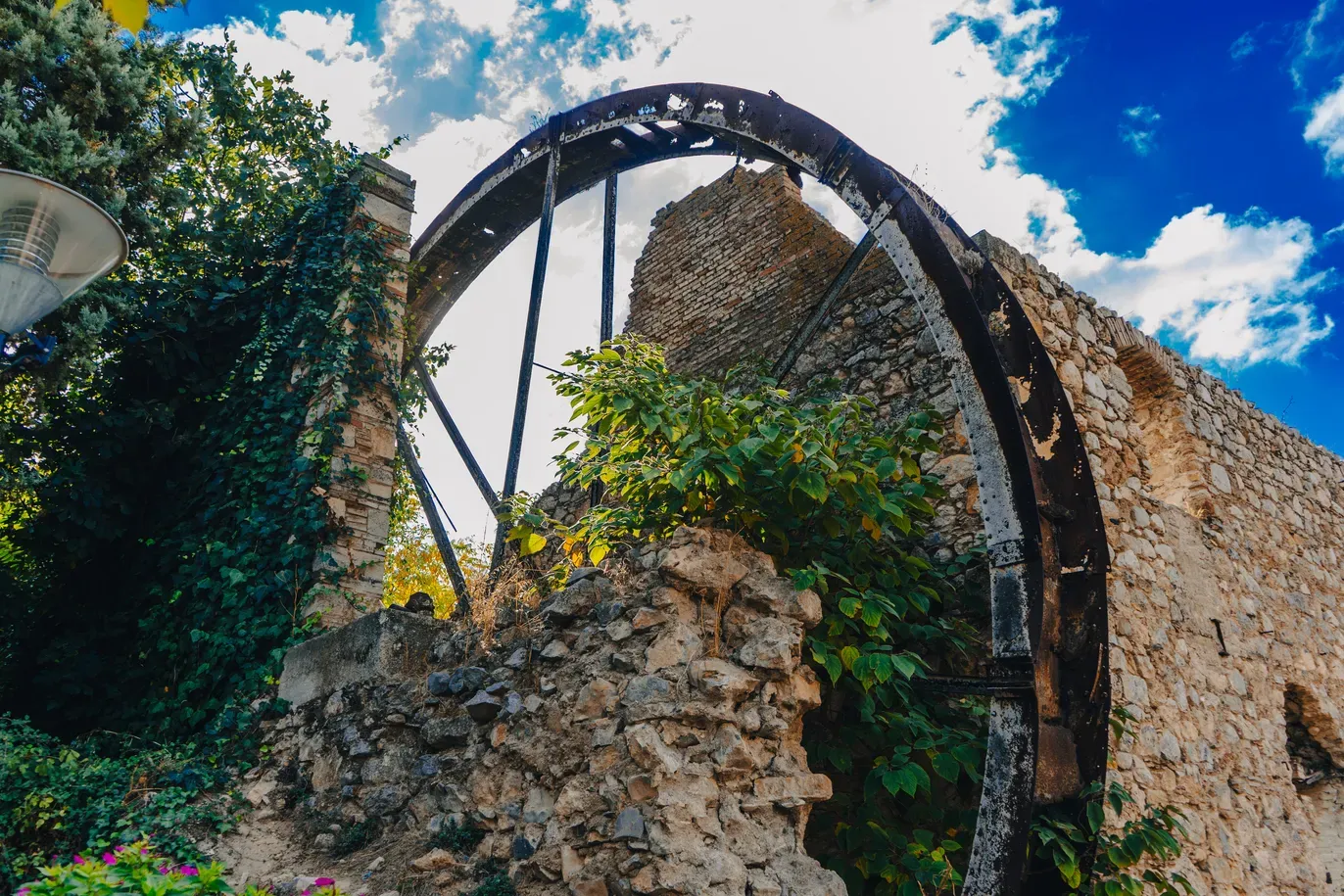
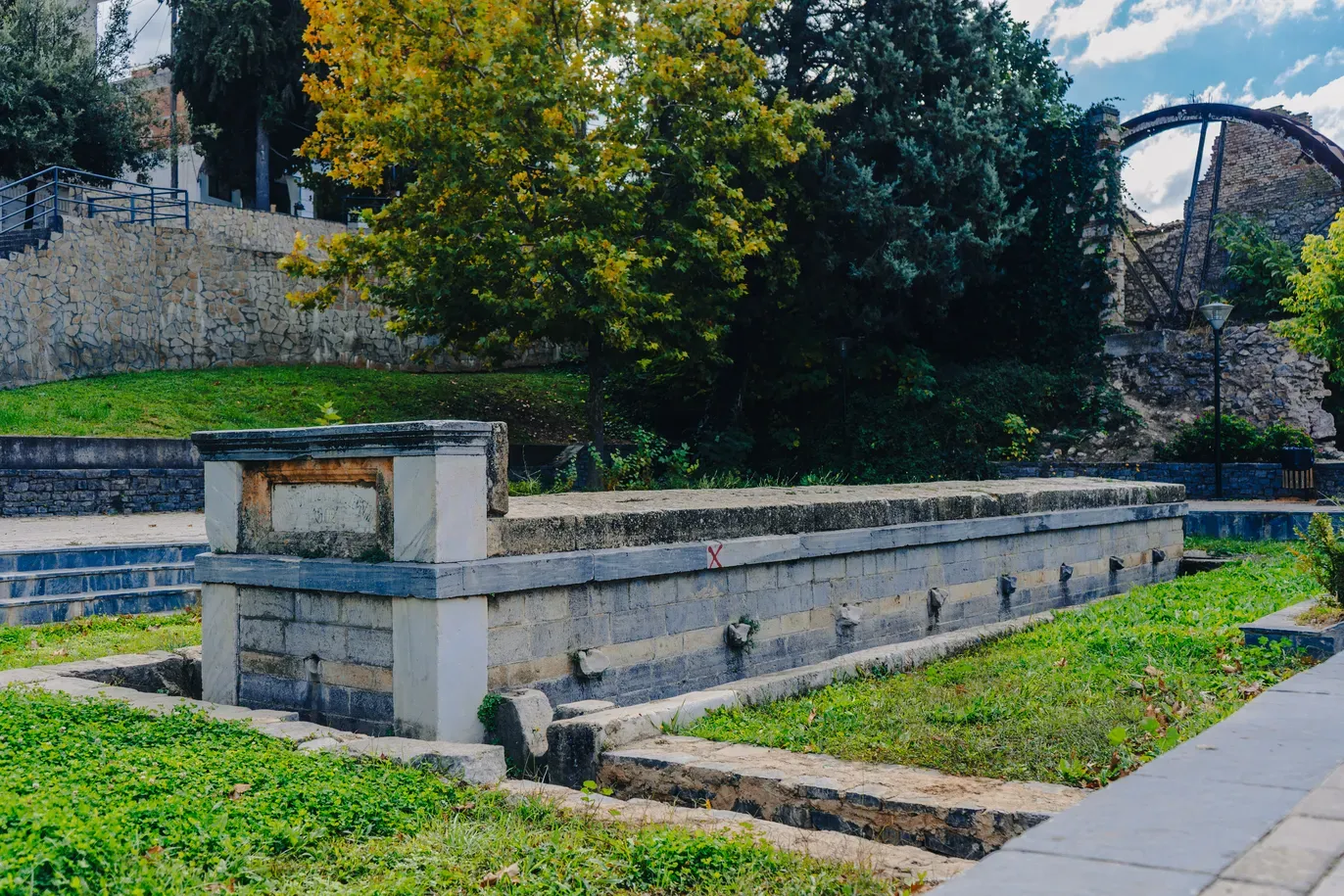
One of Thebes’ most significant landmarks is the Oedipodean Fountain with the old watermill near the city’s entrance, in the settlement of Agioi Theodoroi. The fountain we find today was built in 1902 on the site of the ancient structure. According to myth, this was the place where Oedipus washed the blood from his hands after the murder of his father and king of Thebes, Laius. Beside it stands the Vyllioti Watermill, which dates to the 1800s.
Fountain of Dirce
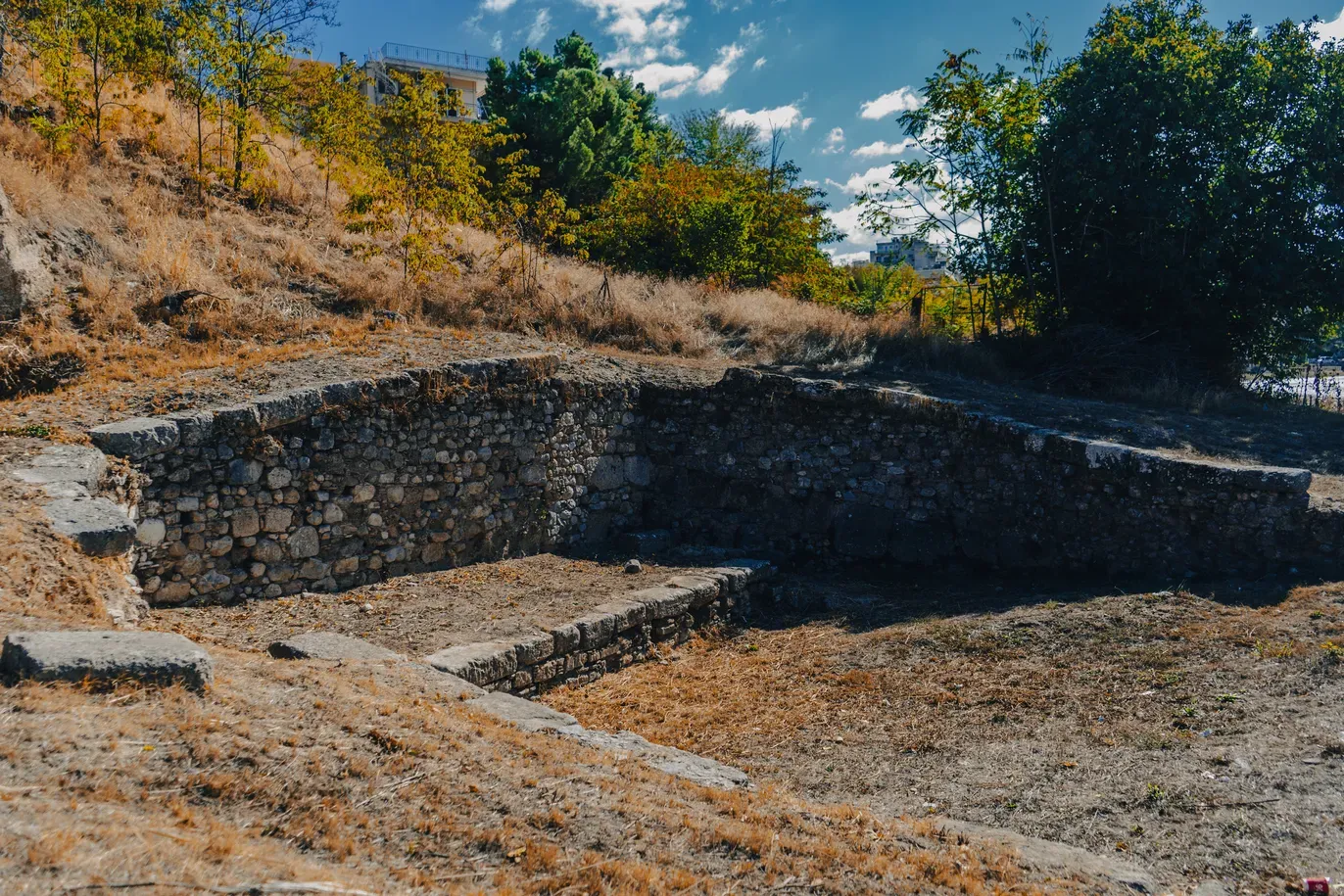
On the western side of the rise on which the city of Thebes is built, we encounter another attraction with a mythological character. The famed Fountain of Dirce is linked to the myth of the founding of Thebes by Cadmus. It is said to have taken its name from Dirce, wife of the king of Thebes, as this was the spot where she was cast down by Zeus’s twin sons.
Religious pilgrimages
Holy Pilgrimage Church of the Evangelist Luke
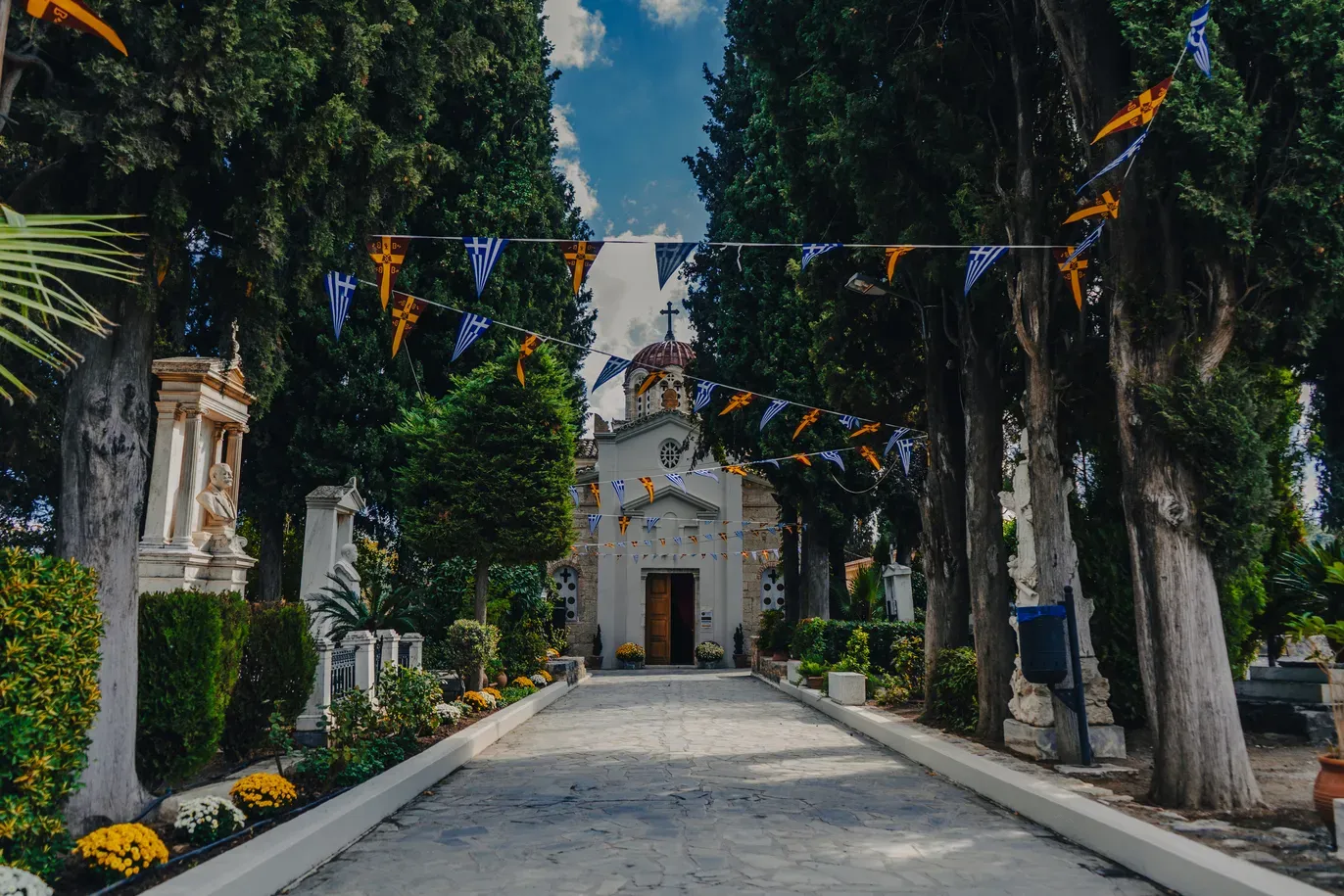
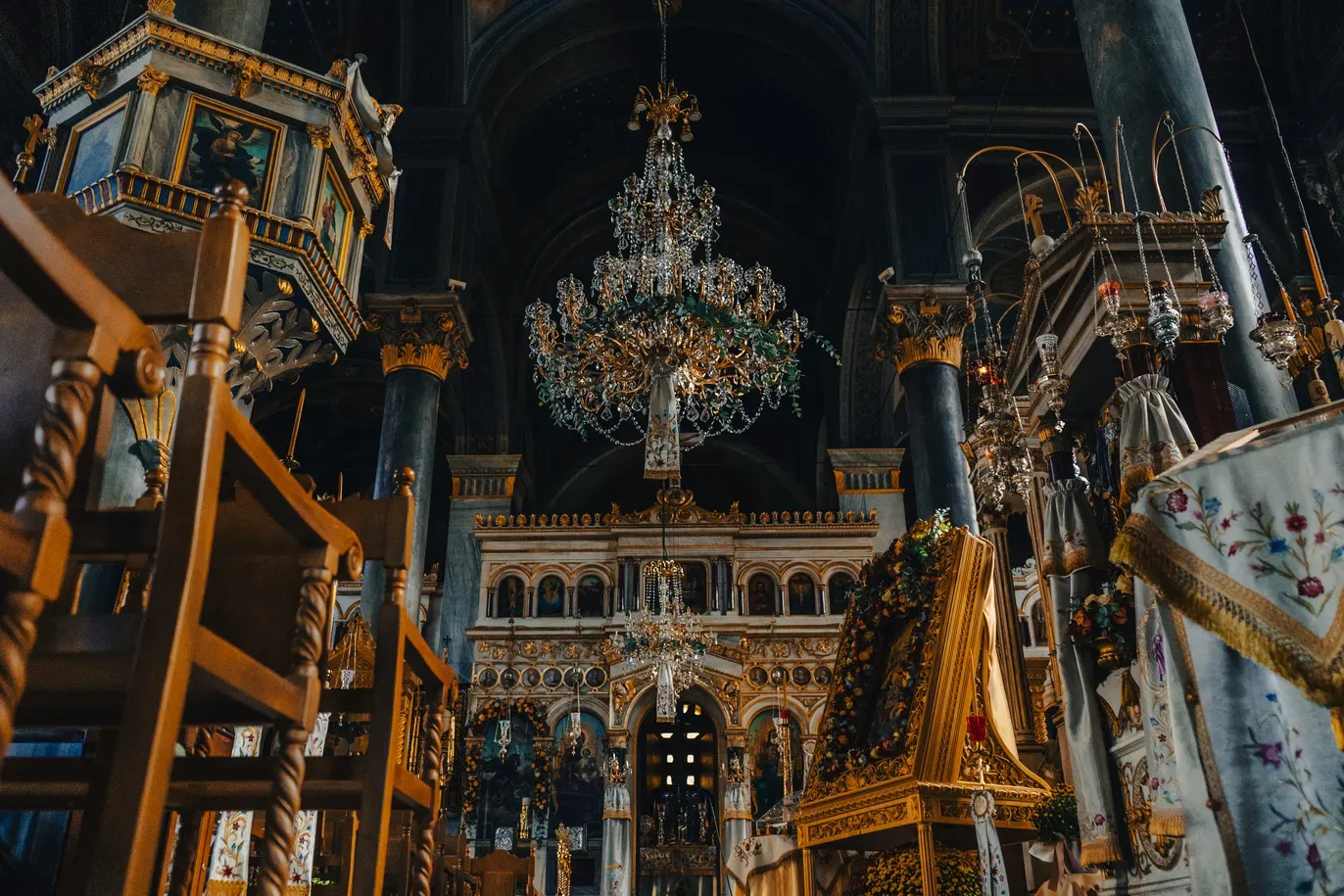
One of the city’s most historic churches is the Holy Church of the Evangelist Luke, where his relics are also kept. According to tradition, the Evangelist Luke lived and preached in Thebes, and it is considered that he wrote part of his Gospel there. The church is an impressive example of Neo-Byzantine style, with a dome that dominates the skyline of Thebes and a symmetrical plan of the cross-in-square type.
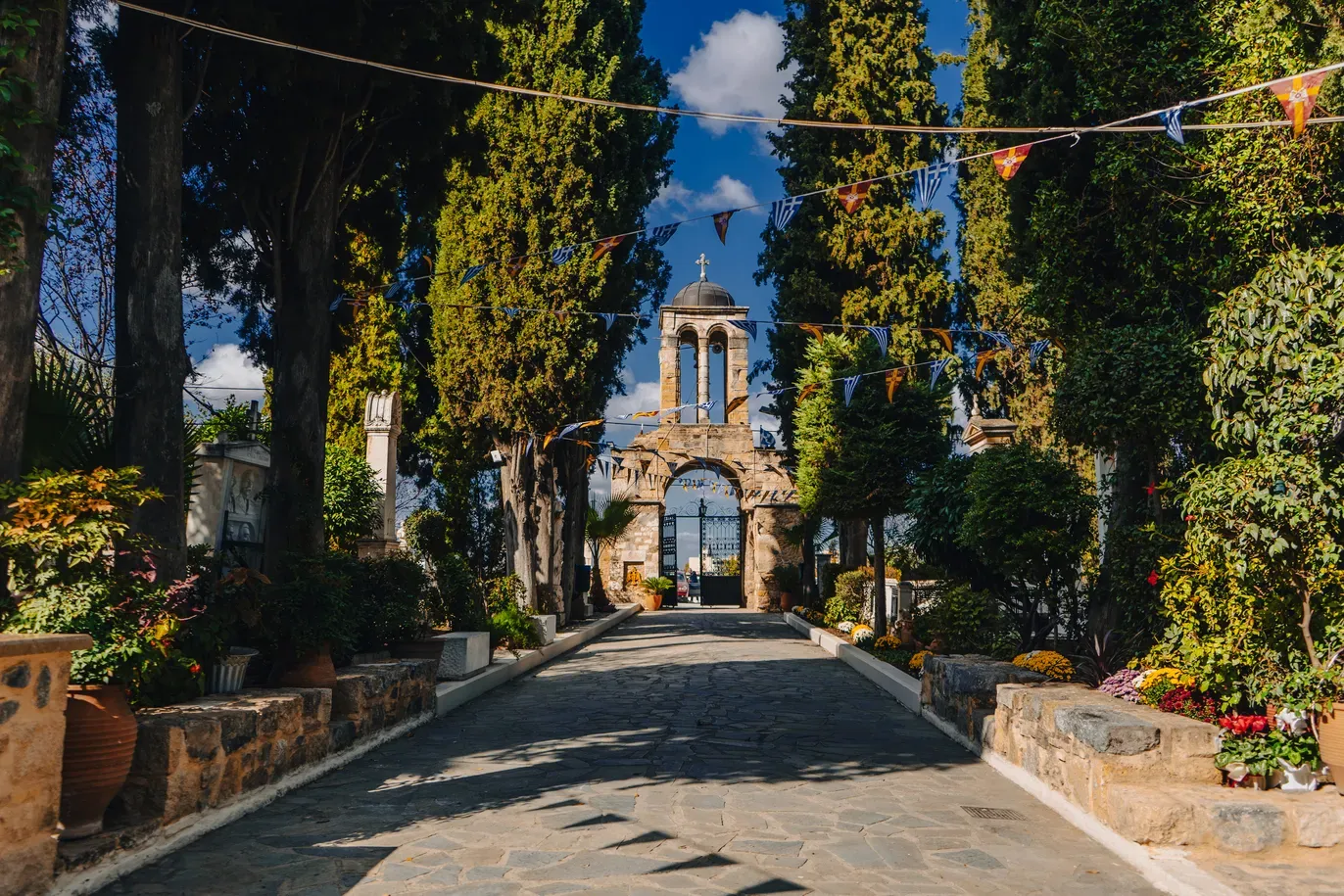
The facade of the church with its stone-built elements is impressive, while inside the mosaic of the Evangelist Luke in the dome prevails, along with frescoes that combine Byzantine artistry with newer techniques. In the churchyard, we encounter sculptures of prominent Thebans and artworks from the former cemetery that was located there.
Holy Church of Saint Demetrios – Great Panagia of Thebes
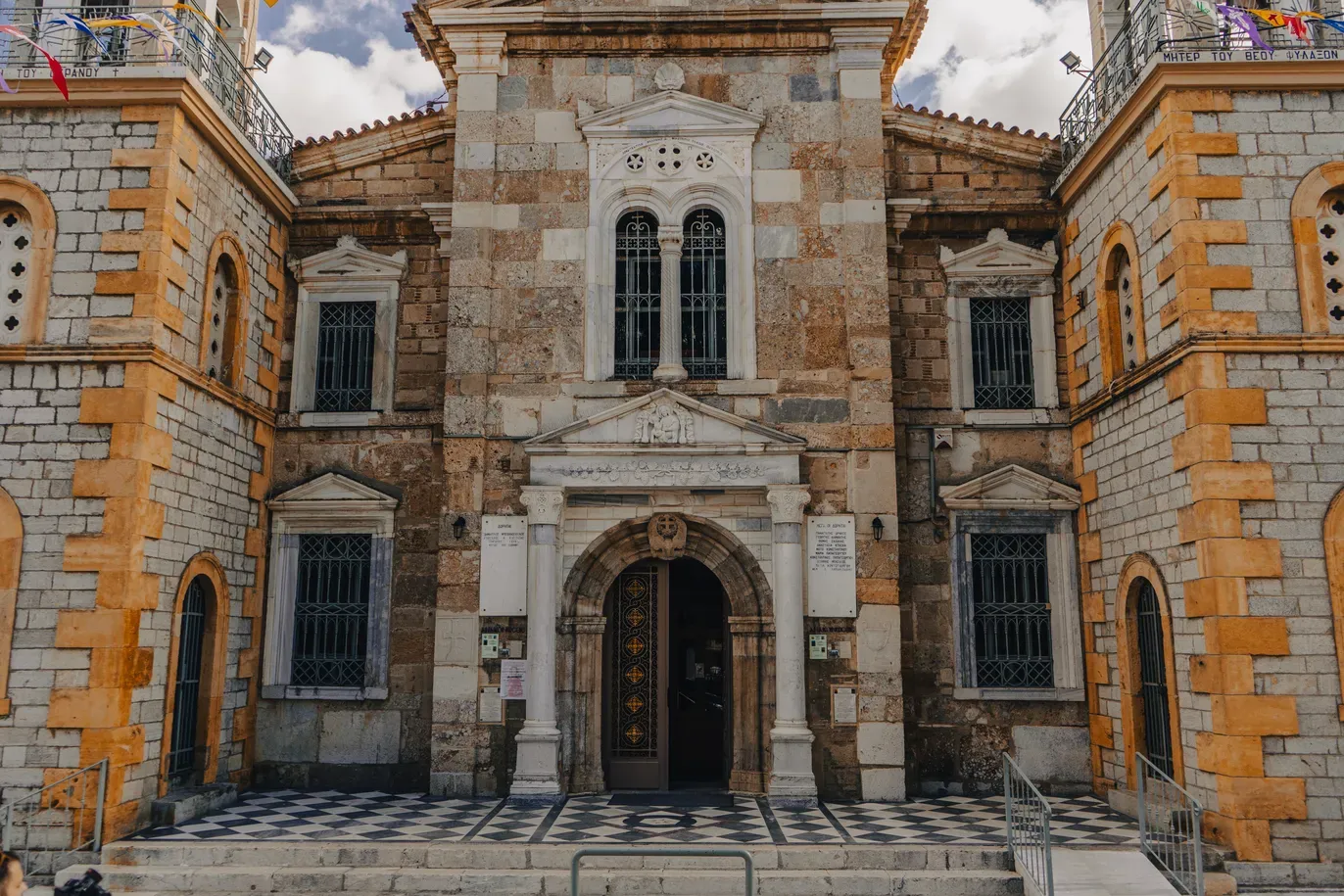
On the western side of the historic center of the city, the impressive Holy Church of Saint Demetrios – Great Panagia of Thebes stands, inaugurated in 1867 and built on the site of an earlier church. In the church stand out the sculpted Boeotian Amphora, the Early Christian Cross, the sculpted marble copy of the Great Panagia, the dedicatory inscription to Emperor Titus, and the Quadriga Charioteer. The most important work found there is the Icon of the Great Panagia, painted by the Evangelist Luke.
The beaches of Thebes
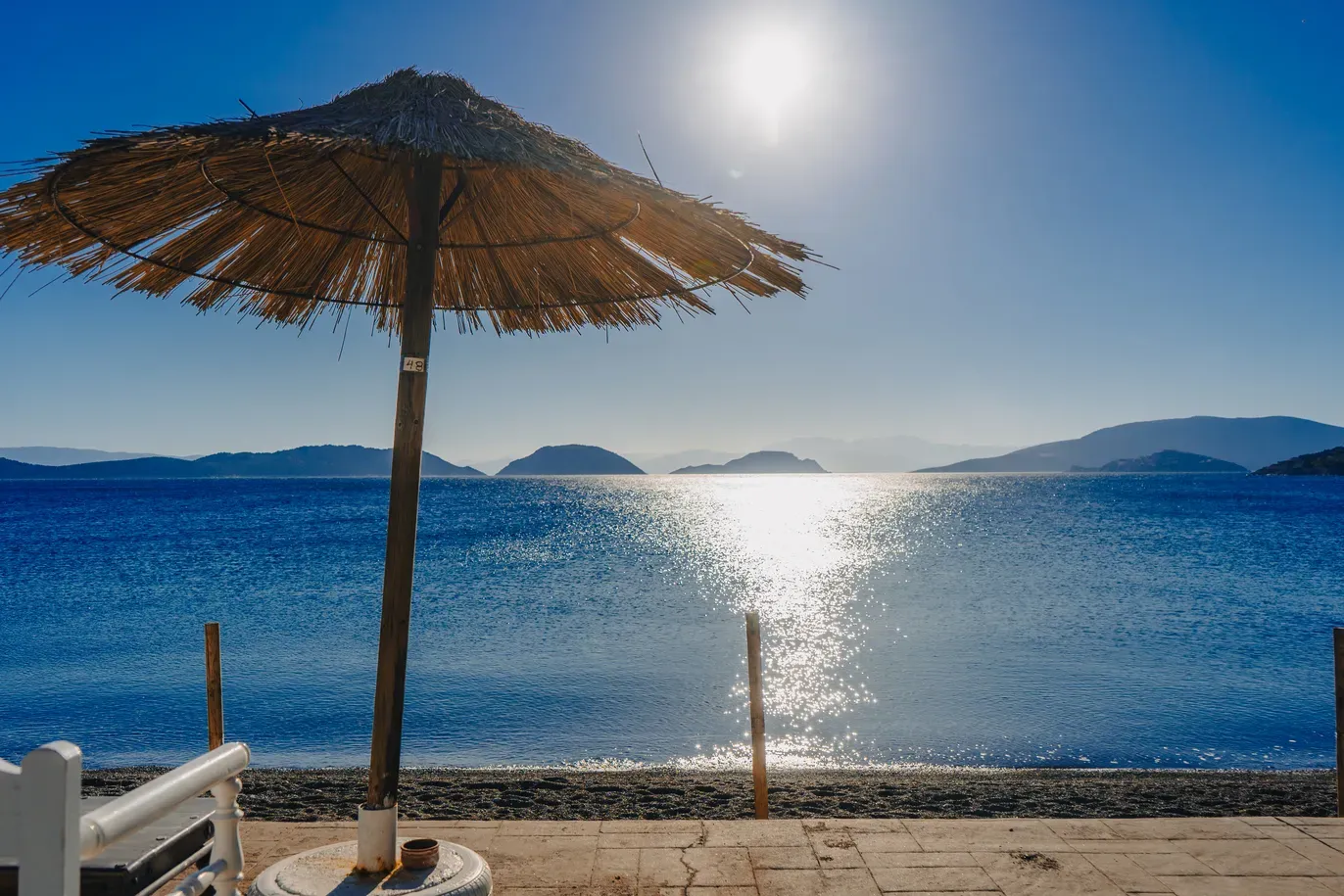
Thebes is famed for beaches with crystalline blue-green waters. The municipality’s seaside settlements begin from Agios Vasileios with its clear waters, tamarisks, and little tavernas. Nearby Kalamaki, with its pebbles, is ideal for more relaxed moments. Shortly after the village of Leuctra, the beach of Livadostra, a narrow coastal valley with sand and small pebbles, enchants with its beauty and its history. From its waters, a few decades ago, the bronze Poseidon was recovered, now housed in the National Archaeological Museum of Athens. Its eastern side is traversed by the river Oeroe.
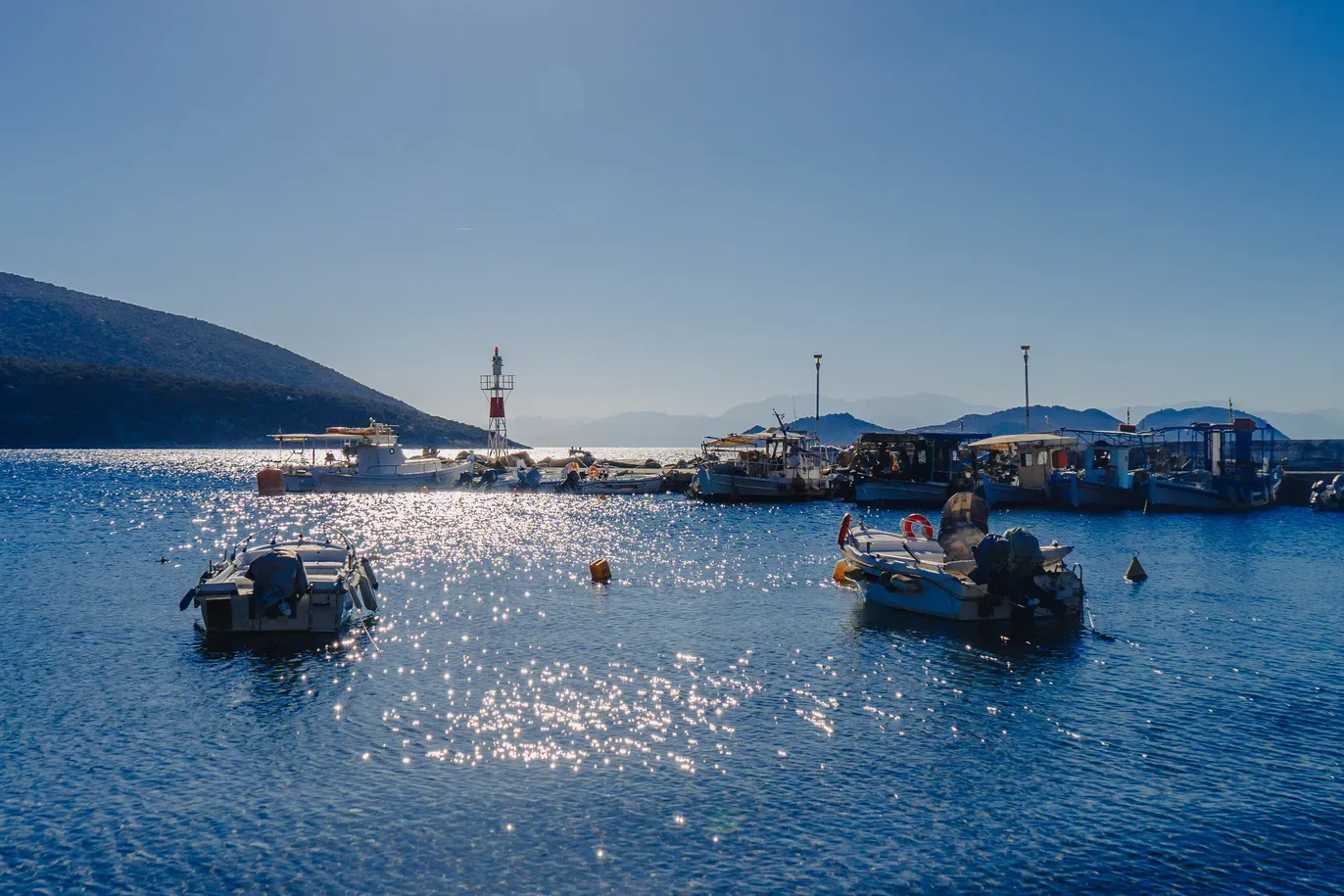
The hidden secret of the Alkyonides Gulf is Alyki, with pebbles and a mesmerizing sunset. It provides autonomous access to the sea for people with disabilities and mobility impairments. It offers choices for good food by the water, as well as accommodation options. There you will see the remnants of the fortification wall of the acropolis of Ancient Siphai, reaching down to the sea. The lake of Alyki next to the shore is striking, turning pink in summer.
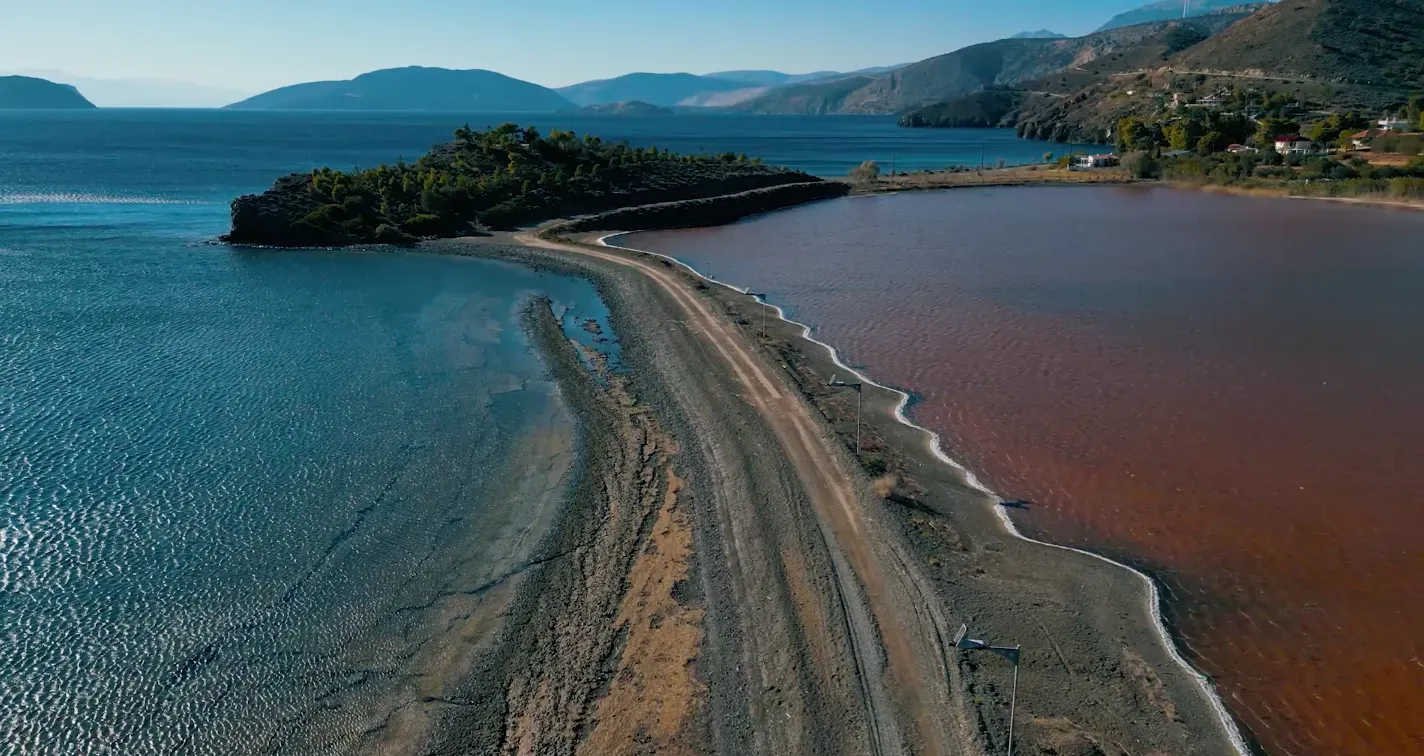
Next to Alyki lies sheltered Agios Nikolaos and opposite, on the small islet of Kouvelos, there are ancient ruins, while offshore you can discern deserted islets that are ideal for fishing. Agios Ioannis is a small, emerald cove near the villages of Thisvi and Domvrena.
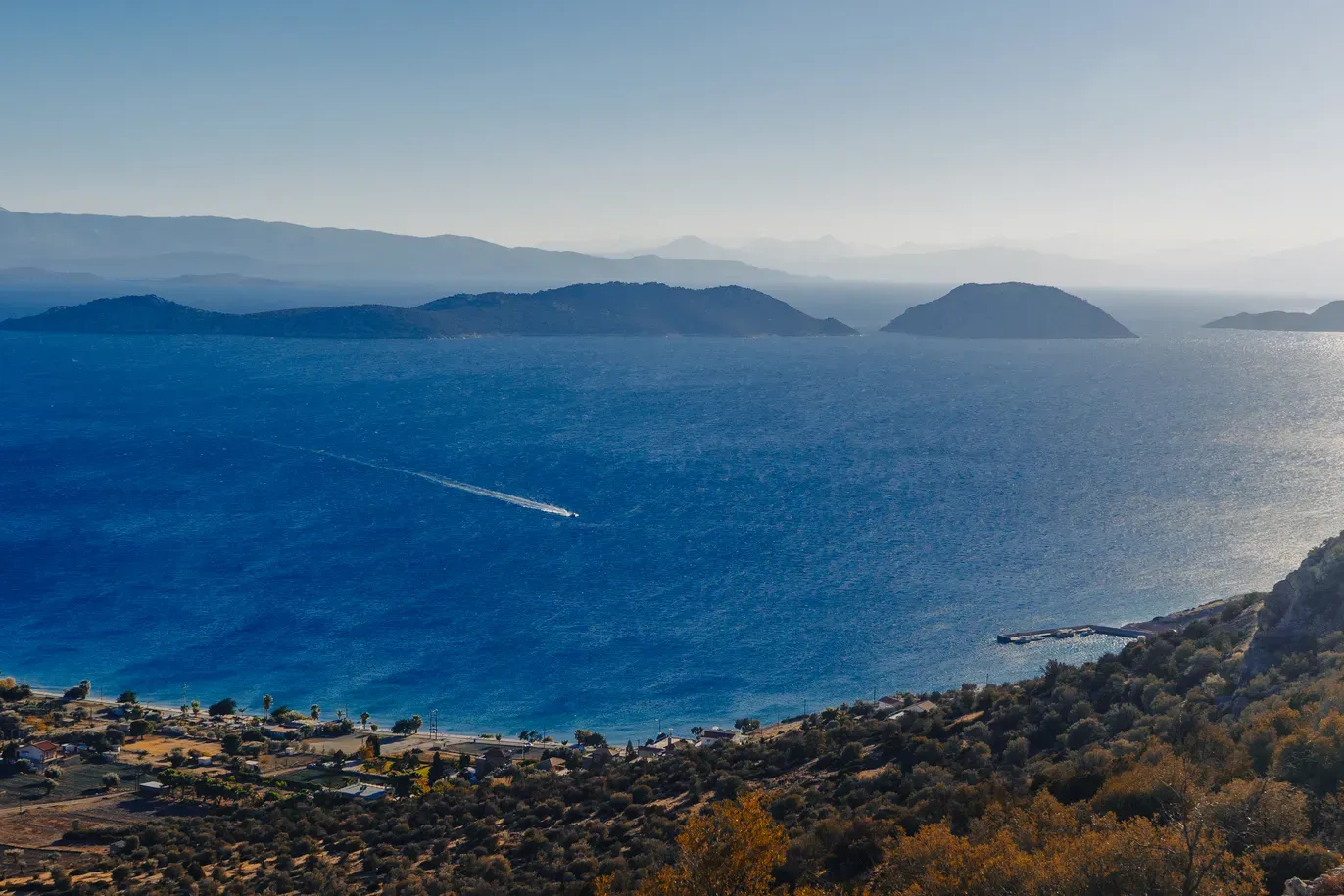
Its sea has a very interesting seabed and is suitable for spearfishing. Near Thisvi, the settlement of Saranti features a crystal-clear cove with fine pebbles and tall tamarisks with ample shade.
*We thank the Mayor of Thebes, Giorgos Anastasiou, for the hospitality and the Deputy Mayor of Culture & Tourism of the Municipality of Thebes, Apostolis Dagdelenis, for the tour of Thebes.