





Volcanic landscapes, beaches with turquoise waters and colorful fishing villages create a unique setting on one of Greece's most enchanting islands.
Famous for its many and stunning beaches, as well as its unique geological landscapes, Milos is undoubtedly one of the most impressive islands in the Cyclades. With SEAJETS you'll reach Milos from Piraeus in just 2 hours and 30 minutes to discover up close all the island's "treasures" where the renowned Venus de Milo was discovered.
From the lunar landscape of Sarakiniko to the picturesque "syrmata" in Klima, every corner of Milos reveals a different face of natural beauty. It's no coincidence that those who visit once always seek the chance to return.
Top beaches of Milos
As a volcanic island, Milos has striking morphology and a variety of beaches. The island boasts more than 70 small and large beaches that are a prime reason to visit.
Sarakiniko
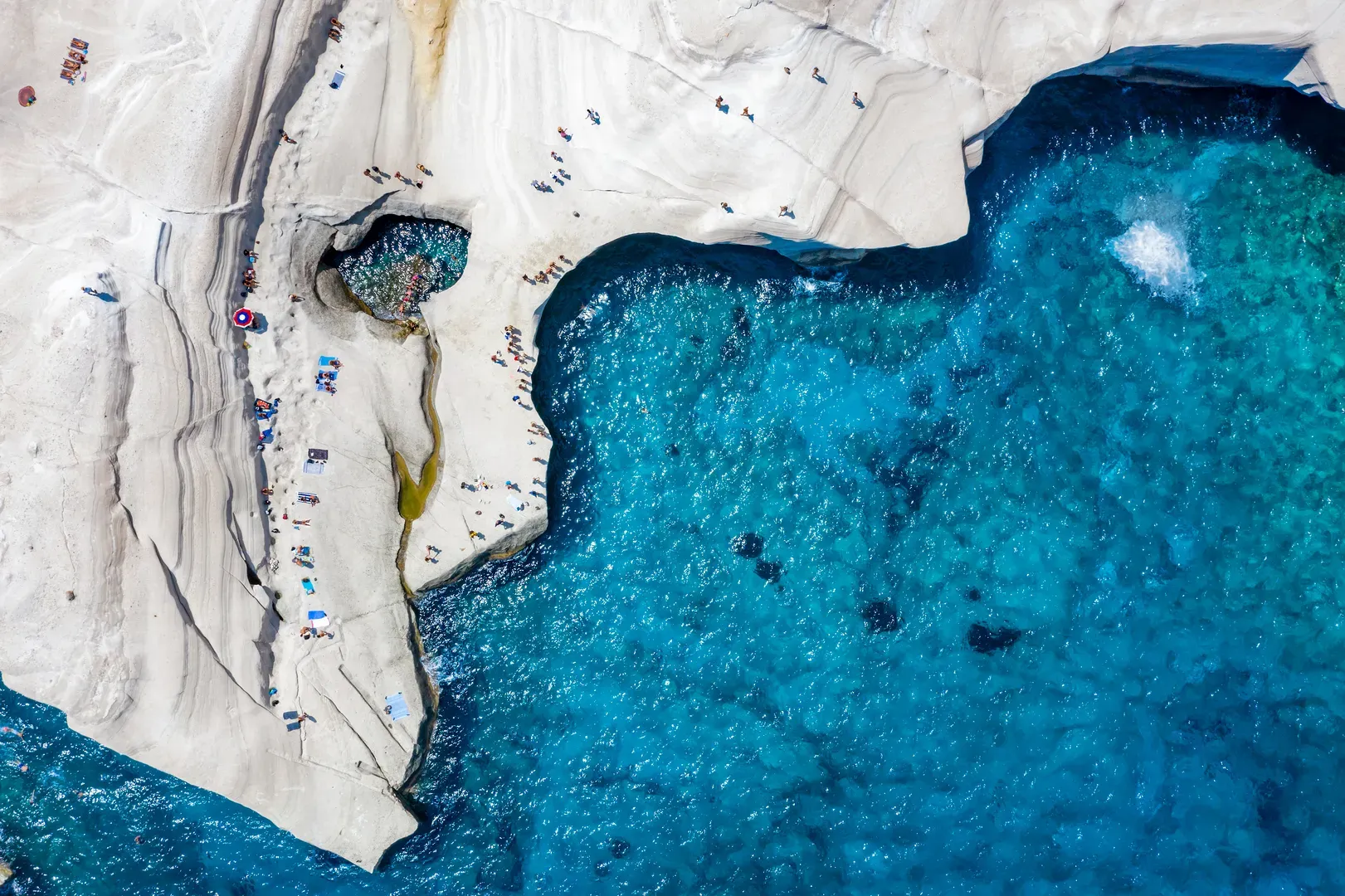
Milos's "lunar" beach is one of the Aegean's most photographed landscapes. Chalk white rocks sculpted by salt and wind meet the deep blue sea in a place of singular beauty.
Fyriplaka
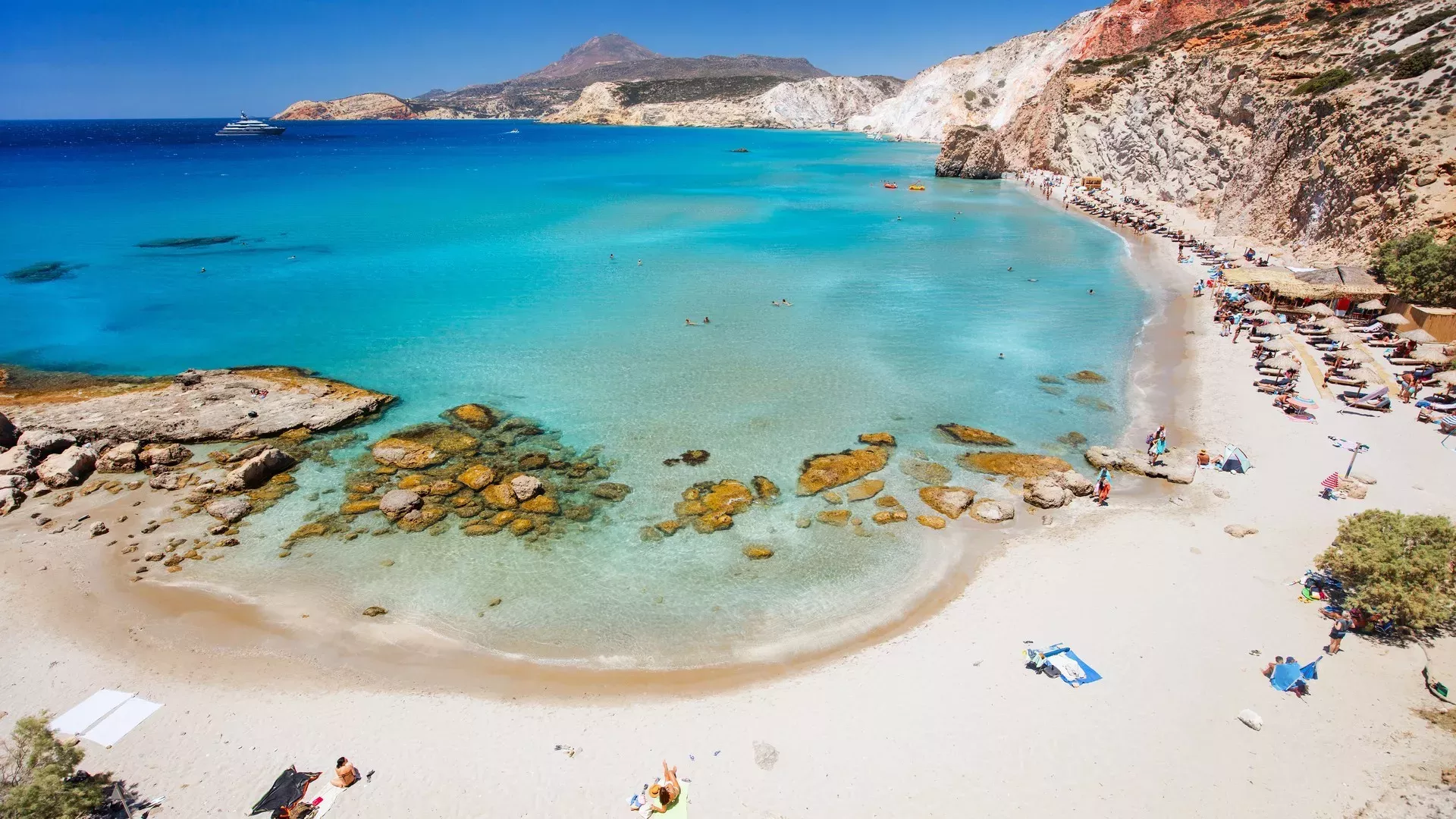
Fyriplaka stands out for the multicolored cliffs rising above the shore and its long sandy beach. The dramatic scenery also draws photography enthusiasts.
Tsigrado
One of Milos's most distinctive beaches. Access is via a narrow passage and a ladder between the rocks, but the small sandy cove and crystal clear waters reward every visitor.
Paleochori
A large and popular beach on the island's southeastern tip, with volcanic rocks in shades of red and orange and deep blue waters.
Papafragas
On Milos's northern side lie the three caves of Papafragas. Here you'll swim in turquoise waters between grey white rocks that lead to the open sea. The descent to the small beach requires care, but swimming here is a one of a kind experience.
Kleftiko
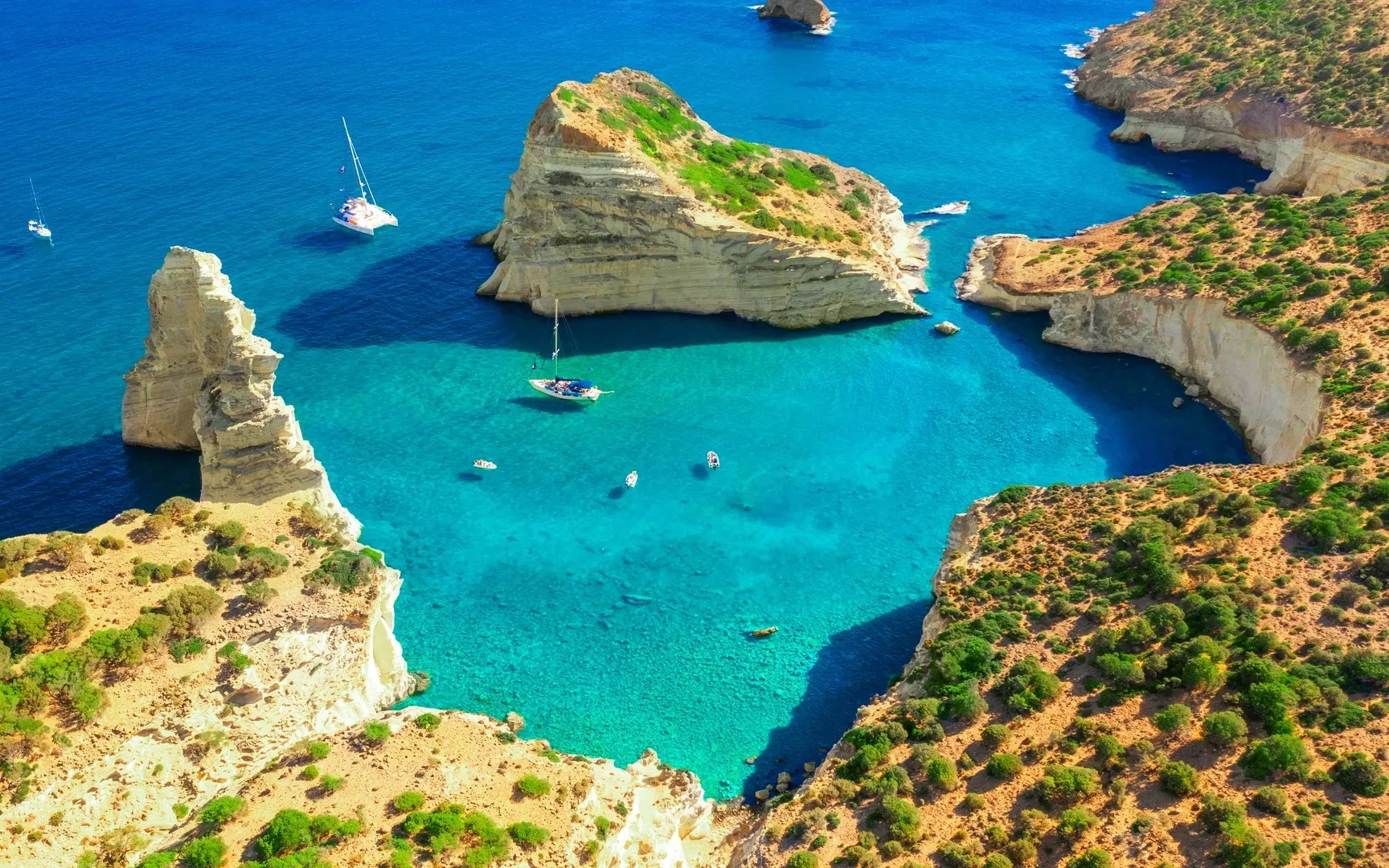
Much photographed Kleftiko (a pirates' hideout in bygone days) isn't exactly a beach but a cluster of striking volcanic white rock formations in turquoise waters, accessible only by sea and ideal for swimming and exploration.
Milos's food and sweets
Milos is a destination with a rich culinary tradition that's worth discovering. Fresh fish and seafood star on most menus, while excellent local produce and cheeses are used in many traditional recipes.
Pitarakia
One of the most characteristic dishes of the local cuisine is pitarakia, small handmade pies filled with local cheese, usually served as an appetizer.
Milos beltes
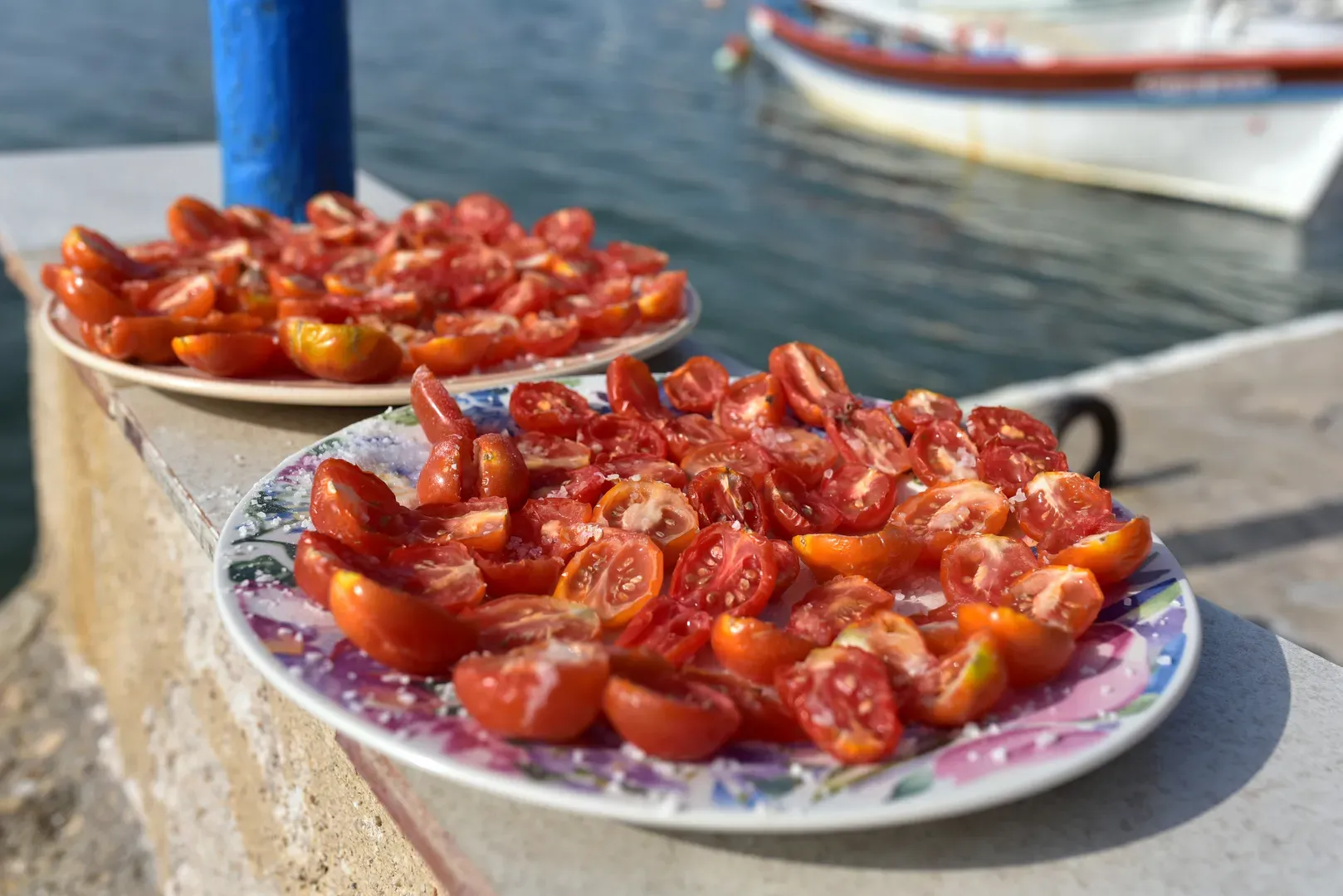
A key ingredient of the local gastronomy is "beltes" made from dry farmed tomatoes. It's eaten on bread with olive oil and goes into many dishes (handmade pasta, skordolazana, etc.), giving them a distinctive flavor.
Karpouzopita
A traditional sweet made with watermelon, flour, and sesame, and one of the island's most distinctive flavors.
Koufeto
A traditional spoon sweet that combines white pumpkin, honey, and almond and is linked to local festivals and customs.
The sights of Milos
With a history that begins in the Neolithic era, Milos was an important center of the Aegean and became world famous after the discovery of the Venus de Milo.
The fishing villages with the colorful "syrmata"
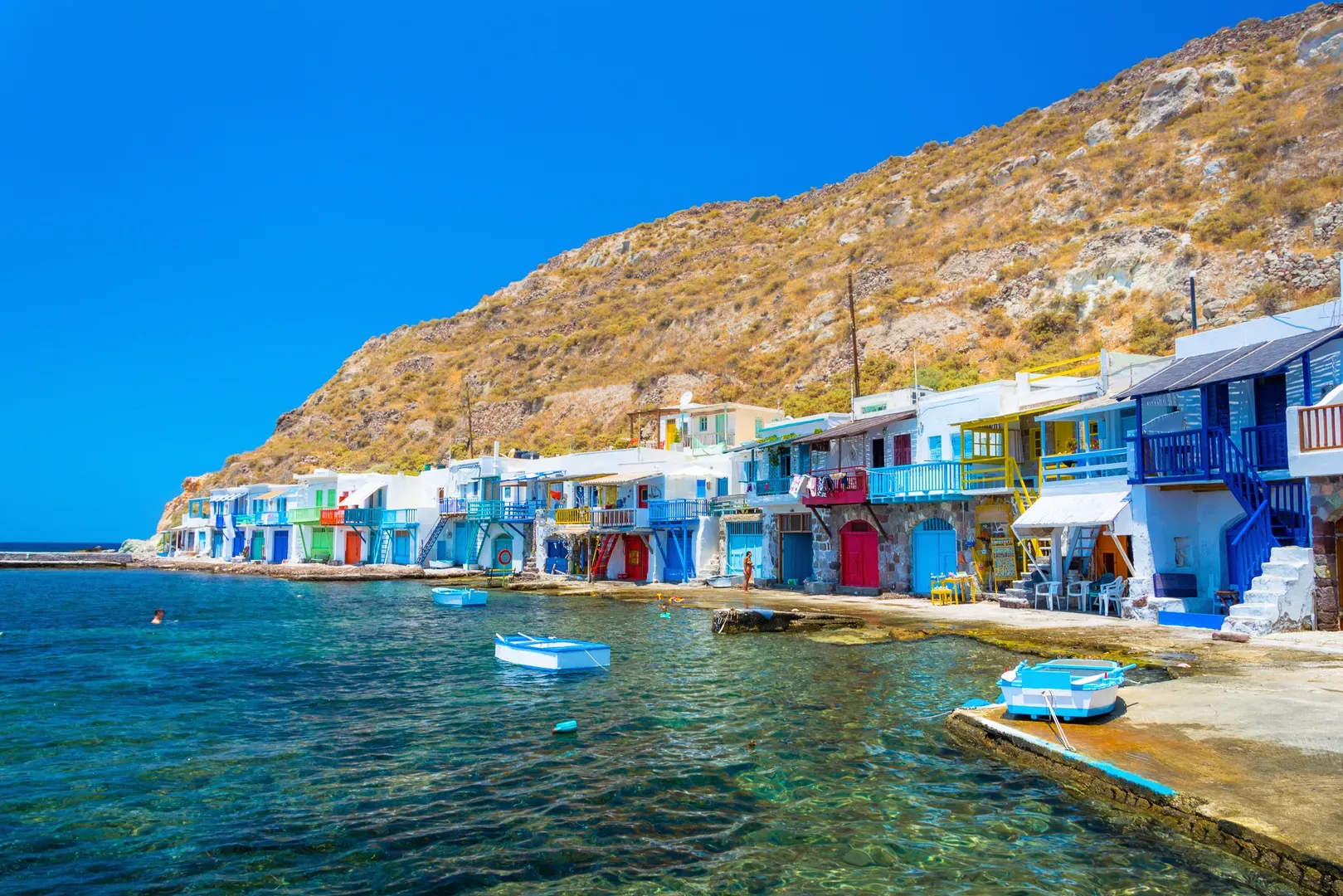
The "syrmata" are among Milos's most characteristic sights and an excellent example of folk architecture. These are rock hewn boathouses where fishermen would haul their boats to overwinter. Take a stroll in Klima, the island's best known fishing village, and photograph the colorful little houses. You'll also find syrmata in Mandrakia, Fyropotamos, Agios Konstantinos and Empourios.
The Catacombs of Milos
The Catacombs are among Greece's most important early Christian monuments. A major historical and religious landmark, they bear witness to the island's long history and attract visitors from all over the world.
The Ancient Theater
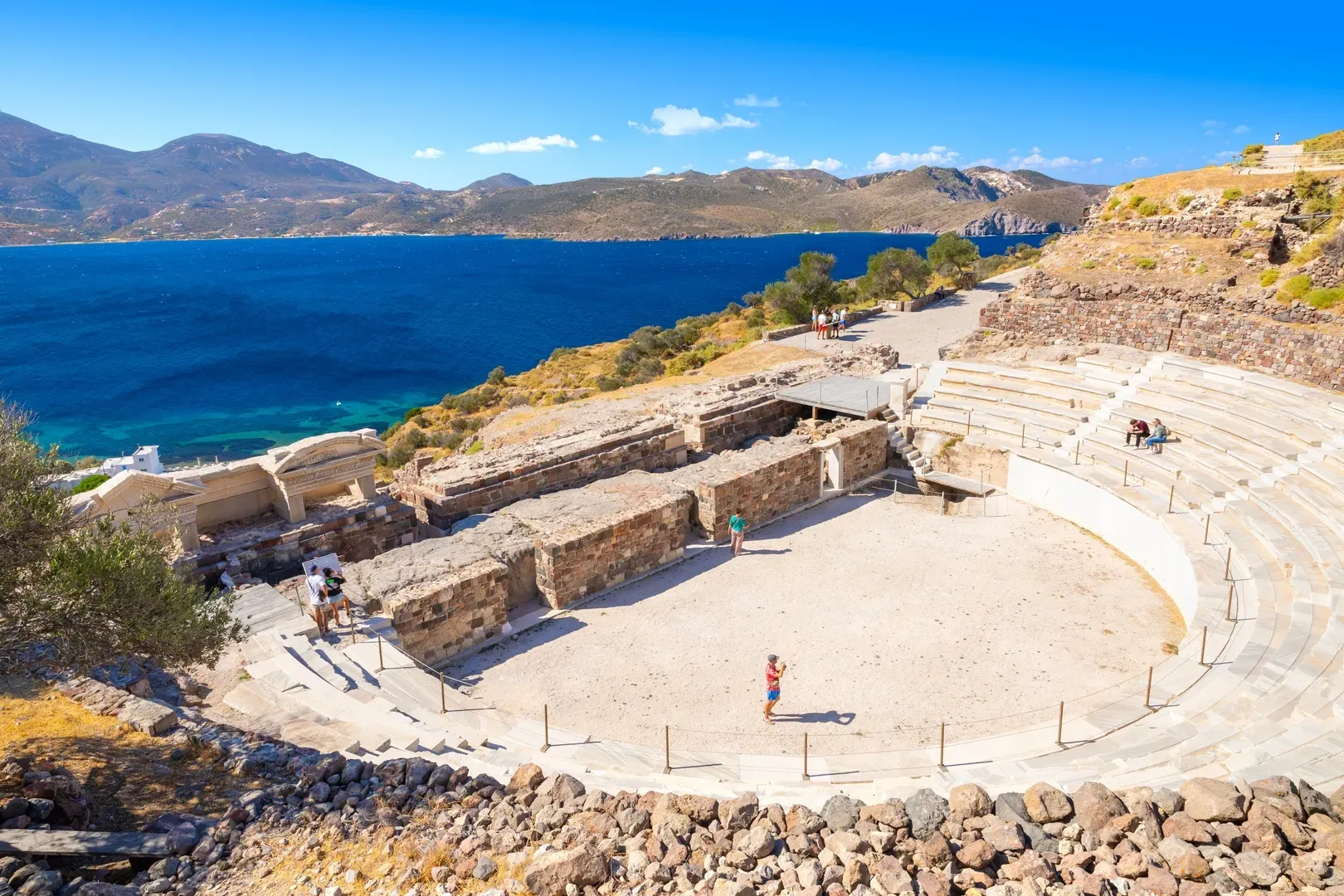
Near the Catacombs lies Milos's Ancient Theater, which is preserved in very good condition. The view over the bay is impressive and highlights the monument's strategic position in antiquity. The famous statue of Aphrodite was found nearby in 1820.
The Archaeological Museum
Housed in a neoclassical building by Ziller in Plaka, it hosts finds from the prehistoric period along with sculptures and reliefs from Classical and Roman times. Here you'll see a faithful copy of the Venus de Milo.
Where to stay in Milos
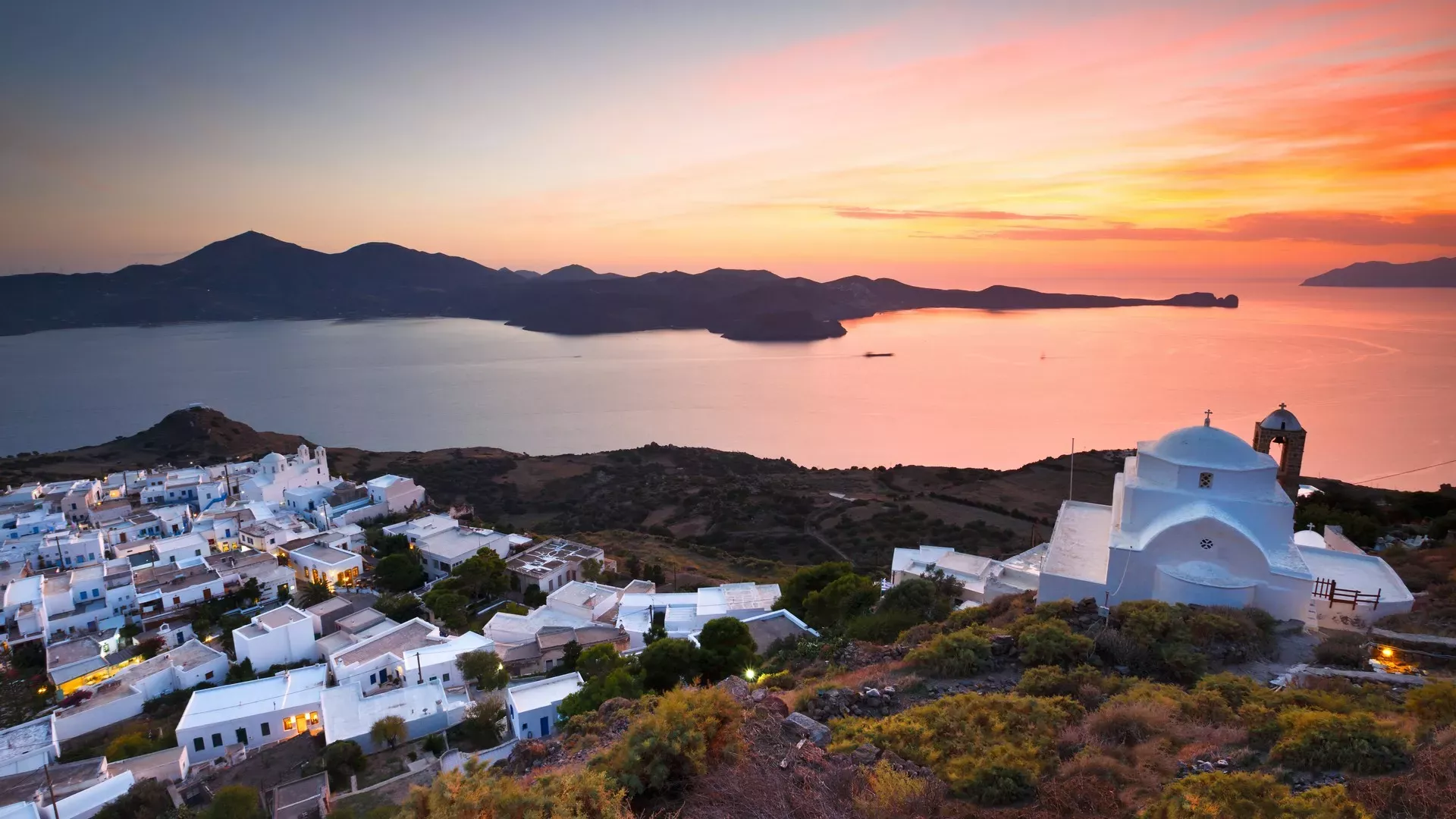
The island's capital is Plaka, a traditional Cycladic settlement with whitewashed houses, picturesque alleys and panoramic views of the Aegean. It's an ideal choice for those who want to be close to the island's traditional atmosphere, with easy access to restaurants, cafés and sights. The sunset from the ruins of the 13th century castle is considered among the most beautiful in the Cyclades.
Adamas, Milos's main port, offers a wide range of accommodations and makes an excellent base for getting around and taking excursions. For a quieter holiday, Pollonia is an excellent choice, with a laid back vibe, a lovely beach and good dining options. Those seeking the island's authentic scenes can choose Klima or neighboring traditional settlements, enjoying the unique Cycladic aesthetic and sea views.
How to get to Milos - Ferries
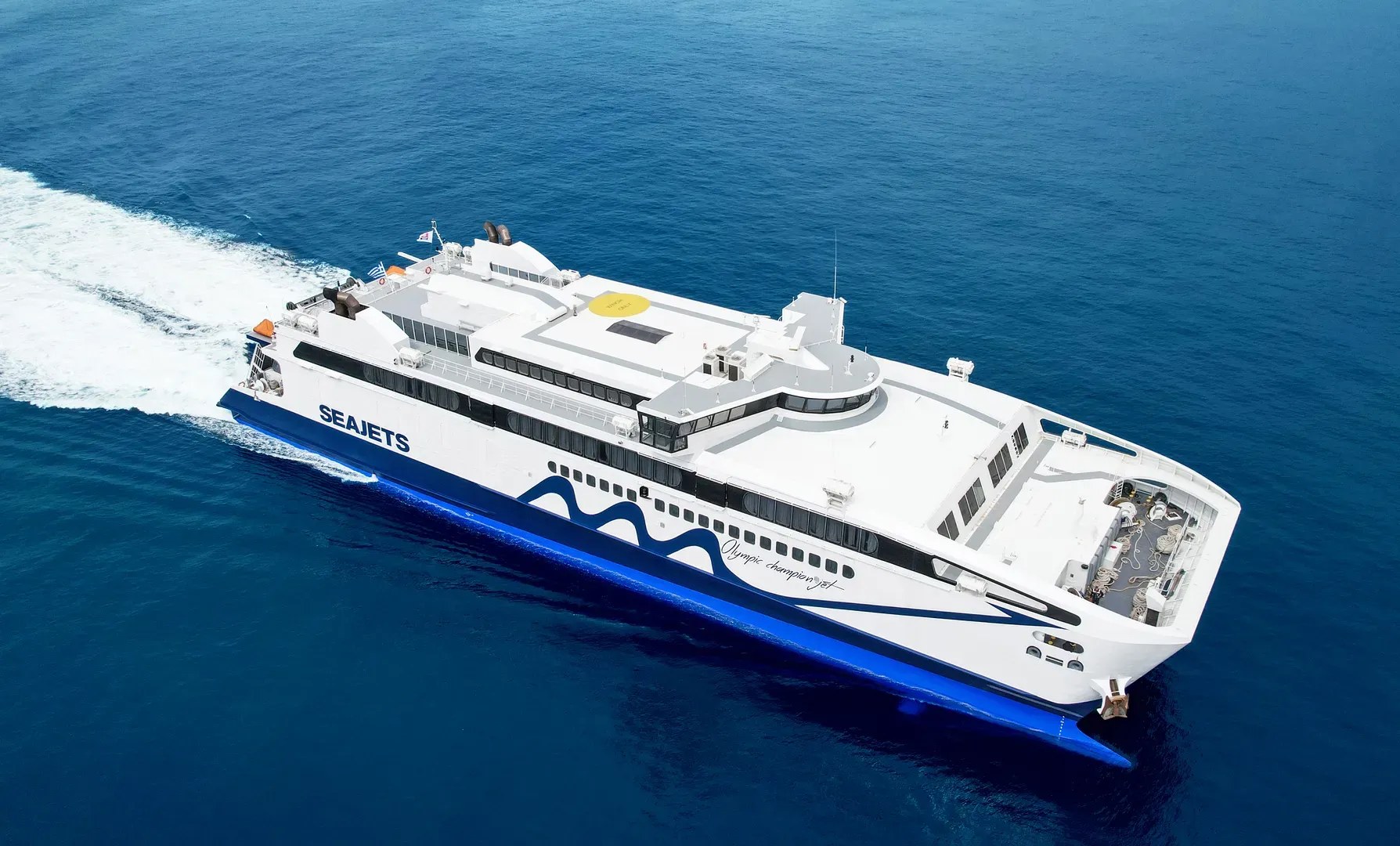
SEAJETS takes you to Milos quickly and comfortably, in just 2 hours and 30 minutes from the port of Piraeus. With 3 daily sailings, you gain more time for more swims, more explorations and more summer.
Silver, Club or Platinum? Choose the class that suits you and travel with comfortable airline style seats and services that make the difference.