





In the boundless blue of the Aegean, small and large churches dedicated to the Virgin Mary look like a painting.
Famed churches and monasteries built in extraordinary locations, the Virgin Mary churches of the Aegean draw worshippers and travelers on 15 August and throughout the summer. They are monuments that testify to our land’s Byzantine and architectural history and are well worth a visit to discover up close their unique beauty in harmony with the island landscape. From the Panagia on Tinos with its thousands of votive offerings to Hozoviotissa on Amorgos clinging to the cliff and Chrysopigi on Sifnos built almost in the sea, we gathered 15 churches dedicated to the Virgin Mary against the magical backdrop of the Aegean.
Panagia Kanala, Kythnos
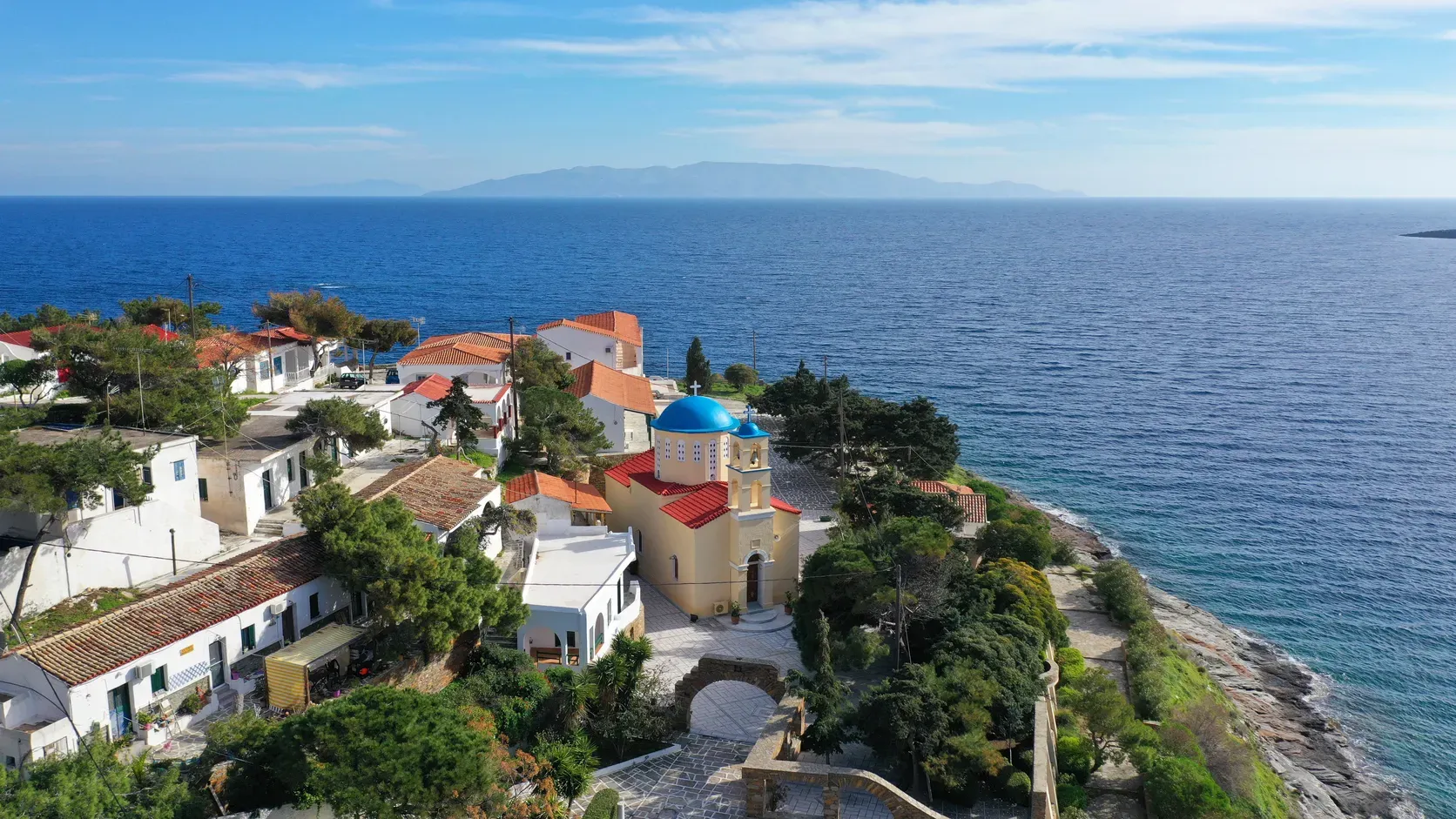
Built on one of Kythnos’ loveliest pine-fringed beaches, the Panagia Kanala is the island’s patroness and a landmark for locals and visitors alike. The church houses the renowned miraculous icon of the Virgin, a 16th-century work which, according to tradition, was found in the Bay of Kanala by fishermen. The church, rebuilt on the site of the previous one, is surrounded by flowers and stands out for its paved square. Every 15 August Kythnos celebrates with a great festival, a procession of the icon, and a traditional Cycladic feast by the water’s edge.
Panagia Theoskepasti, Andros
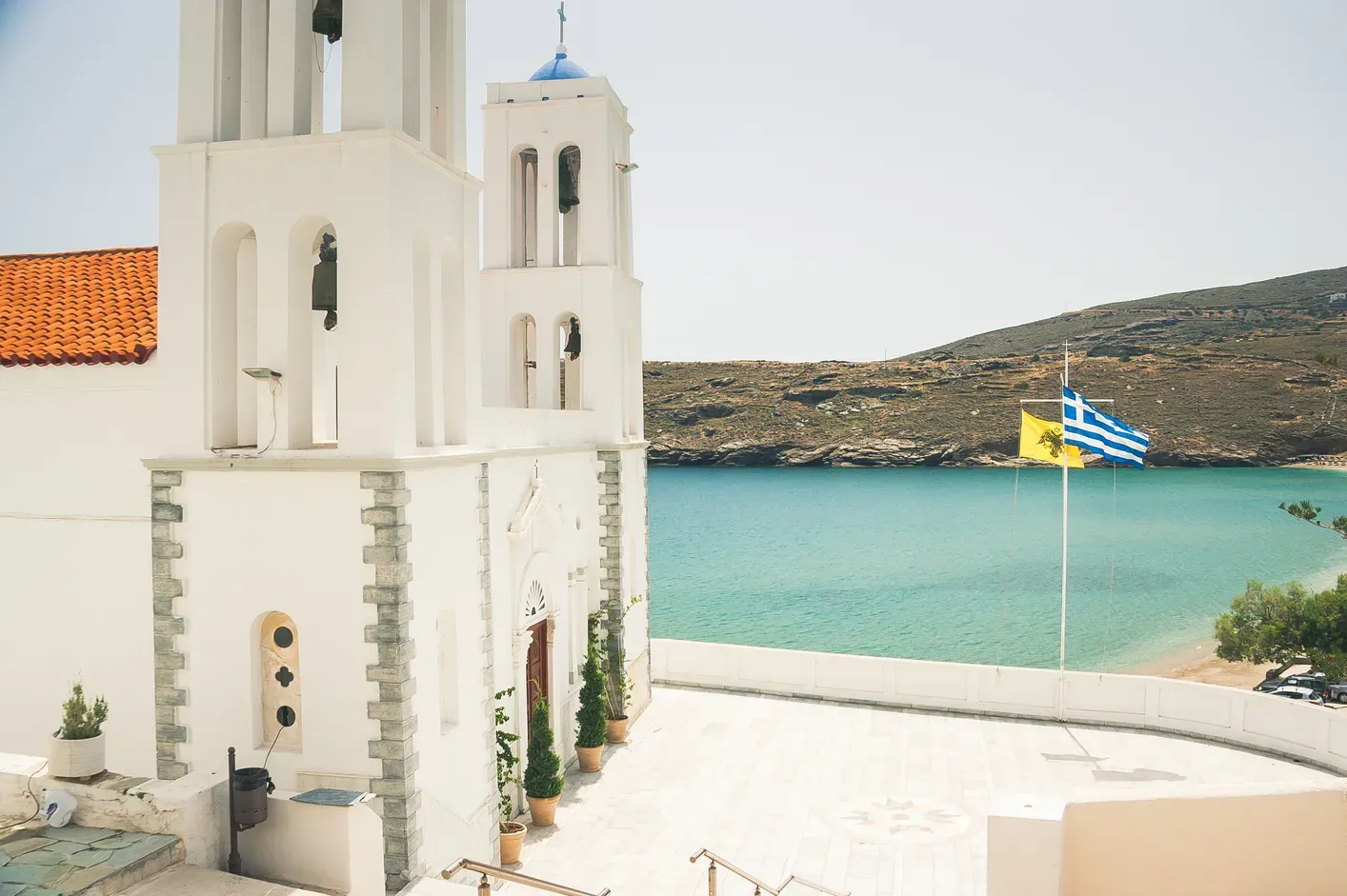
At the top of the hill in the Paraporti area of Andros Town, the church of Panagia Theoskepasti is considered the patroness of the island and of seafarers. According to tradition it was built in this dramatic location because the icon of the Virgin was found there in a cave. It was named Theoskepasti because legend says that the sailors and locals, unable to finish its roof, found heaven-sent timbers in the sea and managed to complete it with them.
Panagia Evangelistria, Tinos
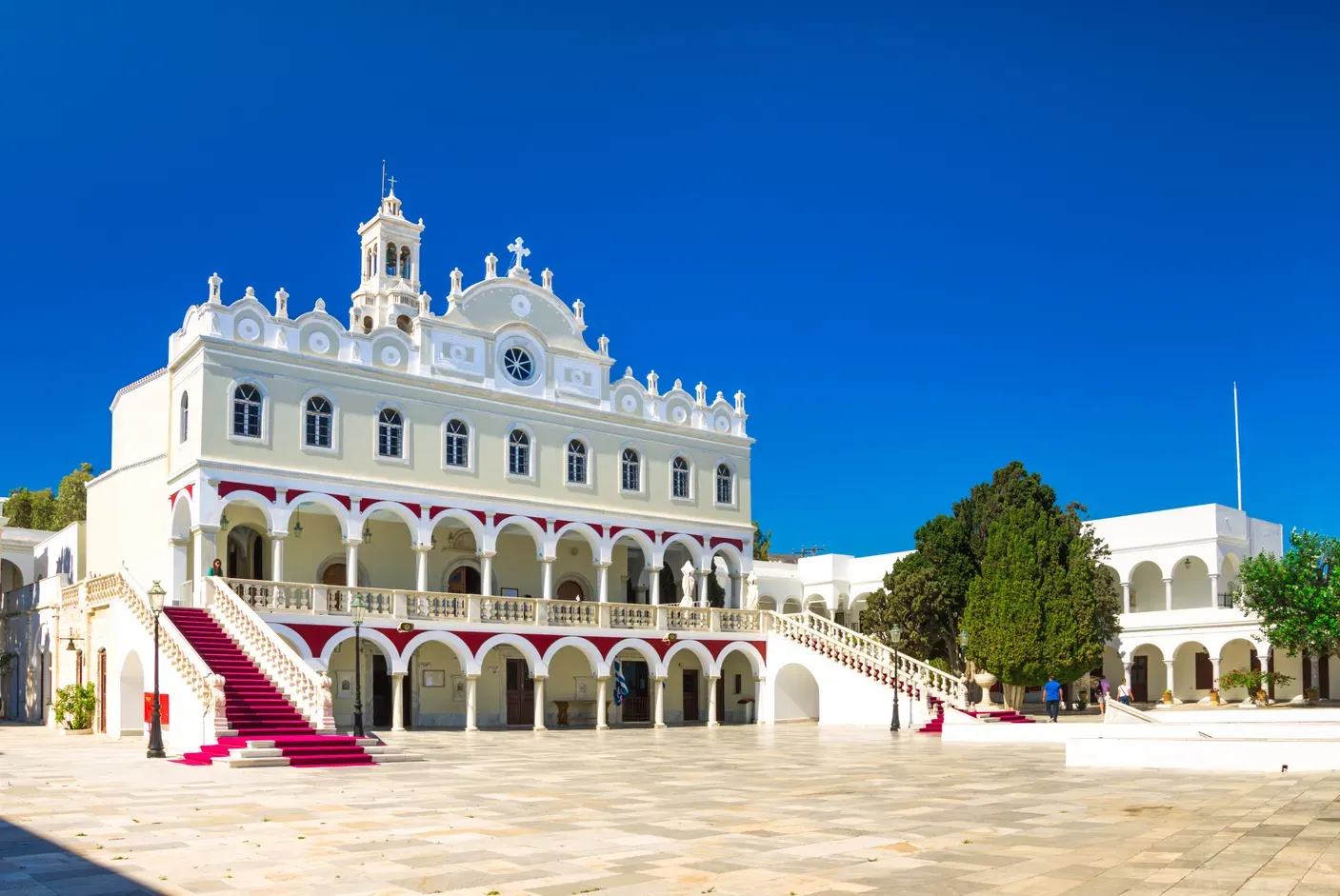
Panagia Evangelistria, also known as Megalochari, is perhaps Greece’s most famous pilgrimage site. Panagia of Tinos, as everyone calls it, stands in a prominent position in Chora and was built in the 19th century on the spot where her icon was found after excavations. With imposing architecture and thousands of votive offerings from the faithful, the church is built of white marble and ranks among the important architectural monuments with religious interest and beyond. Its biggest celebration is on 15 August, when from the eve thousands of pilgrims arrive from all over Greece.
Chrysopigi, Sifnos
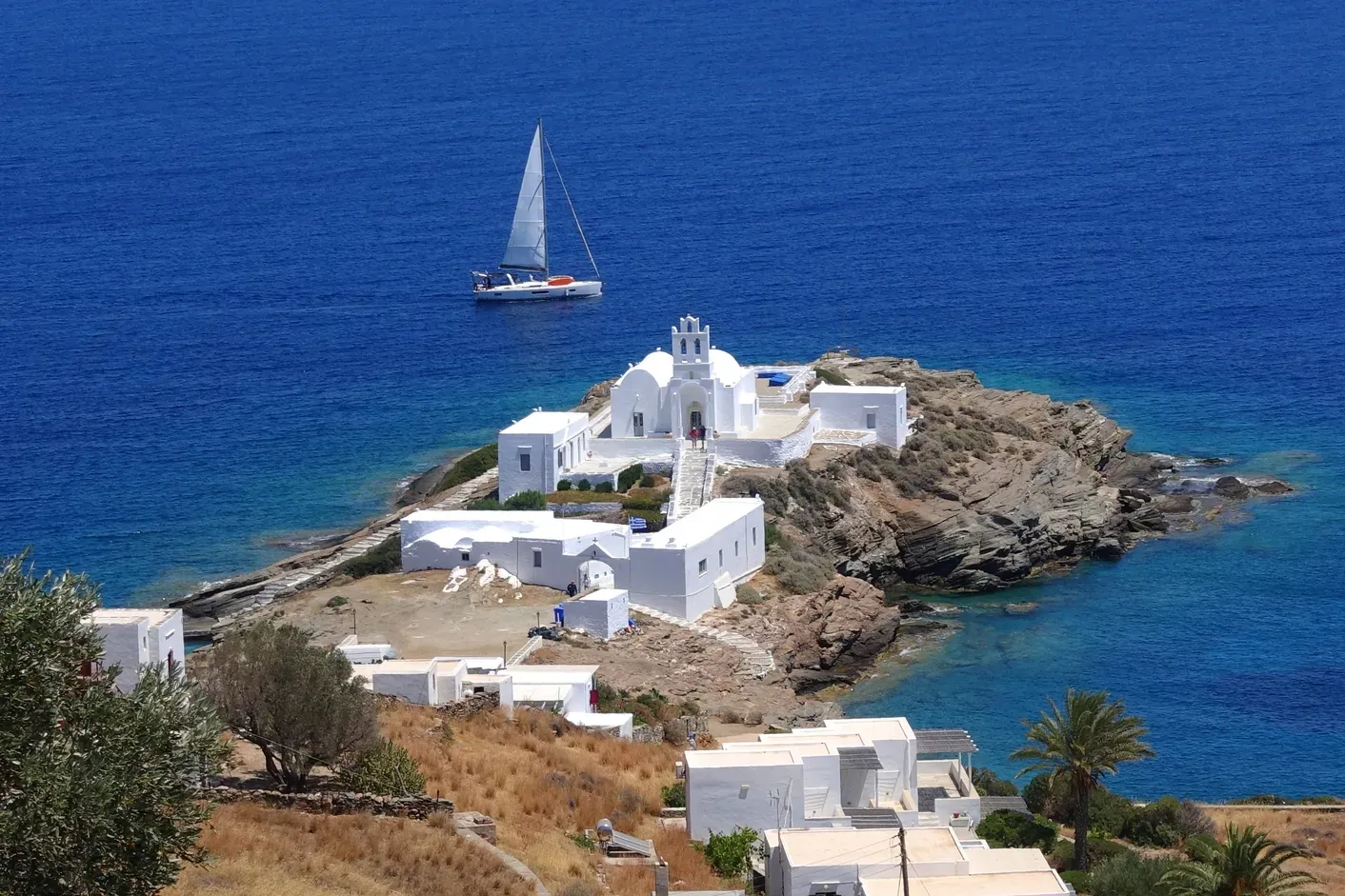
A symbol and patroness of the island, Panagia Chrysopigi crowns a rock connected to the shore by a narrow footpath. It forms one of the loveliest vistas of the Aegean and one of Sifnos’ most iconic scenes. Unlike other monasteries it is not enclosed by a wall, and access is open. According to tradition, this rock is cut off from the island because it was split by the Virgin, who wished to protect the women who were there during a pirate attack. Each year on Ascension Day the miracle is celebrated with a great festival on Sifnos.
Panagia Tourliani, Mykonos
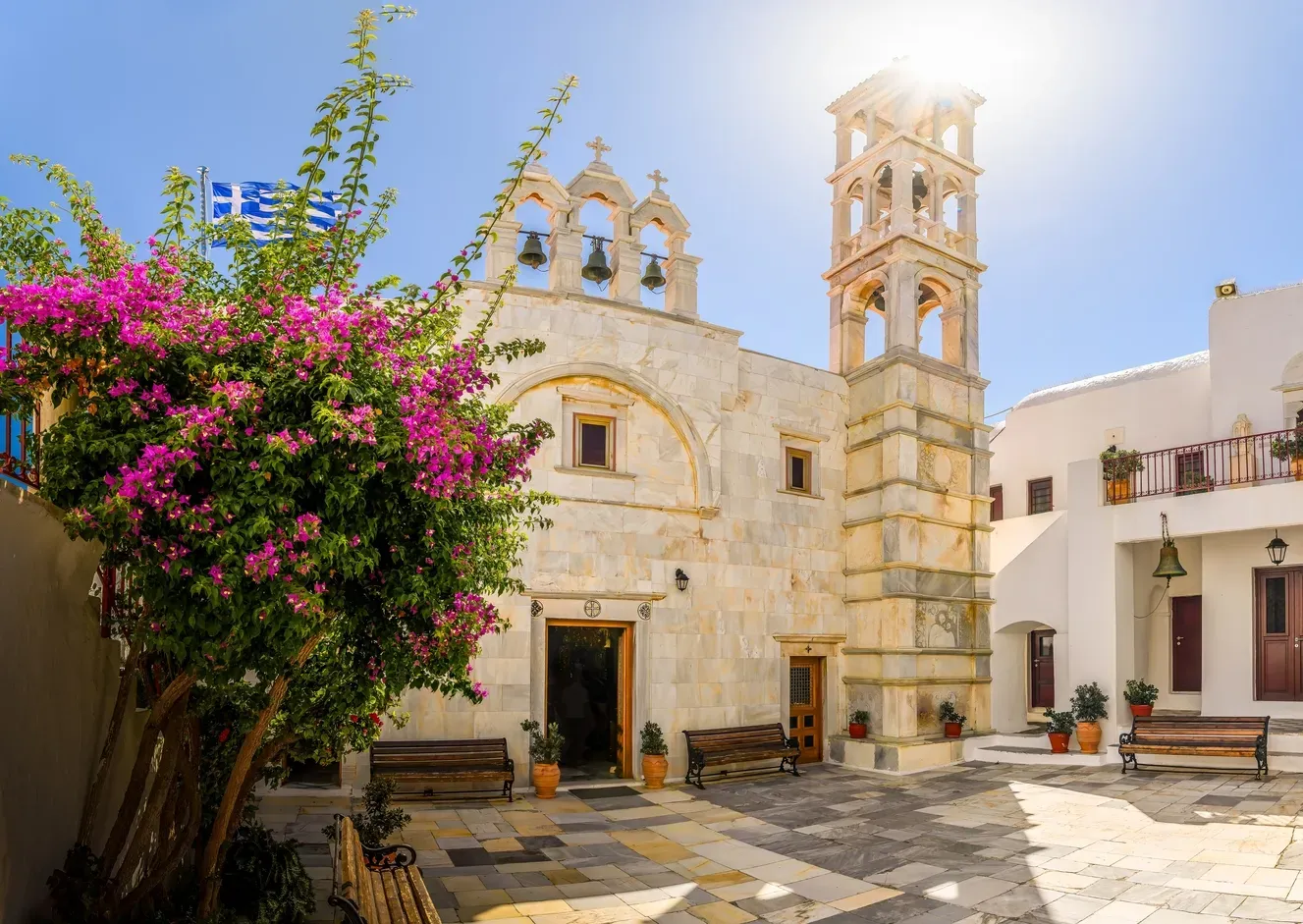
One of the island’s most important sights, Panagia Tourliani, patroness of Mykonos, was built in the 16th century in the village of Ano Mera. It stands out for its elaborate carved wooden iconostasis, the work of craftsmen from Smyrna, and its white Cycladic architecture. The monastery houses an ecclesiastical museum with icons and precious ecclesiastical relics. In the early 20th century the monastery operated as a home for the elderly and later as an orphanage. On 15 August a big festival is held at the monastery; however, the most important feast is on 23 August, the Leave-taking of the Dormition of the Theotokos.
Panagia Ekatontapyliani, Paros
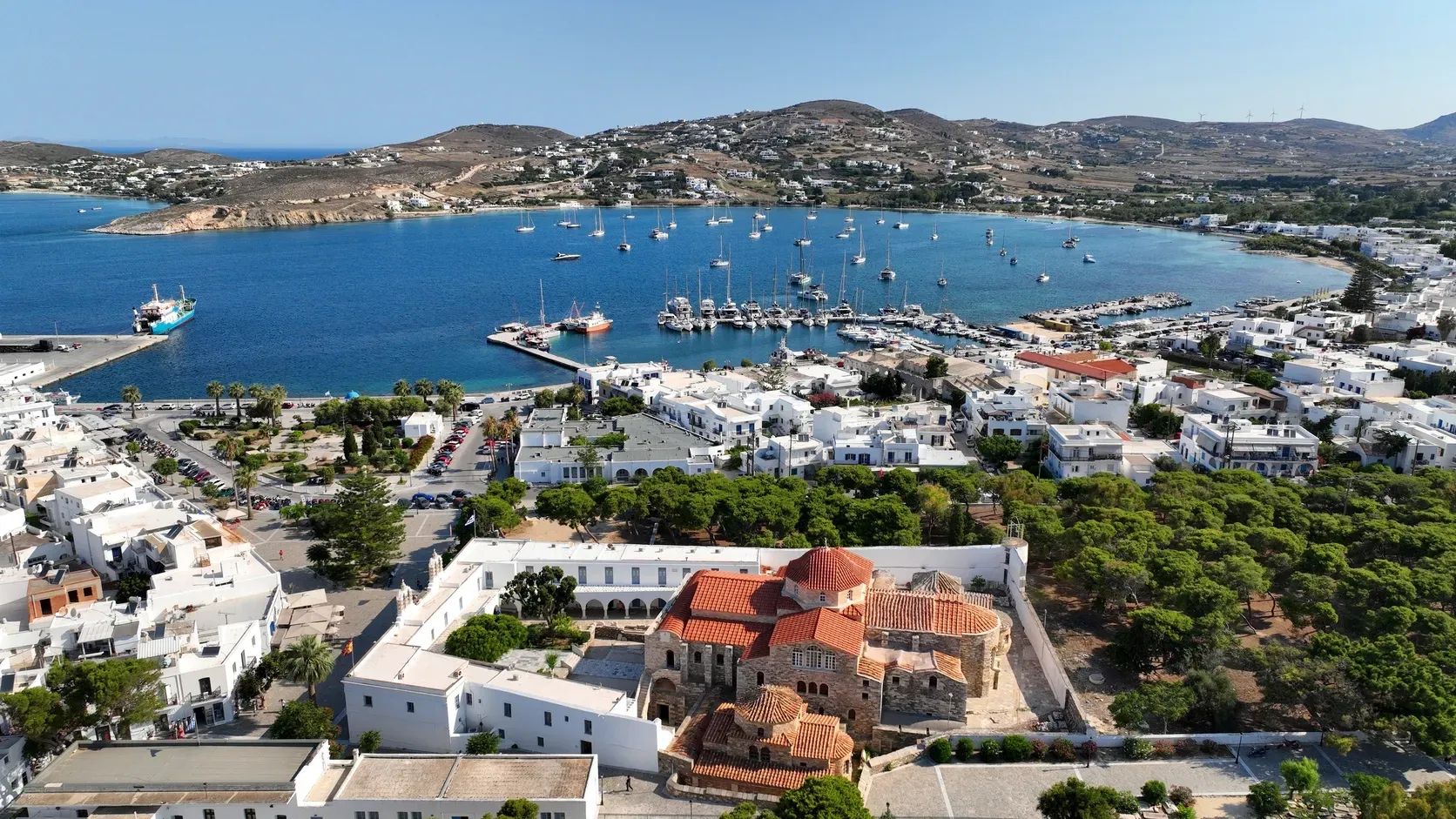
One of Greece’s most significant and best-preserved religious monuments, Panagia Ekatontapyliani of Paros lies just a few meters from the port of Parikia. Its founding is attributed mainly to the Byzantine Emperor Saint Constantine, in fulfillment of the wish of his mother, Saint Helena. The name Ekatontapyliani derives, according to tradition, from the 99 gates that are visible and the hundredth that will be revealed with the opening of a corresponding secret door located in Hagia Sophia. On 15 August the feast is celebrated in grand style in the church with services, a procession of the icon, and spectacular festivities that draw locals and visitors.
Panagia Tourliani, Milos
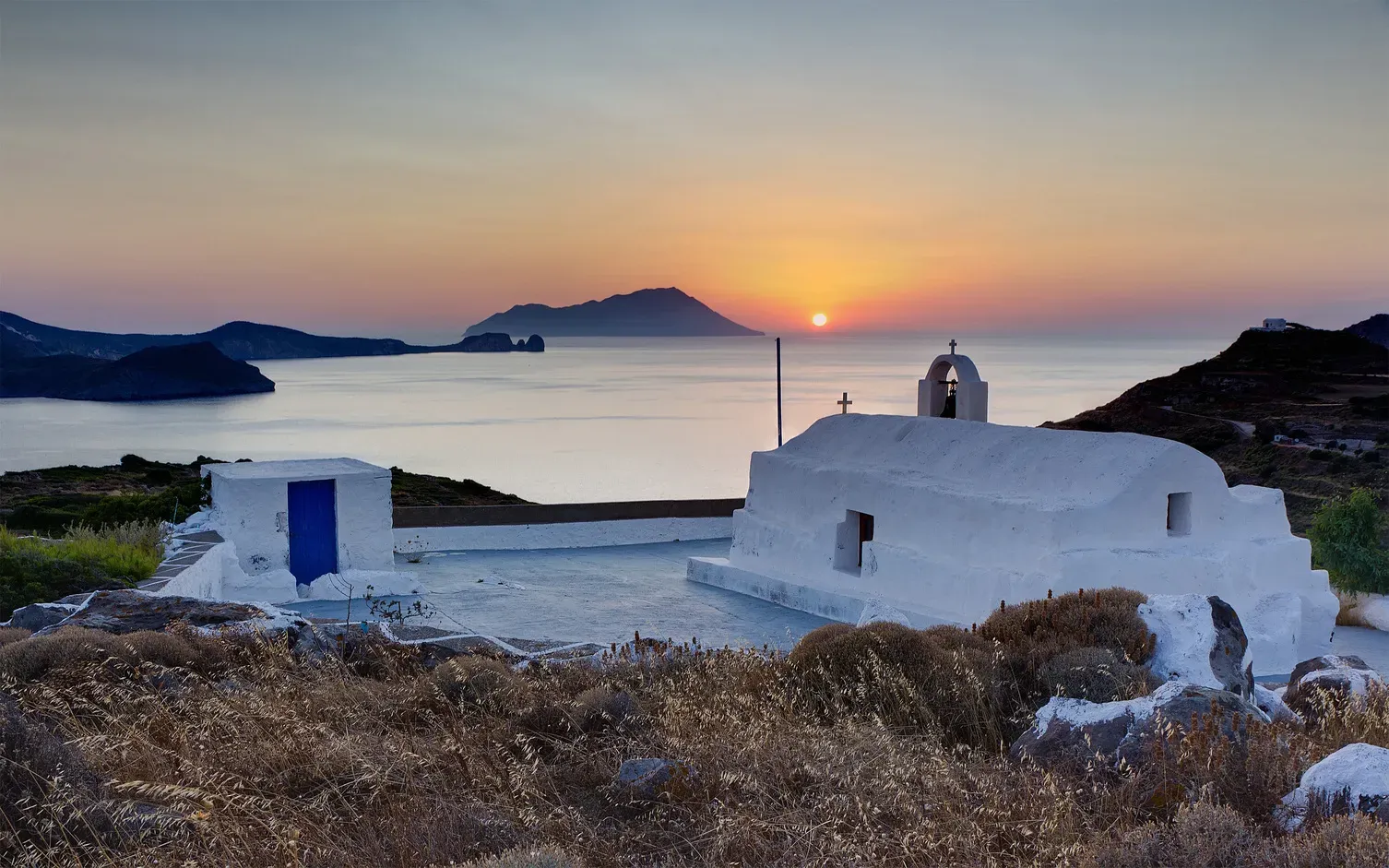
At one of the island’s most striking spots in the Klimatovouni area, the Panagia Tourliani of Milos is among the most traditional chapels. The all-white little church, with uninterrupted views over the Bay of Agios Dimitrios, houses impressive old Byzantine icons. However, it stands out for the view from its forecourt just before nightfall, with a striking sunset backdrop of the sea. On 15 August is Tourliani’s big feast, with vespers and revelry with traditional music.
Panagia of the Dormition, Folegandros
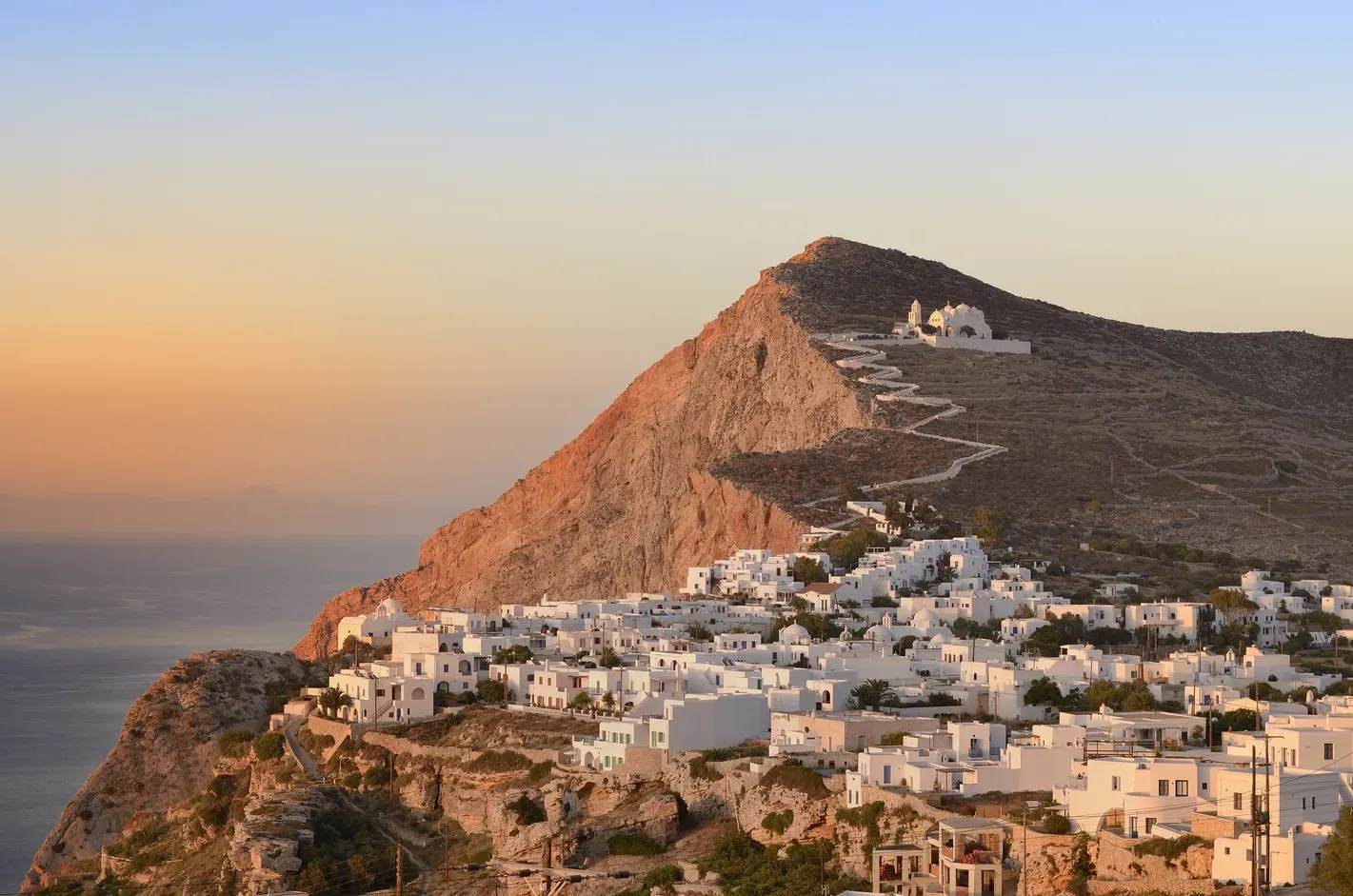
Perched on a height with panoramic views above Chora, the Panagia of the Dormition is Folegandros’ most important church. Dedicated to the Dormition of the Theotokos, it appears to be built on the site of an ancient sanctuary. It features an impressive marble iconostasis, arches, and an emblematic bell tower. It is the island’s foremost religious monument and a point of reference, as visitors climb its cobbled path daily at sunset. The icon of the Virgin is linked to pirate tales and legends of Folegandros. On 15 August it is a big celebration for the island, with a feast and traditional island music.
Hozoviotissa, Amorgos
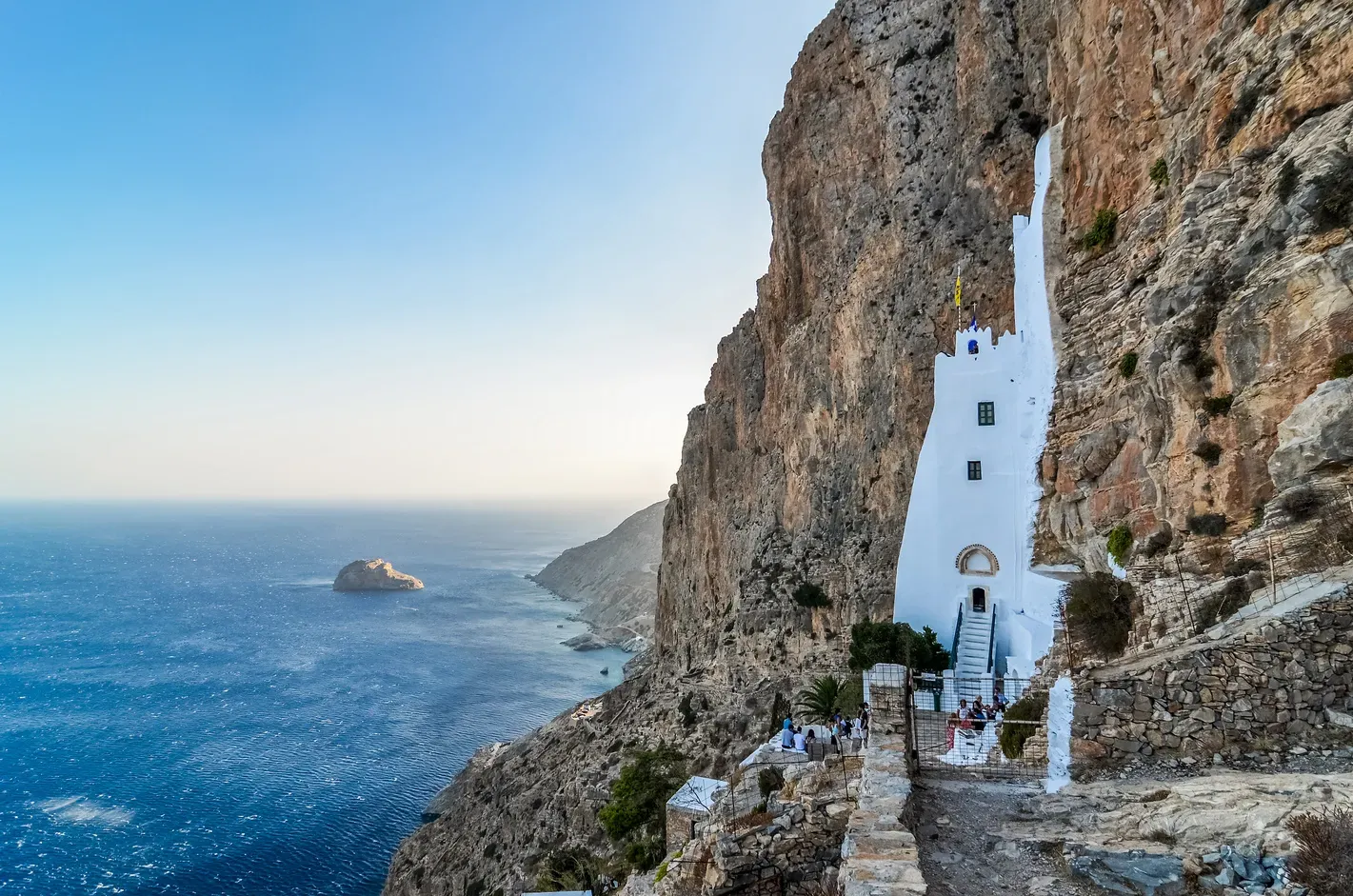
In a breathtaking setting, the monastery of Panagia Hozoviotissa on Amorgos is an architectural marvel built into the rock. Perched 300 m above the sea, it is the island’s patroness and one of its most important sights. It is believed to have been built in the 9th century, when the icon of the Virgin arrived by sea near the monastery. Access is via 271 steps and the building has eight levels that interconnect. The great feast of the monastery and the entire island takes place on 20 and 21 November with services and treats for the faithful such as sweets and traditional fish.
Panagia Episkopi, Santorini
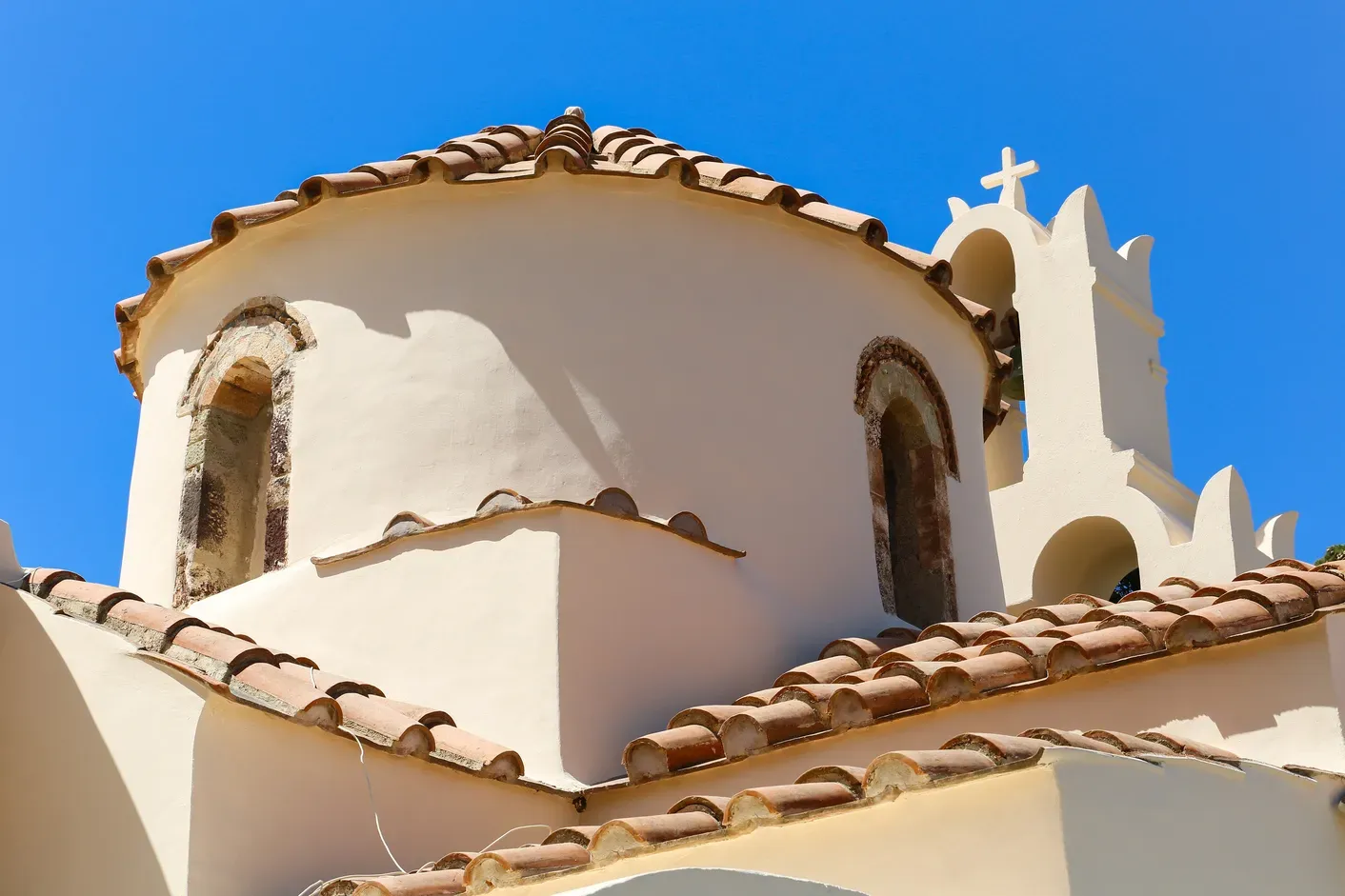
Among the hundreds of churches of Santorini, built in the 11th century in the area of Mesa Gonia, Panagia Episkopi is the island’s most important Byzantine monument. The church appears to have been erected over the ruins of an early Christian basilica that have been incorporated into the current structure and is said to have been founded by Emperor Alexios I Komnenos. It stands out for architecture that blends Byzantine and Cycladic elements, as well as for its exquisite frescoes. The icon of the Virgin is especially honored at the 15 August feast with a big festival, attracting crowds of worshippers.
Panagia of Agiasos, Lesvos
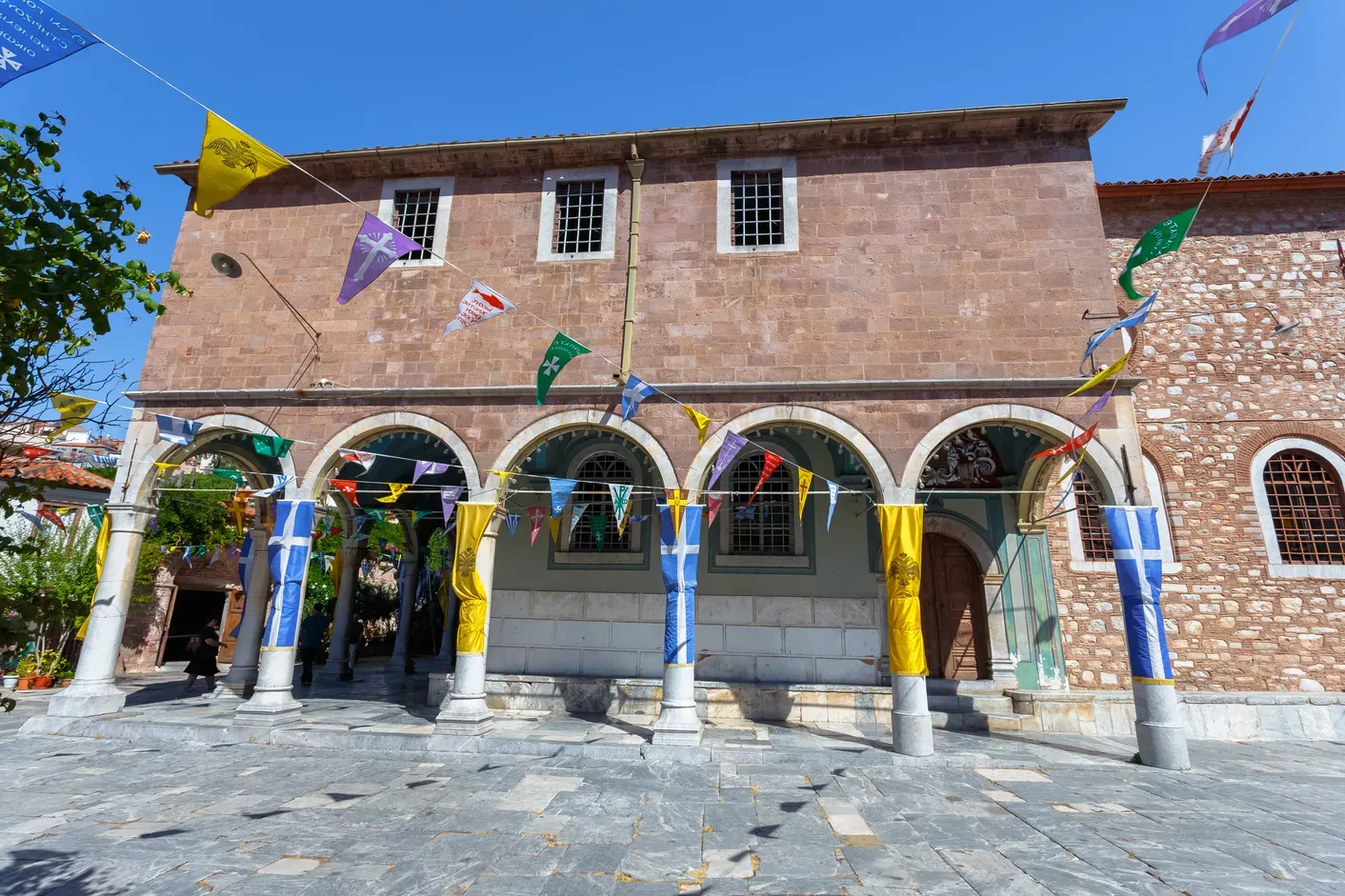
In one of Lesvos’ most picturesque spots, mountainous Agiasos, the church of the Virgin is a center of religious life for the whole island. The impressive Panagia of Agiasos next to the central Agora Square is dedicated to the Dormition of the Theotokos. The church is known mainly for the icon of the Virgin holding the Child, considered miraculous, which draws pilgrims on 15 August. It also houses an Ecclesiastical Museum with an important collection of manuscripts, vessels, and other ecclesiastical objects. Outside the church courtyard on the stone-paved street, you will find picturesque cafés and shops with traditional ceramics.
Panagia tou Harou, Lipsi
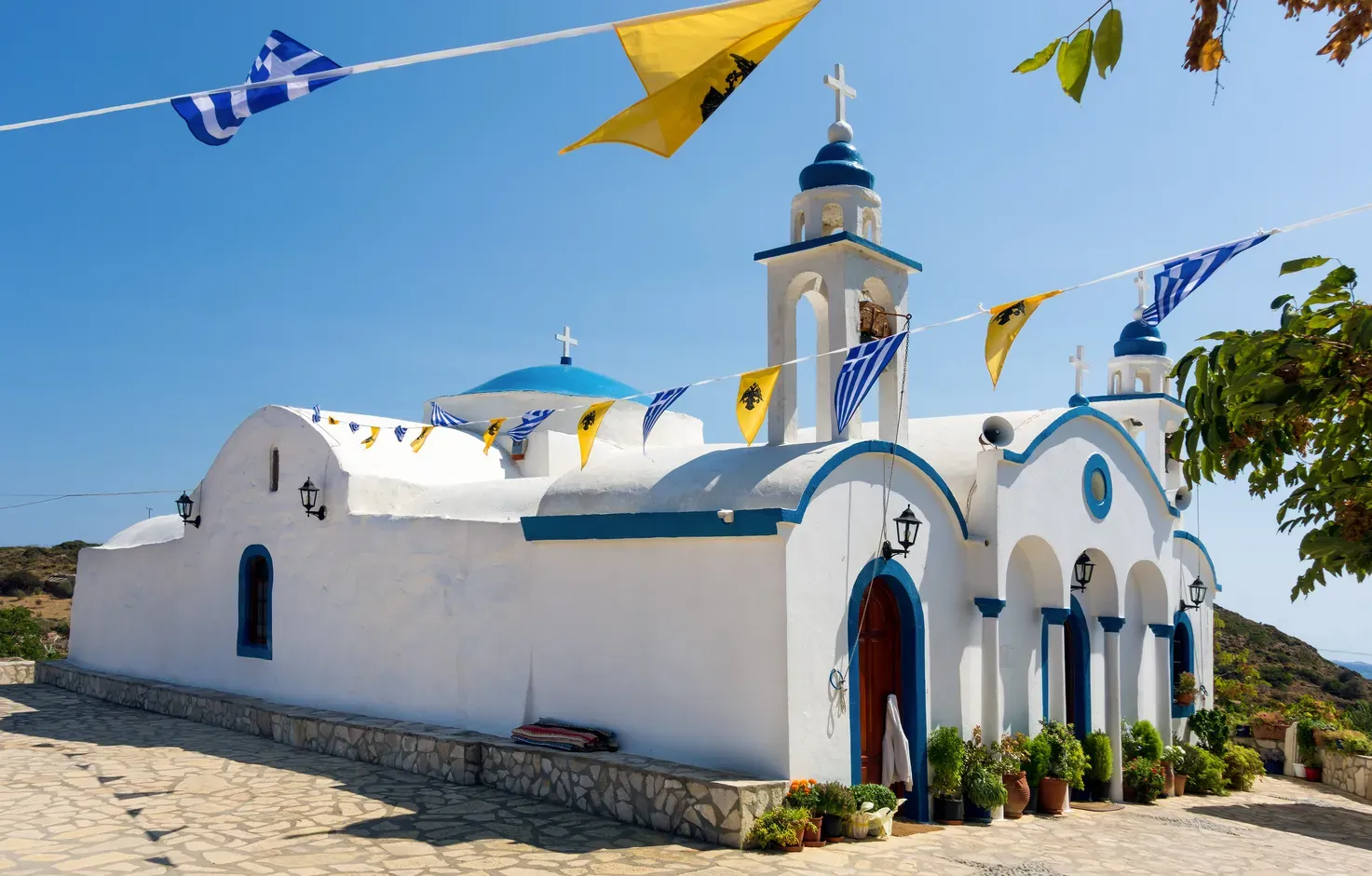
One of the Aegean’s most distinctive pilgrimage sites, Panagia tou Harou on Lipsi stands out for many reasons. Pilgrims marvel at the icon of the Virgin who holds, instead of the infant as is customary, the crucified Jesus. It is said that this is how it got its name, as did the church that was built in 1600 by monks from Patmos. Tradition says that in 1943 a young girl placed white lilies on the icon of the Virgin. Although they withered in the following period, they began to bloom again and on 23 August they were once more in full flower. Each year, on that day, the church is celebrated with the big festival held on the island.
Panagia Portaitissa, Astypalaia
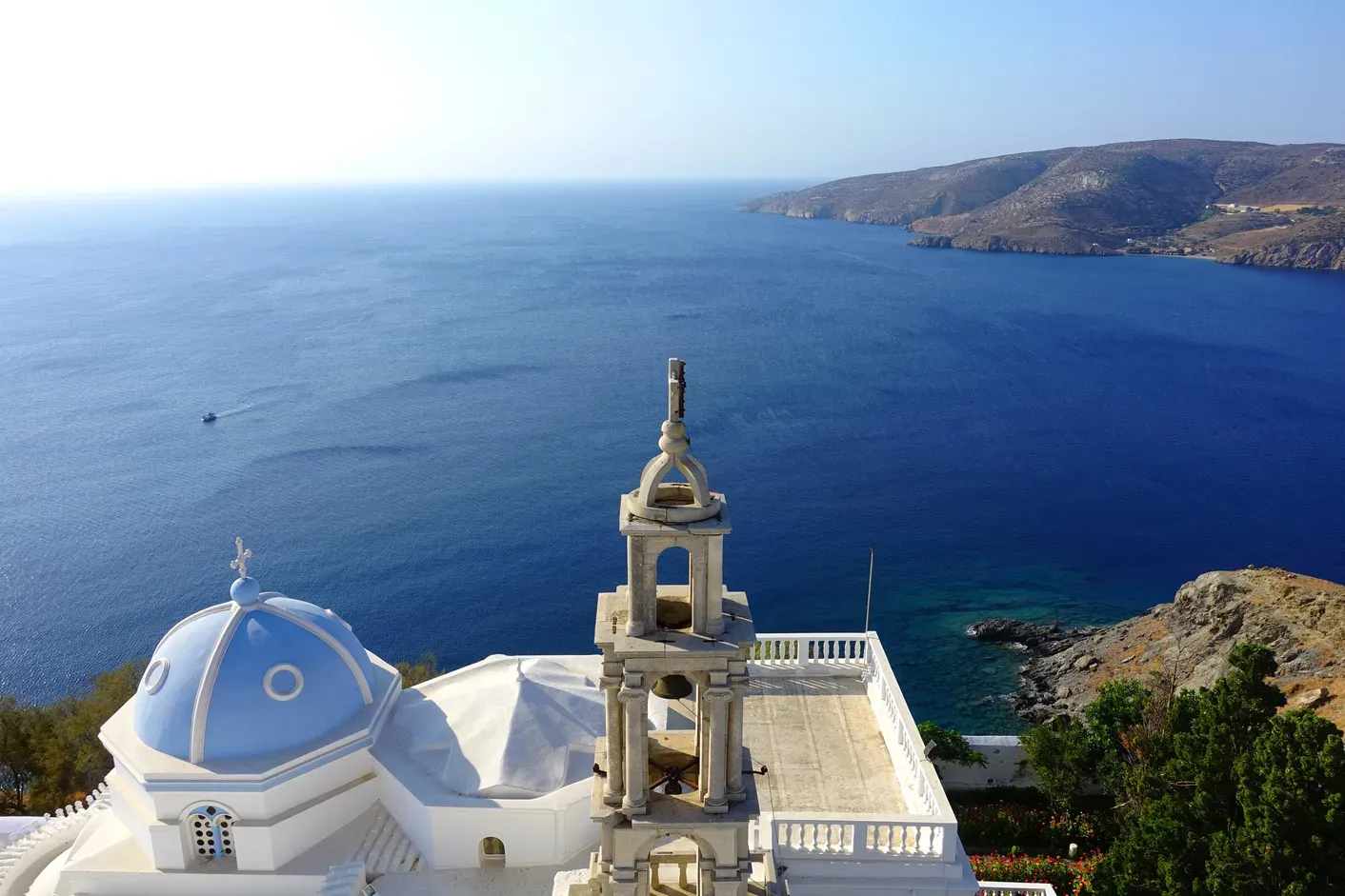
With white bell towers beneath the blue sky and the Aegean as a backdrop, Panagia Portaitissa stands beside the castle of Astypalaia, offering visitors unique views and serenity. It is the island’s religious center and its largest pilgrimage, begun in 1762. Its construction took nine years, during which tradition speaks of many miracles that occurred on the island. The church is dedicated to Panagia Portaitissa of the Iviron Monastery, a copy of whose icon was brought by Hosios Anthimos to Astypalaia. The island’s big festival with island songs takes place on 15 August.
Panagia Spiliani, Nisyros
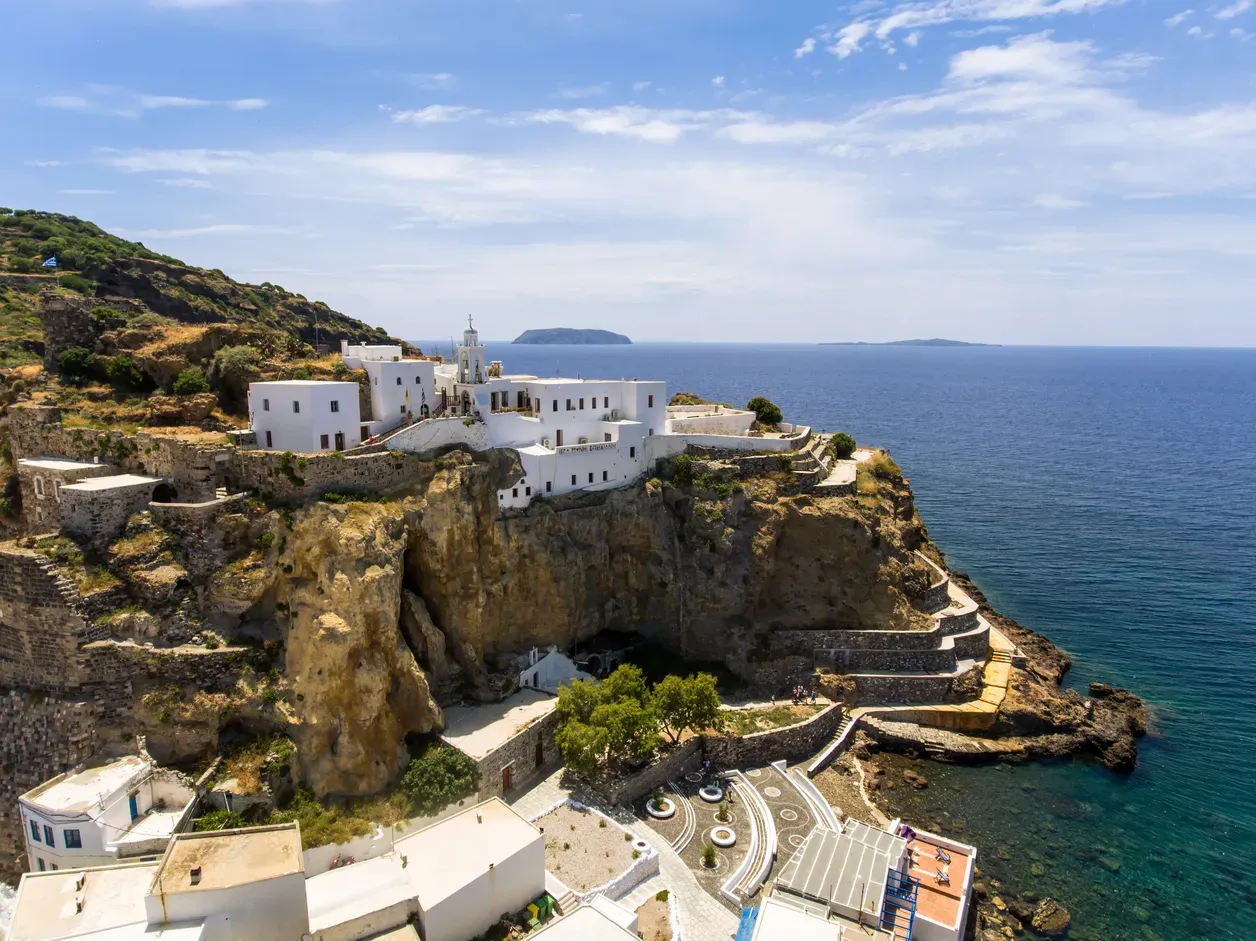
The monastery of Panagia Spiliani is Nisyros’ most important religious monument. A magnet for visitors to the island, the monastery is built inside a cave on a precipitous rock called «Oxos of the Panagia», at an elevation of 35 m. Access is via 130 steps that start from Mandraki. Its age, not precisely determined, is centuries old. Tradition says that the icon of the Virgin was found there and thus the monastery was built, dedicated to the Dormition of the Theotokos. On the eve of 15 August the “lament of Megalochari” is heard and on the day a big festival is held on the island.
Kyra Panagia, Karpathos
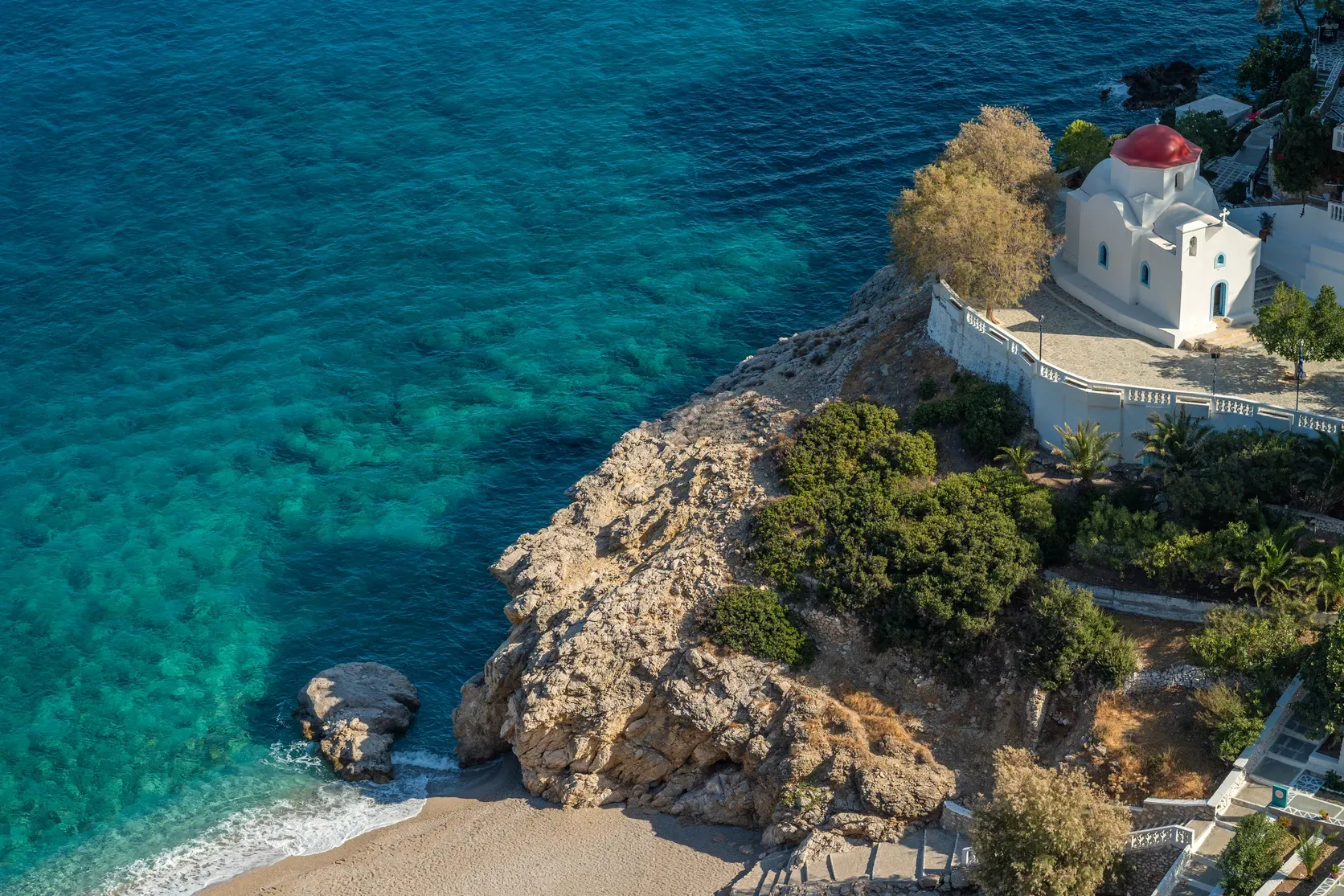
On an idyllic beach that bears her name, Kyra Panagia of Karpathos blends religious reverence with the beauty of the landscape. The church of Kyra Panagia stands on an imposing rock above the sea. It is one of the most photographed beaches on the island and beyond. The first form of the church dates to the 6th century and the present one to around 1833. It is also linked with the Revolution of 1821, as it seems it was renovated by Captain Ioannis Romnakis, a former chieftain from Crete. Each year, the little church celebrates on 23 August, with revelry that begins the previous evening.