





From Northern Greece to Crete, four Greek cities invite us to experience the magic of the Greek Carnival.
The three-day weekend of Carnival and Clean Monday is approaching and gives us the perfect excuse to plan a short getaway. Every part of Greece offers its own carnival experience, uniquely blending local customs and festive revelry with parades and dances. The four cities that follow are ideal destinations to celebrate Carnival.
Patras
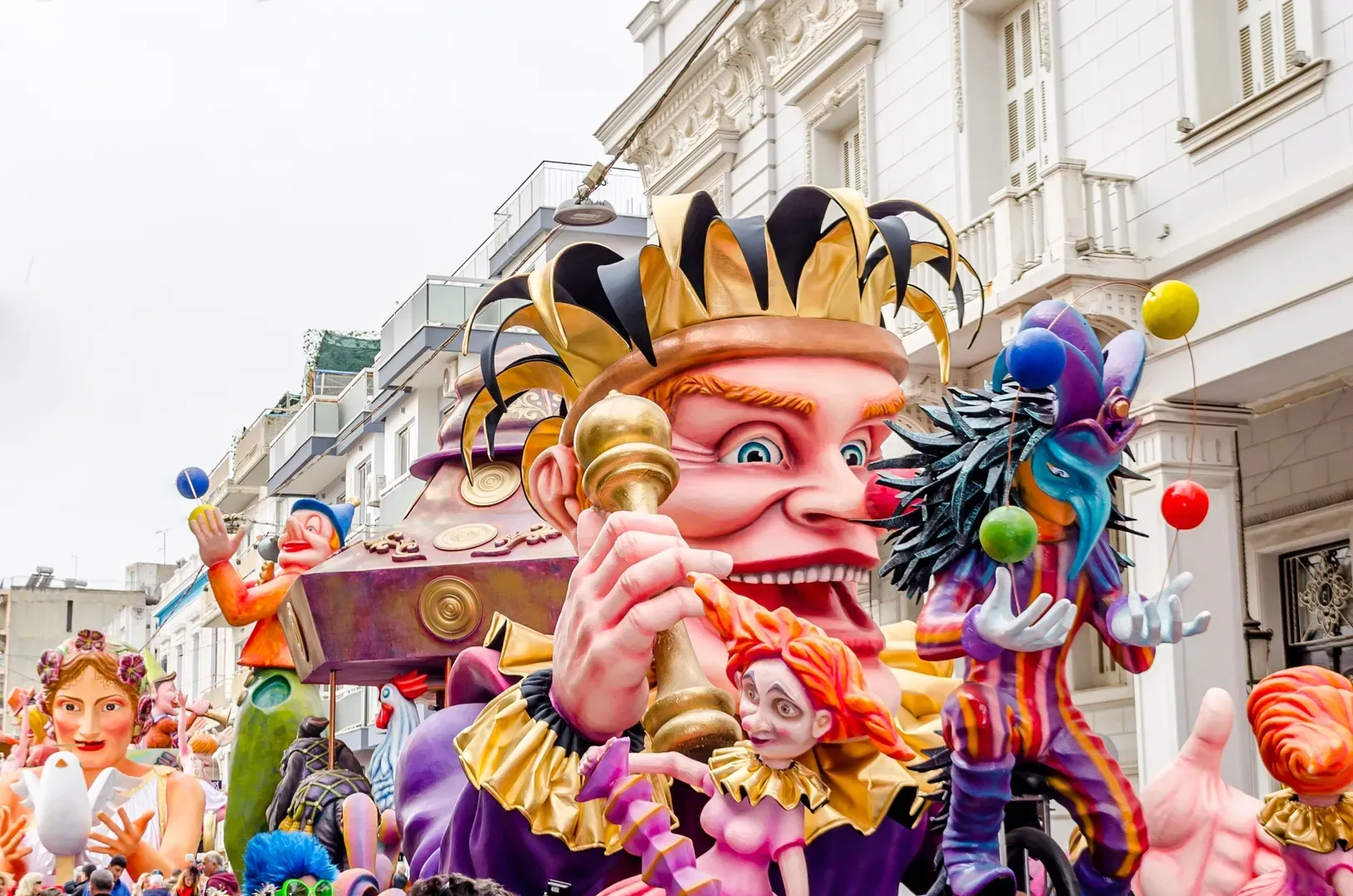
Patras this season moves to the beat of the country’s biggest and most famous carnival, which rouses the city and visitors from all over Greece with dozens of spectacular, dazzling events, theatrical performances, dances, parades and games. Thousands of carnival-goers from every corner of Greece will arrive in Patras on the final Carnival weekend to take part in a 4-kilometer route through the city center in the Grand Parade. After the Grand Parade concludes, a little after 21.00, the burning of the Carnival King takes place at the Agios Nikolaos Pier.
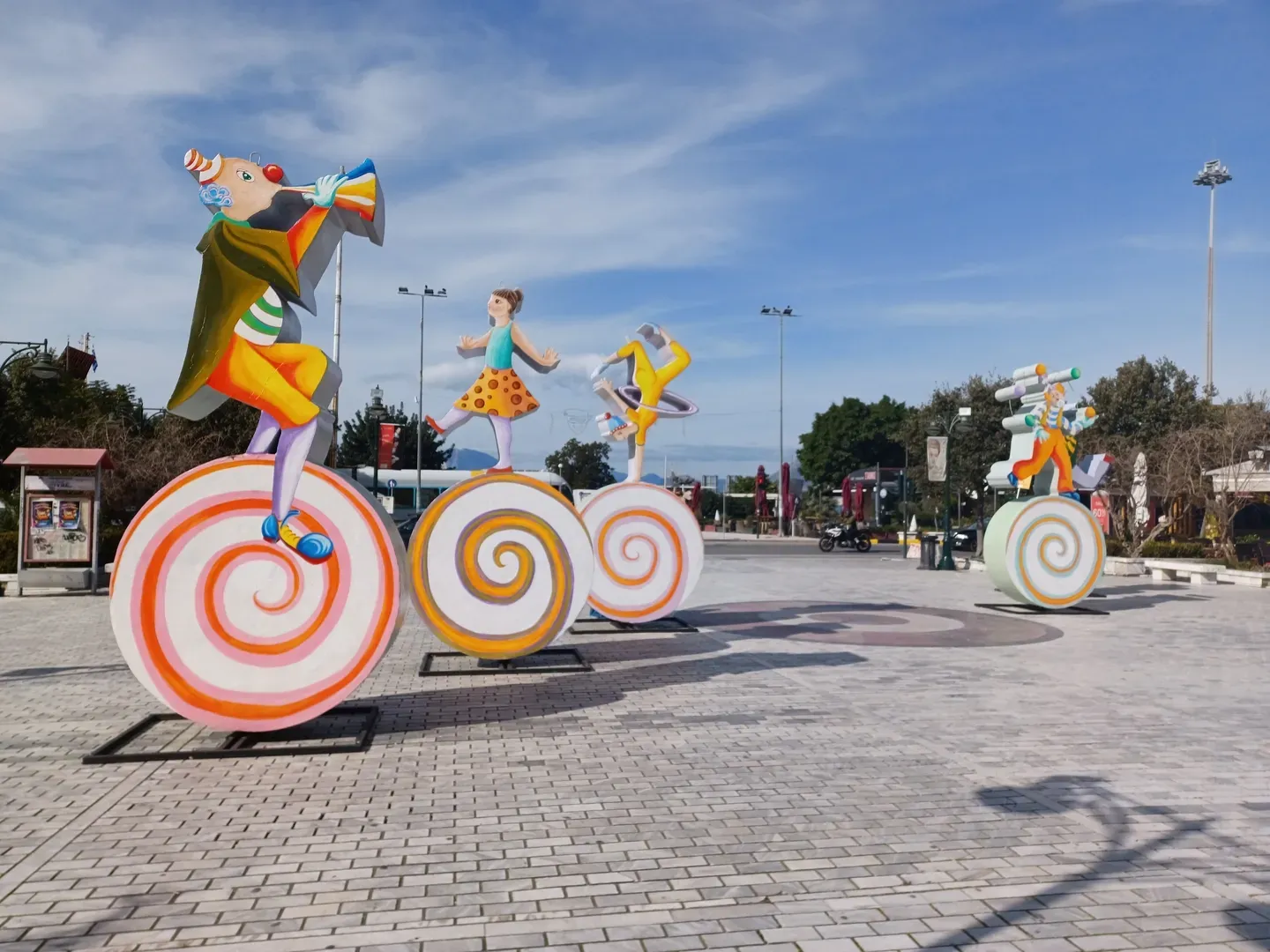
What to do: A stroll through the Upper Town and its historic sights is a must. You’ll see the Roman Odeon, which is even older than the Herodion, aswell as the Hammams built during Venetian rule that still operate today. For sea-breeze walks, follow the locals to the South Park on the seafront. Ona lush green hill, 8 km from thecenterof Patras, lies Achaia Clauss. It is Greece’s first winery, built in 1861, and to this day produces some of the country’s most famous wines.
Xanthi
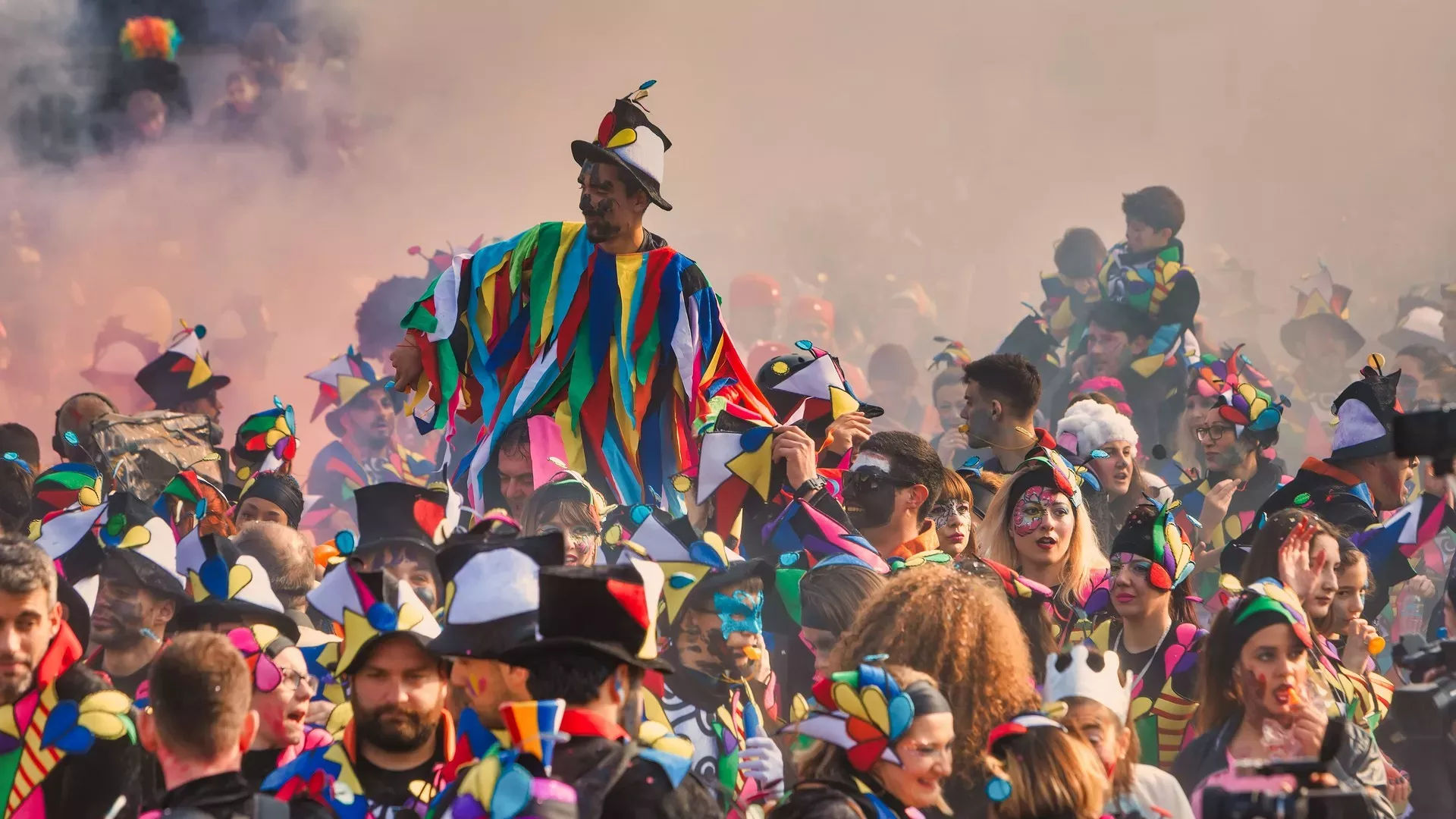
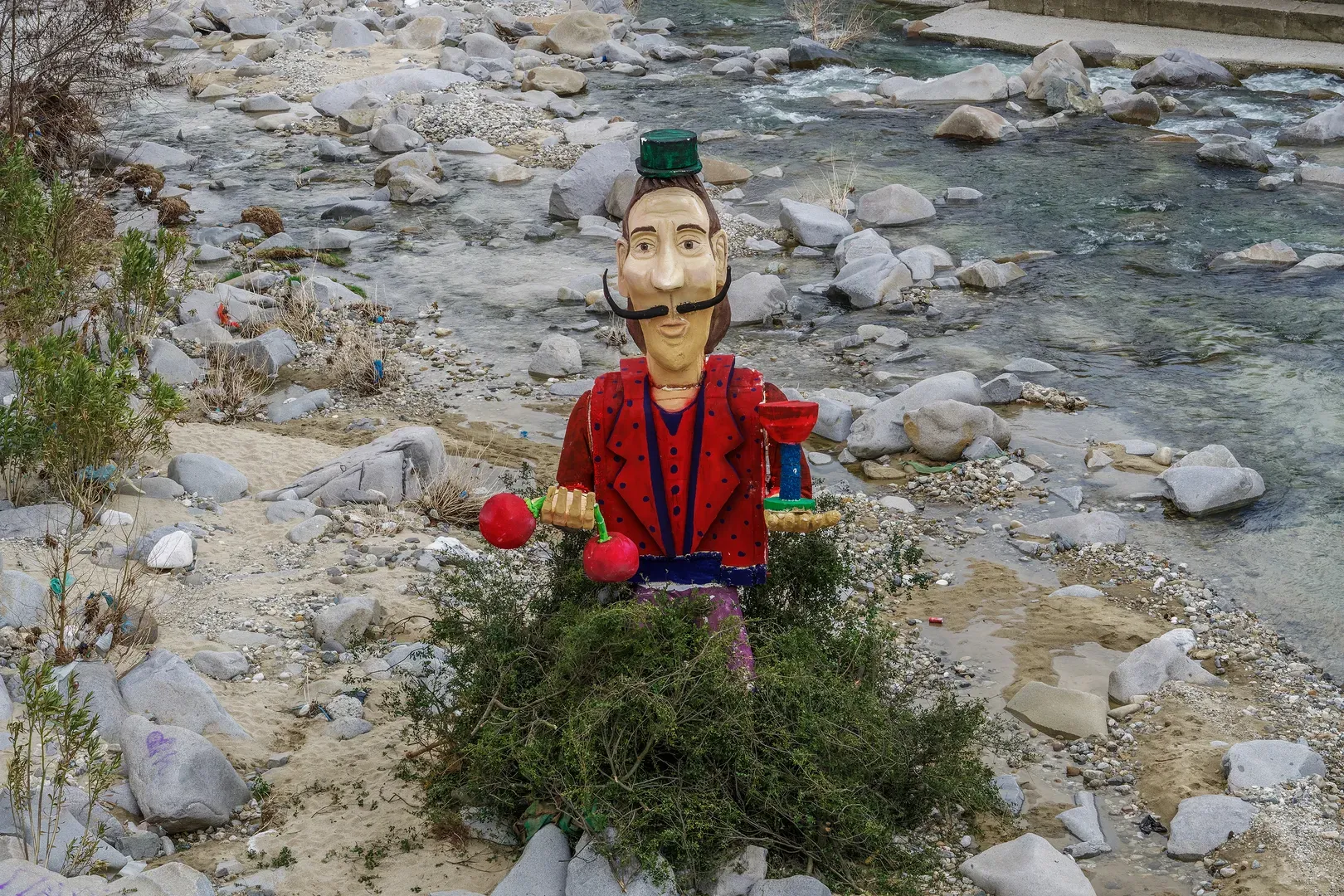
The Xanthi Carnival is the largest in Northern Greece and one of the country’s most popular. At this time, the picturesque alleys of the Old Town of Xanthi welcome thousands for revelry and merrymaking. Its central square becomes a hub of gathering and entertainment, where spontaneous festivities spark to life with traditional dances and the revival of age-old customs. The Tzaros, an effigy of the Carnival King, is burned in a great fire beside the Kosynthos River at the entrance to the old town, marking the close of the carnival events in a riot of fireworks and feasting.
What to do:Wander the narrow lanes of Xanthi’s Old Town to admire traditional houses and handsome mansions. If you have more time and a taste for excursions, visit Porto Lagos with its picturesque church of Agios Nikolaos in the middle of the lagoon, a unique landscape—just the thing to unwind and take photos—or head northeast from the city of Xanthi to discover the secluded Pomak villages, famed for their cultural and architectural uniqueness.
Rethymno
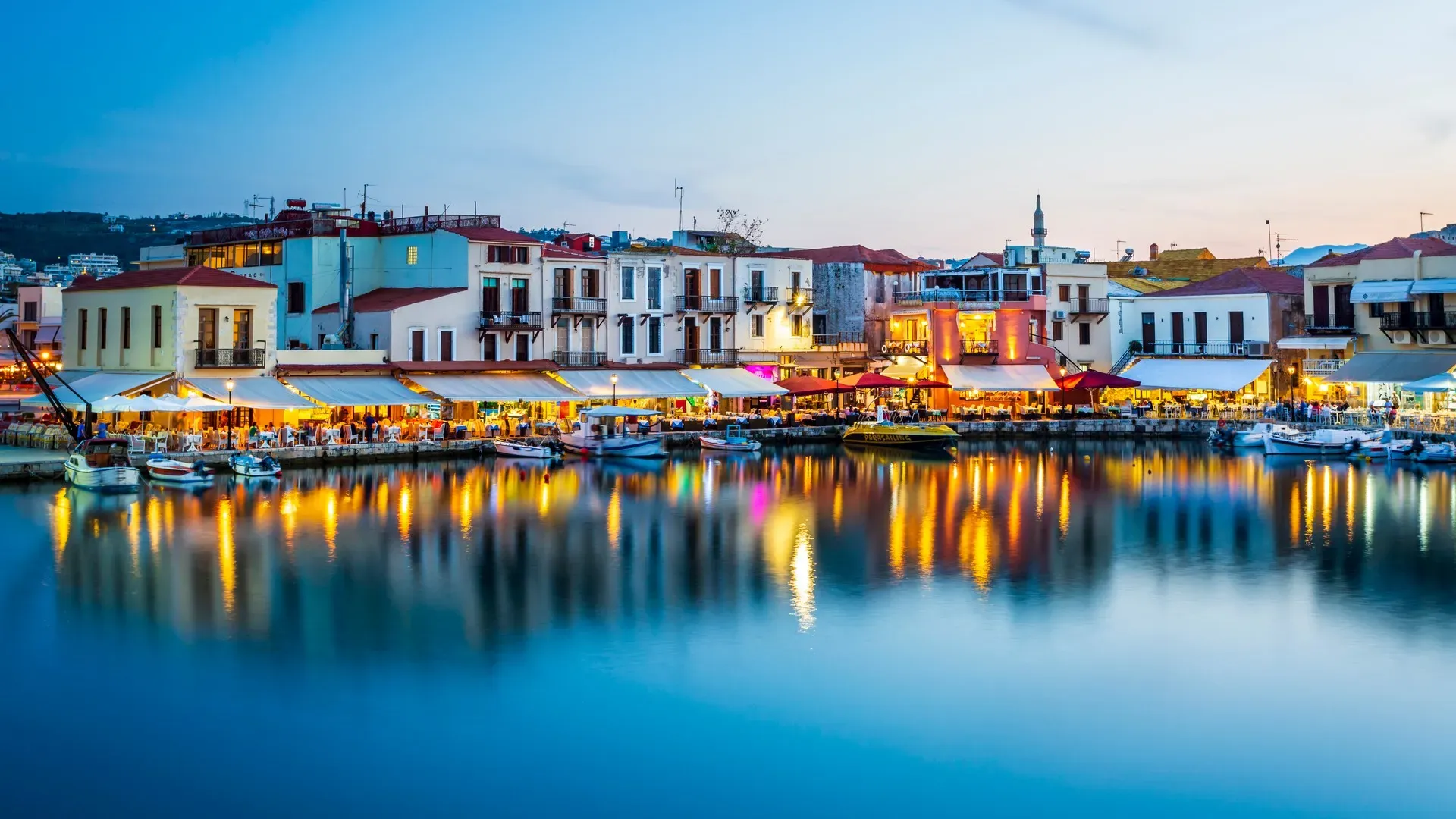
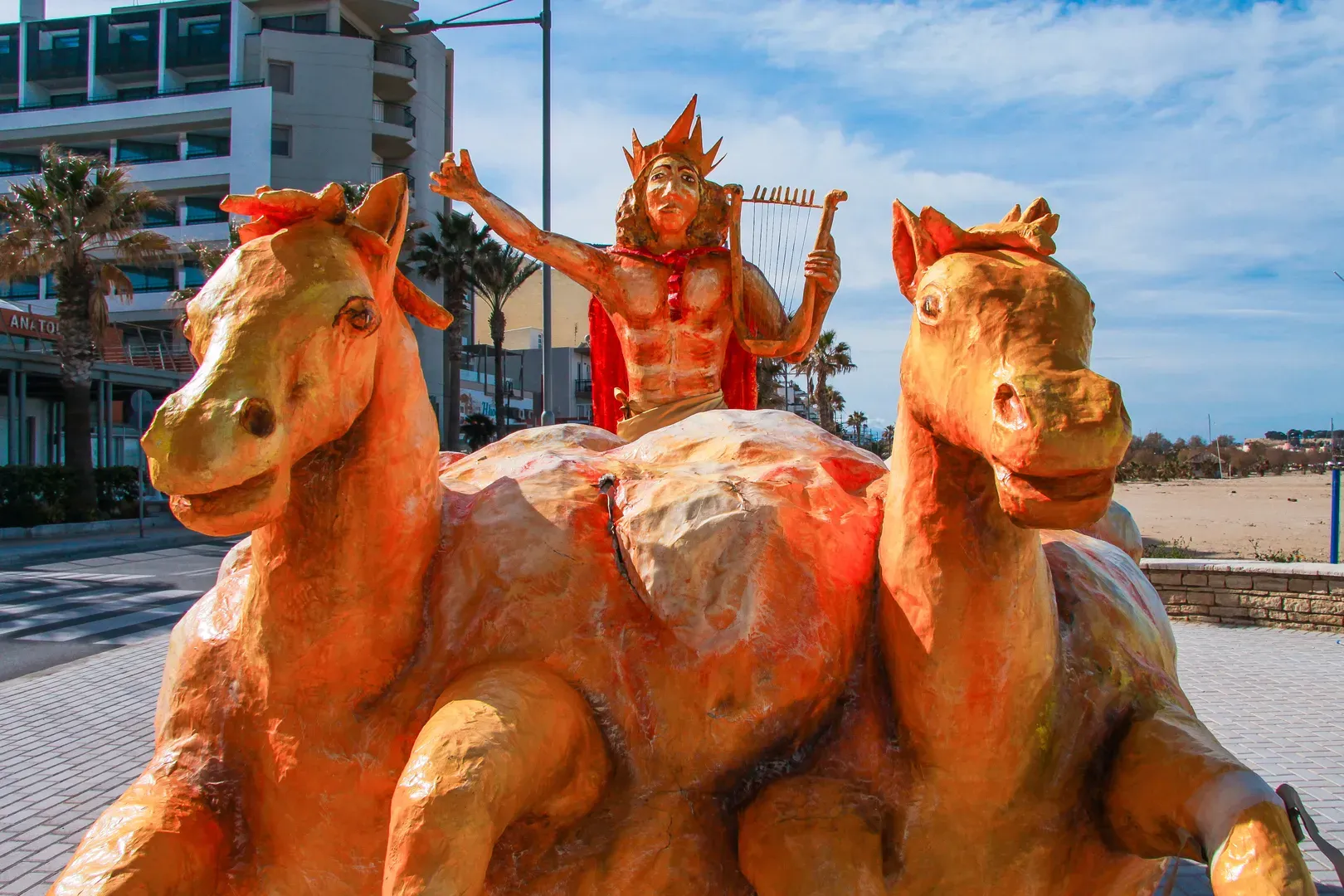
Among Crete’s most celebrated events and the third largest carnival in Greece (after those of Patras and Xanthi), the Rethymno Carnival is one of the city’s most important institutions, boasting over 100 years of history (the first humorous events took place in 1914). The beautiful Old Town of Rethymno transforms into the perfect backdrop for a wealth of carnival happenings, culminating in the grand parades of the final Carnival weekend. It’s worth following the traditional serenaders to travel back in time through the musical habits of another era.
What to do: Rethymno’s Old Town is a labyrinth full of surprises. Strolls begin at the picture-perfect Venetian harbor with its famous lighthouse and continue through alleys lined with splendid mansions of another age, hidden flower-filled courtyards, and numerous Venetian and Ottoman monuments. Don’t miss climbing Palaiokastro Hill and taking a stroll around the Fortezza fortress. The panoramic view from the ramparts is breathtaking. On Clean Monday you can visit nearby villages, such as Armeni, where traditional customs are revived, or take an excursion to the historic Arkadi Monastery.
Naoussa
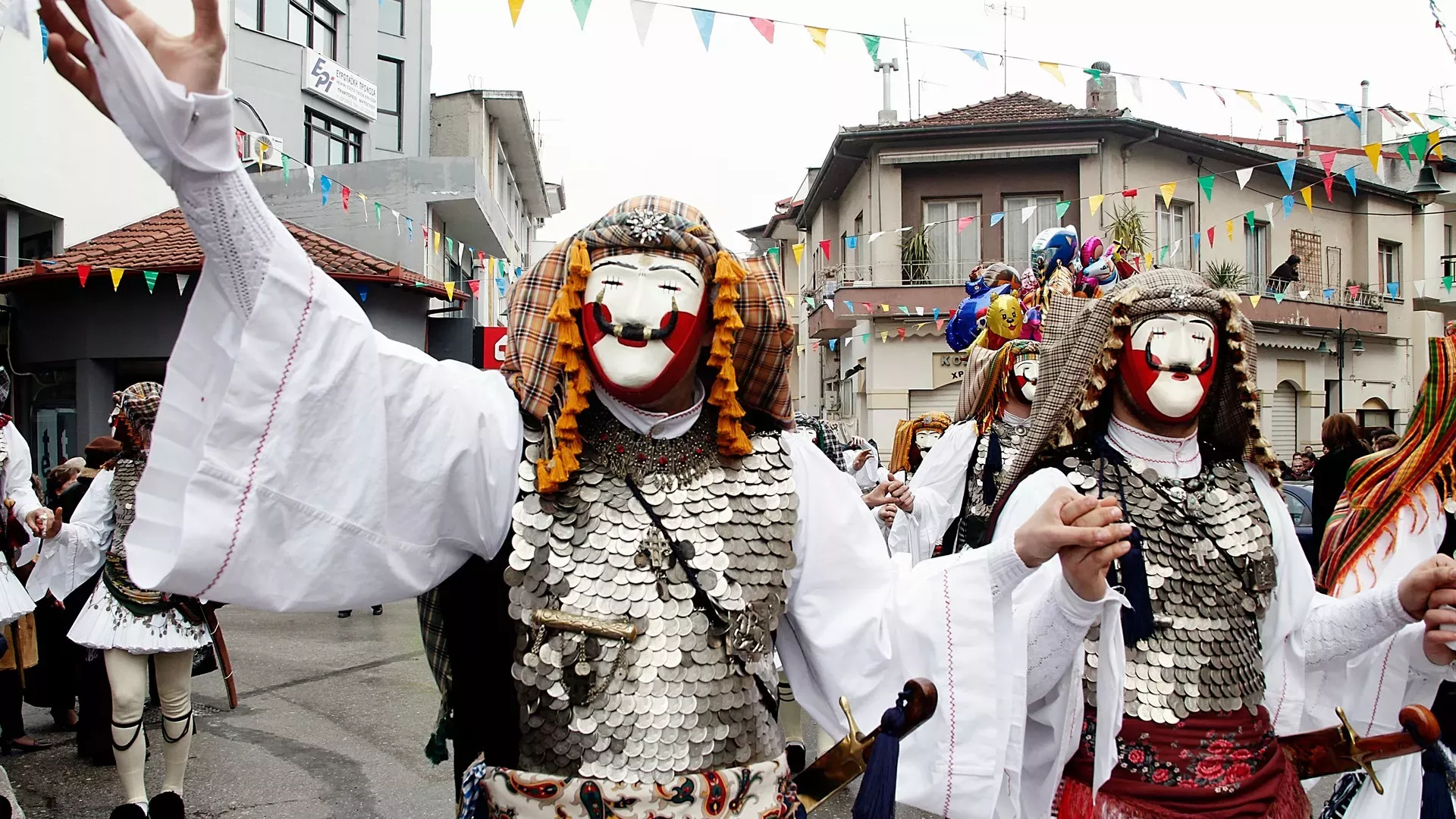
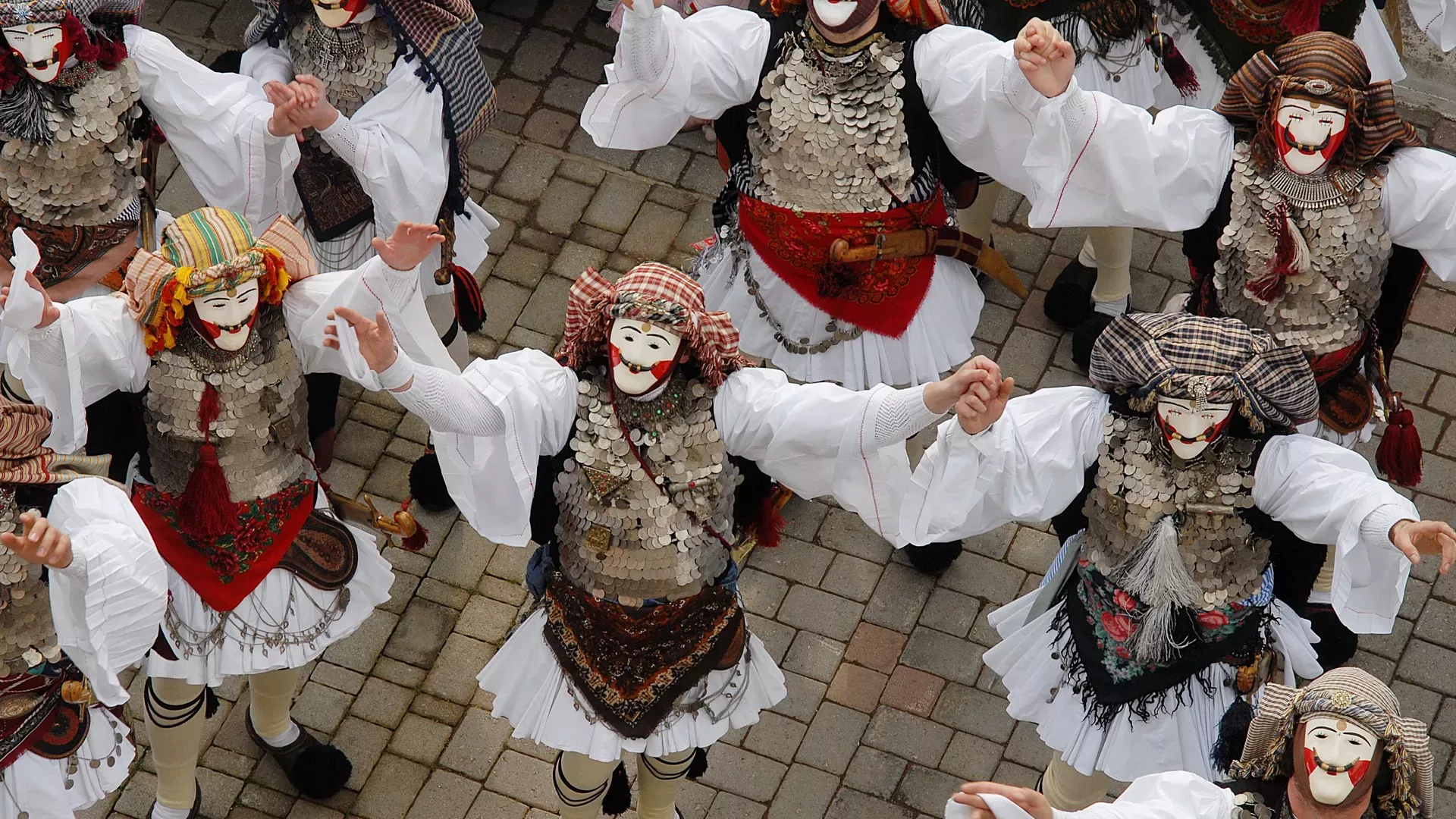
In Naoussa the custom «Genitsaroi and Boules» steals the show. This distinctive tradition dates back to the 18th century, with roots traced to festivals in ancient Greece related to the god Dionysus. Groups of men dressed in the traditional costume of the Genitsaros roam the streets and neighborhoods of the city, dancing traditional dances to the accompaniment of the zurna and the daouli. The custom takes place on the first Sunday of Carnival and on Monday, continues on Carnival Sunday (in the afternoon a feast is held in the Alonia area with traditional meze and the famous Naoussa wine) and on Clean Monday, concluding on the Sunday of Orthodoxy.
What to do: A stroll through the neighborhoods of Alonia, Pouliana and Batania will transport you to the city’s past, and it’s also worth visiting the Municipal Park with sweeping views over the fertile plain of Imathia. At a distance of 3 km from the city lies the Grove of Agios Nikolaos, a lush expanse that offers a unique escape setting for the whole family. Add to your plans a visit to one of Naoussa’s renowned wineries to learn the story behind the region’s celebrated wines.