





A city with aromas of the East and European influences, a historic pastry shop and the dessert that journeyed from Xanthi across all of Greece.
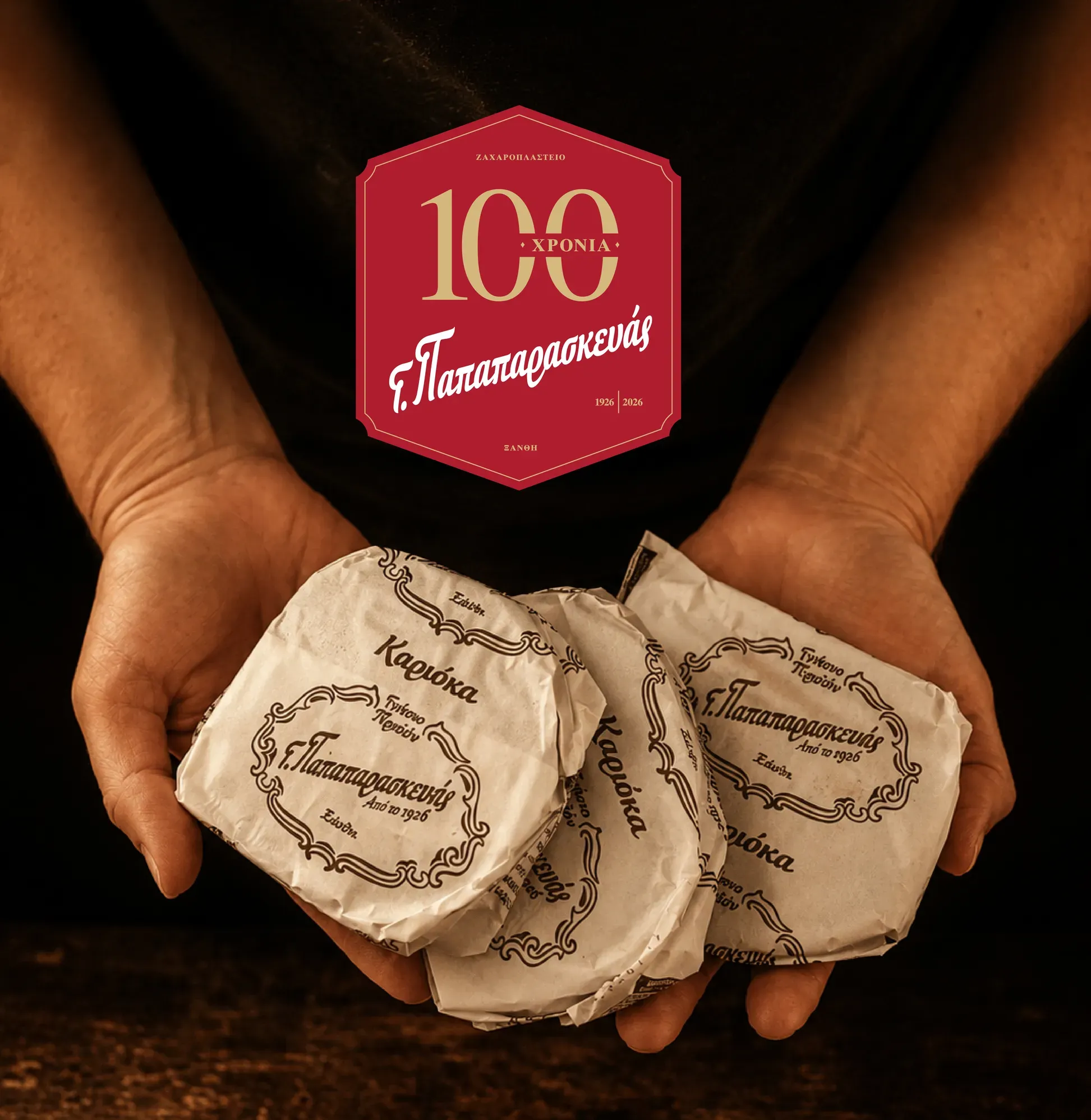
Every city has a flavor that belongs to it a little more than the others. A flavor that isn't found just in its shop windows, but in its people's memories, in travelers' gifts, and in the stories passed down from generation to generation. For Xanthi, that flavor is the karioka.
Dark chocolate, fresh walnut, sponge cake, and a recipe still measured in drams and okas. The dessert born in the workshop of Georgios Papaparaskevas over the years became more than a local specialty: it evolved into a gastronomic symbol of the city and one of the most recognizable sweets in Greek patisserie.
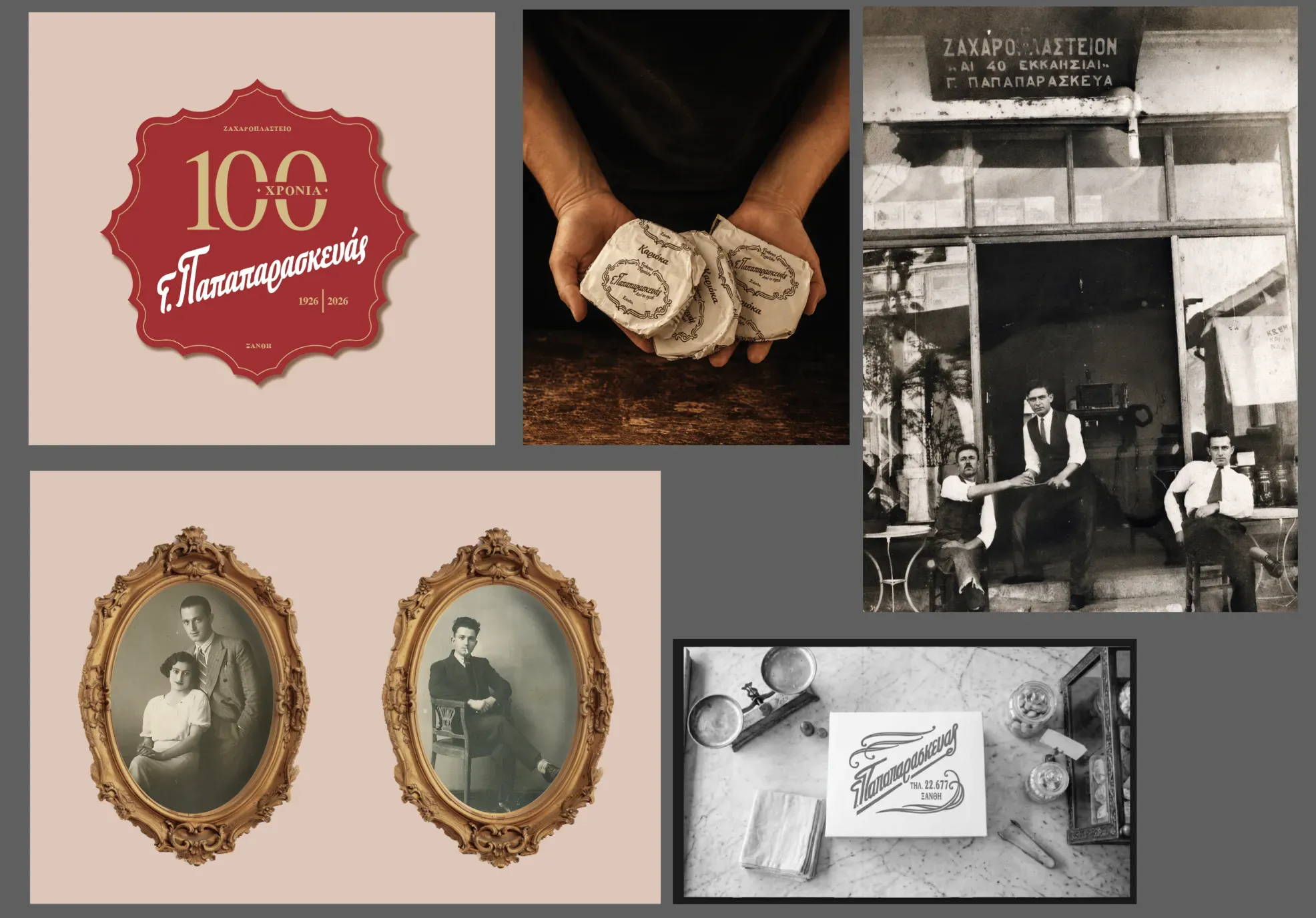
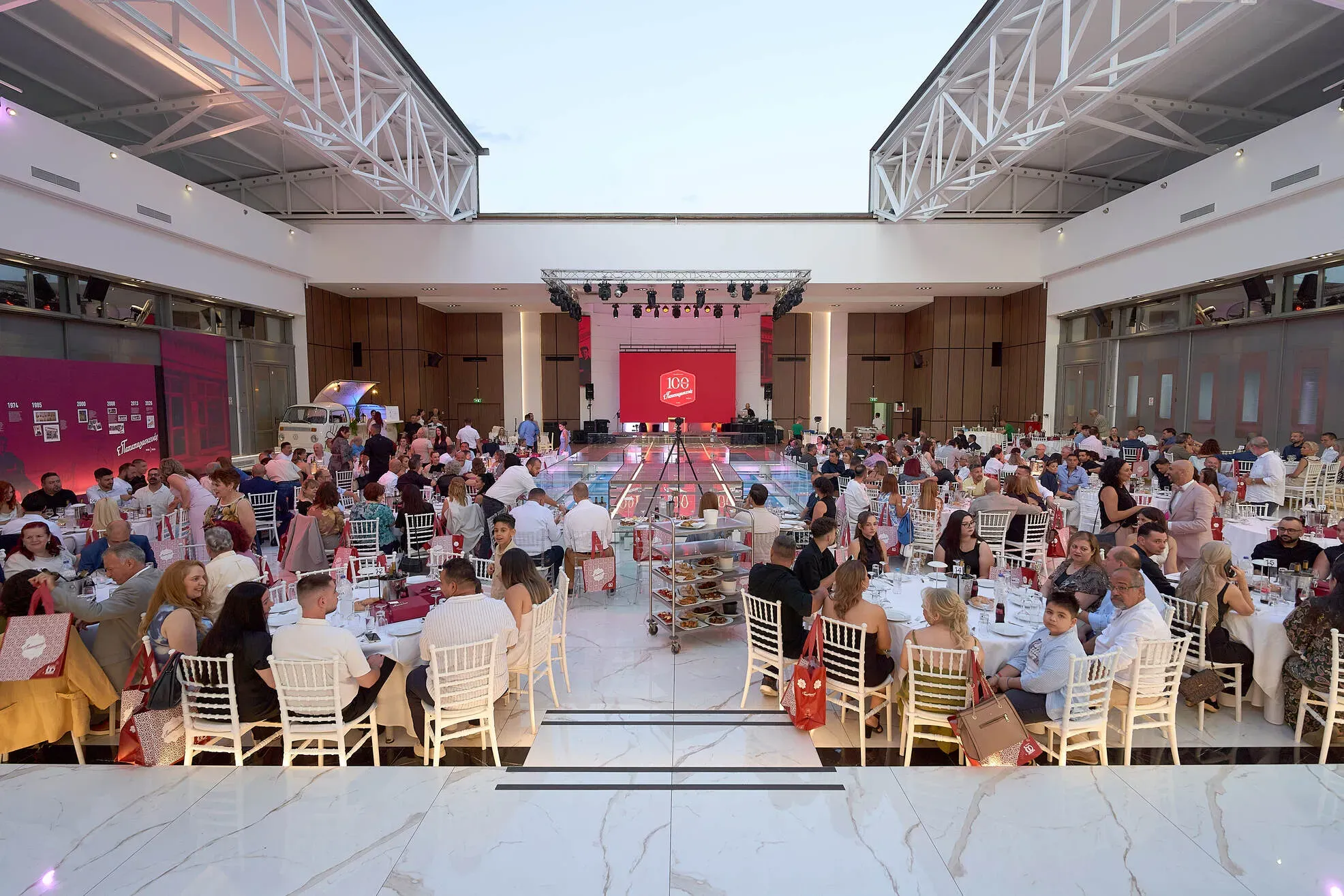
In 2026, Papaparaskevas marked a century of life. The anniversary was celebrated at Valsamis Estate, in Xanthi, with an evening full of images, stories, and personal memories. It was also a reminder that certain flavors can't be separated from the place that gave birth to them. To understand the karioka, you first need to get to know Xanthi.
A city at the crossroads of flavors
In the 1920s, Xanthi was one of the most important hubs of the international tobacco trade. Merchants, travelers, and influences from different worlds met in a city that looked towards the East and Europe at the same time.
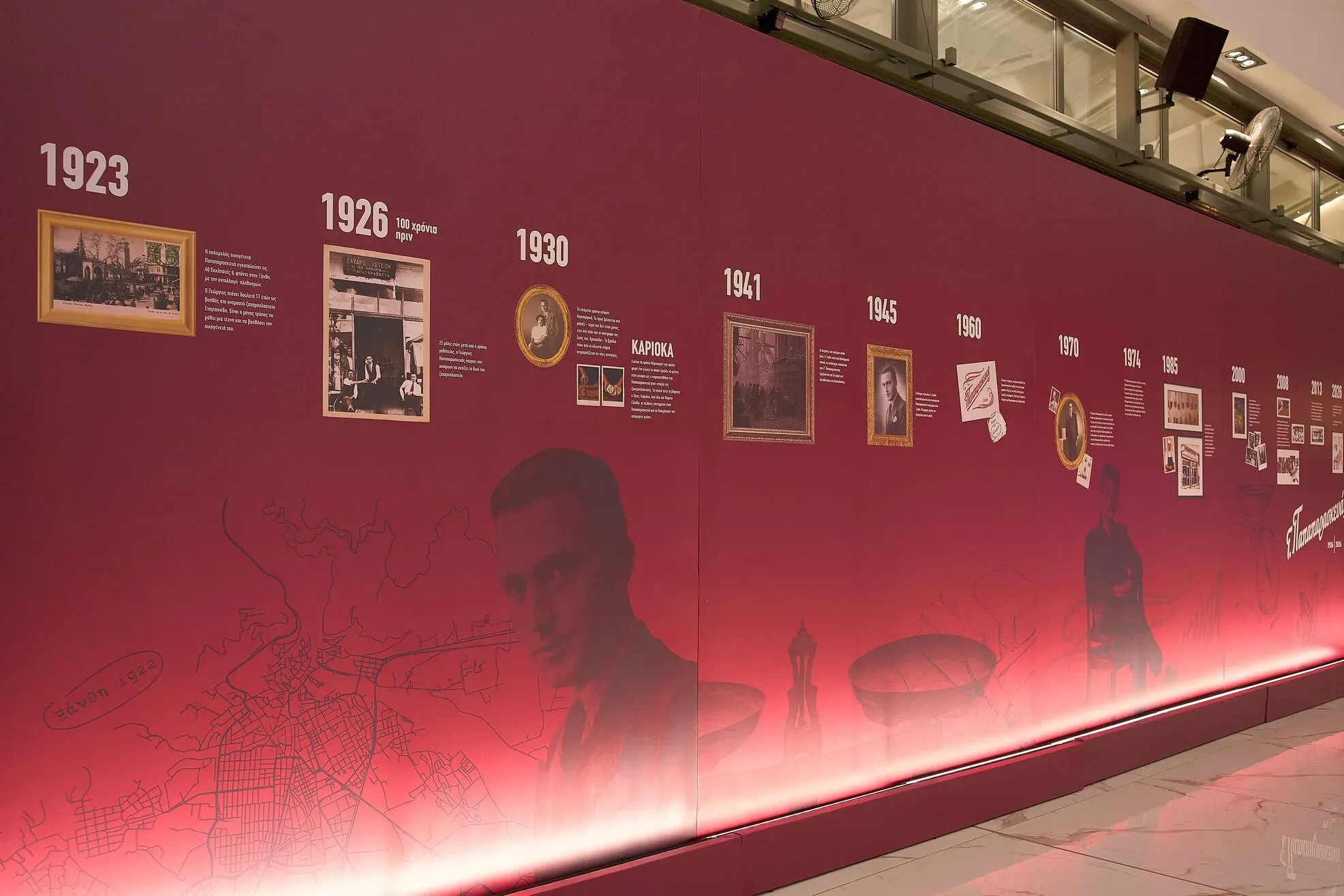
Into this setting, in 1922, the family of priest Paraskevas arrived from the Forty Churches of Eastern Thrace, after the Asia Minor Catastrophe. Among them was 17-year-old Georgios. To learn a craft and make a living, he started working at the well-known Stogiannidis patisserie. Four years later, at just 21, he opened his own shop.
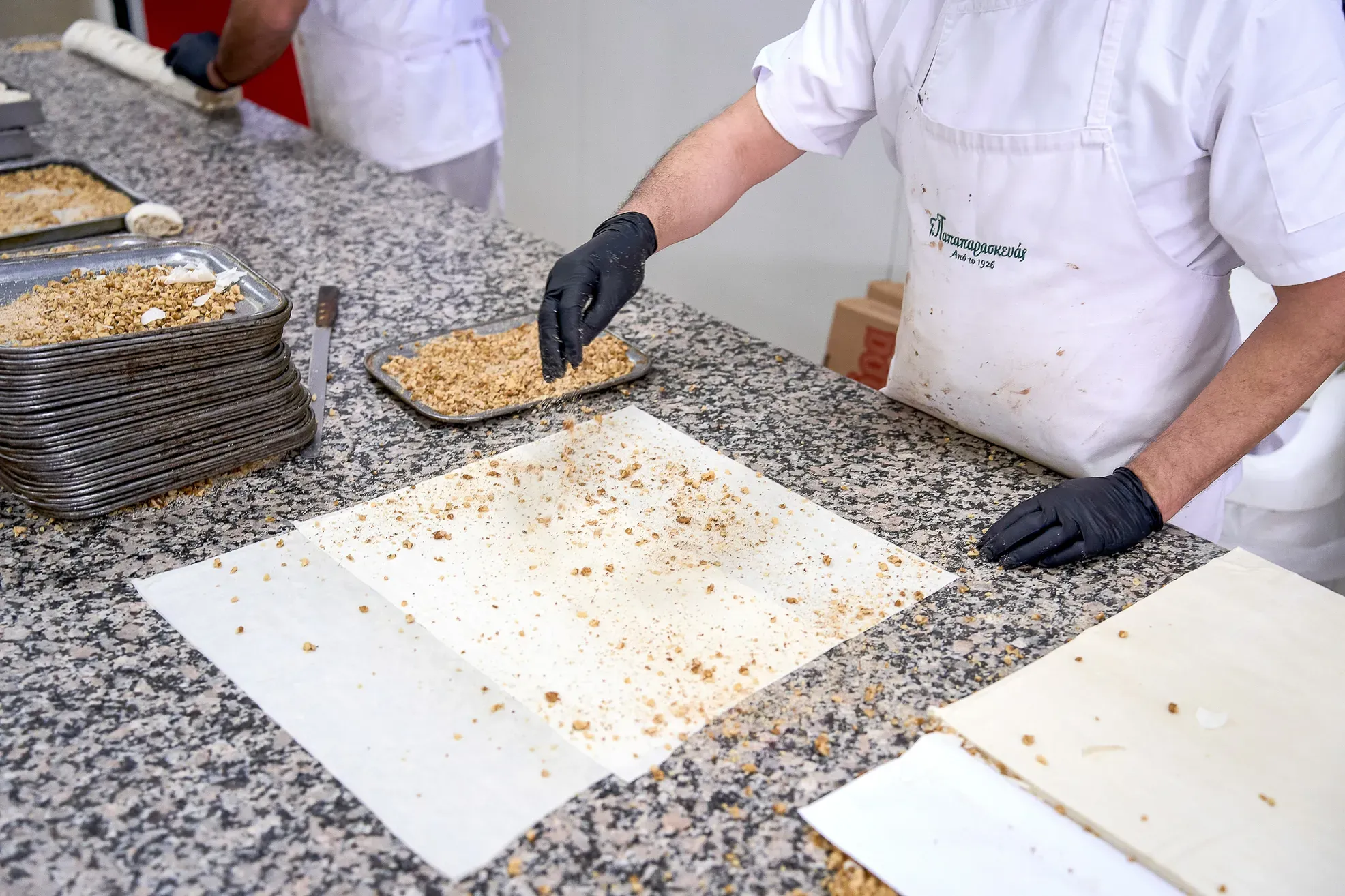
His first big idea was to bring saragli to the market, a traditional sweet that until then was made mainly at home. Crisp handmade phyllo, plenty of walnut, and careful syruping composed a flavor that carried with it the memory of the old homeland. Georgios, however, wasn't content with what he already knew.
The karioka is born when the shutters come down
By day he served his customers. At night, when the shutters came down, he stayed in the workshop and experimented. Chocolate was one of the ingredients that fascinated him most. He wanted to create his own "recipe," combining it with sponge cake and the region's rich walnuts.
The experiments went on for a while. Until one day he chopped fresh walnuts, added them to a chocolate mixture, wrapped it in sponge cake, shaped the sweet like a crescent, and coated it in dark chocolate. He named it "karioka," after the term for the inhabitants of Rio de Janeiro.
The success was immediate. The new sweet was loved by the people of Xanthi, traveled beyond the city, and soon acquired imitators across Greece. The recipe was never patented. Its origin, however, remained inextricably linked to the patisserie and to the city. Thus, the karioka became for Xanthi what certain emblematic sweets are for other European destinations: a small, edible story of the place.
The taste of detail
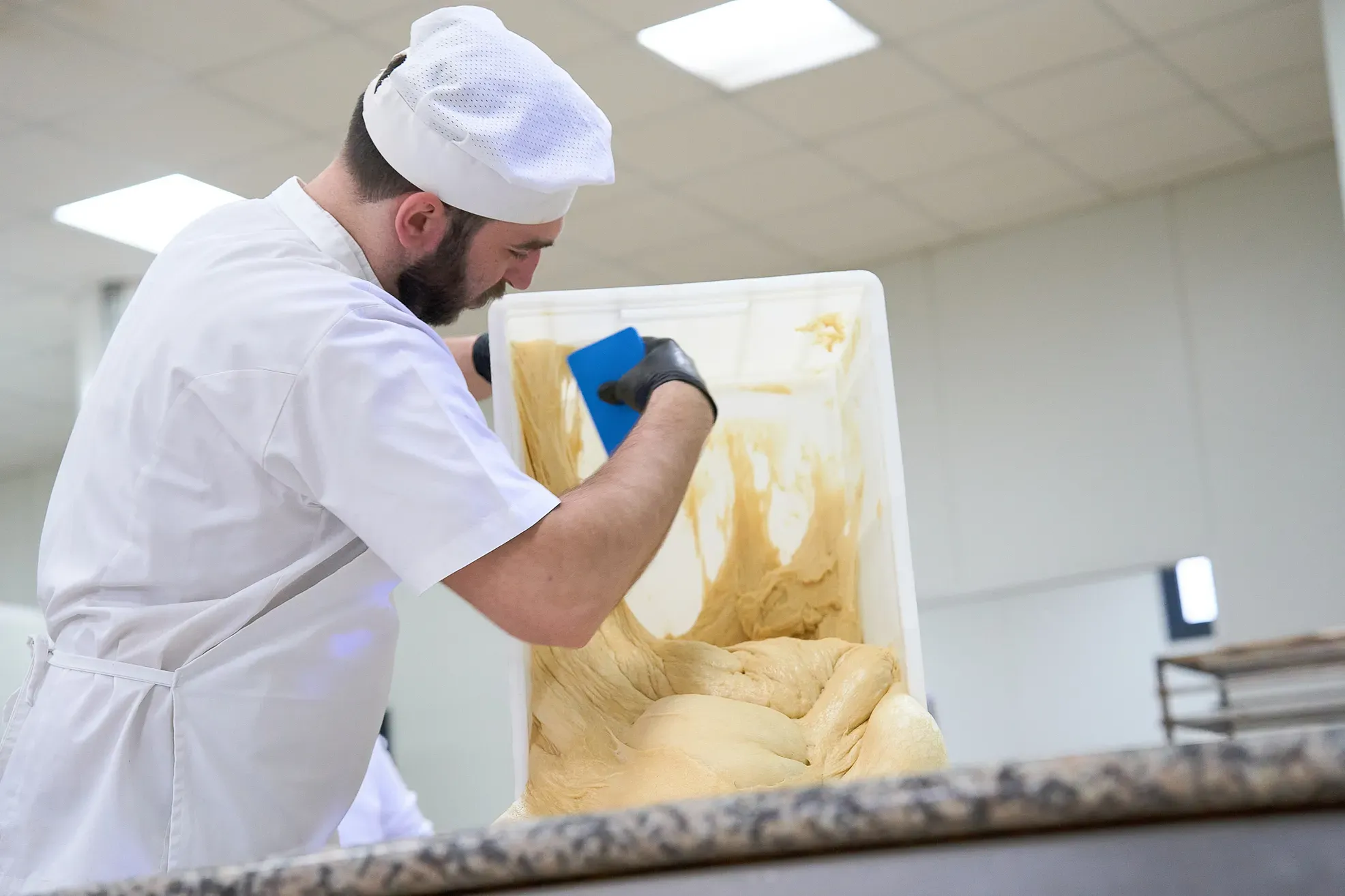
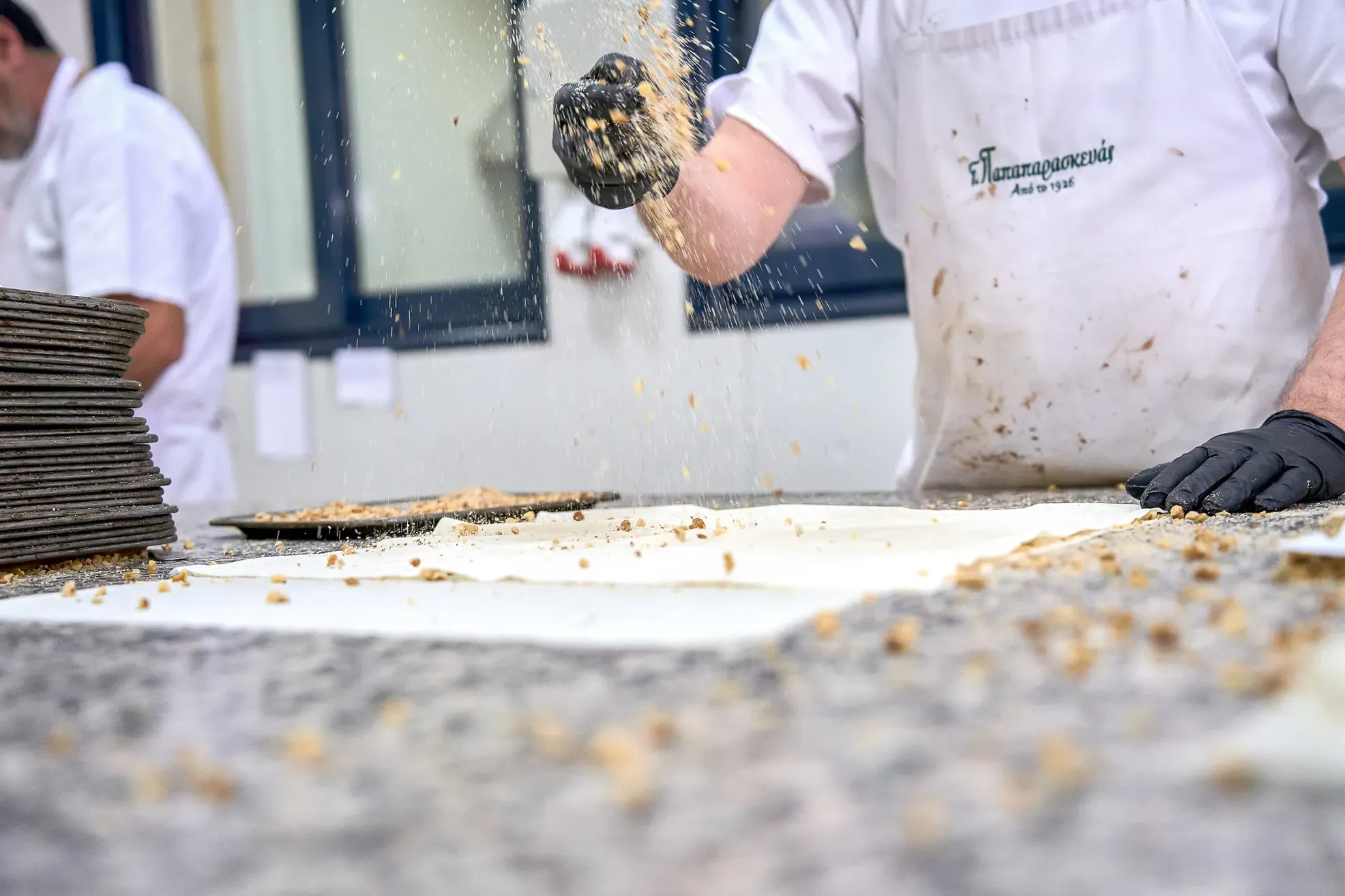
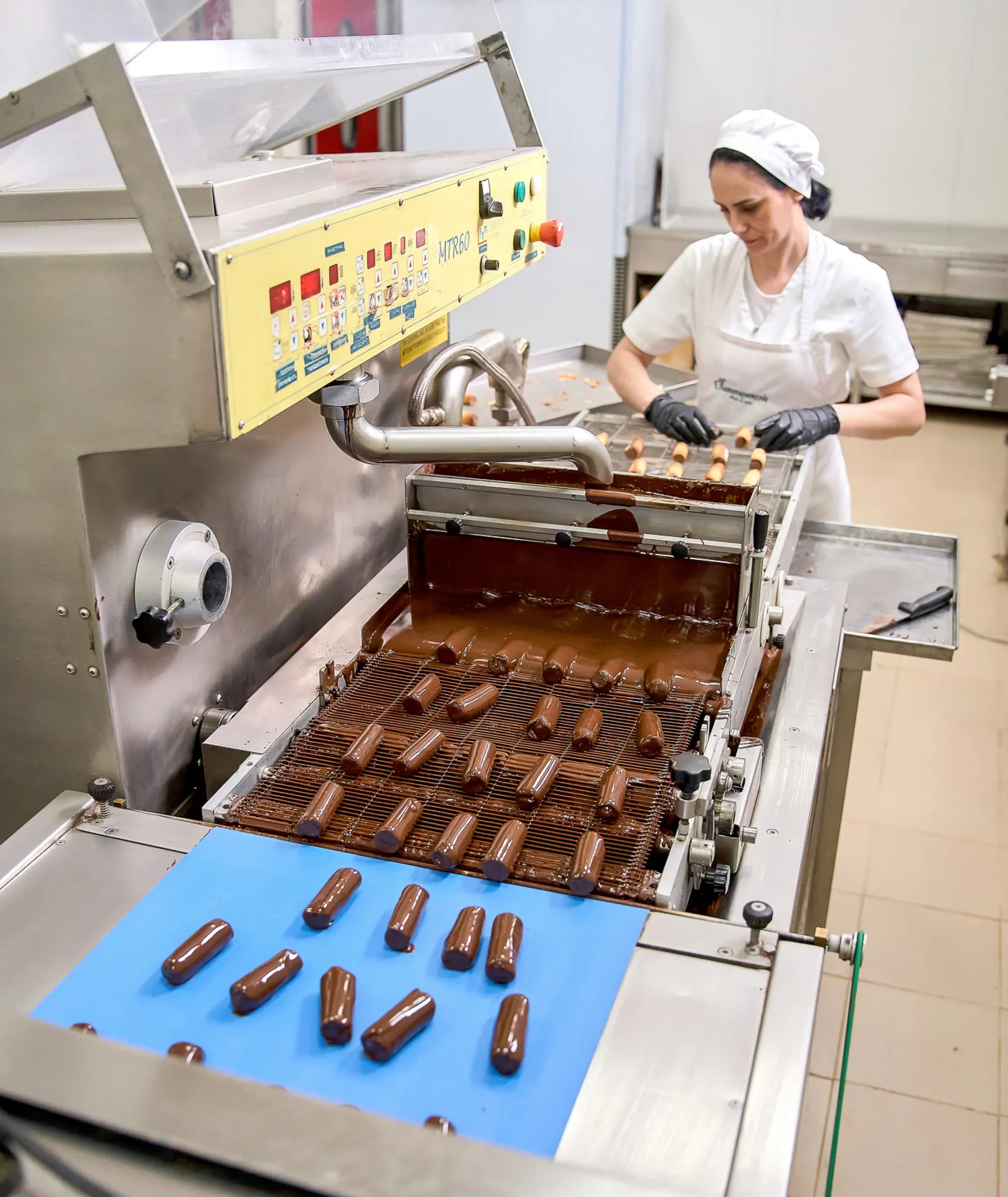
What's most interesting about Papaparaskevas's karioka isn't just the age of the recipe. It's the way it's still treated. The workshop's modern scales have been calibrated to weigh in drams and okas, following the old ratios. Walnuts are bought whole and cracked just before they're used, so they keep their natural oils, their freshness, and their signature crunch.
A family story has it that the founder preferred to make no kariokas at all rather than use walnuts that didn't meet his standards. In the end, his brother traveled to Thessaloniki and bought, at a very high price, a batch of exceptional walnuts that was destined for export to Italy. The business may not have turned a profit on that particular product that year. It did, however, gain something more enduring than short-term profit: a reputation for never compromising on quality.
Even a seemingly small detail hides a whole philosophy. In the 1950s, Georgios Papaparaskevas publicly poured away the milk left over from the day, wanting to show the townspeople that every morning he used only fresh milk. The news spread quickly in Xanthi — an original, for the time, act of communication based not on a slogan but on a deed.
Behind the display cases, the people
A historic patisserie doesn't survive on its recipes alone. It needs people who learn them, respect them, and pass them on to the next generation. Many of Xanthi's children passed through Georgios's workshop as apprentices. For those who were too small to reach the counter, he would place a little stool. The best stayed on the job and, gradually, became an integral part of the business.
When the founder died suddenly in 1974, the patisserie passed to his wife, Chrysoula. By her side stood people who knew every customer, every account, and every quirk of the recipes. Over the years, the ties became familial. The Papaparaskevas, Papagiannopoulos, Arsenis, and Imam families continued together a journey that had begun with a young refugee.
At the centenary evening, that very relationship took center stage. Employees, former partners, suppliers, and members of the third generation spoke not about an impersonal business, but about a big family. "One hundred years isn't the finish line. It's the baton we've received," said Natassa Papagiannopoulou.
The past doesn't go in a display case
Today, Papaparaskevas acts as a guardian of a confectionery tradition at risk of being lost amid fleeting trends. The karioka, saragli, kasetina, chionoula, rodinia, nougat, and seker pare keep their names, their ingredients, and their character. They don't try to disguise themselves as something contemporary to follow fashion.
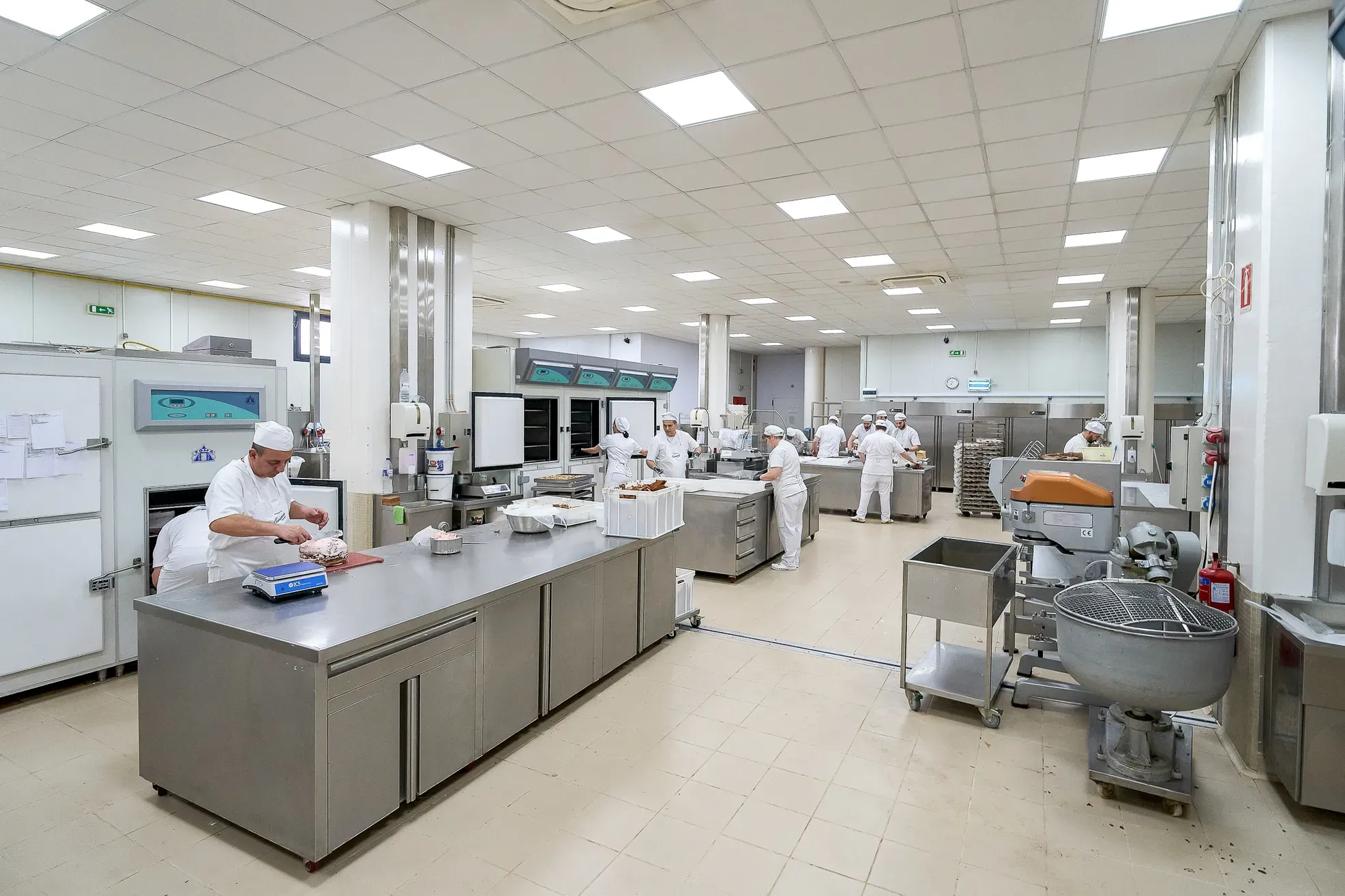
At the same time, production has entered a new era. The workshop in Petrochori has modern equipment and advanced quality controls. The historic store in Xanthi is complemented by the shop in Glyfada, where the sweets arrive daily from Thrace, while online orders carry the workshop's creations to every corner of Greece. This balance between memory and evolution is perhaps the greatest secret of its longevity.
A sweet stop in Xanthi
For the visitor, a karioka in Xanthi isn't just another sweet. It's a way to taste a part of the city's history. A piece of chocolate and walnut that carries the refugee memory of the Forty Churches, the cosmopolitan spirit of old tobacco-trading Xanthi, the late nights of a young pastry chef, and the work of generations of people behind the counter and inside the workshop.
Maybe that's why Papaparaskevas managed to reach one hundred years without becoming just a memory. Because in Xanthi the past isn't preserved only in photographs and old buildings. Sometimes it's served wrapped in silver paper and covered in dark chocolate.
Information
28th October 186, Xanthi
Tel. +30 25410 22677