





Five villages ideal for strolls along cobbled streets and Pelion's autumn scenery.
Autumn is enchanting in the mountain villages of Pelion. Squares with centuries-old plane trees and sweeping views, picturesque cobbled lanes, stone-built mansions, and golden forests create a dreamlike atmosphere. If you're a fan of mountain escapes, follow us to the mountain of the Centaurs and to five wonderful villages that are ideal for autumn getaways.
Portaria
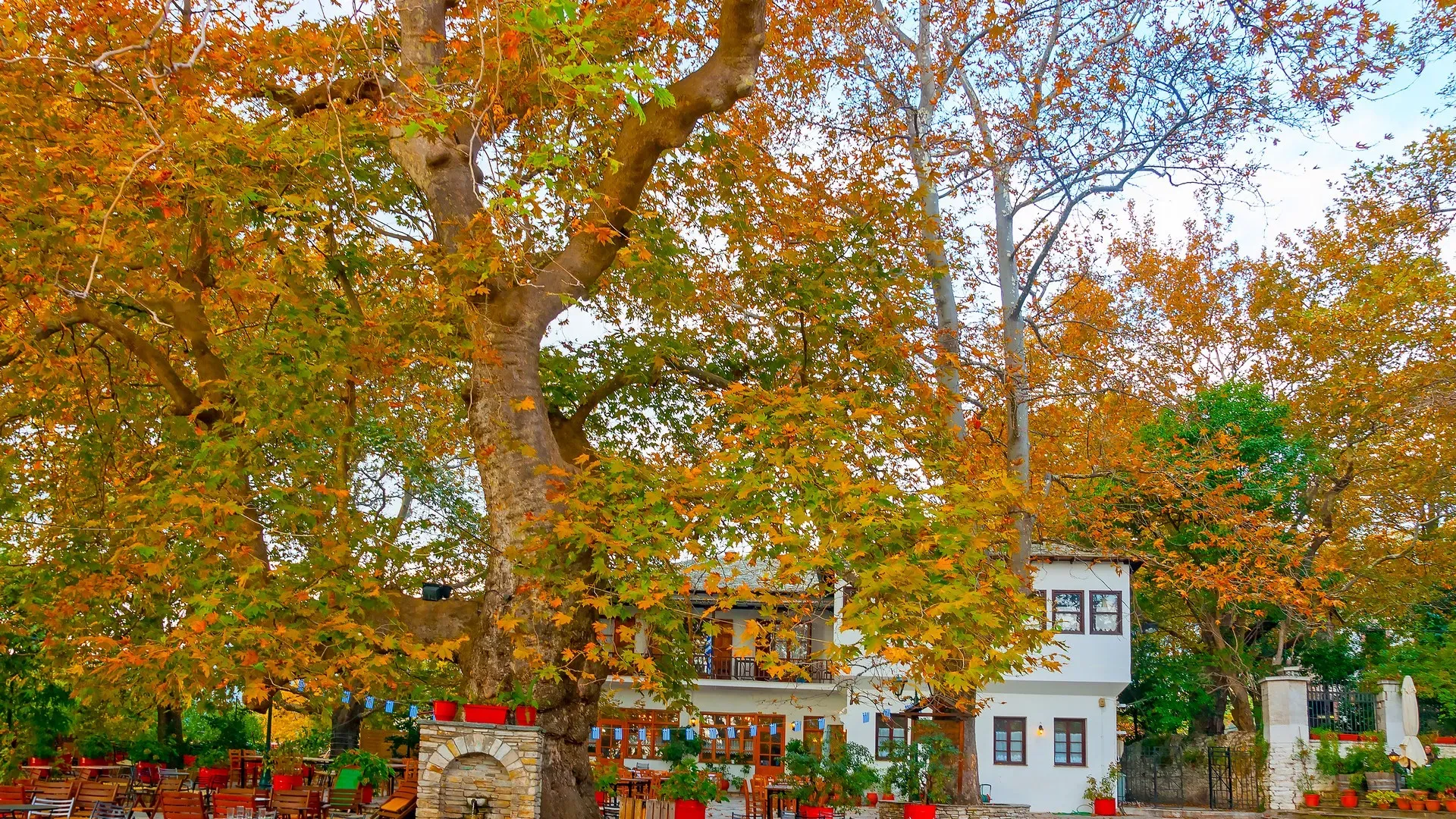
Rushing waters, ornate fountains, stone mansions, and superb views of Volos and the Pagasetic Gulf from an elevation of 650 meters. Beauty in Portaria is everywhere and wins over visitors from the first moment. It may be one of Pelion's most developed tourist villages, just 12 km from Volos, yet Portaria keeps its Pelion identity intact. The village's character is enhanced by the restored mansions (the two-story 1864 Zoulia Mansion houses the Historical and Folklore Museum), the Church of Agios Nikolaos (with its gilded iconostasis and lovely bell tower), the chapel of Panagia Portarea (the village owes its name to it), and the three beautiful squares (Melina Mercouri, Adamenas, Taxiarchon). Nature lovers are drawn to the Path of the Centaurs, a marked 3 km route that circles the settlement: it starts from the chapel of Agia Marina, passes through ravines, old churches, and mansions, and ends at the Mana Spring.
Agios Lavrentios
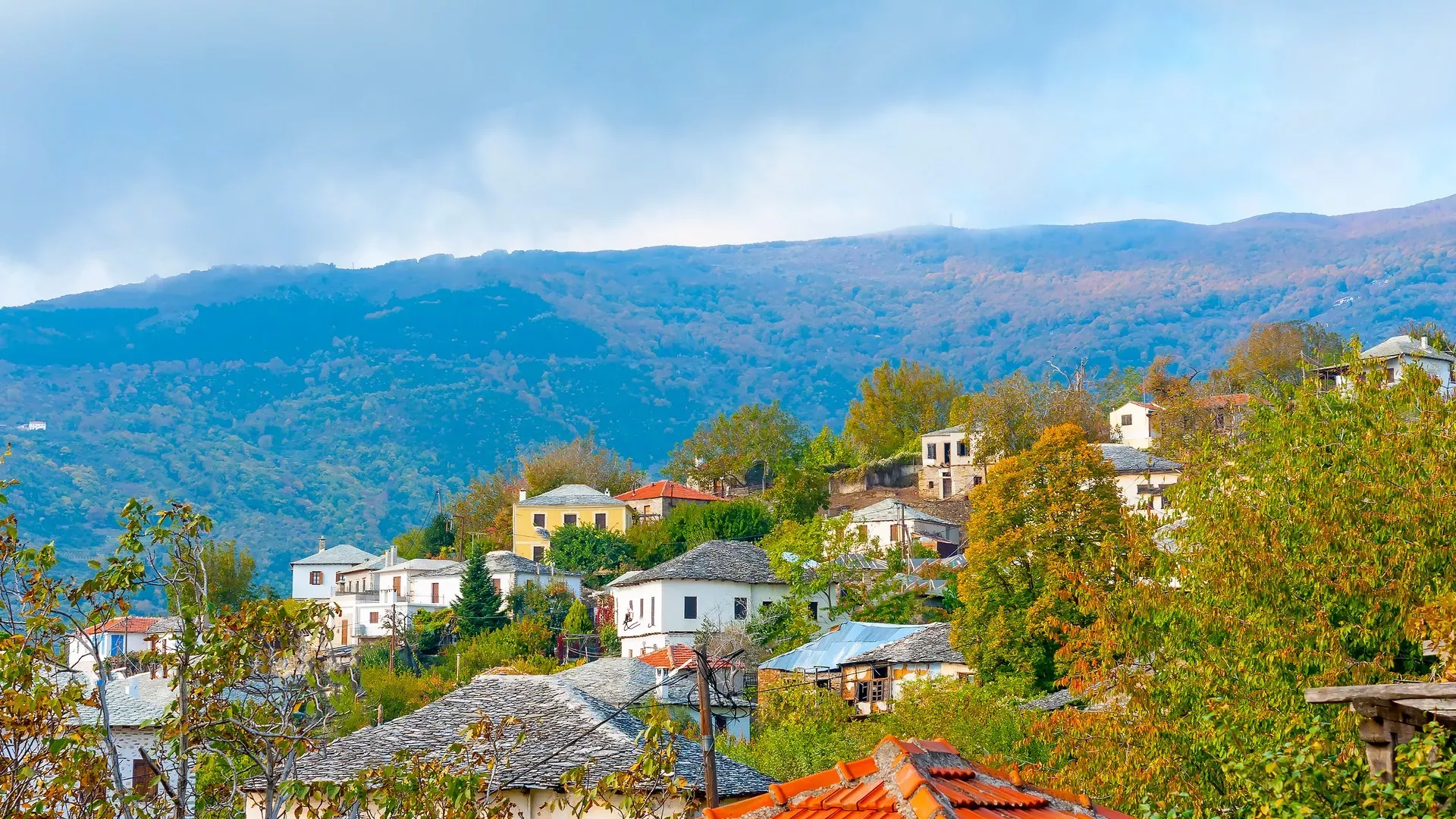
Just 20 km from Volos, the village of Agios Lavrentios is one of Pelion's most beautiful and best-preserved villages. Built amphitheatrically on a lush slope of the mountain of the Centaurs, at an altitude of 600 m, this small and charming village keeps its pure Pelion character intact with restored mansions, many churches, fountains, and picturesque cobbled lanes. The entire settlement looks like a living monument of Pelion craftsmanship. The village owes its name to the Monastery of Agios Lavrentios located just outside the village (the view from there is reason enough to visit). The village's heart beats in its wonderful central square, which is one of the loveliest in Pelion. There you'll find traditional shops, little cafés, and tavernas with good traditional food. It's worth walking the village's cobbled lanes, where no cars circulate, to admire the splendid mansions (Glavani, Kantartzis, Papathanasiou, etc.).
Milies
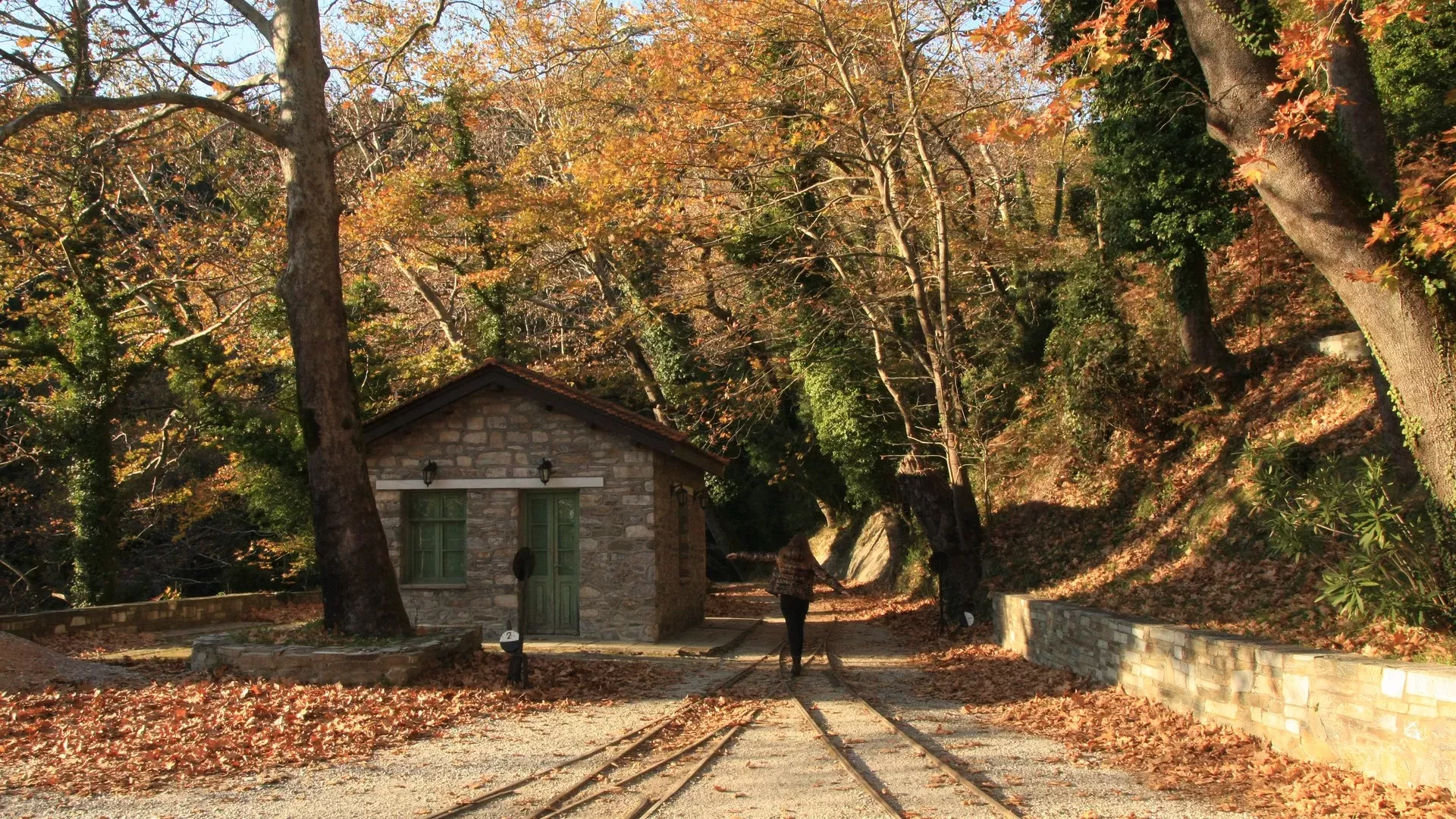
An old chief village with a rich history, Milies will enchant you with its traditional architecture and the nature surrounding it. The settlement is very well preserved, full of stone-paved cobbled lanes, numerous fountains, and tasteful little cafés and shops. An integral part of the village's architecture is the Church of the Pammegiston Taxiarchon, one of Pelion's most distinctive. Opposite stands the library, with rich material from the renowned School of Milies that operated in the village. However, the most famous sight is the old station of the legendary «Moutzouris» train and its impressive bridge, both works by Evaristo de Chirico, father of the famous painter. The ride on the little train Ano Lechonia - Milies is a special experience worth having (it operates from spring until autumn).
Pinakates
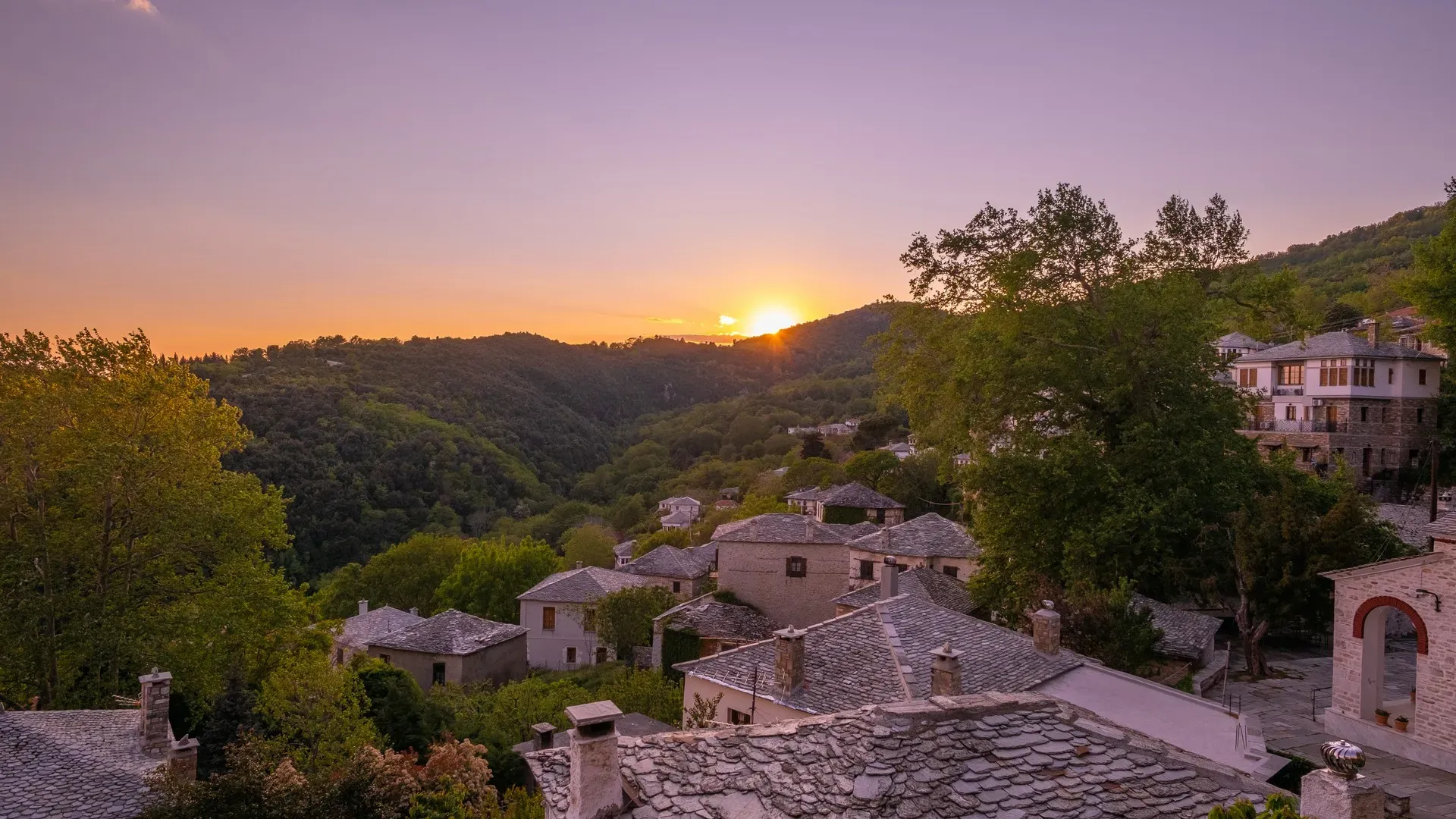
If you haven't visited Pinakates yet, one of Pelion's most authentic traditional villages, we recommend doing so right away. Less known than its neighbors, such as Vizitsa and Milies, this village, 27 km from Volos and built at an elevation of 560 m, will charm you from the first moment with its aesthetic appeal. Its naturally remote position on the mountain kept it well preserved. Pinakates has been protected as a preserved settlement since 1979. You never tire of wandering the stone-paved cobbled lanes, gazing at the beautiful mansions. Completing the scene are the large square with its impressive marble fountain, the Church of Agios Dimitrios, and the 500-year-old plane tree. It's also worth visiting Agia Kyriaki on the hill opposite Pinakates, for the wonderful view over the village, the Pagasetic Gulf, and Pelion.
Lafkos
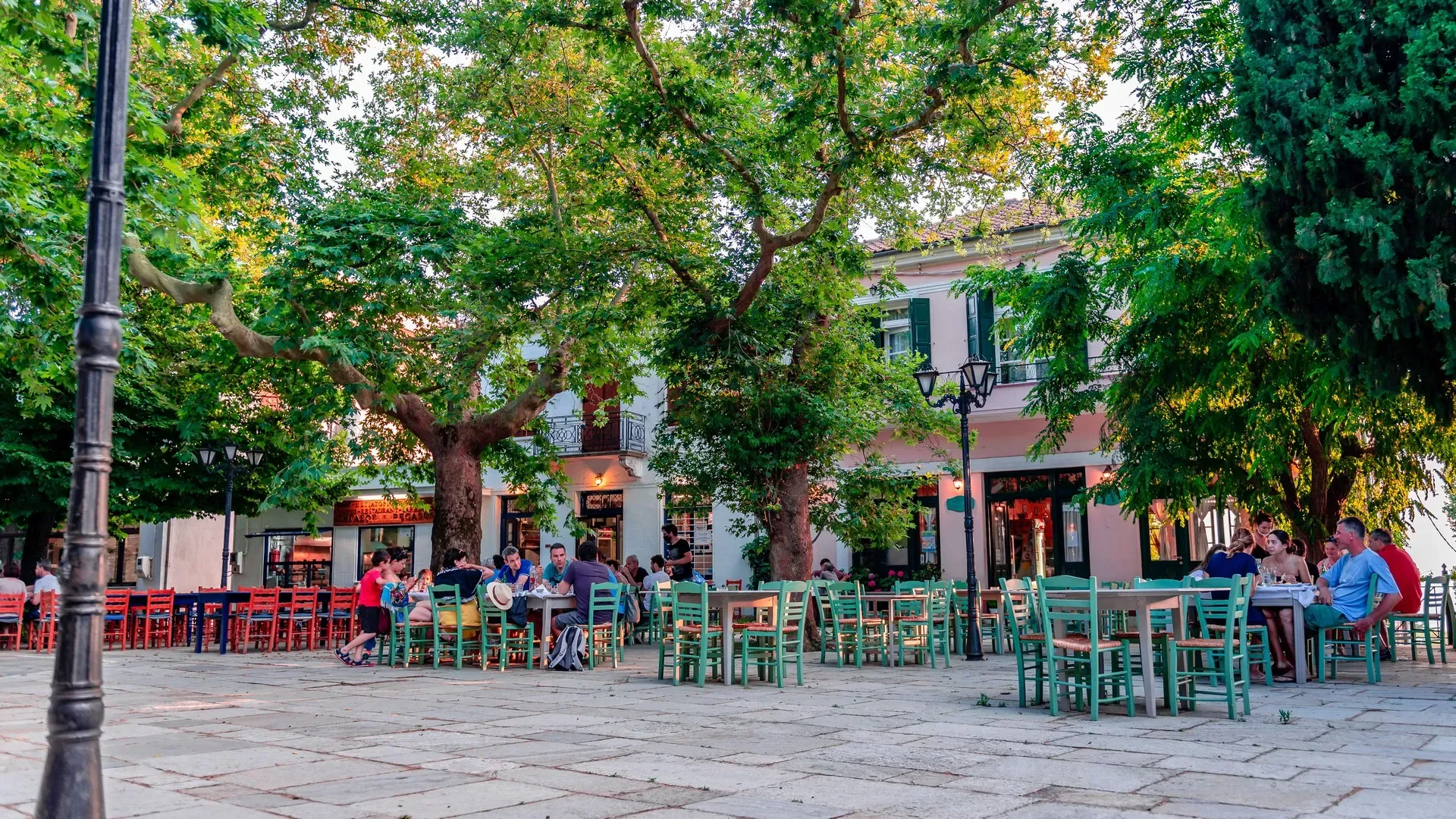
One of the lesser-known villages - and one of the most beautiful in southern Pelion - is Lafkos. Well-preserved mansions, stone-paved cobbled lanes, flower-filled courtyards, stone-built fountains, and a wonderful, large square give the village distinctive color, while the 310-meter elevation offers superb views over the Pagasetic Gulf. Lafkos's heart beats in its beautiful square. It's one of Pelion's largest squares, distinguished by the towering plane trees that have stood for centuries and offer shade and coolness on hot summer days. Around it are restaurants serving Pelion cuisine and the traditional café of Manolis Forlidas, operating uninterrupted since 1785 and considered the oldest in Greece. Also, in the village you can see three museums: the Folklore Museum, the Fampeio founded in 2005 in honor of visual artist Athanasios Fampas, as well as the distinctive Radio Museum (one of the two that exist in Greece).