





In southern Chios the scent of mastic is everywhere and the medieval villages with their narrow alleys and distinctive architecture invite you on a stroll into their own era. The unique Mastic Villages have their own, distinctive stories to tell.
The southern part of Chios offers visitors to the island a truly distinctive experience. Low hills, cloaked with mastic trees and centuries-old olive trees create a beautiful landscape, while the medieval villages, the famous Mastic Villages with their distinctive defensive architecture and unique character, feel like a living museum.
Mastic, which has made Chios famous around the world, gave its name to thesemedieval settlements in the south of the island. Their centuries-long history begins around the mid-14th century, when the Genoese conquerors built these villages to house the lords who would control mastic production. Today, most settlements in the Mastic Villages preserve their medieval architecture. The houses are built very close to one another, connected by very narrow, covered alleys, the «vaulted passages». Of all the Mastic Villages, the best preserved are those that did not suffer major damage from the greatearthquake of 1881: Mesta, Pyrgi, Olympoietc.
Exploring the most beautiful Mastic Villages
Mesta
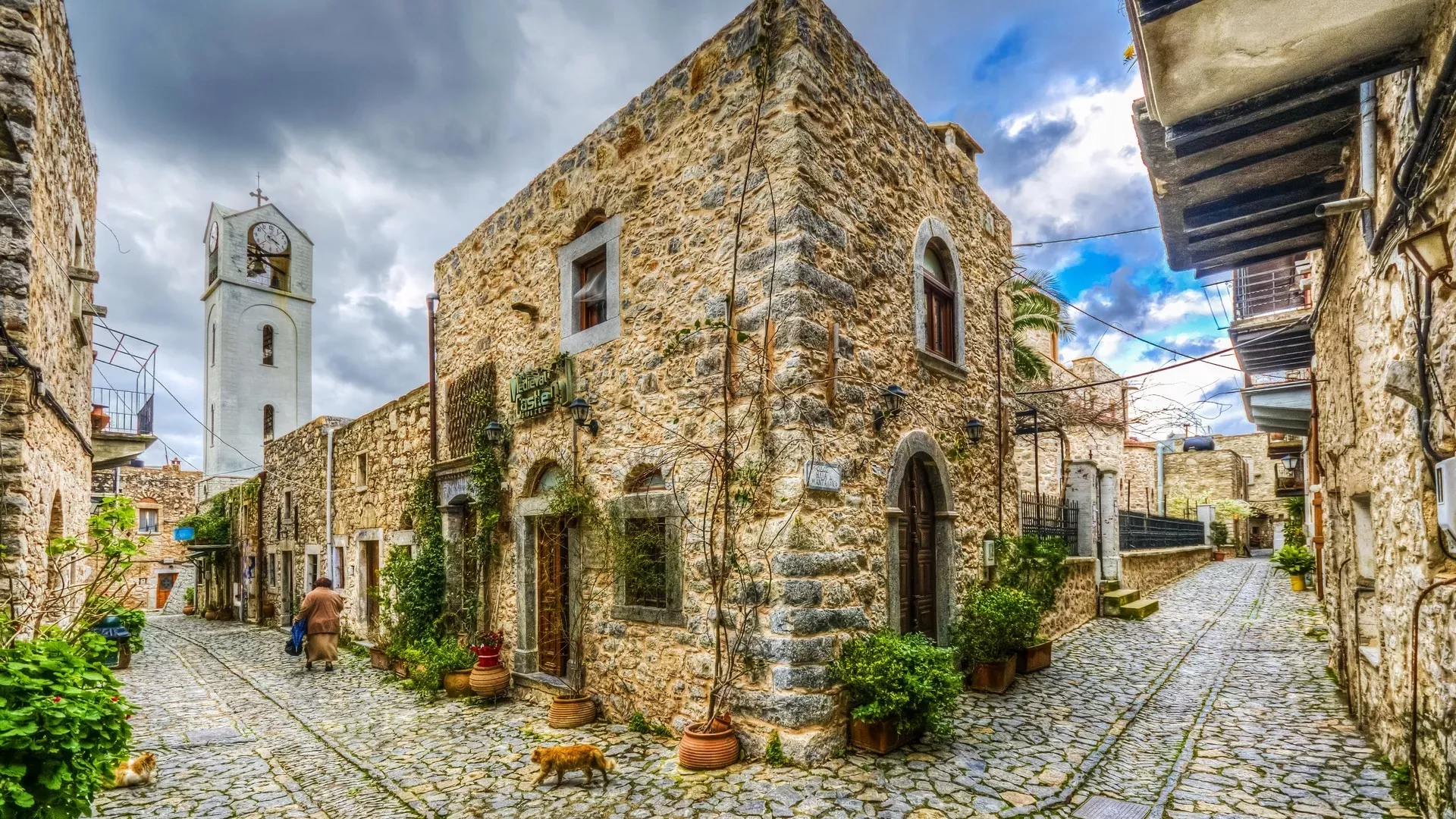
At a distance of 35 km. southwest of the town of Chios, Mesta is the best-preserved Mastic Village and one of the most beautiful medieval castle-villages on the island. Its distinctive architecture dates back to the Byzantine period and the village resembles a true fortress. The stone houses are built very close to each other, connected by very narrow, covered alleys, the «vaults». Those on the outer side of the village act as a continuous wall, without windows facing outwards.
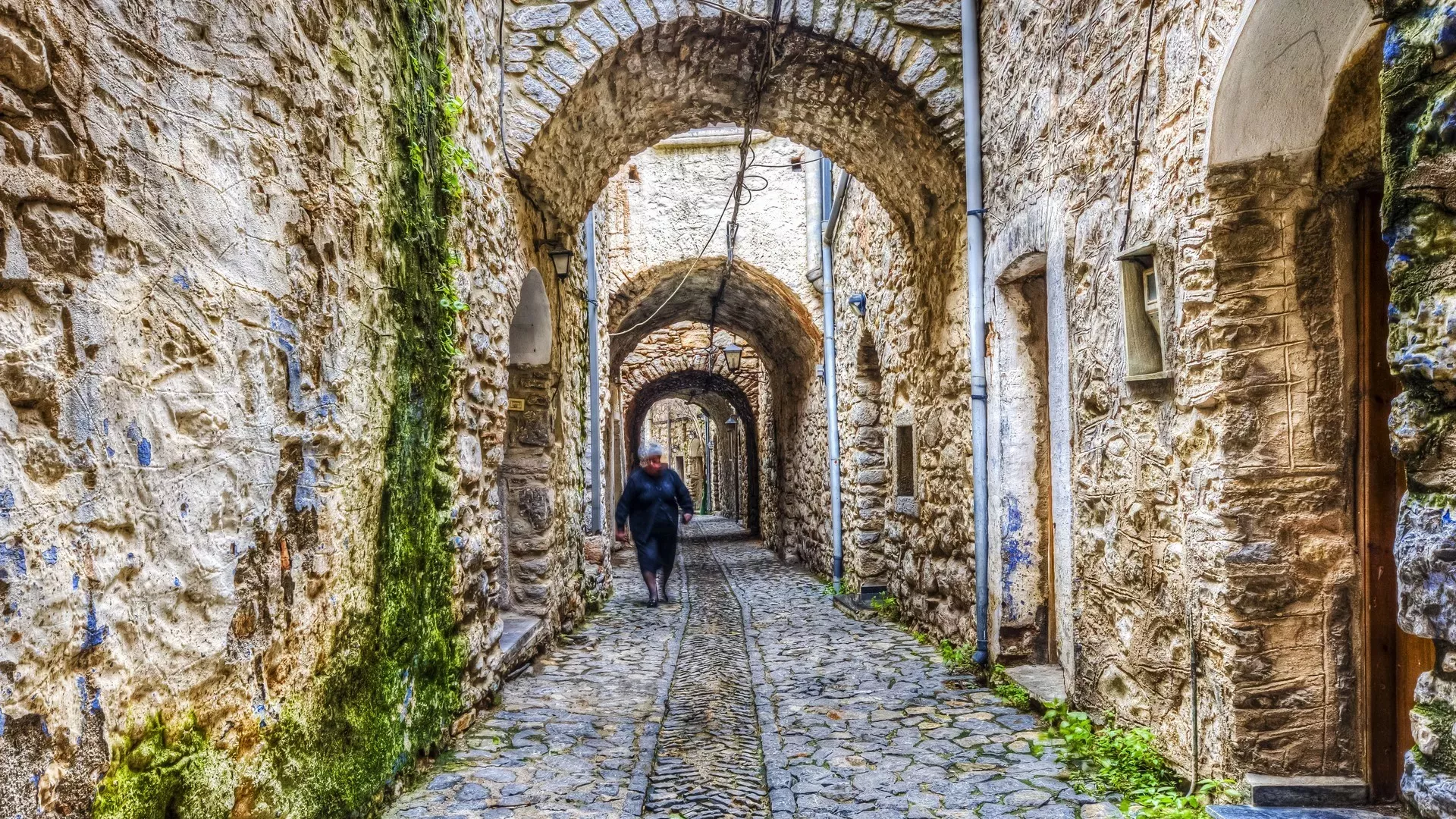
Strolling through the little alleys offers visitors a unique experience, as the entire village resembles a labyrinth. There are many churches in the village, the largest being the Church of the Taxiarches, which was built in 1868 on the site of the old circular tower of the castle.
Dont miss:
- The wood-carved iconostasis of Mikros Taxiarchis is considered an intricate example of Chian woodcarving.
- In the central square of the village (the «livadi», as it is called in the local dialect), tavernas and cafes invite you to relax while savoring traditional Chian delicacies.
Pyrgi
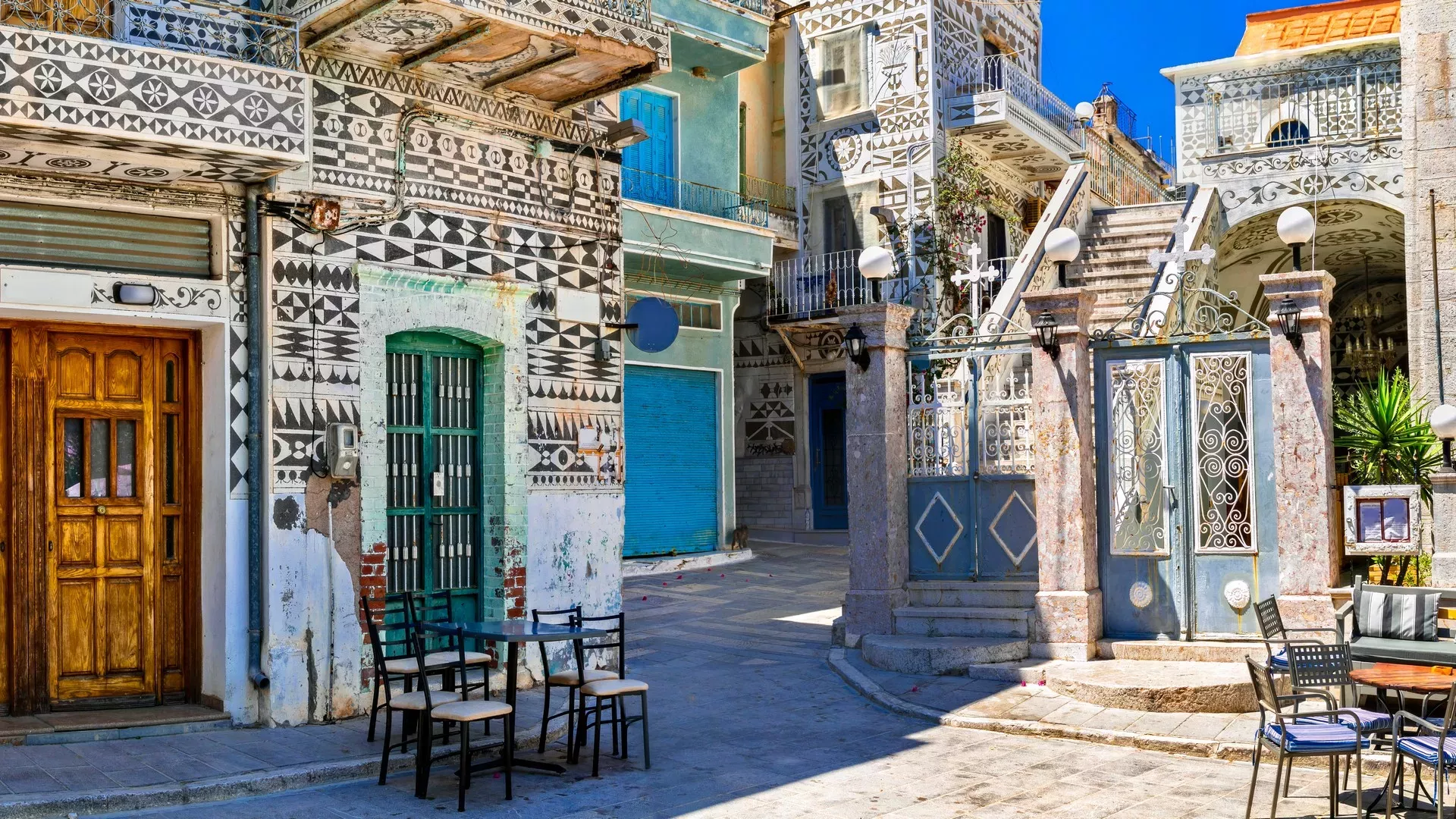
Known as the «painted village», Pyrgi, at a distance of about 25 km. from the town of Chios, stands out for the exterior decoration of its houses with distinctive geometric patterns. The village has been preserved as it was built and has been declared a protected monument. Cobbled and narrow alleys, tall houses linked to those opposite with arches, and countless churches compose a distinctive scene unlike any other. Because it was barely affected by the 1881 earthquake, Pyrgi preserves its medieval appearance inside as well.
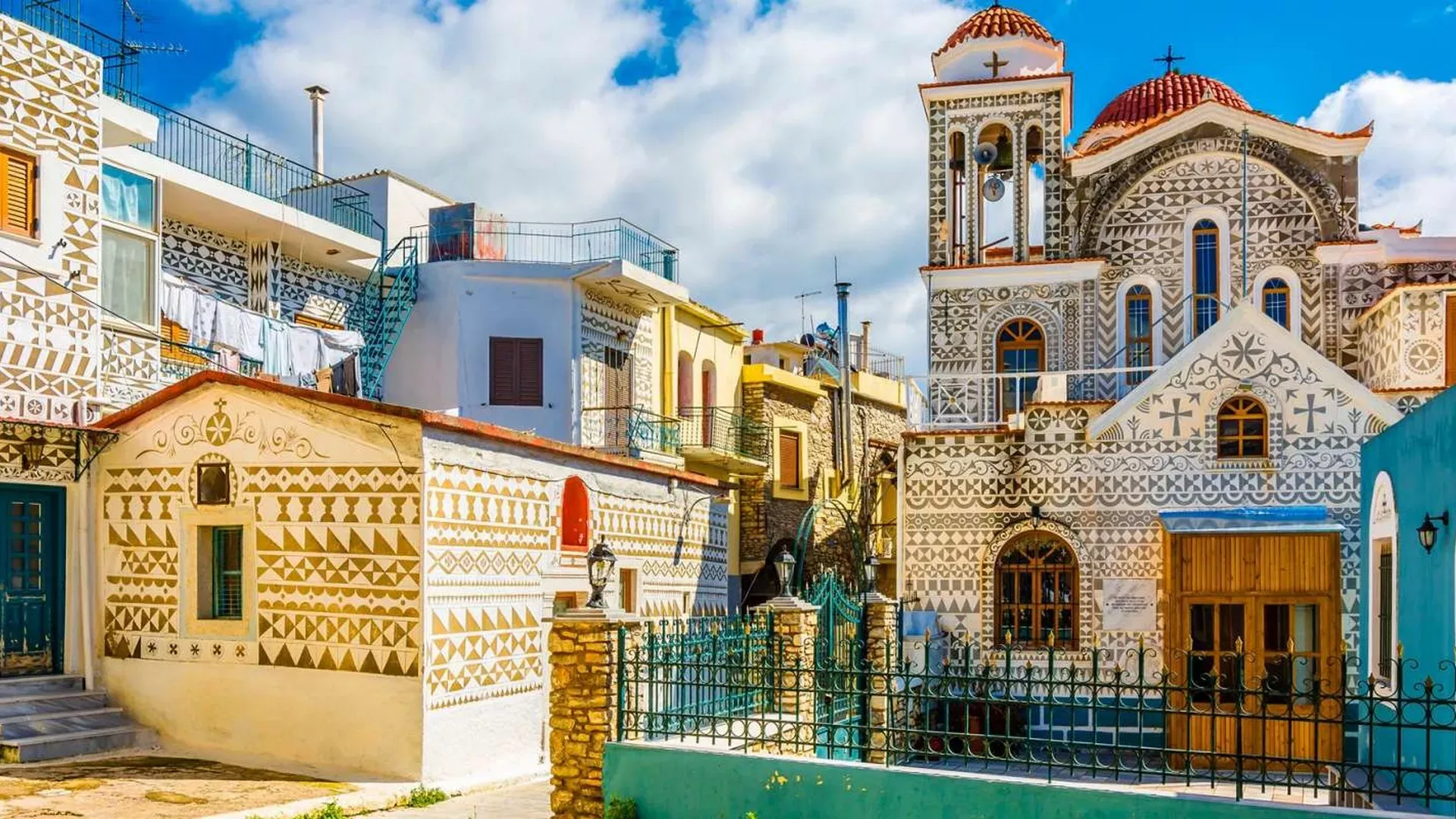
What makes Pyrgi stand out is the elaborate decorative motifs on the façades of the houses. These are the so-called «xysta», a type of façade decoration with geometric patterns in black and white. The technique is based on the black sand in the plaster which, after being carefully whitewashed, is scraped following simple or complex motifs and produces black designs on a white background. It is worth strollingthe narrow lanes of the village and admiring the various designs from squares, rhombi, triangles, bouquets in a vase, storks, tree branches, and more. Every so often you will stop to take photos of the beautiful buildings that make this village look like a painting.
Dont miss:
- Do not forget to visit the Byzantine Church of the Holy Apostles with its excellently preserved frescoes, the work of Antonios Domestichos the Cretan.
- Near the village is the Chios Mastic Museum, on an area of 12 stremmas, of which 5 are mastic grove. The aim of the museum is to showcase the production history of the cultivation and processing of mastic, placing it within the cultural landscape of Chios.
Olympoi
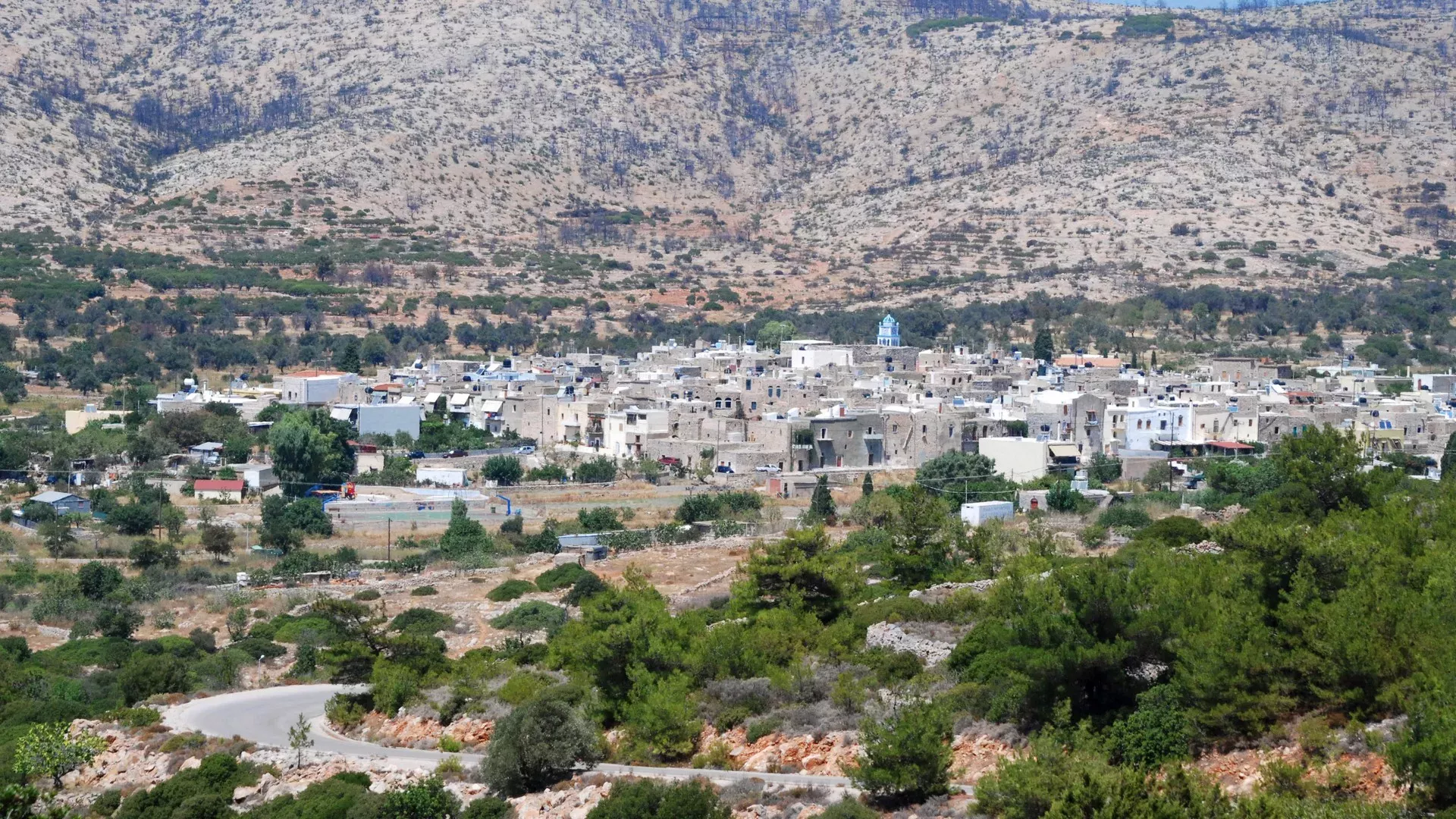
West of Pyrgi lies the fortified village of Olympoi, smaller but equally impressive. Here there is also a central gate, a defensive tower, which survives half-ruined, and narrow lanes with arched stone vaults above them that linked the houses to each other. In the central open area of the settlement, you can cool off at the café, which forms part of the now-restored tower. Also, on the village square stands the Church of Agia Paraskevi with a wood-carved 18th-century iconostasis, while the building of the old girls school is among the most beautiful in the settlement.
Dont miss:
- It is worth seeing the Refectory of Olympoi, a two-storey building with long, narrow halls that survives from the Middle Ages in good condition.
- On the road toward Kato Fana, turning right toward Agia Dynami, you will see Sykia Cave, which was explored for the first time in 1985 by the Hellenic Speleological Society. The cave has a depth of 57 m. and is particularly rich in stalagmite and stalactite formations.
Vessa
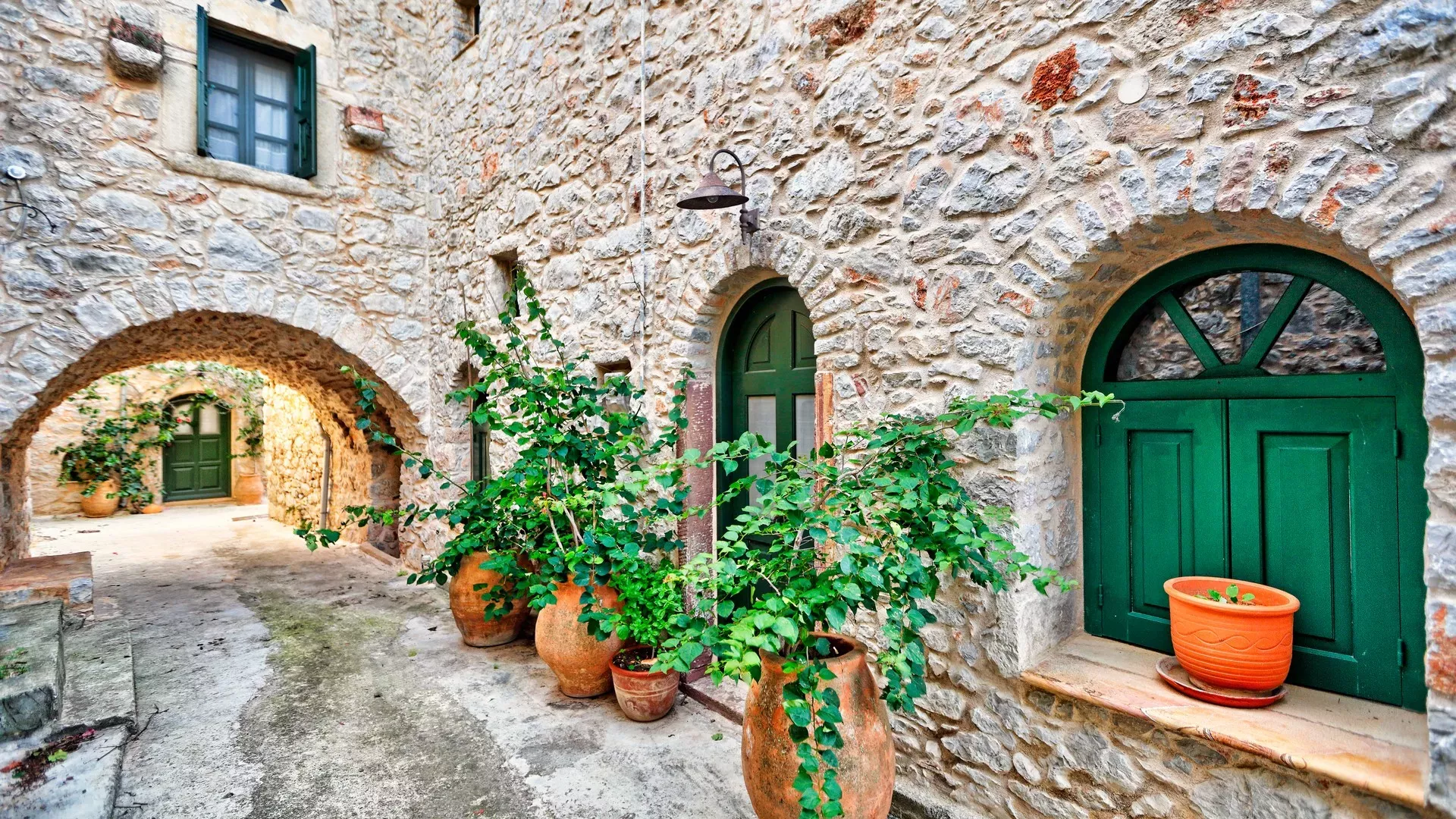
Vessa is a very picturesque medieval village with narrow alleys and traditional architecture. It has all the characteristic features of a village - castle and has preserved its architectural and urban structure over the centuries. The corner towers of its castle, as well as sections of the fortified wall, are very well preserved. Of special interest is the Church of Agios Dimitrios with its unique wood-carved icon.
Dont miss:
- The village square is perhaps one of the most picturesque on the island, with the central tower of the village dominating it and the traditional cafés offering a scene perfectly in harmony with the style of the settlement.
- The village is close to the beaches of Lithi, Agia Irini, Komi, Emporios (Mavra Volia), Trachili, and Elinta.
Armolia
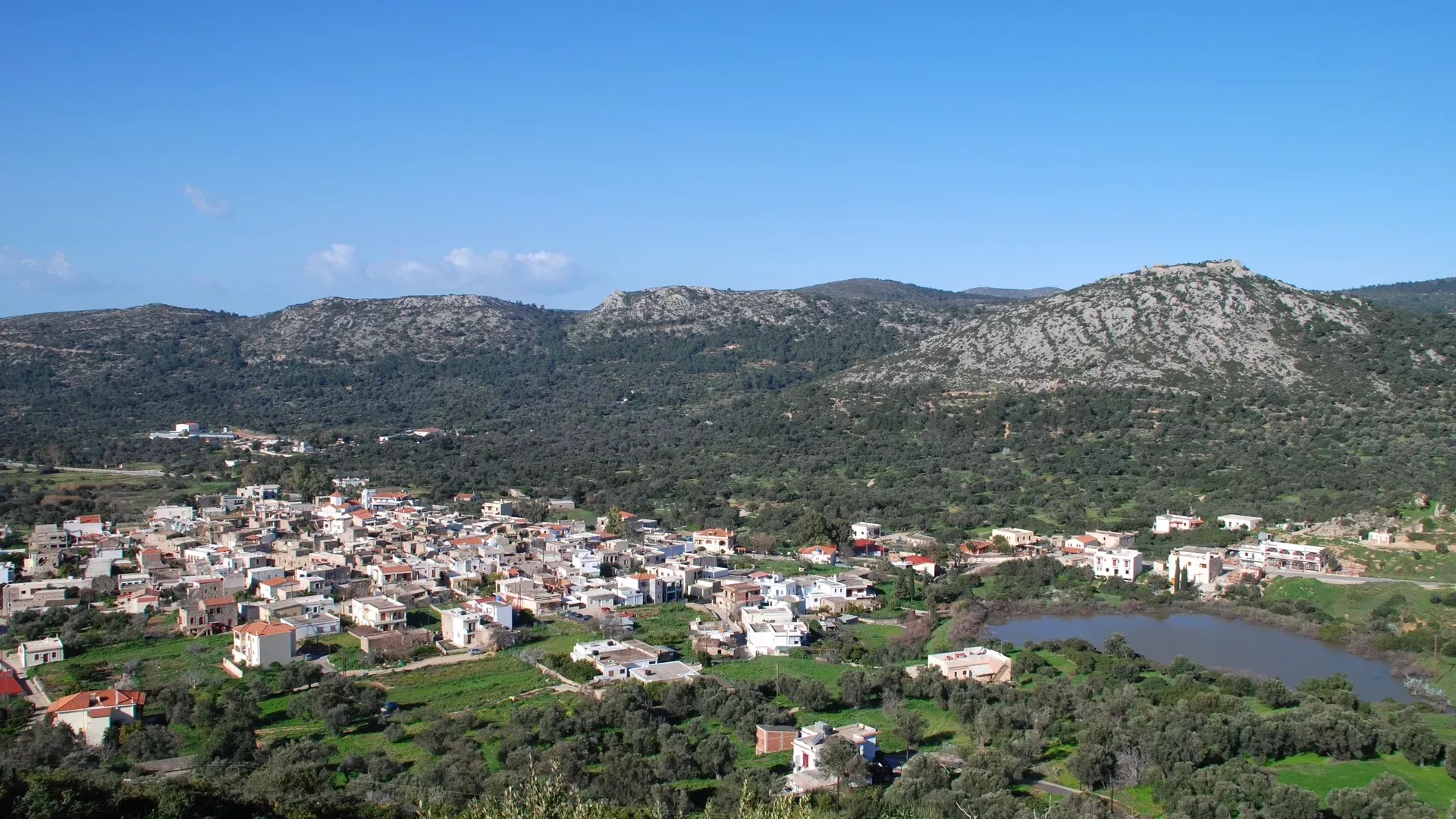
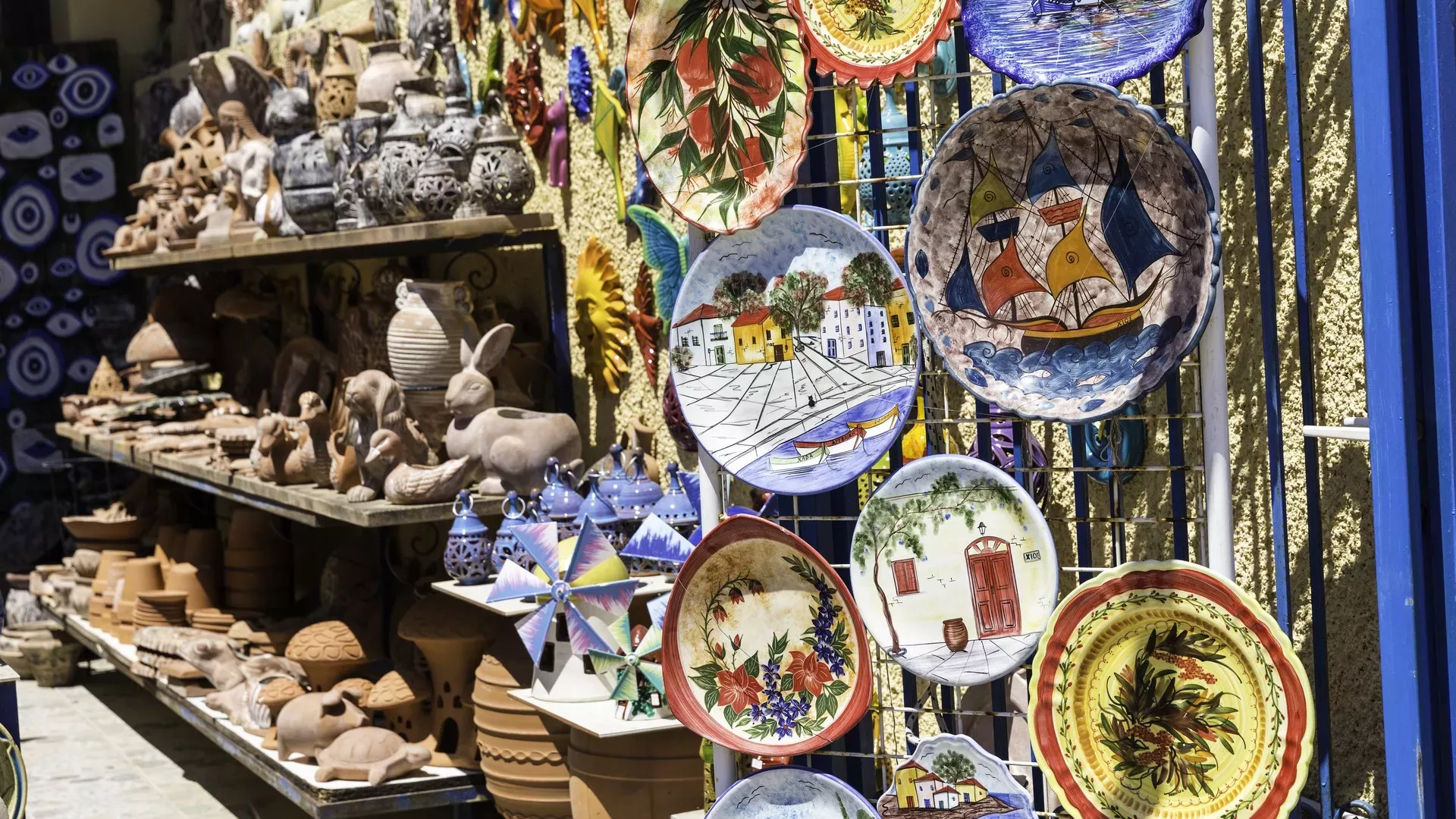
Armolia lies 20 km. southwest of the town of Chios and is the central crossroads for the southern villages. It is a medieval village that has been rebuilt. A few arches remain over the narrow streets in the village center, which give an idea of its original appearance. The inhabitants of Armolia maintain a long tradition in the making and decoration of ceramics and sell them in the shops at the entrance to the village.
Dont miss:
- On a hill to the west of the village stands the Byzantine Castle of Apolichnon, where the Genoese had installed the administrative headquarters of the Mastic Villages. Access to the castle is via an easy walking route on a mountain trail, lasting 40 minutes, with wonderful views.