





In the gorge of the Lousios River in Mountainous Arcadia there are two historic monasteries with breathtaking views. The Philosophou Monastery and the Prodromos Monastery offer a truly unique sight and inspire awe in the visitor.
One of the most important sights of Arcadia is the gorge of the Lousios River, one of the most beautiful gorges in Greece in a place of rare natural beauty. The gorge is filled with monasteries hewn into the rocks, churches, and hermitages. It is no coincidence that the area is called the «Mount Athos» of the Peloponnese.On both sides of the gorge stand Philosophou Monastery and the Monastery of St John the Baptist, two historic monasteries offering absolute serenity and captivating views.
The historic monasteries above the Lousios Gorge
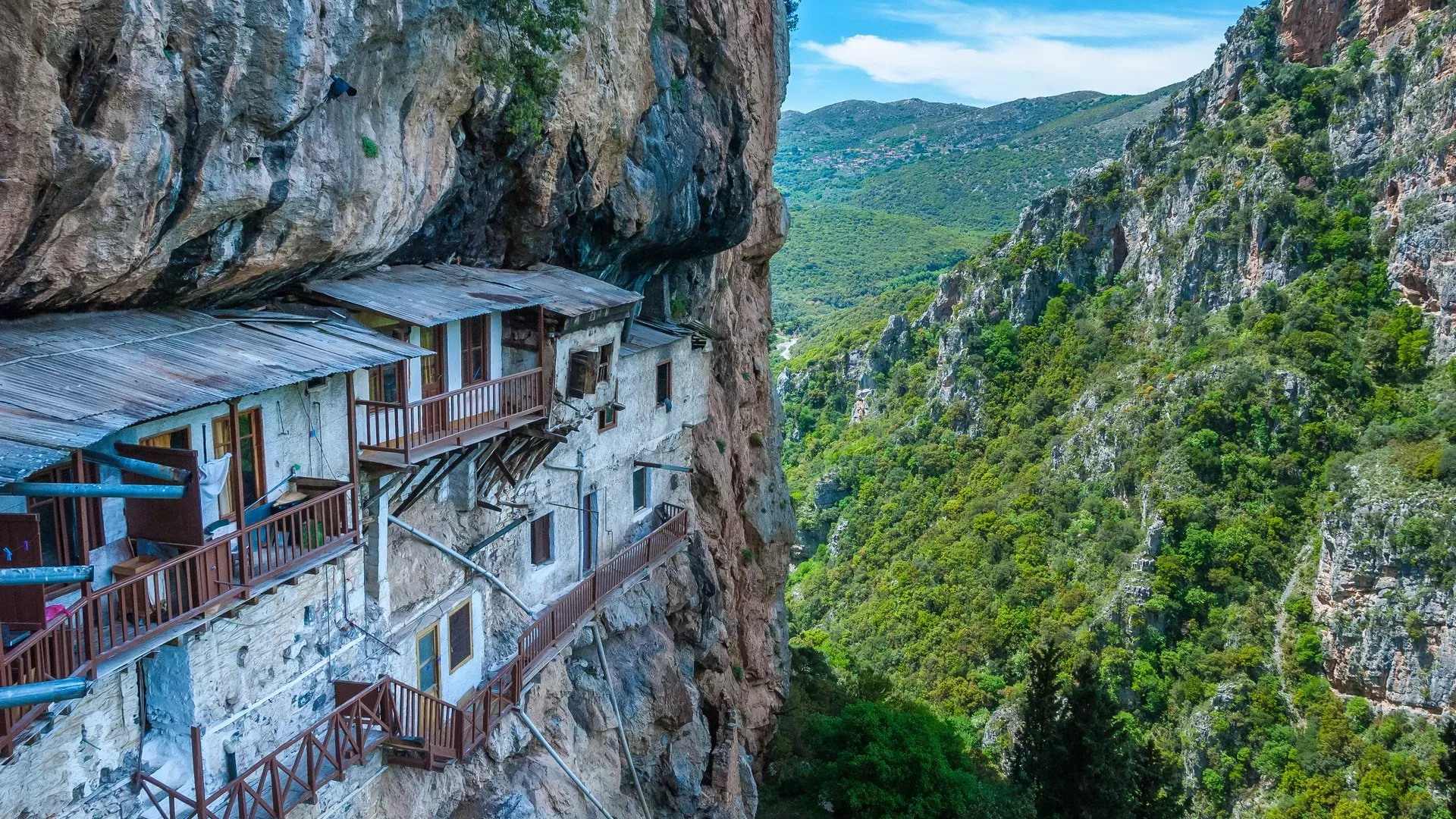
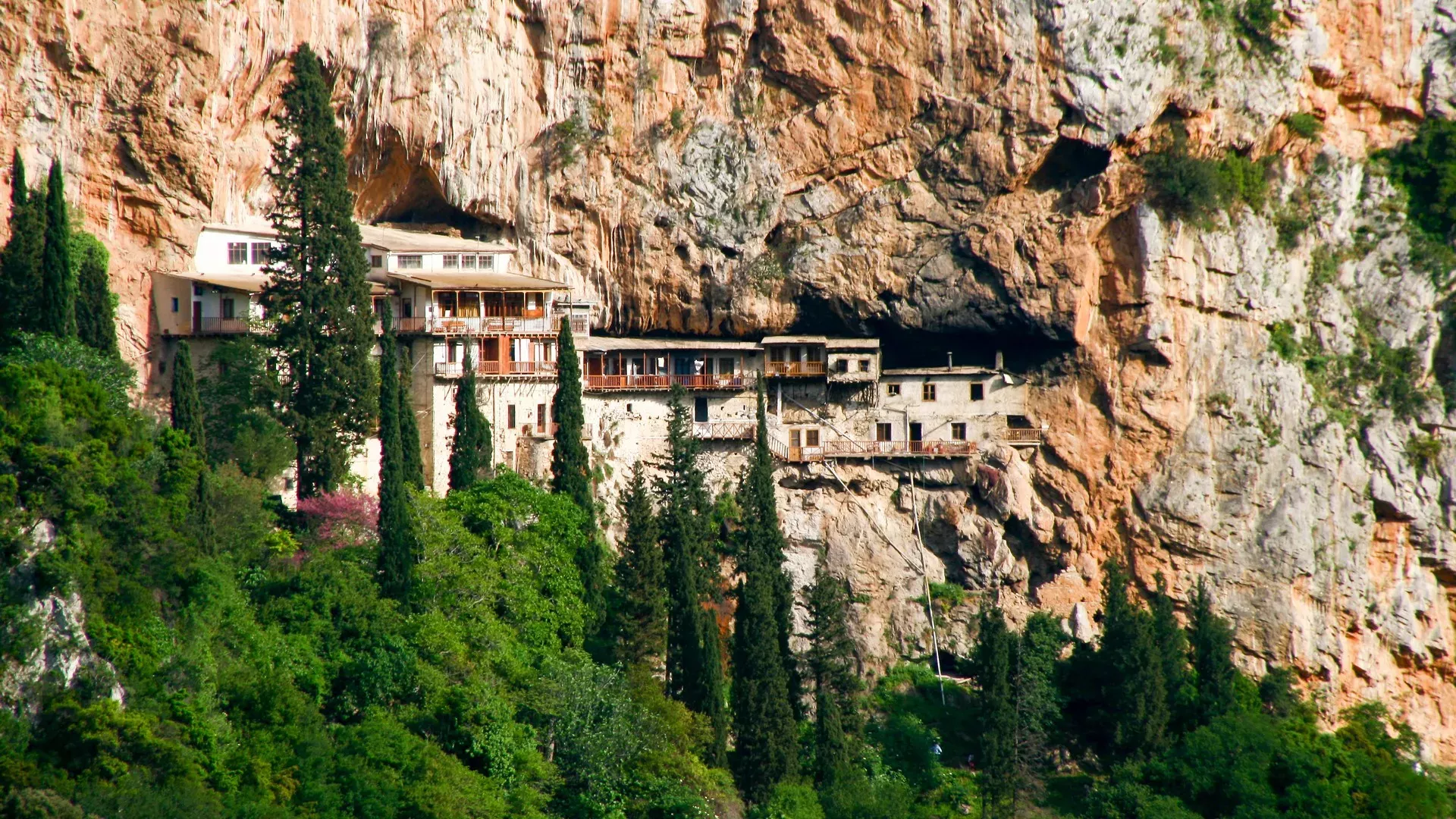
Between Stemnitsa and Dimitsana, the historic Monastery of St John the Baptist, literally wedged, almost hanging from the towering, sheer cliff, seems to float above the Lousios Gorge. It is one of the largest and most beautiful monasteries in the Peloponnese. Access to Prodromos Monastery requires walking through the Lousios ravine, so it is advisable to wear suitable shoes. To get there, a few kilometers from Stemnitsa as you come from Dimitsana, turn at the sign for Prodromos Monastery. The next point is the parking area from which the path begins that crosses the Lousios Gorge.
The monastery is estimated to have been built in the 16th century, but many hermitages flourished in the area from the 12th century. Camouflaged on the side of the gorge, in 1821 it became a base for the chieftains of the Revolution. The monastery’s balcony offers sweeping views of the gorge’s wild beauty.
From the path that descends to the Lousios and crosses the gorge you can reach Philosophou Monastery. At a point where the riverbed narrows there is a small bridge that crosses to the opposite bank. Philosophou Monastery consists of two monastic complexes, an old and a new one, located a short distance from each other.
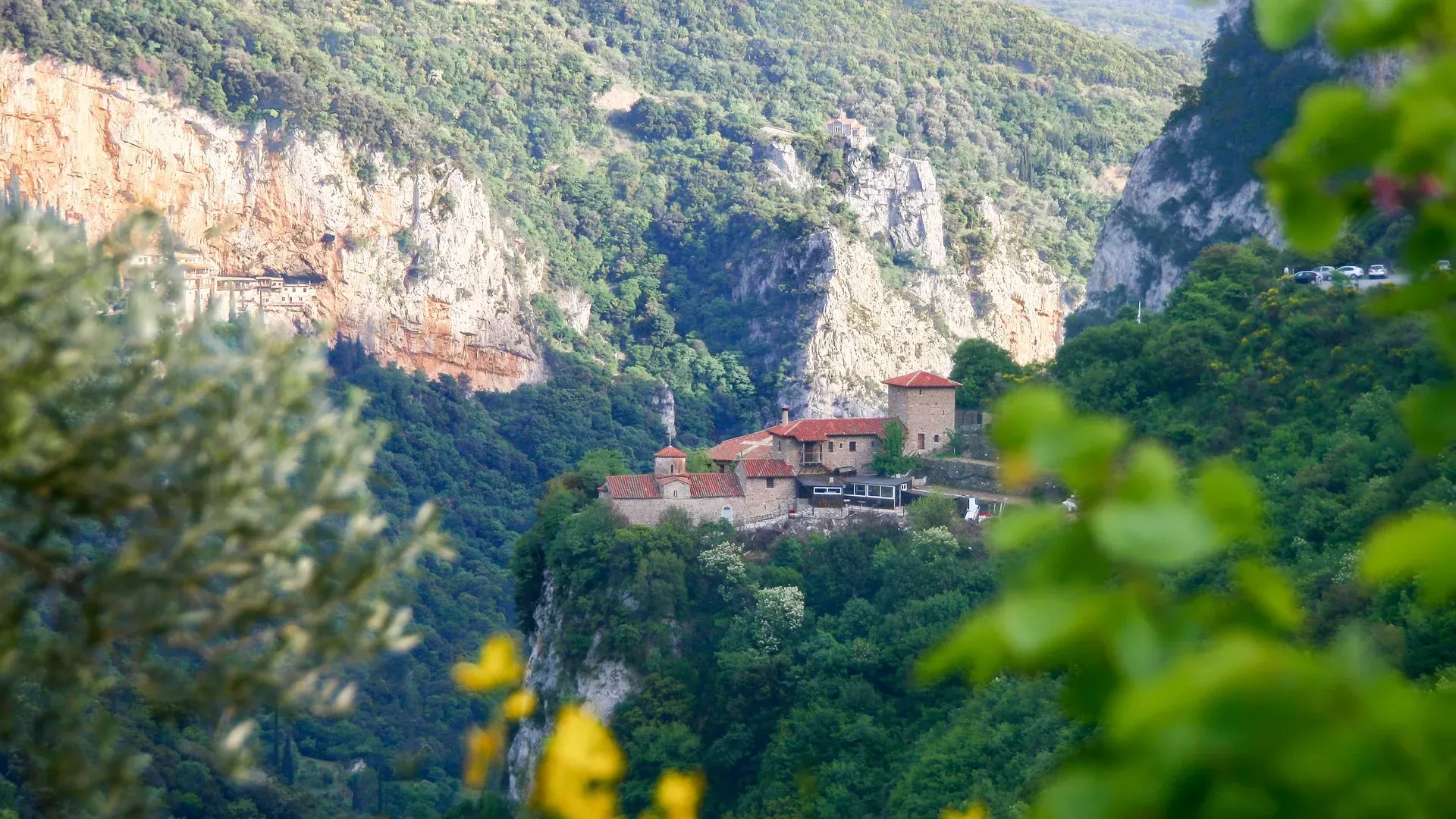
The Old Philosophou Monastery is one of the oldest monasteries in Greece, with roots reaching back to 963 AD. It is one of the oldest Byzantine monuments in Greece and was built inside a cave. Today, only a small chapel survives, in Byzantine style, with noteworthy frescoes.
Close to the ruins of the old monastery (connected by a path) lies the New Philosophou Monastery, whose existence predates 1691. Today it functions with male monks and as a dependency of the Monastery of St John the Baptist. Since 1955 it has been designated a listed monument.