





Santorini's little neighbor generously treats visitors to glimpses of another era. So close to, yet so far from its famous "sister", Therasia is an island with a character all its own that's worth discovering.
Thirasia, like Santorini, was once part of the island of Strongyli, which, after a major volcanic eruption, split into smaller pieces, forming the famous caldera and a cluster of islands. Arriving on this island you'll feel like you've taken a journey back in time, to a Greece of yesterday. With a handful of rooms to let and little tavernas by the sea, Thirasia is one of the country's least developed islands for tourism.
To get there you can take small boats that depart from Ammoudi Bay in Oia (about 20 minutes) or by ship from the port of Athinios . A relaxed pace, serenity, and a familiar atmosphere prevail on this quiet island. Traditional settlements, picturesque chapels, the wild volcanic landscape, breathtaking caldera views, and crystal-blue waters will enchant you.
Exploring Thirasia
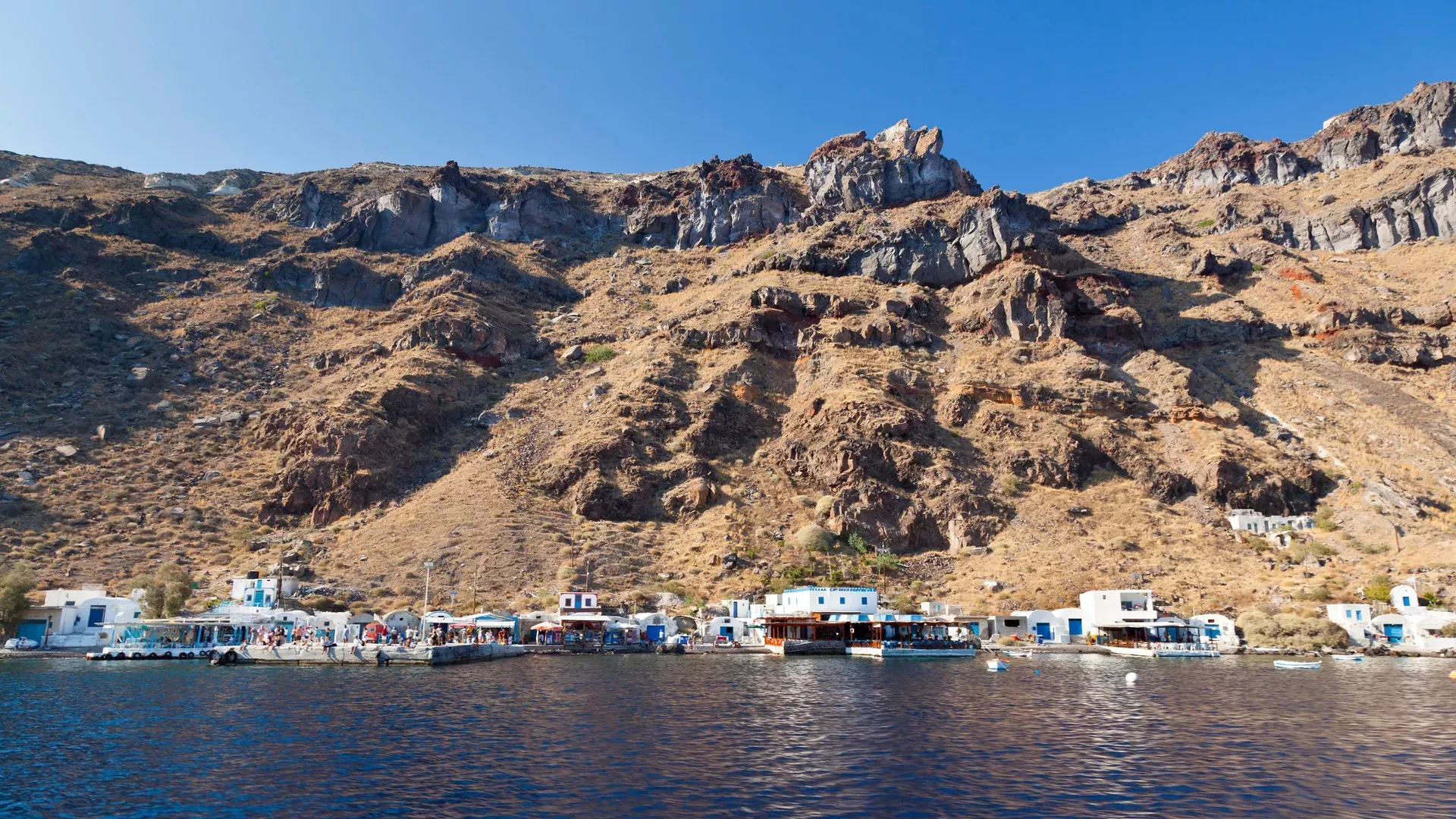
The island's capital is Manolas, a settlement built at the caldera's highest point, with wonderful views of the Aegean. Walking the settlement's narrow lanes, between whitewashed little houses and general stores from another era, you'll pause before the church of Saint Constantine- one of the island's 21. The wood of its great gate and iconostasis comes from a ship that was wrecked and smashed against the island's rocks. You'll need to descend two hundred seventy stone-paved steps from Manolas to reach the port of Korfos and taste fresh fish and local delicacies at the seafront tavernas.
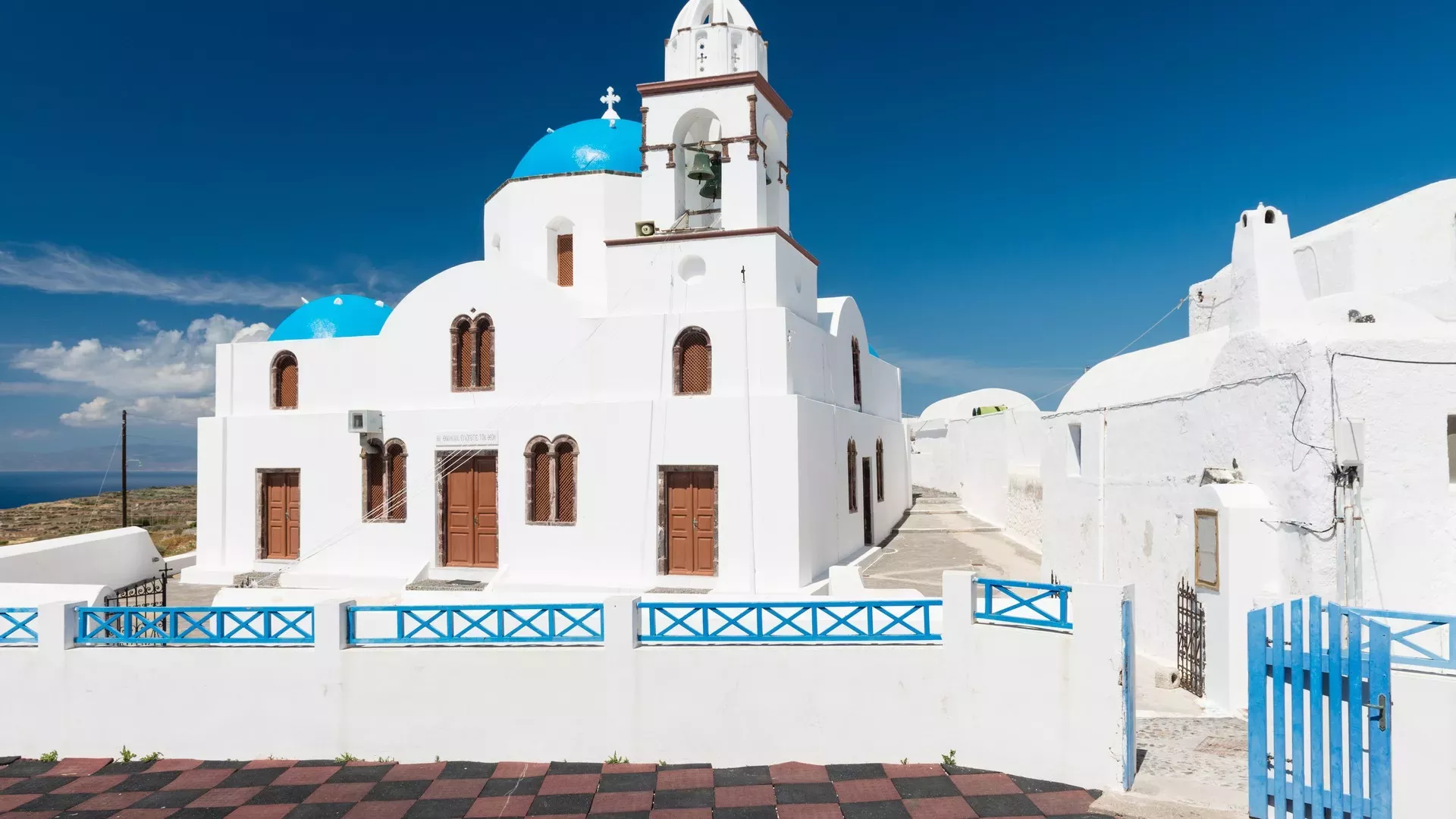
If you want to explore the island's interior, it's worth visiting the village of Potamos, built in a ravine, as well as Agrilia, one of the oldest rural settlements with cave houses and old wine cellars. Thirasia's most enchanting side is revealed on the walk to the Monastery of the Dormition of the Virgin, which lies at the island's southernmost tip. Perched on a hill, the white monastery offers wonderful views of the caldera, Santorini, Aspronisi, Palea and Nea Kameni, and the endless blue of the Aegean. West of the monastery lies the old mine from which pozzolana (Santorinian earth) was extracted in the 18th century, a material used in the construction of the Suez Canal.
The beaches of Thirasia
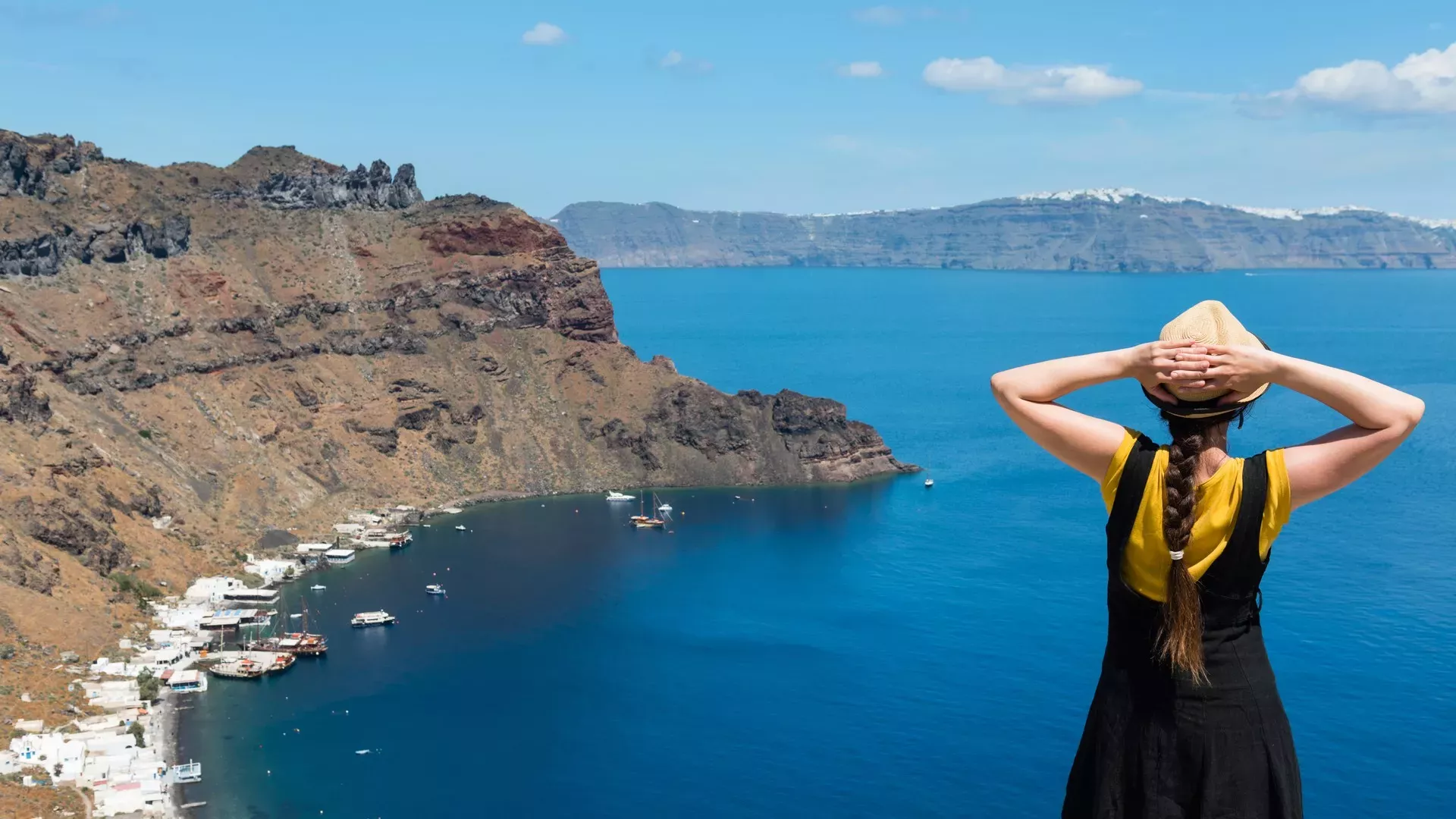
Thirasia has few small beaches. However, the wonderful views will make up for it. Visitors usually prefer the black beach of Agia Irini, which is near the port of Riva. There's also the beach at the little harbor of Korfos with large pebbles and pumice stones.