





You can't go to Naxos and not visit its most famous mountain village. Apeiranthos with its marble-paved alleys and Venetian towers, is a village - jewel that preserves its traditions and distinctive architectural character.
The beauty of Naxos doesn't end with its gorgeous beaches and the cosmopolitan side with Chora, the iconic Portara and the Venetian Castle. In Naxos's lush interior, picturesque traditional villages, labyrinthine alleys with arches, medieval towers, fascinating museums and shady squares with plane trees and traditional cafés await visitors who want to discover the island's authentic side.
Apeiranthos is the island's most famous mountain village. The village of Manolis Glezos - «t' Aperathou», as the locals call it - preserves traditions, the residents' distinctive dialect, reminiscent of the Cretan dialect, and its architectural character from the era of Venetian rule.
Apeiranthos: One of the most beautiful villages in the Cyclades
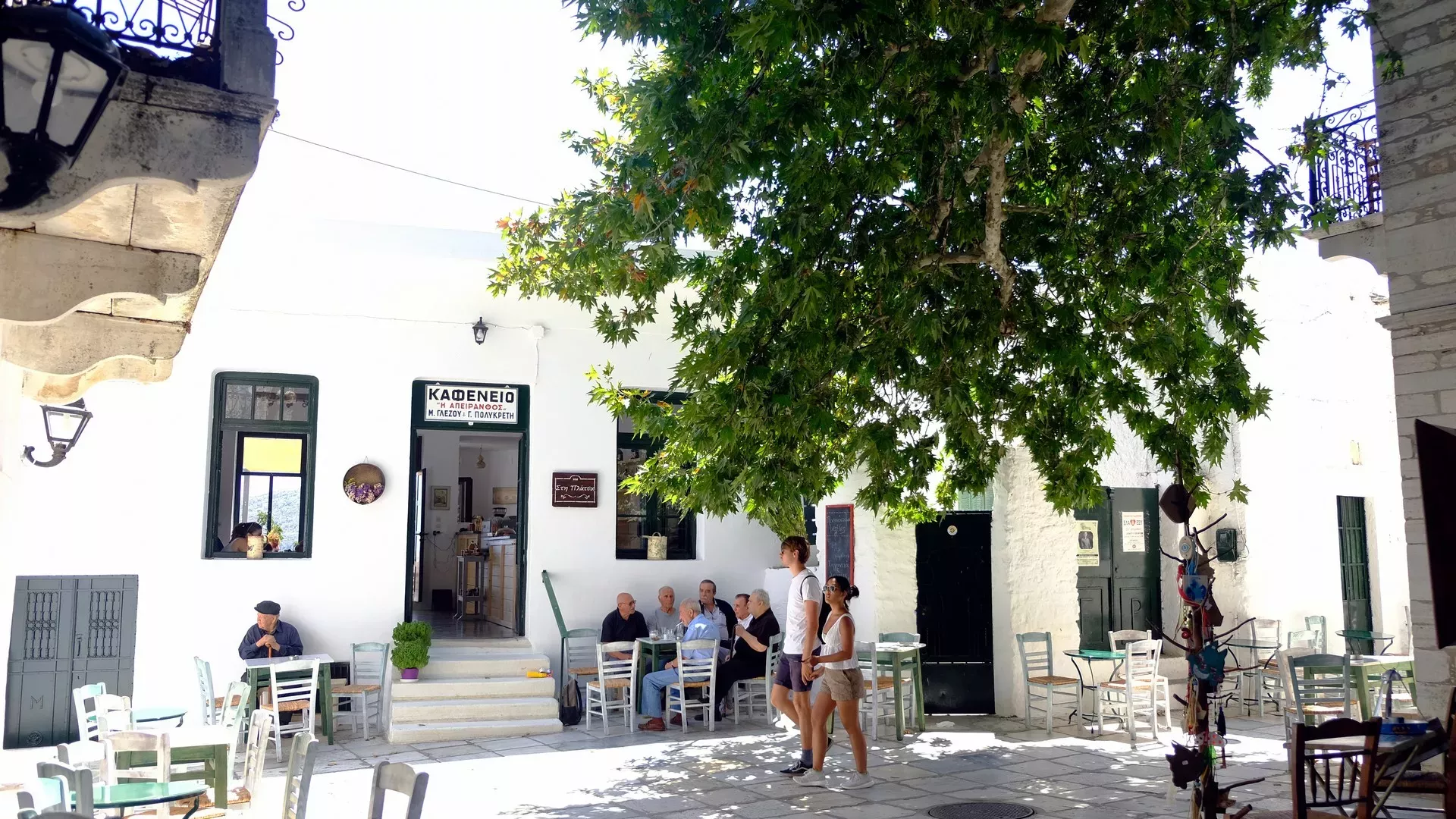
Apeiranthos is a traditional stone-built village, set in the heart of mountainous Naxos, at an elevation of 600 m at the foot of Mount Fanari, 28 km from Chora. It is the birthplace of Petros Protopapadakis, who served as Greece's prime minister, as well as of Manolis Glezos.
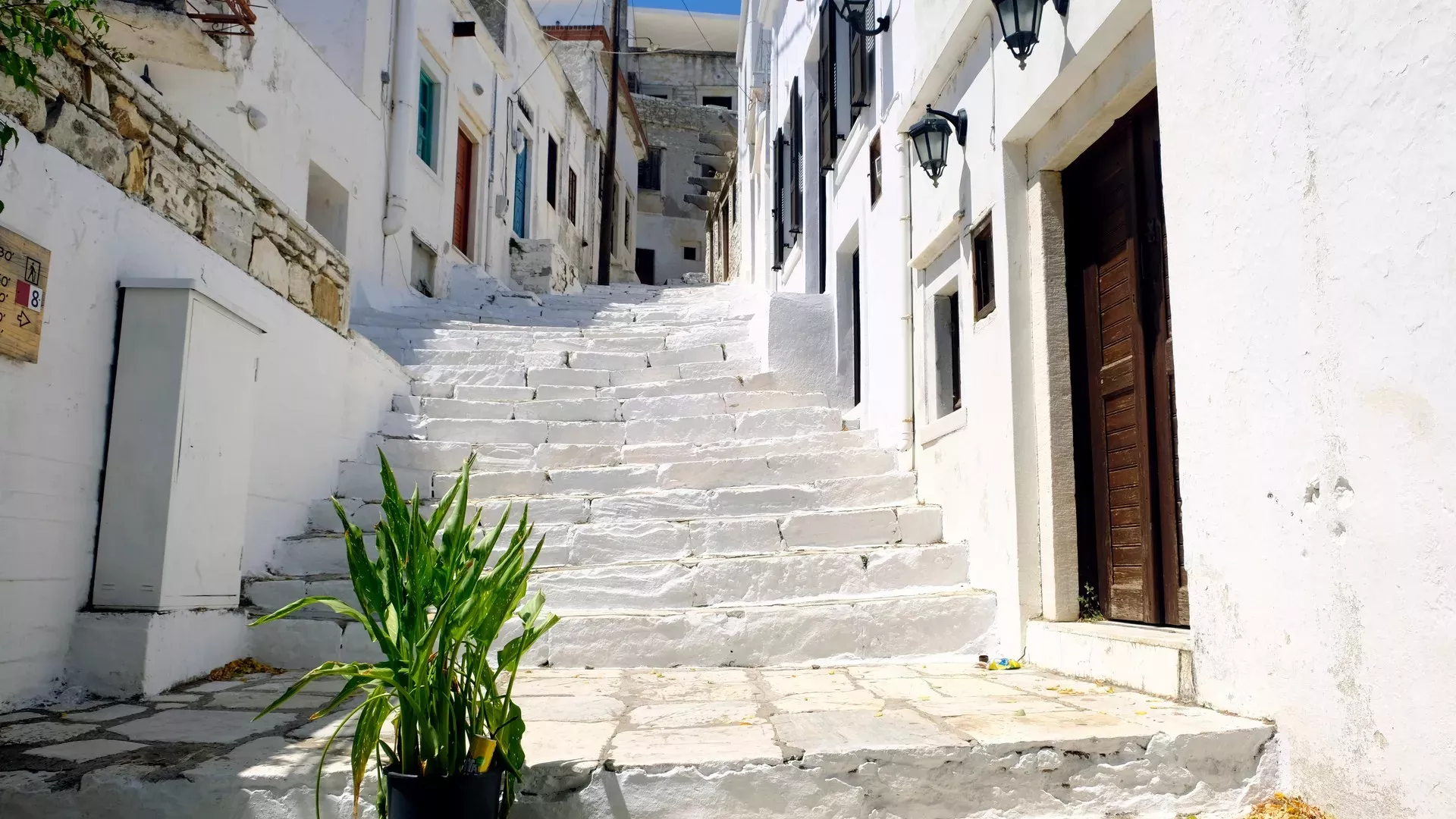
The villagers' linguistic idiom is particularly interesting, as it points to the Cretan dialect. Due to similarities of culture, dialect, customs and traditions, and aptitude for poetry and music with Crete (specifically Sfakia and Anogeia), it's speculated that a large proportion of Apeiranthos's population originates from there.
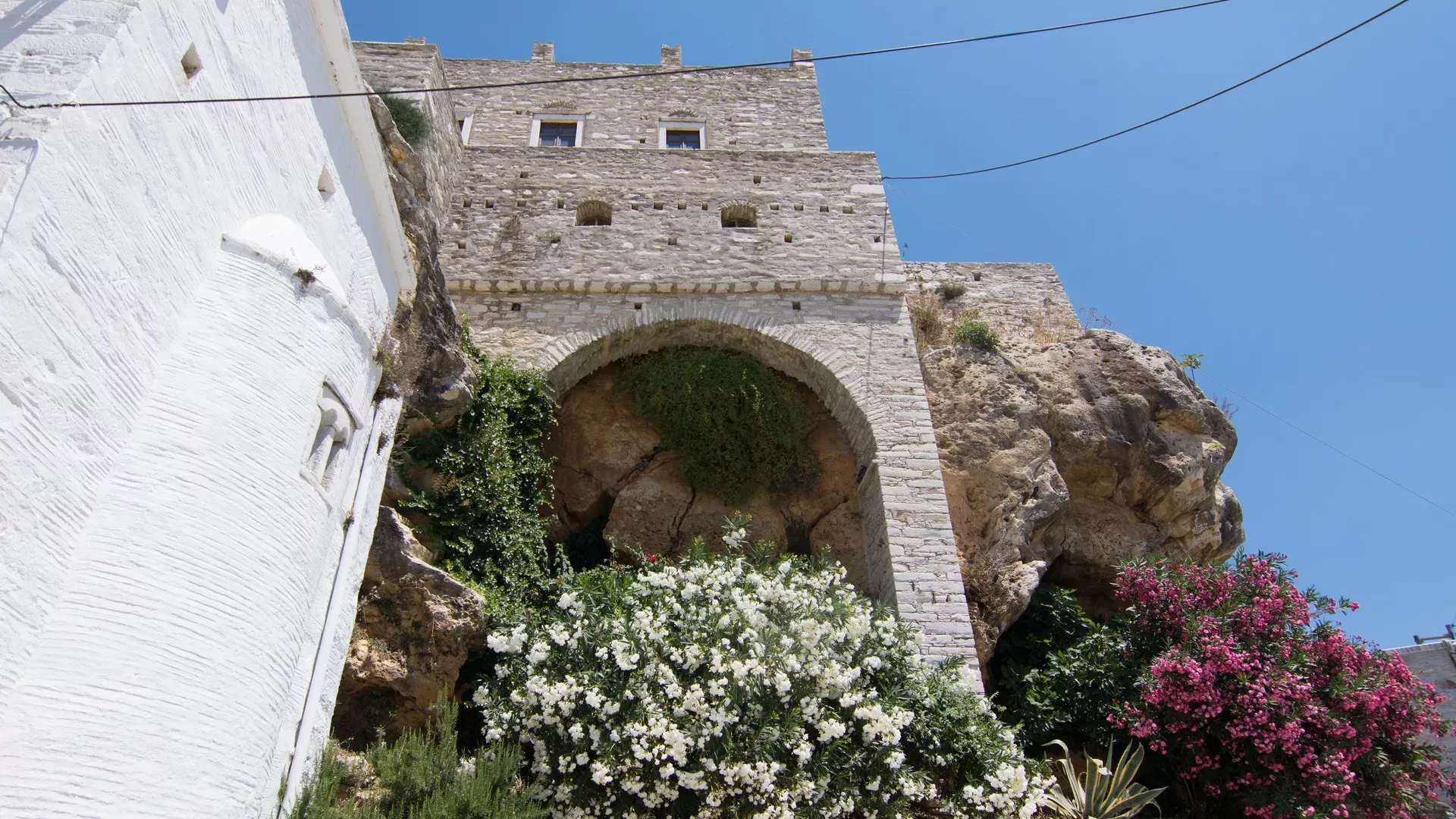
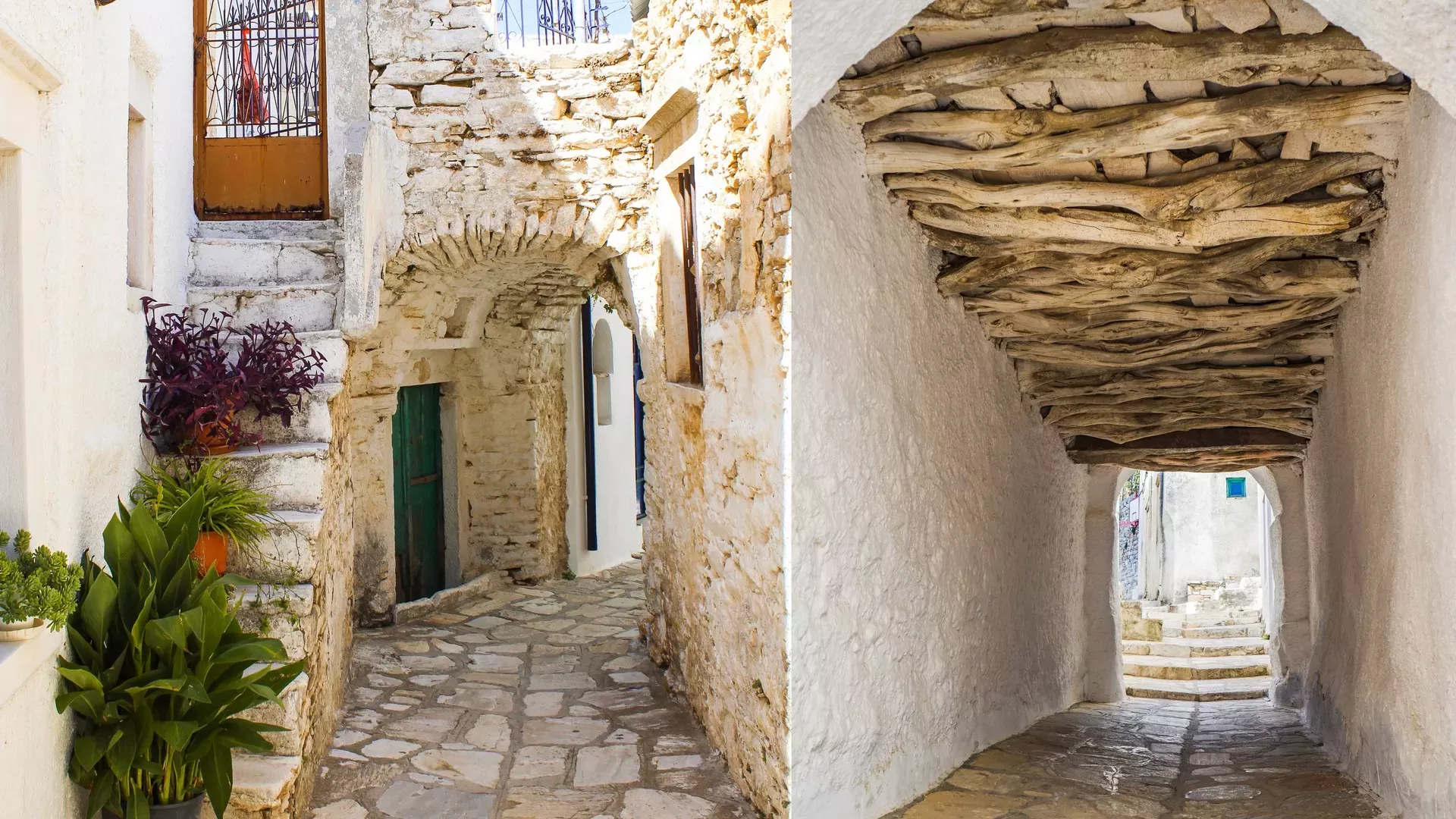
The village, designated a traditional settlement since 1978, is developed around two 17th-century towers that once belonged to Frankish landowners. One of them is the Zevgolis Tower, built on a rock near the entrance to the village. From here your stroll through the village begins, along gorgeous marble-paved alleyways with vaulted arches. Apeiranthos has preserved its architectural form almost intact since the era of Venetian rule.
Apeiranthos boasts several interesting museums (Archaeological, Folklore, Center for Visual Arts, Natural History and Geological), as well as the largest library in the Cyclades, which is dedicated to Nikos Glezos, brother of Manolis Glezos, who was executed by the Nazis in 1944. There's also a women's traditional arts cooperative in the village, where you'll shop for beautiful weavings and handicrafts.
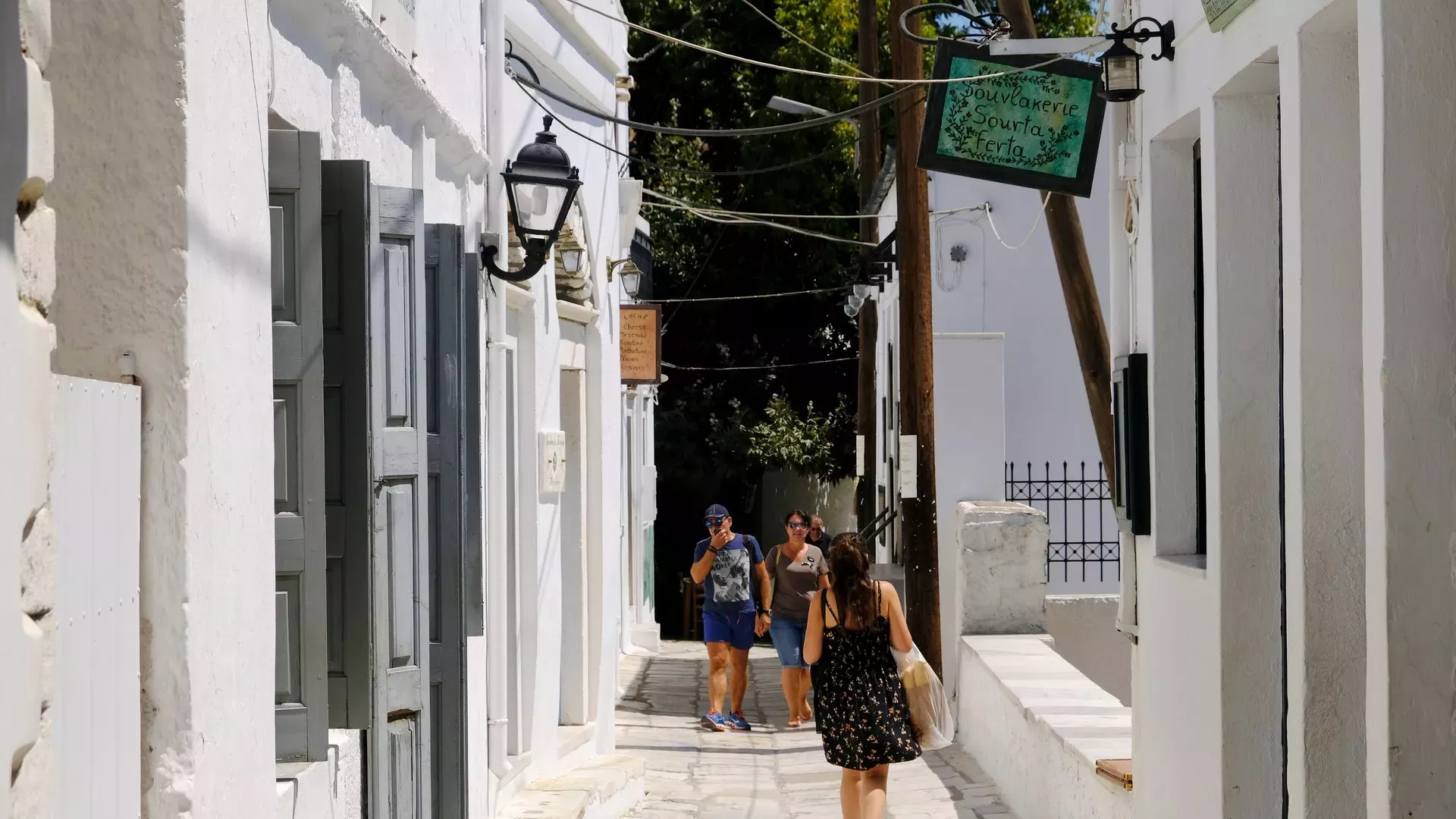
Don't miss having your coffee with the locals at the traditional cafés, such as «Apeiranthos», in the village's central square. Renowned tavernas that honor the local cuisine include Lefteris, Amorginos and Platanos, while Rotonda, in a wonderful location near the village, makes an ideal stop for coffee or a meal with sunset views.
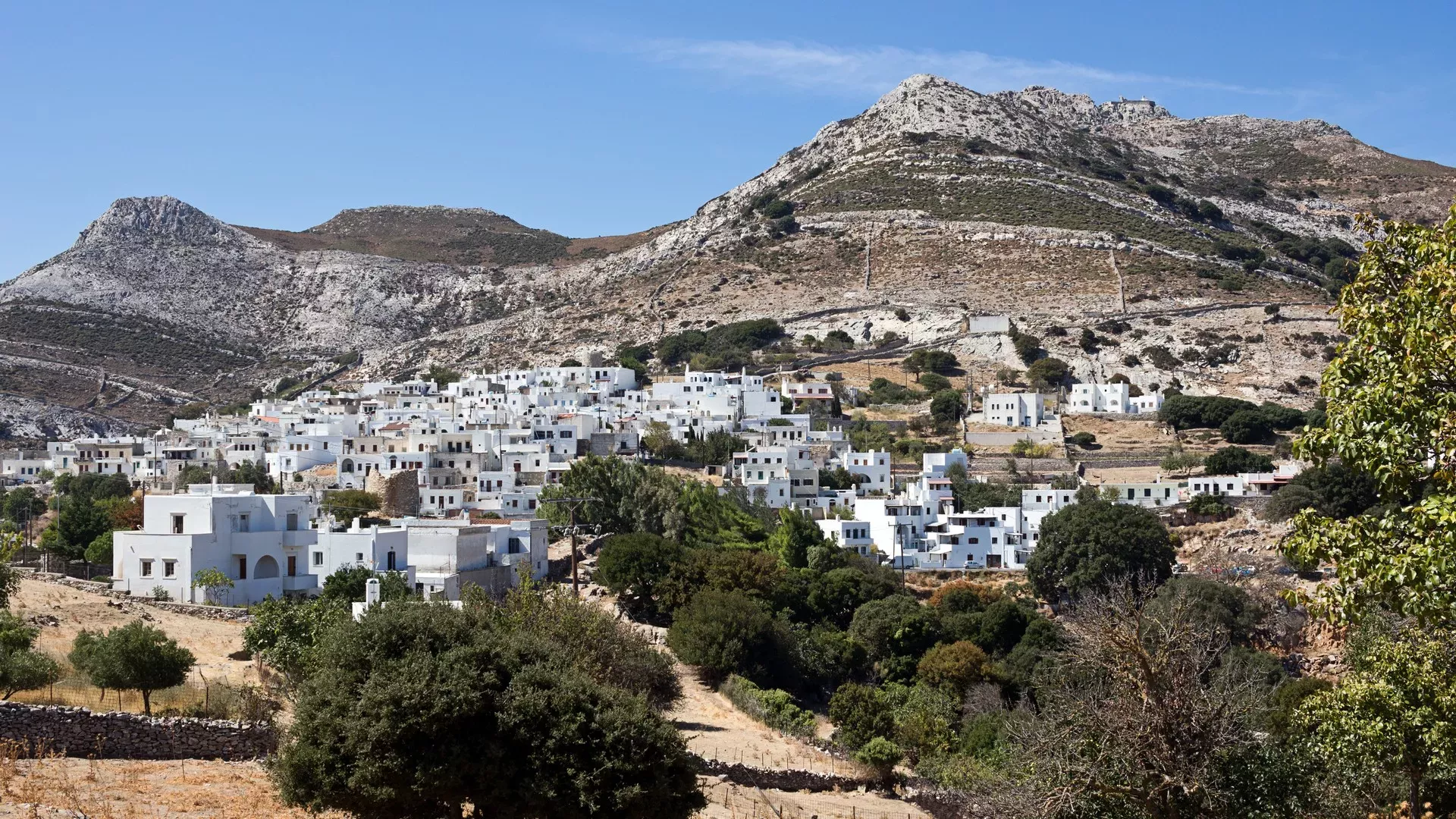
And if you crave a dose of sea salt, head down to the picturesque little harbor of Moutsouna, Apeiranthos's seaport, for a swim and a meal by the water's edge. Moutsouna was, until the early 1980s, primarily a commercial cove exporting emery. In fact, on the road from Apeiranthos to Moutsouna, you'll have the chance to see the aerial railway that transported emery from its mining galleries inside the mountains to the loading dock at the harbor.