





Wild beauty meets the serene landscape on Antikythera, an island that seems forgotten in another era.
Between Kythera and Crete, Antikythera is a barren island covering just 20 square kilometers. Far from the capital and hard to reach, it has remained pristine and untouched by mass tourism. Known in antiquity as Aigila, Antikythera carries significant history. Although it is not among the popular and well-known islands to the general public, it has gained worldwide renown for two unique archaeological finds: the famed Antikythera Mechanism, an ancient astronomical instrument, and the Antikythera Youth, a bronze statue from the Hellenistic period – both on display at the National Archaeological Museum of Athens.
On Antikythera, or Tsirigoto as it is also known, time seems to have stood still. The ferry doesn't come often, but only a few times a week and arrives almost empty to the island. The journey from Kythera takes about 1.5 to 2 hours. The few residents welcome summer visitors, those seeking true tranquility on their holidays, far from the crowds and the stress of the city.
Potamos and the islands beaches
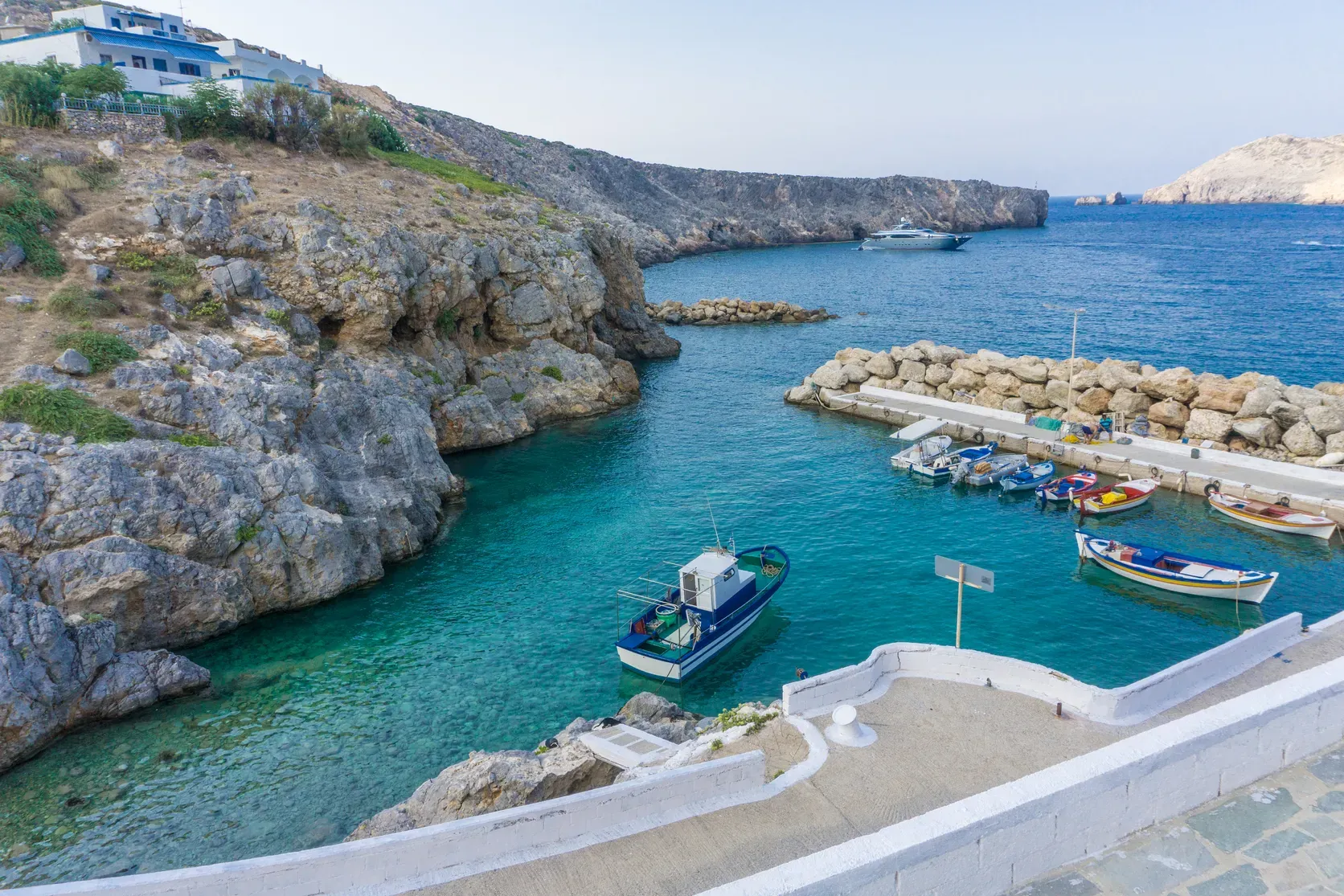
The ferry approaches Potamos, the islands main port and largest settlement. White traditional houses with blue windows -with architecture reminiscent of neighboring Kythera- blend with a unique landscape dominated by mountain and stone. At the little harbor, where boats float in turquoise waters, you won't find big hotels and many restaurants. No vehicle is required since distances are short, and there isn't even a gas station.
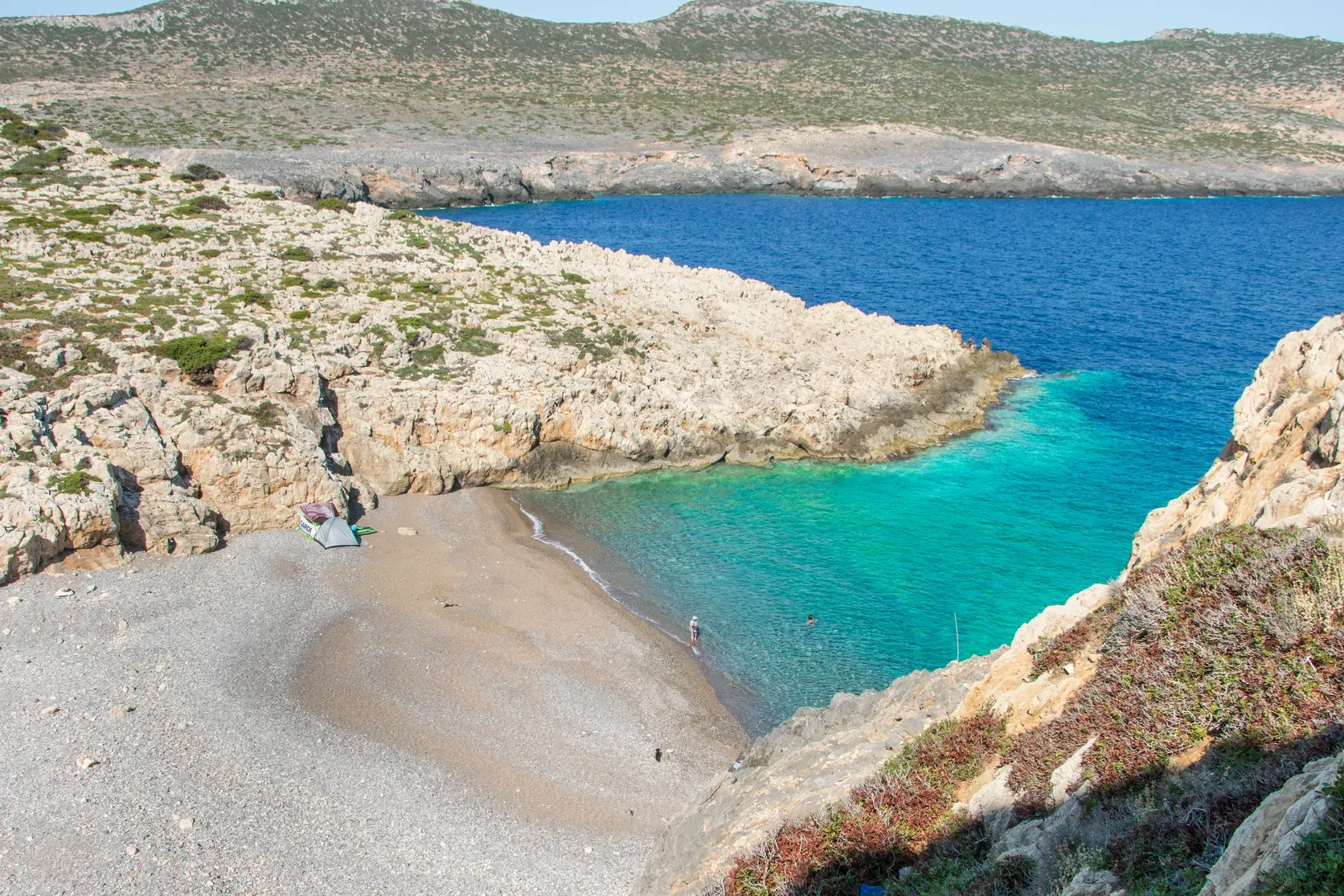
The islands beaches are few, yet striking and with crystal-clear waters. Near the port you can swim at Halara and at Xiropotamos, with its sandy beach between the rocks. Kamarela beach is hard to reach and rocky, but its waters will reward you.
Trails and attractions
On the island you'll walk paths that lead to more places than you can imagine. About 2 km from Potamos you'll come upon the Kastro, the ancient fortified city that has survived almost entirely. In the bay of Xiropotamos lay the port of ancient Aigila, where sections of walls survive that are thought to have belonged to the sanctuary of Apollo Aigileus, whose statue was discovered in the area.
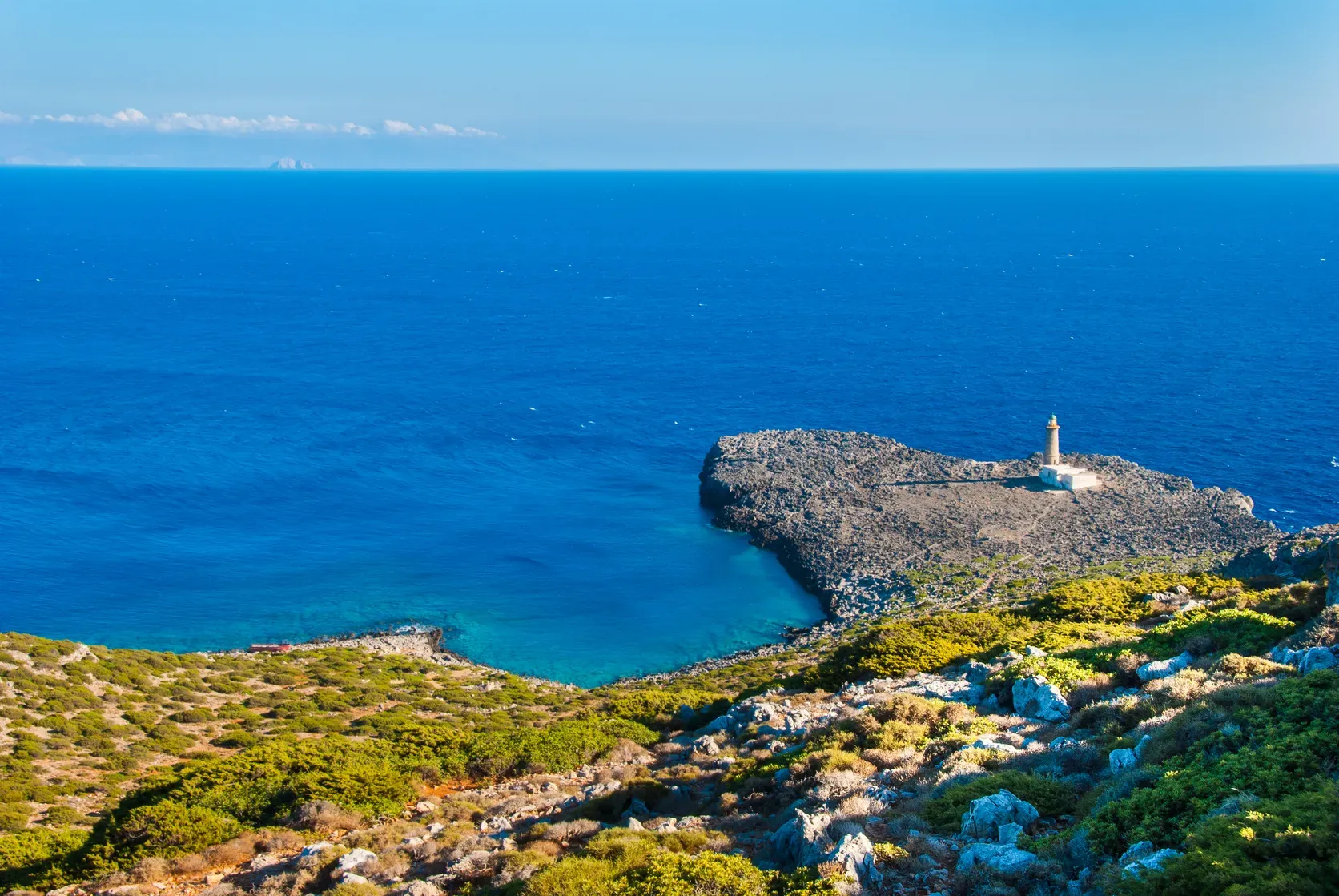
At the southernmost tip of Antikythera stands the islands symbol, the Lighthouse of Cape Apolytaras. It is one of the most historic lighthouses in Greece, built in 1926. You can reach it via a hiking trail set against a backdrop of wild landscape and feral goats, and admire the view of the endless blue. The islands location favors the gathering of migratory birds. The old school of Antikythera houses the Ornithological Station, where you can observe 250 bird species.
The Antikythera festival
A site worth visiting on Antikythera is the Holy Monastery of Agios Myron, built in 1693. It is said that Cretan hunters found the Saints silver icon in a cave near the site of the monastery. Since then, it has been kept in the Holy Church, where visitors have the opportunity to venerate it.
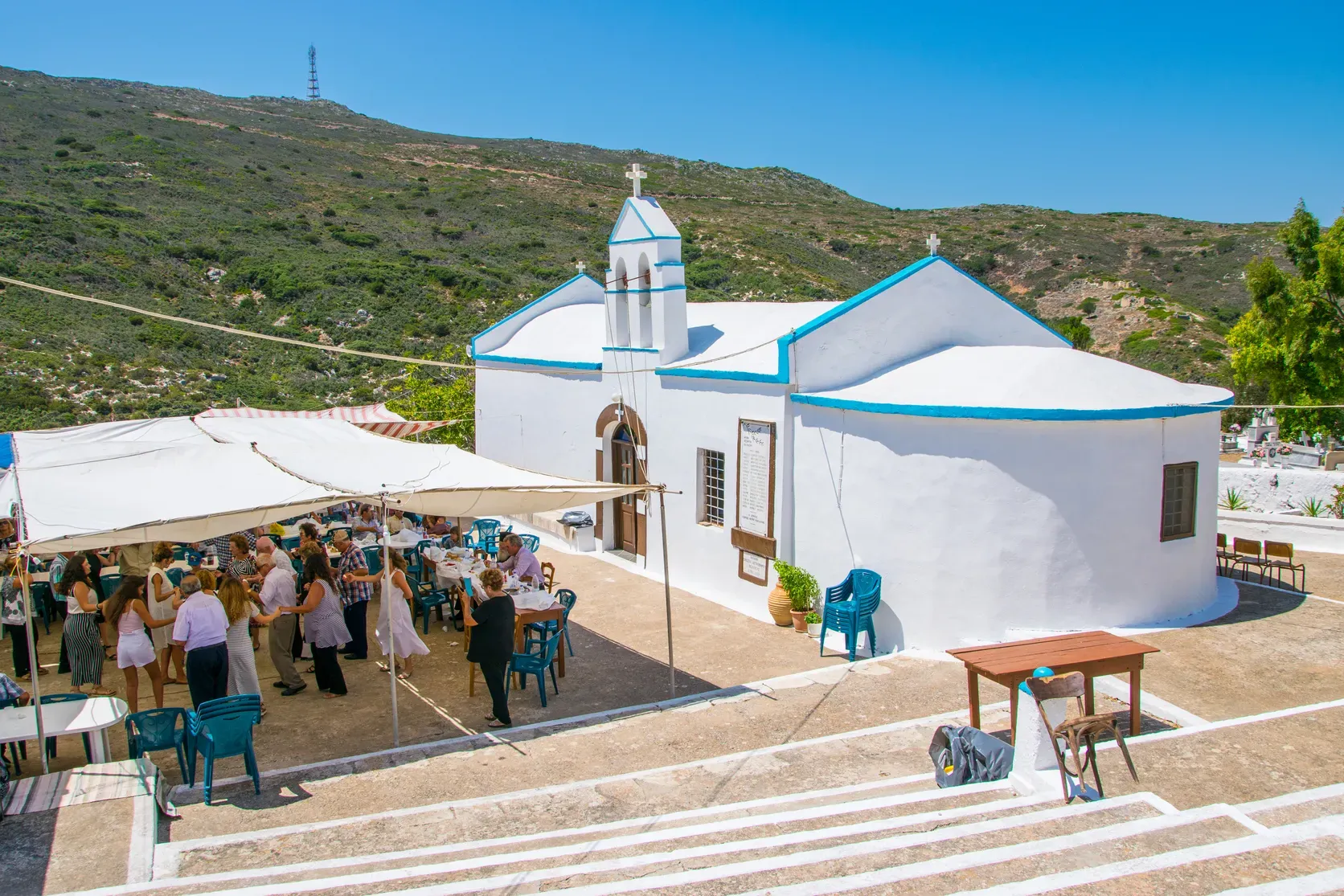
The islands most important days of the year are the two days of the festival of Agios Myron, Antikytheras patron saint, on August 16 and 17. Preparations begin in early August, on the eve the Great Festive Vespers are held and then a feast is set up in the church courtyard, where boiled goat with Cretan pilaf is served. There you'll dance with the locals and visitors to traditional Cretan songs, as Cretans have left an indelible mark on Antikythera.
Local gastronomy
On Antikythera the locals fish and practice beekeeping. Try the catch of the day, local meze as well as their famed thyme honey. However, their specialty is stewed wild goat in red sauce. On the island everyone becomes one group even at mealtimes, since the little tavernas that operate are only two and are located in Potamos.
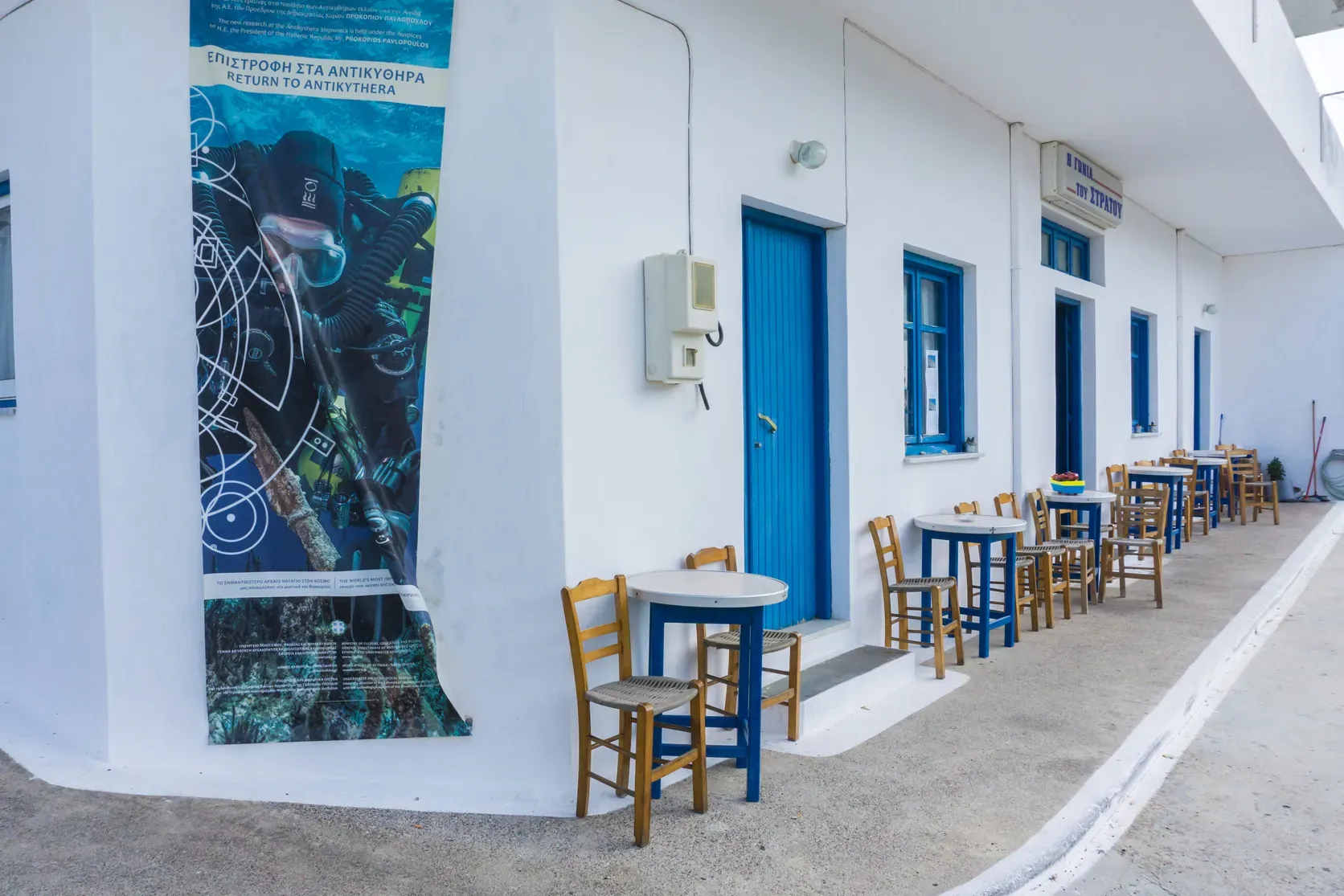
Gonia tou Stratou is a family-run taverna, where owners Dionysis Andronikos and Despina Katsanevaki use produce from their own garden for the cooked dishes and salads they prepare according to the season. There you'll eat everything from local stewed goat to steaks, souvlaki and seafood. One of the very few residents who live on the island in winter, Myron Patakakis, created the Café-grocery «Ta Antikythera» about twenty years ago in his home to serve the locals and not only. At the shop you can shop, but also eat dishes such as stewed goat, steaks, potatoes and omelets.