





Reverent atmosphere, serenity and majestic beauty. Easter in Meteora is the experience of a lifetime.
If you want to experience a serene, devout andspiritual Easter, then Meteora is a destination that will enchant you. The «stone forest» that rises above Kalabaka is a spectacle unique in the world, a marvel of nature and human will.
The famous monasteries built on the summits of the gigantic rocks form the second most important monastic complex in Greece after Mount Athos and one of the principal attractions, not only of Thessaly, but of the whole of Greece. Crowds of tourists arrive all year round to admire the monasteries and the impressive geological formations, to pray, to climb the rocks and to explore the landscape along wonderful paths.
Easter in Meteora
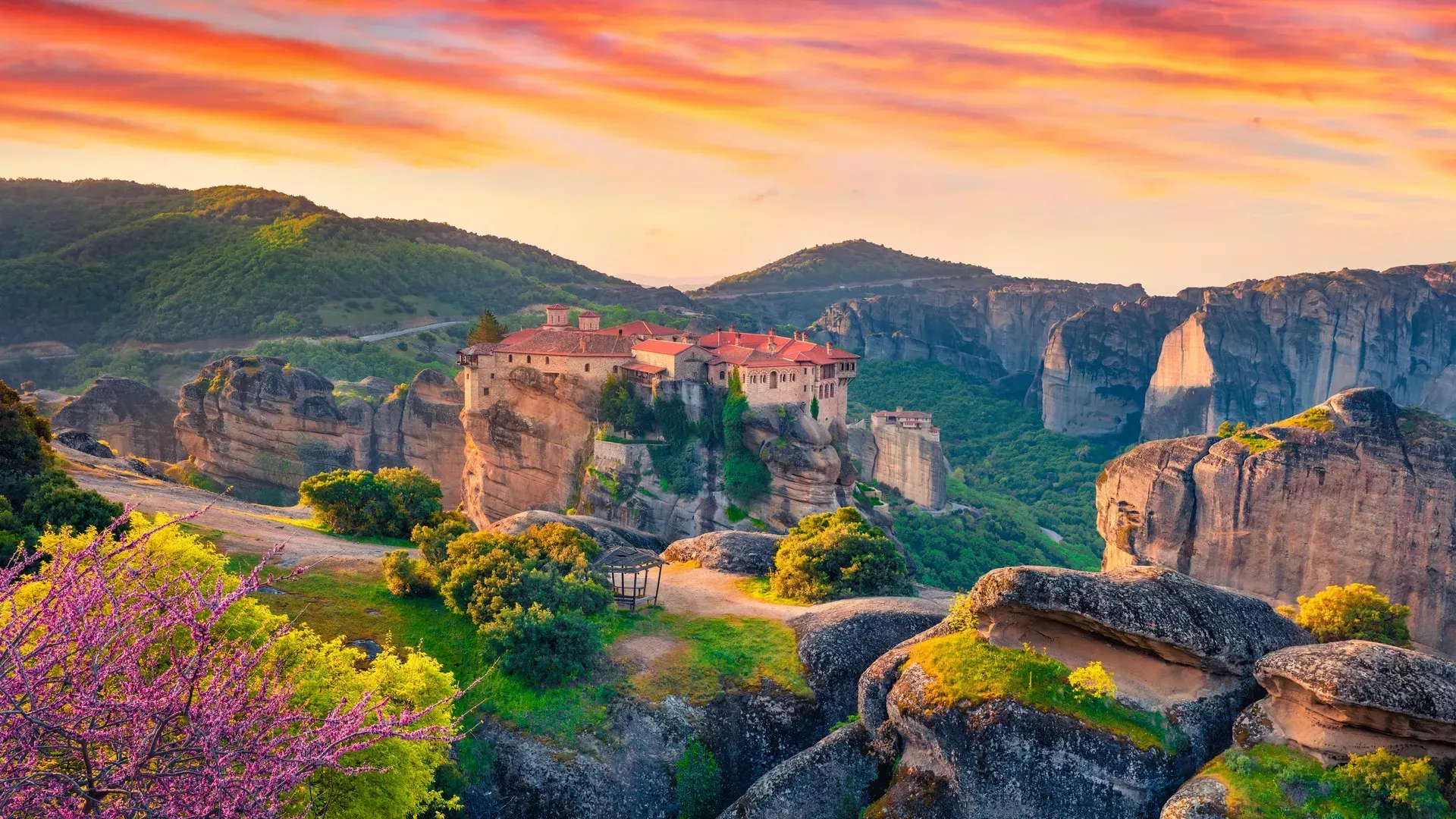
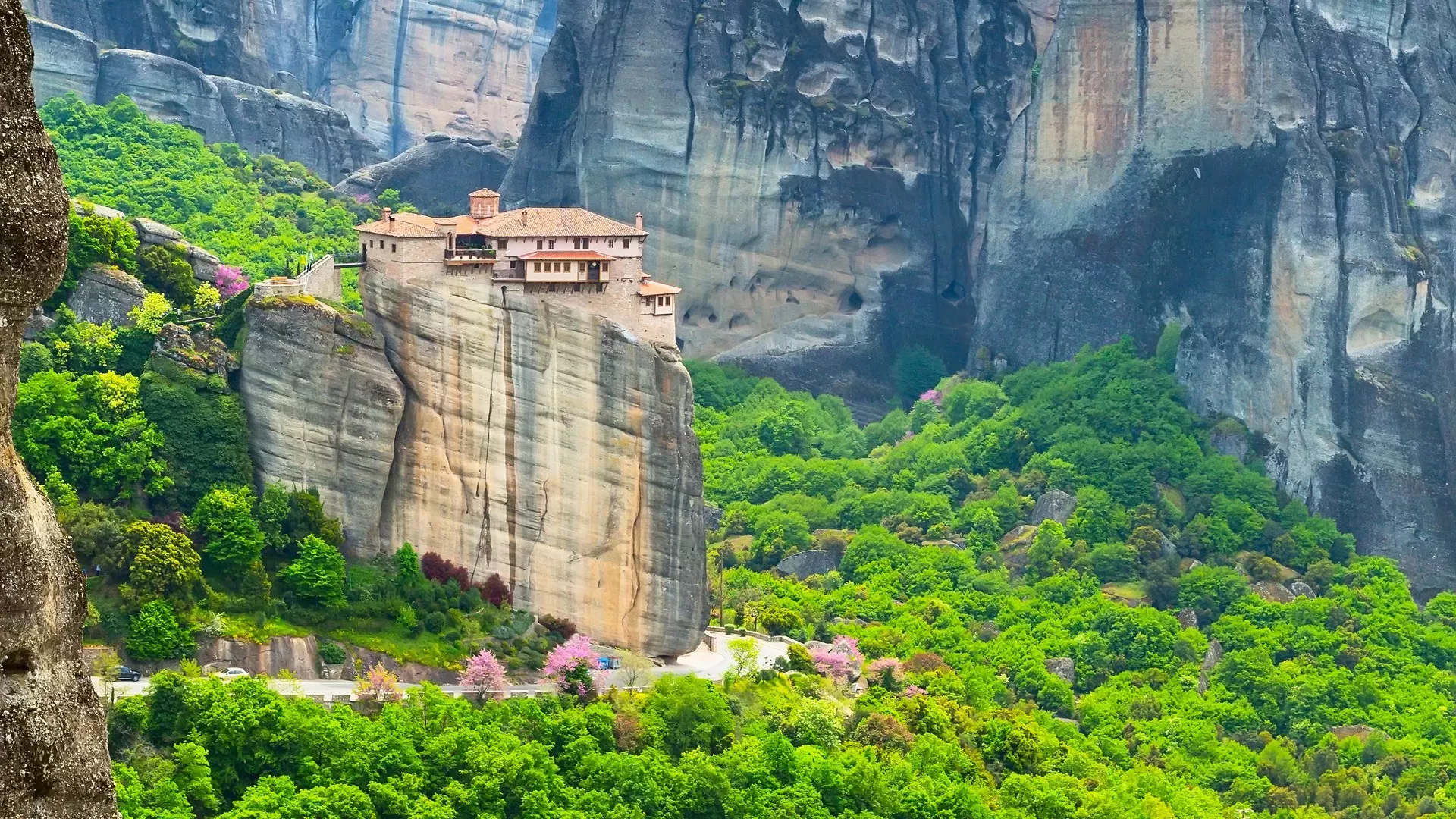
Of the thirty monasteries that existed historically, only six operate today and, since 1988, they have been included on the UNESCO World Heritage list. The mens Monastery of St. Nicholas tou Asmenos, or St. Nicholas Anapafsas Monastery, the Holy Monastery of Rousanos or Arsani, the mens Monastery of the Transfiguration of the Savior, also known as the «Great Meteoron», on the highest rock, the Monastery of All Saints or Holy Monastery of Varlaam, the Holy Monastery of the Holy Trinity, and the womens Holy Monastery of St. Stephen welcome pilgrims. All offer amazing views and each has its own unique atmosphere.
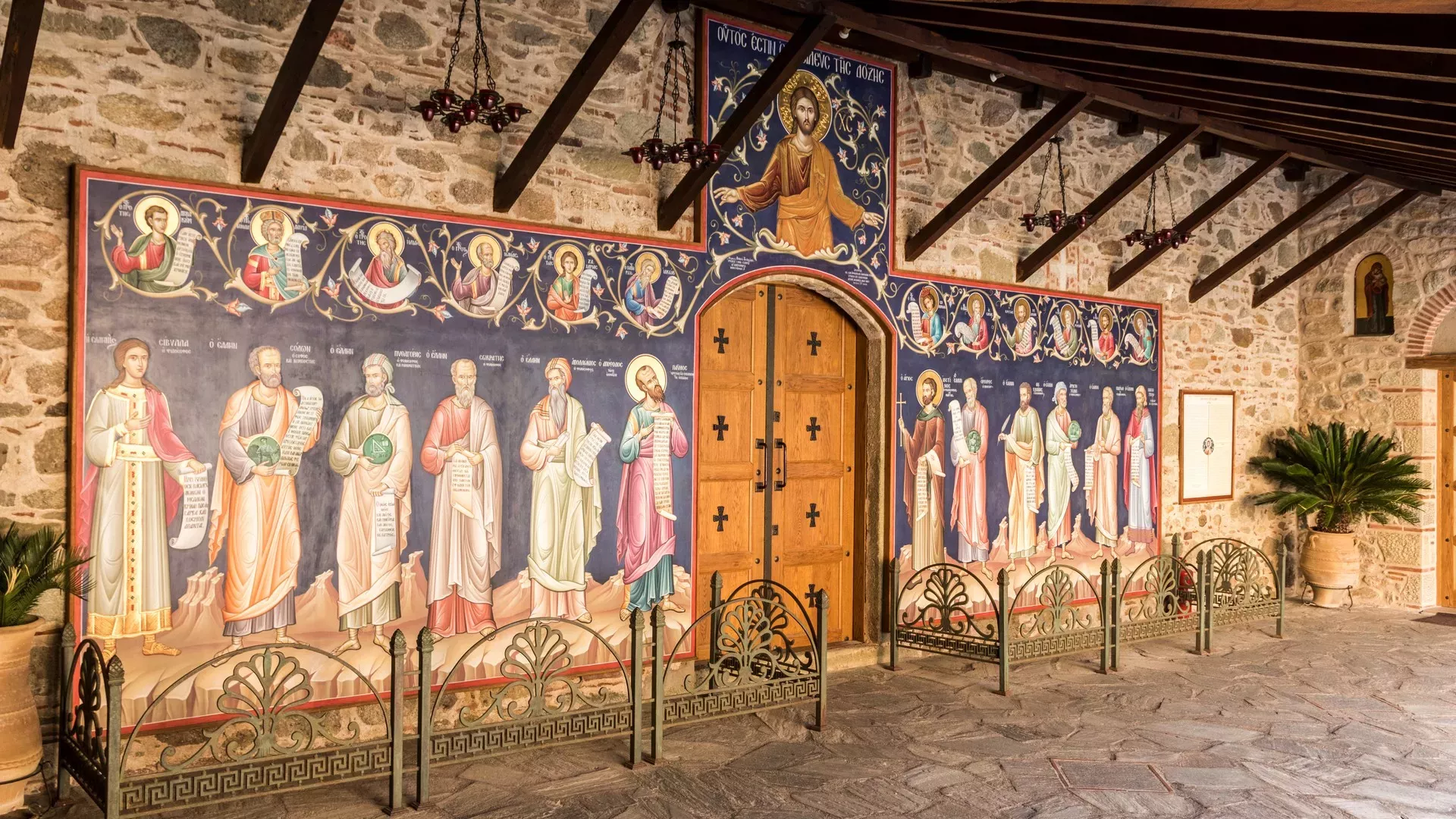
The services in the Meteora monasteries, the wonderful frescoes, the light of the candles and thescent of frankincense create a unique atmosphere. During Holy Week the services begin at 7 in the evening and end around 9.30 at night, while on Holy Saturday the Resurrection service starts at 9 at night. On Holy Thursday it is worth seeing the service of the Last Supper and the Passion at the Holy Monastery of Varlaam. On Good Friday the Epitaphios biers are adorned discreetly and without the usual canopy.
On the night of the Resurrection, we suggest attending the service at the Monastery of the Great Meteoron, the oldest and largest monastery of those operating today, or at the Monastery of St. Stephen, which is easily accessible. On Easter Sunday and in the days that follow, it is worth being in Kastraki and in Kalabaka.
What to do in the area
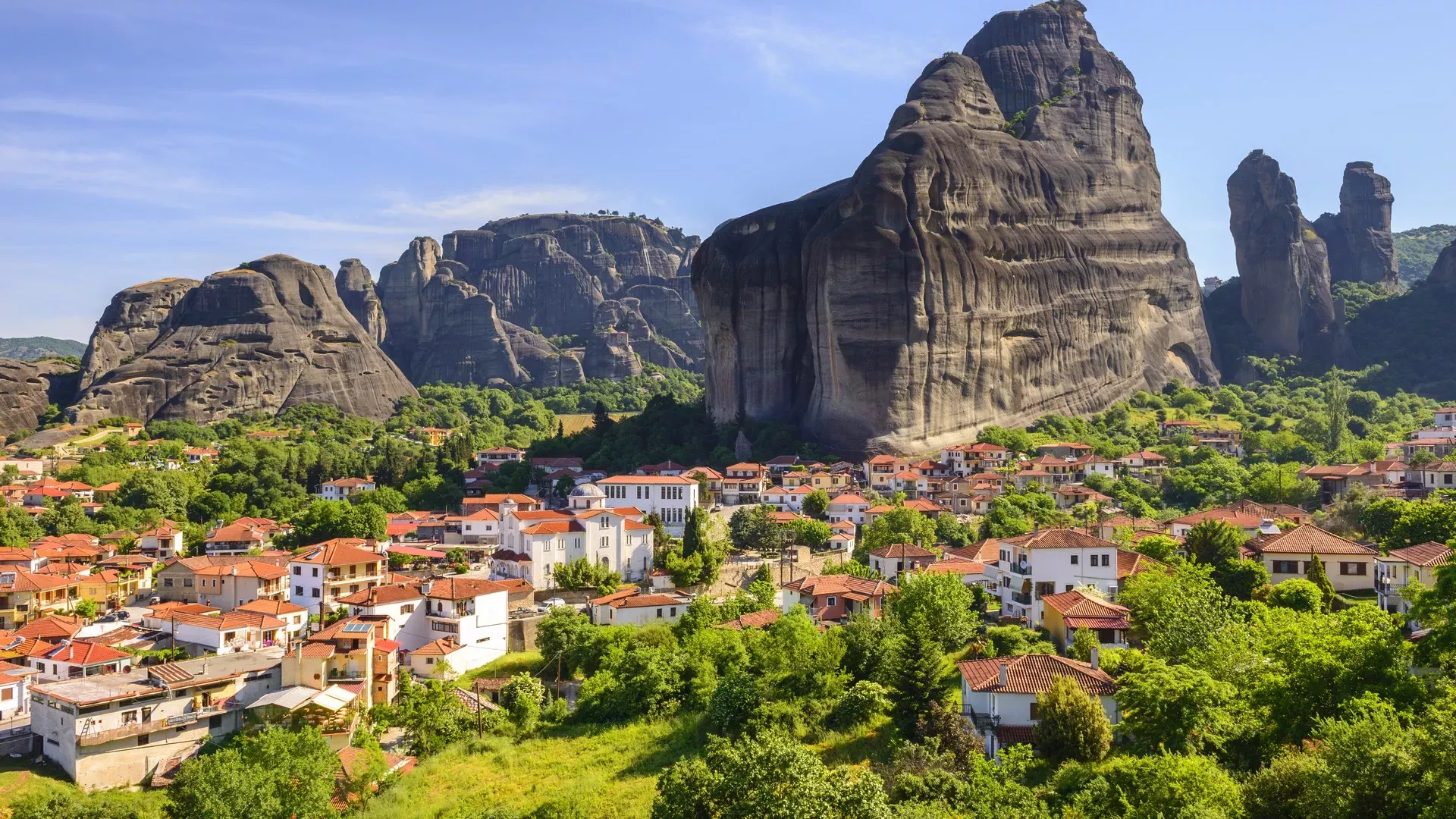
On the western foothills of Meteora, nestled in the embrace of the rocks, lies Kastraki, designated as a protected traditional settlement. It is worth walking through the old settlement, through neighborhoods of mansions with red-tiled roofs, seeing the Meteora Geological History Museum, following the paths between the towering rocks, visiting the small chapels, and tasting traditional recipes together with local tsipouro and wine at the tavernas of the area.
In Kalabaka it is worth taking a stroll in the old town, seeing the woodcarving school that is unique in Greece, as well as the Byzantine Church of the Dormition of the Theotokos. The city is home to the Museum of Greek Education and the Museum of Natural History and Mushrooms.
Using Meteora as your base you can visit Trikala for strolls in the famous lanes of Sakaflias and cycling beside the Litheios River, the villages of Koziakas, Elati and Pertouli, as well as the villages of Aspropotamos. At a distance of 45 minutes from Meteora you will find the stone bridge of Palaiokarya, which is framed by two artificial waterfalls. The imposing single arch bridge that dominates a narrow pass is 26 meters long and has stood there since the 16th century. It is a monument perfectly in harmony with the natural landscape around it.