





Meteora, beyond being the second most important monastic complex in Greece after Mount Athos, is a global geological phenomenon.
The Meteora form one of Greece's most spectacular natural landscapes and are counted among the world's most important geological and cultural monuments. The gigantic rocks that rise imposingly above the plain of Thessaly inspire awe in visitors, while their origin remains the subject of scientific research.
The name «Meteora» is attributed to Saint Athanasios the Meteorite, founder of the Holy Monastery of Great Meteoron. When he first climbed the imposing rock of Platy Lithos, around 1344, he described it as «Meteoron», meaning suspended in the sky, a name that eventually prevailed for the entire area.
The geological formation of Meteora
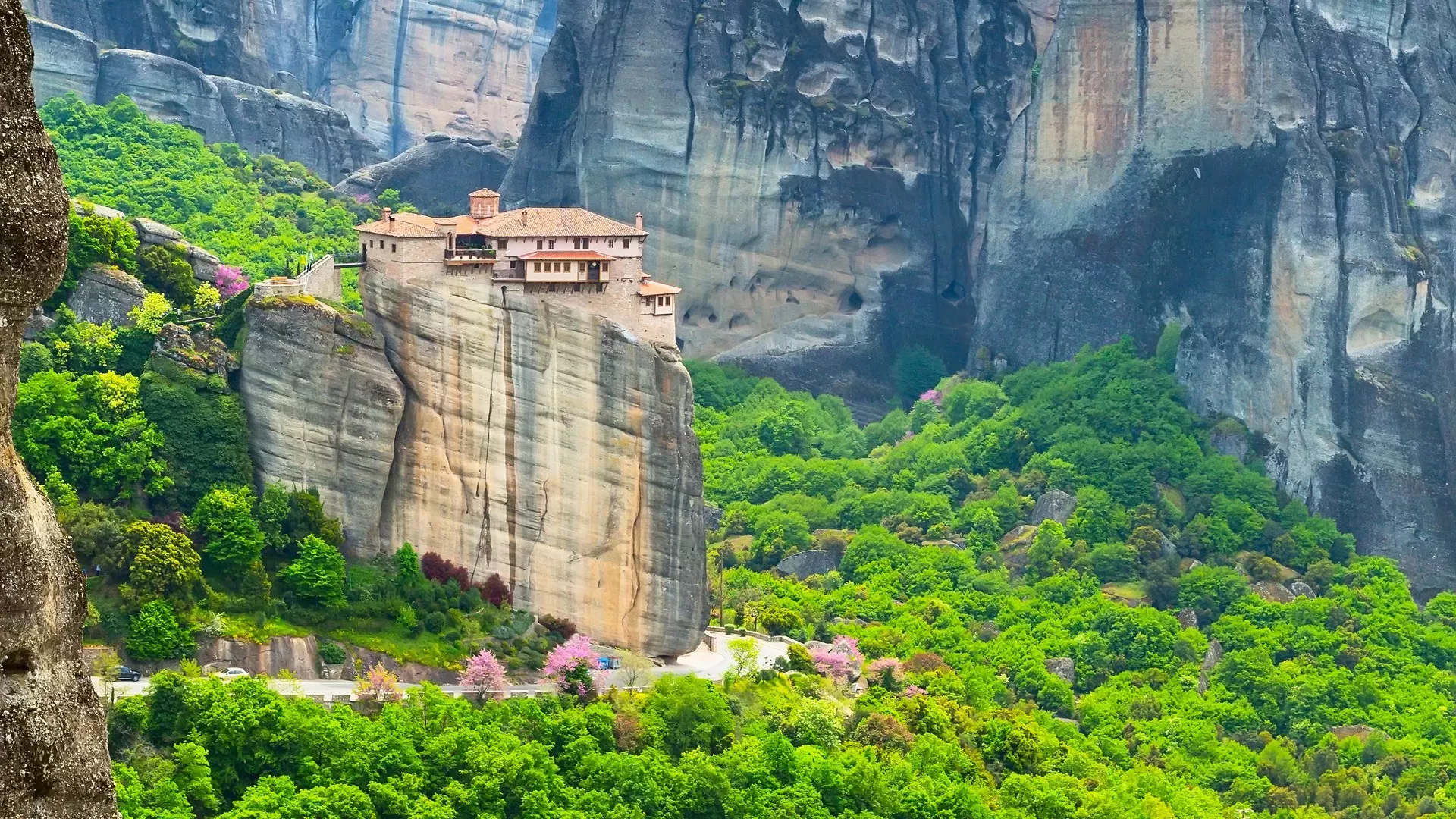
The most widely accepted scientific theory for the formation of Meteora was formulated in the late 19th century by the German geologist Alfred Philippson. According to his view, about 25 to 30 million years ago the region of Thessaly was covered by an extensive marine basin. Rivers descending from the surrounding mountain ranges carried vast quantities of pebbles, sand, gravel, and calcareous material, gradually creating a large deltaic formation.
During the intense tectonic changes that accompanied the formation of the Pindus mountain range, the entire area was uplifted. The waters retreated toward the Aegean and these sedimentary rocks were exposed to the elements.
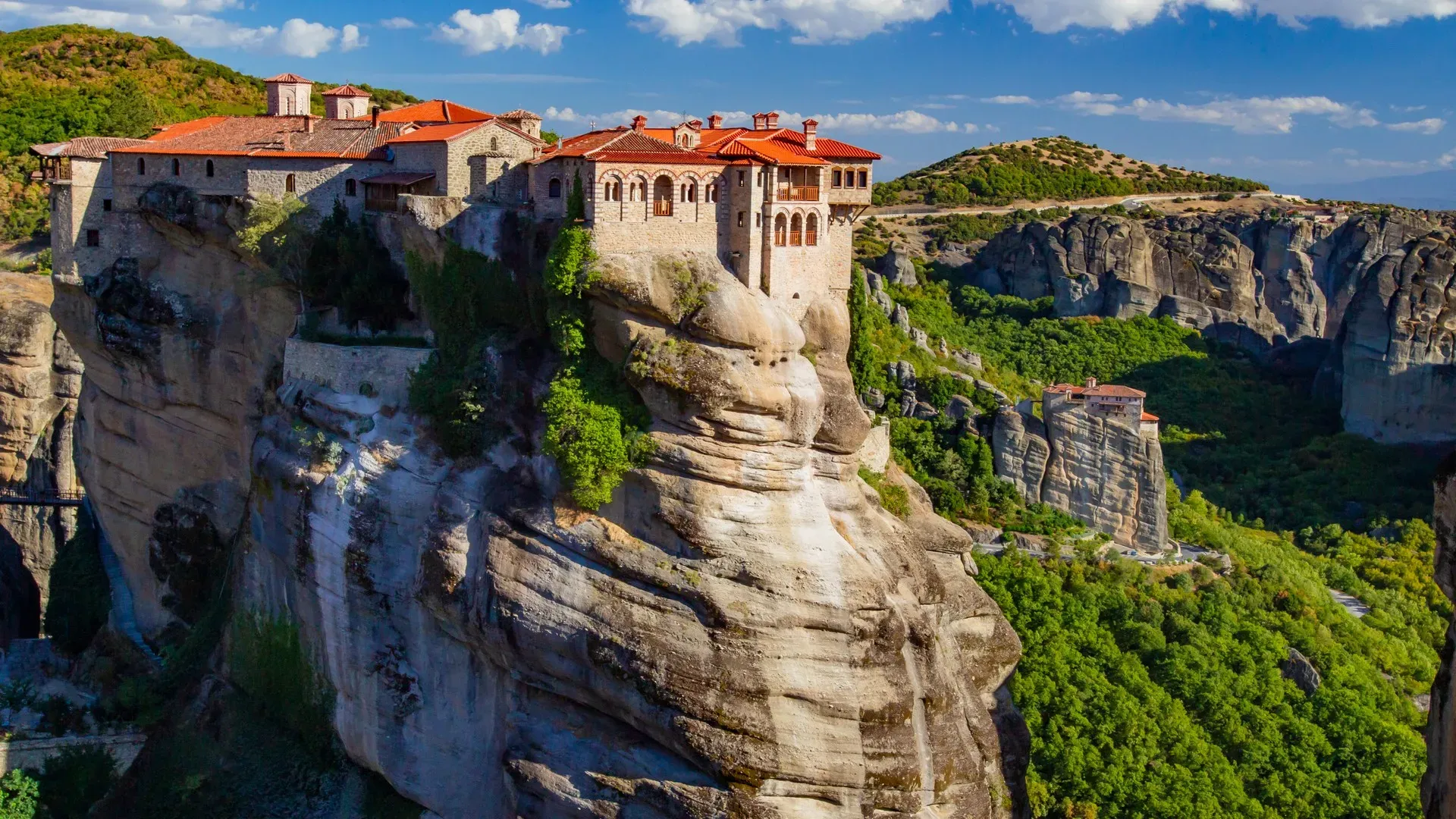
For millions of years, wind, rain, large temperature fluctuations, and erosion by water shaped the enormous rocky pillars we see today. The more resistant rocks remained standing, while the softer ones eroded, creating the sheer cliffs, ravines, and impressive natural "sculptures" that characterize Meteora.
Between the rocks the valley of the Pineios River formed, while on the summits of several rocks fossilized marine shells have been found, confirming that the area was once beneath the sea's surface.
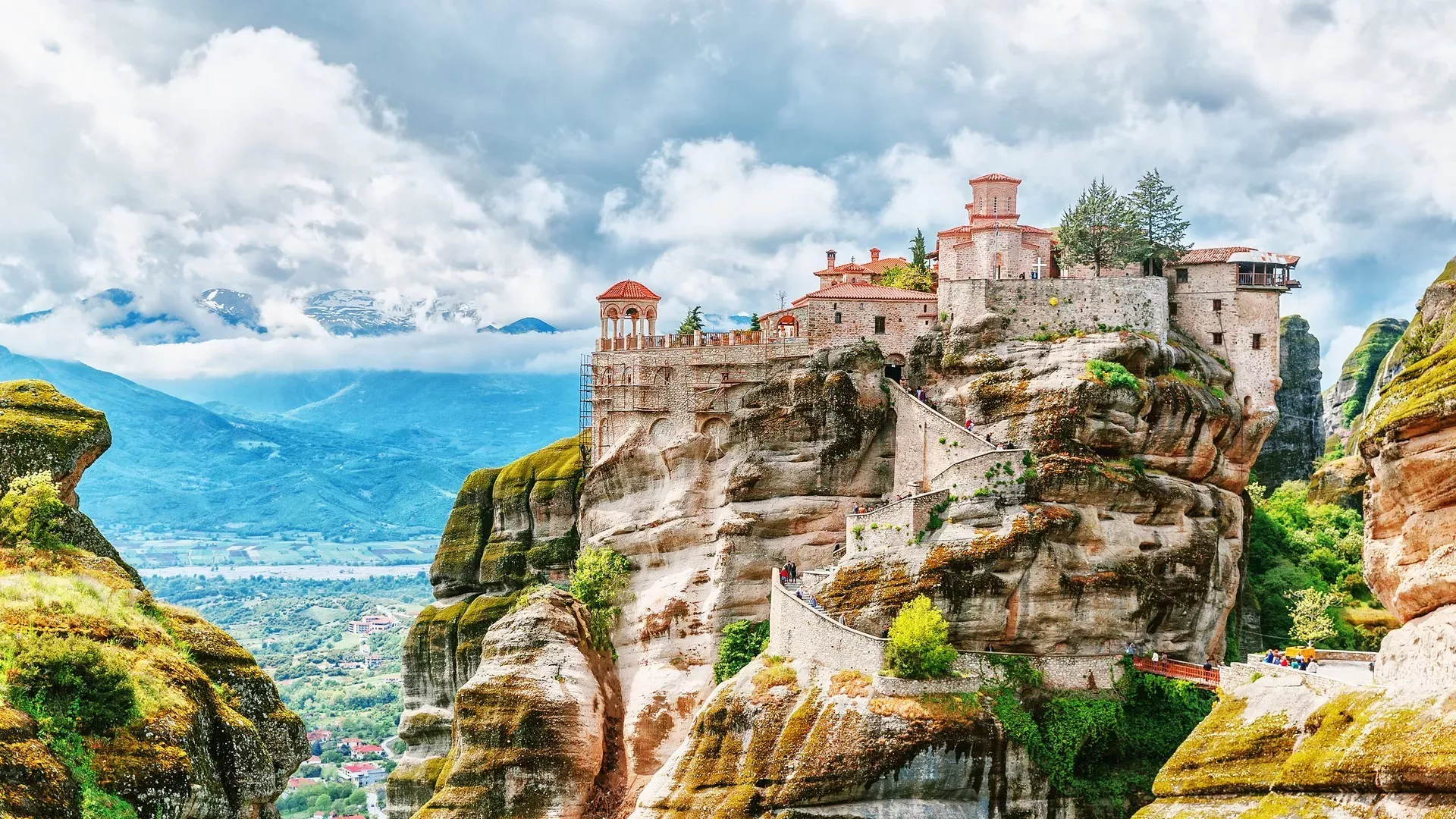
What makes Meteora so special isn't only the height of its rocks but also their distinctive morphology. The almost vertical rock formations create a landscape that's hard to encounter anywhere else in the world. The unique coexistence of natural environment and human creation led to Meteora's recognition as a UNESCO World Heritage Site in 1988, as they represent an exceptional combination of geological, historical, architectural, and religious heritage.
The first hermits at Meteora
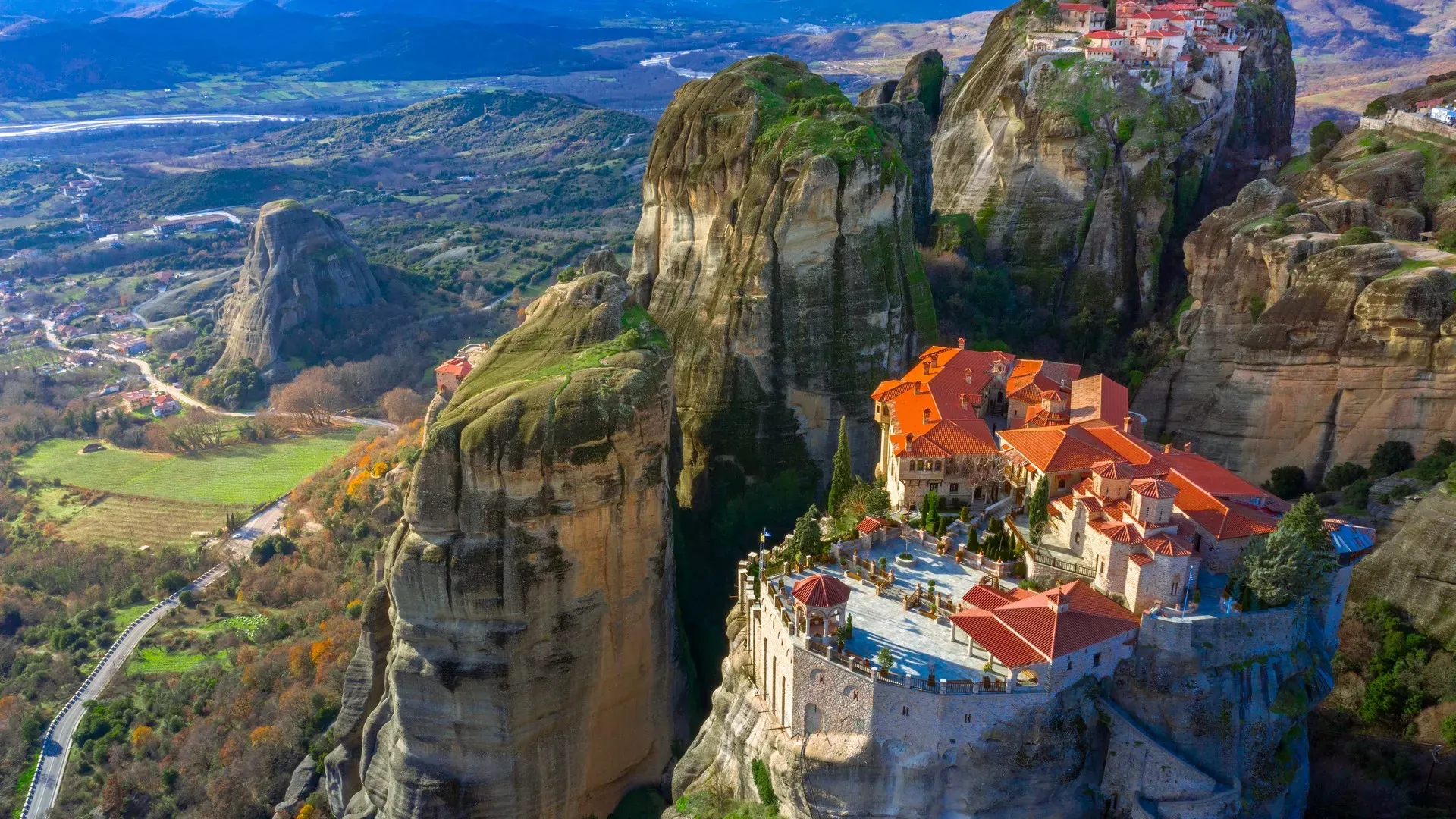
The precipitous rocks provided an ideal refuge for people seeking safety and seclusion. From the 10th and 11th centuries, the first hermits and ascetics appeared, who settled in natural caves, fissures, and small hollows in the rocks.
At first they lived alone, devoted to prayer and ascetic practice. They created small chapels, known as 'oratories', where they held their services and prayed not only for their own salvation but for the whole world. Their daily life was especially arduous, as reaching the summits demanded great physical effort and living conditions were extremely austere.
The development of the monasteries
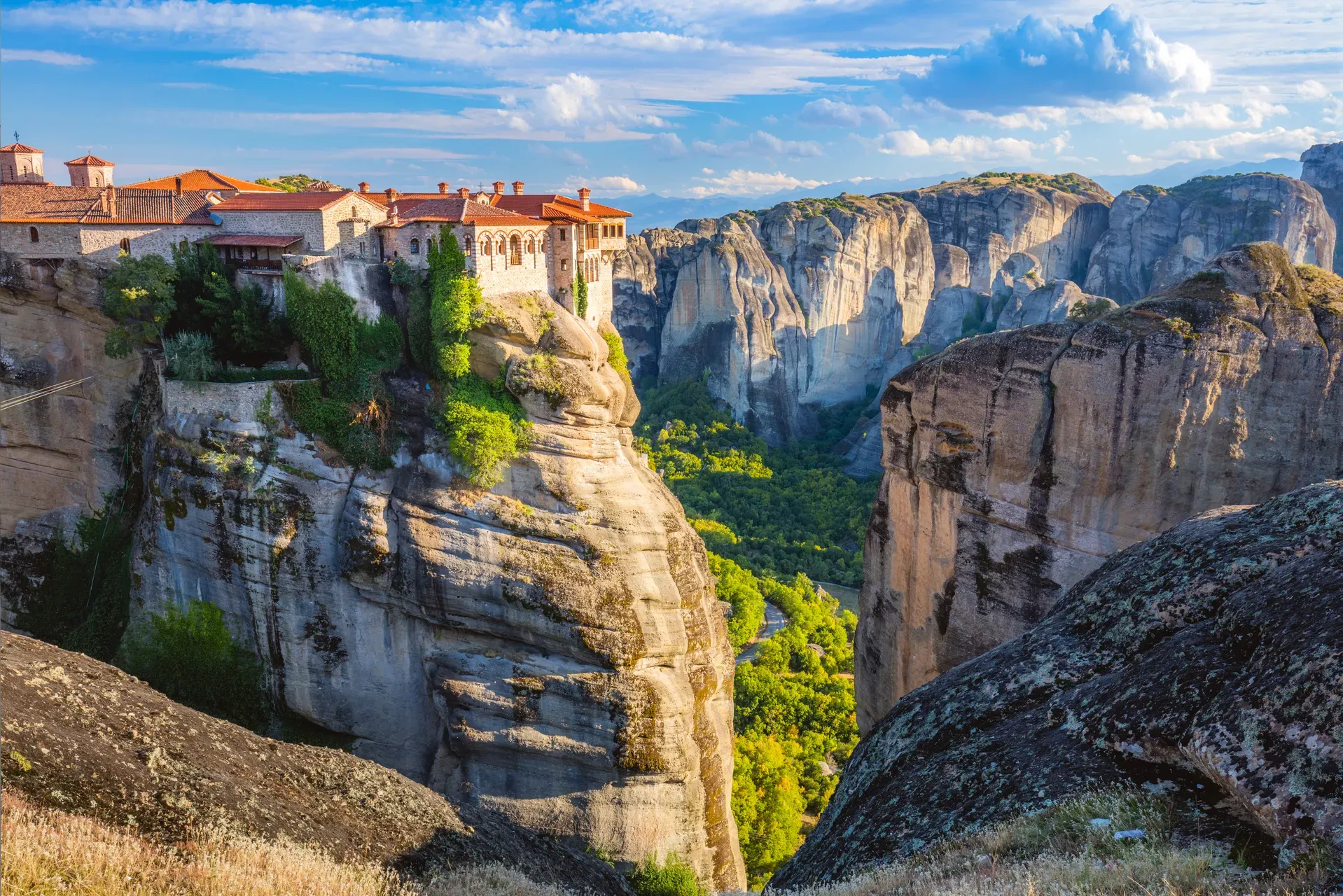
From the 14th century onward, monasticism at Meteora flourished. Saint Athanasios the Meteorite founded the Monastery of Great Meteoron, which became the area's most important monastic center. Gradually, other monasteries followed, and by the 16th century a total of 24 monasteries were operating.
Building the monasteries on the rock summits didn't only serve the needs of spiritual seclusion. It also offered protection from raids and the upheavals of the era, as the rocks acted as natural fortresses. For many centuries, access to the monasteries was particularly difficult. The monks used rope ladders, ropes, pulleys, and large nets to transport people and goods. Only in the first decades of the 20th century were the carved steps constructed that facilitated visitor access.
The monasteries operating today
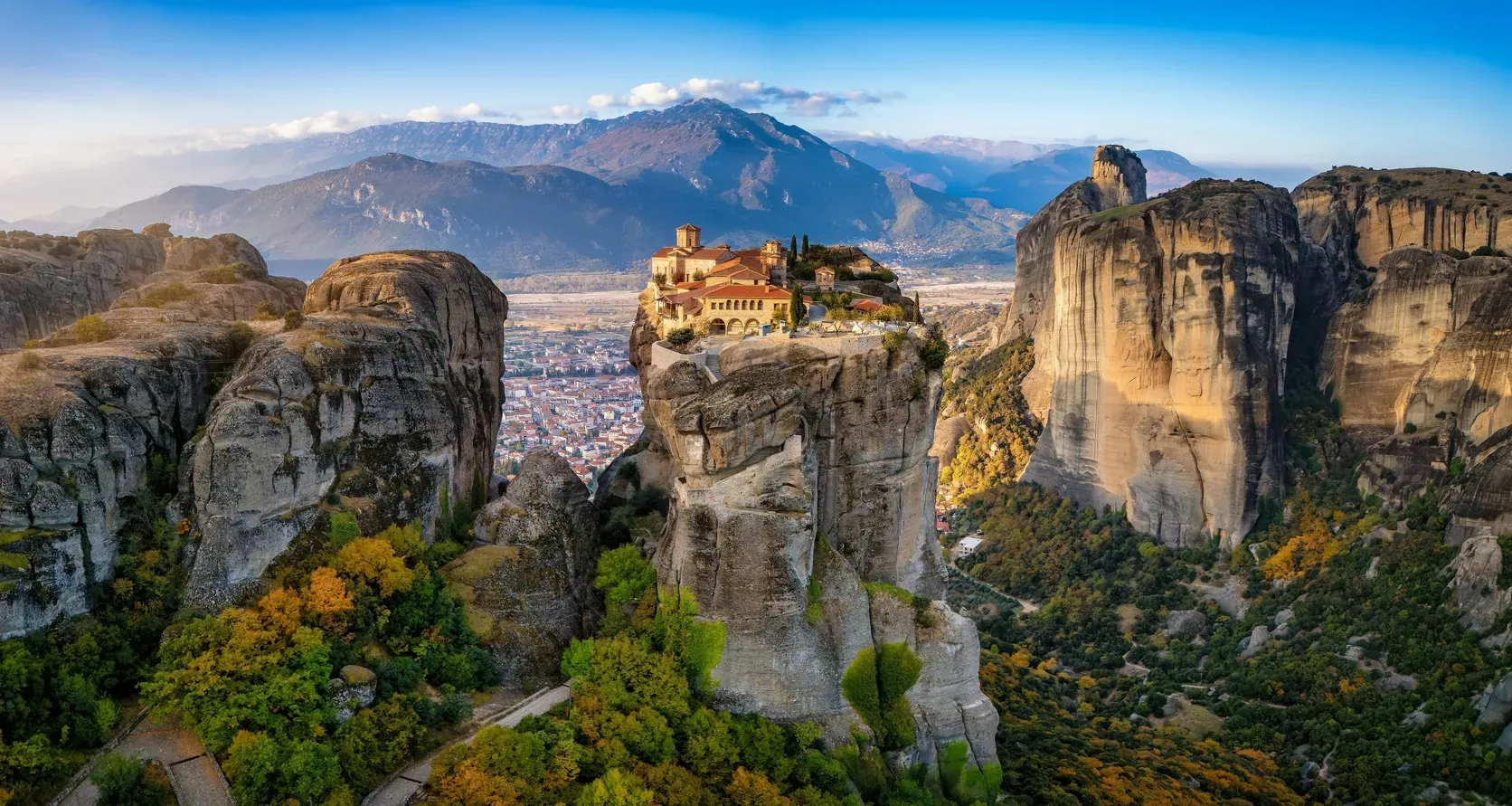
The decline of Meteora monasticism began in the 18th century, while several monasteries suffered significant damage and looting, particularly in the early 19th century, during the period of Ali Pasha. Today, of the 24 historic monasteries, six remain active; they are living monuments of the Orthodox tradition and welcome hundreds of thousands of visitors from around the world every year.
The four men's monasteries are:
- Holy Monastery of Great Meteoron (Transfiguration of the Savior)
- Holy Monastery of Varlaam
- Holy Monastery of the Holy Trinity
- Holy Monastery of Saint Nicholas Anapafsas
The two women's monasteries are:
- Holy Monastery of Rousanou
- Holy Monastery of Saint Stephen
Inside them are preserved invaluable works of post-Byzantine art, with outstanding frescoes painted by eminent iconographers such as Theophanes the Cretan and Frangos Katelanos.