





Hiking in the Samaria Gorge, amid the wild nature of Crete's White Mountains National Park, is a once in a lifetime experience for nature lovers and hikers from every corner of the world.
Hiking the famous Samaria Gorge isn't just a walk in nature. Crossing it is a one-of-a-kind experience that reveals the most authentic and untamed face of Crete. A National Park since 1962 and a unique natural monument with rich flora and fauna, Samaria Gorge (also known as "Faraggas") draws nature lovers and hikers from every corner of the globe, who flock by the thousands from May to October to walk one of the most impressive gorges in Greece, and one of the largest in Europe (its total length reaches 18 km).
Samaria Gorge: The route's top highlights
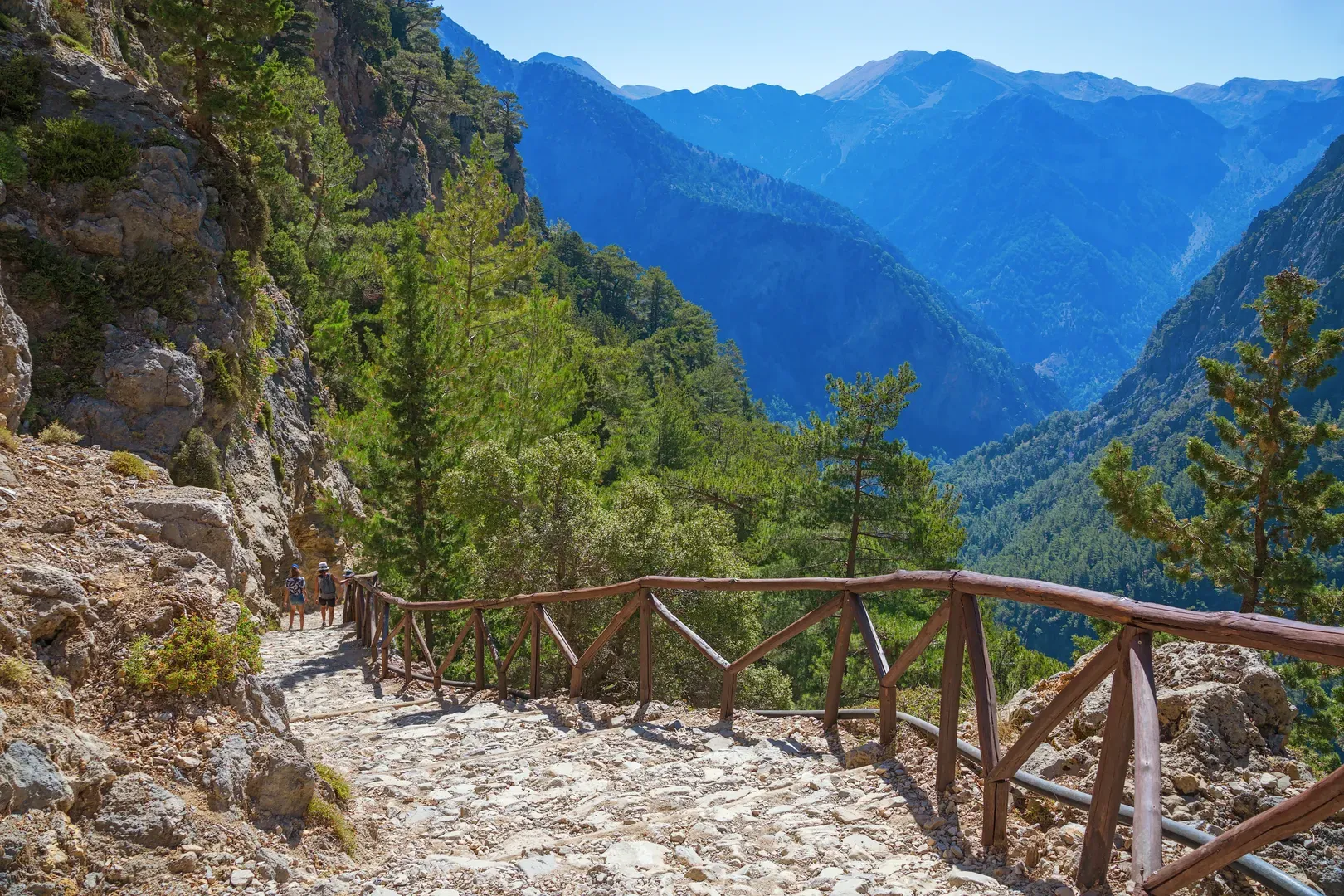
The classic route starts at Xyloskalo, on the Omalos Plateau, at an elevation of about 1,250 meters, and ends at the seaside Agia Roumeli on the shores of the Libyan Sea. The total hiking distance is about 16 kilometers, and an average time to cross the gorge is 5 to 7 hours, depending on your fitness level and the stops you make.
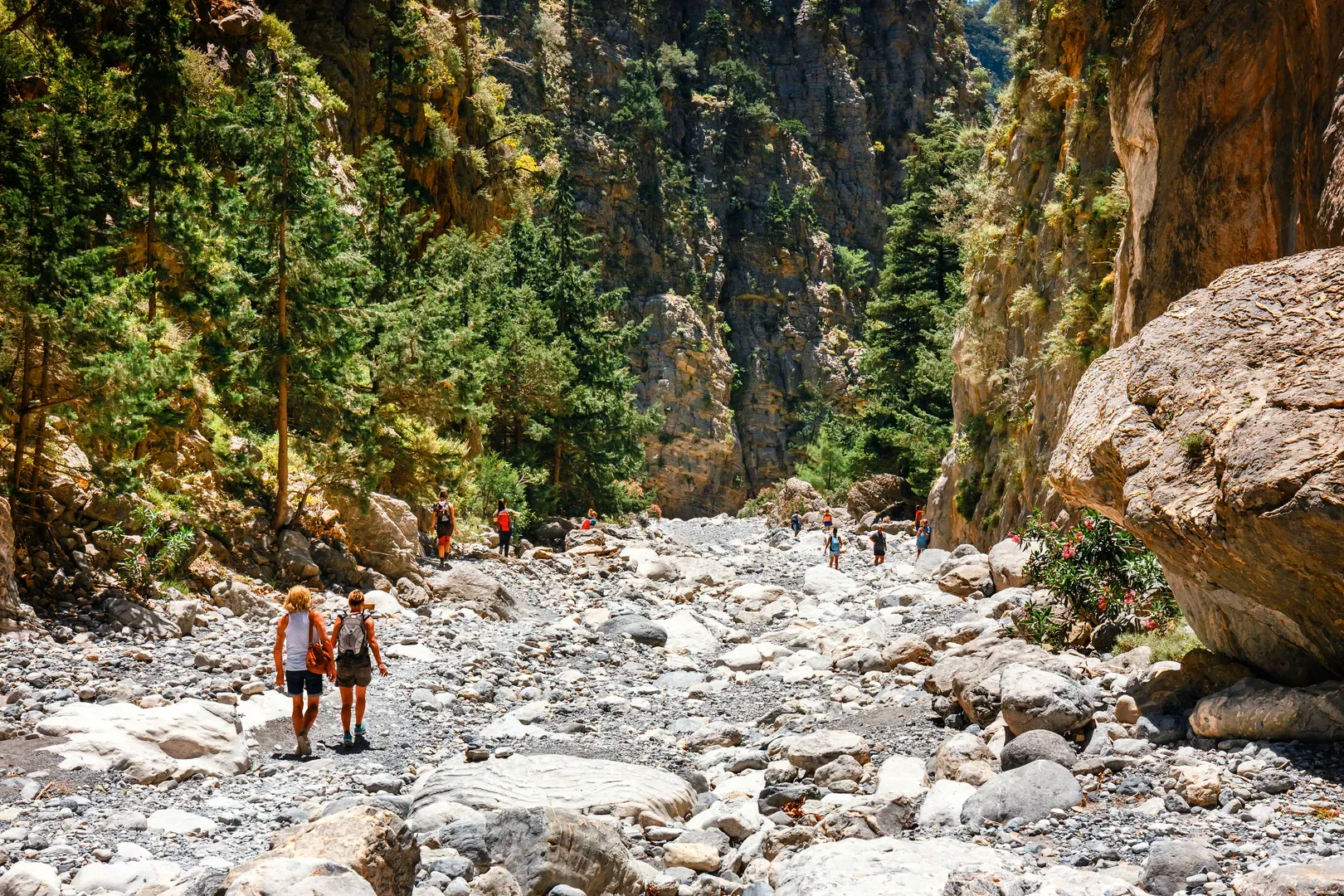
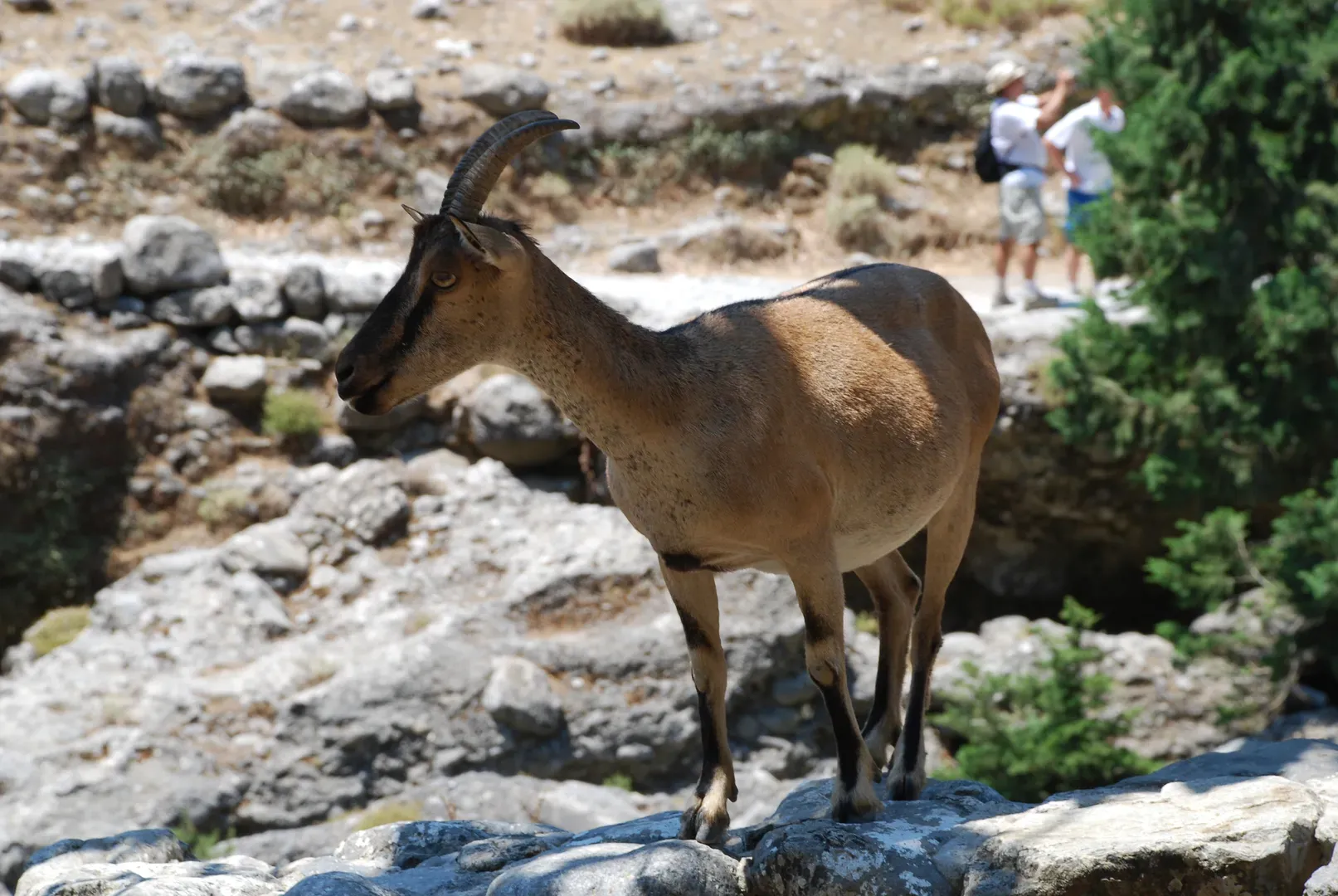
Inside the gorge, there are rest areas where you can stop and relax. If you're lucky, you'll spot the Cretan wild goat, the famed kri-kri. The descent begins with a steep yet dramatic trail through a forest of pines and cypresses. The first kilometers require attention, as the path is rocky and often taxes the knees more than most hikers expect.
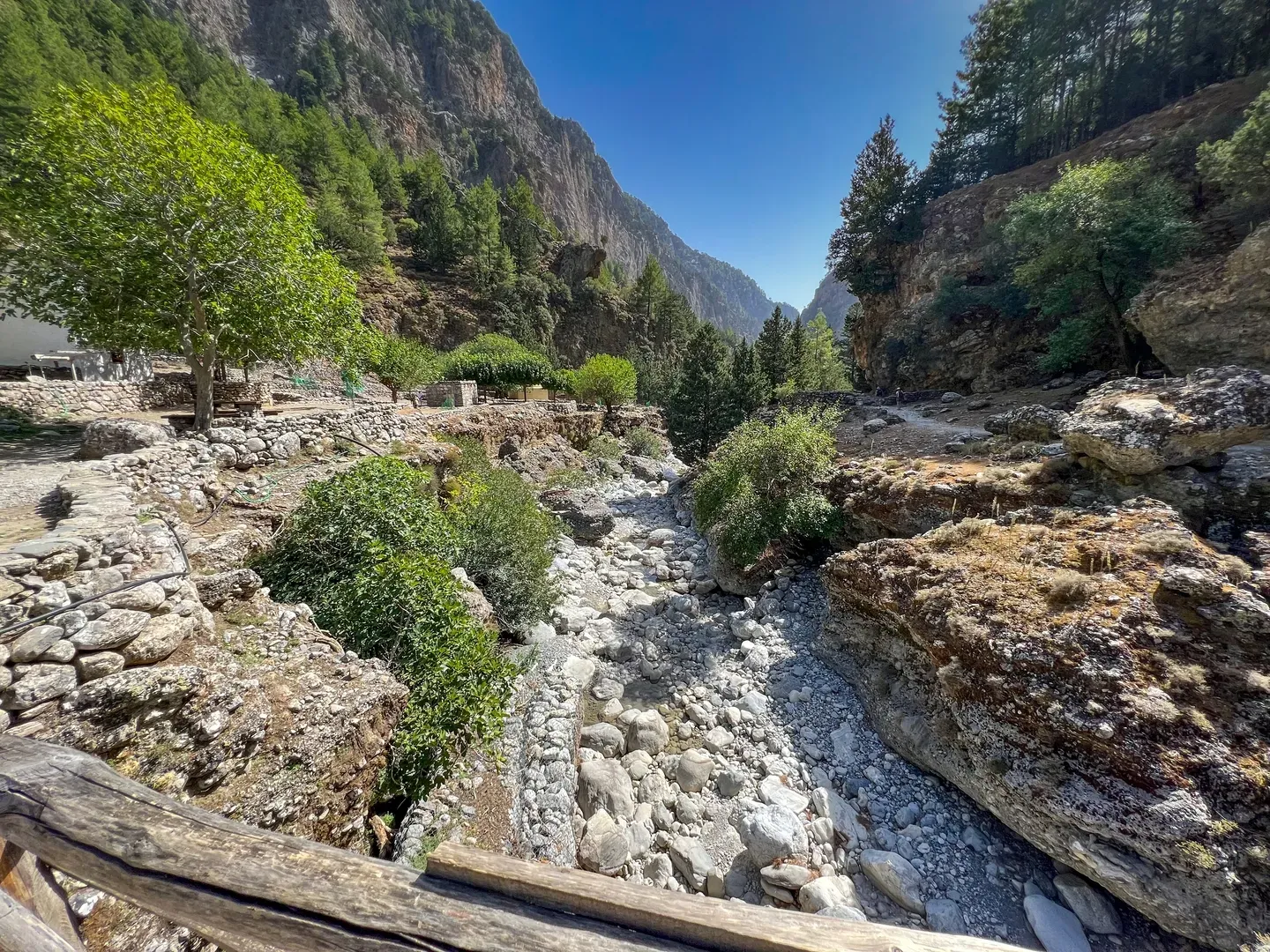
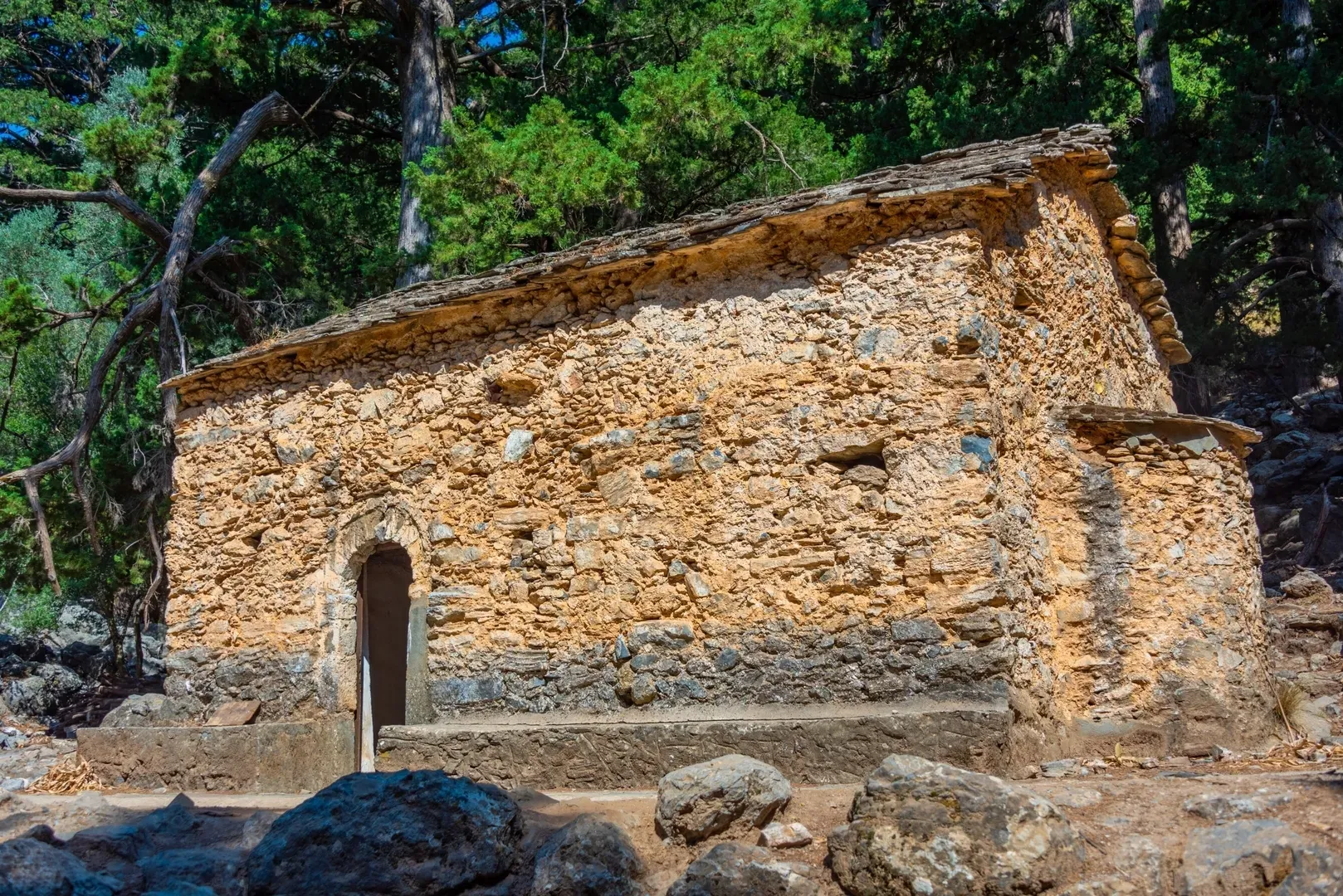
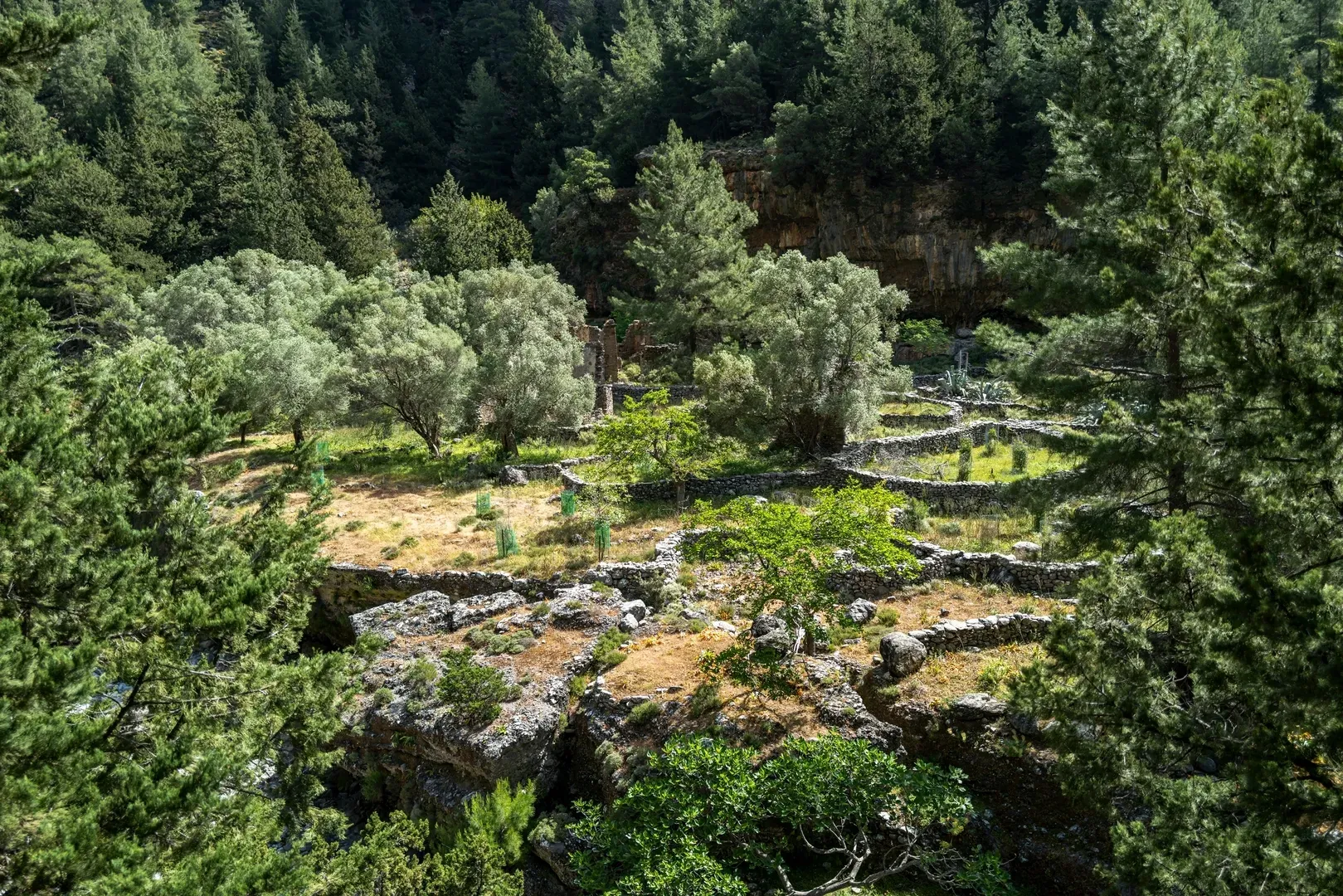
About halfway along the route, the abandoned village of Samaria appears, from which the gorge took its name. The last residents left when the area was declared a National Park. Today, the stone buildings and the historic church of Osia Maria make for an interesting rest stop. From here, the trail follows the riverbed and is mostly rocky.
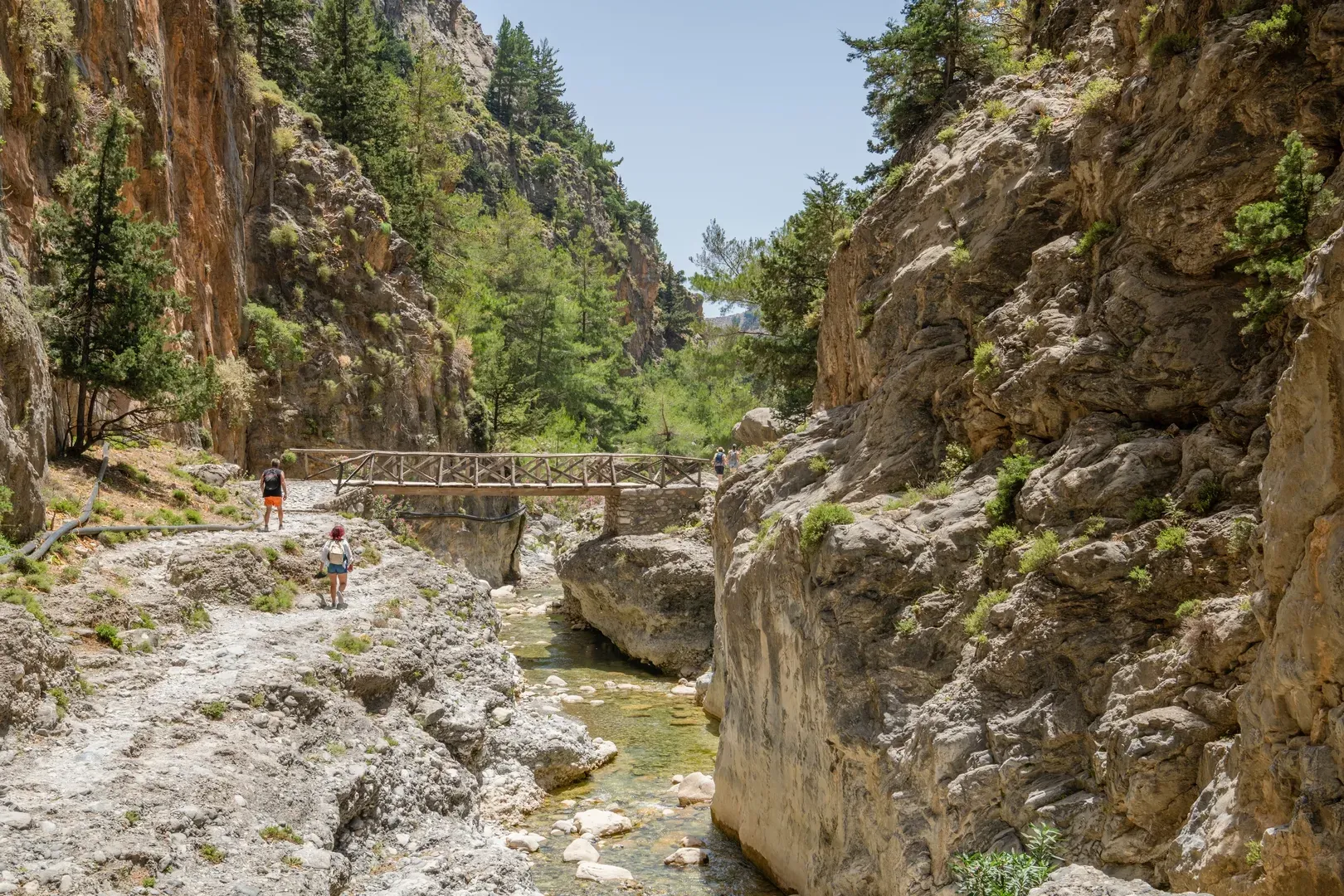
As the route continues, the gorge narrows more and more until its most famous point: the renowned "Gates" or "Iron Gates". Here the sheer cliffs rise to around 300 meters, while the width of the passage narrows to just a few meters. It's the most photographed spot on the route and one of Crete's most striking natural landscapes.
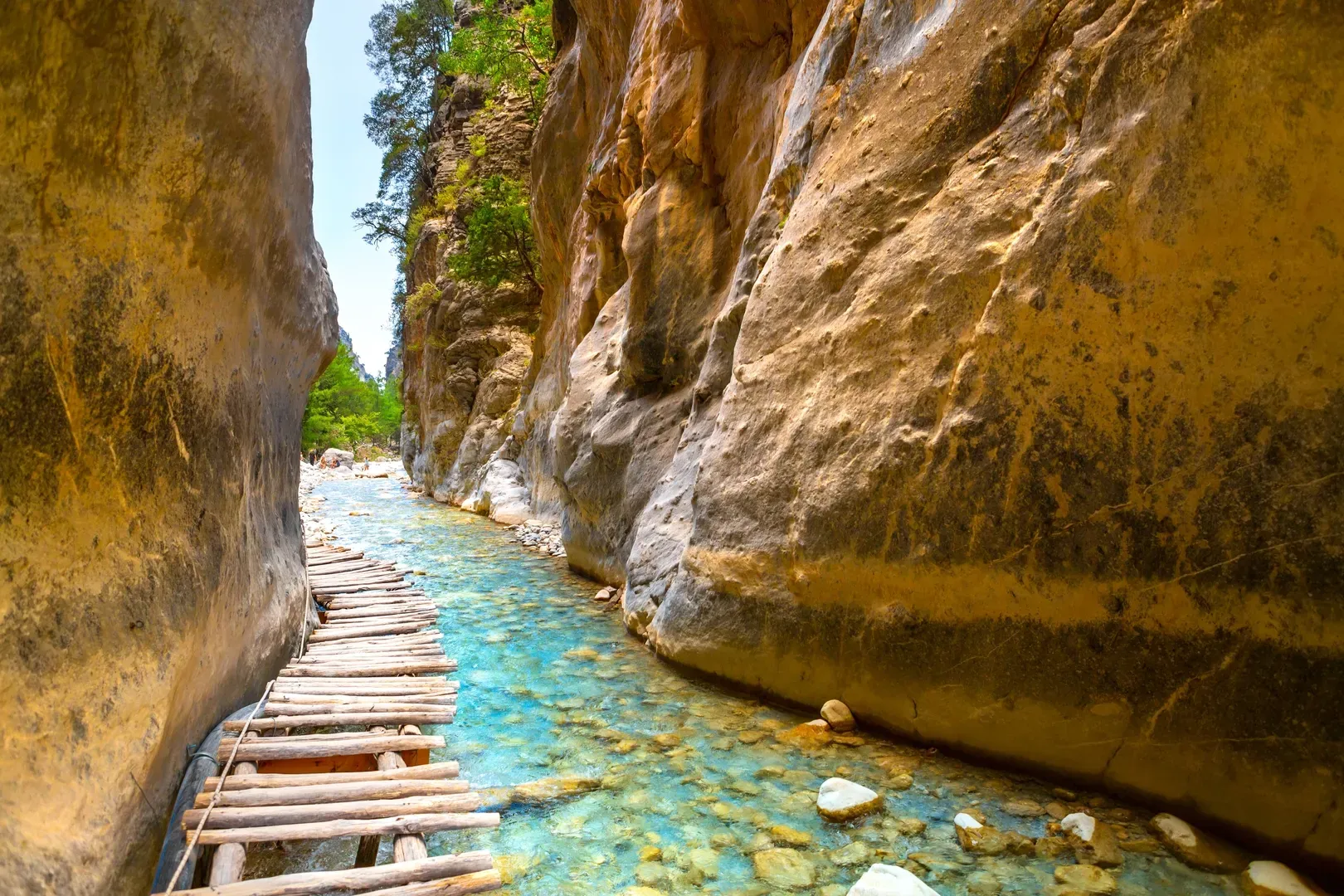
After the Gates, the trail becomes gentler and gradually leads to the exit of the gorge and to Agia Roumeli, where most hikers enjoy a dip in the waters of the Libyan Sea before boarding the return boat.
What you need to know
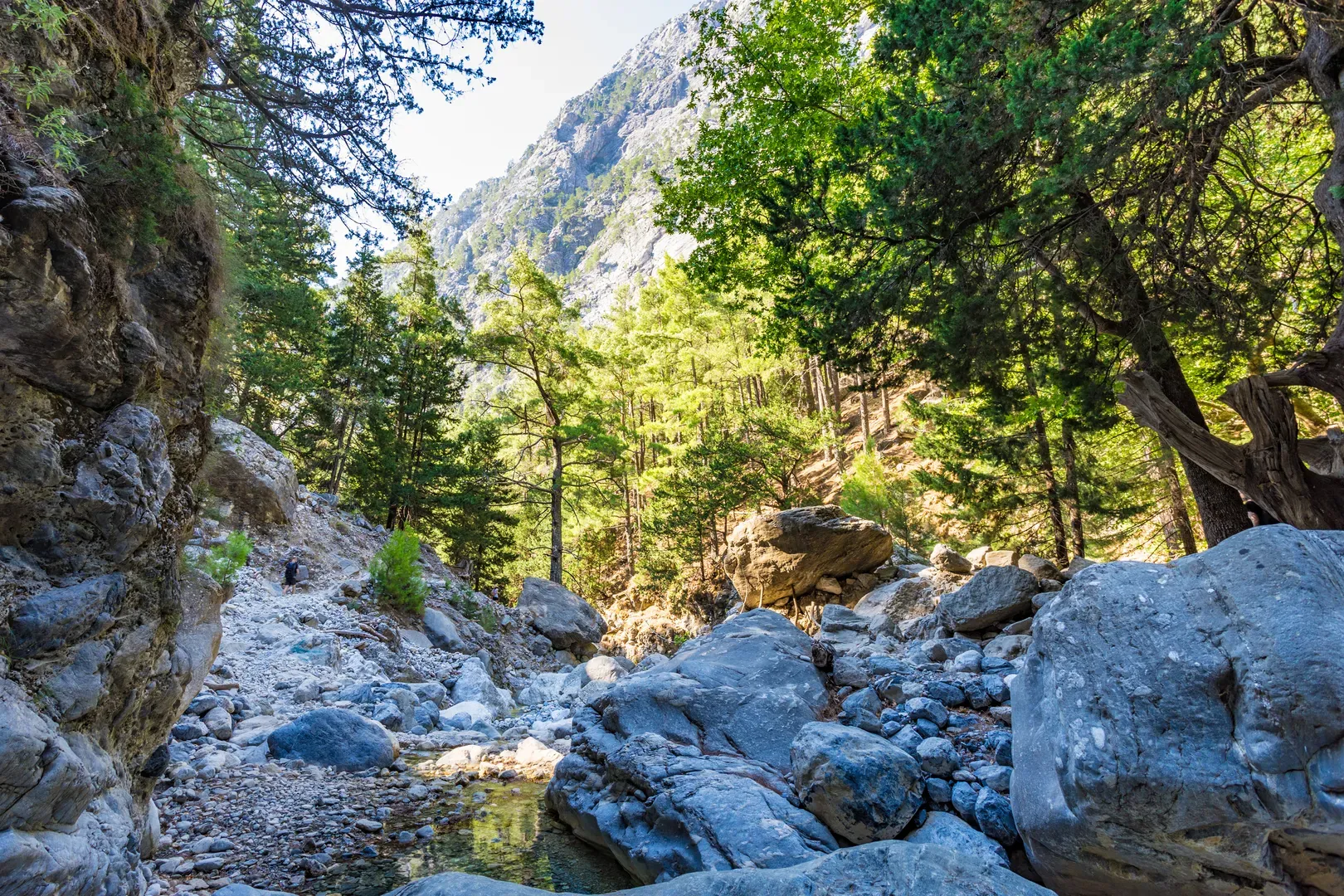
Although the route doesn't require mountaineering experience, it's not considered an easy hike. The terrain is mostly rocky, there are several river crossings, and good physical condition is required. The most important piece of gear is proper hiking footwear. City sneakers or sandals don't provide the necessary stability on the stones. A hat, sunscreen, a light backpack, and trekking poles are also useful for those with sensitive knees.
Samaria Gorge usually operates from May until mid or late October, depending on weather conditions and the state of the trail. It's important, before you start, to check for any announcements for emergency park closures.
You can choose to enter the gorge from the northern entrance (Xyloskalo) or from the southern entrance (Agia Roumeli). Xyloskalo is accessible by car, but Agia Roumeli can only be reached by boat. You can also choose to do the entire route or just a section of it. In any case, you should assess the time you have available so that you exit the gorge in good time and definitely before 18:00.
Tickets (€10 for adults) are issued online through the official platform, but they can also be purchased at the gorge's entrances. In recent years, new visitor management policies and upgraded safety measures have been implemented.
Tips
- Start as early as possible in the morning to avoid the heat and the crowds.
- Don't underestimate the strain of the descent. Your knees take more punishment than on the climb.
- Although there are springs with drinking water along the route, it's best to carry a bottle you can refill. It's also essential to bring some snacks. Respect the National Park's natural environment and don't leave litter.
- Keep your ticket with you until you exit.
- You can reach Xyloskalo (about 40 km from Chania) either by car or by bus. Check the ferry timetables in advance from Agia Roumeli to Chora Sfakion or Sougia. From there you can take a bus back to Xyloskalo or Chania.