





Discover some of the most iconic traditional Easter sweets across Greece.
Easter in Greece is full of colors, customs, and flavors passed down from generation to generation. From Macedonia to Crete and from the Ionian to the Aegean, in every part of the country kitchens fill with aromas. Beyond the Easter tsoureki, in the villages and cities of Greece we find signature sweets of Easter, linked to local products and the traditions of Holy Week.
From Venetian tsourekia to sweet cheese pies and from syrup-soaked pastries to koulourakia, we have gathered some of the top Easter sweets that make bakeries smell heavenly from corner to corner of the country.
Crete - Kalitsounia
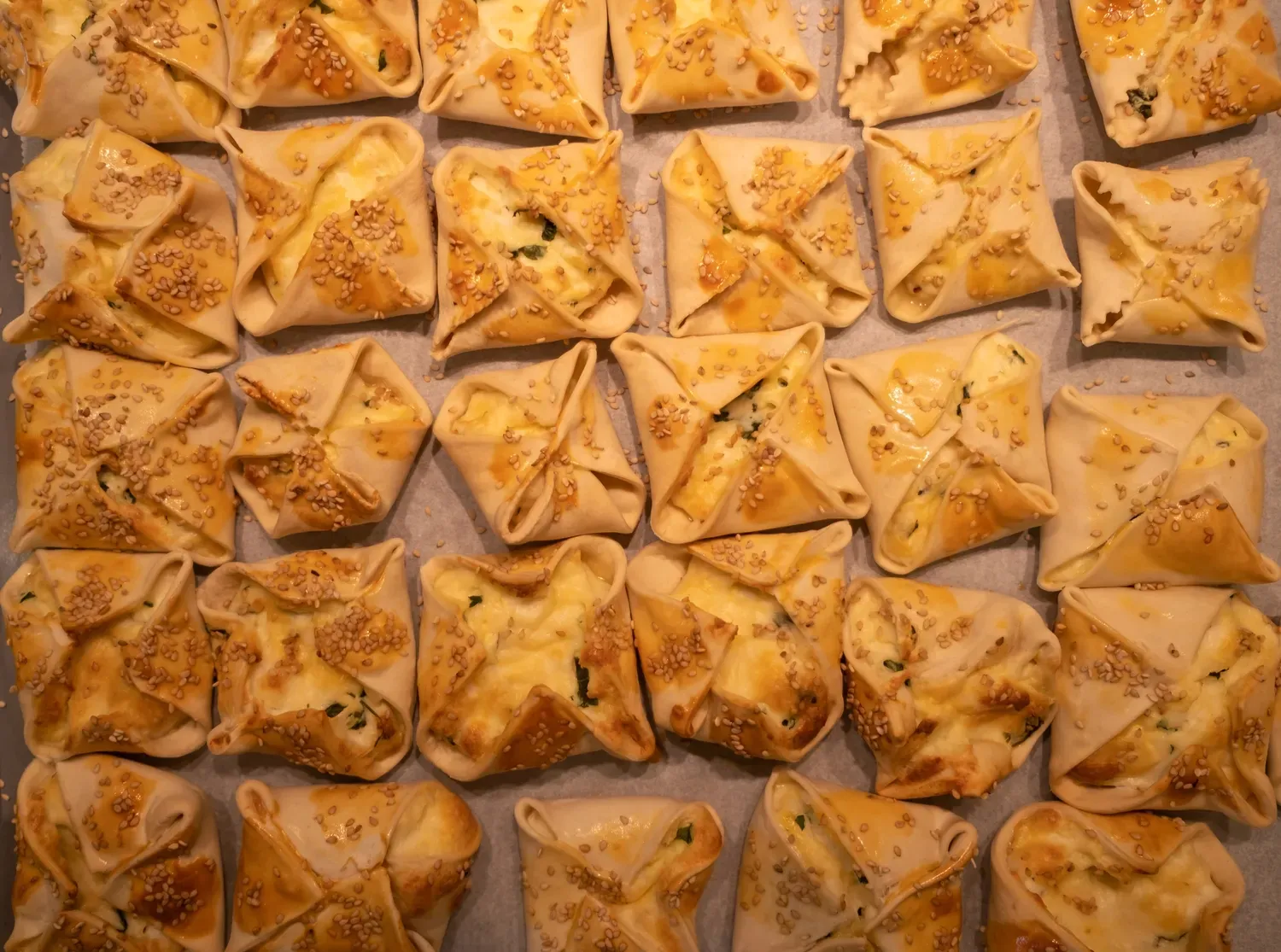
Kalitsounia, also spelled kaltsounia, are among Crete’s best-known and most beloved sweets. What many don’t know, however, is that for many parts of the island they are the most characteristic Easter sweet. In places such as Heraklion, Lasithi, and Sitia, every year during Holy Week homes smell of freshly baked dough. The small sweet pies, known as anevata or lychnarakia, are filled with sweet myzithra, differ from those of Chania, and are the favorite festive treat in every home. Their preparation is deeply tied to togetherness, as families gather at home and make them together.
Rhodes - Anevata koulouria
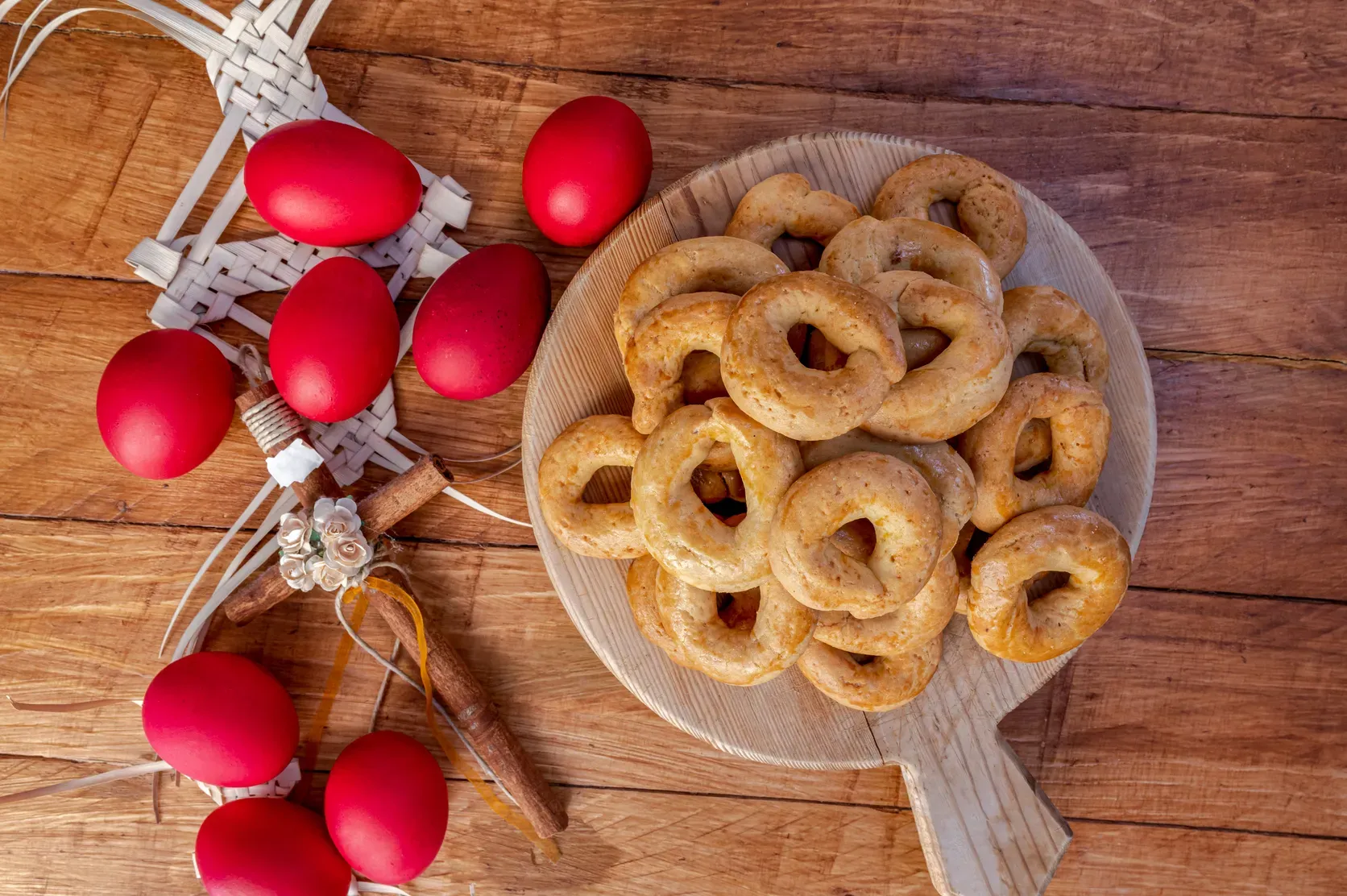
On Rhodes, Easter is perfumed with butter and spices thanks to the traditional anevata koulouria. Preparations start on Lazarus Saturday and continue throughout the week. Rhodes’ Easter koulouria are elaborate, shaped into striking forms like the snake and the wheel. With the same dough, they also make katergakia, the cookies that have a red egg in the center.
Sifnos - Melopita
Sifnos is famed for its gastronomic tradition and naturally among its rich dishes there is a traditional treat for the Easter days. The island’s melopita is a sweet pie made with just a few pure ingredients, such as eggs, anthotyro or myzithra, and honey, without phyllo or with a thin base. It bakes until it develops a velvety texture and accompanies the Easter Sunday meal. Variations can be found on other Cycladic islands too.
Tinos- Sweet cheese pie
Another Cycladic culinary custom, Tinos’ Easter sweet cheese pies are a symbol of local tradition. They are the island’s Easter treat, with the recipe passed down from generation to generation. They’re prepared on Holy Tuesday with exceptionally thin, almost transparent phyllo and filled with fresh local cheese, sugar, eggs, and aromas of orange or vanilla. You’ll usually find them as bite-sized pieces and recognize them instantly by their flower-like shape, thanks to those pleats, the “pinches” of the dough around the edge.
Peloponnese - Diples
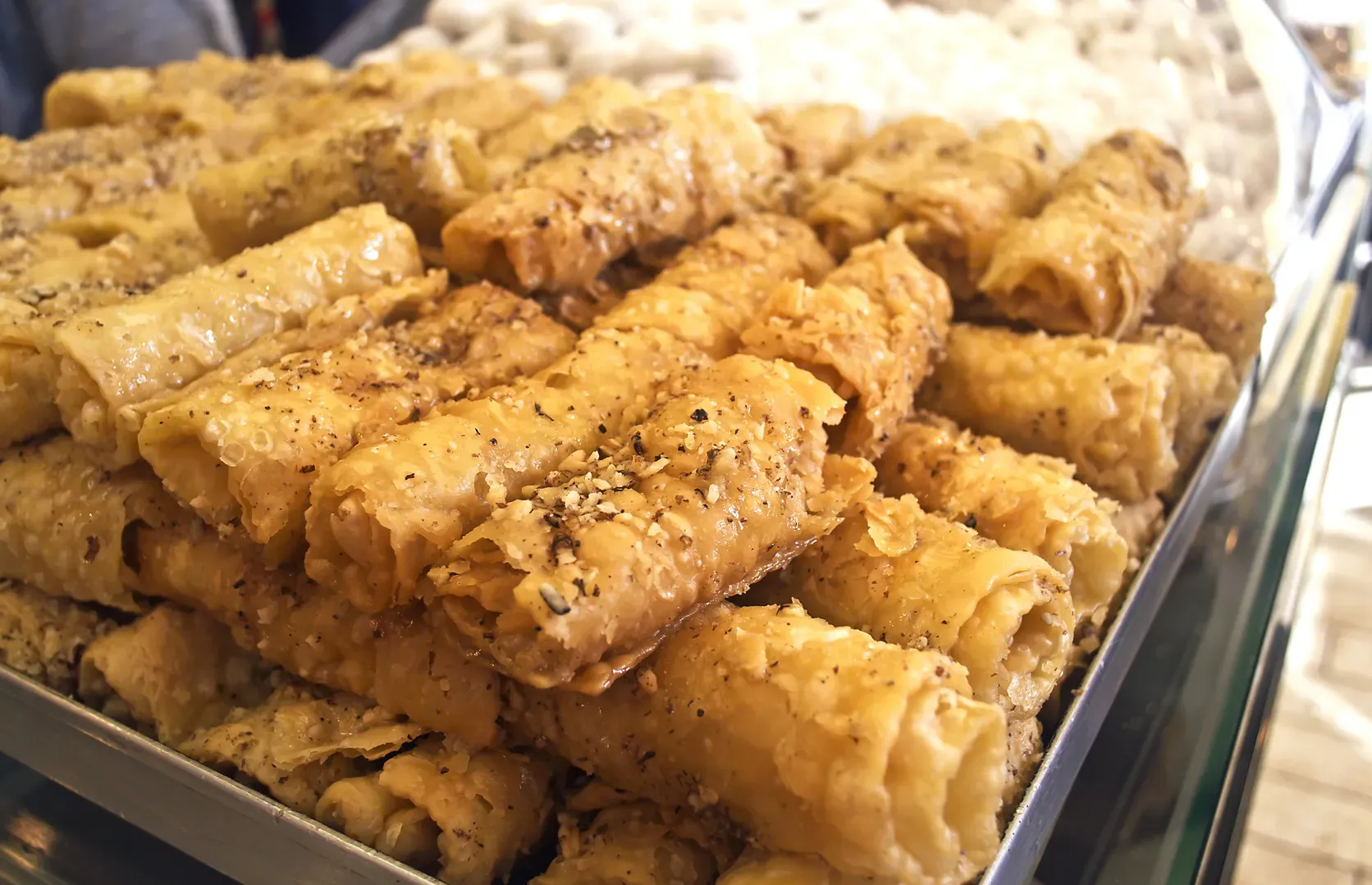
In the Peloponnese the most characteristic treat at every celebration and wedding is diples. At Easter, in many parts of the Peloponnese you’ll find this golden, honey-drenched sweet, made from thin sheets of dough that are fried, folded into eye-catching shapes, and then drizzled with honey and walnut. Crisp, aromatic, and festive, they are an ideal companion to the Easter table.
Lesvos – Lamprokouloura
On Lesvos, Easter is inextricably linked with the lamprokouloura or lampropsoma, which closely resemble traditional tsoureki scented with mahlepi and mastiha. According to tradition, it is kneaded every Holy Thursday, has that distinctive ring shape, and symbolizes the circle of life. Depending on the recipe it resembles sweet bread or tsoureki more, but it always has that characteristic shape and the decoration with patterns and red eggs.
Corfu - Fogatsa & Kolombina
Fogatsa is Corfu’s ultimate Easter sweet, a testament to the island’s Venetian influence. It’s a fluffy, round tsoureki with Venetian roots, scented with citrus, cognac or rum, often enriched with kumquat, the island’s traditional liqueur. If you find yourself on Corfu, you’ll see it in every pastry shop and on every table.
Kolombina is a different version of tsoureki, reminiscent of the most emblematic sweet of Catholic Easter, the Italian colomba. It’s a sweet bread as airy as tsoureki, which also arrived in Corfu from the Venetians. It is said to symbolize peace and hope and is often adorned with a red egg, blending Italian with Greek Easter tradition.
Veria - Revani
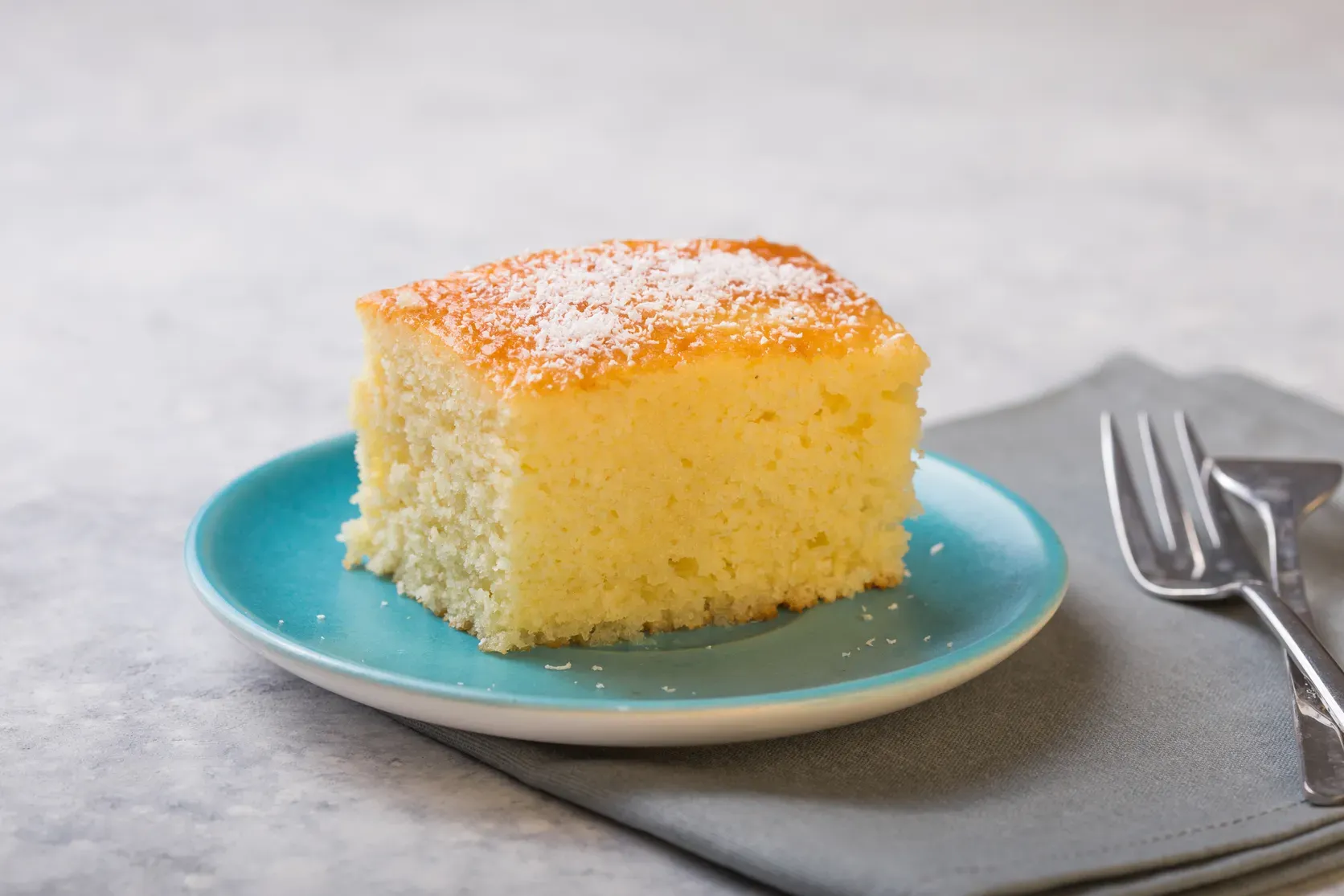
Revani or ravani from Veria is perhaps the most famous in Macedonia and a favorite Easter dessert of the area. Fluffy and drenched in syrup, it stands out for its light texture, which makes it ideal after the rich Easter meal. It’s one of the easiest sweets and is cherished at every celebration, but Easter is when it has its moment.