





A thrilling journey through India and the uncharted regions of the Himalayas, at an altitude of 5,359 meters above sea level.
By Taxideutoula
We had considered Tibet several times and were eager to visit, but we held back because of what we’d heard about its profound transformation after China’s occupation. We were afraid we might be disappointed.
India, on the other hand, is a different world—deeply fascinating, yet so vast you don’t know where to begin. A few months earlier, in a conversation with fellow travelers, we heard about Ladakh in northern India, known as Little Tibet (because many Tibetans settled there after being driven out by the Chinese). We were thrilled and began planning our trip there with help from friends who had visited the area.
Kashmir, Ladakh, and Manali are three captivating regions in northern India. But for the first time, I was afraid at the thought of a trip—and not without reason!


To begin with, there are frequent disturbances in Kashmir, as it lies on the border with Pakistan, which claims it, as does China. As recently as 2019 there were numerous terrorist attacks by both Pakistanis and Indians. In addition, the roads connecting Srinagar (Kashmir’s capital) with Leh (Ladakh’s capital), and Leh with Manali (a city in Kullu district), are considered extremely dangerous!
They are very narrow, barely wide enough for two cars, with cliffs and tight, difficult turns. You often face enormous trucks and can be stuck for hours until a solution is found. Yet this part of the journey turned out to be the most fascinating, as these are said to be among the most beautiful routes on the planet.


Another deterrent was that we would have to ascend to elevations above 3,000 meters, often over 5,000—something we had never done and didn’t know how our bodies would react to. There is always a risk of landslides, too—summer is monsoon season, after all. In the end we decided to brave it all and booked the tickets. Two more friends even joined us.
On 31 July we flew to Delhi. India didn’t welcome us kindly at first; our arrival coincided with a severe thunderstorm. The plane circled above the airport for an hour amid thunder and lightning, while I prayed to all the country’s gods and faiths, and perhaps that’s why we eventually landed safe and sound, even if delayed.
Our journey, however, truly began the next morning, when we took a domestic flight to Srinagar in Kashmir. At the airport, huge signs read “Welcome to paradise on earth,” and yes, as we approached Dal Lake, it really did look like paradise.
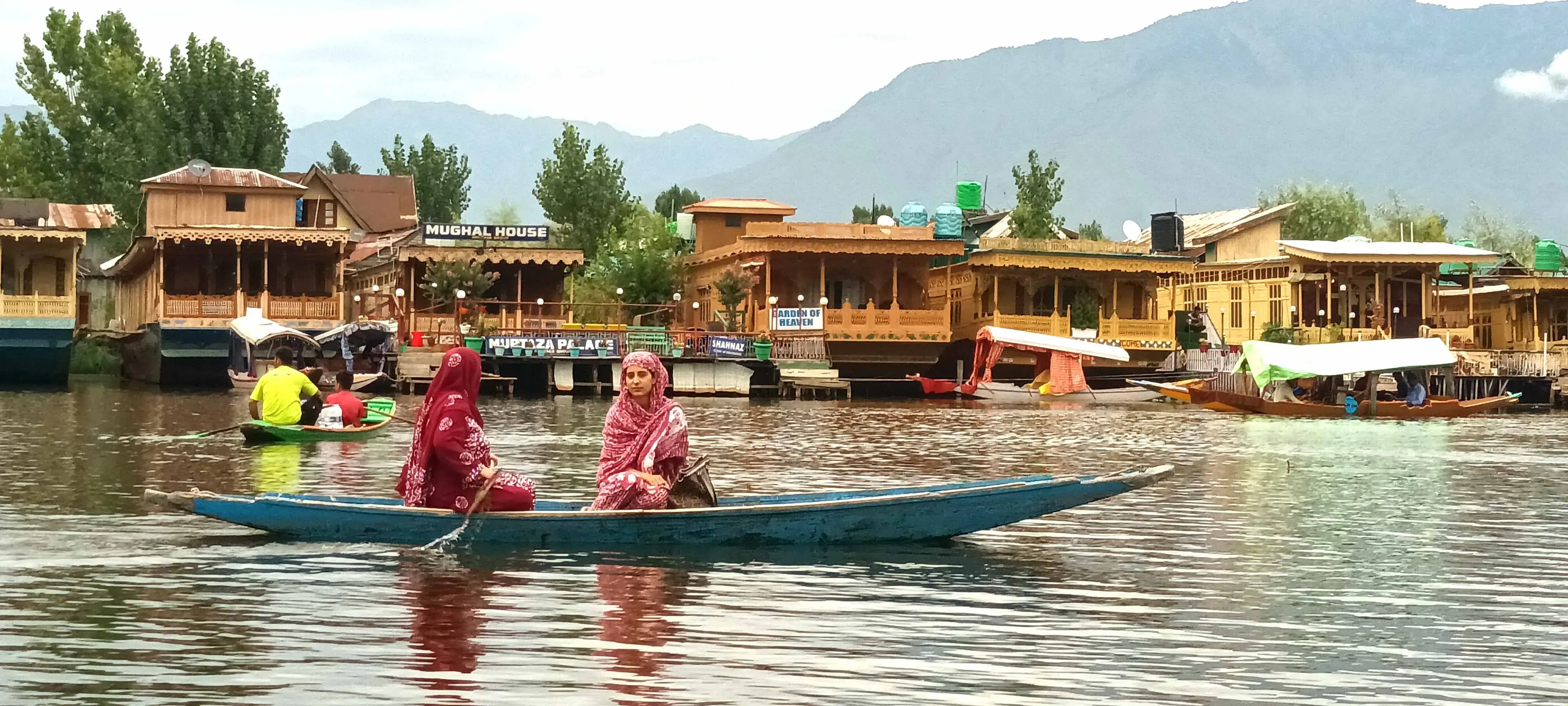
We stayed there two days. We slept on the famous houseboats—beautiful wooden ship-hotels where the British once spent their summers to escape the heat in the rest of the country. We were, after all, in the Himalayas. Beyond endless rides on the lake in shikara, the wooden oared boats, we shopped for the renowned Kashmiri shawls (pashminas), sampled Indian cuisine, visited gardens and mosques, and relaxed while gazing at the stunning scenery.
After that, the hard part began! On the third day, early in the morning, we bid farewell to paradise and set out on a demanding route that took about 10 hours to cover 200 kilometers! The roads were narrow, buses barely fit, turning above terrifying cliffs, and there was army everywhere. (Let’s not forget that Kashmir is divided among three countries!)
Late in the afternoon we reached Kargil, a small town that, apart from the river, didn’t have much to show. The view from the hotel, though, was breathtaking, and we spent a pleasant evening. We were already at 2,500 meters elevation, but everything was OK.
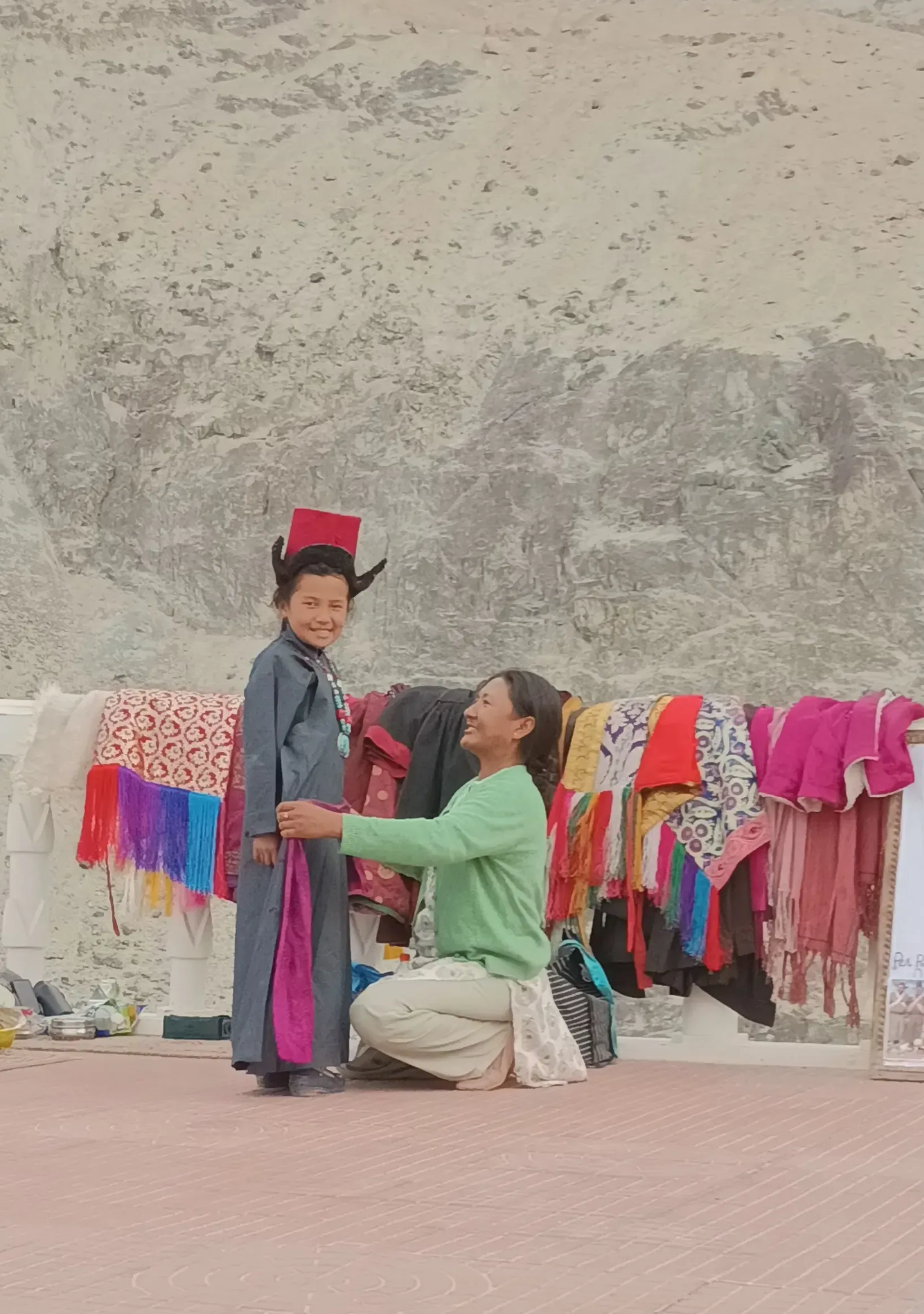
Early the next morning we continued to Leh, the so-called Little Tibet. The roads were in better condition, but with countless bends across barren, towering mountains. The altitude reached 3,500 meters, but we were undaunted. There we encountered our first Buddhist monasteries—another world.
By late afternoon, after 10 hours of travel, we arrived in Leh, a colorful city high in the Himalayas. Our hostel in the old town was opposite the winter palace, in a neighborhood full of tiny shops, barbers, bakeries, grocers, etc.
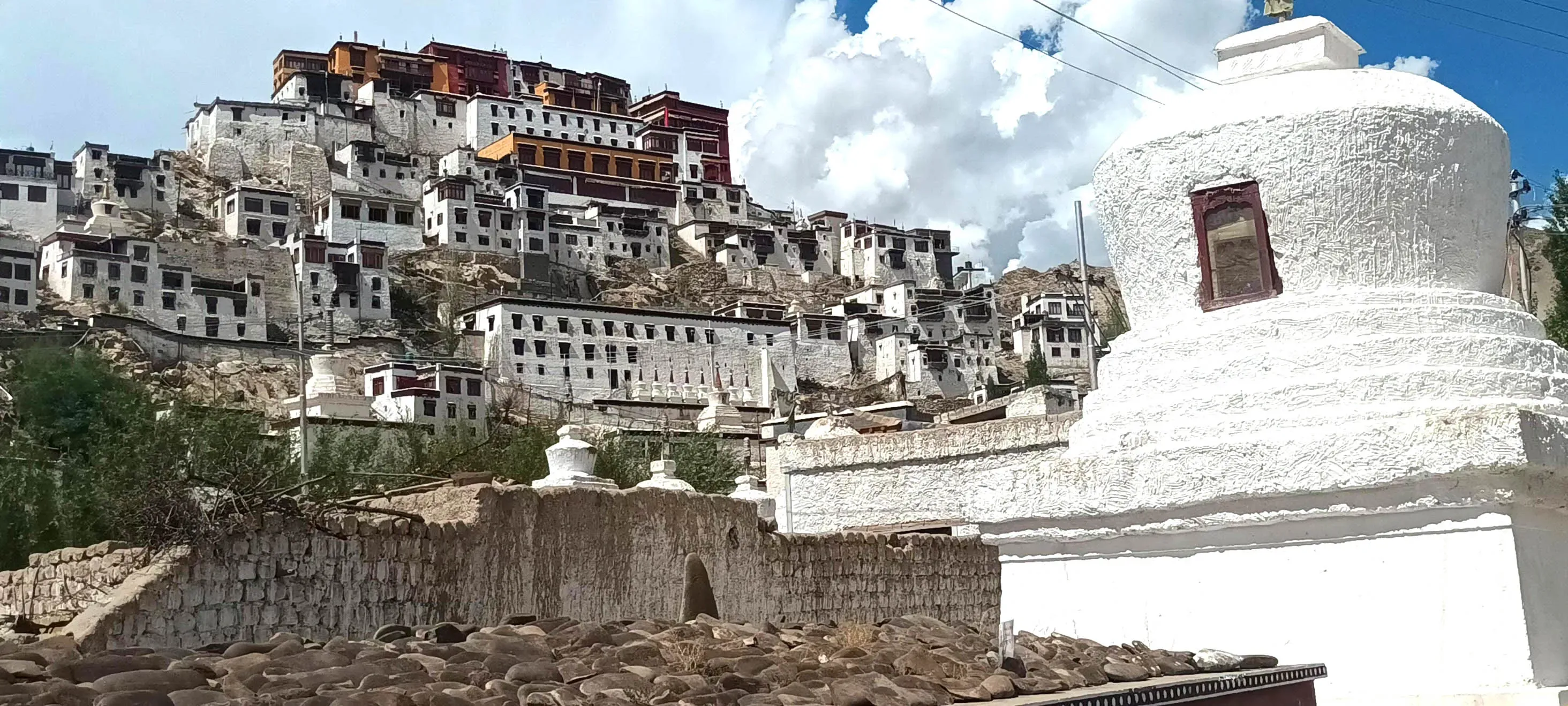
The two days we stayed were enough to acclimatize to the altitude and to visit several monasteries in striking locations. The most famous were Ticksey, which resembles the Potala in Tibet, and Hemis, which, apart from its renowned festival every July, also houses a museum dedicated to Buddhism.
Having soaked up, as much as possible, the reverent atmosphere of the monasteries, we set off for the Nubra Valley, a vast, rugged valley ringed by towering mountains and rivers that cross deserts with enormous sand dunes. A mesmerizing landscape that belongs on every must-see list.
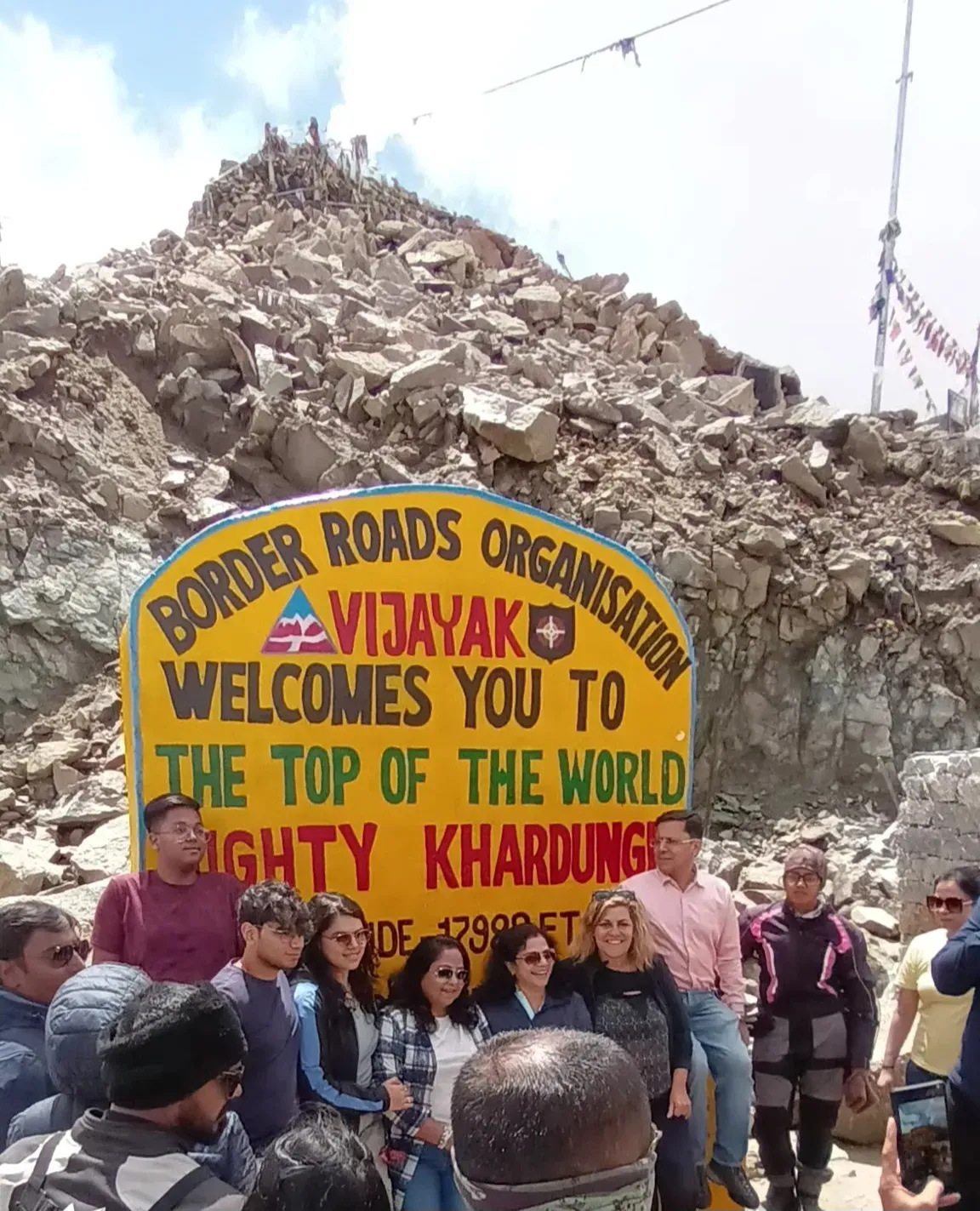
We reached it via the famed Khardung la pass, the second-highest in the world that you can cross by car. We also saw many Royal Enfield motorcycles, mostly with local riders. It lies 5,359 meters above sea level, and we would in fact have to cross it twice.
Descending into the heart of the valley, we were greeted by a huge, multicolored 33-meter Buddha, but as we approached the beautiful 14th-century Buddhist monastery at Diskit, a sandstorm rose. Luckily it was brief, so we continued deeper and, for the first time, saw Bactrian camels. The difference from the others is that they have two humps. We couldn’t resist a ride on their backs. The sunset was magical!


We overnighted at a lovely campsite in the middle of the valley, and in the morning we took the difficult road back to Leh, where we stayed one more night. At dawn we set off for Manali, a two-day journey along rivers and through forests beneath the towering Karakoram range. We also stopped at a river whose banks were grazed by many of the famous yaks—strange, very shaggy animals found only in the Himalayas, which until then I had only seen in films.
On the first day we drove for 14 hours to avoid sleeping at 4,200 meters, where Sarchu lies—an isolated area where most travelers camp—because we feared the altitude might affect us; we preferred to continue to the village of Jispa, which sits lower, at 3,200 meters. The right choice, as our lodging was wonderful, right by the river with mountain views. After breakfast we visited another Buddhist monastery and continued on to Manali.
Manali is a charming winter resort, ideal for hiking, rafting, and mountaineering, which is why there are many chalets perched along steep forested roads. At the same time, it’s a quintessential Indian town with yoga centers, Hindu temples, small budget hotels, and dozens of little shops selling local souvenirs, clothes, jewelry, and woodcarvings. In the cafés by the river we saw the spirit of India just as we’d imagined it: all peoples coexisting, every shade of skin and splash of color in their clothing. Two days weren’t enough to savor the lush landscape, but time pressed and we had to return to Delhi.
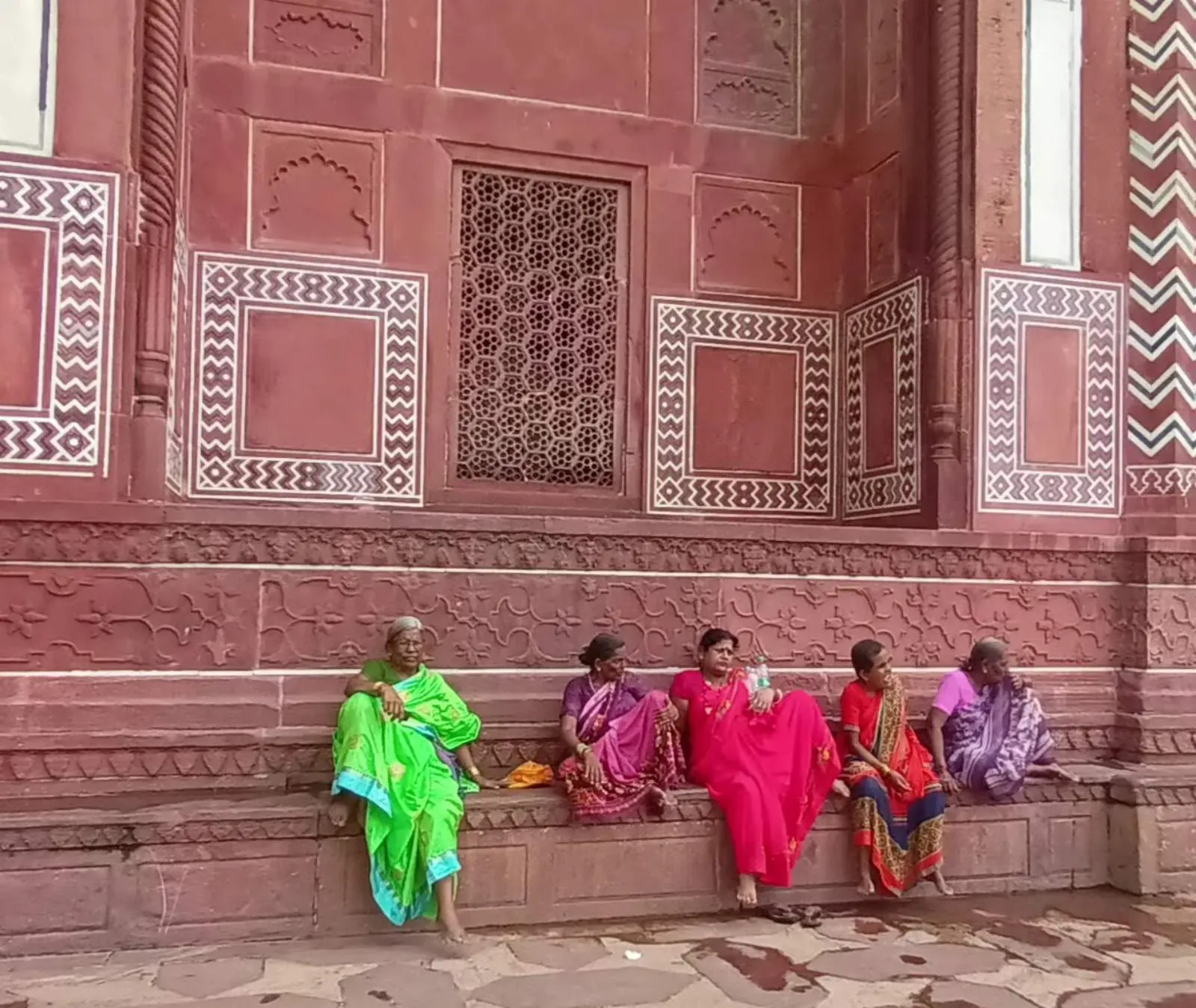
On the third day, then, we began to descend, thinking from here on the road would be straightforward and the worst was behind us; but no—the route was even more challenging this time due to the risk of landslides from frequent rains (during the same period last year entire buildings had collapsed into overflowing rivers). There’s even a myth about King Manu, who survived a flood that destroyed the entire world and then recreated it, starting from this very valley.
He must have helped us reach our destination without serious problems, although it still took about another 14 hours for 500 kilometers! When late at night we entered Delhi it was pouring down, but as if by magic, by the time we reached our hotel everything had dried, and we were able to enjoy our dinner on the rooftop with a view of the beautiful Masjid, the city’s principal Islamic temple.
We still had two days left, and there was no way we could be in India and not see the Taj Mahal. So early in the morning we took the car again—this time to Agra. Four hours there and as many back were worth it for the country’s most famous funerary monument, and one of the most beautiful buildings in the world.
It stands imposingly beside the Yamuna River and is a mausoleum, a symbol of eternal love, built by the Mughal emperor Shah Jahan in memory of his beloved wife Mumtaz Mahal, who died in 1631. We also admired the Red Fort, which was the main residence of the emperors of the Mughal Dynasty until 1638, when the capital was moved from Agra to Delhi.
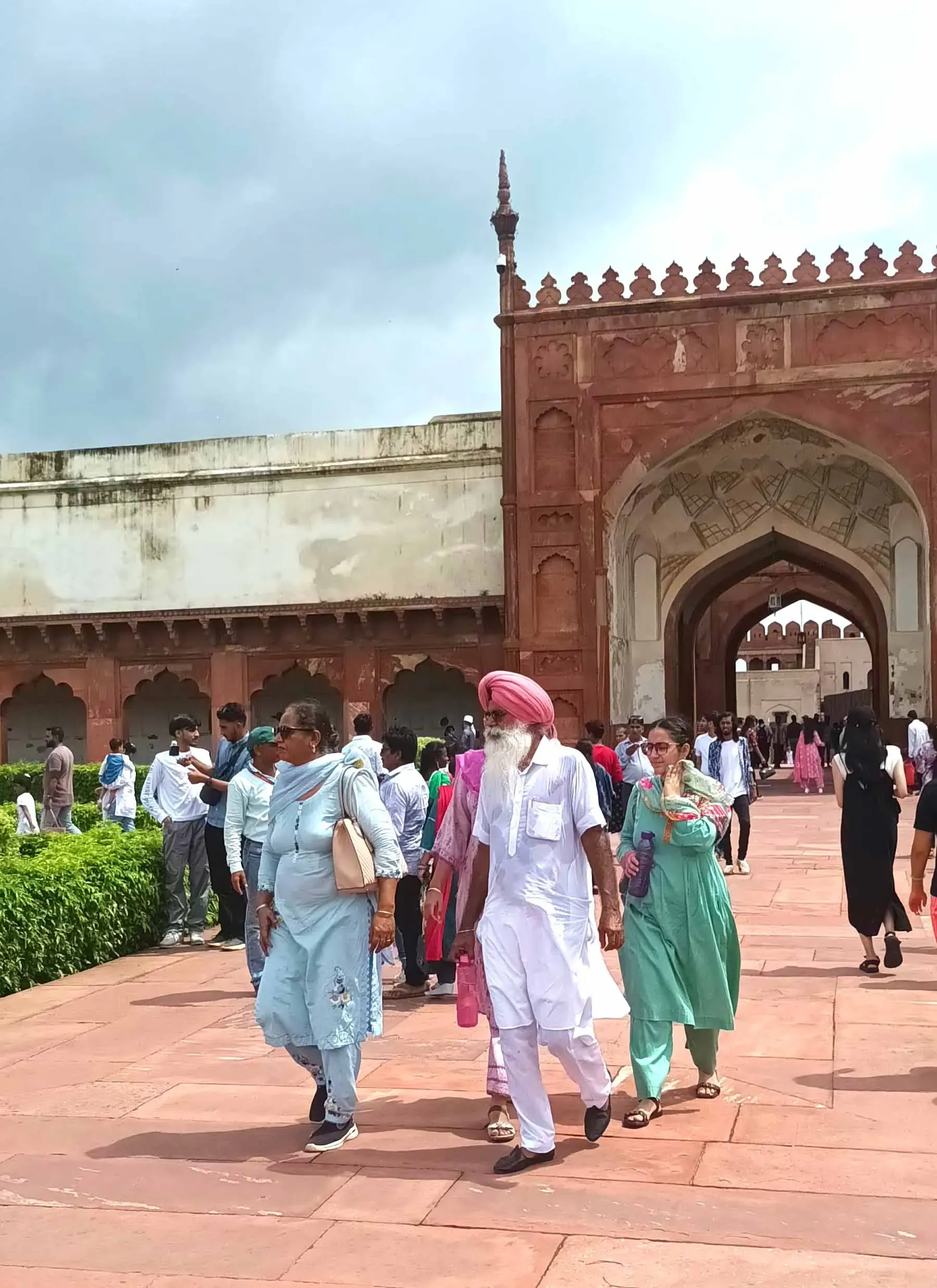
The next and final day we explored Old Delhi, experiencing what we usually imagine about India: colorful, bustling markets, with the spice market being the most intriguing—a vast bazaar with every kind of spice.
Old men in turbans hawked their wares, women wrapped in vibrant sarees chose fresh herbs, the elderly rested on the ground, youths hauled sacks of food, bicycles clashed with tuk tuks as they tried to avoid pedestrians—and the cows, which, being sacred, lay wherever they pleased—while the aromas of tikka masala and curry mingled with the stench of rubbish in the muddy alleys, amid clouds of flies!
We slipped out of this enchanting chaos to visit a beautiful Sikh temple, then hopped into a tuk tuk to take us to Humayun’s Mausoleum, which we discovered is older than the Taj Mahal and, for me, more beautiful. It is the tomb of Humayun, a Mughal emperor. Its construction was commissioned by his wife (!) in 1562. It lies within a vast garden and is surrounded by other equally beautiful funerary monuments.
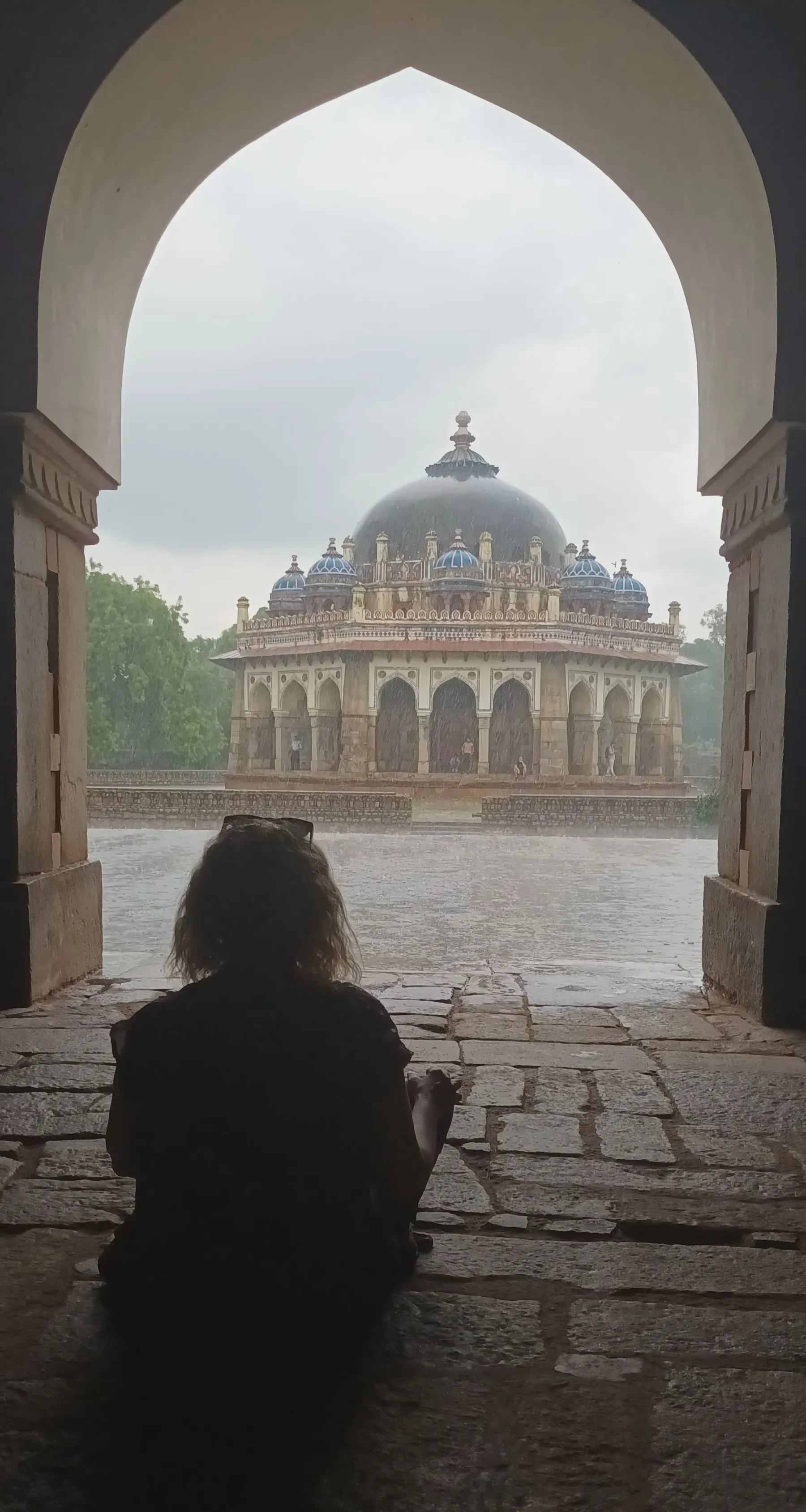
With that lovely memory we concluded this difficult yet exhilarating journey, which thrilled us and left us eager to return. India, after all, is a vast country you cannot get to know in just one visit.
Wishing to return soon, we bid her farewell with the well-known phrase “NAMASTE,” which means “I bow to you”!