





Explore the islands of the South Aegean, the Cyclades and the Dodecanese, traveling from one to the other by ferry.
In Greece there are more than 200 inhabited islands as well as quite a few uninhabited ones, each with its own unique energy. In the South Aegean travelers can find destinations for every taste, whether its their first visit or not. The Cyclades and the Dodecanese have everything a visitor is looking for. From the family-friendly golden sands of Naxos and the history and culture of Rhodes to the gastronomic delights of Sifnos, the choices are endless.
There are many ways to reach the Greek islands, depending on the time you have and the mode of transport you prefer. Travelers short on time can choose flights or high-speed catamarans, which offer quick access to their destination. On the other hand, conventional ferries ease you into the relaxed rhythm of island life from the very first moment. However, you may encounter difficulties with island combinations and with how to travel from one to another.
The Cyclades and the Dodecanese offer countless combinations. Many of the larger islands are connected to their smaller neighbors by conventional ferries, high-speed boats or regional vessels, while some are also accessible by plane. What follows is a comprehensive guide to island hopping in the Cyclades and the Dodecanese, with suggestions for nearby islands and unique experiences.
Touring the Dodecanese
Disembarkation point: Kalymnos
For adventure lovers, Kalymnos is one of the most thrilling climbing destinations in Greece. Even if youre not experienced, with over 4,000 routes the island welcomes climbers of all levels, including beginners. Sheer cliffs combined with views of the Aegean blue offer an unforgettable experience.
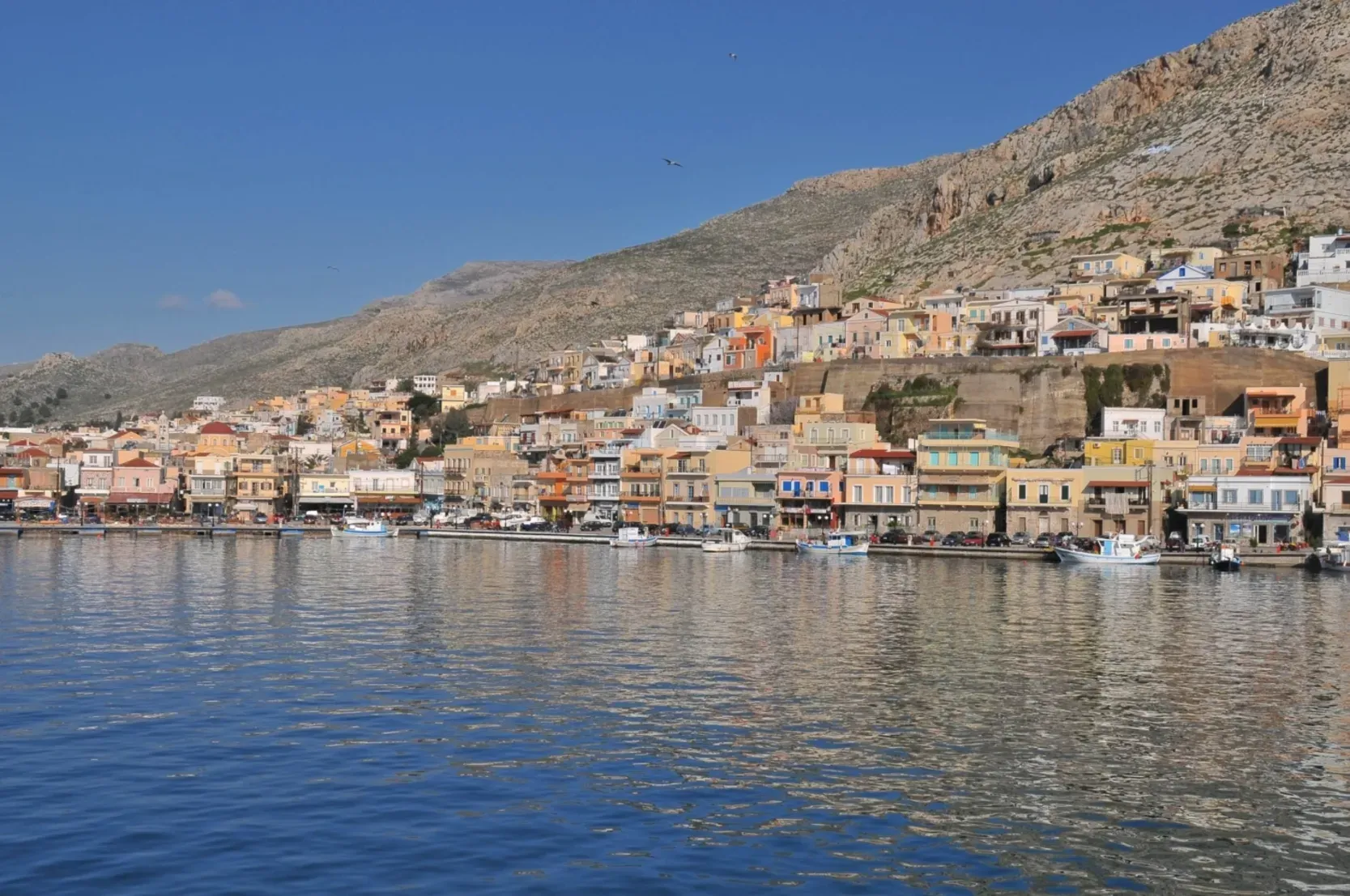
Kalymnos, however, is not only for climbers. It is also the island of sponge divers, with a centuries-old tradition. At the Nautical Museum you can learn more about the history of this craft. Local flavors, such as spinialo, the specialty that sustained sponge divers on their long voyages, bring the islands authentic gastronomic heritage to your palate today.
Nearby island
Pserimos
Pserimos is not included in the main ferry itineraries, yet it is worth every effort to visit. If you dream of a small, quiet island with a picturesque settlement and beaches of sand and pebbles, Pserimos is the ideal choice. Life moves slowly here, with the 12 families who live mainly from fishing and the few visitors getting around on foot or by traditional wooden caiques, savoring the simplicity and authenticity of the place.
Disembarkation point: Kos
Kos, the island of Hippocrates, blends lively beach bars with historic grandeur. In the islands capital stands a plane tree said to descend from the one under which the father of modern medicine taught his students. The island is ideal for cycling between historical sights such as the Ancient Agora, the 14th-century Castle of the Knights and the Defterdar Mosque. The Asclepieion, an extensive healing center built in the 3rd century BC, lies just 3.5 kilometers from town. Mountain-biking enthusiasts can choose among many routes, with stops including the wetlands of Psalidi.
Nearby islands
Leros
Leros, an island with a character distinct from the rest of the Dodecanese thanks to Italian influences, captivates lovers of history and architecture. In the town of Lakki visitors will discover an Art Déco cinema, a school that marries Byzantine and modernist elements, and a circular market hall. All are examples of the refined yet quirky Italian architecture of the early 20th century.
Nisyros
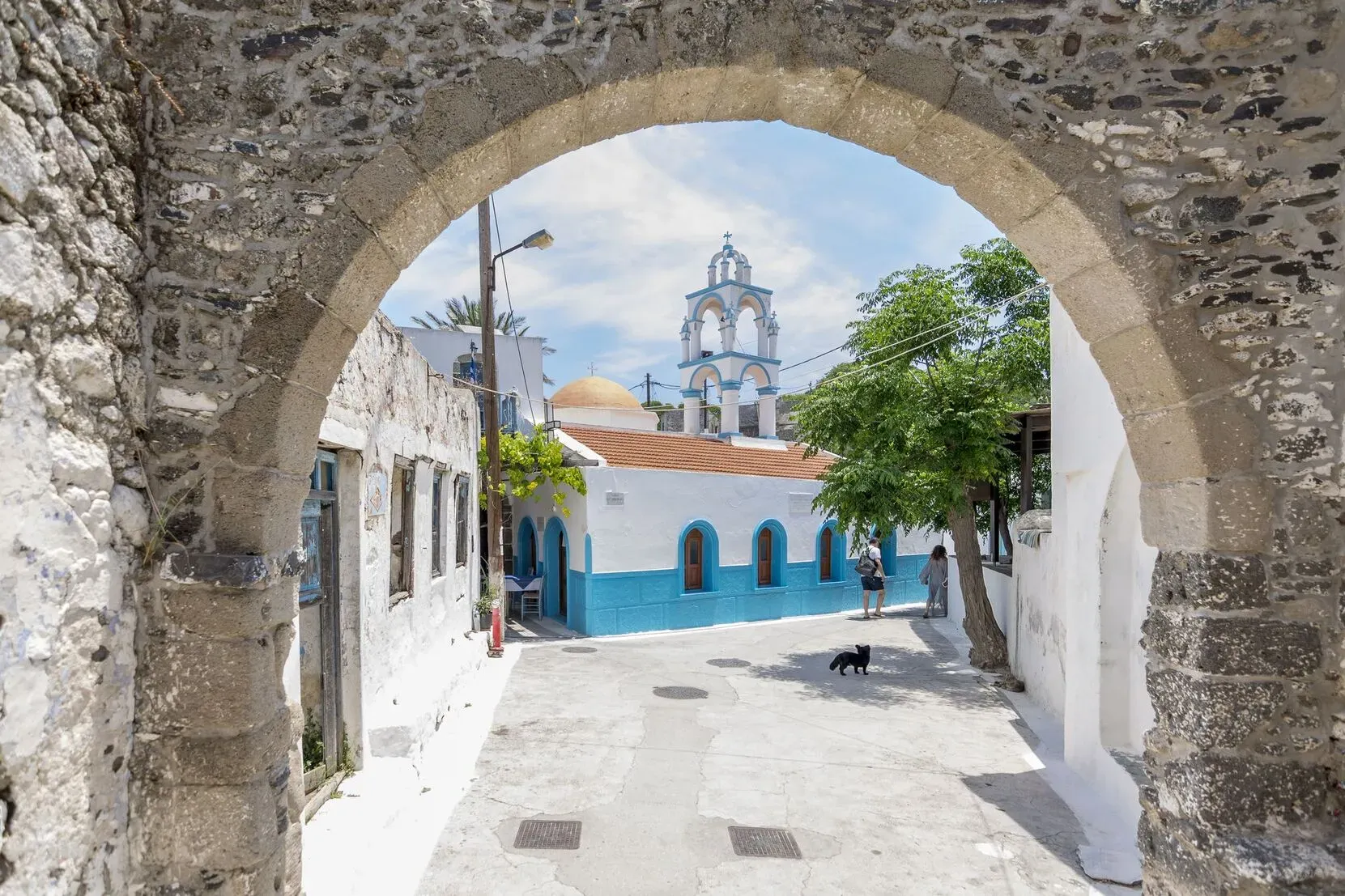
Nisyros is a dream for geology lovers, as from above the island looks like a volcano emerging from the sea. Although the volcano has not erupted since 1888, steam venting from the fumaroles reminds us it remains active. Visitors can walk inside Stefanos, one of the largest active hydrothermal craters in the world.
Tilos
Tilos is a paradise for birdwatchers in spring and autumn, hosting resident and migratory species such as Bonellis eagle, Eleonoras falcon and the hoopoe. In addition, the island impresses with the prehistoric remains of dwarf elephants displayed in a museum near the cave where they were found, offering a rare encounter with nature.
Disembarkation point: Patmos
Patmos has drawn artists, intellectuals and pilgrims for centuries, offering a unique blend of spirituality and authentic island charm. This Dodecanese island is considered a place of spiritual awakening, as it is here that Saint John is believed to have written the Apocalypse around 96 AD in the Cave of the Apocalypse, which is one of the key sights for travelers.
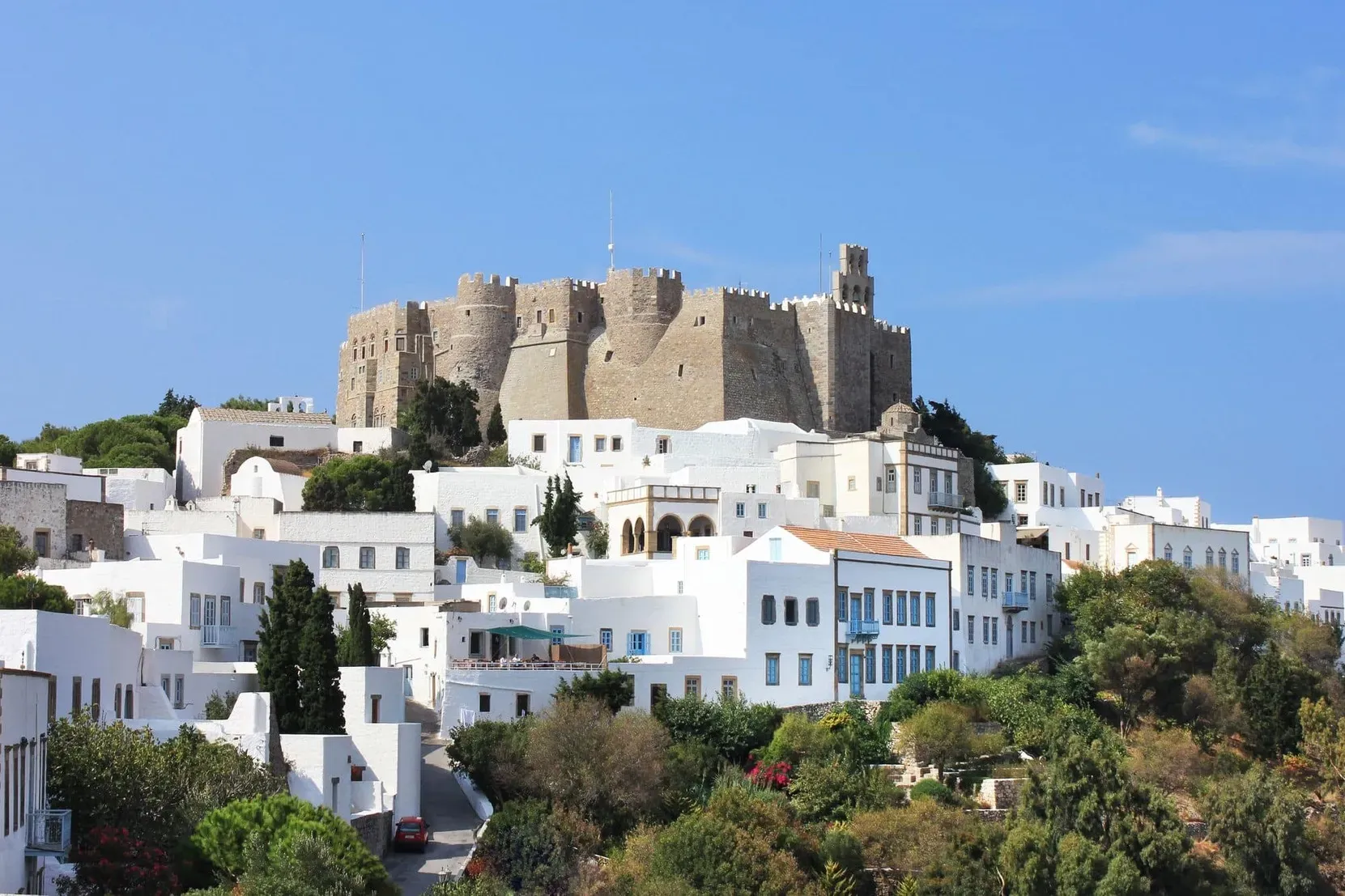
Near the cave rises the 11th-century monastery, with its commanding fortress creating a distinctive skyline of Chora from afar. Inside are preserved priceless manuscripts, striking frescoes and relics. The Cave and Monastery complex is a UNESCO World Heritage Site, set within one of the oldest and best-preserved settlements in the Aegean.
Nearby islands
Agathonisi
Agathonisi, meaning pure island, is home to just 185 inhabitants and offers a sense of tranquility and authenticity. Two villages, pebbled beaches – some a little more rugged than others –, the ruins of a Hellenistic-era castle and a small church atop a hill make up the main attractions of this picturesque island.
Arkoi
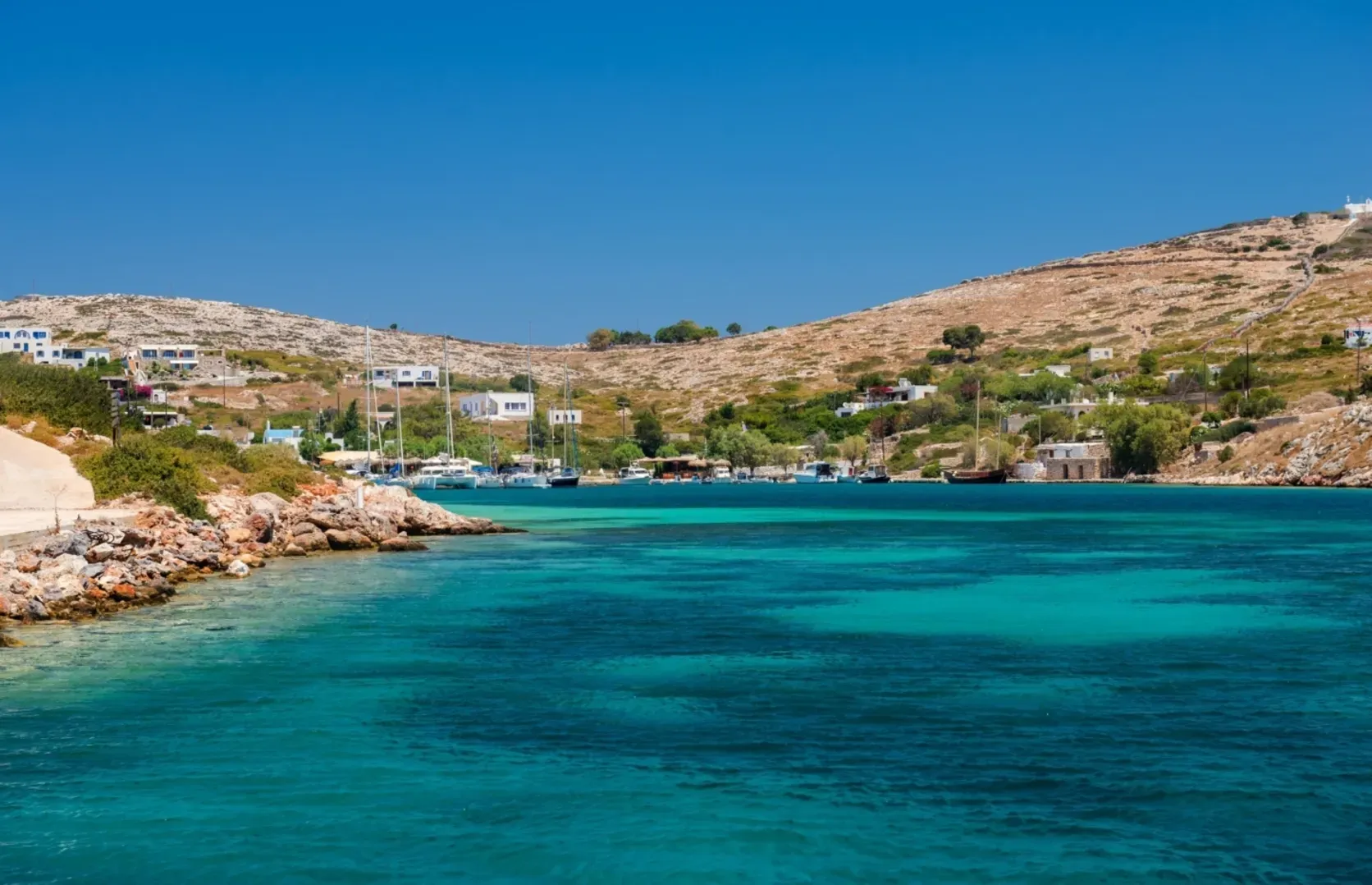
On Arkoi life moves slowly around the harbors main square, where a few simple yet welcoming tavernas greet visitors. The turquoise waters and dramatic rocky formations at Tiganakia beach create the perfect setting for calm and exploration.
Leipsoi
Leipsoi is a paradise for adventure lovers, but also for couples seeking tranquility. With abundant unspoiled beaches and small coves, the island offers a unique connection with nature. Fishing boats ferry visitors to the surrounding islets for even more serenity. Your acquaintance with Leipsoi is completed with a glass of the islands award-winning wine.
Disembarkation point: Rhodes
Rhodes, the former stronghold of the Order of the Knights of St. John, is an island rich in history and dramatic landscapes. The Old Town, shielded by 500-year-old fortifications and designated a UNESCO World Heritage Site, blends medieval castles, cobbled streets, churches and mosques, creating an atmosphere that transports visitors back in time.
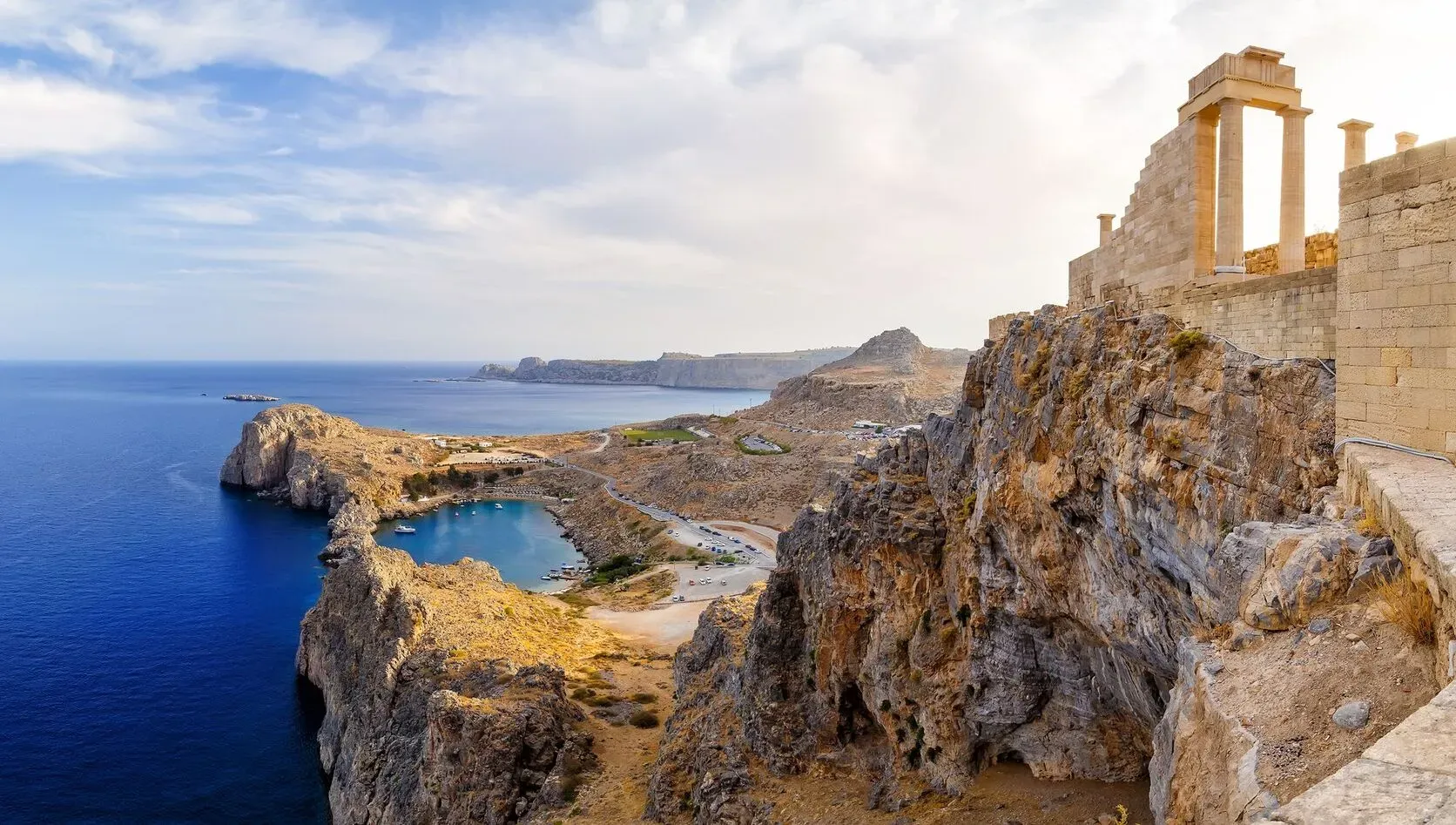
In the south of the island, just an hour away, lies romantic Lindos, with its hilltop acropolis offering spellbinding views of the Aegean. Antiquity lovers can explore Ancient Kamiros, with its temples, baths, houses and public squares that bear witness to the islands civilization. On hot days, the Valley of the Butterflies, a protected habitat for Rhodes Jersey Tiger, or the Seven Springs near Archangelos, offer coolness and tranquility in nature.
Nearby islands
Halki
If you seek serenity, Halki offers it generously. In Nimborio, the islands only town, stroll cobbled lanes among neoclassical houses painted in different hues. Sandy beaches with emerald waters are easily reached on foot or by caique, while the small islet of Alimia makes for an unforgettable day trip.
Karpathos
Karpathos is a family-friendly island, and the best way to explore it is by car. It combines turquoise seas, mountain villages and rich gastronomic experiences. The scenic Olympos, where women still wear traditional handmade attire, seems untouched by time. Cultural heritage comes alive at local festivals, where traditional specialties such as makarounes, the islands handmade pasta, are served.
Kastellorizo
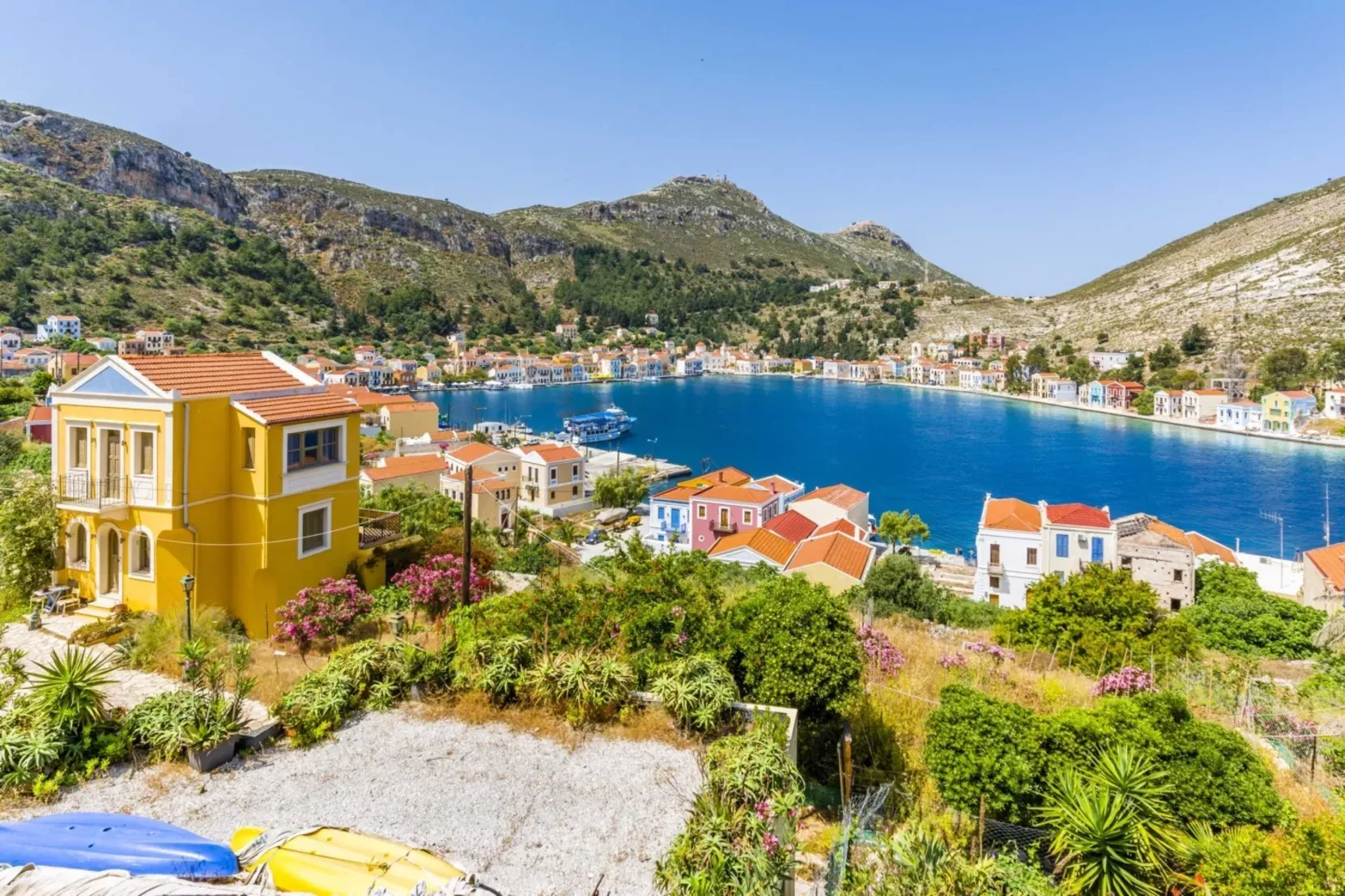
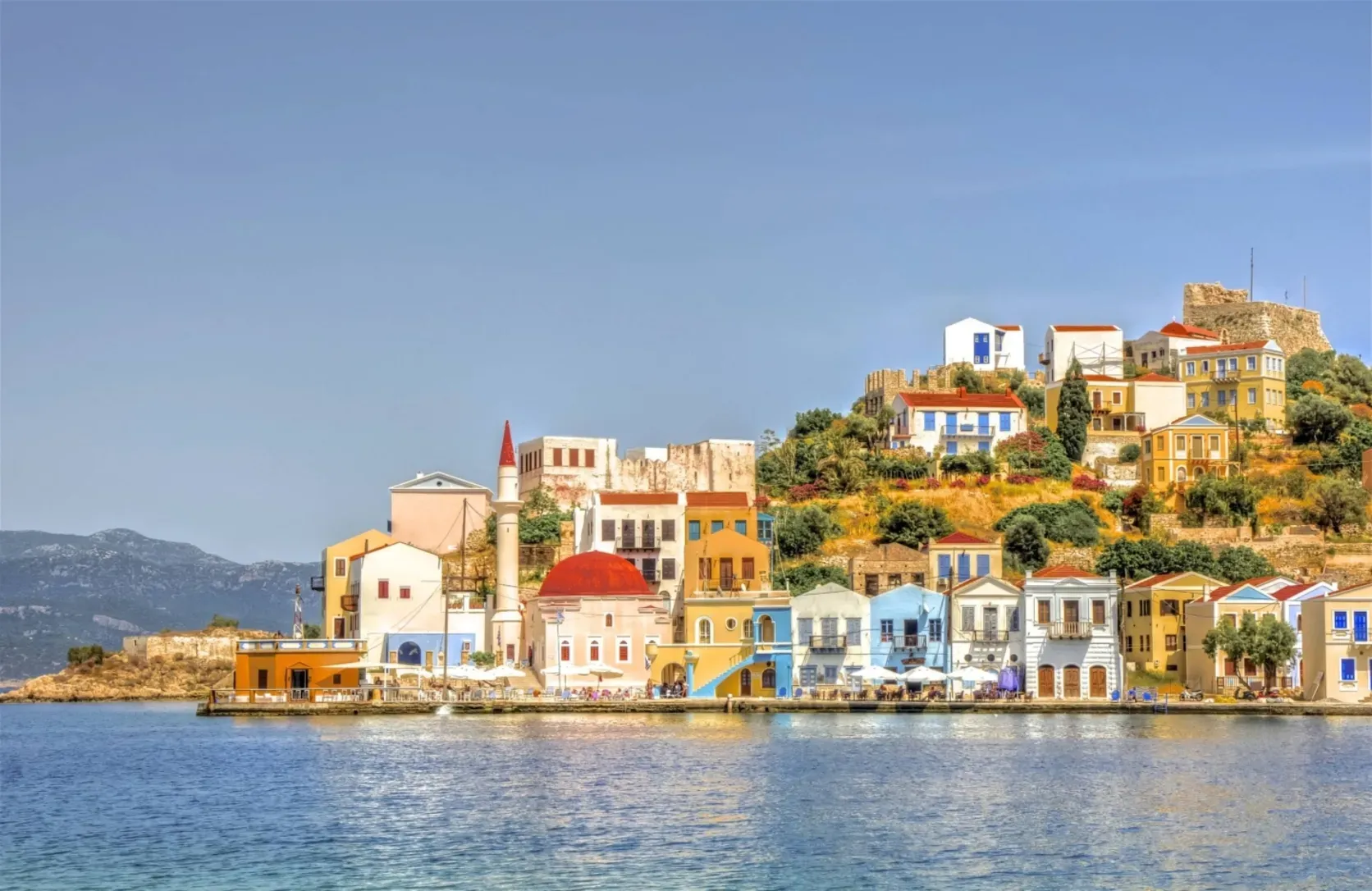
With only about 300 residents, the population of Kastellorizo swells in summer thanks to the return of many expatriates. Wander the waterfront lined with stately neoclassical houses and take the sea taxi to the Blue Cave for a swim in its shining green waters. Dont miss climbing the 401 steps to the Monastery of St. George to savor a breathtaking panoramic view.
Symi
Symi impresses with the unique 19th-century mansions of Gialos harbor, as if lifted from a painting. Climb the 500 steps to admire the islands main settlement, where Venetian and classic Aegean architecture prevail. Buses depart regularly from Gialos for the Monastery of Panormitis, which offers moments of peace and contemplation in one of the islands most serene spots.
Touring the Cyclades
Disembarkation point: Ios
Ios has long been associated with fun and wild summer parties in Chora. Indeed, in August it still buzzes with life, but the island has much more to offer. Golden beaches such as Mylopotas, Manganari and Kalamos welcome those seeking relaxation by the sea. Skarkos, one of the best-preserved Cycladic settlements of the Early Bronze Age, highlights Ios rich history, which is also linked to Homers tomb.
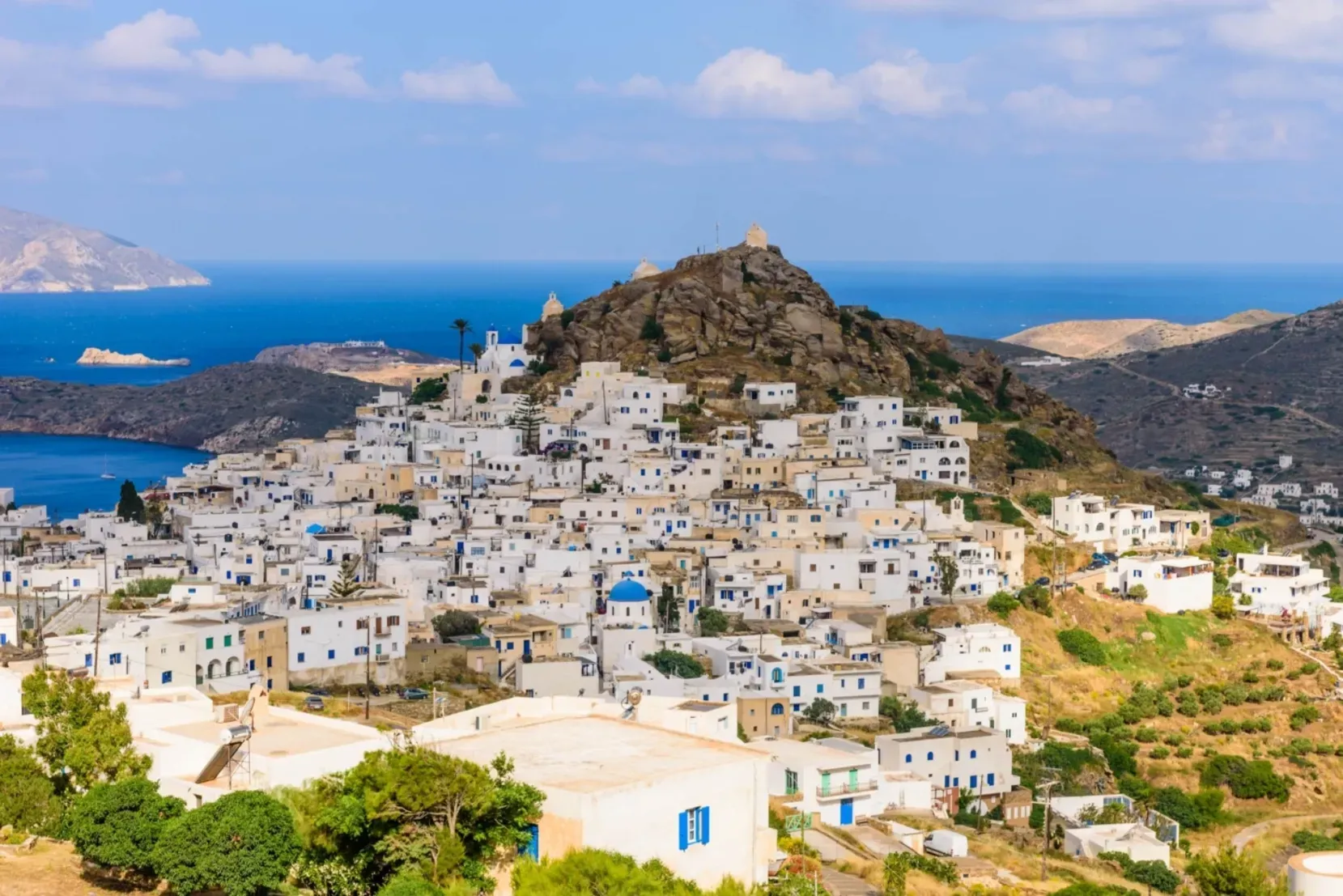
In summer, cultural performances at the Odysseas Elytis amphitheater combine art with sea views. The most magical spot on the island is near the church of Panagia Gremiotissa, above Chora, where visitors gather at sunset to watch the orange glow wash over sky and sea.
Nearby island
Sikinos
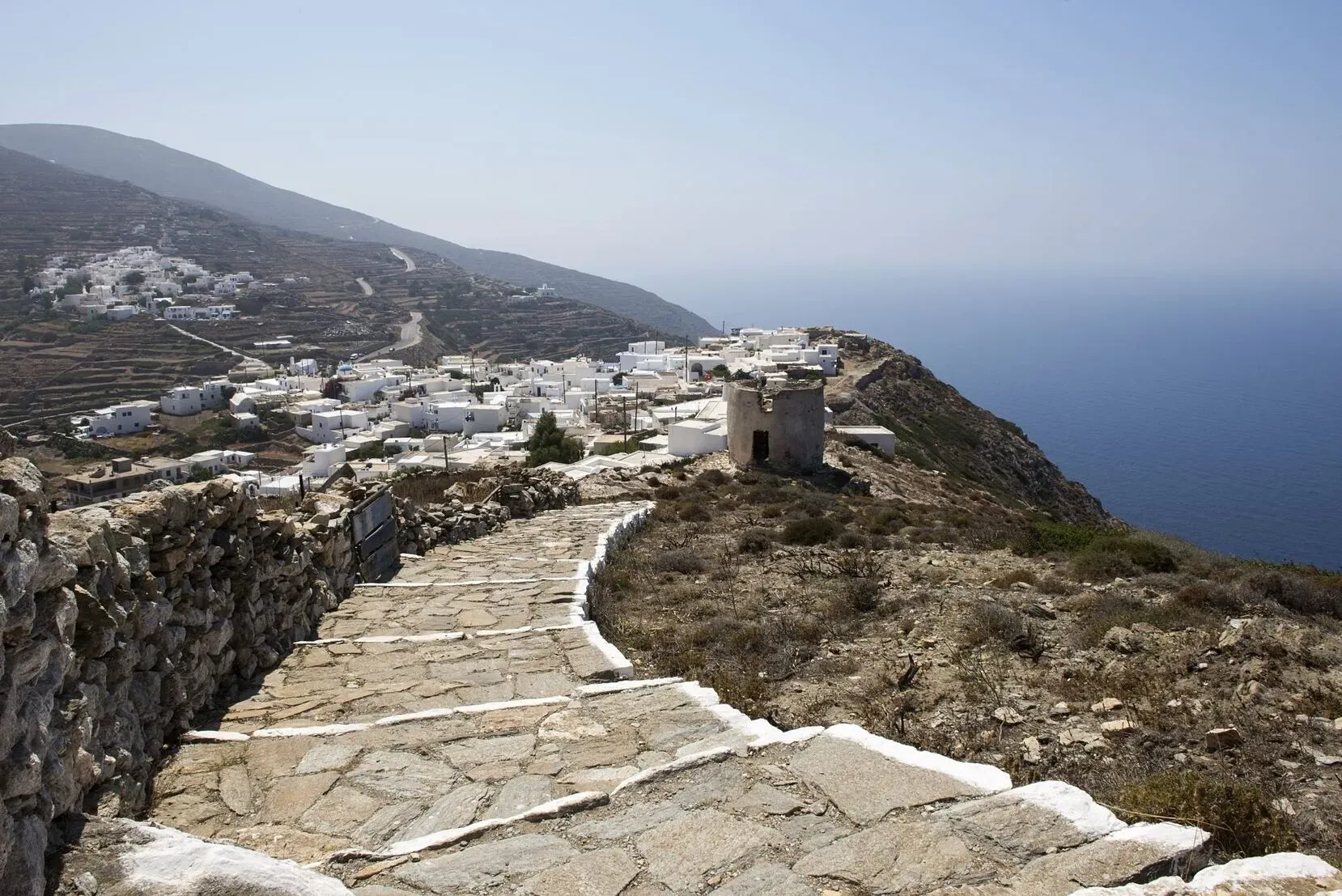
Sikinos, with its 240 inhabitants, is synonymous with simplicity. This small island invites visitors to surrender to its unhurried pace and discover it on foot along its waymarked trails. Along the way, ancient ruins appear, the 17th-century Monastery of Chrysopigi, and a small folklore museum with the old olive press.
Disembarkation point: Kea
Kea, just a breath from Athens, is a favorite weekend retreat for Athenians seeking a close escape. Despite its popularity, it has managed to preserve a laid-back and authentic atmosphere. On the islands beaches, such as Gialiskari and Koundouros, youll find tamarisk trees offering natural shade, amid landscapes that promise moments of pure carefreeness.
For hiking lovers, a trail crosses hills and ravines dotted with oak trees and leads to ancient Karthea. There, the ruins of the ancient city stand proudly above two beautiful beaches, known as Poles. On the slope rise the remnants of an 8th-century BC acropolis, bearing witness to the islands long history. Ioulida, the car-free, cobbled capital, invites you to get lost in its narrow lanes. There, youll find cafés and tavernas on the square, while the small archaeological museum reveals more of the islands past.
Nearby island
Kythnos
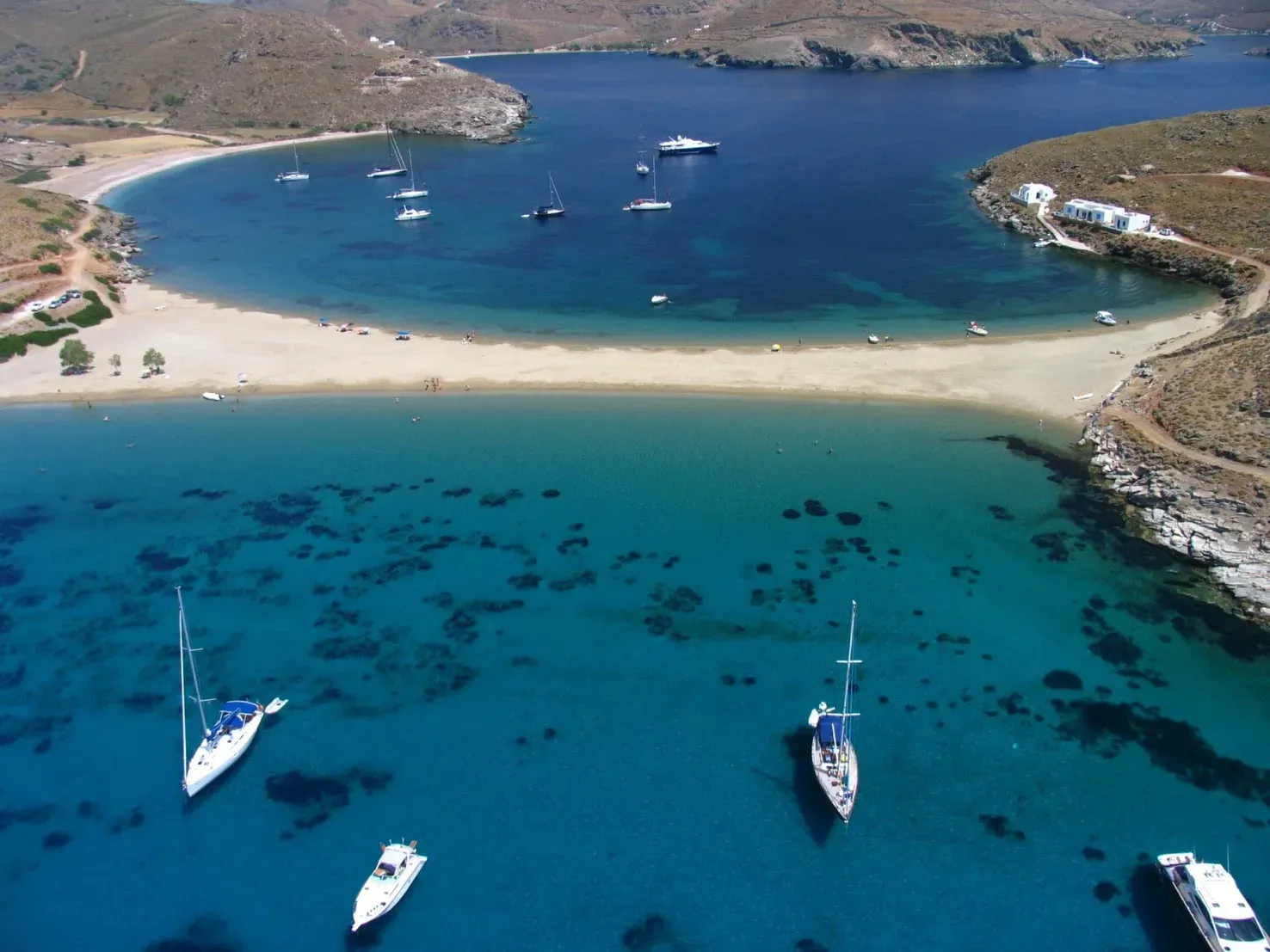
Kythnos is an authentic corner of the Cyclades, with winding roads hugging hillsides scented with thyme and sage that lead to quiet, sheltered beaches. In the port of Merichas and in the picturesque village of Dryopida, whitewashed houses exude traditional Cycladic charm, while in Loutra, natural thermal springs bubbling by the sea offer a relaxing experience that rejuvenates body and soul.
Disembarkation point: Milos
Milos is the island of lovers, a Cycladic gem that captivates with its wild beauty and blue-green waters. The famous statue of the Venus de Milo was found here in 1820, a symbol of harmony and allure. With more than 60 beaches, Milos feels like a natural film set. From the white, lunar landscapes of Sarakiniko to the precipitous beauty of Tsigrado, the island never ceases to surprise.
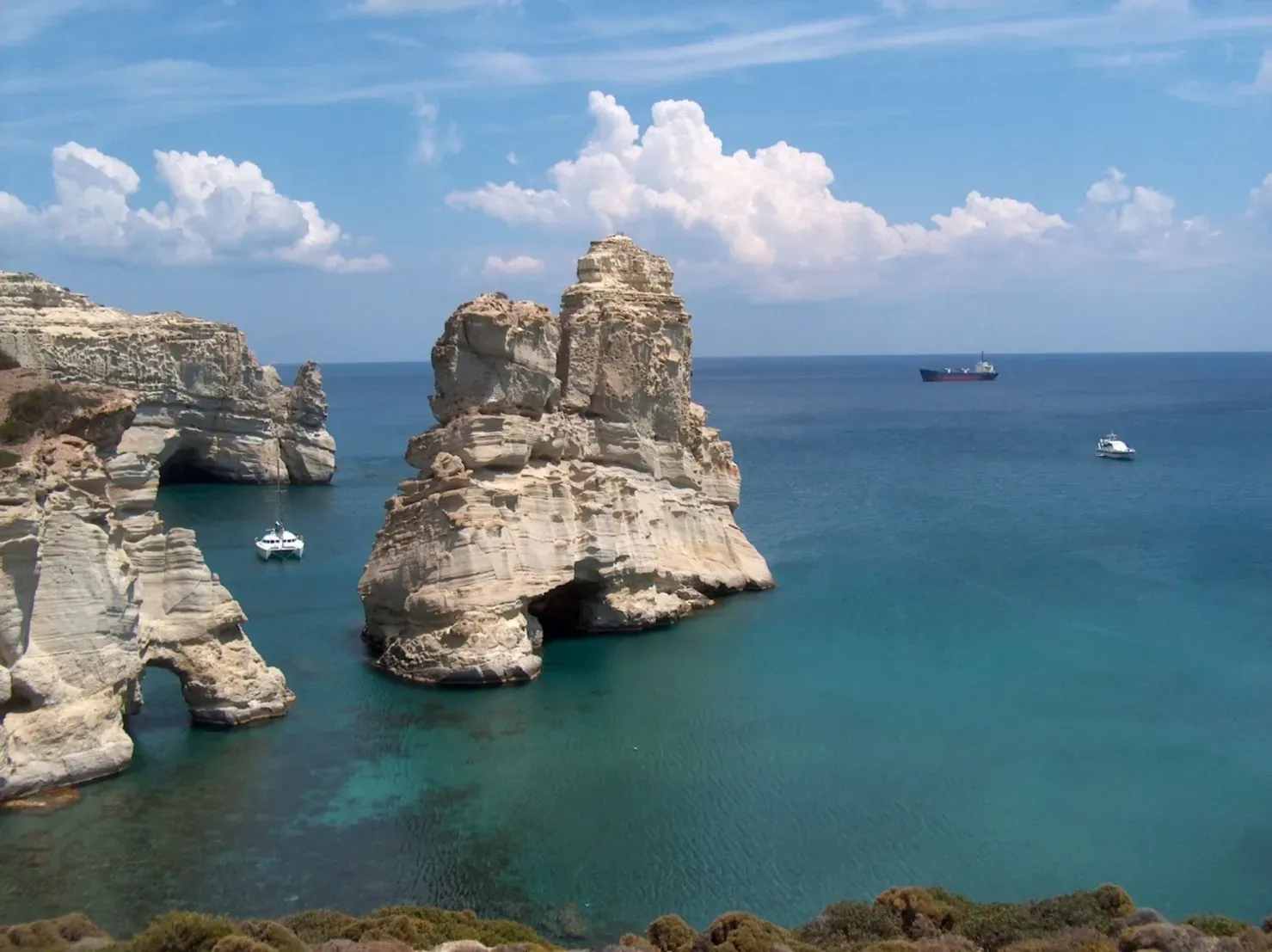
Explore the waters of Kleftiko and Sykia, which reveal sea caves once hideouts for pirates. Visit the seaside settlements of Klima, Mandrakia and Fyropotamos and admire the traditional brightly colored fishermens houses known as «syrmata». For many, the islands most beautiful sunset is in Plaka, the capital of Milos, from the courtyard of the church of Panagia Korfiatissa.
Nearby islands
Kimolos
Kimolos is a radiant island with a discreet character, combining tranquility with natural beauty. Prassa beach dazzles with its turquoise waters, while in the tiny settlement of Goupa, rock-hewn structures with blue doors, the famed «syrmata», tell stories of old fishermen.
Polyaigos
Polyaigos, with only the wild goats that gave it its name as residents, enchants sea lovers. Sheer cliffs rise imposingly above turquoise coves, creating a scene that takes your breath away. If youre lucky, you may spot the Mediterranean monk seal Monachus monachus that finds refuge in this protected Natura 2000 habitat.
Disembarkation point: Mykonos
Glamorous Mykonos has been the ultimate cosmopolitan destination for decades. From royal families and international celebrities to nightlife lovers, everyone finds refuge on its shores, where whitewashed Cycladic houses and traditional chapels coexist harmoniously with luxury hotels and beach resorts.
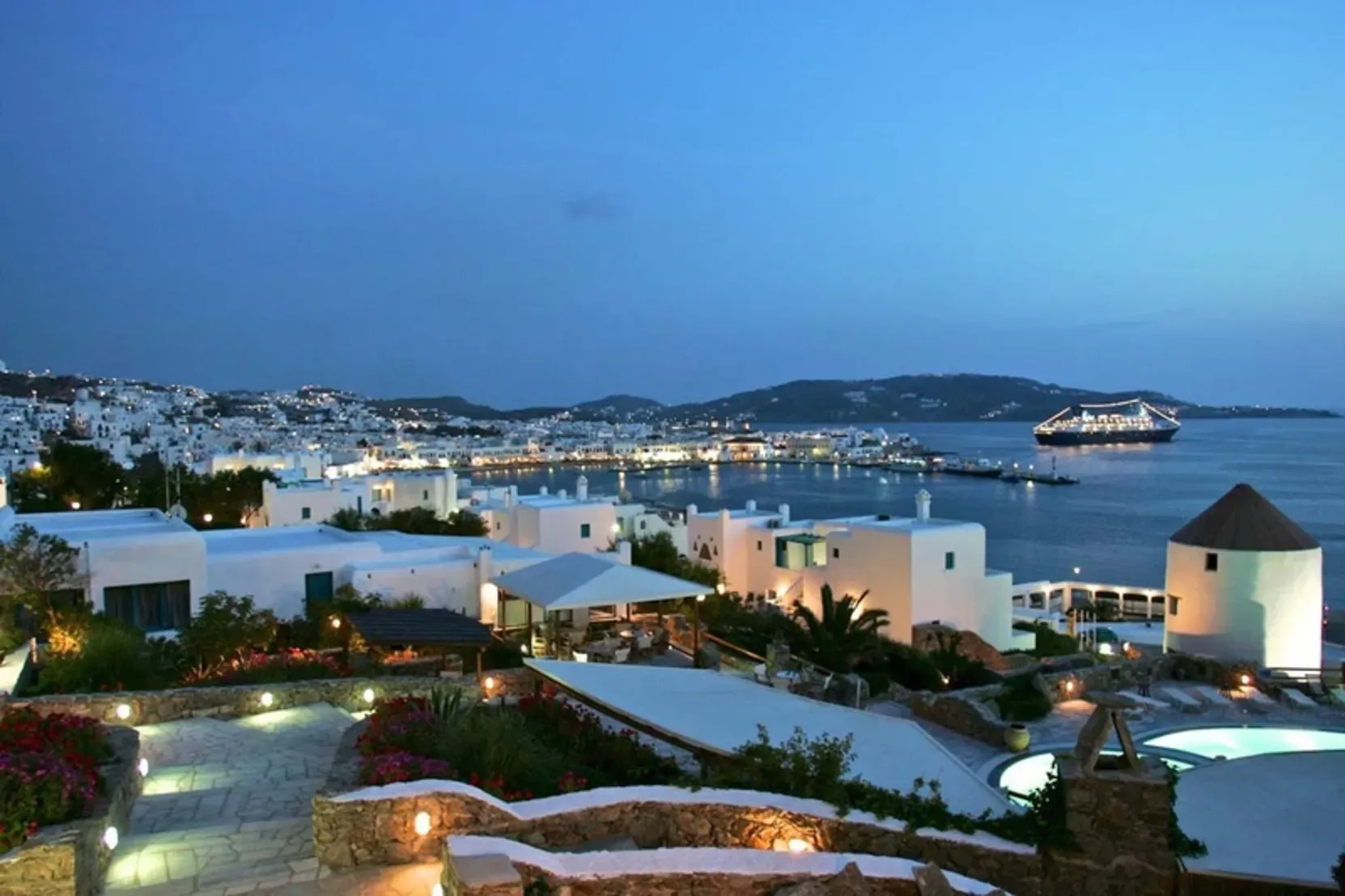
The choice of beaches is inexhaustible, from the iconic Super Paradise that pulses with life, to Kalafatis, which is ideal for water sports, and more secluded Kapari. At night Mykonos Town comes alive and its narrow lanes throng with people. The alleys brim with chic restaurants and bars, some hanging right over the sea in the famous Little Venice with the windmills as a backdrop. Beyond these, youll find boutiques, museums and an open-air cinema.
Nearby island
Delos
Delos, the holiest island of antiquity, is a unique open-air archaeological treasure. According to mythology, this is where the god Apollo was born. In the 2nd century BC, Delos was one of the most important city-states of the Mediterranean. Today, its well-preserved monuments and sanctuaries offer a fascinating journey through time.
Rhenia
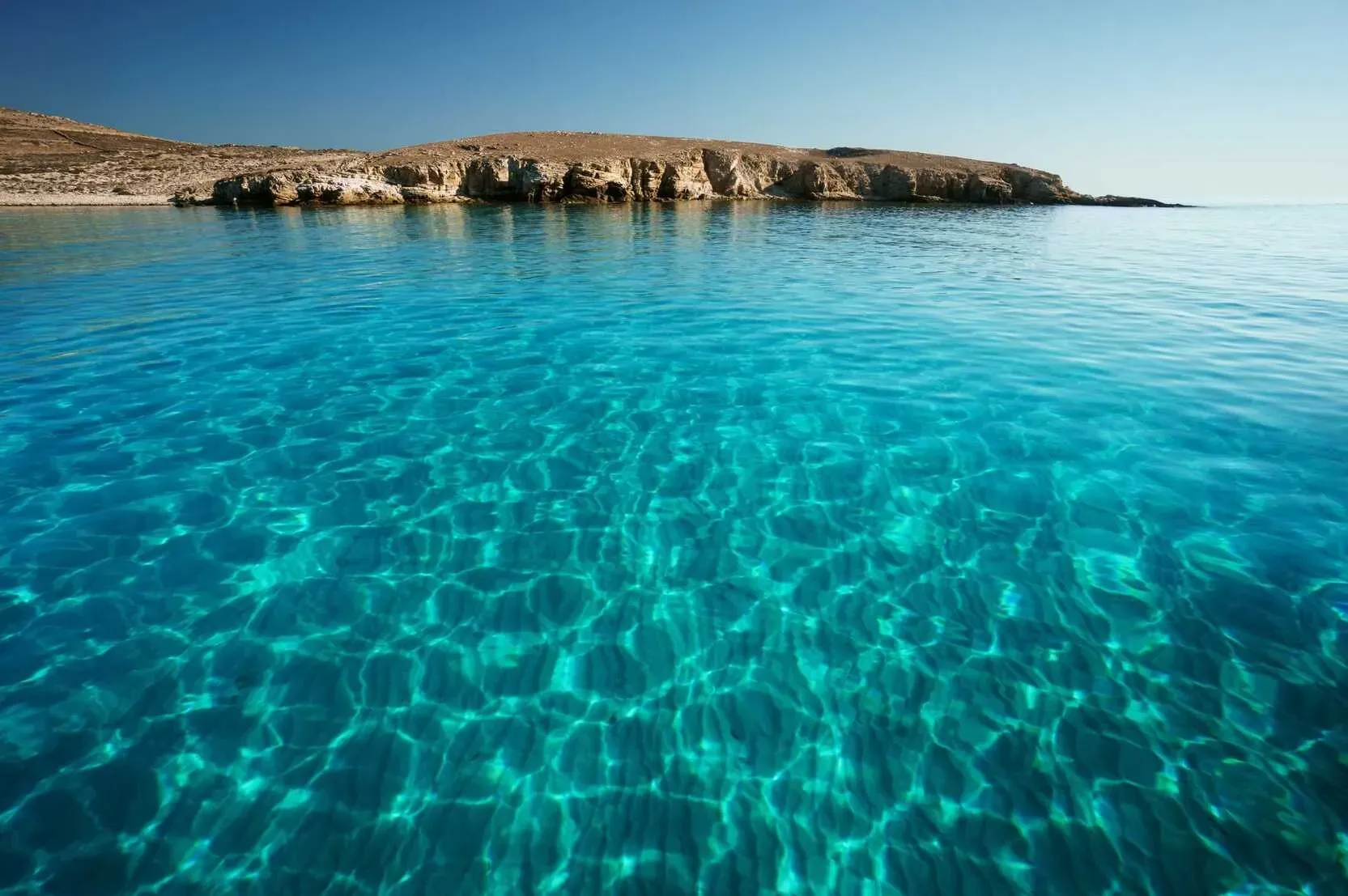
A breath away from Mykonos, Rhenia, with its endless sandy beaches, crystal-clear waters and tranquil atmosphere, feels like a slice of paradise on earth. In antiquity it was the island where the women of Delos went to give birth, while today it attracts sailboats and leisure craft that anchor in its sheltered bays.
Disembarkation point: Naxos
Naxos is a paradise for families as well as for gastronomy lovers. The largest island in the Cyclades blends history, nature and flavor. In Chora, children will get lost in the lanes of the medieval Castle, while adults will discover the fortifications and sights that are scattered across the island. Beaches such as Agios Prokopios and Plaka with calm, shallow waters offer the ideal setting for endless play in the sand.
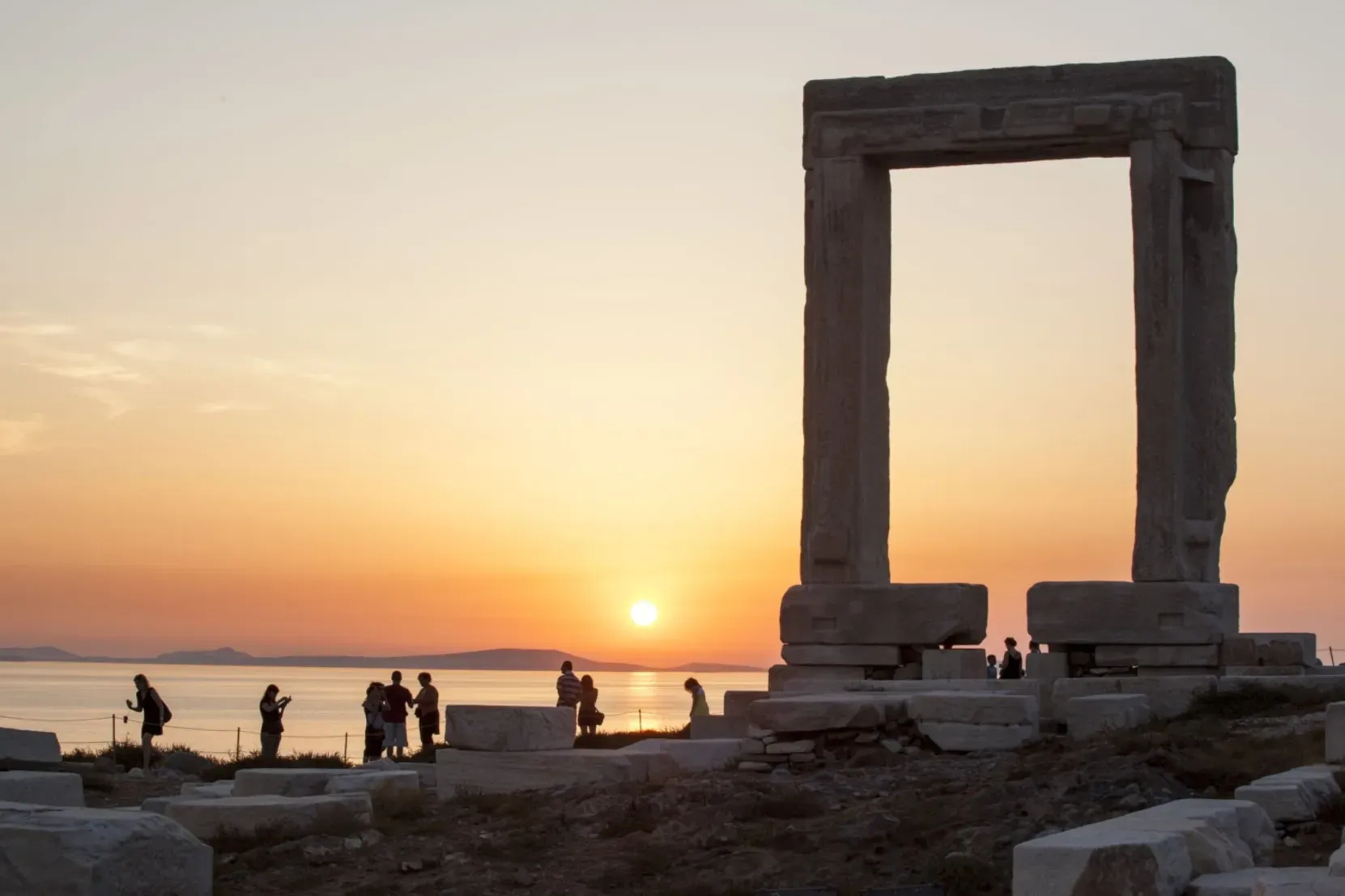
A trip into the interior leads to the picturesque village of Apeiranthos, with its stone-paved alleys and its four museums. Naxos, however, is not only about images but also about tastes, with its famed potatoes and the aromatic slow-aged graviera cheese starring on restaurant menus.
Nearby islands
Small Cyclades
In the Small Cyclades, a cluster of four tiny islands a breath from Naxos, youll find tranquility. On Ano Koufonisi, everything is within walking distance, from the settlement to the beaches. For those who seek even more seclusion, Donousa, Schinousa and Iraklia offer quiet shores and authentic fish tavernas that serve fresh seafood meze.
Disembarkation point: Paros
Paros marries elegance with hospitality, a favorite destination for those who want to enjoy beaches, culture and nightlife. From the golden shores of Santa Maria, Piso Livadi and Golden Beach, which is a haunt for surfers, to the impressive granite formations at Kolymbithres, every beach has its own unique character.
Inland, villages such as flower-filled Lefkes and traditional Marpissa exude an authentic atmosphere, while Panagia Ekatontapiliani in Parikia is one of the most important examples of Byzantine architecture in Greece. In the quaint little port of Naoussa, fishermen unfurl their nets beside tavernas that serve local treats such as gouna (sun-dried mackerel), while cool cocktails are poured in the waterfront bars.
Nearby islands
Antiparos
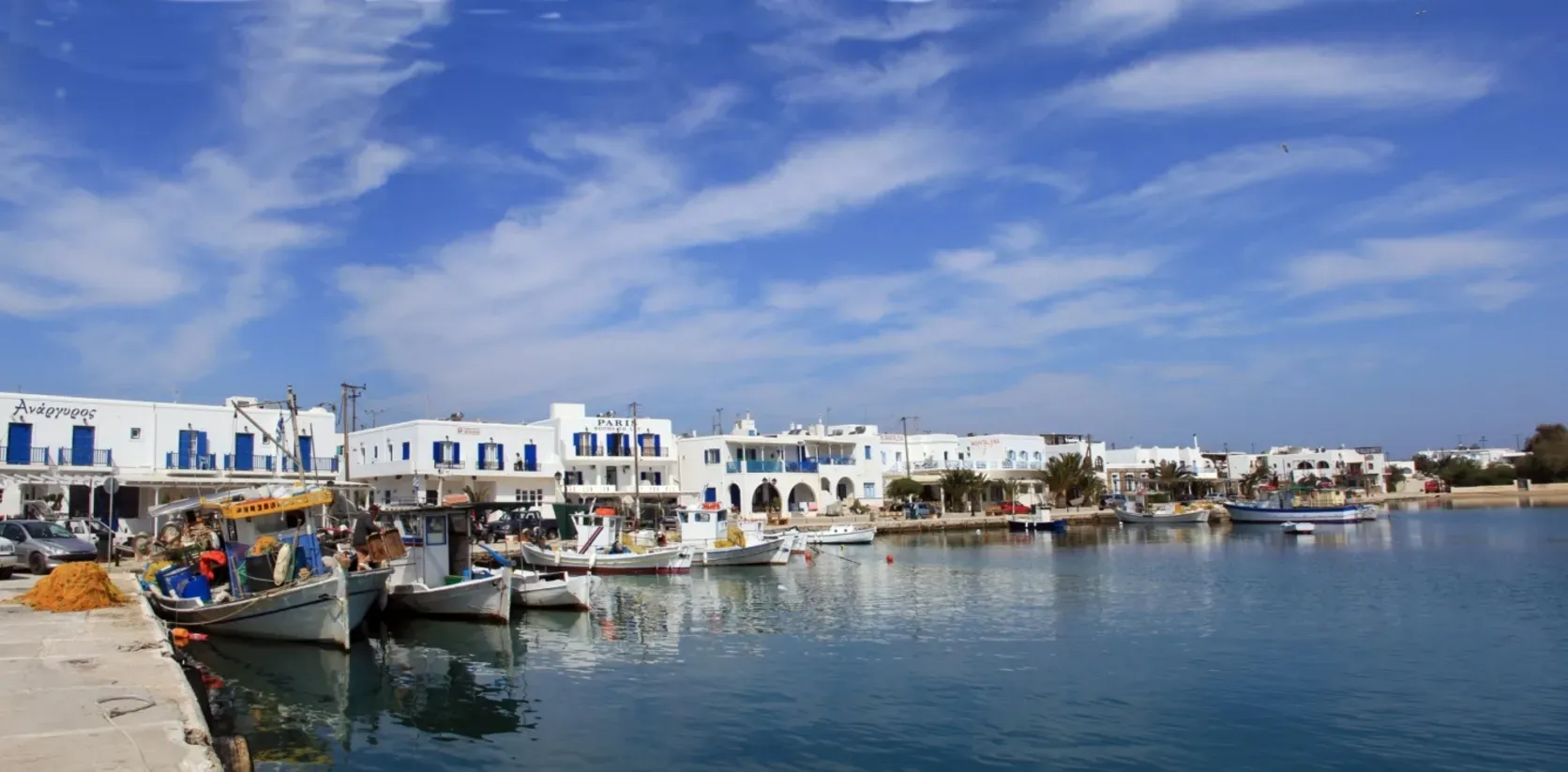
Once a hippie haunt today it attracts travelers of every kind. Antiparos charms with secret coves, clear blue seas and traditional seaside tavernas. Be sure to visit the famous Cave of Antiparos on the hill of Agios Ioannis, with its impressive stalactites, descending its 411 steps.
Despotiko
A short trip by caique from Antiparos leads to Despotiko, a significant archaeological site in the area. The ruins of the Temple of Apollo, which flourished in the 6th century BC, transport visitors back in time to an era when the islet was a center of worship and culture.
Disembarkation point: Santorini
Santorini is a destination that enchants couples and travelers of every age with its famous sunsets and whitewashed houses. The volcano that erupted some 3,600 years ago shaped the strikingly colored cliffs and the caldera, while the ancient city of Akrotiri reveals the life of a Bronze Age settlement.
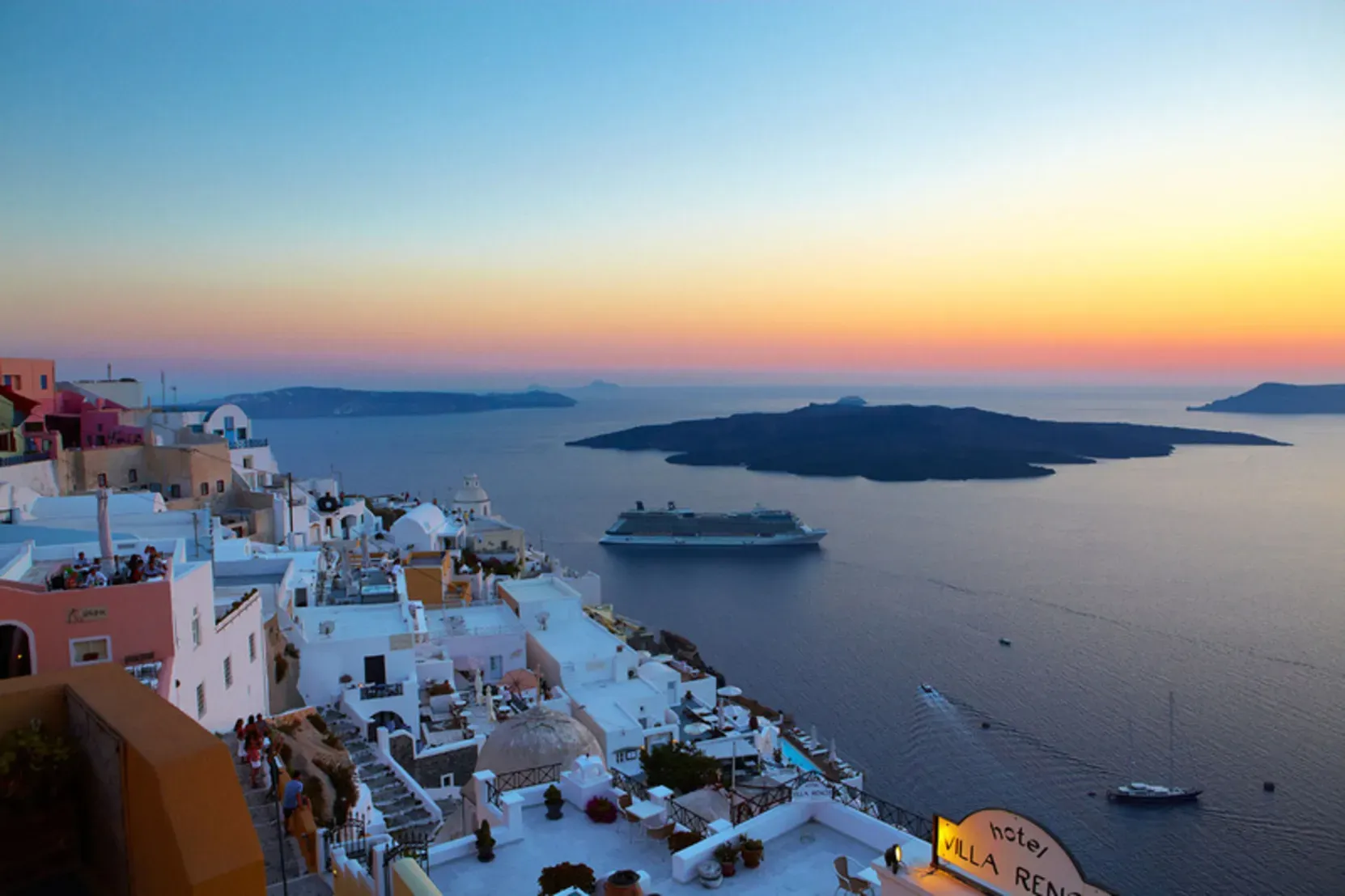
From beaches with black and red sands to the active volcano of Nea Kameni and family-run wineries, Santorini offers a variety of experiences. Dont miss the chance to taste the famous fava, cherry tomatoes and white eggplants that define the islands flavor.
Nearby islands
Anafi
Anafi is the island-epitome of simplicity. Hikers head to Mount Kalamos, where the 18th-century Monastery of Ano Panagia Kalamiotissa offers stunning views over the Aegean. In Chora, the only village, a handful of tavernas serve home-style specialties, fish soup and a salad with capers.
Folegandros
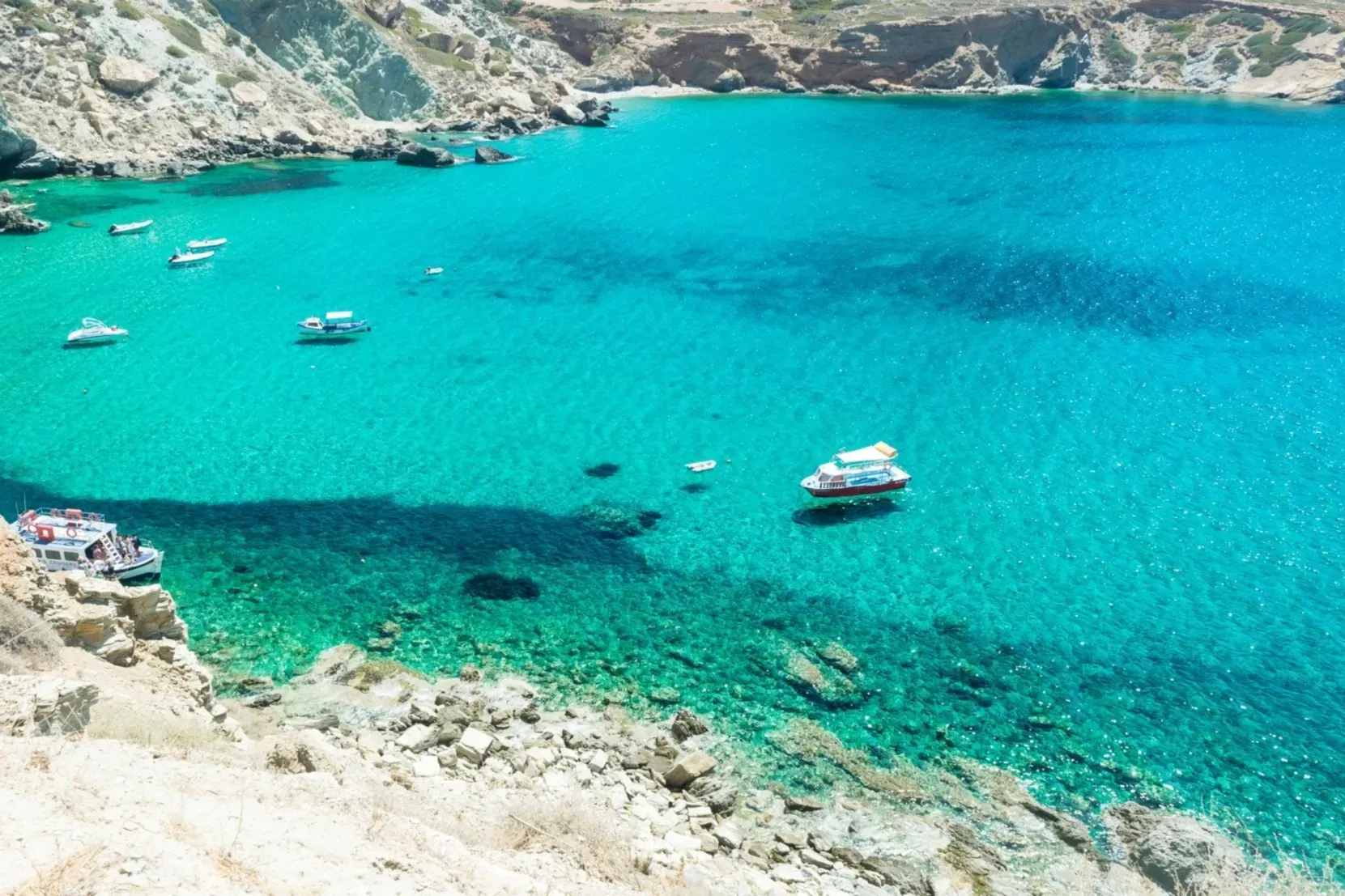
Folegandros is a more rugged island, with cobbled paths that cross the arid landscape, leading to churches, windmills and hidden beaches. The islands Chora, where visitors congregate, is considered one of the most beautiful in the Cyclades, with squares that provide shade, bougainvillea, white houses, little tavernas and intimate, atmospheric bars.
Thirasia
The tiny islet of Thirasia, which is accessible by boat from Oia, offers a return to a Santorini of another era. Trails link inhabited and abandoned villages, small coves and 19th-century chapels. In the port of Riva, old fish tavernas serve fresh seafood beside the water, while the hillside village of Manolas offers sweeping views of Santorini.
Disembarkation point: Sifnos
Sifnos is a destination that weaves together tradition, gastronomy and natural beauty. Sailors make for the islands calm bays to shelter from the meltemi and to savor traditional dishes, such as revithada and wine-cured manoura cheese. A 200-kilometer network of trails links ancient towers, windmills and dovecotes amid wildflowers.
On the east coast, the imposing fortified settlement of Kastro stands above the gorgeous church of the Seven Martyrs that looks like a postcard. In the island capital Apollonia, when the sun goes down, fairy lights twinkle along the bougainvillea-lined street, while the tavernas, bars and boutiques with handmade ceramics and jewelry fill with people.
Nearby island
Serifos
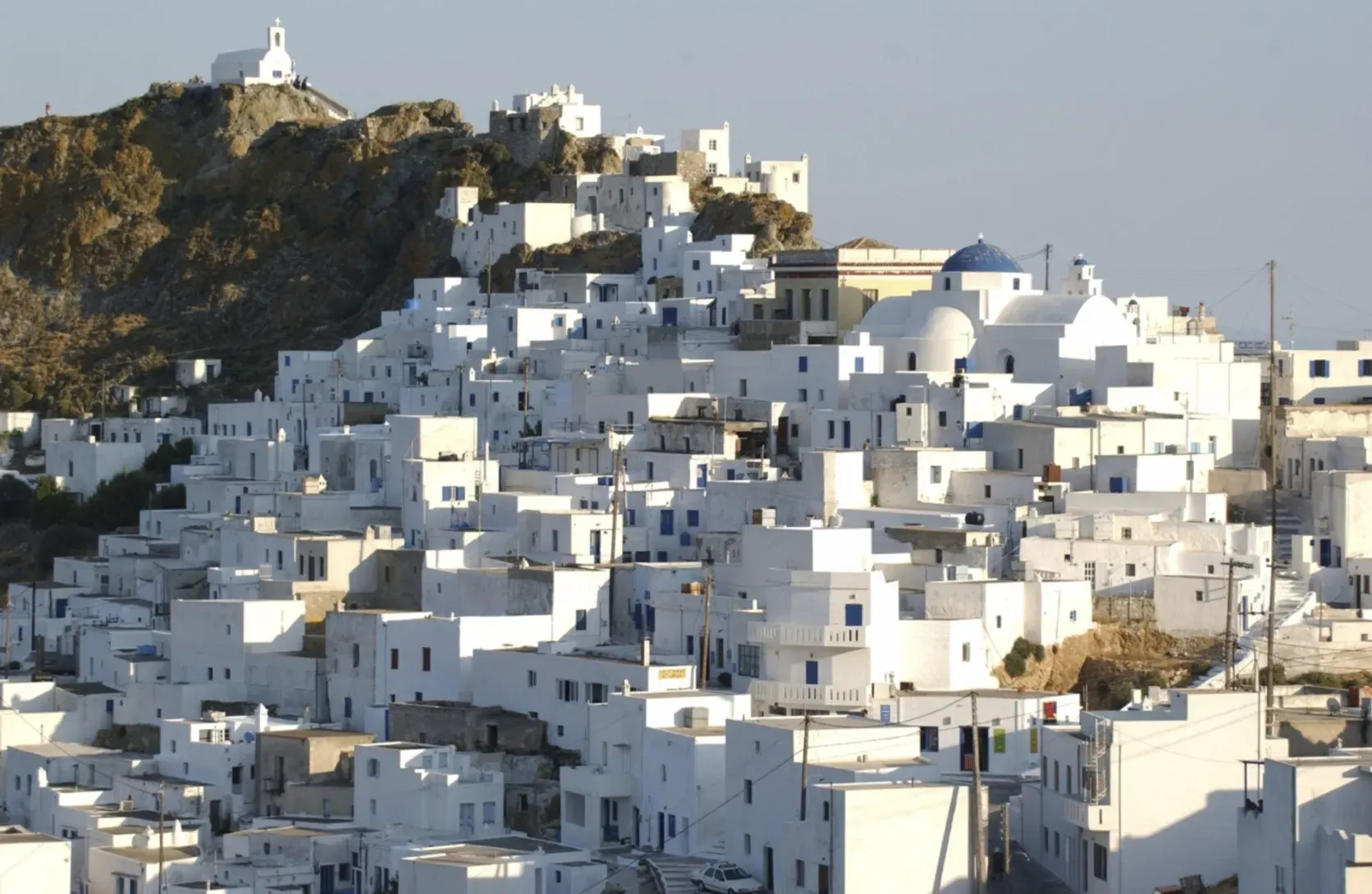
Tiny Serifos remains a hidden gem despite its proximity to Piraeus. Its worth staying in Livadi, the islands port, which is an ideal base to explore superb beaches such as Psili Ammos and Agios Sostis. If you want to enjoy a magical sunset, climb to the ruins of the castle atop Chora.
Disembarkation point: Syros
Syros stands apart from the other Cycladic islands thanks to its distinctive personality and shipbuilding tradition. In the refined capital, Ermoupoli, neoclassical buildings take the place of the Cyclades traditional whitewashed houses. On the waterfront of the aristocratic Vaporia quarter, mansions adorned with frescoes stand beside the imposing Apollon Theater.
On one of the two hills sprawls the settlement of Ano Syros, crowned by the Catholic church of Saint George. Once a refuge from pirate raids, today it comes alive at night as the paved alleys fill with the sound of rebetiko music.
Nearby islands
Tinos
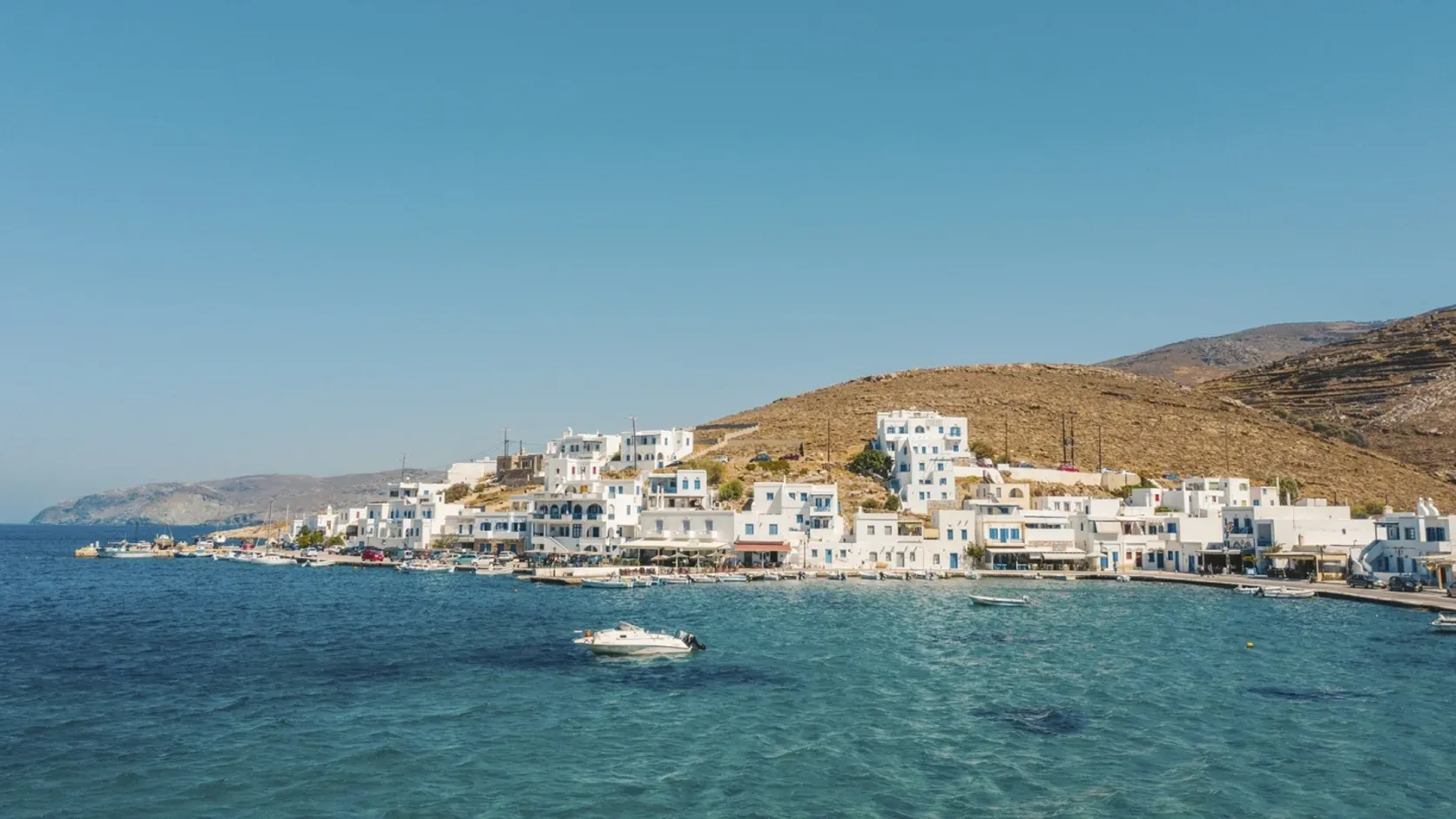
Tinos becomes a destination for pilgrims every August, due to the Church of Panagia Evangelistria. But the island is not confined to its religious side, as it is also ideal for hikers. Trails cross hills fragrant with herbs and pass by white dovecotes and traditional villages. Tinos is also a rising gastronomic destination, with producers, pioneering restaurants and innovative winemakers.
Andros
With its verdant hills, streams and stone bridges, Andros stands out from the other Cycladic islands. An extensive network of hiking trails weaves through villages full of plane trees, cypresses and olive groves. The island of shipowners also hosts cultural treasures, such as the Museum of Contemporary Art of the Goulandris Foundation, one of the first museums of contemporary art in Greece.