





Traditional villages with cobbled alleys and blooming courtyards, lush landscapes and gorges that beckon you to explore them - Spring is a perfect match for these picturesque villages of Crete.
Just before summer sets in and we set sail for the island’s enchanting beaches, we head to the mountains to discover some of the most picturesque villages of Crete. The escape plan includes strolls through traditional settlements, great food and delightful hikes along flower-filled paths, mountain peaks and gorges. For lovers of authentic Crete, we chose 7 wonderful villages, from Chania to Lasithi, that are ideal for getaways at this time of year.
Archanes, Heraklion
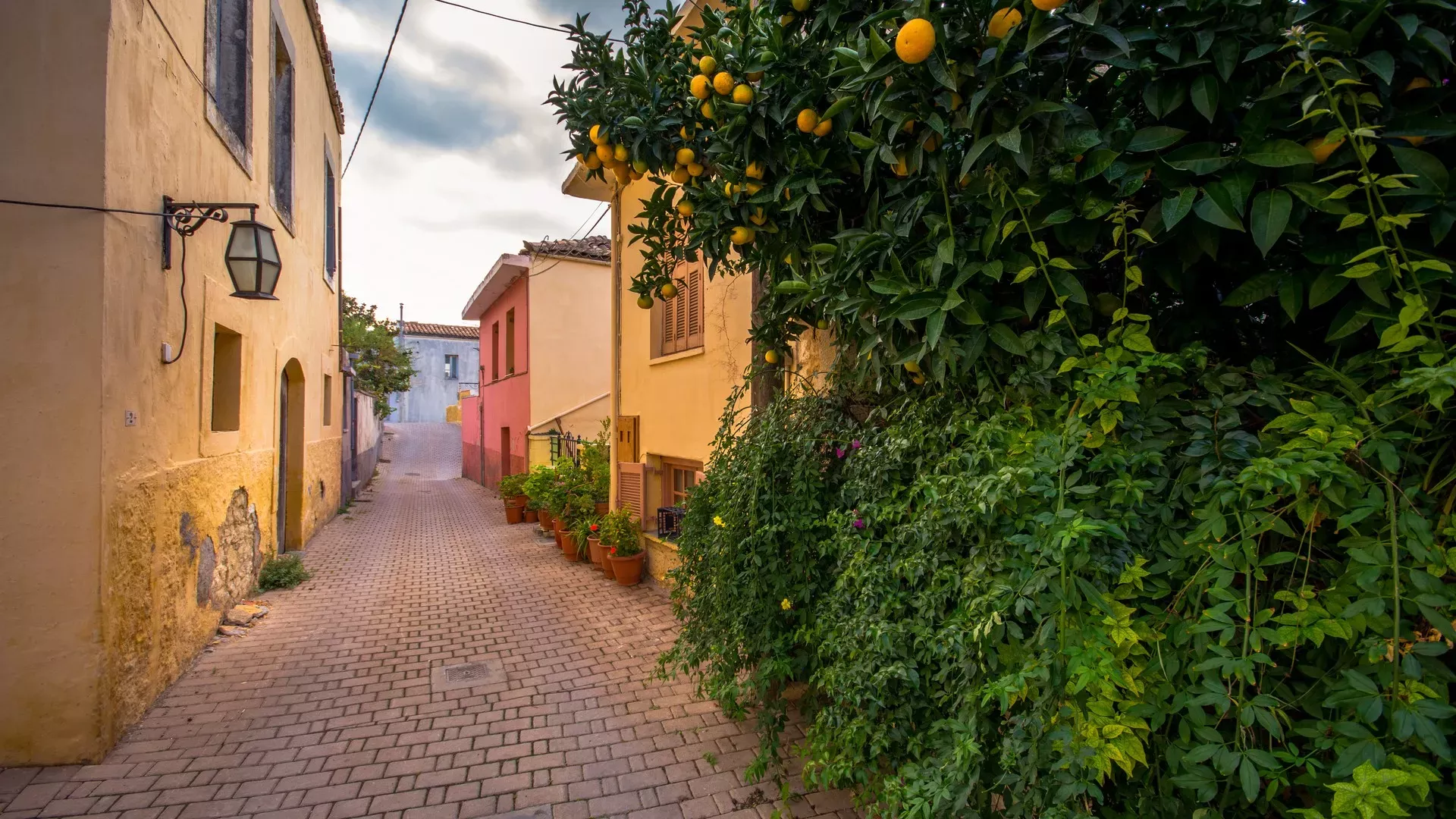
Just 15 km from the city of Heraklion and only 7 km from the Minoan palace of Knossos, you will encounter one of Crete’s most charming and renowned settlements, Archanes.This colorful village, built at an elevation of 380 meters on the northeastern edge of the Yuchtas valley, has been awarded in a European Union competition and stands as a model to emulate in terms of residential development. The houses have been restored with artistry, care and, above all, respect for local tradition.A stroll through the traditional settlement, with its cobbled alleys, well-preserved houses and flower-filled courtyards, is delightful.
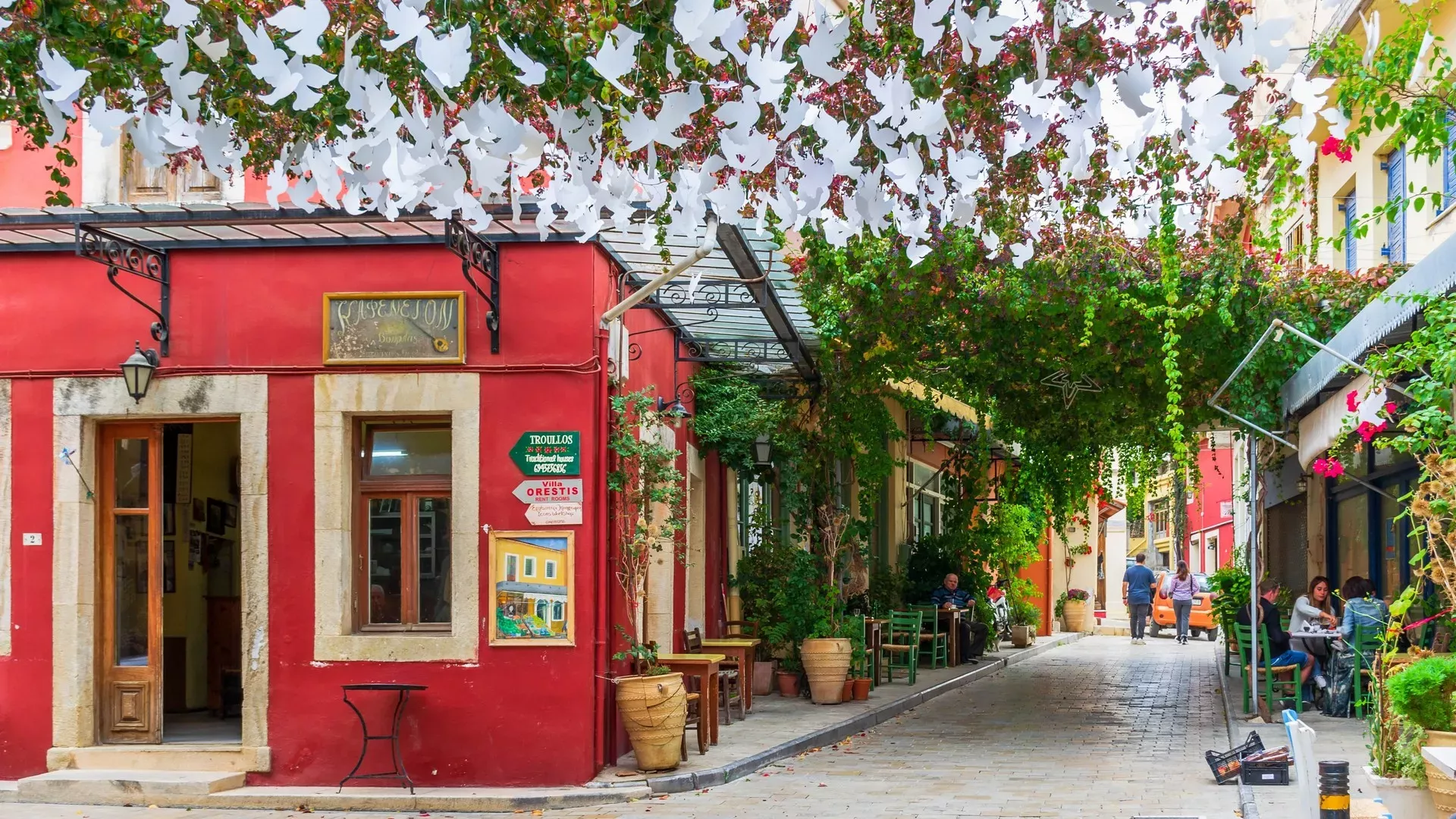
In Archanes you’ll find interesting museums (Folklore, Archaeological, Cretan History and Tradition), lovely shops for handicrafts and local products, and tavernas where you can taste authentic Cretan flavors along with the famous local wine. Also make a stop at the restored "Fabrika Eleni" to learn all about the traditional way of producing olive oil.Hiking enthusiasts can climb Fourni Hill with its Minoan cemetery and walk the trails of Yuchtas, the Minoans’ sacred mountain, which rises to 811 m.
Zaros, Heraklion
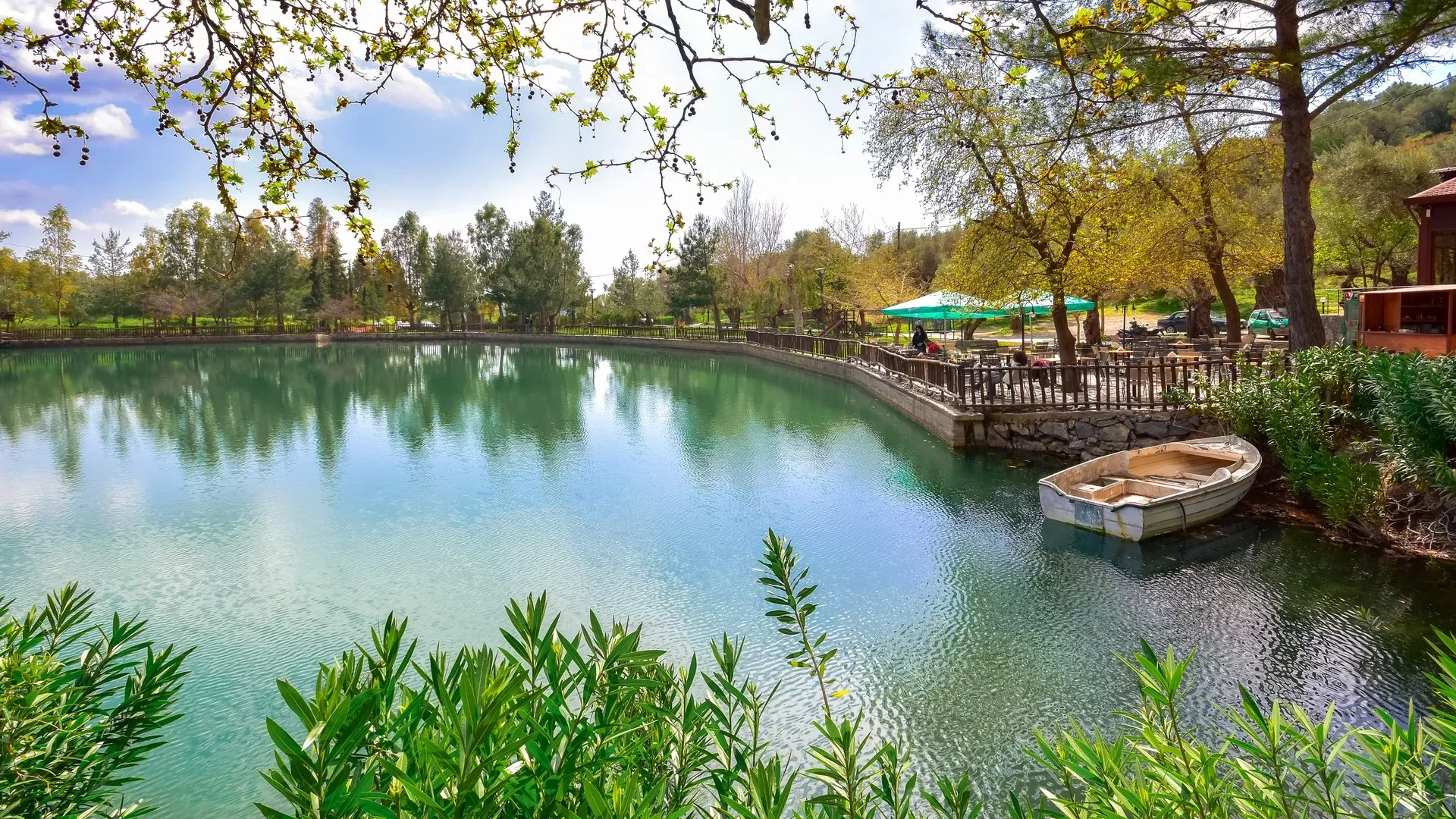
Built at the foot of Psiloritis, in a lush green valley at an elevation of 450 m, Zaros is a picturesque and historic main village famed for its abundant waters, its gorge, and the important ecclesiastical monuments in and around it. The most popular attraction is the artificial lake of Zaros, or Votomos (1 km north of Zaros), where you can wander amid greenery and plane trees and, when your appetite stirs, sit down for a meal at the tavernas there.
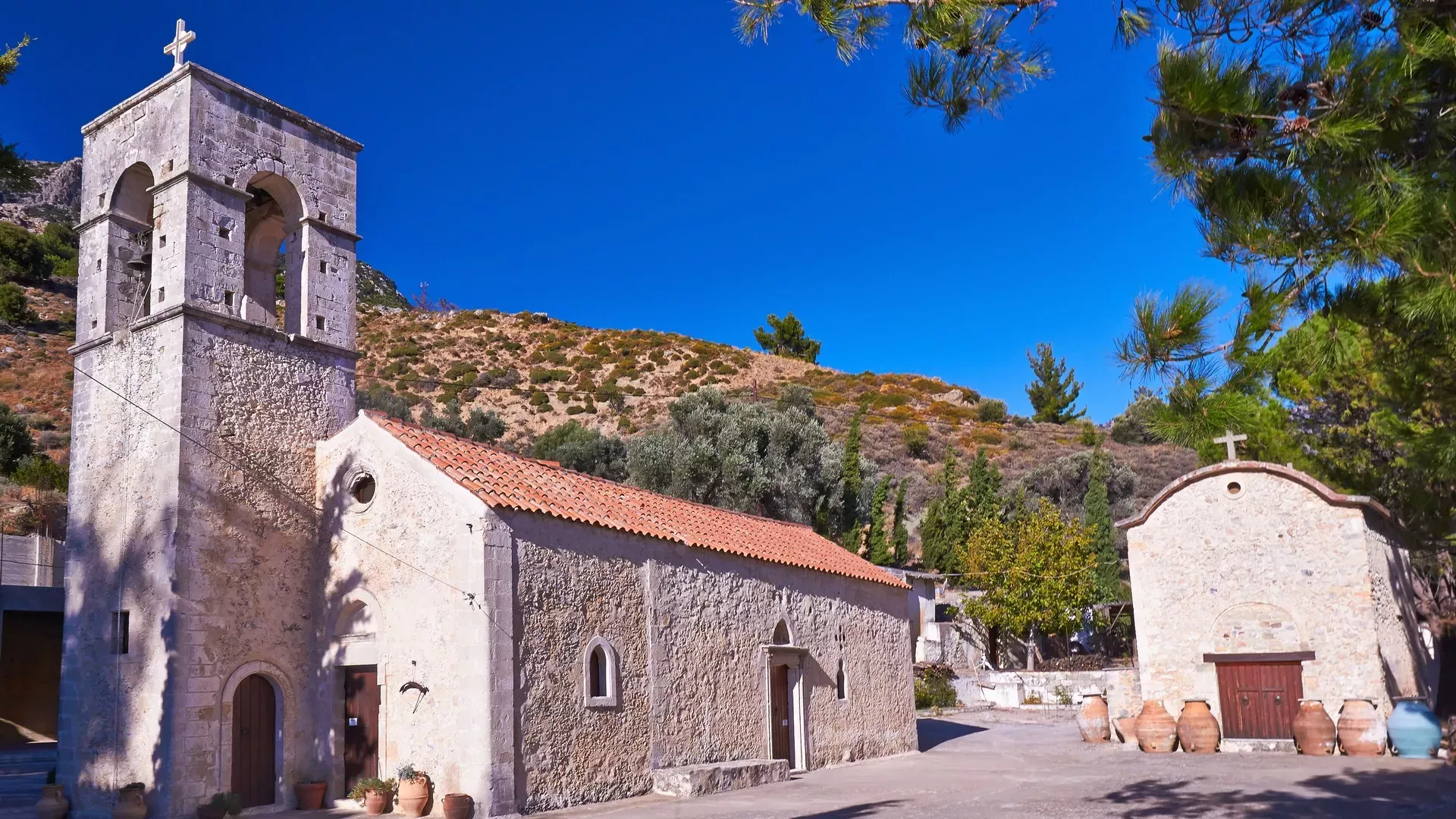
Starting from the lake you can follow the path that leads through the gorge of Agios Nikolaos, where the namesake monastery is located, and visit the verdant Rouvas Forest, one of the largest and most beautiful in Crete. The historic monasteries (Vrontisi Monastery, Varsamonero Monastery, etc.), as well as the archaeological sites of Gortyna and Phaistos nearby, invite exploration.
Vamos, Chania
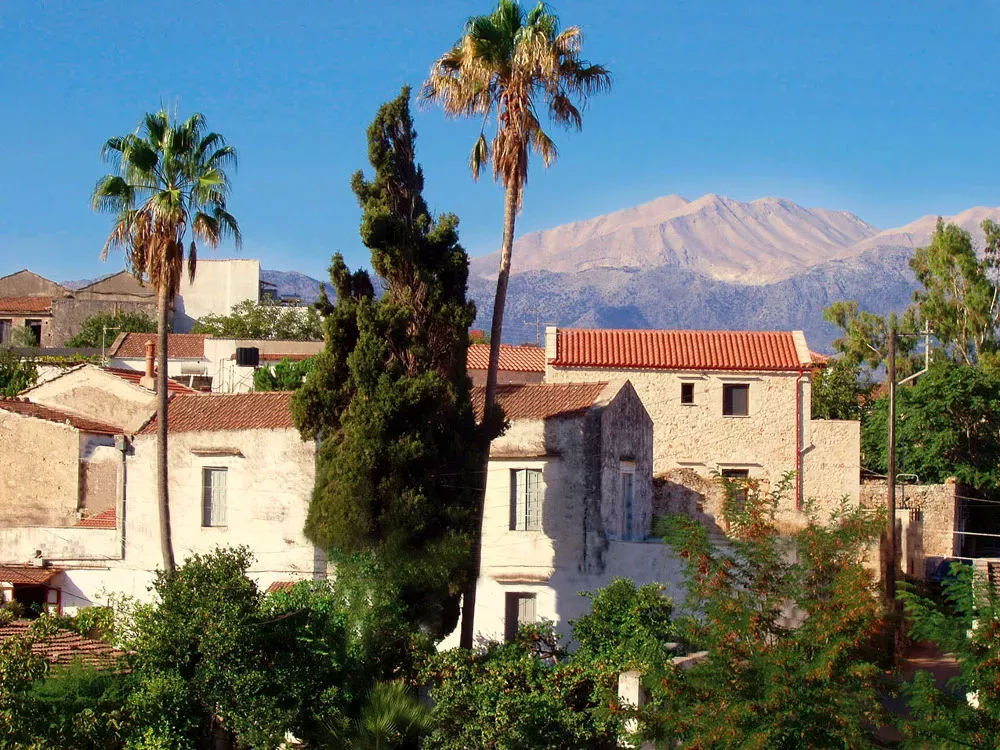
In Western Crete at the foot of the White Mountains, 25 km from the town of Chania, you’ll find a scene reminiscent of Tuscany. If you want a true taste of Cretan life and countryside—warm hospitality in a rustic stone-and-wood guesthouse, pure local flavors, coffee or tsikoudia in a traditional kafeneio, strolls along stone-paved lanes and into the fields, and the fragrance of blooming flowers—then Vamos is the ideal village for you.
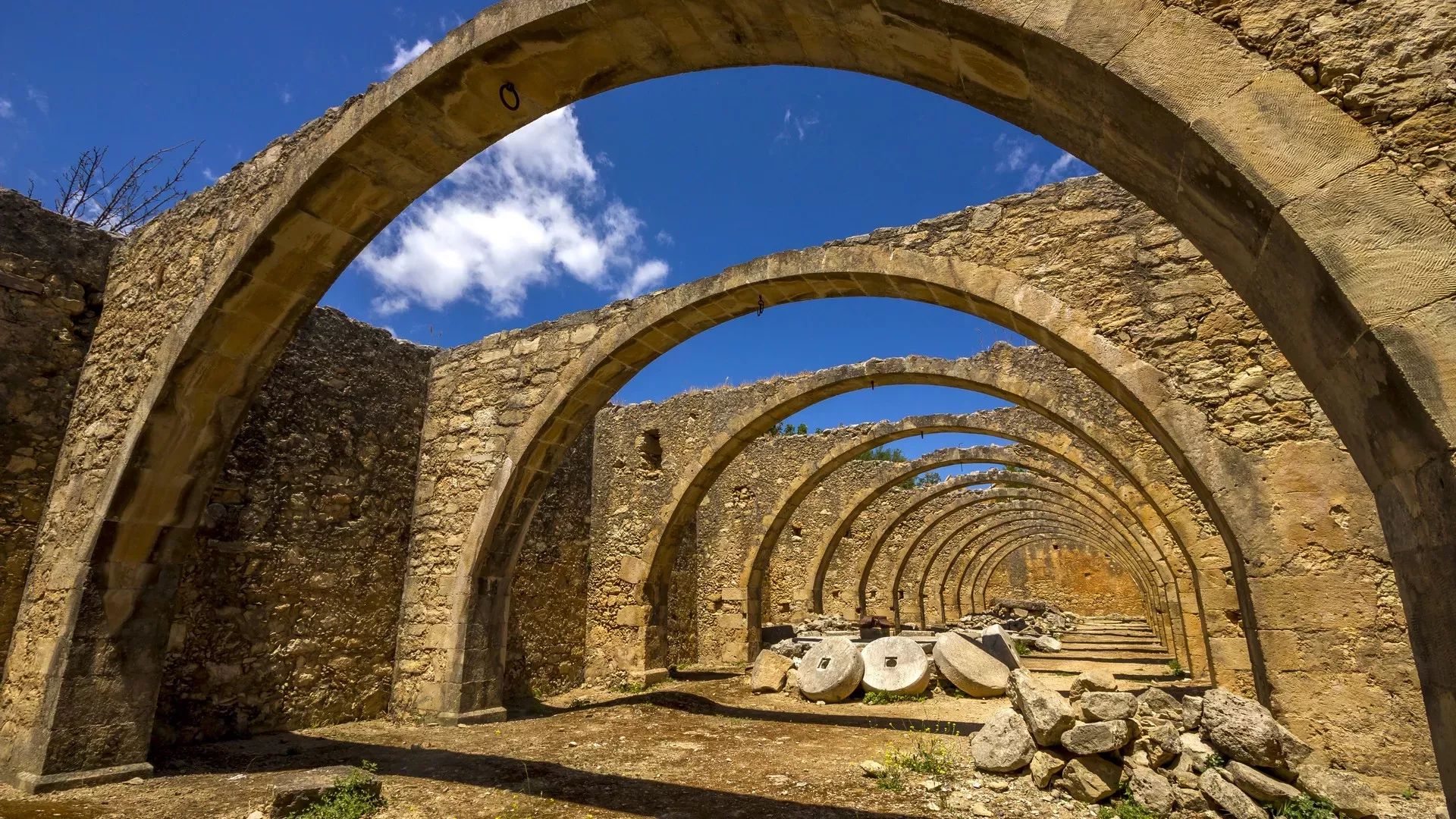
This is one of the loveliest traditional settlements of Chania. Buildings from the 18th, 19th and early 20th centuries have been restored with great care and respect for tradition and architectural heritage, and converted into beautiful guesthouses. The preserved traditional stone road, the old neighborhood, the Chapel of the Virgin Mary (a 13th-century monument) and Karidi Monastery with its remarkable olive press of 12 arches complete the enchanting scene.
Theriso, Chania
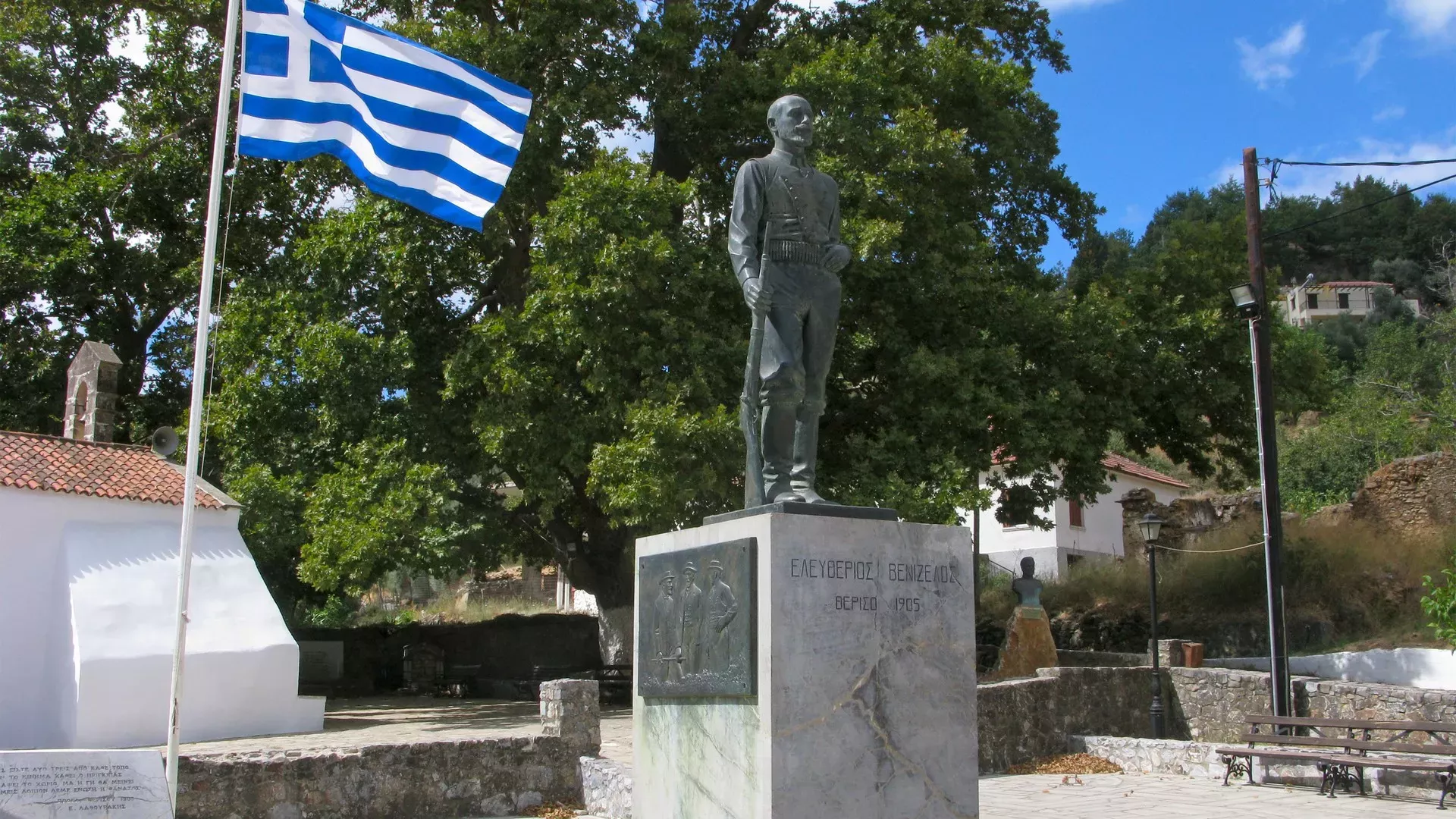
Set in a beautiful, lush valley 15 km south of Chania, Theriso is a lovely village with a rich history. Here, on March 10, 1905, fighters from all over Crete gathered under the leadership of Eleftherios Venizelos and declared an armed revolutionary struggle against Prince George II, seeking the union of the island with the rest of Greece. To reach the village, you’ll pass through the superb Theriso Gorge, literally drenched in green. Theriso is a genuinely Cretan village, with traditional houses, kafeneia and well-kept streets. There are two churches, of the Panagia and of Agios Georgios, as well as two museums (Historical-Folklore and National Resistance Museum), while in the central square stands the statue of Eleftherios Venizelos. A stop at the village’s famous tavernas for juicy meats and traditional Cretan dishes, such as apaki, syglino, and tsigariasto lamb, is a must.
Margarites, Rethymno
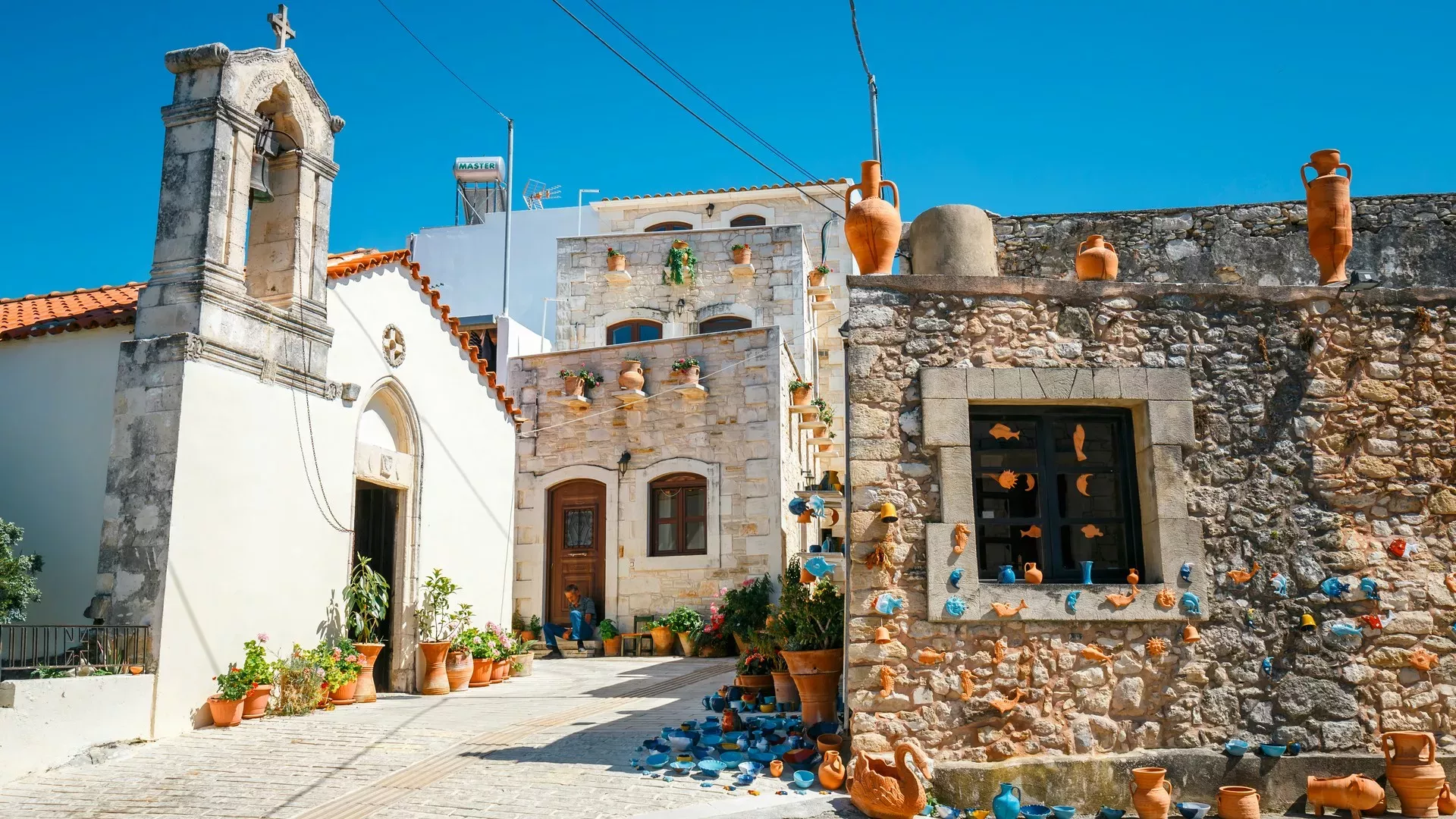
Margarites, the beautiful village of potters, lies on the northern foothills of Psiloritis, at an elevation of 300 m and 27 km from Rethymno. It is a place with a unique color and character. The village’s pottery tradition (considered the largest pottery center in western Crete) is evident everywhere. As you wander the picturesque alleys you’ll see large clay pots outside every house, ceramics hanging on the walls and pitharia adorning the flower-filled gardens. Today, at least 16 pottery workshops operate here, where you can buy ceramics and watch artisans working in the way of their forebears.
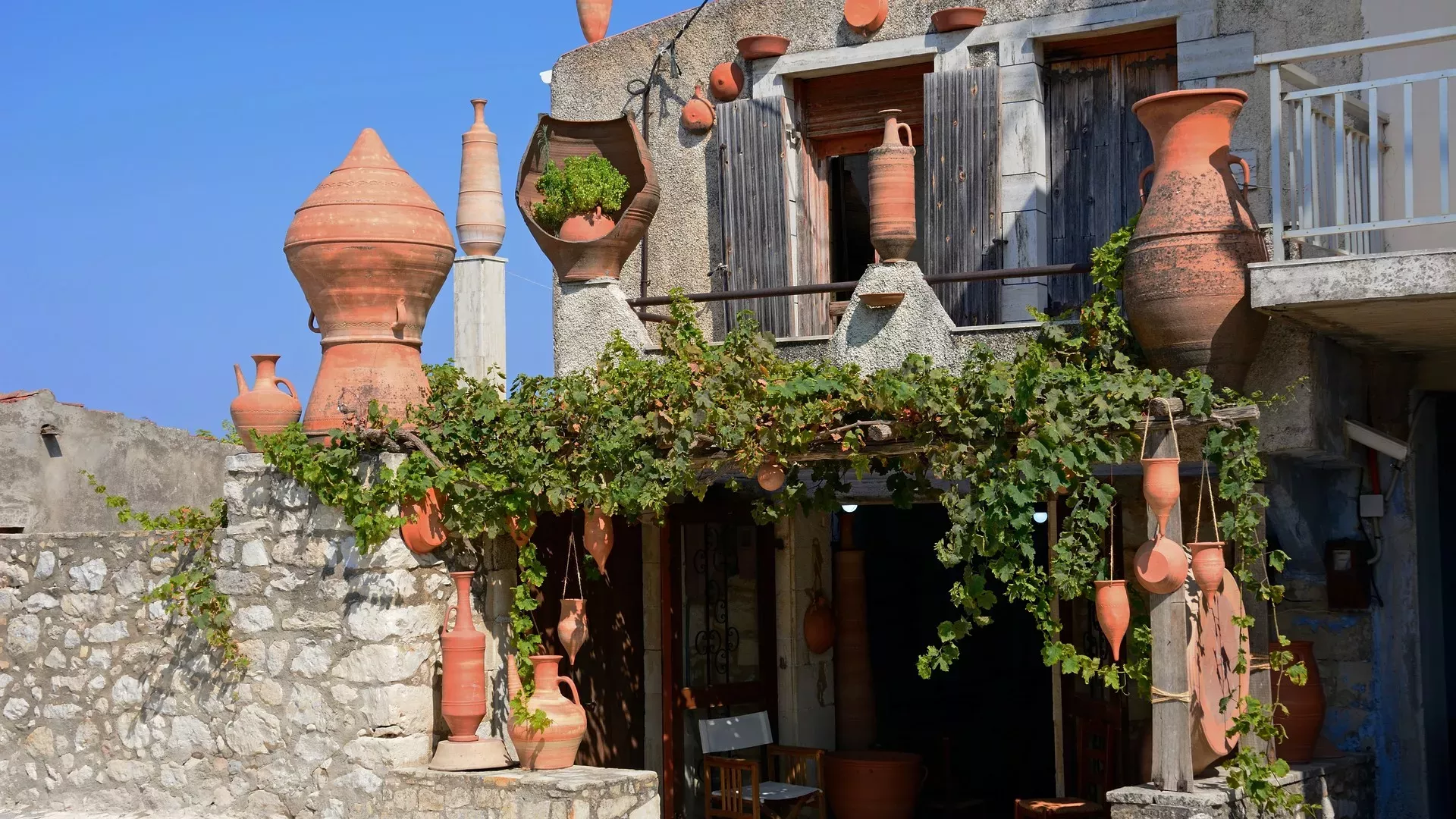
In Margarites there are many churches in and around the village. Visit the oldest, St. John the Theologian, with its stone iconostasis. On the eastern side of the village, amid lush nature, stands the 16th-century Monastery of the Savior Christ and St. Gedeon, offering lovely views of the area. Hikers can follow the path that leads to the gorge, along beautiful routes. Alternatively you can enjoy views of the gorge from the south of the village.
Argyroupoli, Rethymno
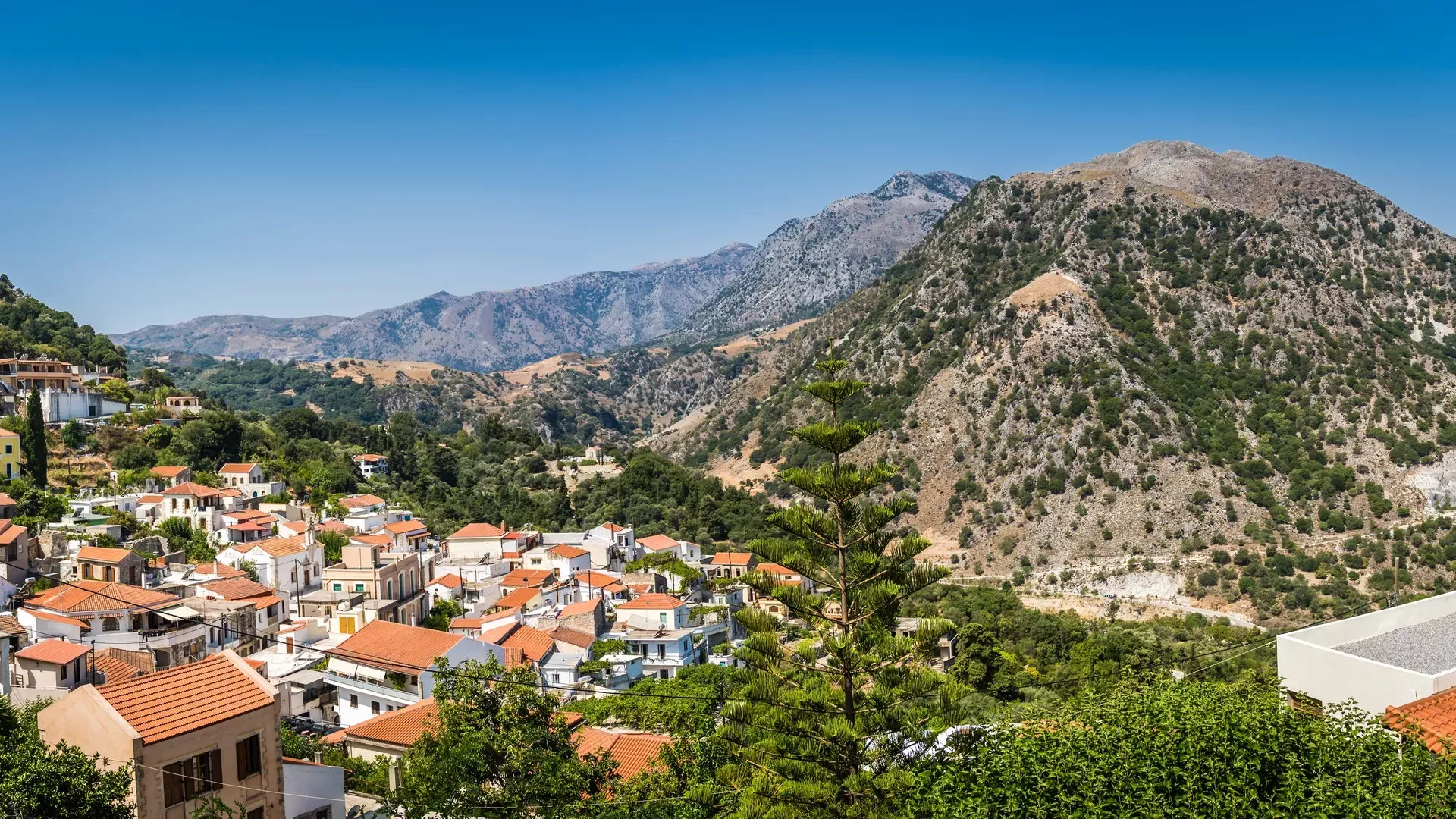
Near the Chania–Rethymno border you’ll find this picturesque mountain village, known for its springs and verdant landscape. Argyroupoli has been designated a traditional settlement and is built atop the ruins of Ancient Lappa, one of the most powerful cities of the Mycenaean period, said to have been founded by Agamemnon. Today, in the village you can see ancient and Venetian architectural material incorporated into many houses. A stroll through Argyroupoli’s alleys, in its two neighborhoods, brings you to splendid Venetian mansions. The village preserves many important remains, including two Roman baths, three basilicas and statues of Aphrodite, Zeus and Dionysus. Near the settlement are rock-hewn Roman tombs, as well as a small chapel dedicated to the Five Virgins.
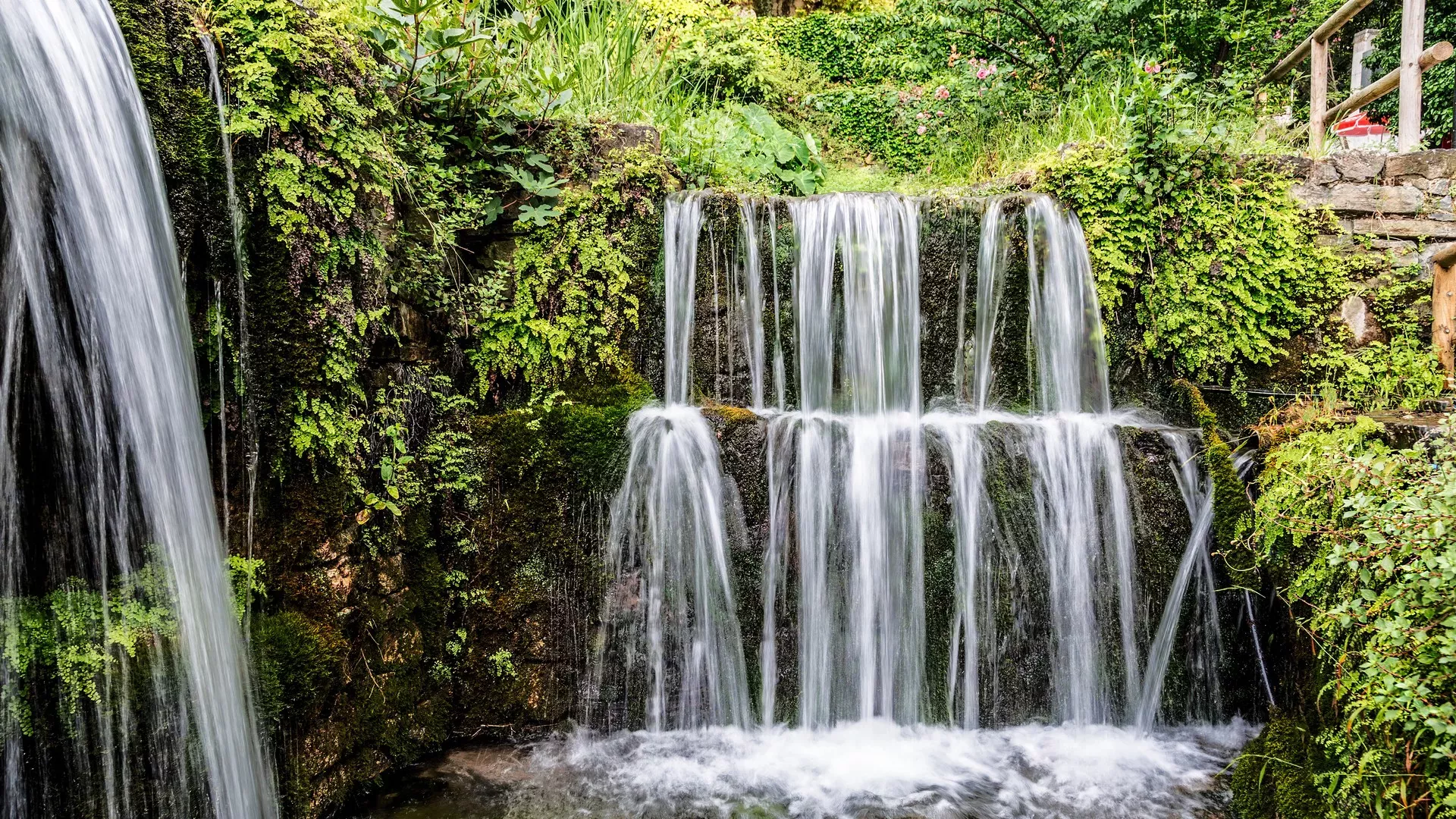
A little beyond the village you’ll come upon an idyllic place with dense vegetation, centuries-old trees, running waters, small waterfalls, ponds and watermills. The scene is lush and beautiful. At the springs of Argyroupoli, or the springs of Agia Dynami, you’ll find several noteworthy tavernas serving traditional flavors and local meats. Another attraction in the area is the chapel of St. John, carved into the rock at the springs of Agia Dynami.
Kritsa, Lasithi
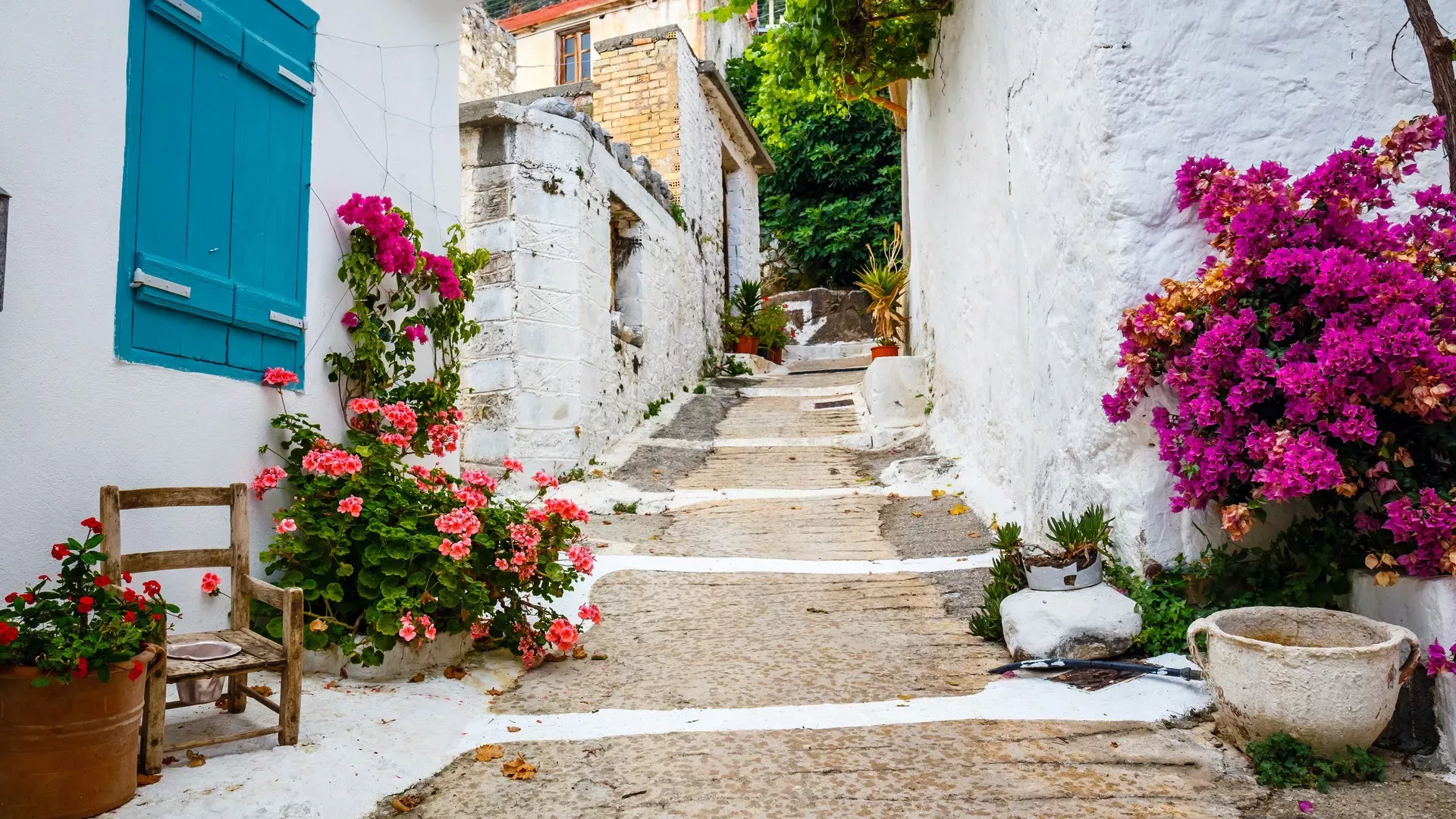
Built amphitheatrically on the foothills of Mount Kastellos, very close to Agios Nikolaos,Kritsa is one of the oldest villages in Crete. Having preserved much of its old architectural character, Kritsa offers a picturesque scene of handsome cobbled alleys, stone arches, old houses and shops with traditional products and folk art. Images of the village have traveled around the world through the film "Christ Recrucified" by Jules Dassin and Melina Mercouri, which was shot there.
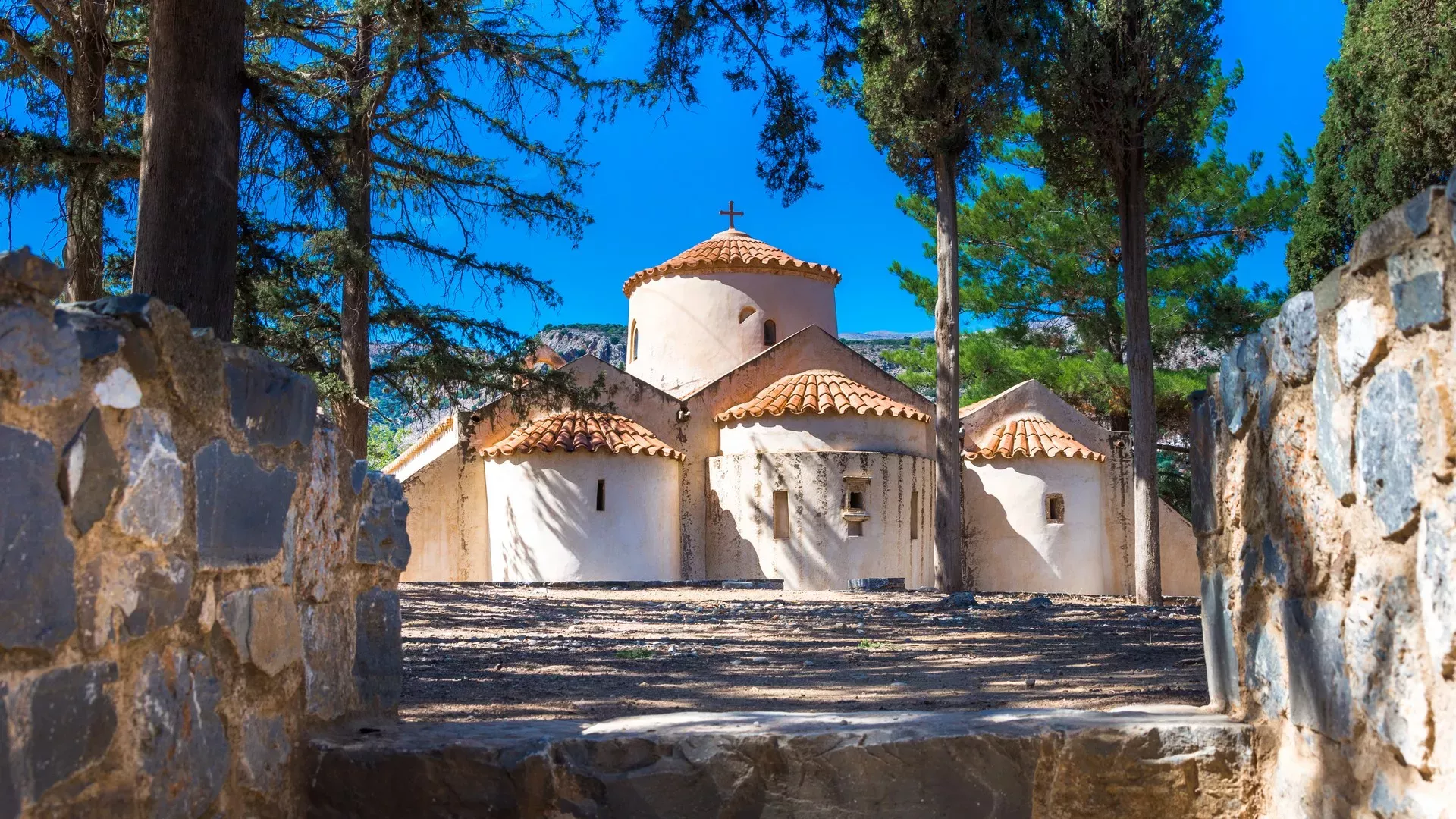
It is worth noting that the village is famous for its exceptional extra-virgin olive oil. The olive oil produced by the Kritsa Agricultural Olive Oil Cooperative has received distinctions and won awards in many competitions. The Kritsa Gorge, the small village of Tapes and the Byzantine monuments, such as Panagia Kera with its elaborate frescoes, are the most important attractions of the area.