





From ancient sanctuaries and prehistoric settlements to Byzantine monuments and castles, the Cyclades tell a cultural story spanning thousands of years.
Wherever you travel in the Cyclades, the landscape reveals traces of a history that spans thousands of years. From Delos, Apollo's sacred island and one of Greece's most important archaeological landmarks, to Kea, Sikinos, Naxos and Santorini, the Cyclades' cultural treasures form a unique mosaic of archaeological sites, monuments and living traditions.
The South Aegean Region has undertaken the preservation and promotion of this heritage, as the islands' cultural landscape isn't limited to the monuments that have survived. Ancient customs, religious festivals, local crafts and musical traditions continue to connect the past with the present through contemporary cultural events. From the prehistoric settlements of the Bronze Age to Roman monuments and Byzantine remains, each island tells a different story.
Cycladic Civilization
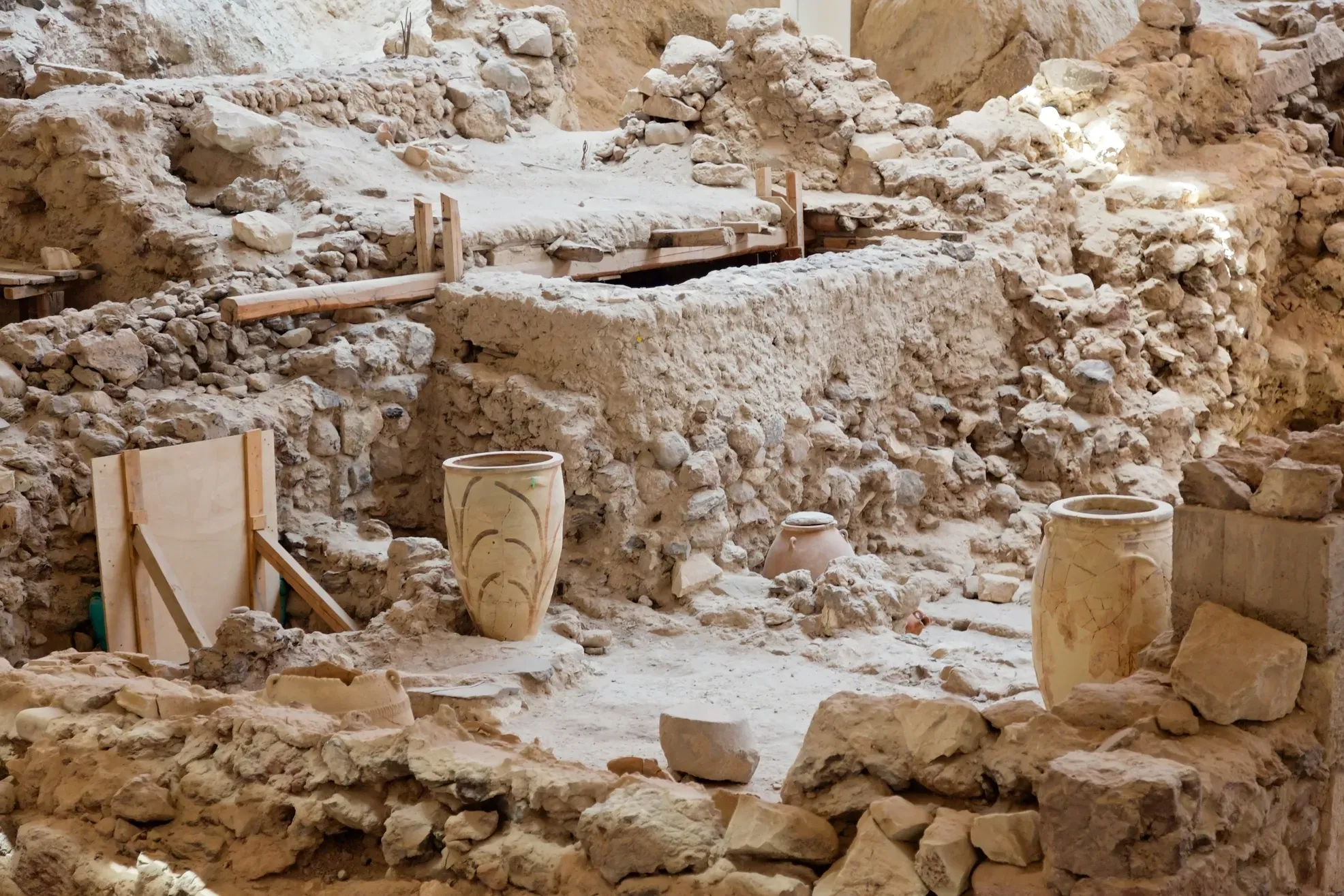
The Cycladic Civilization flourished most during the Early Bronze Age (circa 3000–2000 BC) across the Cycladic archipelago. The islands' pivotal geographical position at the center of the Aegean established a powerful maritime and trade network, allowing inhabitants to develop seafaring, metallurgy and pottery. Islands like Delos and Naxos provided the earliest evidence of continuous human habitation in the region. Hallmarks of its flourishing are the famed marble Cycladic figurines with their abstract, geometric lines.
Marble figurines, vessels and tools attest to the islanders' skills, while sea routes linked the Cyclades with other important Aegean islands. In the centuries that followed, the Cyclades experienced diverse political and cultural influences without losing their distinctive character. Ancient sanctuaries, Early Christian and Byzantine monuments, castles, monasteries and traditional settlements compose a multifaceted cultural landscape today.
Delos: The sacred island of the Aegean
At the heart of the Cyclades' cultural route lies Delos, one of Greece's most important archaeological ensembles. It's one of three South Aegean monuments inscribed on the UNESCO World Heritage List since 1990. The small island southwest of Mykonos was a major religious and commercial center of the ancient world and today offers a unique window onto Aegean culture, from the 3rd millennium BC to Early Christian times.
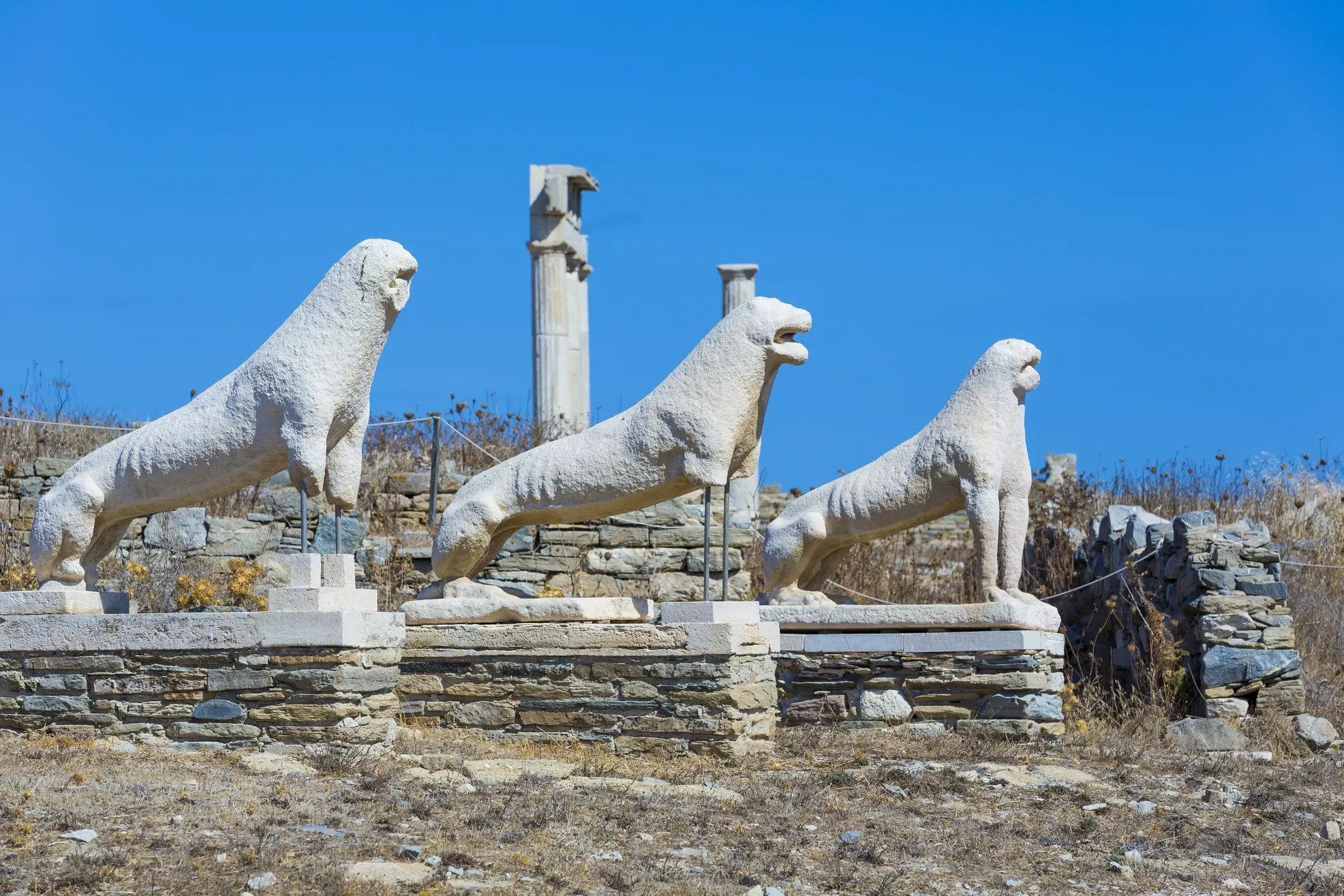
Delos is the foremost point of reference for the ancient history of the Cyclades. According to mythology, Apollo and Artemis were born here, making the island one of the most significant sanctuaries of the ancient Greek world. From the 9th century BC, Apollo's great sanctuary began to take shape, and over the centuries Delos evolved into a major religious, commercial and economic hub. The famed Terrace of the Lions, the temples, houses with striking mosaics and the streets of the ancient city create a unique archaeological landscape today.
Kea: An ancient city beside the Aegean
On Kea, history meets the natural landscape at one of the most impressive archaeological sites in the Cyclades. Karthaia was one of Kea's four ancient city-states and remained inhabited for many centuries, up to Late Antiquity. The archaeological site is reached via an ancient path and offers a striking setting, with the remains of temples and public buildings commanding views over the Aegean.
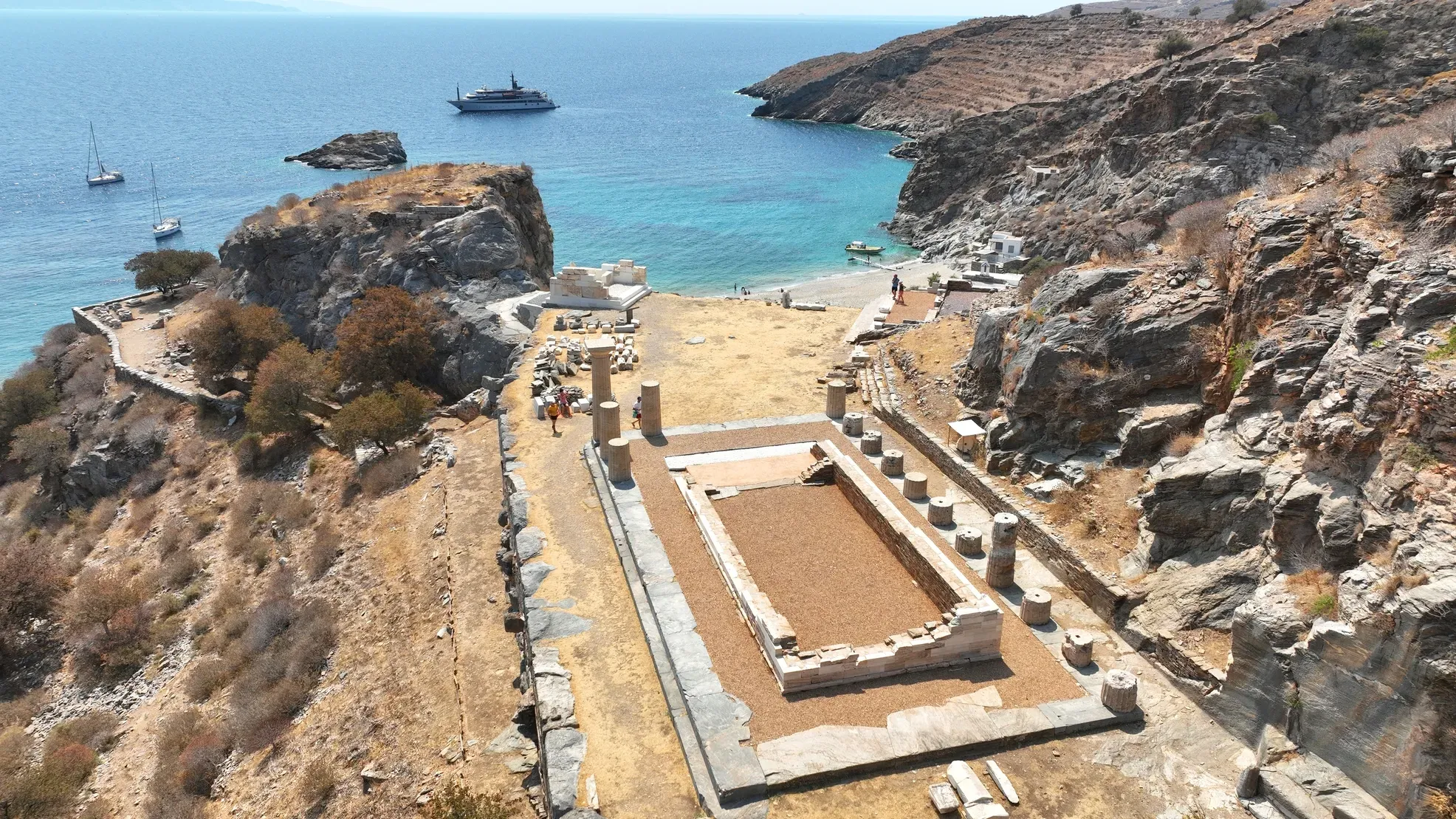
Also noteworthy is Karthaia's ancient theater, on the southwest slope of the city's acropolis, at the mouth of the Vathipotamos stream near the sea. Kea's cultural heritage isn't limited to Karthaia, as the Lion of Kea, an Archaic 6th-century BC sculpture carved into the rock, is another emblematic monument of the island.
Sikinos: The restoration of Episkopi
On Sikinos, Episkopi is a prime example of how a monument can change use over the centuries while remaining connected to the local community. The monument began as a Roman mausoleum and was later converted into a Christian church. The restoration of Episkopi by the Ephorate of Antiquities of the Cyclades revealed significant evidence from its different historical phases, including the tomb of Neiko, a woman of high social status in the Roman era.
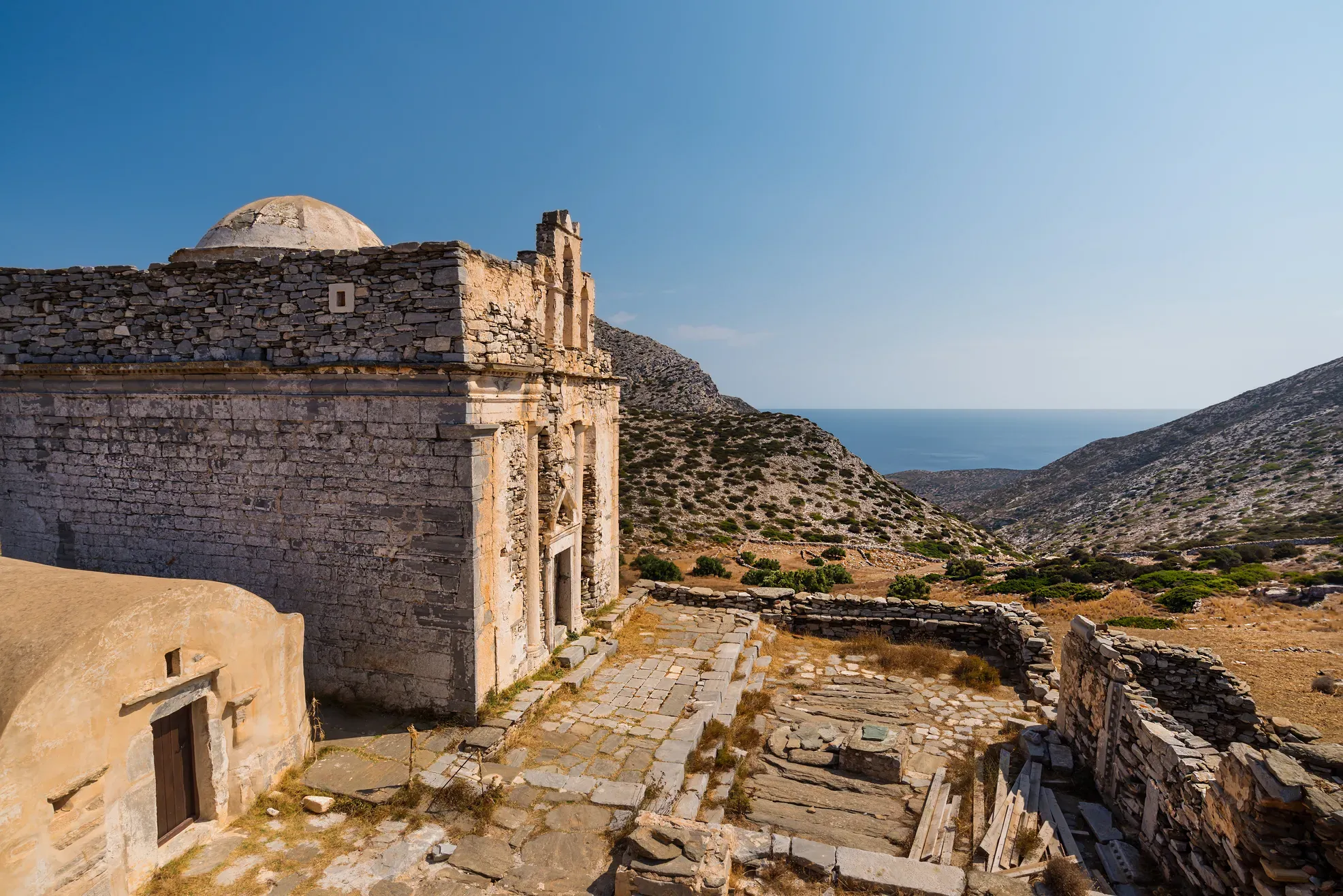
The interventions aimed to highlight the monument's different historical layers and its relationship with the community of Sikinos. For its restoration and reuse, Episkopi was honored in 2022 with a Europa Nostra Award, as part of the European Heritage Awards. The distinction underscored not only the monument's archaeological and architectural significance, but also the effort to keep it accessible and embedded in the island's contemporary life.
Milos: Phylakopi and the beginnings of the Aegean
In northern Milos lies Phylakopi, one of the most important settlements of the Bronze Age in the Aegean. Milos's location proved decisive for its development, as the island had valuable raw materials and lay along the sea routes that linked the Cyclades with the other islands of the Aegean.
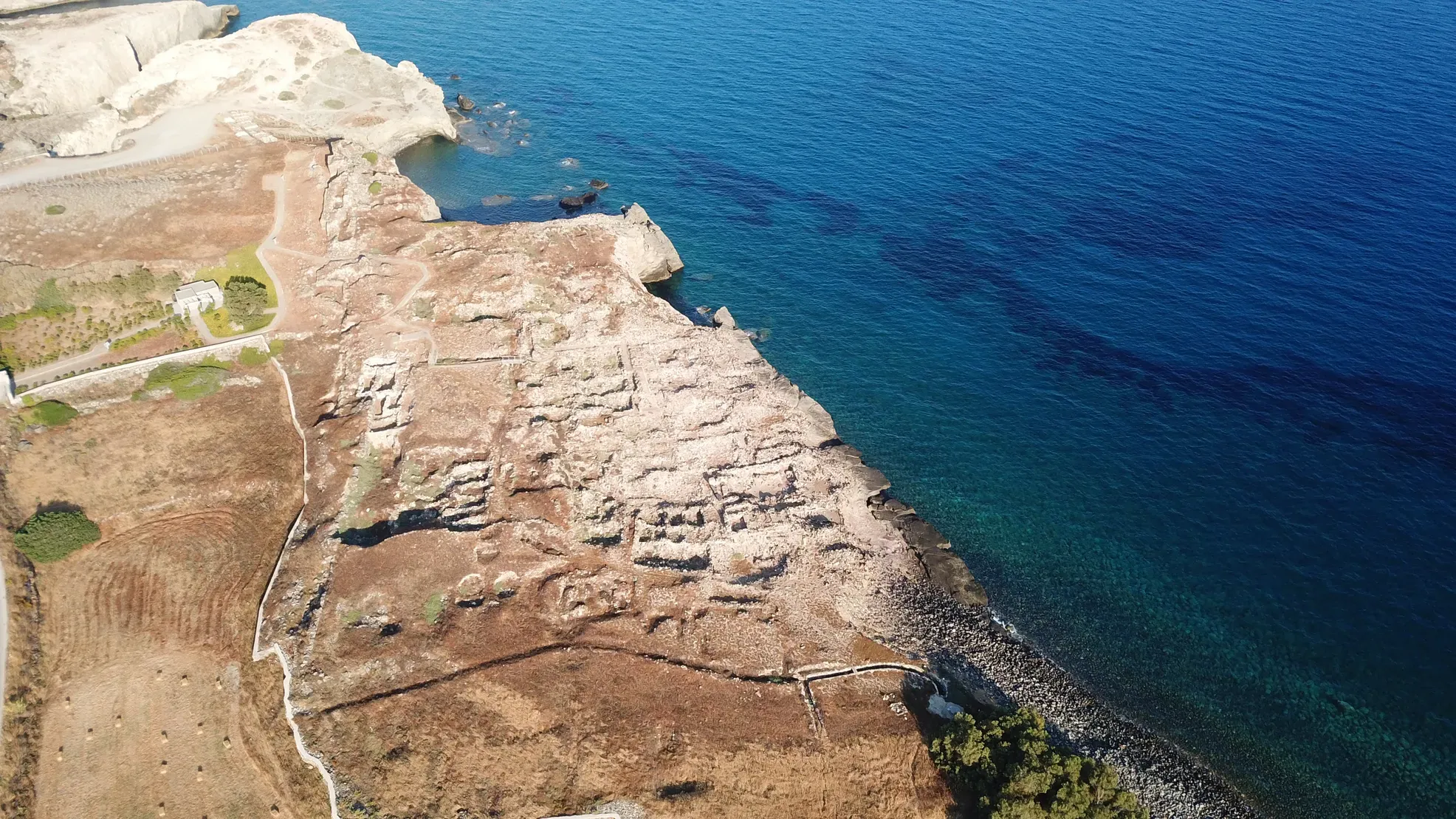
The small rise on which the settlement is built was once a headland. The settlement developed in different phases and was inhabited for many centuries. Finds from the excavations shed light on the daily life, economy and contacts of the Cyclades' prehistoric inhabitants. Part of this material is presented at the Archaeological Museum of Milos, while the archaeological site itself lets visitors get closer to one of the Aegean's most important prehistoric settlements.
Santorini: Akrotiri, the city where time stood still
On the southwest coast of Thira, in the settlement of Akrotiri, one of the most significant centers of the prehistoric Aegean developed, with a long history (4500 BC – late 17th century BC) and a dynamic role in shaping Cycladic Civilization.
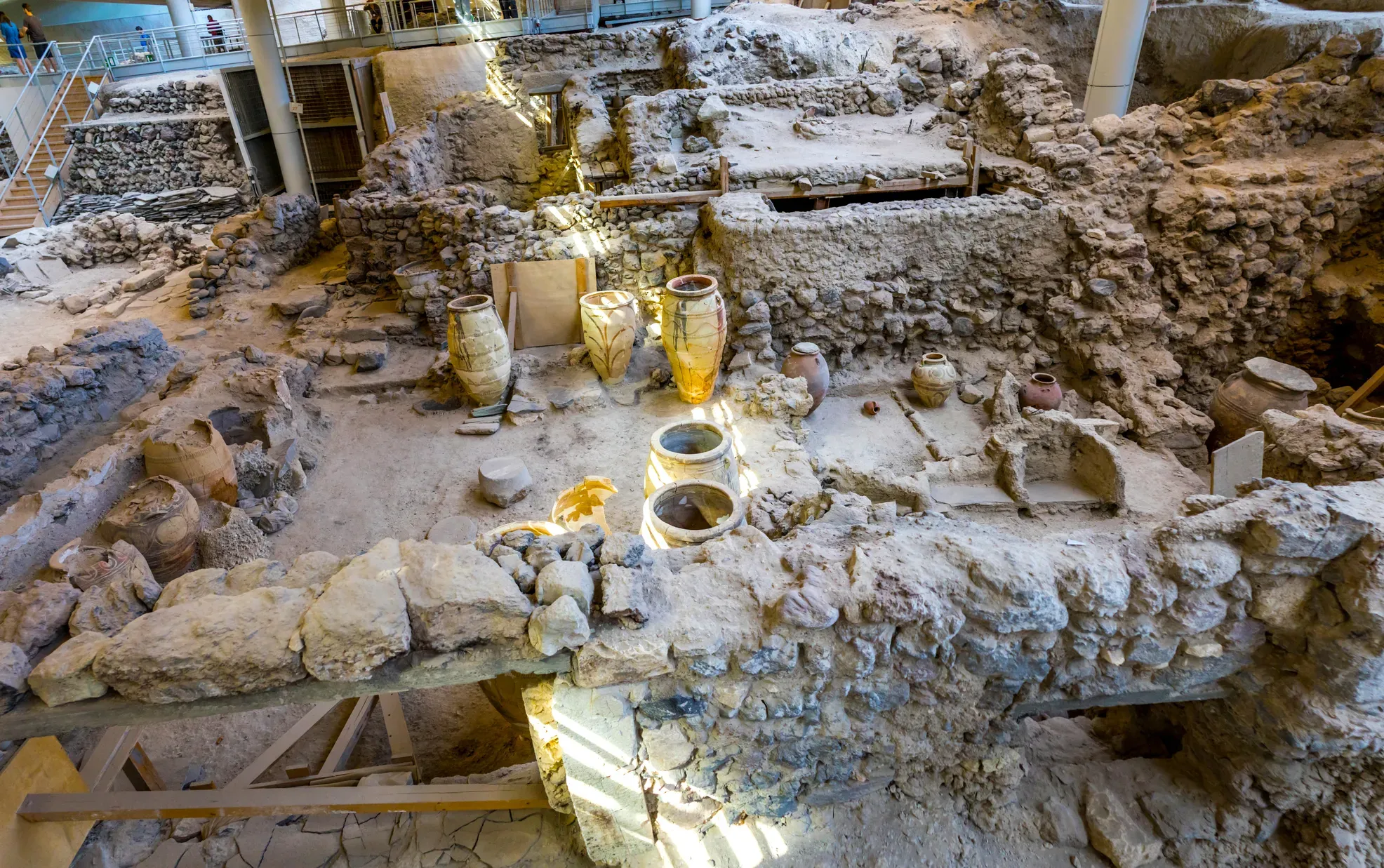
Akrotiri is one of the most important archaeological monuments of prehistoric Greece, as the settlement thrived during the Bronze Age and was destroyed by the great volcanic eruption, with ash covering buildings, objects and works of art. The preservation of the settlement offers a unique picture of life in the Aegean thousands of years ago. Multi-story buildings, organized streets, a drainage system and exquisite frescoes testify to a society with complex organization and close ties to other cultures of the Aegean and the Eastern Mediterranean.
Naxos: The Portara and the island's heritage
The image of the Portara against the Aegean is Naxos's most recognizable sight. It's one of the island's most important monuments: an imposing marble frame of the gateway to an unfinished Temple of Apollo that began construction in the 6th century BC on the islet of Palatia. The monument draws visitors from across the island, especially at sunset, when the scenery is spellbinding.
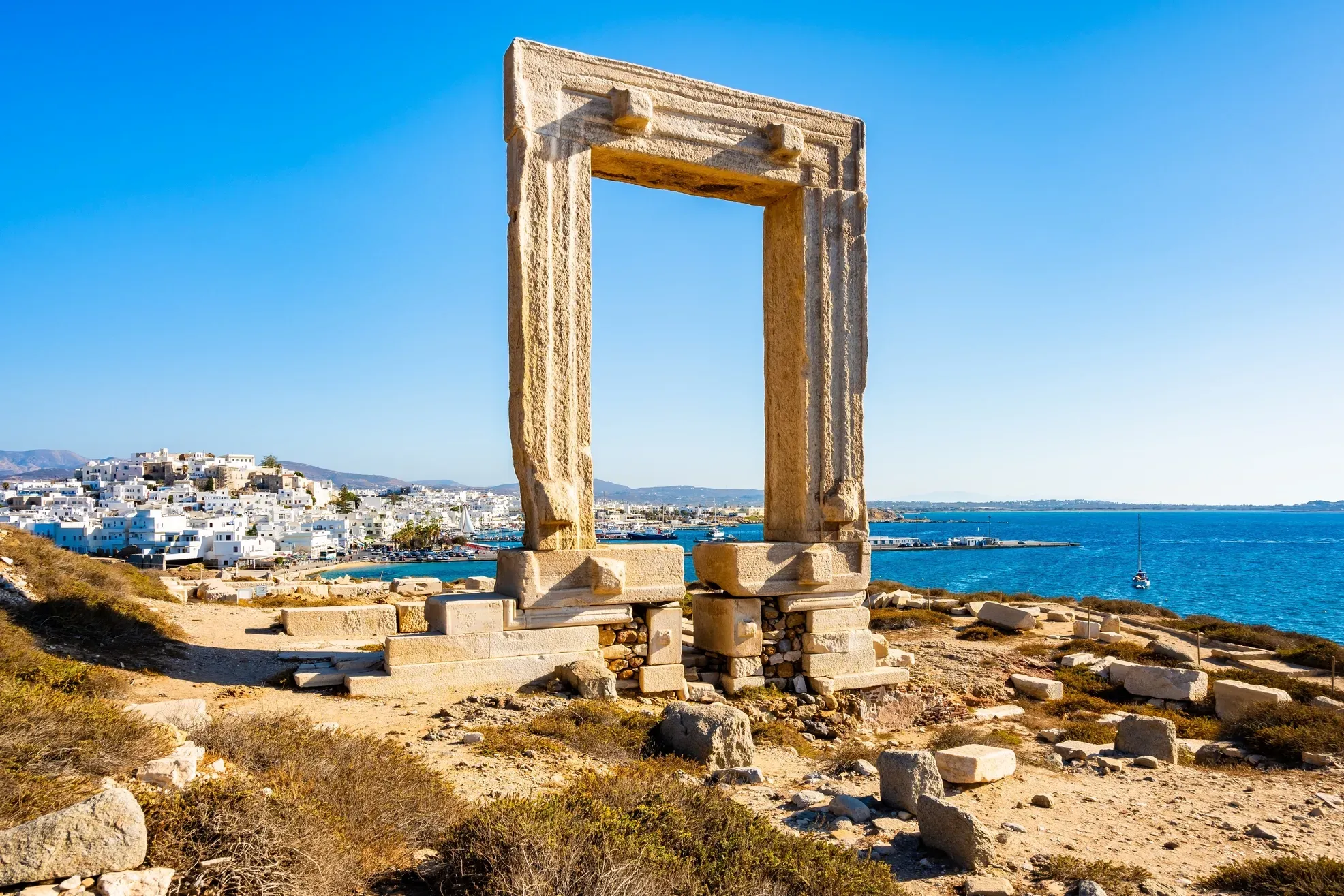
Inland, the Temple of Demeter at Sagri adds another significant chapter to Naxos's archaeological story, while the famed kouroi and traces of marble craftsmanship reveal the special role the island played in the art of the ancient Cyclades. Another important monument of the island is the Castle of Chora Naxos. Built in 1207 over the ruins of the ancient acropolis, it's one of the few living medieval castle-towns in Greece that have been continuously inhabited to this day.
From monuments to living traditions
The cultural heritage of the Cyclades doesn't live only through archaeological sites and museums. It remains vibrant in the villages, in religious celebrations, festivals, dances, local techniques and traditional crafts. Religious feast days are a characteristic example. On the islands, these festive days blend religious tradition with communal life: the table, local food, music and dance.
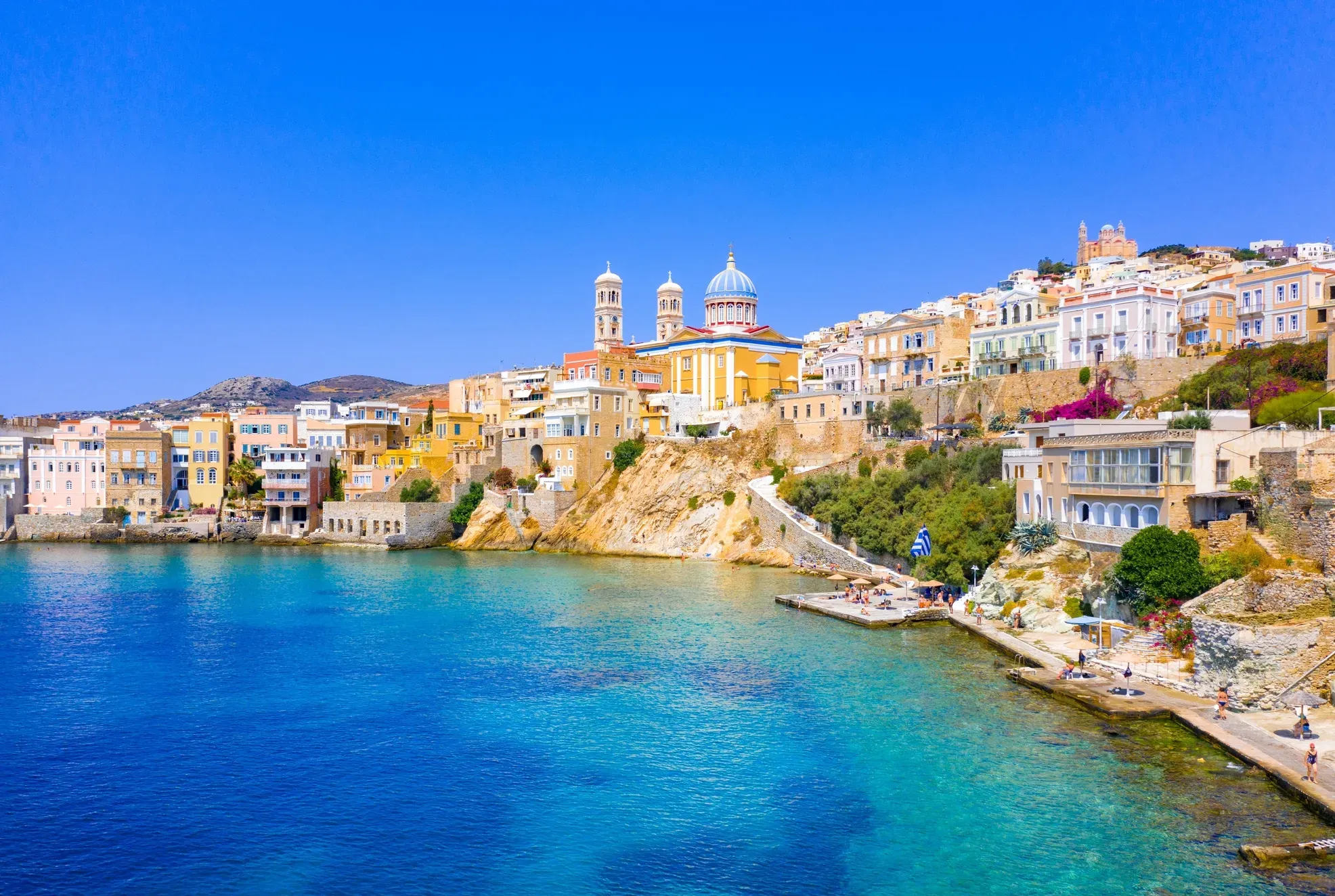
These are practices passed down from generation to generation that still serve as meeting points for local communities. At the same time, contemporary cultural creation adds new chapters to the Cyclades' identity. Syros, for example, hosts events like Animasyros, while on Tinos the Tinos World Music Festival creates a dialogue between musical tradition and contemporary creativity.