





Tucked away in natures beauty, Greeces stone bridges are unique monuments that still inspire awe today.
Masterpieces by renowned stone masons, the bridges that adorn the Greek countryside feel like extensions of nature, blending seamlessly with their surroundings. Most are entwined with myths, local traditions, and even tragic tales. Some are tucked away in natural beauty, and to find them you’ll walk along trails, «descend» rivers, and cross gorges.
Here are some of the most beautiful and famous stone bridges you’ll encounter on your travels in Greece.
Bridge of Arta
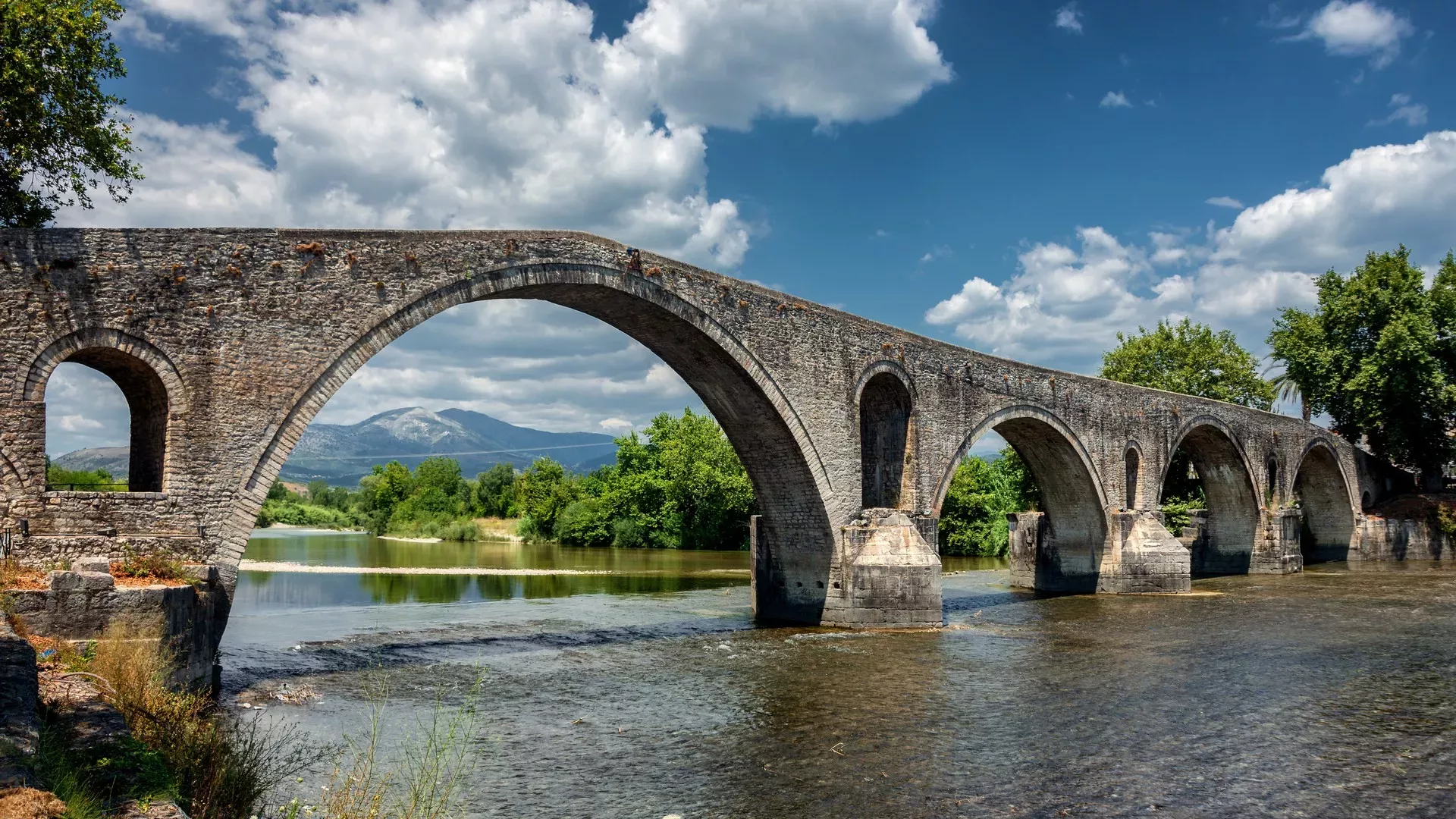
It’s the first that comes to mind when we hear the word «bridge». A jewel and the city’s premier sight, the Bridge of Arta is the most renowned in Greece, thanks to the legend of the master builder’s wife who was sacrificed because «they built it all day long, and at night it collapsed». The bridge’s original construction dates to the era of classical Ambracia, under King Pyrrhus I, while it took on its present form between 1602-1606. Its current length reaches 142 meters and its width is 3.75 meters.
Artotiva Bridge, Mountainous Nafpaktia
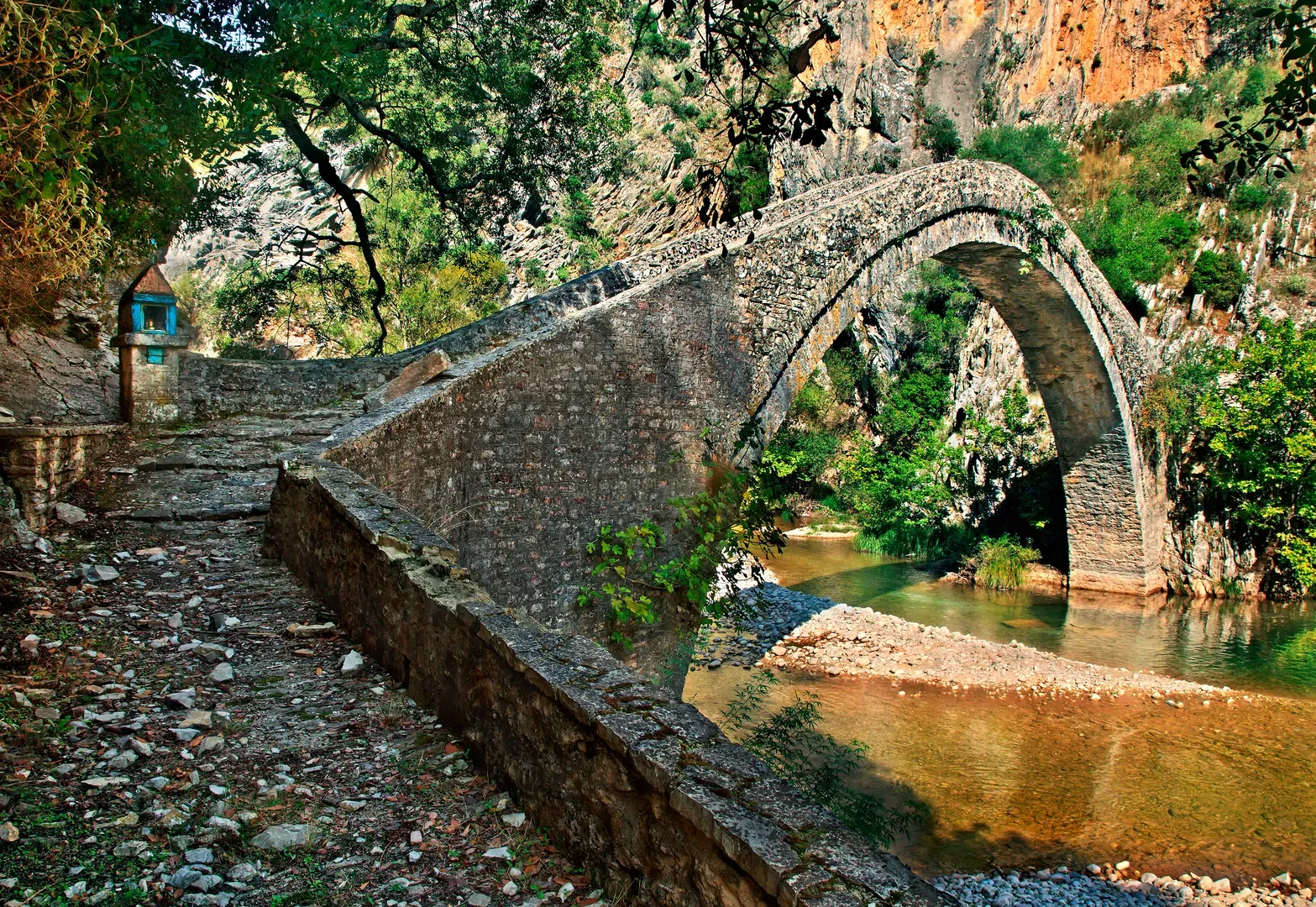
The Artotiva Bridge lies on the natural route linking Trichonida with Mountainous Nafpaktia, on the banks of the Evinos River at its narrowest point. According to local tradition, it was built or rebuilt during the First Venetian rule (1407-1499). It is the oldest surviving bridge in the regional unit of Aetolia-Acarnania, recently restored and designated a protected historic monument.
Pyli Bridge, Trikala
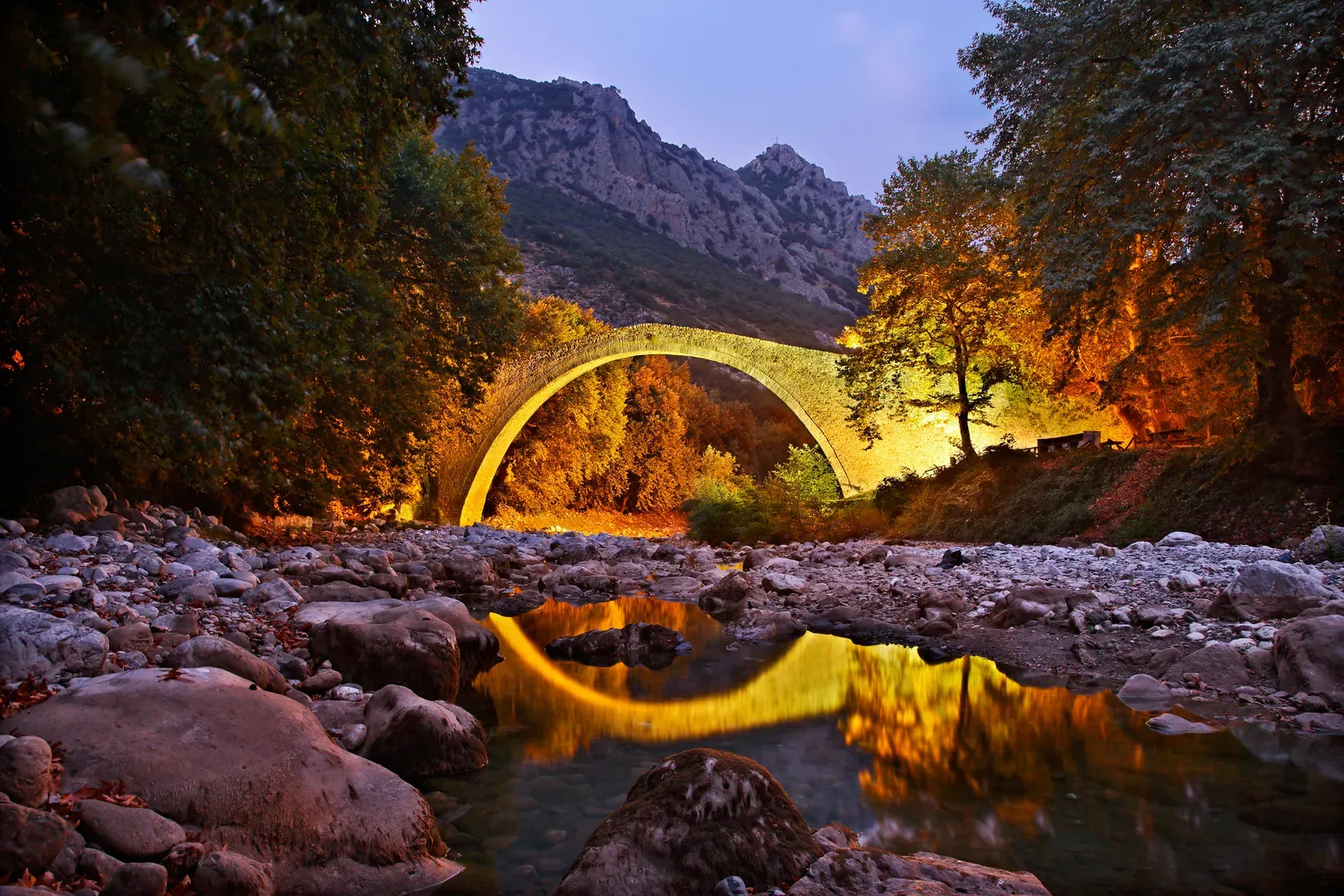
The Pyli Bridge (or Porta Bridge) stands 2 km west of Pyli and about 20 minutes from Trikala. The Portaikos River flows beneath it, and until 1936 it was the only passage from Thessaly to Epirus, linking Mount Itamos and Koziakas. Built by Saint Bessarion in 1514, it is the second-largest single-arched bridge in Thessaly, with a semicircular arch crafted from limestone and sandstone. The bridge area is a favored stop for many visitors before heading up to the villages of Koziakas, Elati, and Pertouli.
Paleokarya Bridge, Trikala
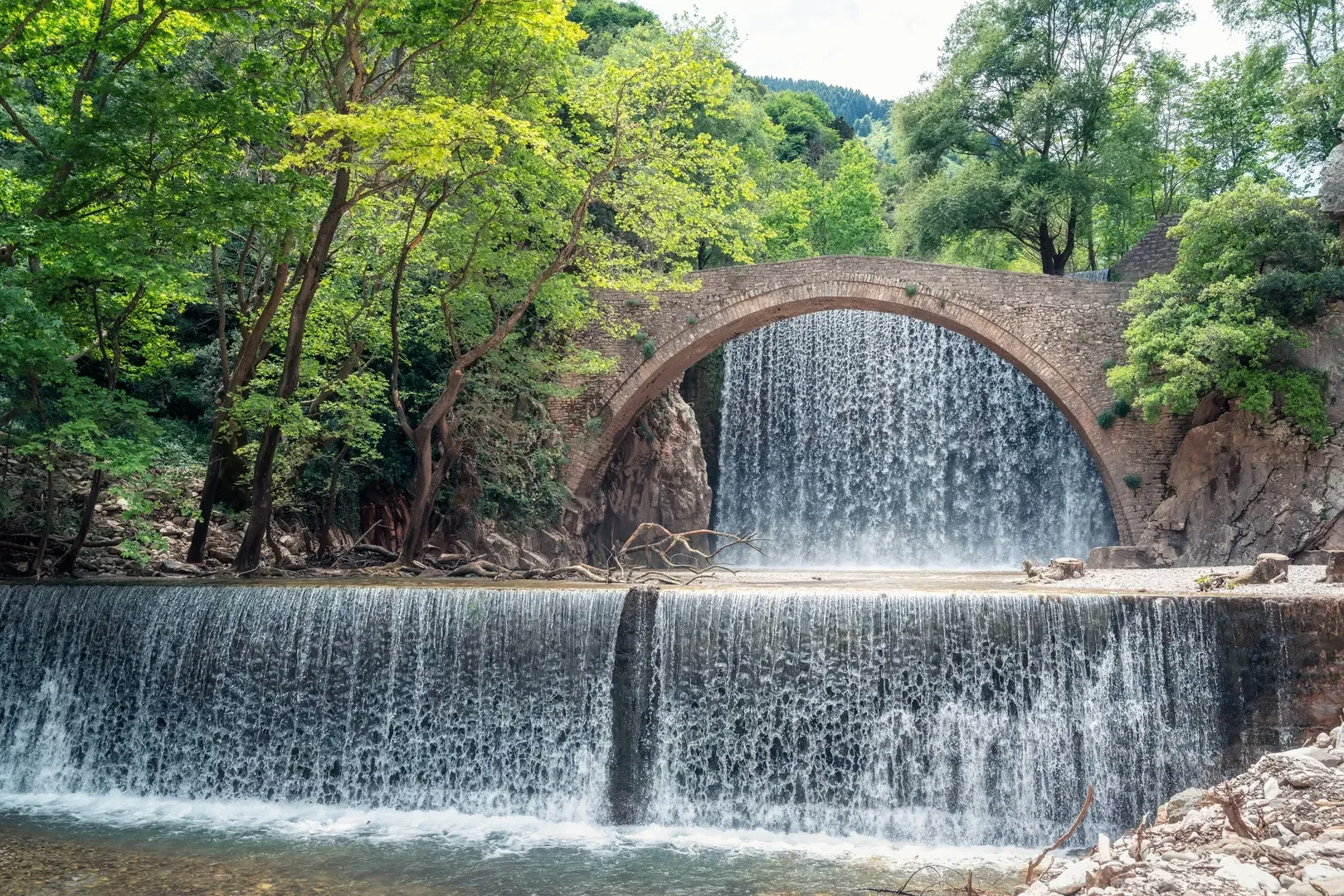
In the beautiful gorge of Paleokarya in Trikala, the crystal-clear waters of the small Paleokaritis River flow. A magical scene unfolds before anyone who reaches the stone bridge with its two man-made waterfalls. The imposing single-arched bridge commands a narrow passage, about half a kilometer from Kato Paleokarya. It is 26 meters long and has stood there since the 16th century. A monument perfectly attuned to the surrounding landscape. Two dams built in 1970 create two artificial waterfalls that add a distinctive touch to the enchanting picture.
Plaka Bridge, Tzoumerka
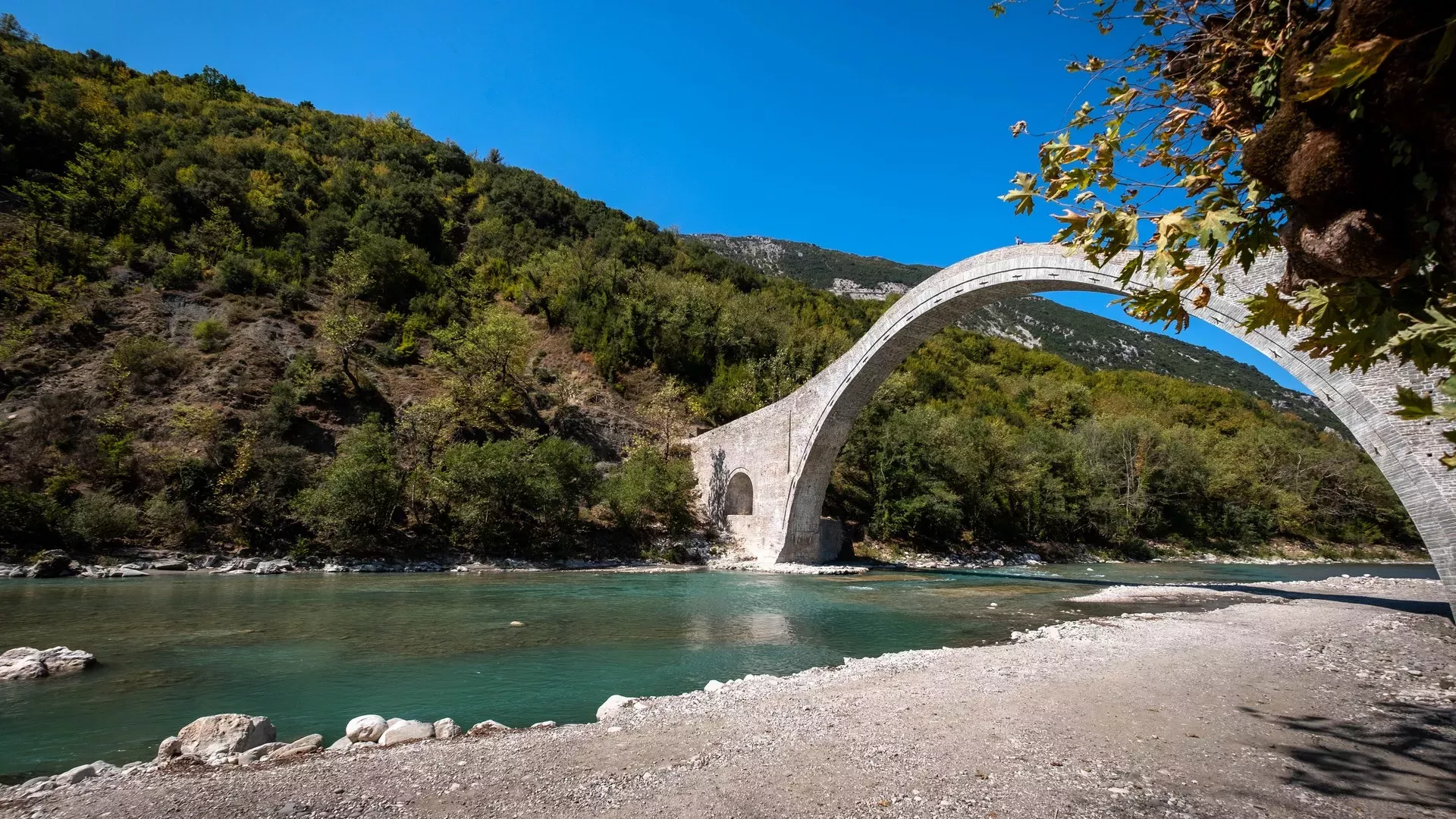
The historic Plaka Bridge was built in 1866 by master builder Konstantinos Bekas and is considered the largest single-arched bridge in the Balkans. It lies 50 km from Ioannina and links the Tzoumerka with the Katsanohoria villages over the Arachthos River. Plaka Bridge served as the Greece–Turkey border from 1880 to 1912, while nearby the Plaka–Myrofyllo agreement was signed on 29 February 1944. In February 2015, the bridge’s arch collapsed due to heavy rainfall. Today, the impressive bridge stands tall once more, following restoration completed in 2020. Notably, it was rebuilt using the same age-old stone-masonry techniques, and it received the European Union’s Europa Nostra 2021 distinction.
Plakidas or Kalogeriko Bridge, Zagorochoria
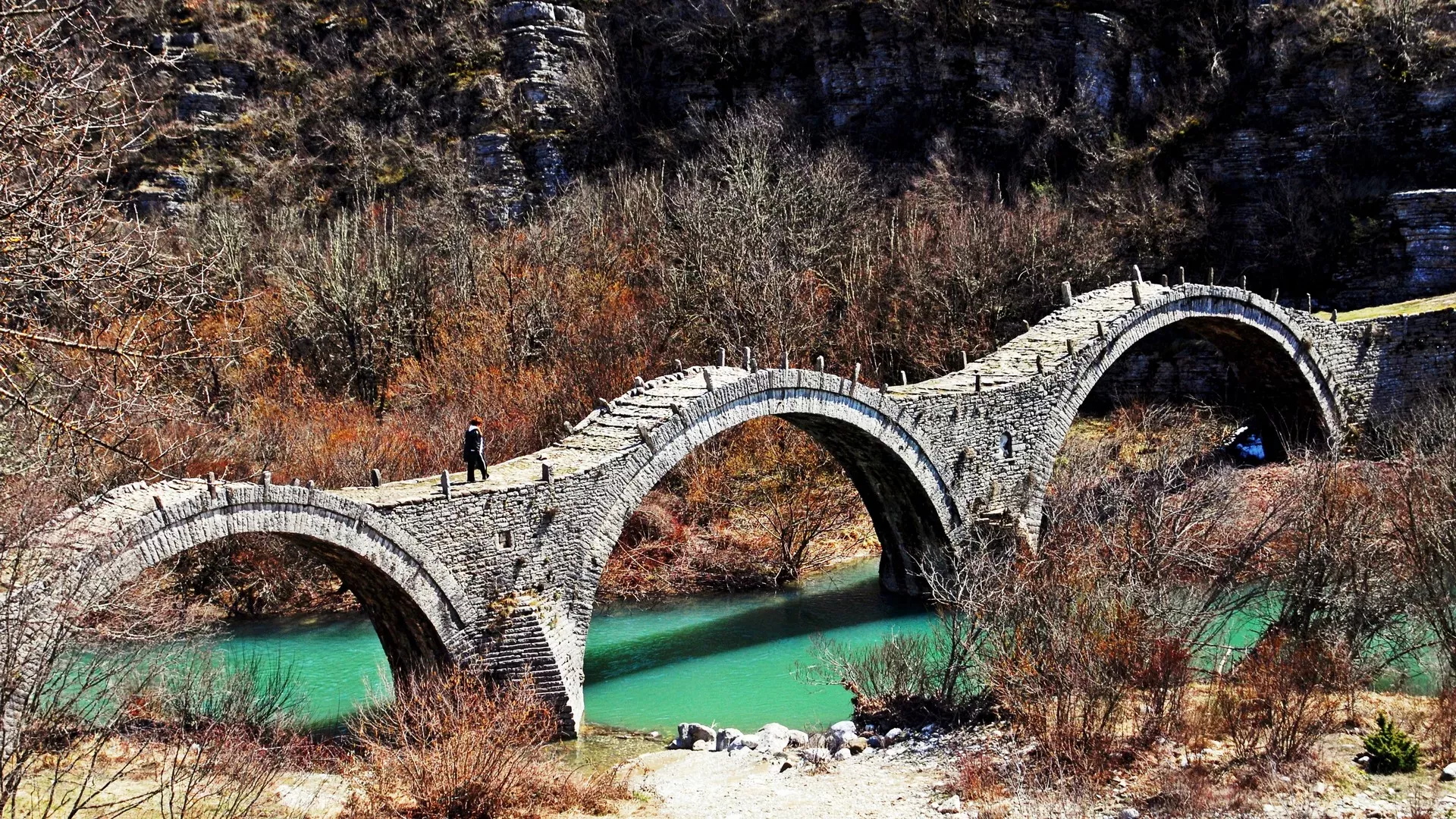
Among the most famous and distinctive bridges of Zagori, the Plakidas or Kalogeriko Bridge lies west of Kipi. This bridge was originally wooden but was rebuilt in stone in 1814, financed by a monk from the monastery of Vitsa—hence its second name. What captivates visitors up close is how its three semicircular arches, aligned in harmonious sequence, create a sense of light movement, like a caterpillar in motion.
Kokkori (Noutsos) Bridge, Zagorochoria
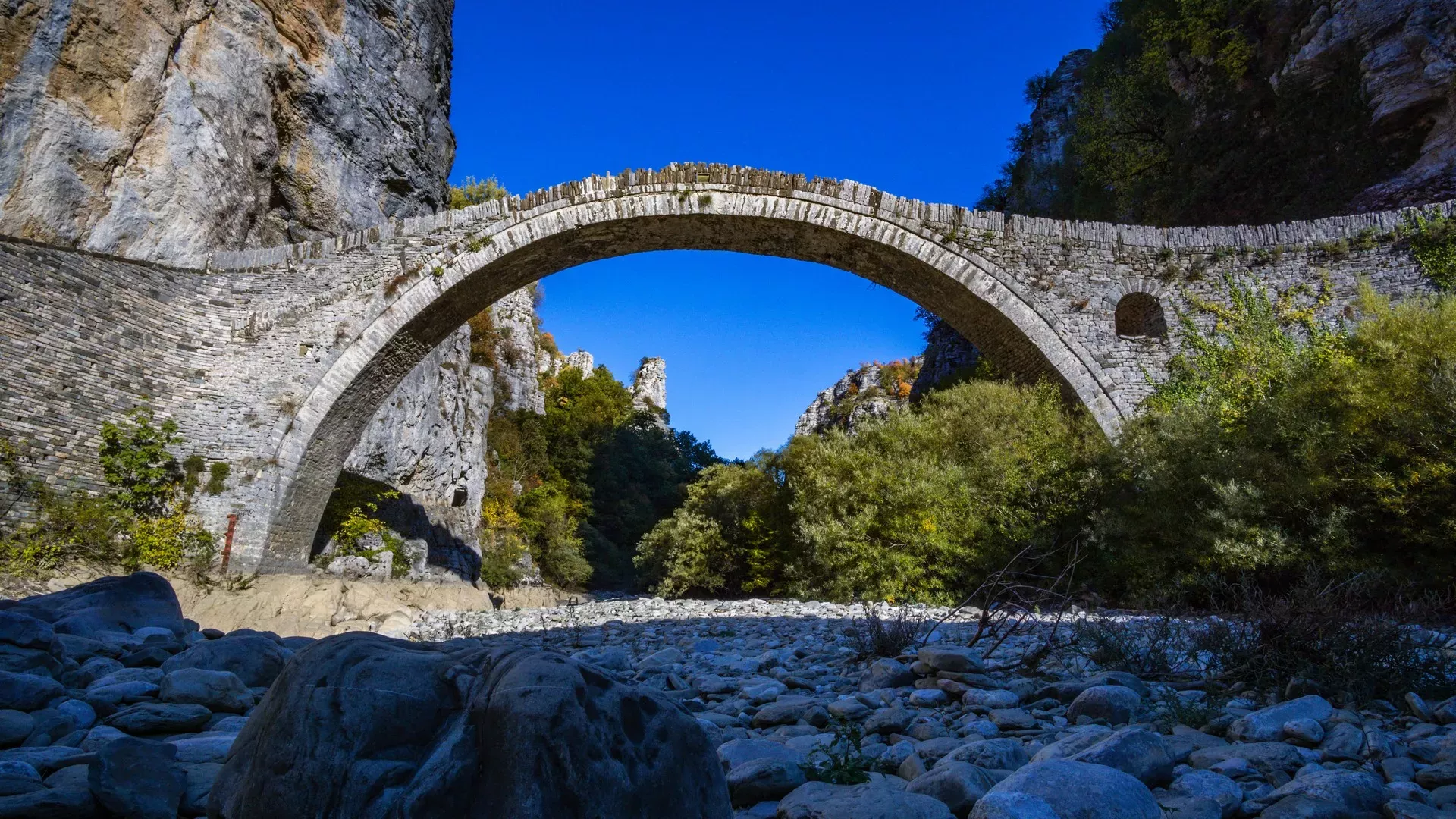
One of Epirus’s most celebrated and striking bridges is Kokkori or Noutsos, set between the villages of Koukouli, Dilofo, and Kipi, measuring roughly 24 meters in length and 13 meters in height. Built in 1750, it took the second name, Noutsos, from its benefactor, as Noutsos Kontodimos from the village of Vradeto financed its construction. It is also called Kokkori (or Kokkoro) Bridge, since Kokkoros from the village of Koukouli, who had a mill there, contributed funds in 1910 for its repair. Beside the bridge rises an imposing vertical rock, while beneath it flows the Voidomatis with its crystal-clear, pristine waters.
Konitsa Bridge
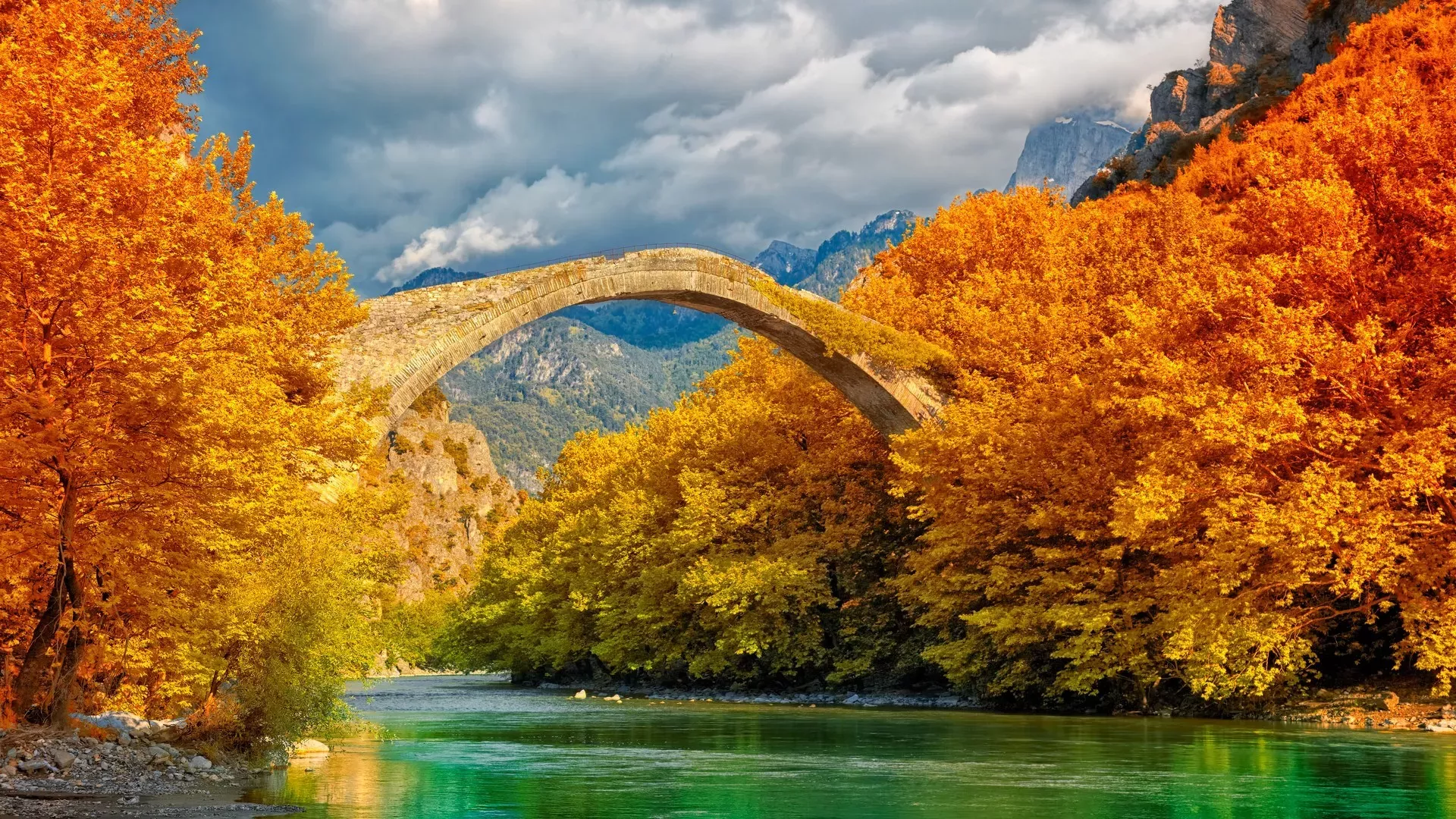
At the city’s southwest edge, right at the entrance to the Aoos Gorge, stands the great single-arched Konitsa Bridge, which was built in 1870-71 by a crew of 50 masons led by master builder Ziogas Frontzos from Pyrsogianni. An earlier wooden bridge had been built on the same spot in 1823, but it could not withstand the river’s force and was soon destroyed. The present stone bridge spans 36 meters and rises 20 meters high, and beneath its arch hangs the small bell that rang to warn passersby not to cross the bridge when strong winds blew from within the gorge.
Portitsa Bridge, Grevena
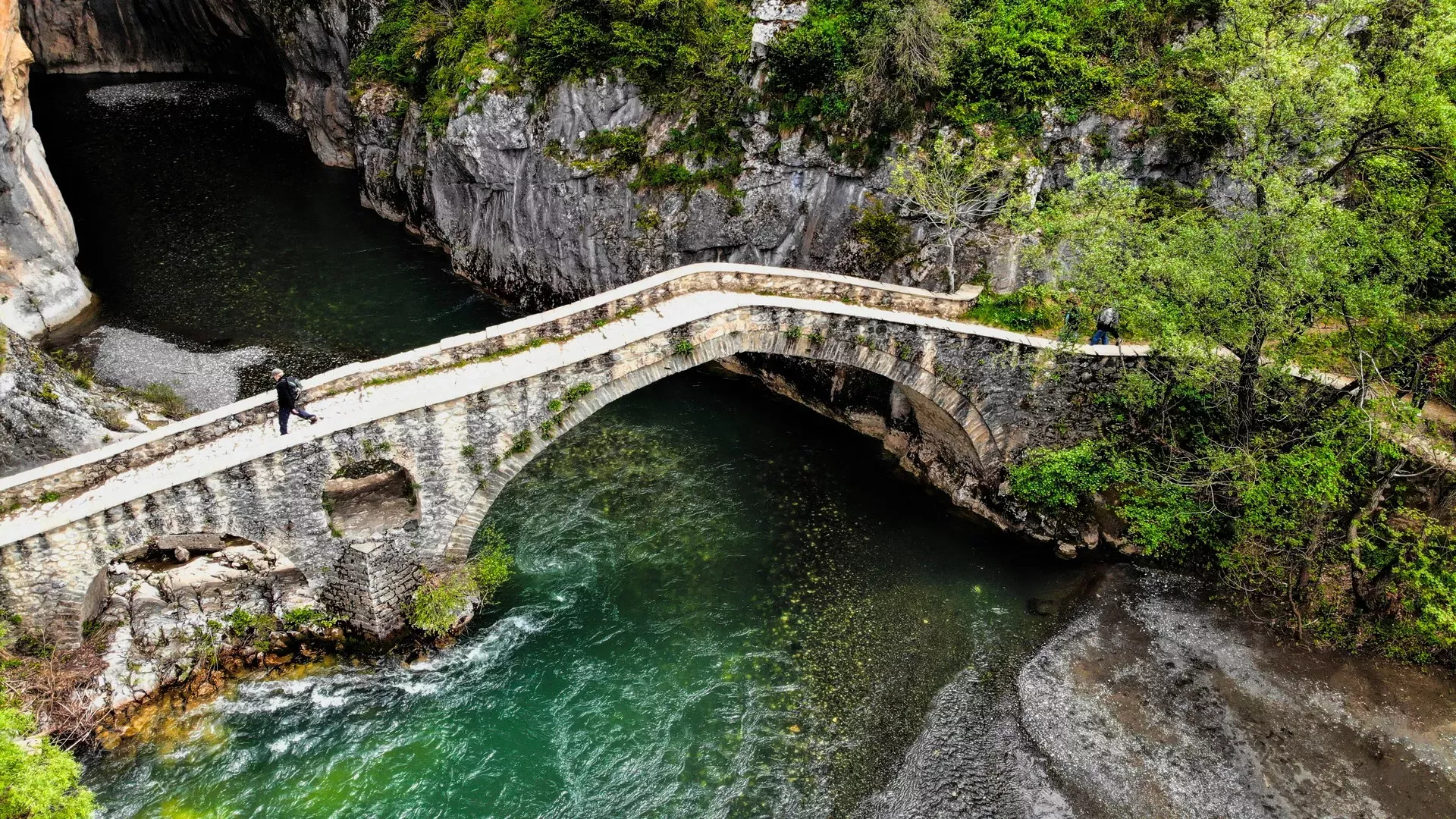
The Portitsa Bridge is located in the village of Spilaio in the regional unit of Grevena and is 45 km from the namesake capital. It is perhaps the most popular and beautiful bridge of the region, set in a stunning landscape shaped by a deep gorge. The two towering rocks that rise like clashing stones behind the bridge inspire awe, while the scene is completed by the emerald waters of the Venetikos River. Its construction is dated to 1743 and, according to sources, it was built with donations from the Monastery of Spilaio. It is a double-arched bridge, with the main arch spanning 13.80 meters and the smaller one 5 meters. From the village of Spilaio, a trail of about 2 km leads to Portitsa Bridge. Alternatively, you can drive the road that begins to the west of the village.
Aziz Agha Bridge, Grevena
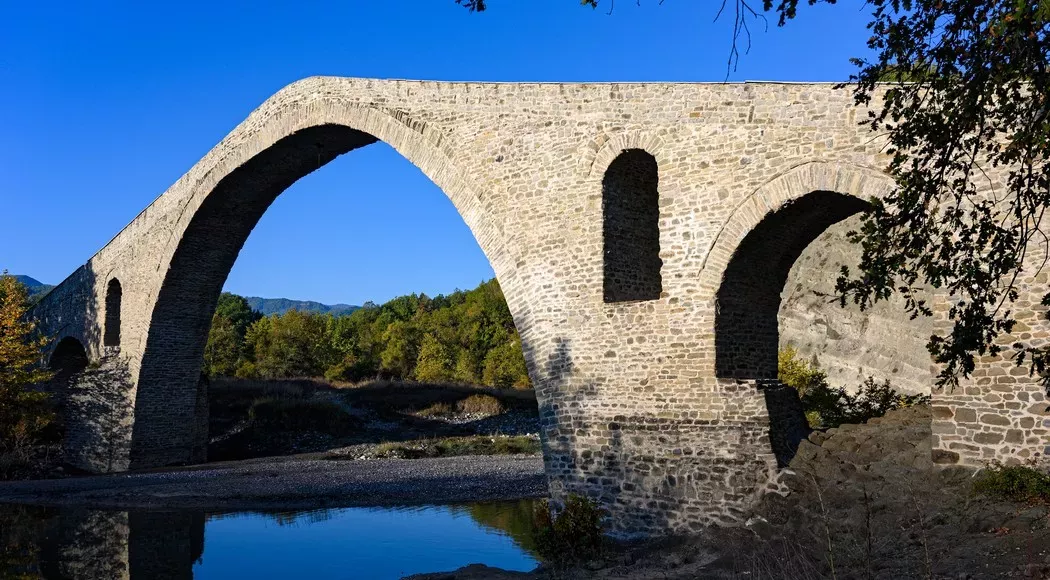
Near the village of Trikomo, the imposing three-arched Aziz Agha Bridge stands proud. This striking stone structure spanning the Venetikos River boasts the widest arch among the surviving bridges of Macedonia, reaching 15 meters, with an overall length of 70 meters. It was built under Ottoman rule in 1727 -with no end of hardships- and was financed by Aziz Agha.