





From Corinthia to Laconia, eight enchanting castles of the Peloponnese give us a reason to travel.
The Peloponnese is dotted with impressive castles, many of whichare preserved in very good condition. Built atop high hills or beside the sea,they stand proud, filled with legends and mysteries, inviting the visitor on a different journey through time. Exploring them is a unique experience in every season. Here are 8castles - jewels of the Peloponnese that stand out for their beauty and grandeur.
Acrocorinth, Corinthia
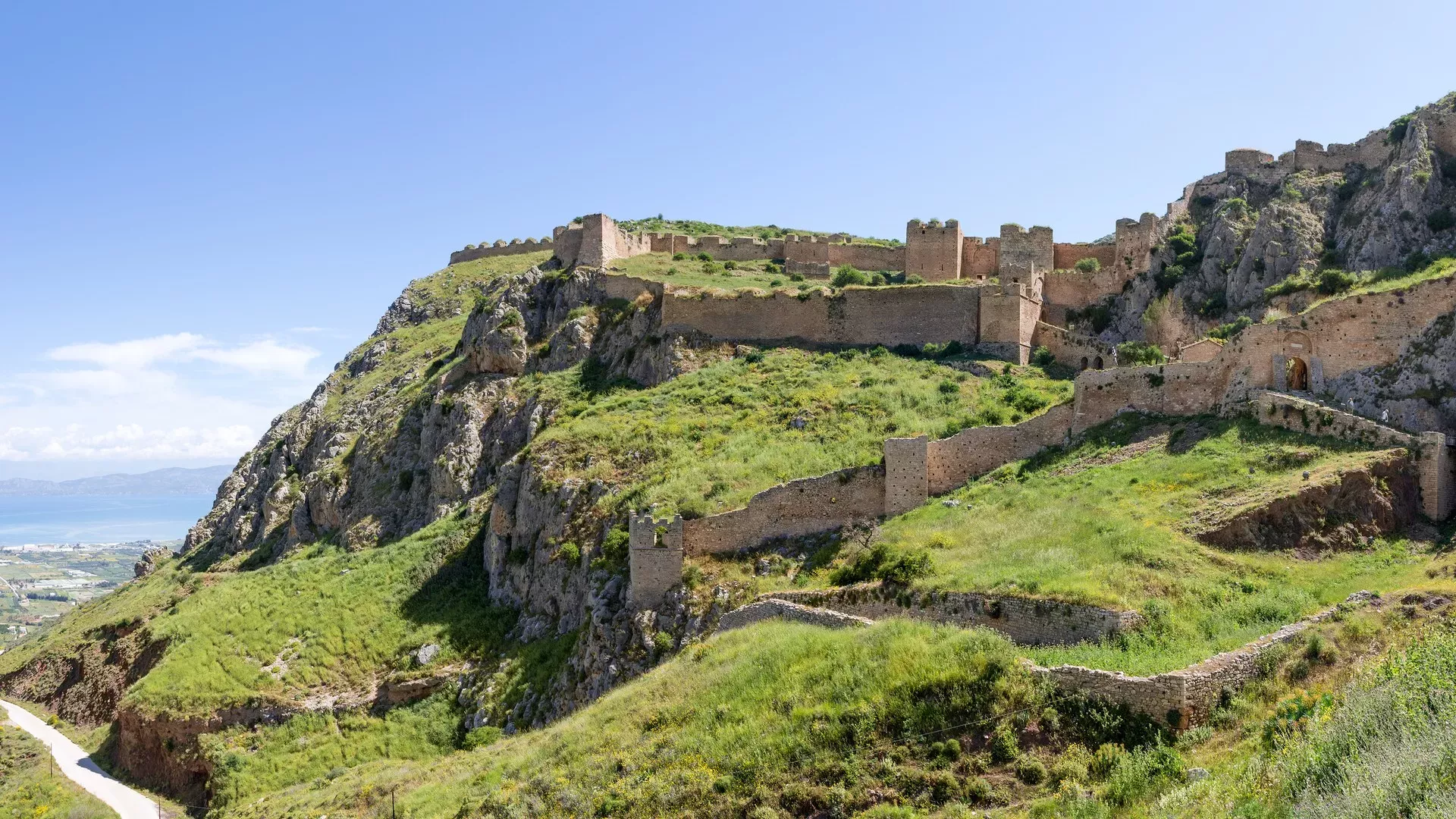
Acrocorinth towers at 575 meters, looking out over the plain of Corinth, and is one of the largest castles in the Peloponnese by area. The perimeter of its walls reaches 3 kilometers. Owing to its terrain, it was used since ancient times as a lookout that evolved into a castle-fortress, from which any possible raid from Central Greece or from the sea was supervised. From the top of the hill the view is spectacular, taking in the Gulf of Patras and the Corinthian Gulf, the southern coasts of Central Greece, the entire western part of the Saronic, Salamis and Aegina.
Palamidi, Nafplio, Argolis
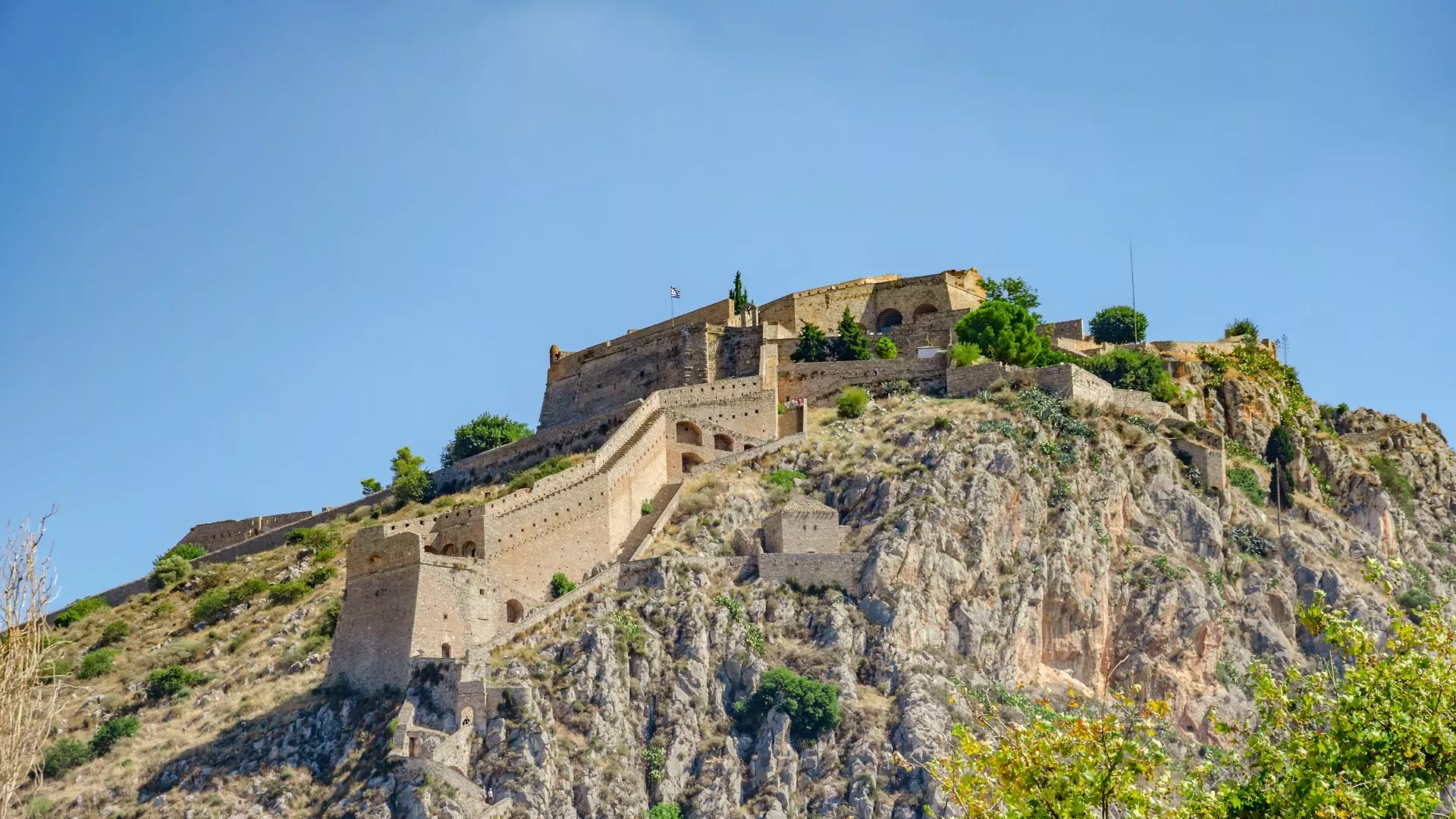
It was built in 1687 by the Venetians and today is one of the most popular attractions of Nafplio. It is one of the best-preserved castles in Greece, an example of Venetian fortification architecture. After the Revolution, Palamidi served as a prison, where Theodoros Kolokotronis was imprisoned in 1833. The hill on which it stands is 216 meters high and took its name from the Homeric hero Palamedes. There is the easy way (by car) and the hard way (the notorious 999 steps that are in fact a little fewer) to climb up to Palamidi. However you ascend, the view from there over the town and the sea is unique.
Chlemoutsi, Kyllini, Ilia
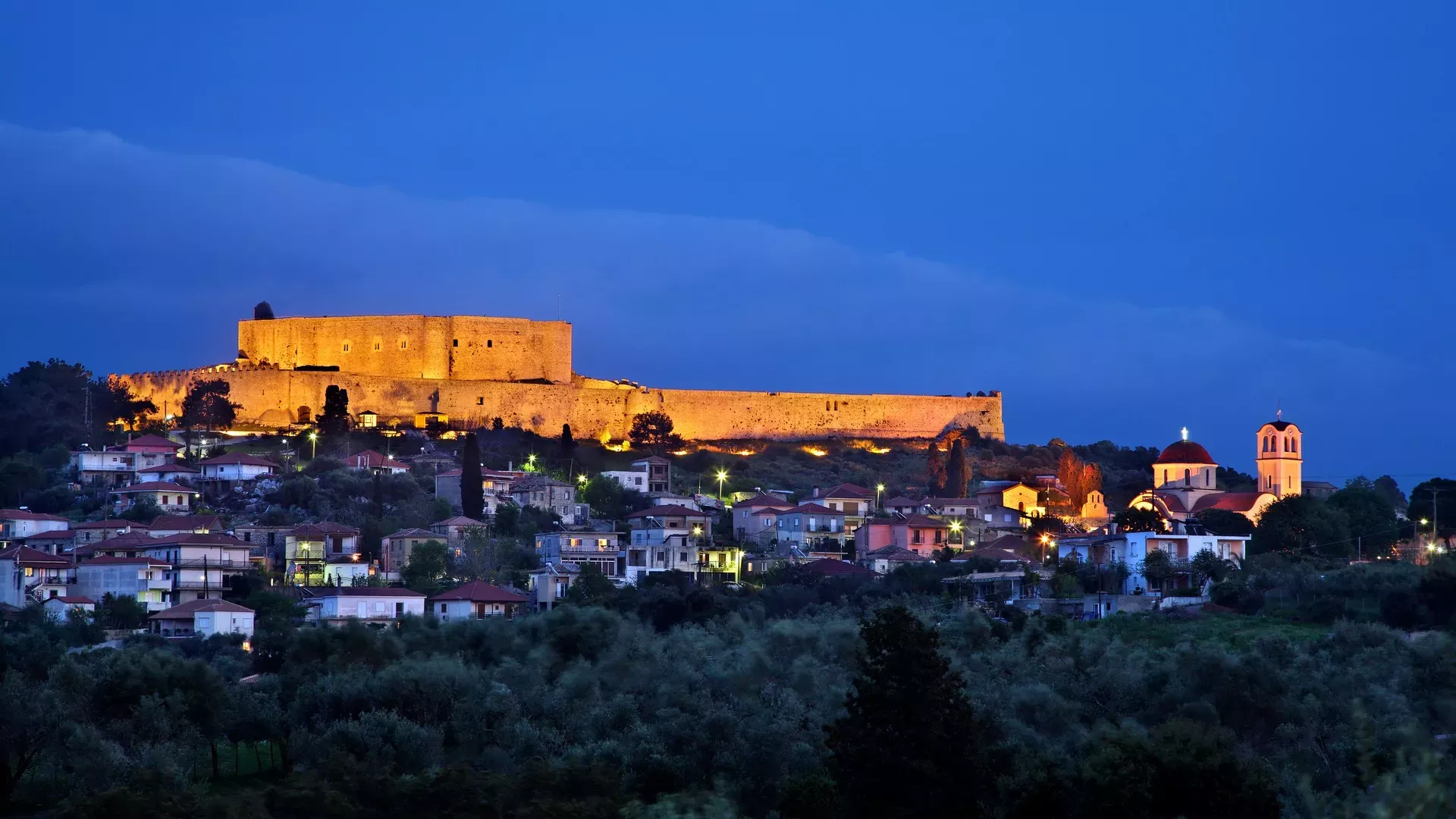
In a part of Ilia near the village of Kastro, the medieval castle of Chlemoutsi rises imposingly atop a hill. An excellent example of Frankish fortress architecture, the castle, which was the strongest stronghold of the Principality of Achaea, was built during the rule of Geoffrey I of Villehardouin, in the years 1220-1223. The castles original name was Clermont, as its French owners called it. It is one of the best-preserved castles in the Peloponnese and enjoys sweeping views over the entire plain of Ilia and the Ionian Sea.
Koroni, Messenia
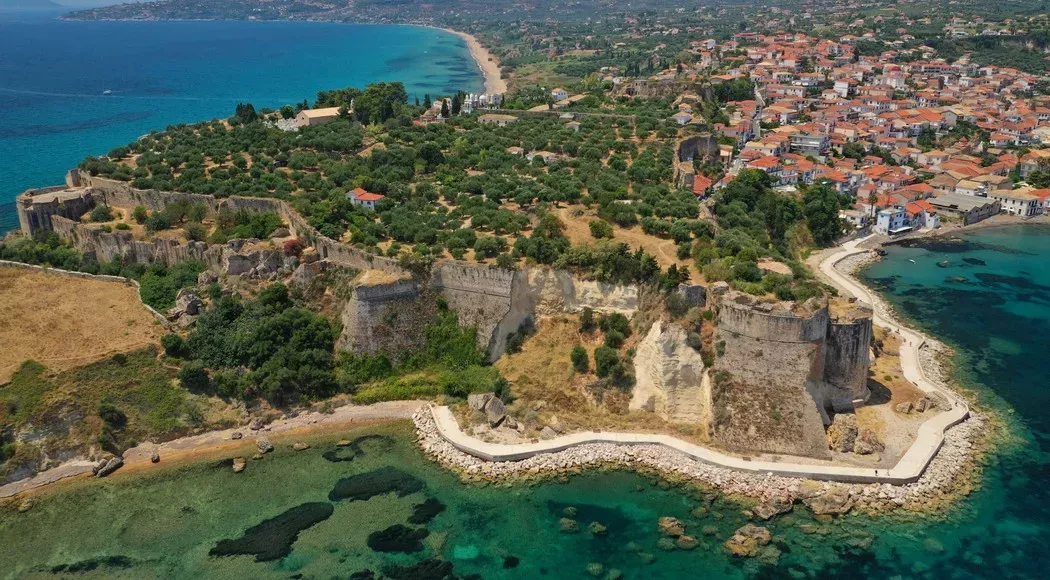
Built at the southwestern tip of the Peloponnese, stately Koroni is one of the loveliest small Greek towns. Koronis famed and imposing castle was built by the Venetians in the late 13th century on the ruins of a Byzantine fortress. Its strategic position - atop the highest point of the peninsula - made it an ideal spot to oversee the entire area. It is an outstanding example of Venetian defensive engineering with massive gates, underground passages, sturdy walls and square towers. Remarkably, it is still inhabited even today. Taking a stroll through its cobbled lanes, you can see the ruins of the Church of Agia Sophia and the Old Calendarist womens monastery of Timios Prodromos, which can be visited, and enjoy the enchanting view over Koroni and the Messenian Gulf.
Methoni, Messenia
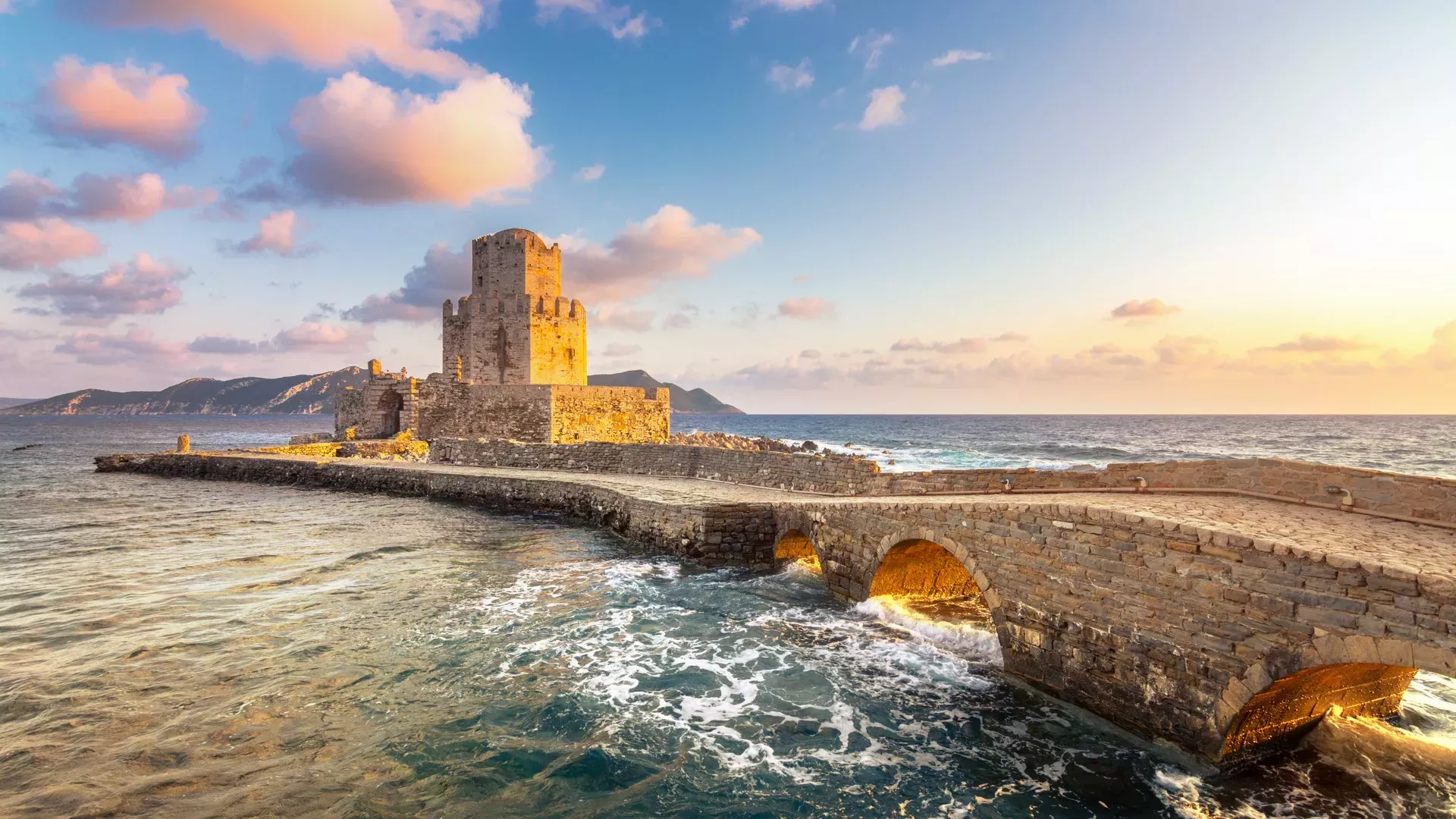
South of Pylos and opposite the island of Sapientza lies Methoni, a beautiful small town with houses in neoclassical style. Its most famous attraction is none other than its castle, one of the most important fortification complexes in Greece. In medieval times it was a stop on the route of pilgrims to the Holy Land and of merchant ships from West to East. The castle extends over an area of 93 stremmas and ends at the Bourtzi, the octagonal tower lapped by the sea on all sides.
Niokastro, Pylos, Messenia
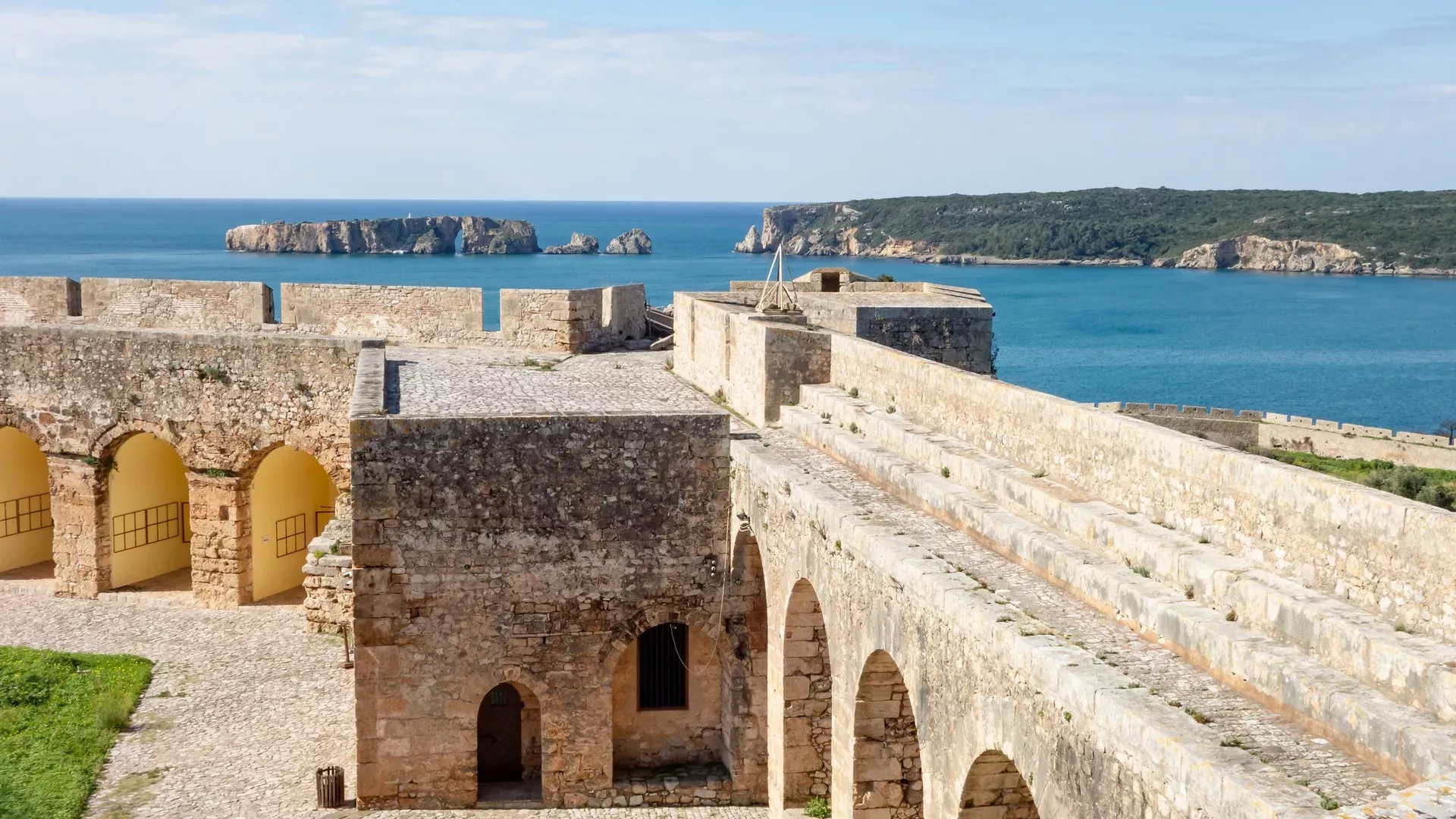
One of the best-preserved castles in Greece is Niokastro, the castle that the Ottomans built in 1573 on the southern side of Pylos, right on the sea. It is one of the two castles that guarded the strategic Bay of Navarino- its northern entrance was guarded by the Palaiokastro of Navarino, a medieval fortress of the 13th century. The castle was particularly strong as it had a triple defensive fortification: a moat, walls and a powerful citadel. Its walls are built with hewn limestone and poros stone and reach 8.5 m in height and 2.5-3 meters in thickness.
Mystras, Laconia
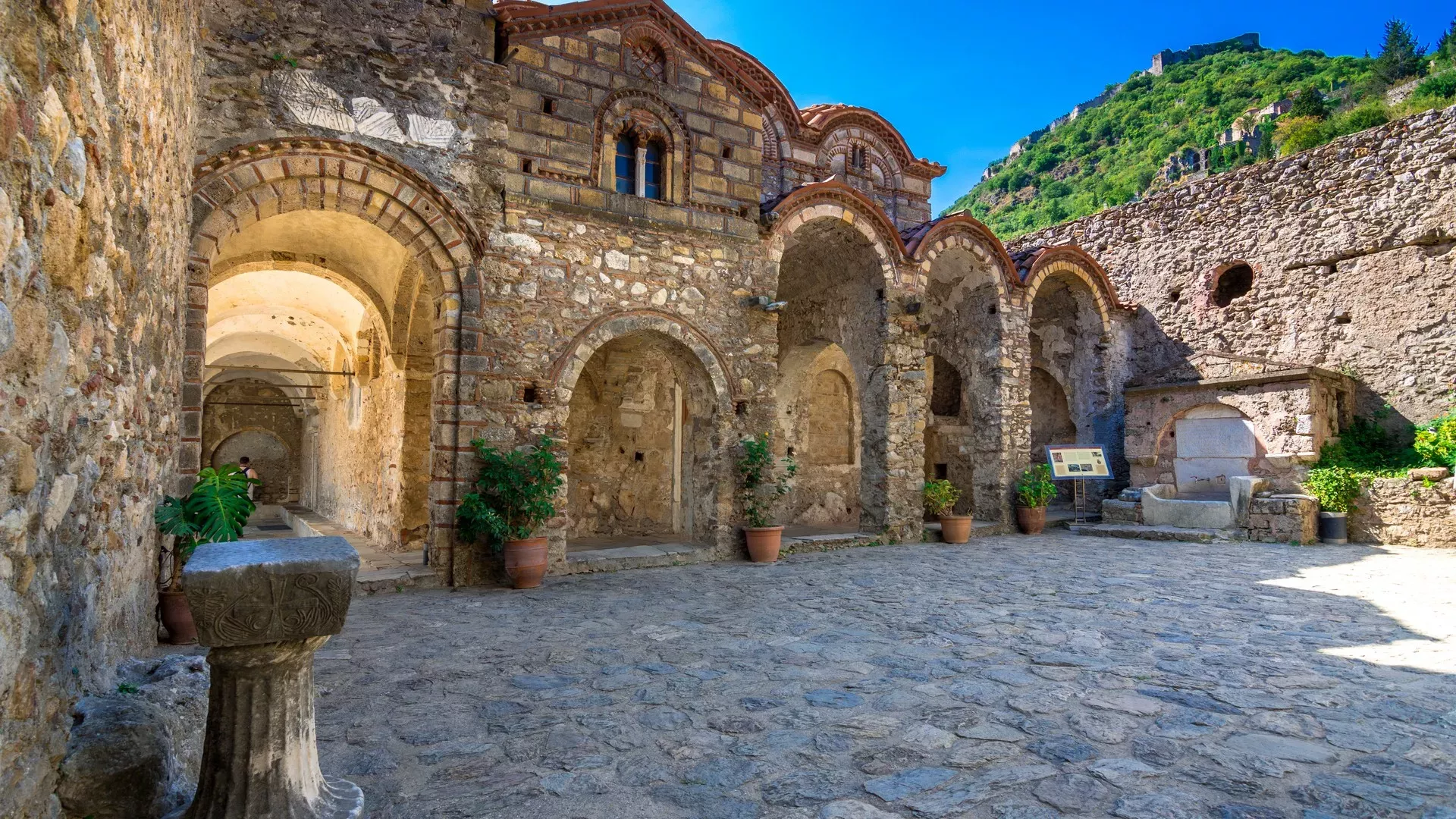
Five kilometers northwest of Sparta, on a rocky hill at the foot of Taygetus, rises the castle-town of Mystras- one of the countrys most important castle-towns, which in 1989 was designated by UNESCO as a World Heritage Site. The castle-town, deserted today, was a brilliant and powerful Byzantine city. Its history begins in the mid-13th century, when the conquest of the Peloponnese by the Franks was completed and William II of Villehardouin built a strong wall and castle on the eastern side of Taygetus, on the top of a rise called Mystras or Myzithras. Over the years, an entire fortified town developed, which passed into the hands of the Byzantines, the Ottomans and the Venetians. The best-known surviving monuments are Agia Sophia, the Palace of the Despots, the Monastery of Pantanassa, the Metropolis (or Saint Demetrios), Saints Theodoroi, Panagia Odigitria, while on the southern side of the Lower Town there are the ruins of the mansions of Laskaris and Frangopoulos. The museum completes the tour in the best possible way.
Monemvasia, Laconia
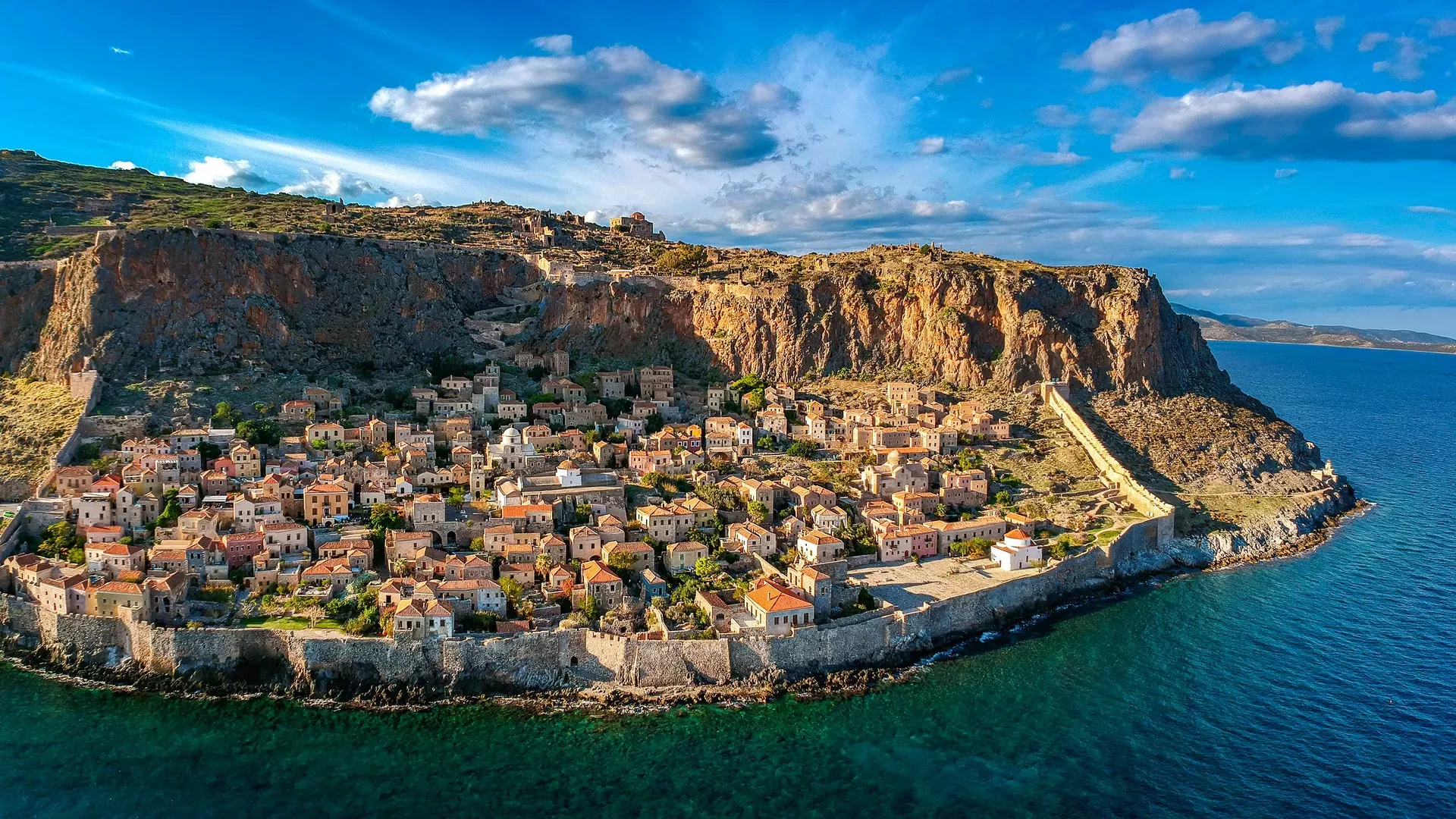
At the southern end of the eastern coast of the Peloponnese, the medieval walled castle-town of Monemvasia, with its 40 Byzantine churches and labyrinthine cobbled lanes, seems as if it has emerged from a fairy tale. Even from afar, it is impossible not to feel awe at the sight of the huge rock. Passing through the central gate, a leisurely stroll begins in an immaculately preserved medieval settlement with stone-paved lanes, old mansions and Byzantine churches that coexist harmoniously with traditional guesthouses, dozens of shops, restaurants and cafes. In the central square with the famous cannon aiming toward the sea stands the Archaeological Museum, while you will also see the renowned church of Elkomenos Christos, with rare icons, among which the one of the Crucifixion stands out. In the Upper Town, on the edge of a cliff, 300 m above the Myrtoan Sea, dominates the church of Agia Sophia, which was built in the 12th century. From here the view of Monemvasia and the sea that spreads at its «feet» is mesmerizing.