




The need for meaningful public dialogue and review of the ΠΟΑΥ framework, based on today's scientific, environmental, social and economic data was at the center of «AKTAIA»'s intervention
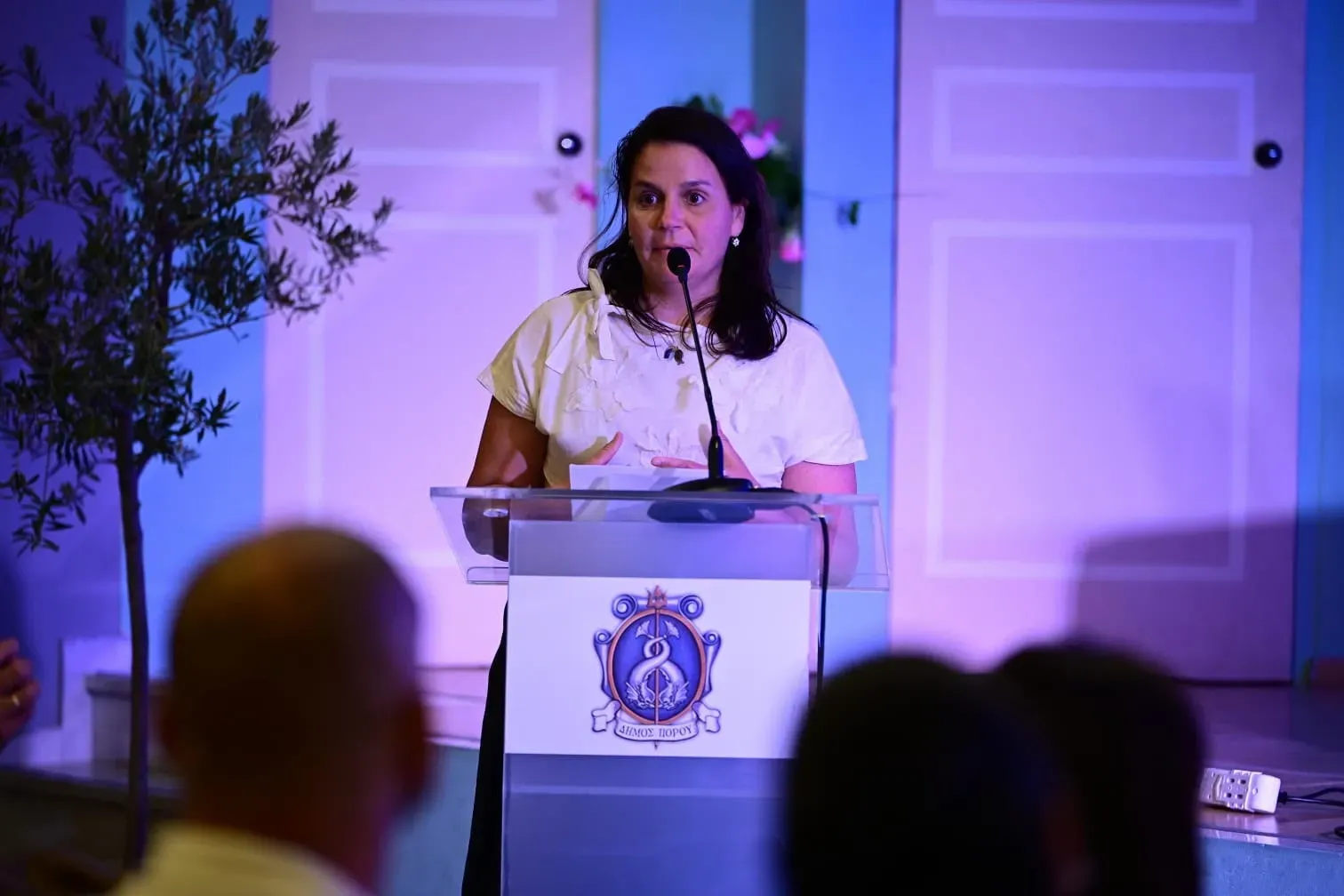
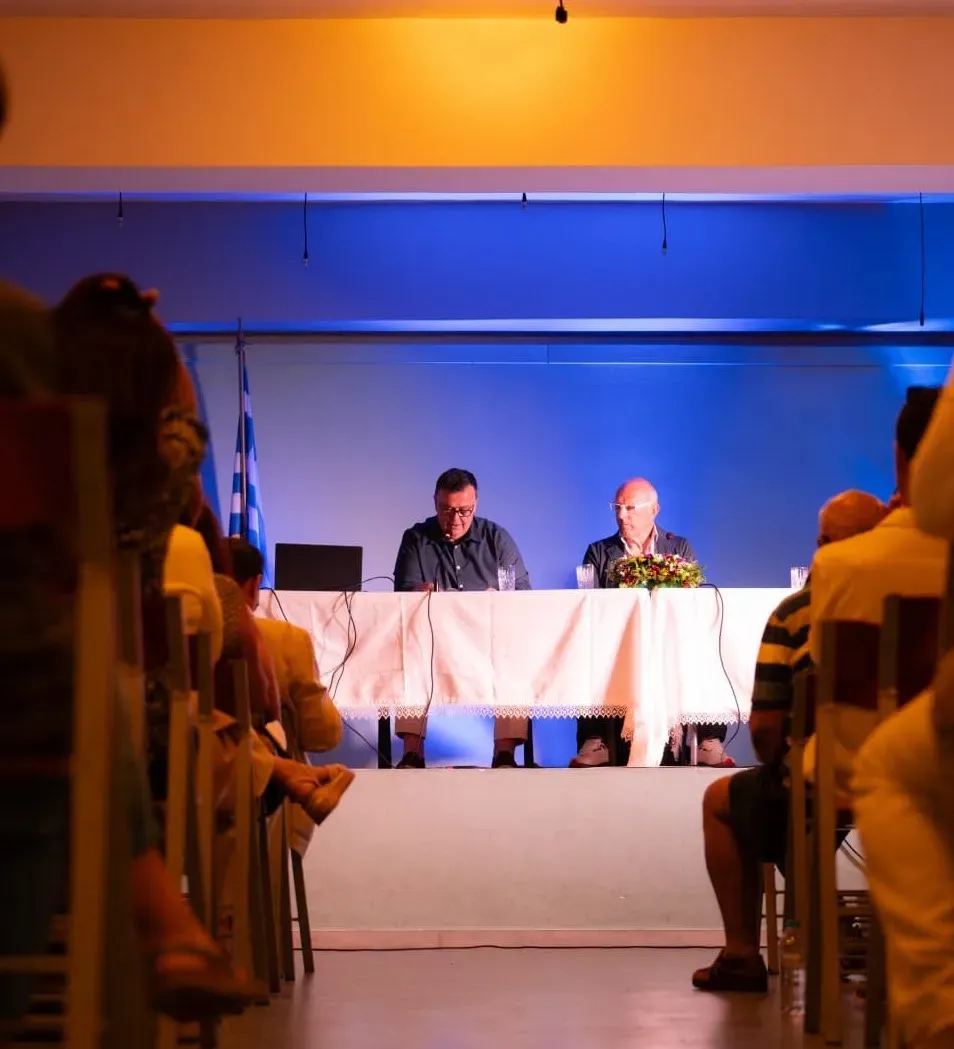
At the consultation workshop held on Monday, June 22, in Poros, «AKTAIA» participated as part of the discussion on aquaculture units and the challenges faced by island and coastal areas. The workshop was organized by the Municipality of Poros, in collaboration with Aegean Rebreath and the Blue Municipalities Network, with the participation of representatives of local government, organizations, scientists, and citizens.
Of particular importance was the presence of Mayors and representatives from twelve Municipalities, as well as the President of the Network of 25 Blue Municipalities, who with a united voice highlighted their opposition to the establishment of POAY within the maritime boundaries of their areas, within the framework of the new Spatial Planning for Aquaculture.
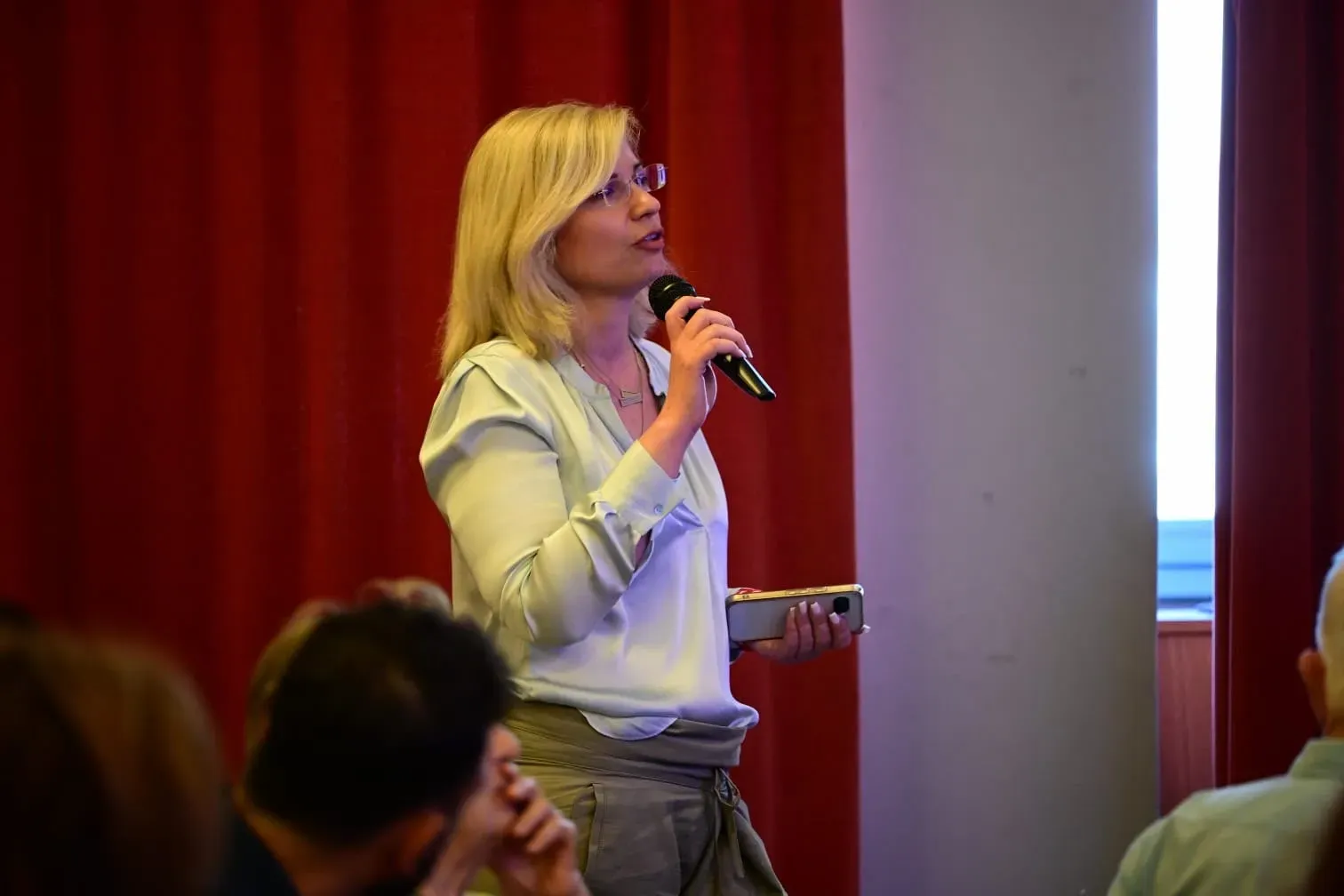
On behalf of «AKTAIA», Eva Douzina highlighted the need to re-examine the current framework for Organized Aquaculture Development Areas, stressing that Greece now stands before an important opportunity to correct a plan based on data from previous decades. The POAY framework that currently governs aquaculture in Greece was designed fifteen years ago.
Since then, however, science has advanced, experience has grown, and the data have changed. Today we know more about the environmental, social, and economic impacts associated with the siting and operation of the units, as well as about the consequences left behind by an inadequate management framework, as shown by the existence of 173 abandoned aquaculture units across the country.
Along the same lines, the presence of Elina Makri and Anthi Giannoulou from «AKTAIA» helped share experiences from other areas where POAY have been developed or planned, such as Xiromero and Evia. Their remarks underscored that the experience of regions already confronted with similar challenges must be taken seriously in today's dialogue, so that decisions on aquaculture aren't disconnected from what local communities themselves are experiencing.
This makes the discussion underway today even more critical. The decisions being taken during this period don't only concern the present, but will shape Greece's coasts for decades. At the same time, a large part of society still doesn't know the scale and consequences of the plan in progress: with POAY, aquaculture zones are expected to expand 24 times, reaching 240,000 stremmata of marine area.
The discussion, however, can't be limited only to the environmental dimension. As «AKTAIA» highlighted, the issue of aquaculture is also deeply economic. It needs to be described in clear terms and with a full picture of the real data: jobs are decreasing, public subsidies continue, lease fees remain unpaid, and much of the economic benefits don't stay with the local communities that bear the environmental cost.
Within this context, the presence of Mayors and representatives of local government at the workshop takes on particular significance. For «AKTAIA», their stance brings hope, as coastal communities are the ones closest to the problem, who see the impacts every day and know what's at stake.
«Without a meaningful public discussion, coastal communities have become the last line of defense for the sea. They are the ones who see the impacts every day and know what's at stake», noted Eva Douzina.
The need for a new approach is now clear. Greece needs a better framework for aquaculture, with best practices, independent science, and a genuine public dialogue. It doesn't need to start from scratch. There are already international examples of countries re-examining how aquaculture units are sited and operated: from Cyprus, where sea-based units are sited at distances of kilometers from the shore, to western Canada, where the gradual removal of open-net salmon farms from coastal waters is underway. These practices show that there are alternatives and that they must be taken seriously in the Greek discussion.
«We can't move forward with POAY as they were designed fifteen years ago, ignoring what we know today. The stakes are far too high. They concern our environment, our culture, our identity, and the future of the next generations», noted Eva Douzina.
«AKTAIA»'s intervention concluded with a clear reminder of the responsibility of everyone taking part in the public dialogue about the sea's future: «The sea doesn't have its own voice. It has ours. And we have a responsibility to use it».
«AKTAIA»'s participation in the Poros workshop is part of its steady effort to contribute to a substantial and evidence-based public dialogue about the future of Greece's coasts, with respect for the environment, local communities, and the generations to come.