





A surprise city of Northern Italy straight out of a fairy tale, Bergamo impresses at first glance.
Set at the foot of the Alps in Lombardy, Bergamo is a city that wins visitors over from the very first moment. Just 50 km from popular, cosmopolitan Milan, yet far from the tourist crowds, Bergamo preserves its own distinct character and a tranquil everyday rhythm.
Bergamo harmoniously blends past and present, divided in two between cosmopolitan Città Bassa and atmospheric Città Alta. The city invites you to walk and explore in a fairy-tale setting of picturesque alleys and iconic landmarks steeped in history, as well as viewpoints where the vistas take your breath away. In 48 hours you’ll have the chance to get to know it well and fill up on images and moments that will stay with you.
The modern Città Bassa
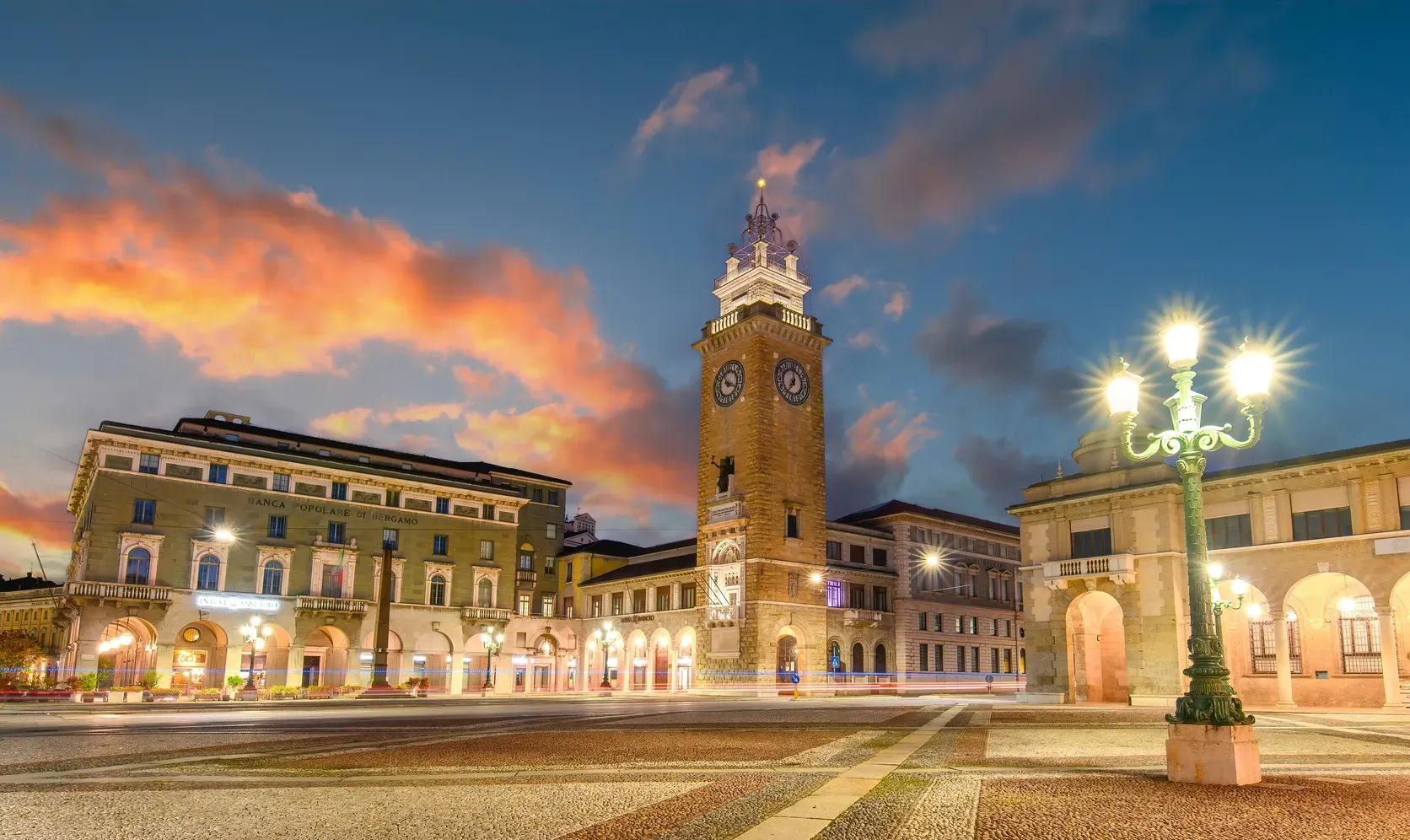
Bergamo is a city with two faces: Città Bassa, the Lower Town, and Città Alta, the Upper Town. Arriving at the train station, you’ll first encounter Città Bassa, the most modern and lively part of Bergamo, developed mainly in the 19th and 20th centuries. Stroll along streets and boulevards such as Via XX Settembre, brimming with shops and energy. Piazza Matteotti with its cafés is the ideal spot to feel the city’s pulse, as it’s a favorite meeting point for locals.
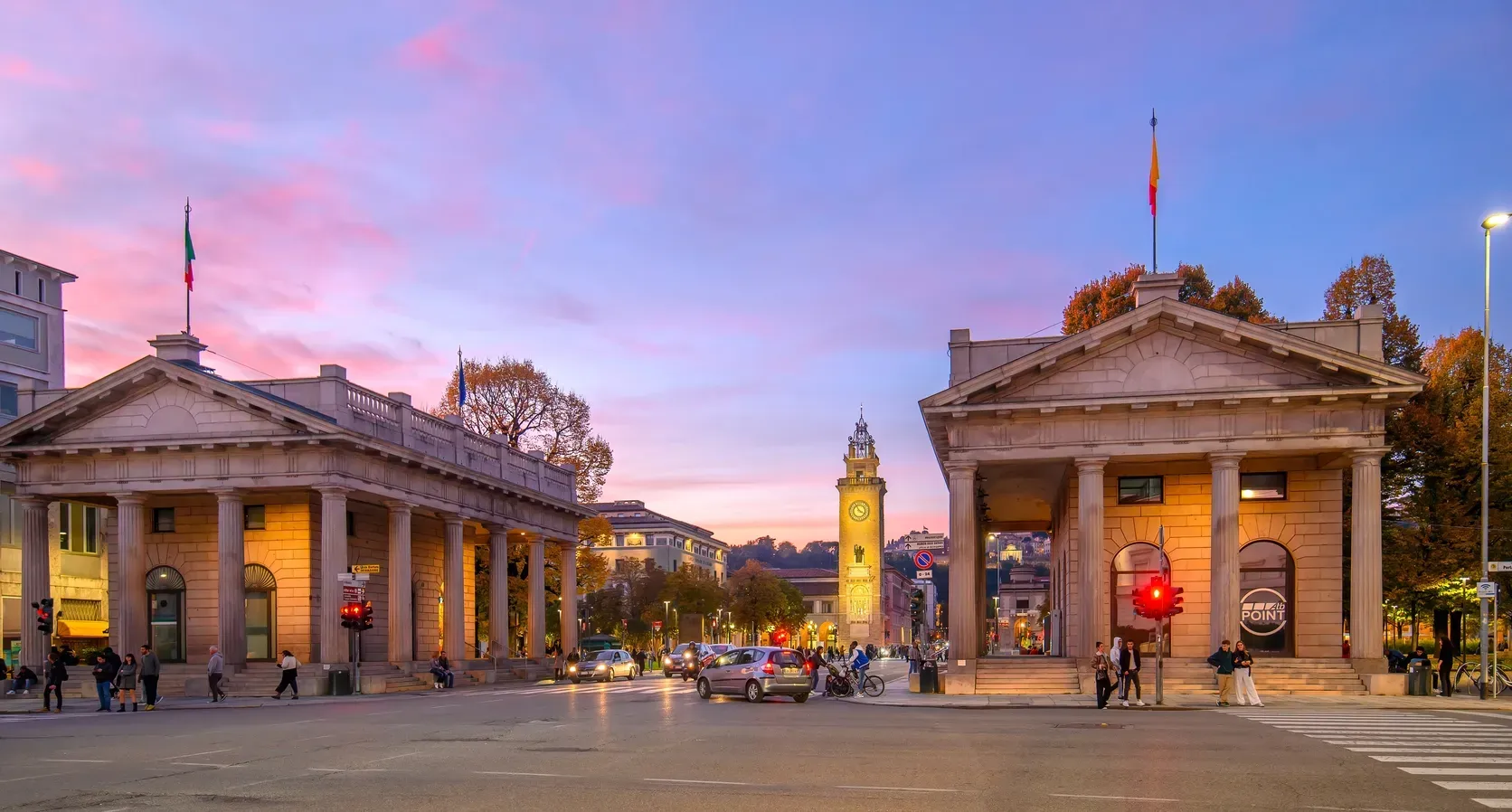
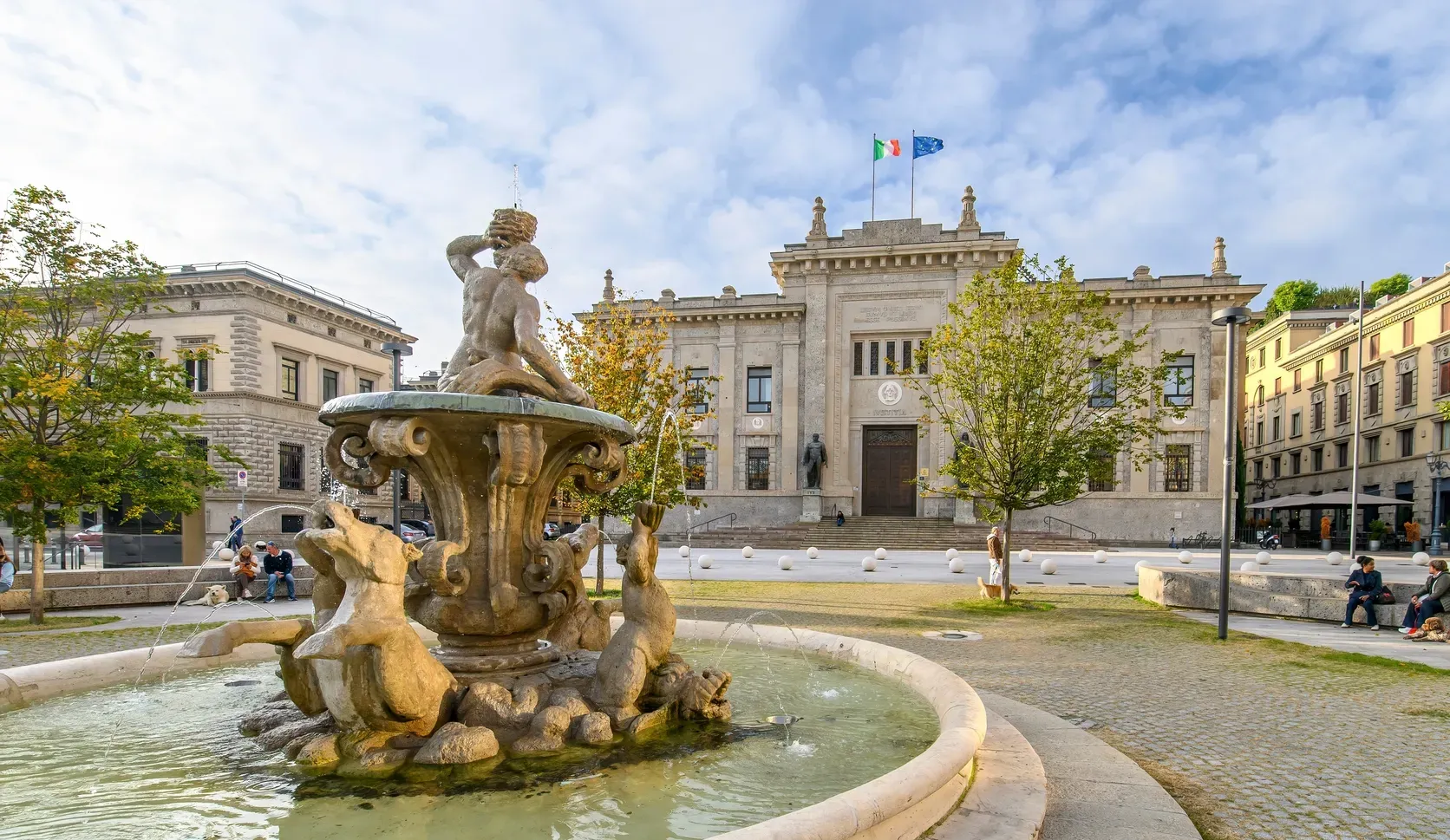
Your attention will be drawn to the Porta Nuova gate, with the Monumento a Vittorio Emanuele II on one side and the Monumento a Francesco Nullo on the other, and beside it a standout attraction, the Teatro Donizetti, dedicated to the famed composer Gaetano Donizetti, who was born in Bergamo. You’ll also come across the Torre dei Caduti on Piazza Vittorio Veneto. Nearby, the architectural gem Quadriportico del Sentierone impresses, with the Triton Fountain at the center of Piazza Dante.
Art lovers will appreciate the Accademia Carrara, a museum that hosts works by great Renaissance artists and beyond, including Raphael, Bellini and Botticelli. Next door, GAMeC (Galleria d’Arte Moderna e Contemporanea) is a gallery housed in a 15th-century former monastery, presenting works by 20th-century Italian artists and creations by up-and-coming talents.
The medieval Città Alta
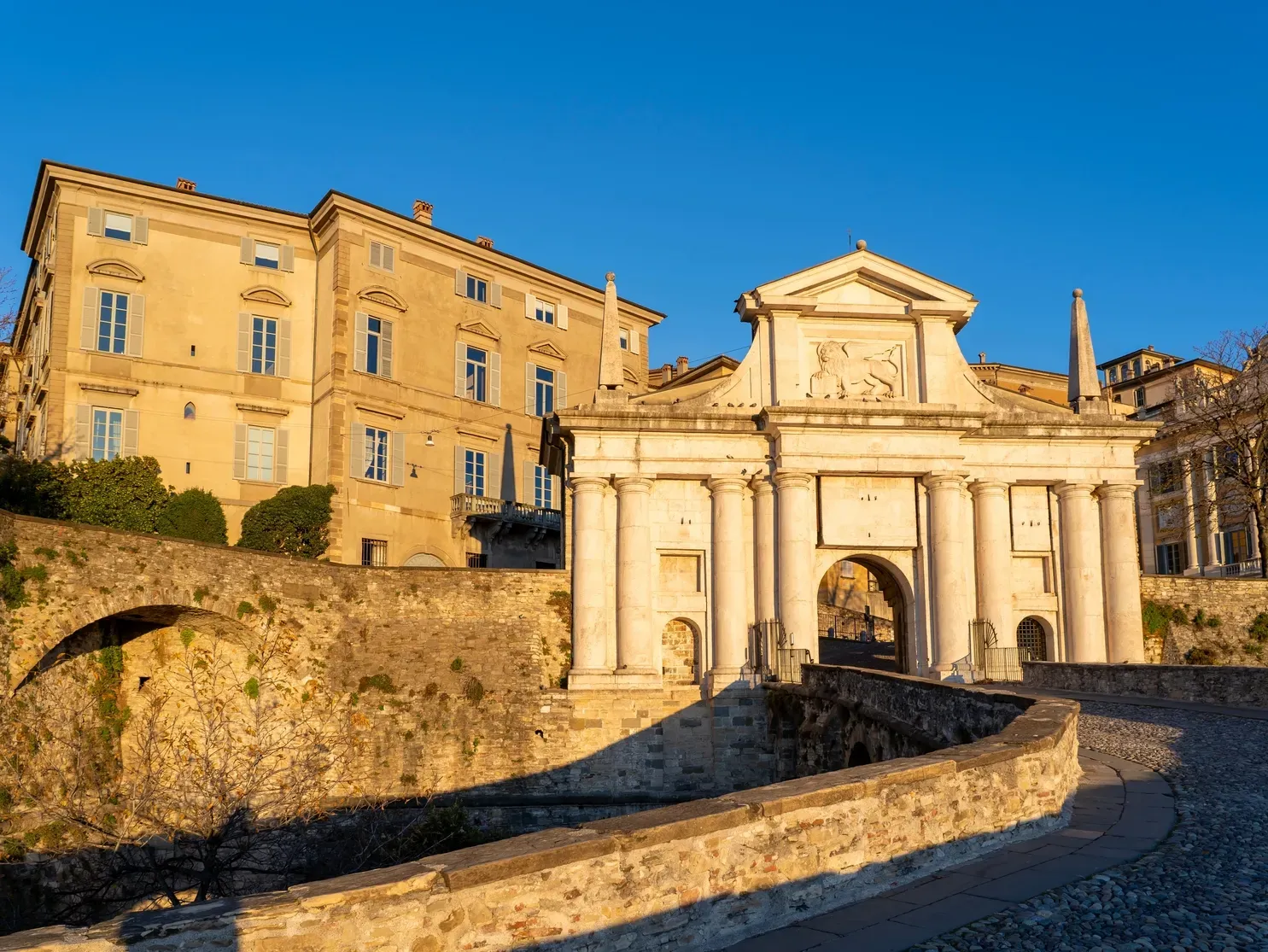
You can’t get a complete picture of the city, however, without going up to Città Alta, whose medieval atmosphere complements the more modern Città Bassa. For most, it’s Bergamo’s jewel, built atop a hill, protected by walls, with cobbled lanes and squares, imposing buildings, trattorias and glorious views. You can ascend on foot or by bus, but the most distinctive way is the funicular, the famed Funicolare, which climbs the slope slowly and carries you into the heart of the medieval town.
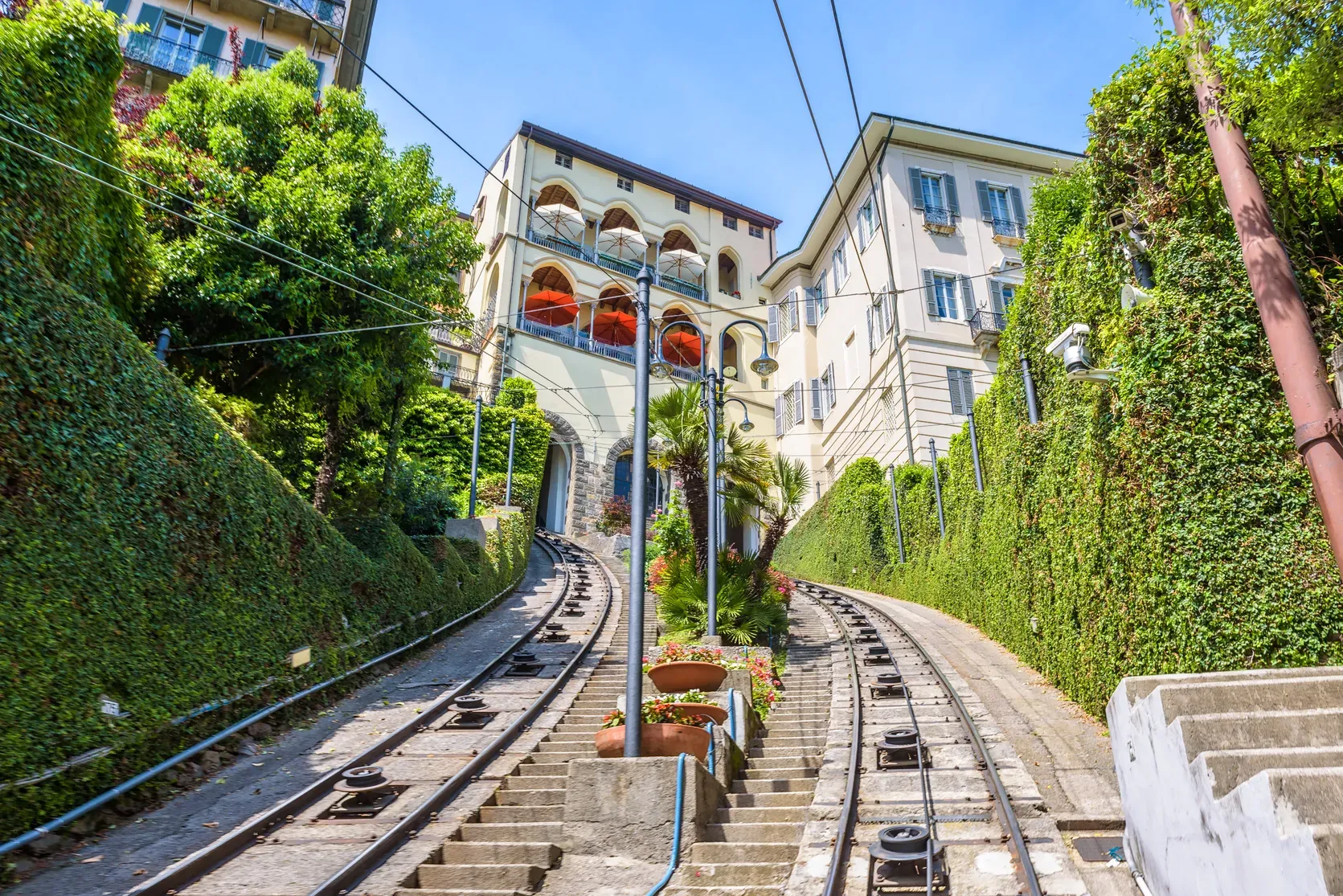
If you follow Viale delle Mura, you’ll see the city gradually unfolding below, admire the emblematic Porta San Giacomo that remains as part of the walls, and take in the Palazzo Medolago Albani. In Città Alta it’s worth getting lost in the narrow streets to discover the little shops, bookshops and cafés that pop up before you.
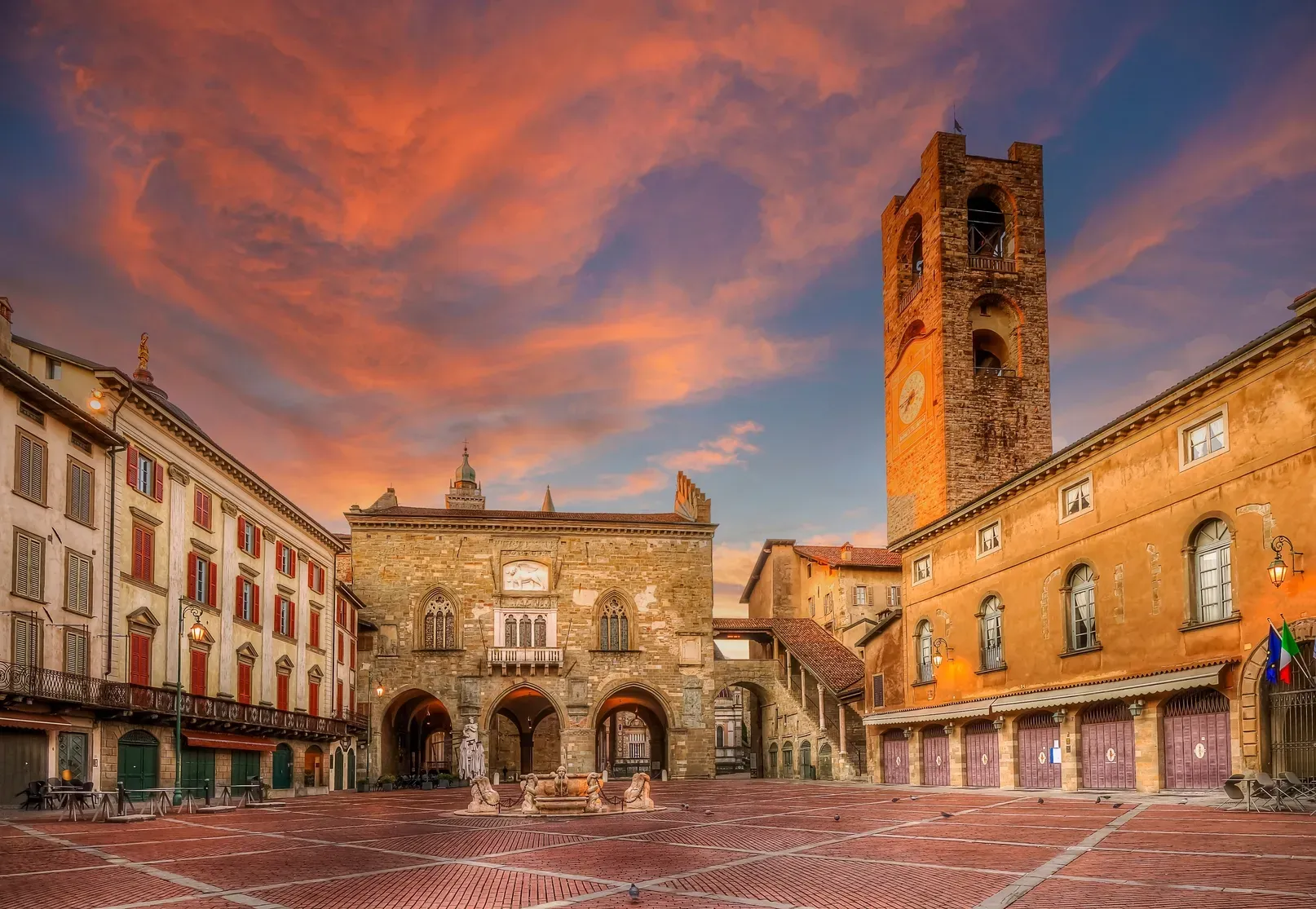
In Piazza Vecchia, thesquare that is the soul of the Upper Town, you’ll feel as if time has stopped. The square’s harmonious geometry impressed architect Le Corbusier, who called it a perfect work of art. Here you’ll see travelers sitting at cafés, restaurants and even on the steps, pausing to rest from their wanderings. All around stand historic buildings, such as the Palazzo della Ragione, one of the oldest Italian municipal buildings from the 12th century, which once also served as a court. In essence, it separates the two central squares, Vecchia and Duomo.
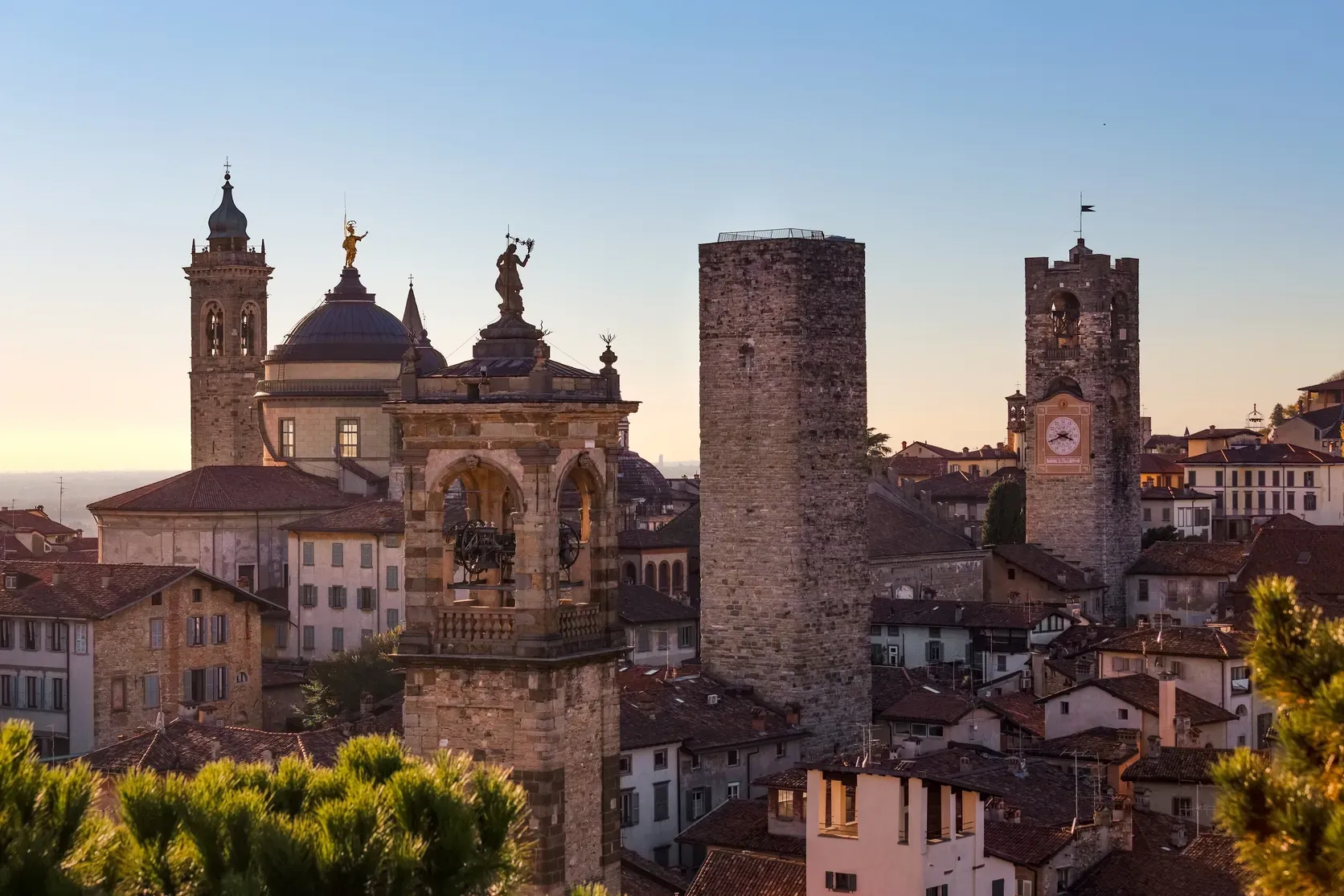
Opposite, the tower Torre Civica, also known as Campanone, impresses. Its height is 52.76 m. and you can go up to admire the city’s enchanting view. At the top is Lombardy’s largest bell, which to this day strikes 100 times every evening at 22:00, keeping alive a tradition that dates back to the era of the Republic of Venice.
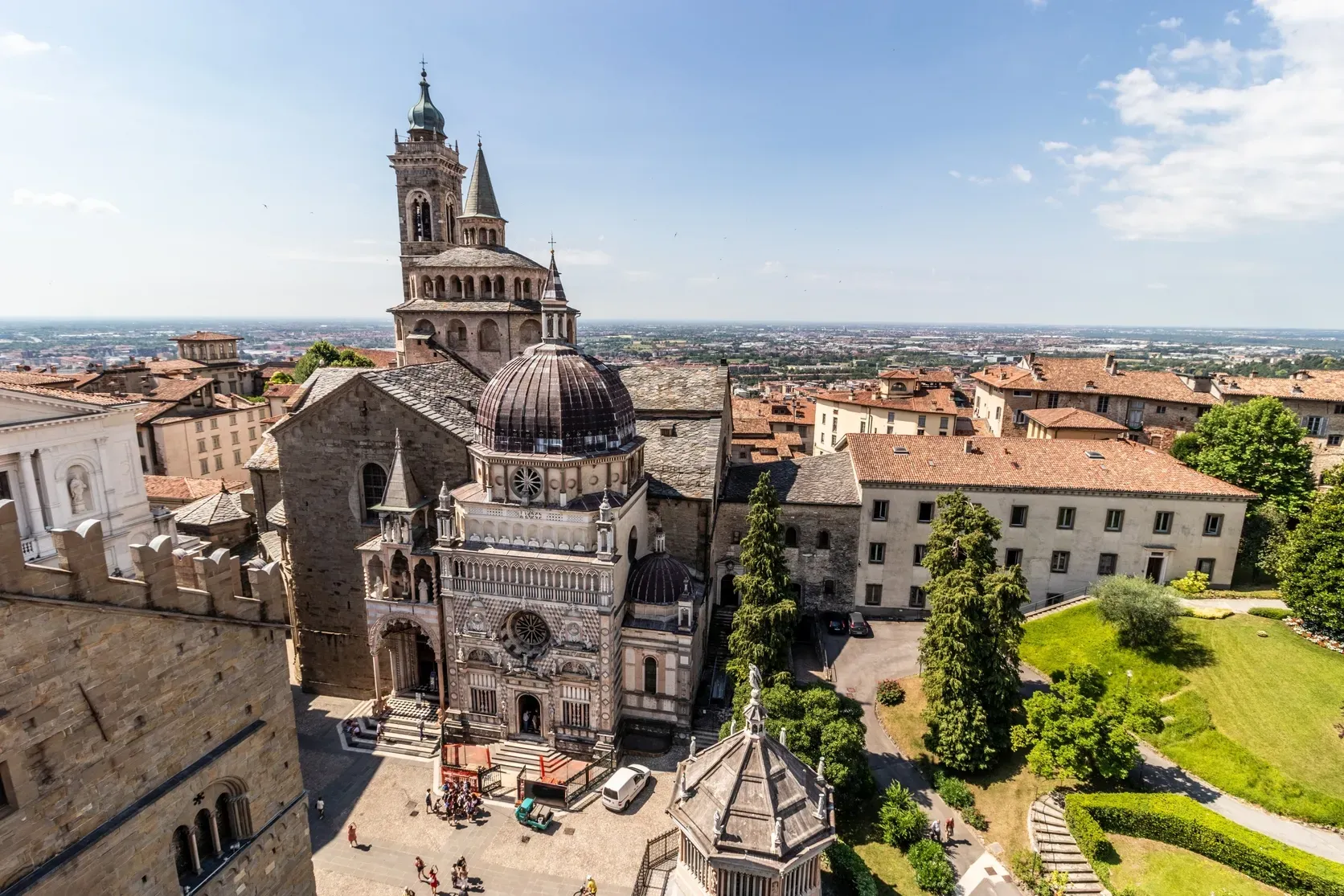
Visit Duomo Square and the Basilica of Santa Maria Maggiore with its impressive Baroque interior décor, the adjoining Cappella Colleoni and the Bergamo Cathedral with its Neoclassical façade. The arcades Portici della Ragione also make a lovely spot for photos.
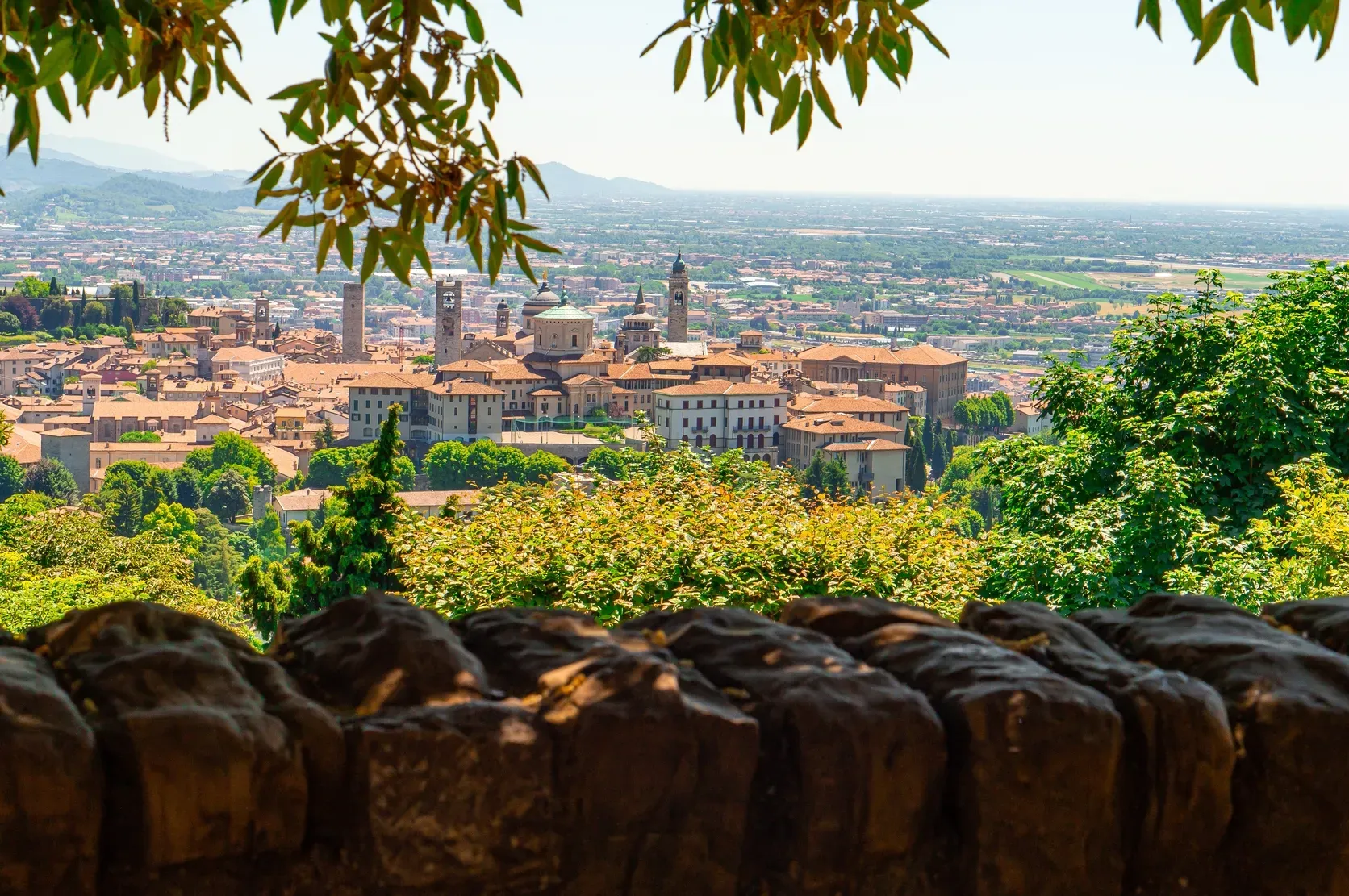
One of the most beautiful places to drink in the view over Bergamo’s tiled rooftops is the Rocca di Bergamo with its impressive park. This 14th-century fortress houses a small museum on the city’s history. The funicular ride continues, as there’s a stop to go even higher if you wish. The higher you go, the more you’ll notice this side of the city grows calmer and closer to nature. Near the Funicolare S. Vigilio stop is the Lorenzo Rota Botanical Garden, with many plant species that are even more impressive in spring, while at the end of the route you’ll find the Torre Castello San Vigilio, with views over the Lombardy plain and the Alps that will impress you.
Nearby escapes
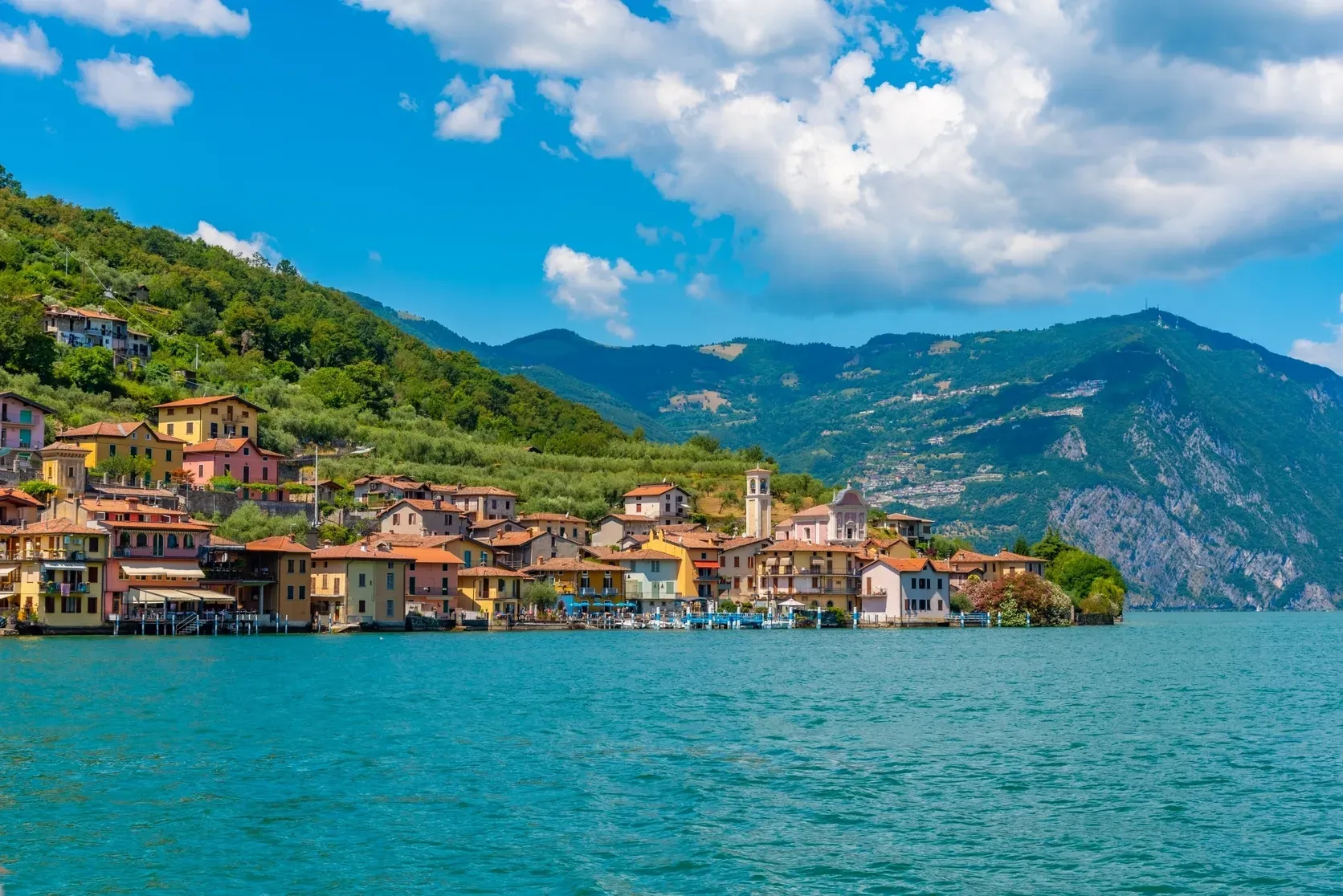
If you have time for nearby excursions, pair the city with nature and enchanting landscapes with a visit to Lake Iseo, located about 40 minutes away. Known for its picturesque lakeside villages, such as Iseo itself, Lovere and Sarnico, it offers tranquility and an authentic Italian atmosphere. At the center of the lake rises Monte Isola, the largest inhabited lake island in Europe, where time seems to flow slowly.
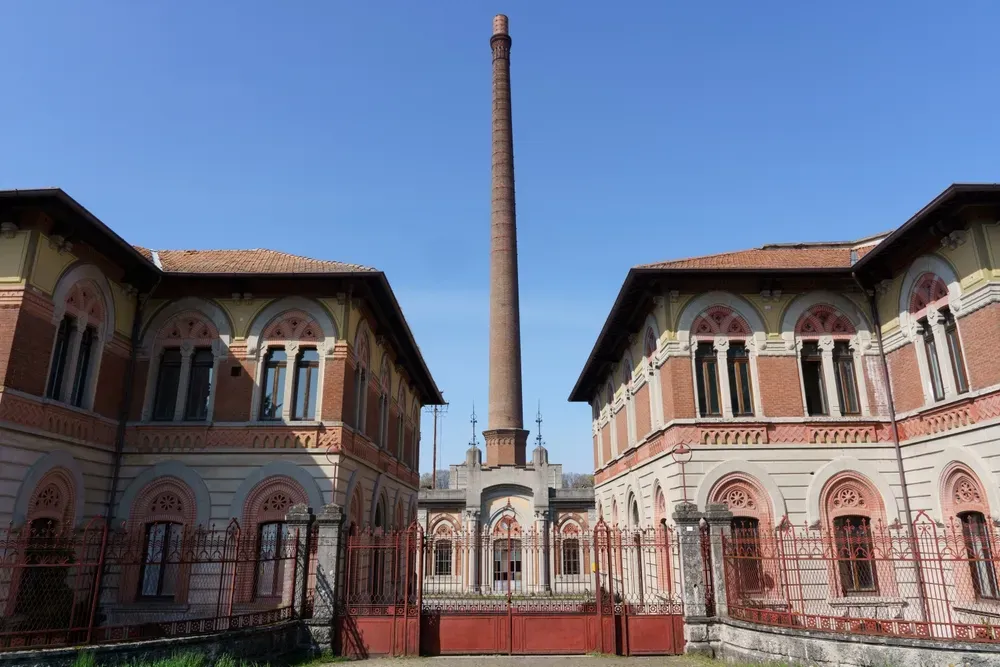
A distinctive outing awaits at Crespi d’Adda, just half an hour from Bergamo, a unique village recognized as a UNESCO World Heritage Site. It was created in the late 19th century by the Crespi family as a model workers’ community around the area’s large textile mill. Here you’ll see well-preserved stone houses, the school and the church, transporting you to another era and revealing what industrial life was like in the late 19th and early 20th centuries.