





Strolls through fishing villages and stone-built settlements that seem frozen in time, refreshing swims at unique beaches, delightful journeys through history and nature. These are the reasons that make Messinian Mani a wonderful destination for summer - and not only - getaways.
Lush nature, endless olive groves, traditional settlements, stone tower houses, hidden chapels, wonderful seas... The Messenian Mani, southeast of Kalamata, is a distinctive place crafted from beautiful scenes.
Famous as well as lesser-known seaside villages, quiet little harbors with fish tavernas serving whatever the boat brings in, organized sandy beaches and small coves of wild beauty compose the scene in one of the most enchanting corners of the Peloponnese. This region awakens the appetite for discovery. Its secrets are many. The following places, however, are those that will turn Messenian Mani into your favorite summer - and not only - destination.
7 reasons to travel to Messenian Mani
Kitries
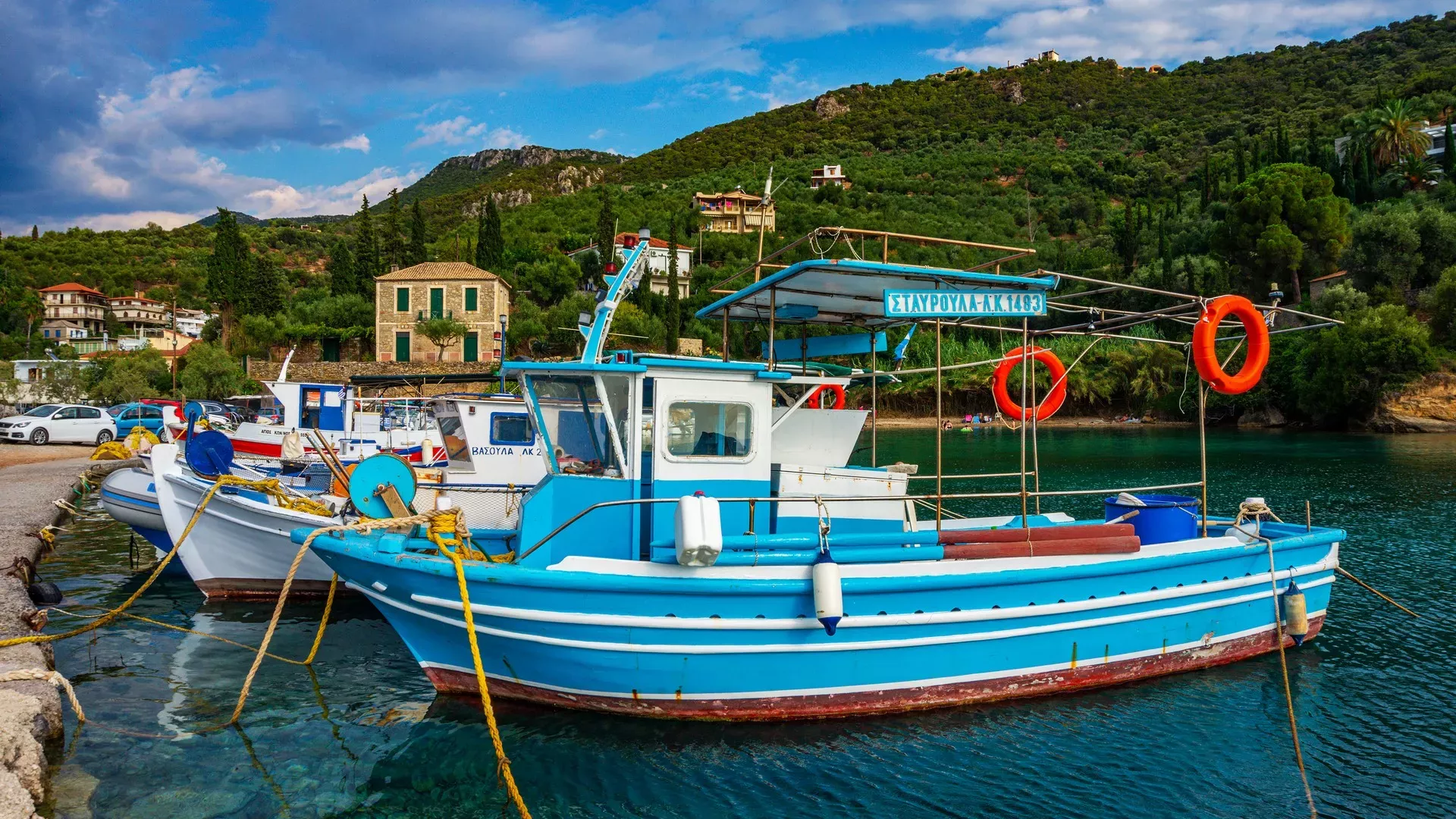
12 km from Kalamata, on the eastern side of the Messenian Gulf, lies the fishing village of Kitries, nestled in a small cove. From here, the gateway to Messenian Mani is considered to open. The small beach in Kitries has pebbles and emerald-green waters, with the lush slopes almost touching the sea. Beyond swimming, here you will also savor fresh fish in little tavernas right on the water. The village’s history is fascinating as well. During Ottoman rule, Kitries was the seat of the Beys of Mani and the most important port of the Messenian Gulf. Indeed, the historic Pact of Kitries was drawn up here in 1819, by which the Mavromichalis, Grigorakis and Troupakis families pledged peace, concord, and the union of their forces in the upcoming Revolution of 1821.
Kardamyli
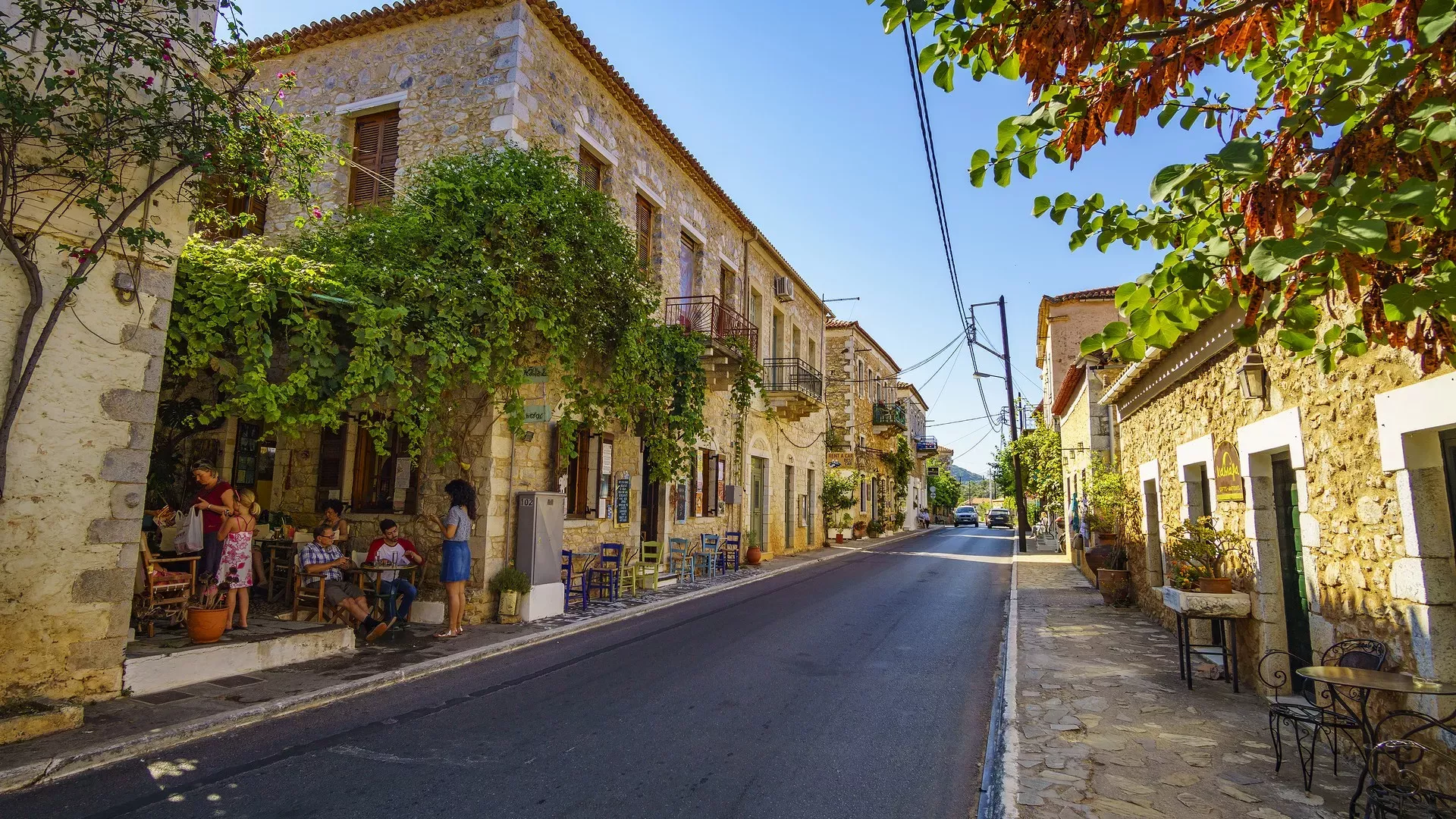
At the foot of Mount Taygetos and overlooking the Messenian Gulf, Kardamyli is the jewel of Messenian Mani. This historic seaside village lies 35 km from Kalamata. Dense olive groves, stately cypress trees, well-kept stone houses with leafy gardens, pebbled coves and the village’s picturesque little harbor set a cinematic scene in this sophisticated resort that captivates nature lovers and artists, Greek and foreign alike.
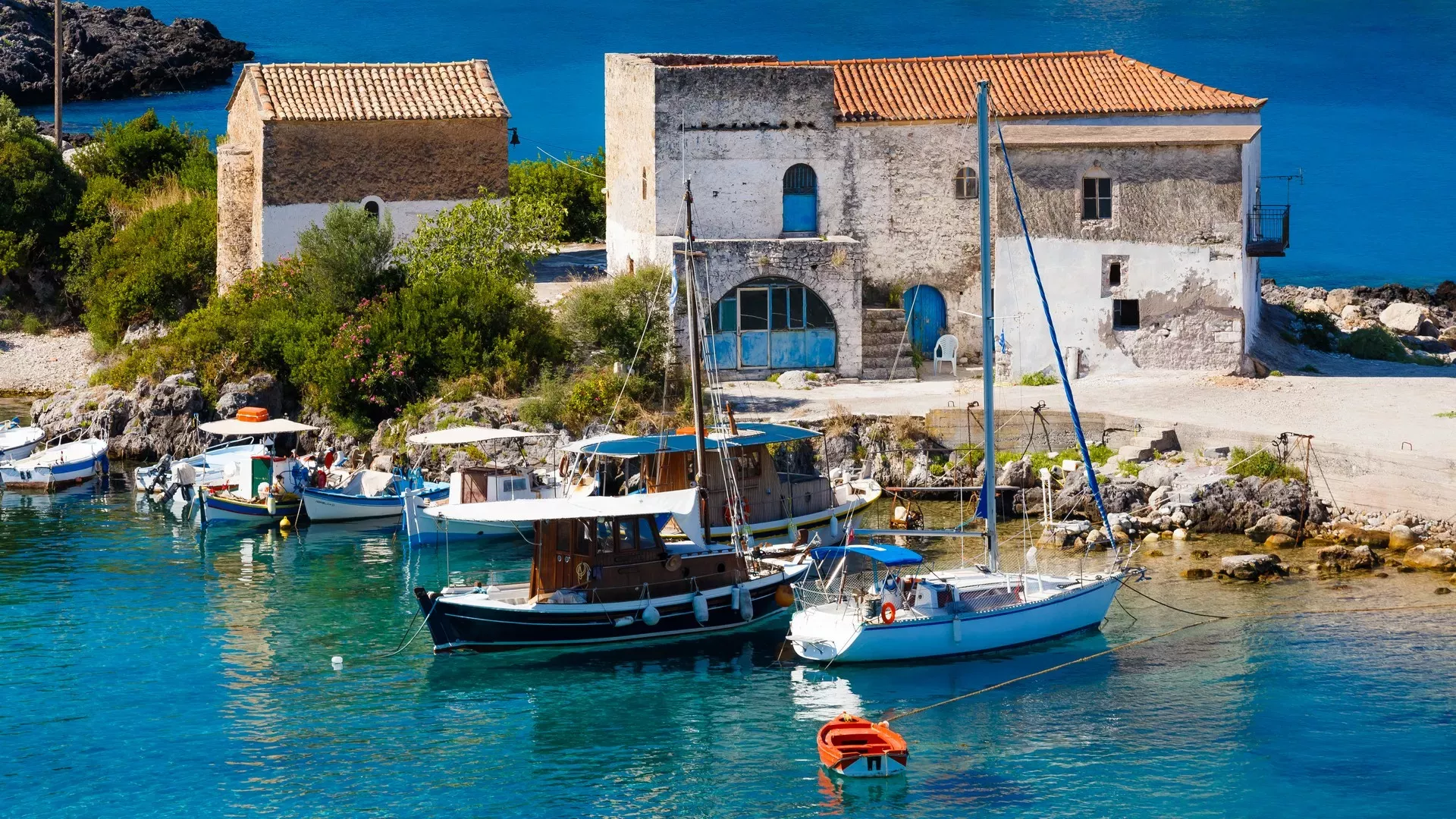
Many famous Hollywood stars (Ethan Hawke, Brad Pitt, Angelina Jolie, etc.) have swum in its waters and strolled its stone lanes. The English writer and traveler Sir Patrick Leigh Fermor, in fact, never wanted to leave and lived there for years. His house in the Kalamitsi area is a must-see for those who reach Kardamyli (it belongs to the Benaki Museum and is open to the public, with guided tours and organized visits).
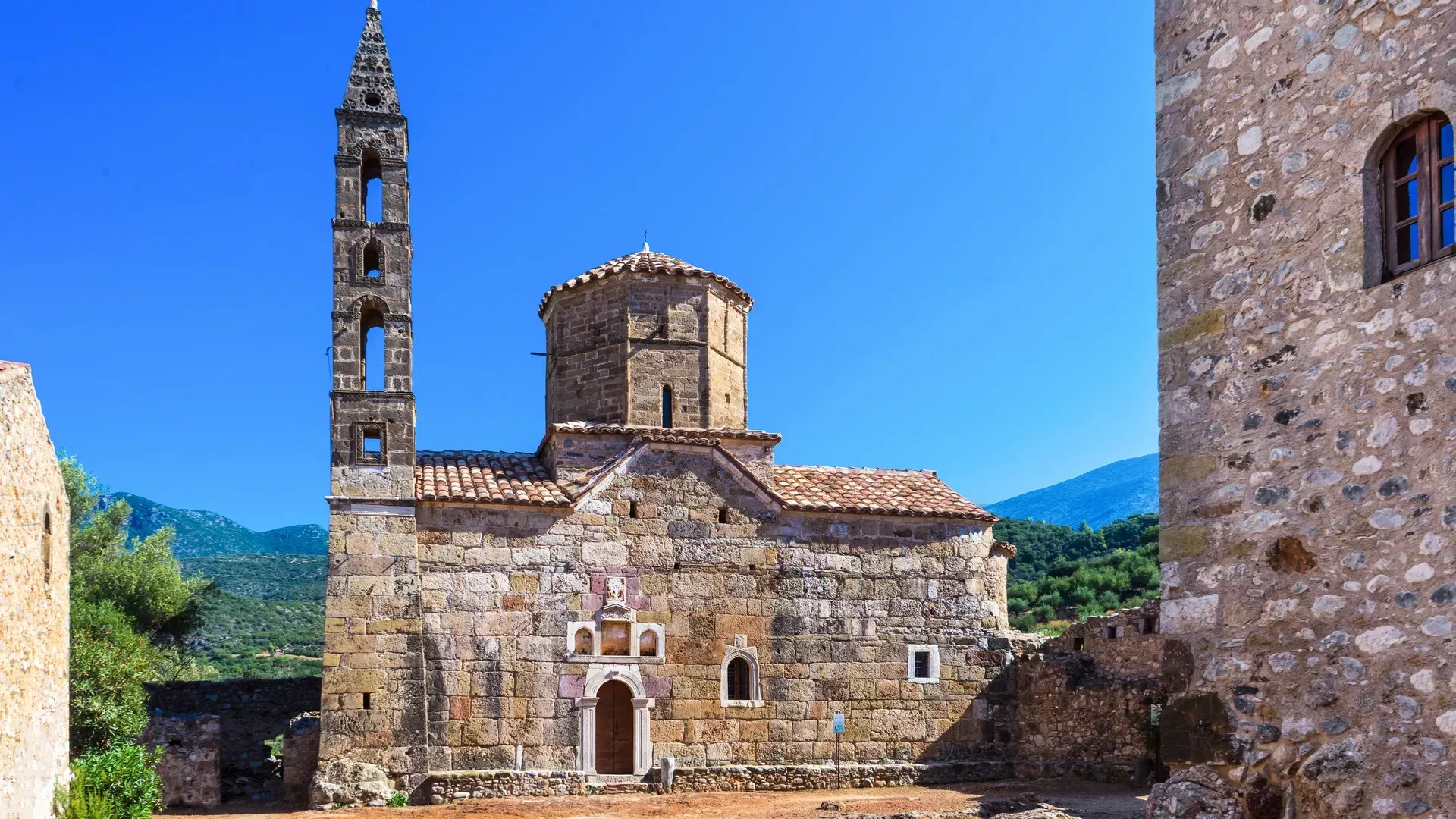
On a hill with olives and cypresses, at the foot of Mount Taygetos, lies Old Kardamyli, a ruined settlement that enchants every visitor. In the historic settlement you will see the Mourtzinou Tower (of the last Maniot captain of Kardamyli), built in 1807, and the church of Agios Spyridon with its elegant belfry. The official beach of Kardamyli is Ritsa, west of the settlement, while a short distance away you will find Foneas beach with its wild beauty and Delfinia with coarse sand. All with gorgeous, green-tinted waters.
Foneas
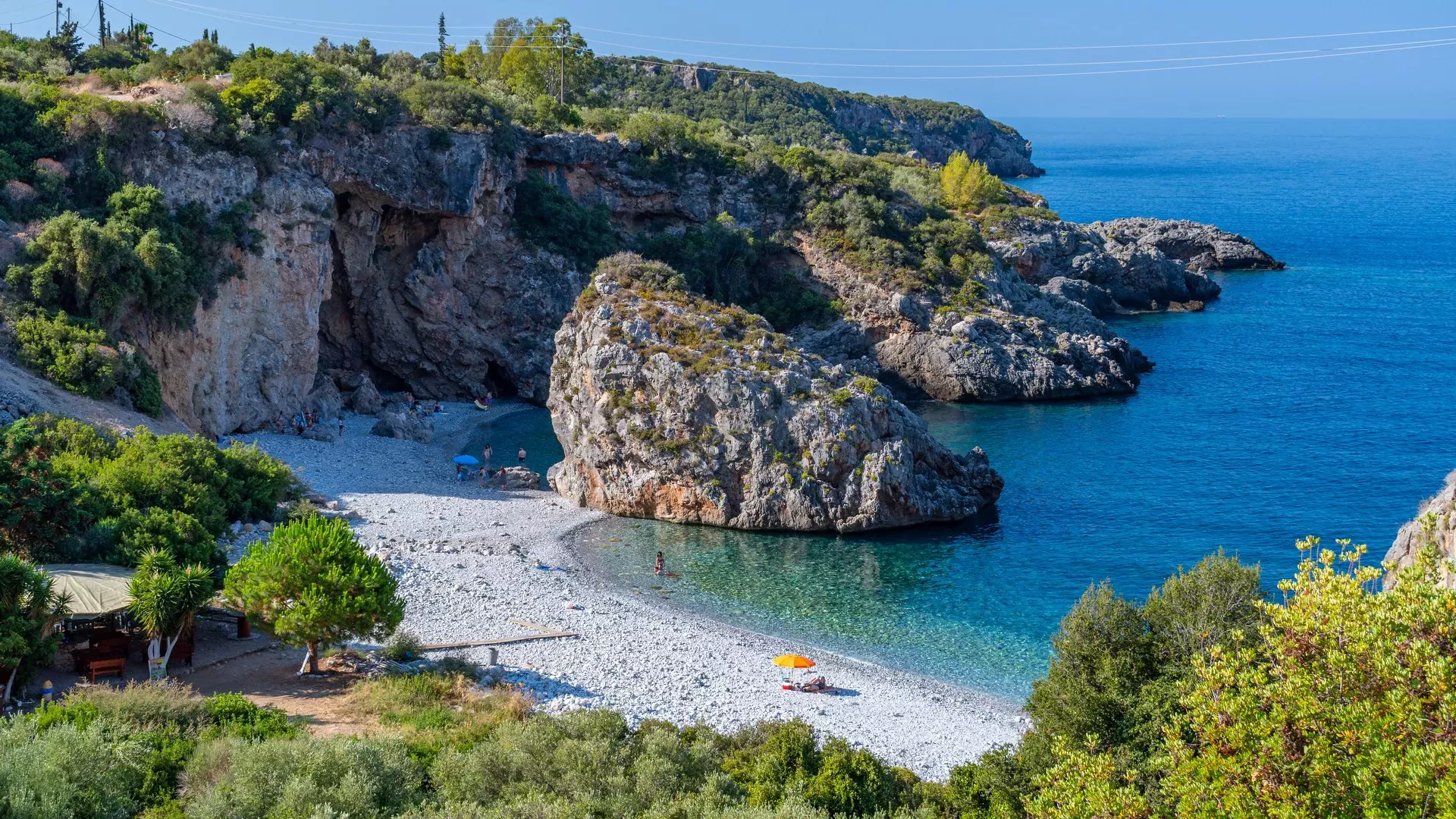
Foneas is one of the most beautiful beaches of West Mani, a few kilometers southeast of Kardamyli. This small cove of wild beauty, with white pebbles and cool, turquoise-green waters, is a favorite for locals as well as visitors to Messinia. A large rock splits the beach in two and offers natural shade. One version for the beach’s curious name speaks of a pirate who was shipwrecked there and killed passers-by. The second version has the killer being a huge snake that devoured the monks’ flocks at the castle-monastery of Vaidenitsa.
Stoupa
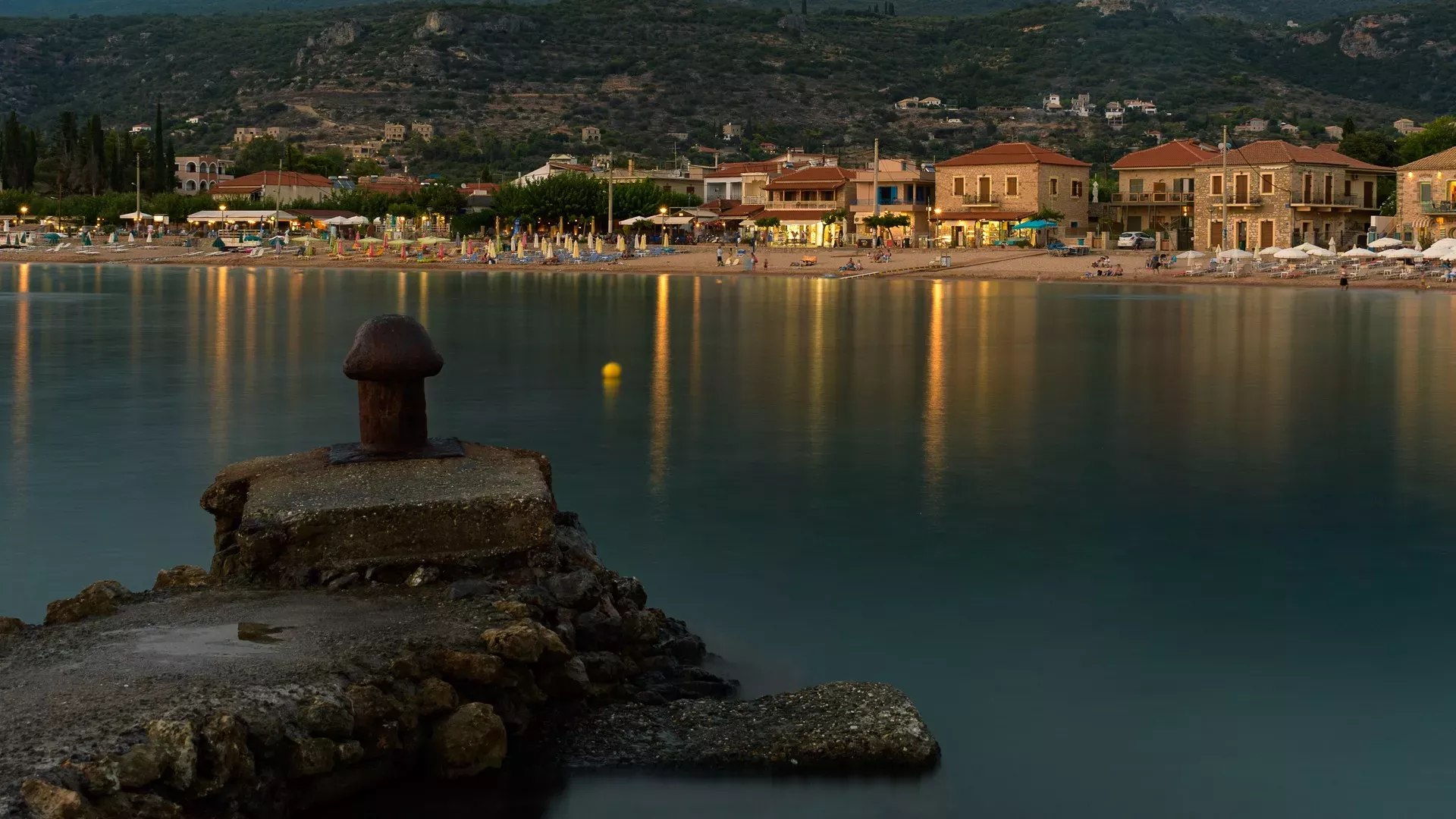
The road then leads to Stoupa. It is a famed Messenian resort that offers many options for food, entertainment, as well as accommodation for all tastes. The settlement is built at the foot of Mount Taygetos, in an area once known as Potamos because the Drakos or Drakolagkados stream flows into Stoupa beach during the winter. The village’s long beach stretches along the main road, has coarse sand and is ideal for families.
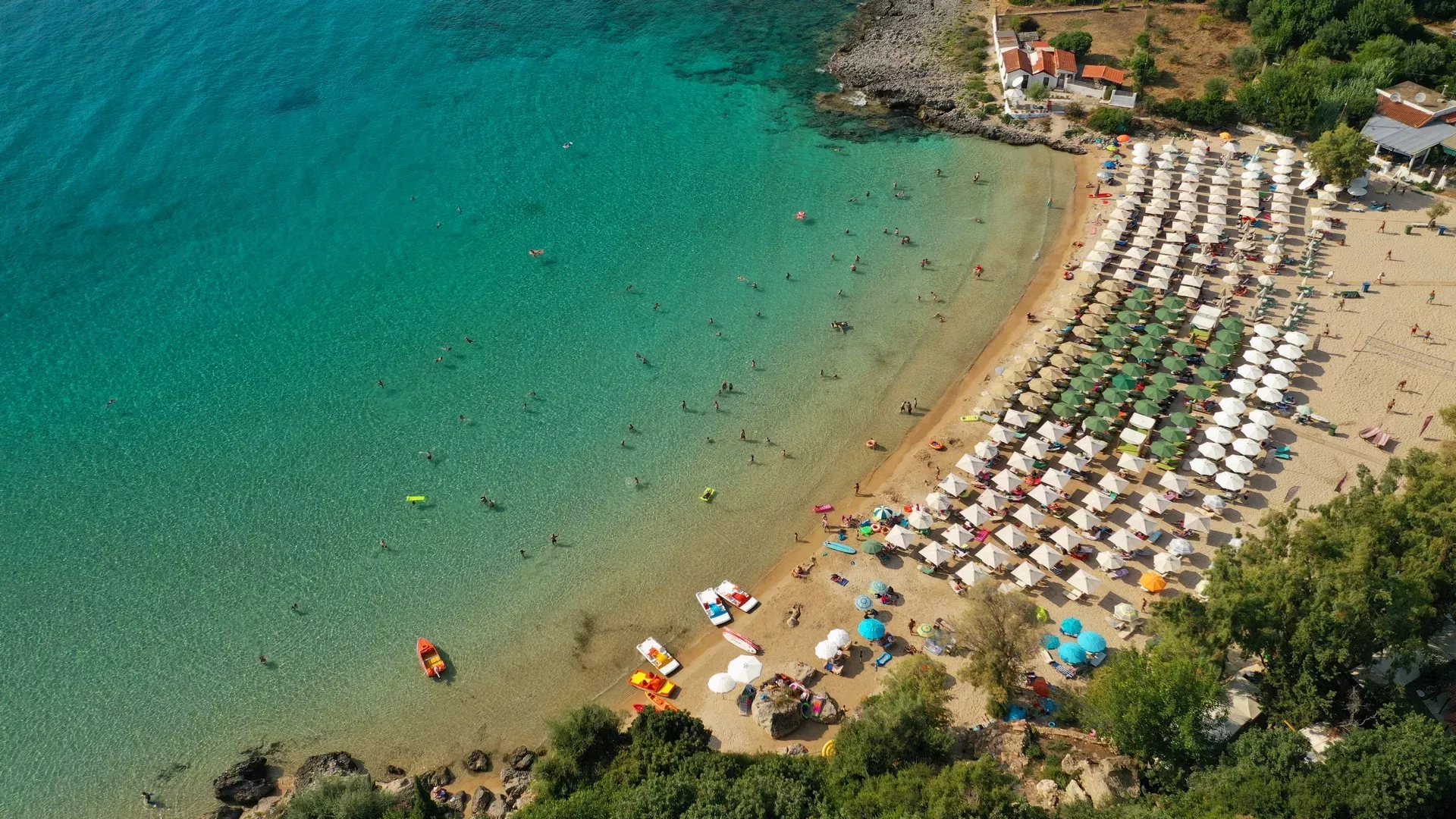
Right next to it is Kalogria beach, among the best-known organized beaches in the area, with wonderful, crystal-clear waters and soft, deep sand. This particular beach is linked to the writer Nikos Kazantzakis, as it was here he was inspired to write Life and Times of Alexis Zorbas.
Agios Nikolaos
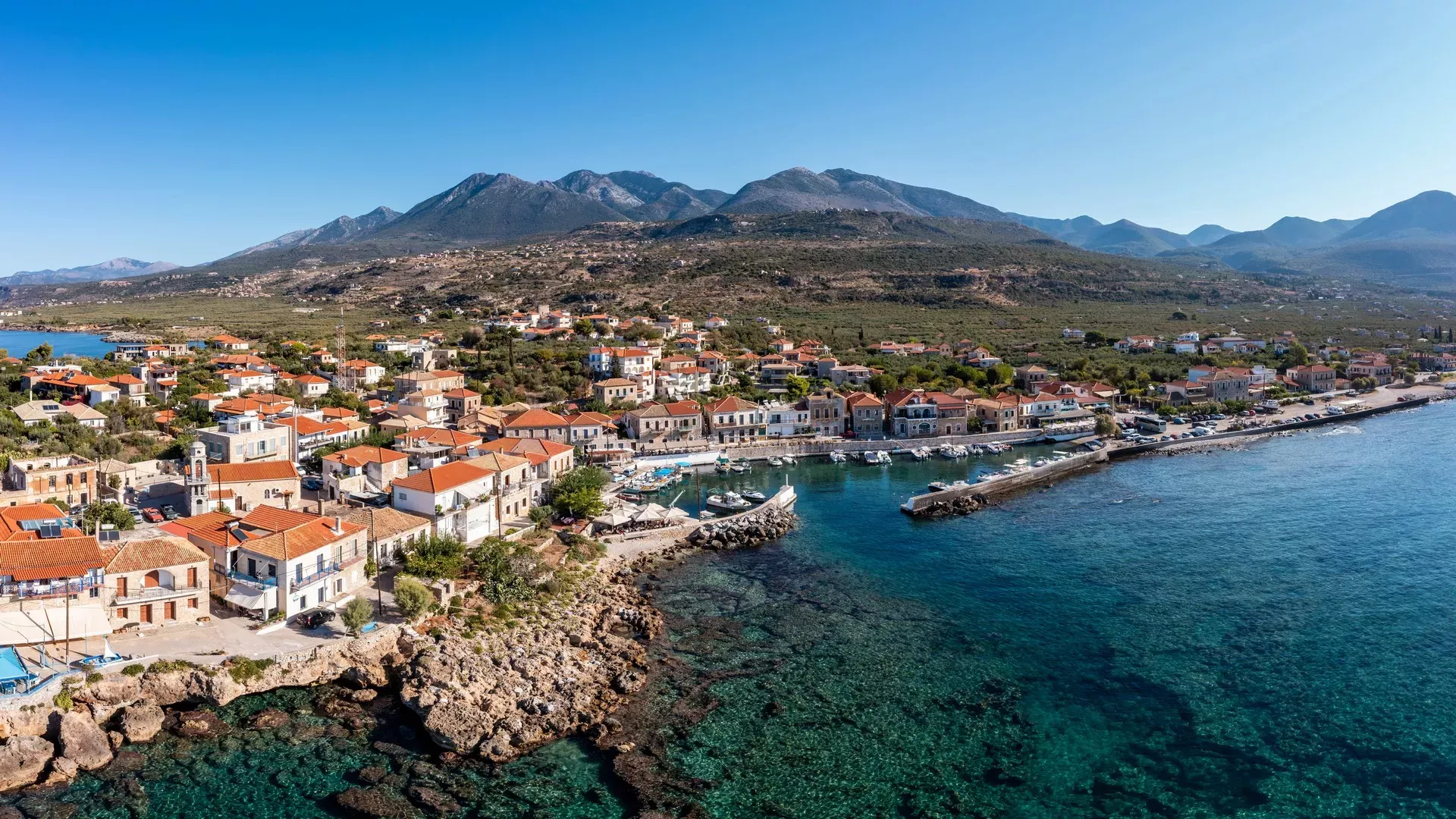
Leaving Stoupa behind, after 5 km you will meet Agios Nikolaos, a village that has preserved its traditional character intact, with picturesque lanes and a lovely little harbor filled with colorful boats and caiques. Its old name is Selinitsa, meaning little moon or little Helen, since, according to tradition, on this shore Paris anchored his ship and abducted the beautiful Helen.