





From Chania to Lasithi, the beaches of Southern Crete feel like little pieces of paradise. Weve curated and present 10 of Southern Cretes most beautiful beaches for pure relaxation with views of the Libyan Sea.
White and pink sand, turquoise waters, cedars, dunes, palm trees, wild gorges that end in sandy beaches and, in the distance, the immensity of the Libyan Sea. A paradise for those seeking absolute relaxation in touch with nature, Southern Crete boasts some of the most impressive and exotic beaches in Greece. Here your biggest problem will be how you’ll manage to dive into as many beaches as you can.
From Chania to Lasithi, we’ve gathered and present ten of the loveliest beaches of Southern Crete that will gift you dreamy summer holidays. Some are famous and much-photographed and others feel unexplored and pristine, ideal for greater seclusion.
Elafonisi, Chania
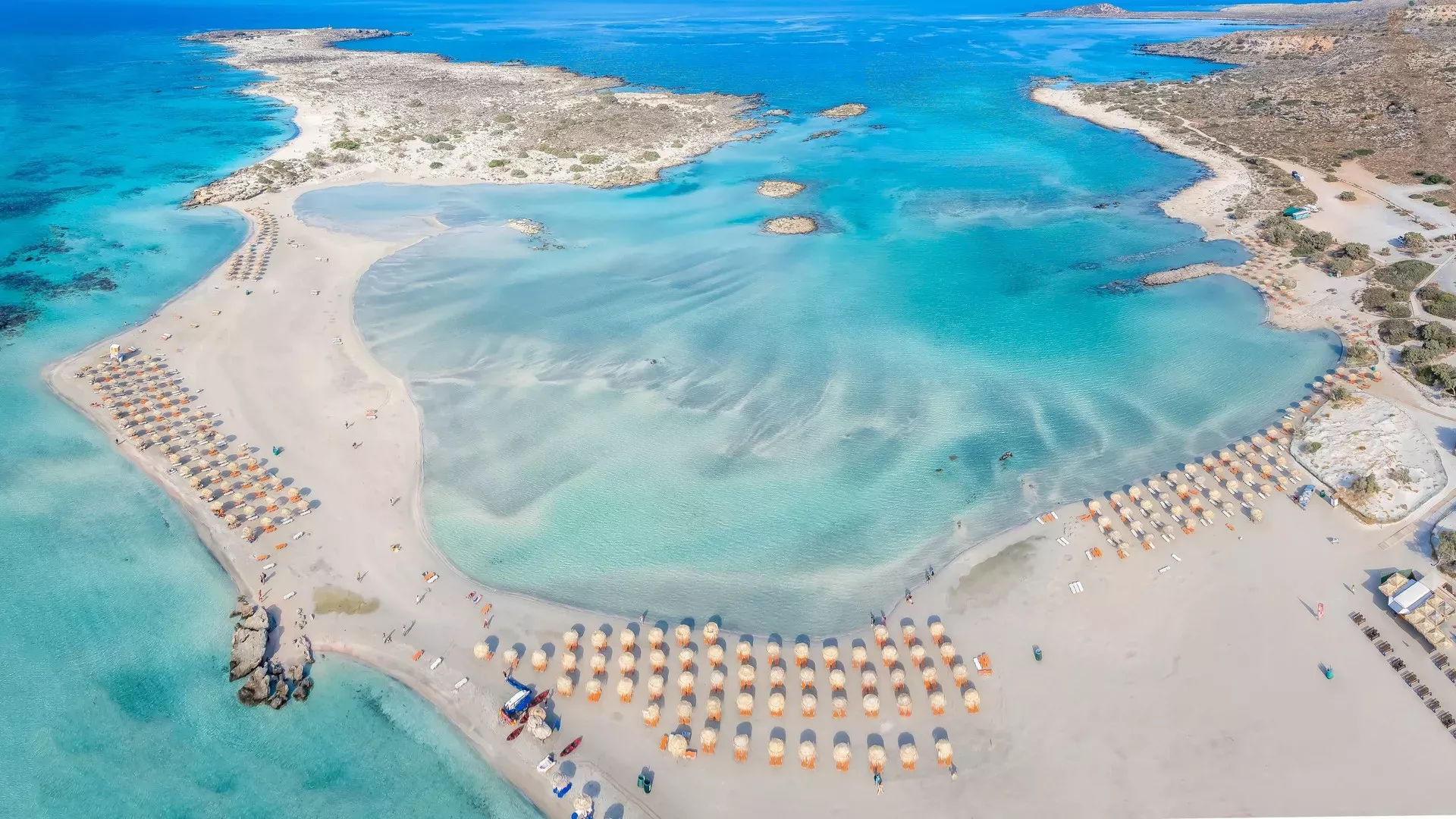
At the remote southwestern tip of Crete, Elafonisi is one of the most popular destinations in the Chania prefecture. It is a narrow peninsula that “breaks” at its base, giving the impression of a separate island about 150 m. from the opposite shore. The area is part of the Natura 2000 network and the setting is tropical, with shallow blue-green waters and white sand that takes on pinkish hues from thousands of crushed shells.
Kedrodasos, Chania
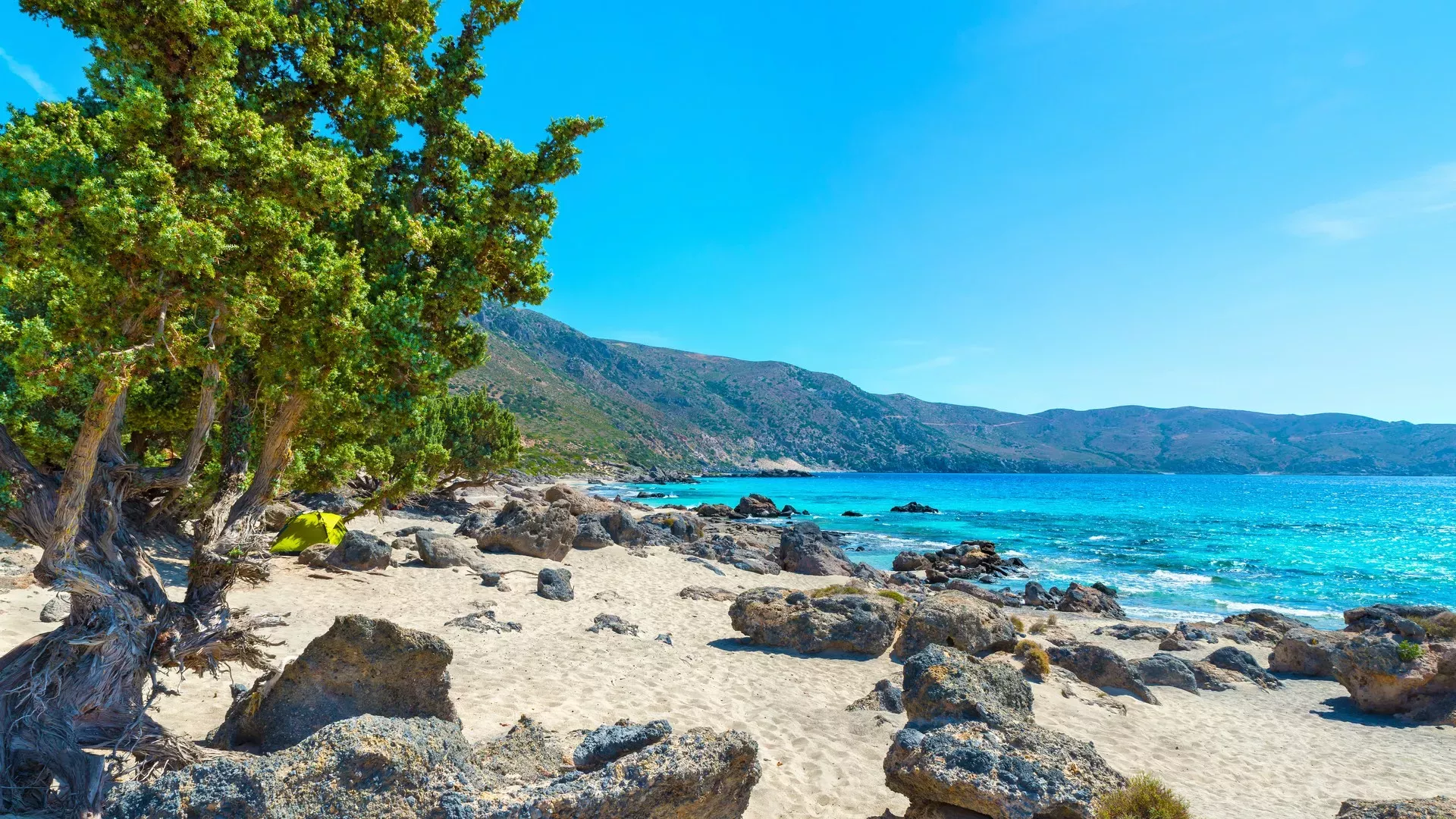
Kedrodasos beach is described as an earthly paradise—and not unjustly. This secluded shore, 76 km. southwest of Chania and just 1 km. from the famous beach at Elafonisi, will impress you with its rare beauty. It is a fairytale place with white sand, smooth rocks, and juniper trees or sea cedars (these trees are very fragile, so please avoid approaching them). Although less well known than Elafonisi, the beach has become quite popular in recent years. If you want more seclusion, there are various beaches between Kedrodasos and the church of Agios Ioannis, located about 2 km. further east.
Glyka Nera, Chania
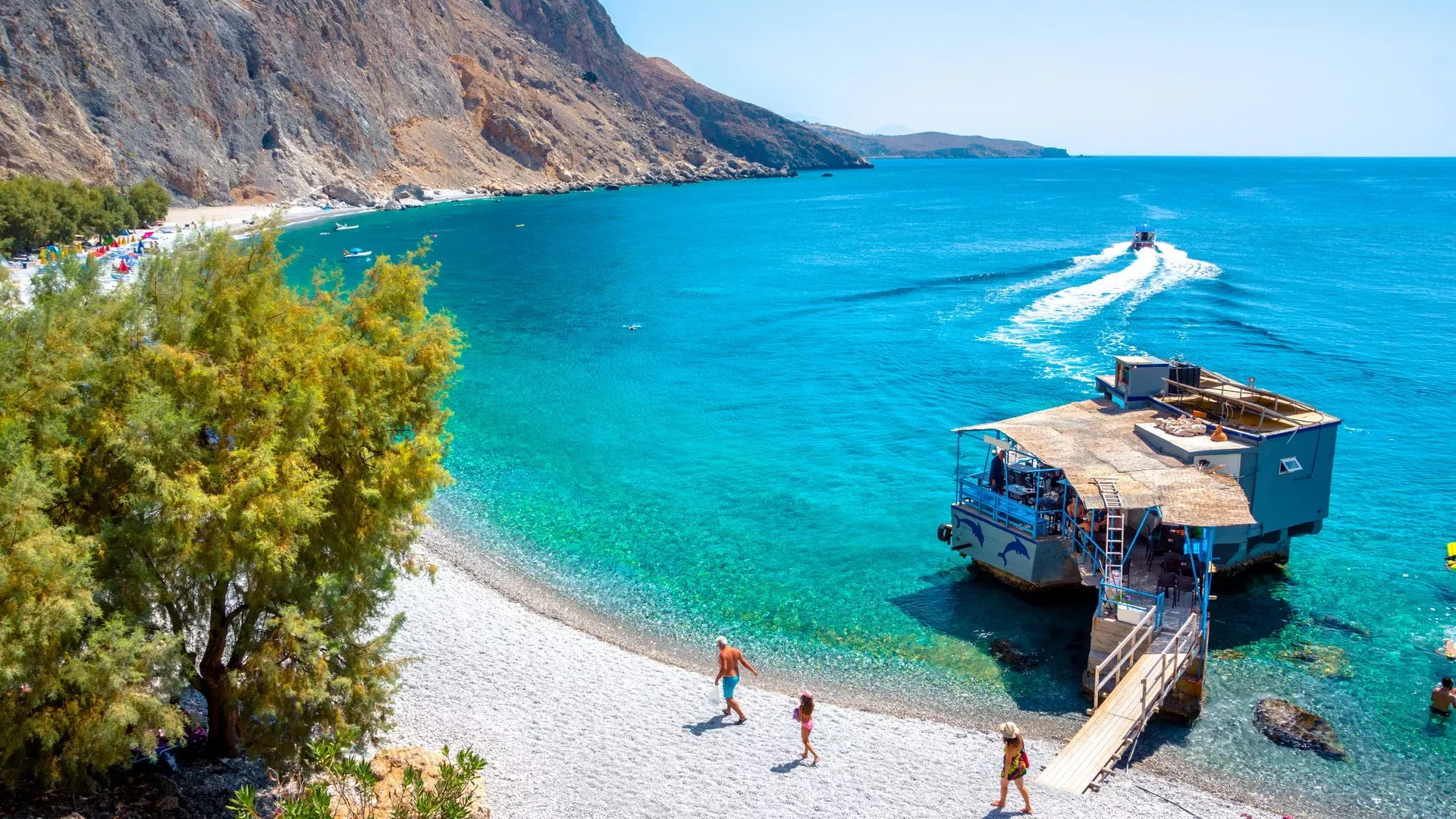
Glyka Nera is one of the most beautiful beaches in southern Crete, hidden among the mountain masses of Sfakia, 75 km. south of Chania and 5 km. west of Chora Sfakion. The beach is pebbly and was named after the freshwater springs that bubble up beside and within the sea. There are two ways to reach this coastal “secret”: either by boat from Loutro or Sfakia, or by hiking the E4 mountain trail.
Preveli, Rethymno
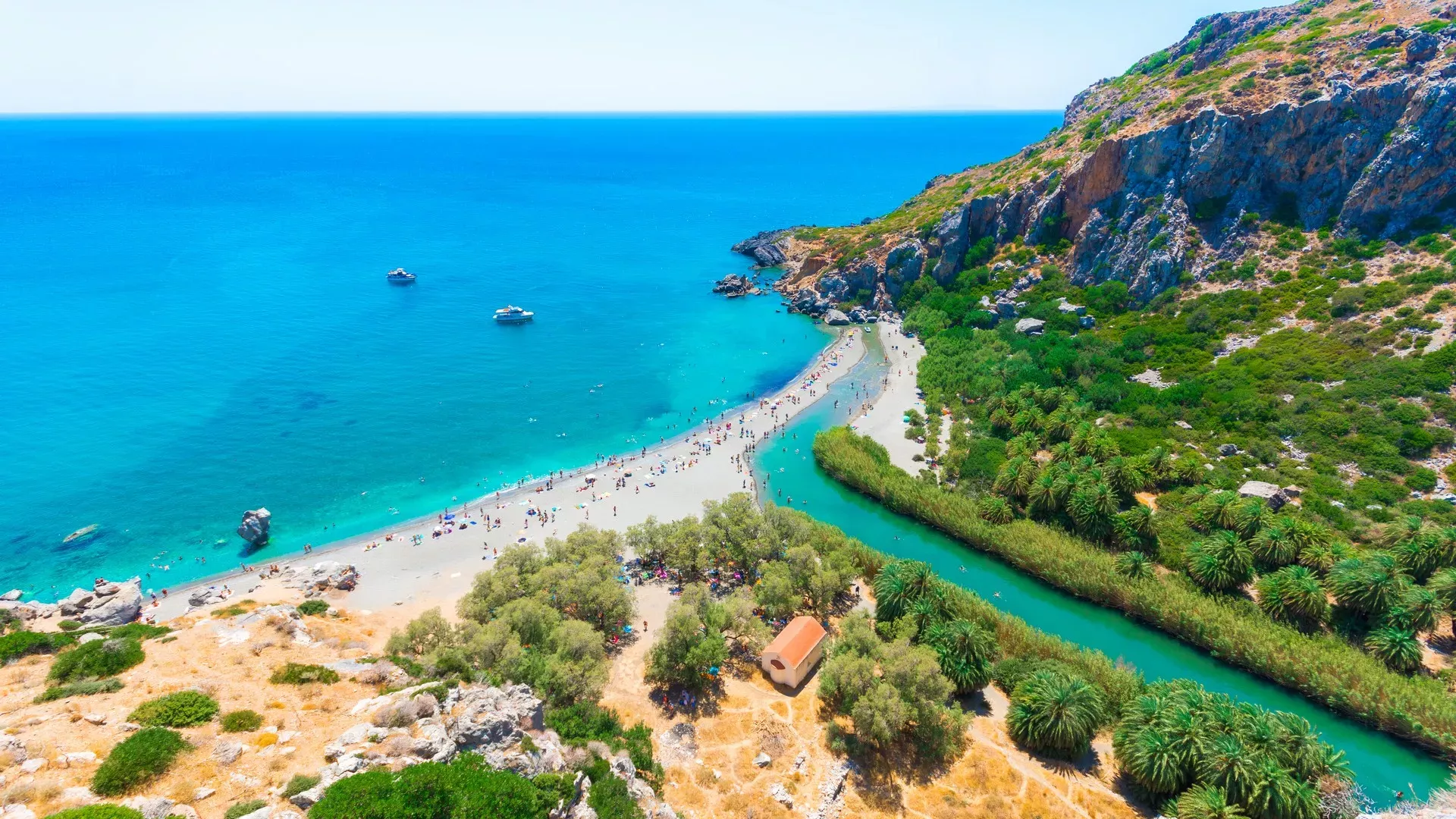
Also known as Lake Preveli or Finikas, Preveli beach, about 35 km. south of the town of Rethymno, is among the most famous beaches of southern Crete. In the past it was a favorite beach of the hippies, who chose it for meditation. Here the stream from the Kourtaliotiko Gorge flows into the sea, its banks covered with palm trees and other greenery. The beautiful Preveli palm forest with Theophrastus palms burned completely in 2010, but fortunately returned to a great extent within a short time. You can come from Plakias by boat or drive to the Preveli Monastery and follow the path that leads to the beach in about 15 minutes.
Agios Pavlos Sand Dunes, Rethymno
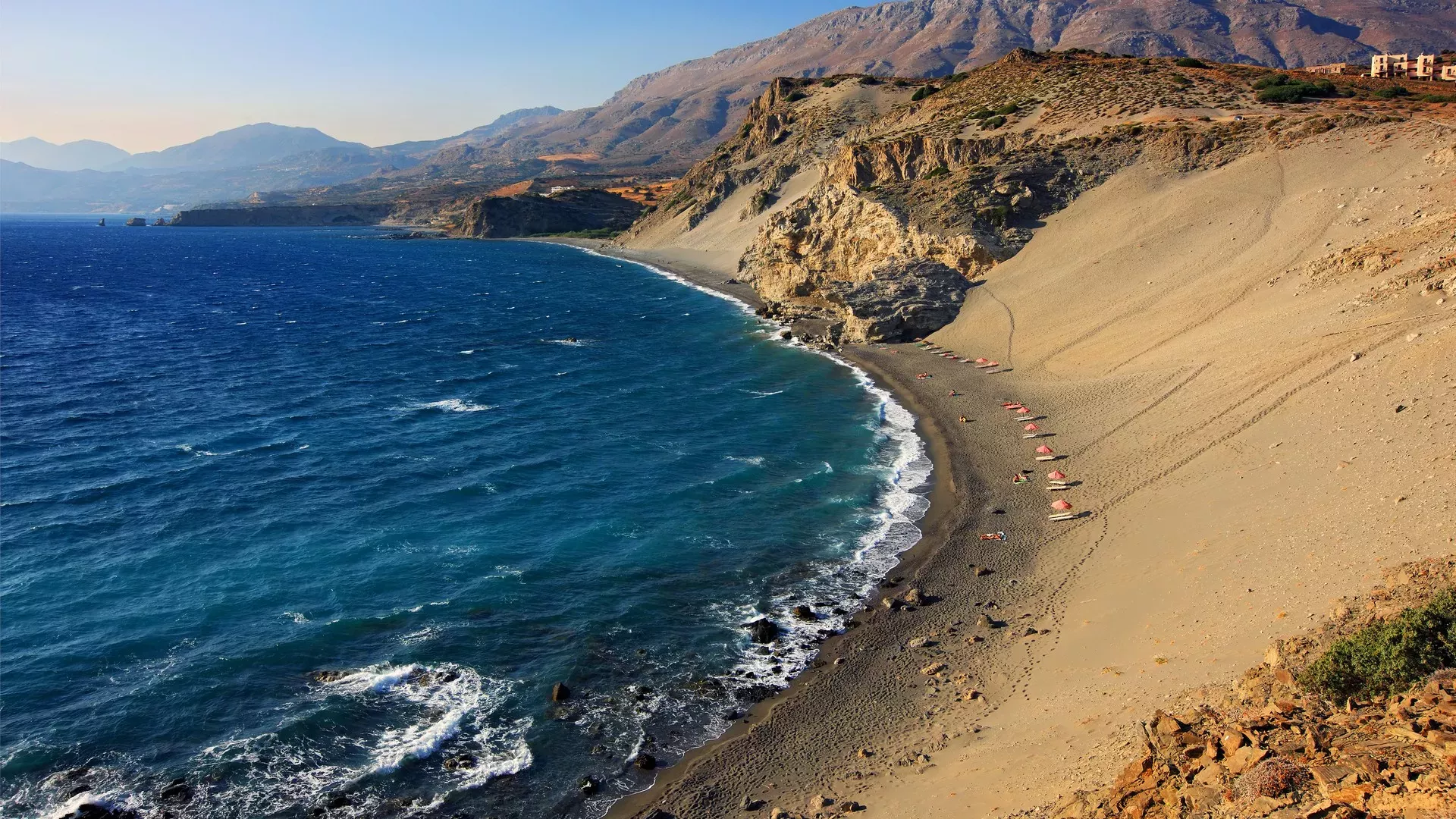
This dreamlike landscape of sand that starts at the cliff rising above the beach and fades gently into the waves is one of those images you never forget. The dunes here reach up to thirty meters high and the sunset is among the most impressive you can see in Crete. Due to its great size, it never seems full. The beach (also called Alatsogremnos) lies 58 km. south of Rethymno, near Agia Galini.
Triopetra, Rethymno
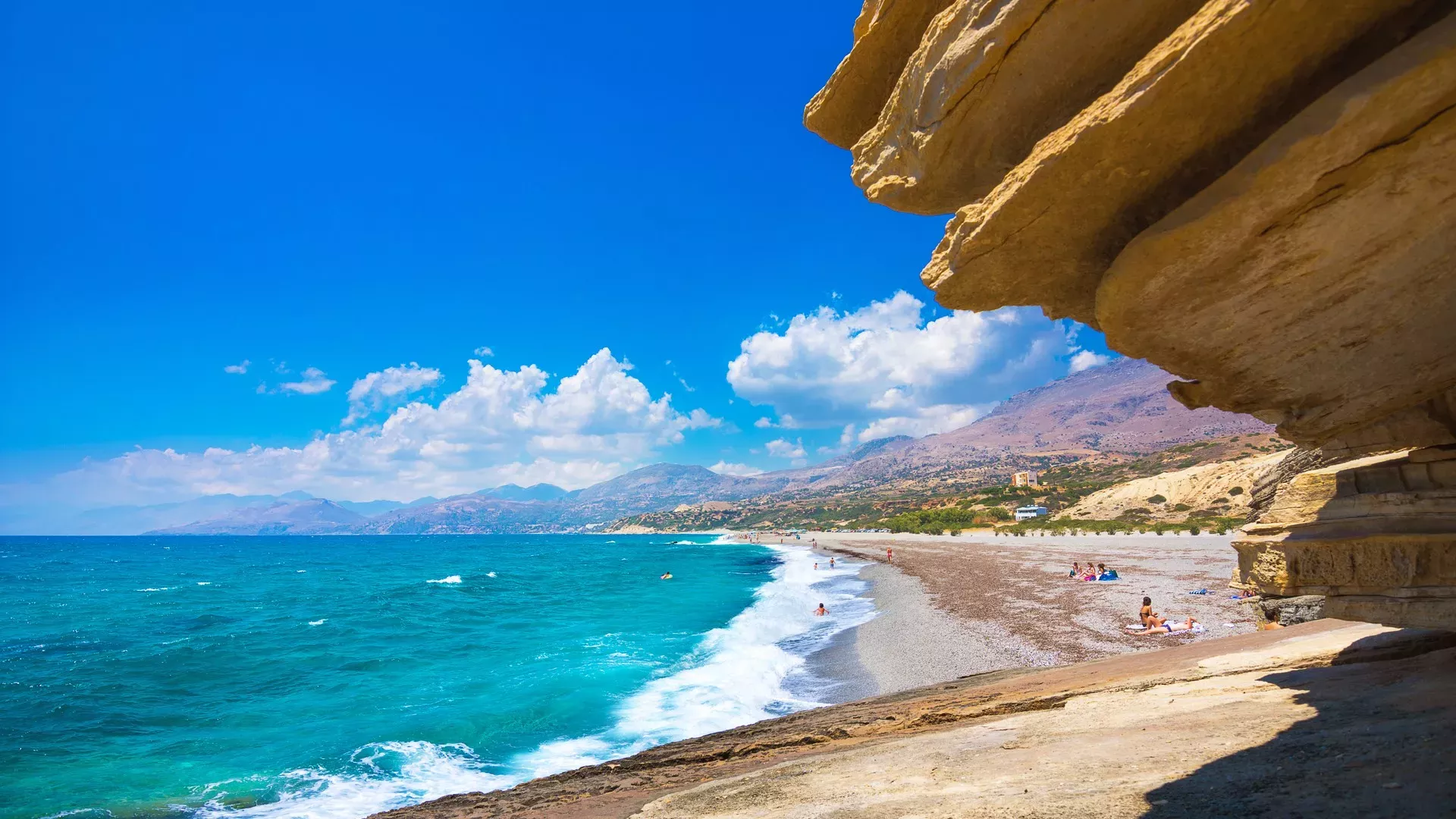
Three imposing rocks that dominate the sea, at the tip of a small peninsula, give their name to the area and the vast beach of Triopetra, located 52 km. south of Rethymno, near the village of Akoumia. It is essentially a double beach. The main beach of Triopetra, Megali Triopetra, has coarse sand and wonderful deep waters. Part of it is organized with sunbeds, umbrellas, little tavernas, and accommodation options. South of the three rocks is the cove of Mikri Triopetra, ideal when the wind is up at Megali Triopetra.
Agiofarago, Heraklion
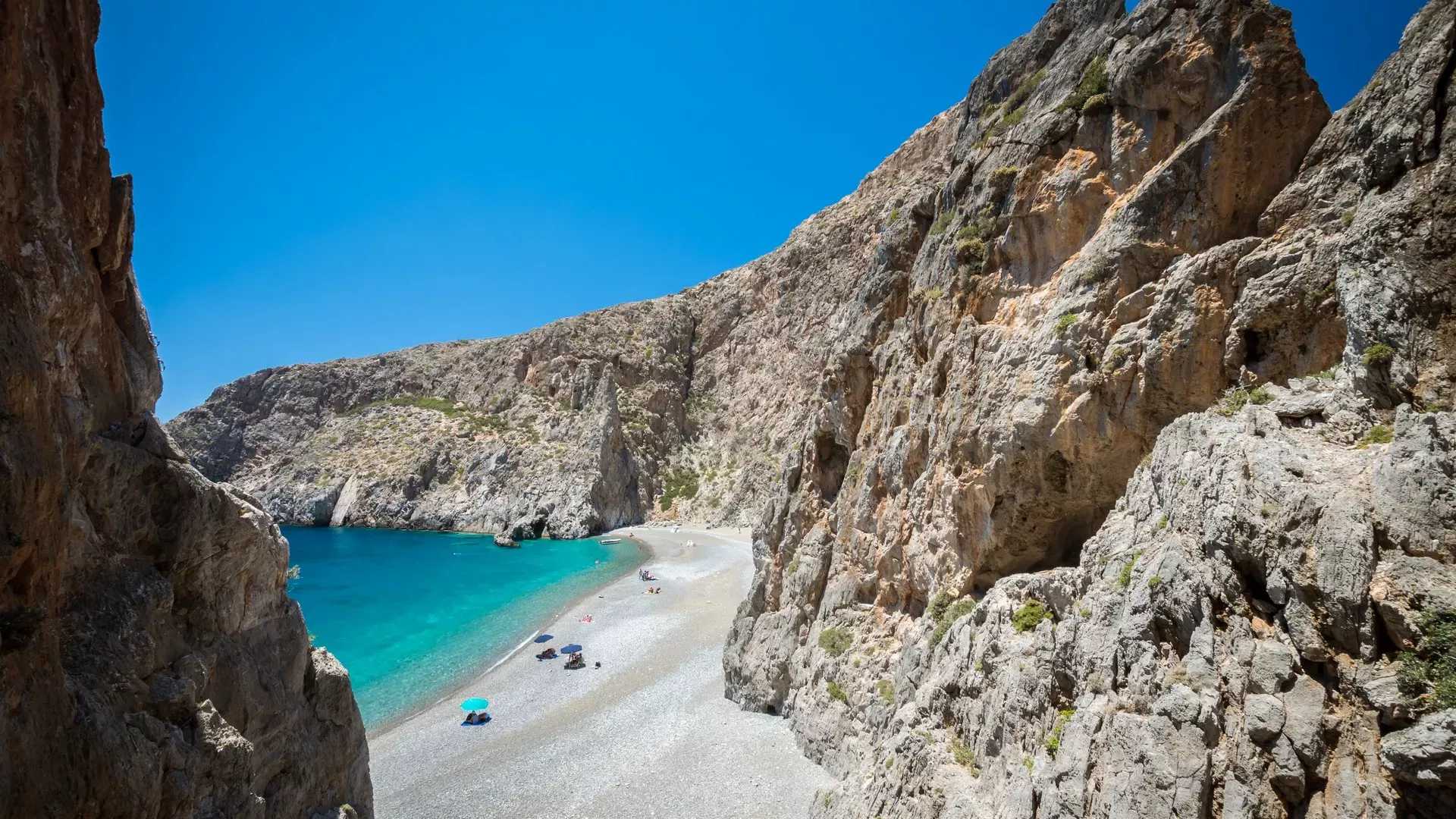
One of the best-known and most secluded beaches in the south of Heraklion prefecture (about 80 km. from the city). Agiofarago is a favorite place for hikers who descend through the gorge of the same name, of which it is the natural continuation. The beach is encircled by sheer cliffs and has fine pebbles and wonderful, refreshing waters. You can get here either by walking through the gorge (about 20-30 minutes, an easy hike) or by boat from Agia Galini, Matala, or Kaloi Limenes. Along the way through the gorge you’ll see the caves where dozens of hermits once lived, as well as the church of Agios Antonios with its little well. Make sure you bring the essentials.
Kommos, Heraklion
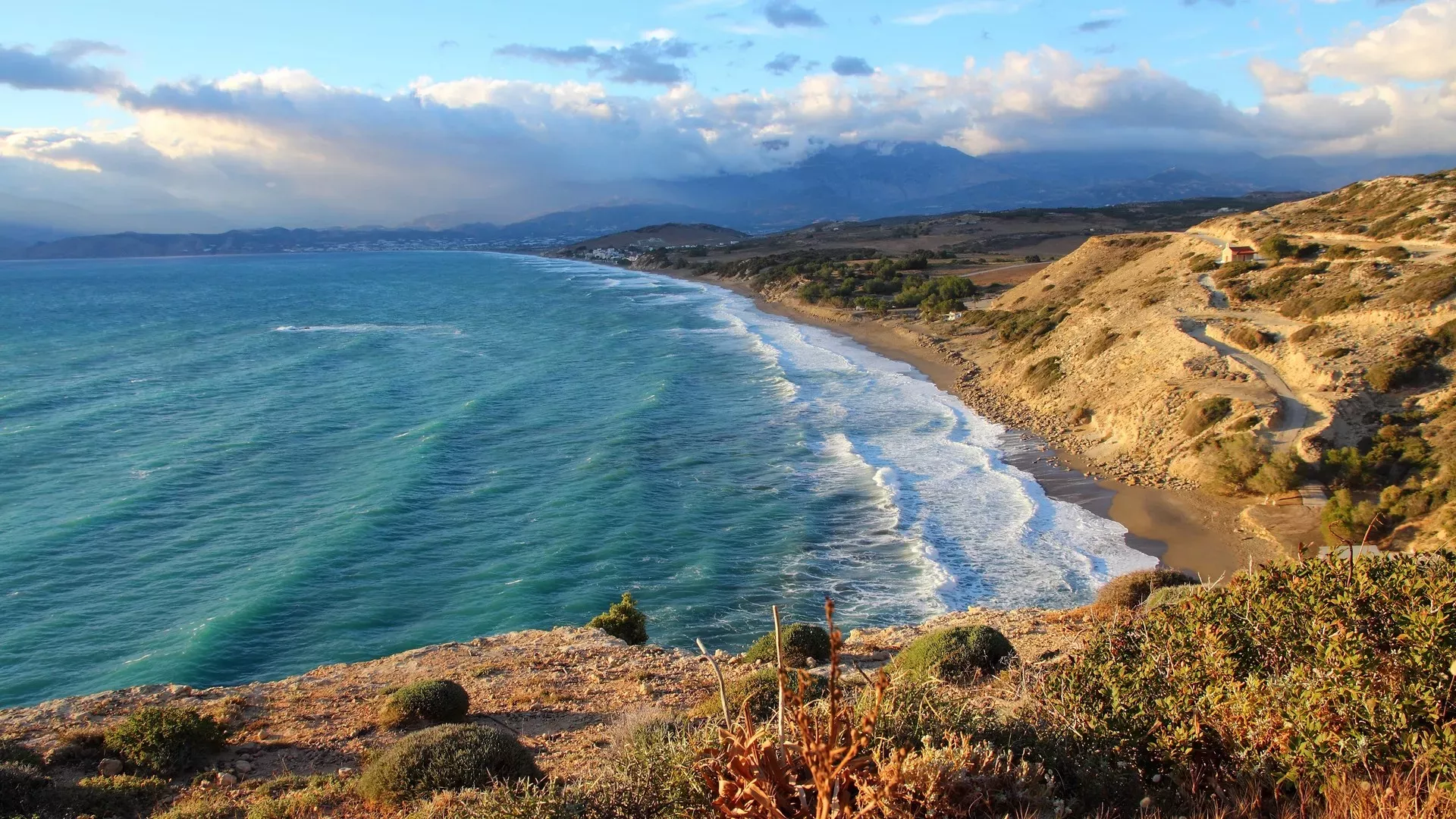
Behind bustling Matala, 65 km. southwest of Heraklion, lies an endless beach that is well worth a visit. In antiquity, Kommos was the port of Phaistos and today there is an archaeological site above the beach. The northern section of the beach is quieter (nudists prefer it) and around it a few tamarisk trees offer their shade, while farther south, near the archaeological site, there is an organized beach with umbrellas and sunbeds. Both sections of the beach are sandy and offer enchanting views of the uninhabited Paximadia islets.
Agia Fotia, Lasithi
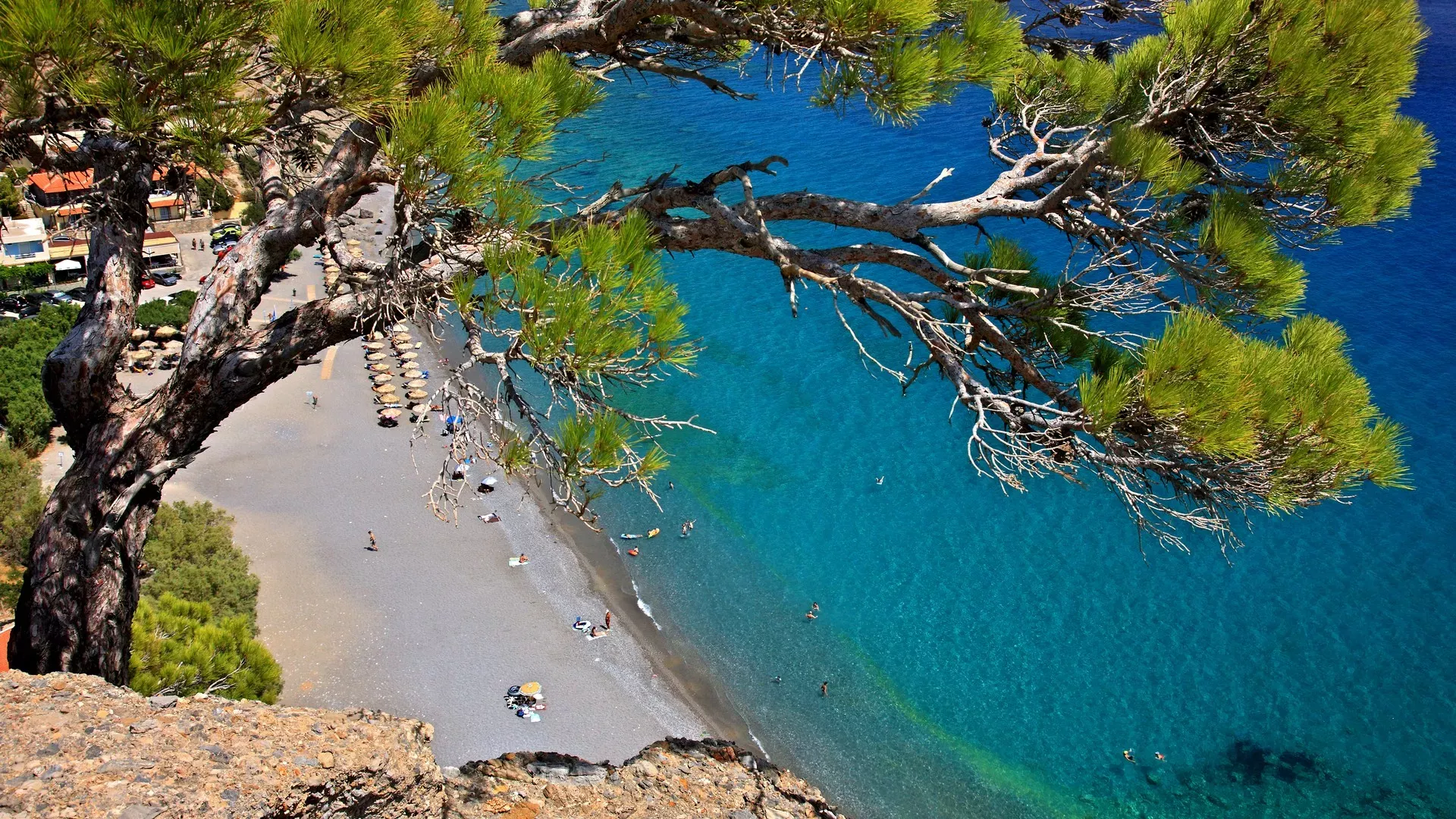
Agia Fotia is one of the most beloved beaches in the prefecture of Lasithi. It lies 45 km. southeast of Agios Nikolaos and 12 km. east of Ierapetra, on the coastal road from Siteia to Vai. Nestled among plane trees and tamarisk, in a cove hidden between high mountains and rocks, this wonderful beach has fine, greyish pebbles and calm, crystal-clear waters. There are beach bars, a few tavernas, and hotels. Walk to its eastern end, where you’ll find a spring in the rock from which fresh water flows.
Chrissi, Lasithi
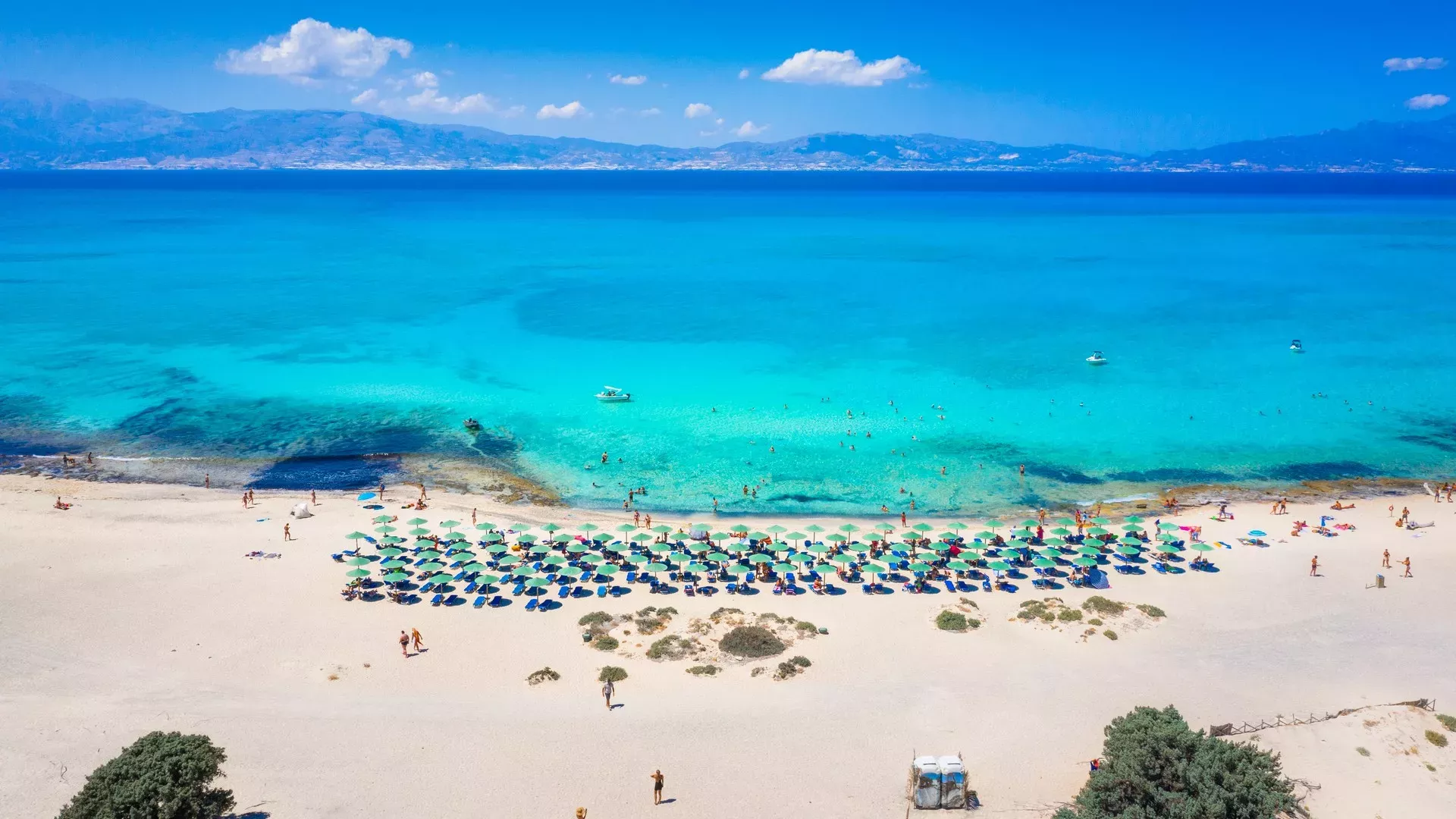
Opposite Ierapetra lies a little island that enchants visitors with its exotic landscape. This is Chrissi (or Gaidouronisi), one of Crete’s 81 uninhabited islands. Its shores are surrounded by the Libyan Sea and attract crowds of visitors, as the crystalline, turquoise waters and endless, golden sands offer an utterly relaxing setting. The most beautiful and most popular beach is Belegrina, or Golden Beach, on the north side. Chrissi is home to the largest naturally formed forest of Lebanese cedar in Europe. Most of the cedars are 200 years old and reach 7 meters in height. In summer, daily sailings operate from the port of Ierapetra to Chrissi.