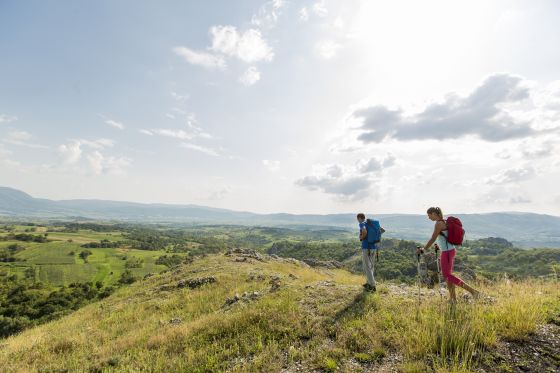





In earlier times, before a comprehensive network of motorways was created in Greece, beyond the main road arteries that crossed the country, travel and communication took place mainly along footpaths, which the elder residents of the mountain villages still refer to as «δημοσιά» (public, main road), because for them it was the most important road access. Although some of the old paths and stone-built cobbled ways, true works of art, have been turned into asphalted roads, most of them slip between the roads and continue to exist and to run through mountains, thickets and gorges.
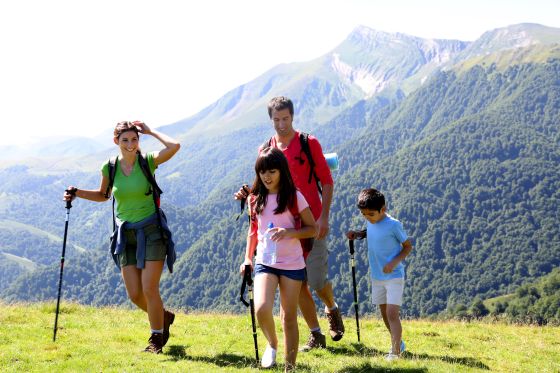
Thus, in recent years, with funding from various bodies (municipalities, mountaineering clubs, private individuals, etc.), large sections of them have been maintained, revived and waymarked throughout Greece, creating an extensive network with a total length of approximately 3.500 km In their largest part they are extensions of the European Long-Distance Paths, E4, E6 and category O (3.000 km), while, apart from these, a further 500 km of shorter trails have been laid out, which are of equally compelling interest.
The E6 Trail
Its Greek section has two branches. The first starts in the Prespa region and, via Kastoria, Ioannina and Dodoni, reaches the town of Igoumenitsa. The second branch starts in the Florina area, crosses the mountainous regions of Western, Central and Eastern Macedonia, along Greeces borders with FYROM and Bulgaria and reaches the city of Alexandroupoli, in the region of Thrace.

The E4 Trail
It starts in the Pyrenees and reaches Greece via the former Yugoslavia. The Greek section of the E4, crosses Northern and Central Greece, the Peloponnese, ends at Gytheio and continues on the island of Crete. It thus offers the hiker or mountaineer the chance to experience the full variety of the Greek landscape and the richness of Greek nature. The highest elevation of the entire route is the Skolio peak of Olympus (2.911 m). The ideal period for hiking the E4 trail is from 15 May to early October, because some villages along the route are uninhabited in winter, limiting the possibility of overnight stays. Often, the opening of new forest roads can cause confusion for the hiker - traveler. The climate is Mediterranean and presents great aridity in summer and a significant difference in temperature between day and night. The period during which one may encounter snow along the route is from November to June. The route in the southern section of the trail (Peloponnese and Crete) is considerably easier than its northern section and can be walked in all seasons, because the climate there is milder.